Ethereum Shanghai unlock had minimal market impact – 84k ETH withdrawn

cryptoslate2023-04-13 tarihinde yayınlandı2023-04-13 tarihinde güncellendi

Özet

The chart below shows approximately 10,000 tokens are processed every hour. Interestingly, most withdrawals are attributed to “reward” rather than “principal” — indicating that the majority of individuals have chosen partial withdrawals to capitalize on staking profits but still plan to continue as validators.

Data from Token Unlocks showed validators had withdrawn 84,000 Ethereum at the time of press.

This was possible thanks to the Shanghai upgrade, which went live on April 12 at around 22:30 UTC — enabling ETH stakers to re-custody their tokens.

Ethereum withdrawals limited

Staking directly to the Beacon Chain contract required people to become network validators and delegate a minimum balance of 32 ETH. Shanghai allowed people to stop validating, exit the network, and unlock their staking balance plus the rewards accrued.

Those who delegated more than 32 ETH — and wish to unlock some tokens — can opt for a partial withdrawal and continue acting as network validators.

There was much speculation surrounding the upgrade. Some anticipated a surge of withdrawals, leading to a potential drop in the spot price. Meanwhile, others believed that enabling withdrawals would encourage more ETH holders to stake their tokens.

Per Ethereum’s FAQs, to manage outflows, the project has adopted an exit queuing system — with placement determined by the number of tokens requested for withdrawal.

“The exit queue depends on the size of the validator set in the network. This limit exists to regulate the rate of exit and entry into the beacon chain validator set.”

An initial analysis of the numbers shows the Shanghai upgrade had an insignificant impact on the market.

The numbers

Token Unlocks showed a 2.7% fall in deposits to 17.52 million ETH, with 84,000 ETH withdrawn at the time of press. This figure far outweighed deposits post-Shanghai, leading to a net loss of 78,000 tokens. However, the total pending withdrawals are currently at 825,000 ETH.
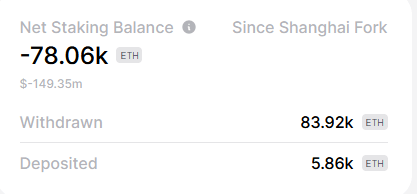
Ethereum Shanghai withdrawal stats

Source: token.unlocks.app

The chart below shows approximately 10,000 tokens are processed every hour. Interestingly, most withdrawals are attributed to “reward” rather than “principal” — indicating that the majority of individuals have chosen partial withdrawals to capitalize on staking profits but still plan to continue as validators.w
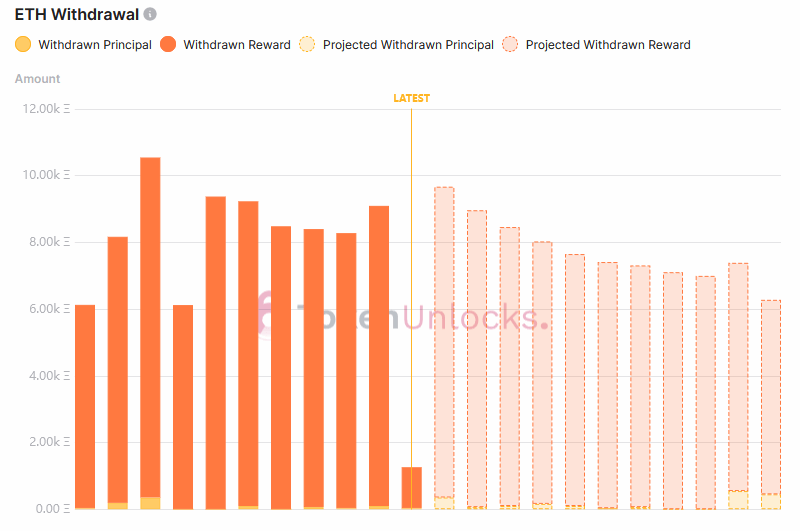
Ethereum withdrawals

Source: token.unlocks.app

The price of Ethereum grew 3.9% to $1,944 over the past 24 hours. This performance was enough to lead the top 10 cryptocurrencies. Polygon placed second — up 2.8% over the same period.


İlgili Okumalar

Bank of Korea Reveals Results of Tokenized Deposit Testing

The Bank of Korea has announced the results of its pilot test for tokenized deposits. Involving 28 central banks and international financial organizations, the project saw participation from major South Korean banks including KB Kookmin Bank, NH NongHyup Bank, Shinhan Bank, Woori Bank, and Hana Bank. Transactions, from payment orders to final settlement, were completed in real time, averaging just 80 seconds. The test involved 30 transactions across 17 different scenarios—such as corporate and interbank transfers—and was conducted in six currencies, including the Korean won, US dollar, and euro, with a total transaction value reaching approximately $995,000. The central bank reported that the platform operated stably throughout, despite being only partially connected to the existing banking infrastructure. Settlements using tokenized deposits were executed seamlessly, quickly, and transparently. An internal transfer of 20 million won (about $13,890) between NH NongHyup Bank and Shinhan Bank was also successfully processed via the Project Agora platform, which involved connecting to the Bank of Korea's CBDC test platform, Project Hangang. Additionally, KB Kookmin Bank and Japan's MUFG Bank tested cross-border payments using these deposit tokens—digital certificates issued by commercial banks within the pilot, not directly by the central bank. The Bank of Korea plans to continue testing payments with tokenized deposits. This follows last year's pledge by South Korean authorities to tighten regulations for won-based stablecoins, which will require approval from both the central bank and the Financial Services Commission.

cryptonews.ru3 dk önce

Bank of Korea Reveals Results of Tokenized Deposit Testing

cryptonews.ru3 dk önce

İşlemler

Spot
活动图片