人均赚千万美元,Polymarket的顶尖交易员都使用什么策略?

marsbit2026-05-07 tarihinde yayınlandı2026-05-07 tarihinde güncellendi

编者按:加密市场中,利润就是成绩单。本文从 Polymarket 头部钱包的链上数据出发,探索预测市场上的大赢家到底是靠信息差、模型、信念,还是纯粹的交易纪律?结论是稳定大赚的万能策略并不存在,盈利前三的知名账户采用的是三套几乎互不相通的赚钱方式。

研究全球最大预测市场上那些赚到数百万美元的钱包后,会发现这里并不存在一种统一打法,而是至少有三种,而且它们几乎没有共同点。

如果你经常刷预测市场圈的推特,很快就会在各种「最大赢家」榜单帖里看到同一批匿名 ID。Theo4 在 2024 年大选市场赚得盆满钵满。swisstony 默默地在 NBA 盘口中持续获得收益。MonsieurDimanche 则几乎会出现在各种市场的评论区里。时间久了你会开始好奇:这些人是同一类人吗?他们做的是同一套事情吗?所谓「擅长 Polymarket 的人」,是否有某种可识别的画像?

直觉上的答案是:有。就像你会以为「擅长扑克的人」也有某种共同画像:耐心、数学能力...

但在查看了平台上所有 Top 20 钱包的链上数据后,真实答案是:没有这种统一画像。至少有三类,甚至可能更多。除了都出现在排行榜上之外,它们几乎没有共同点。这个答案比预想中更有意思,所以值得认真拆解一下数据到底说明了什么。

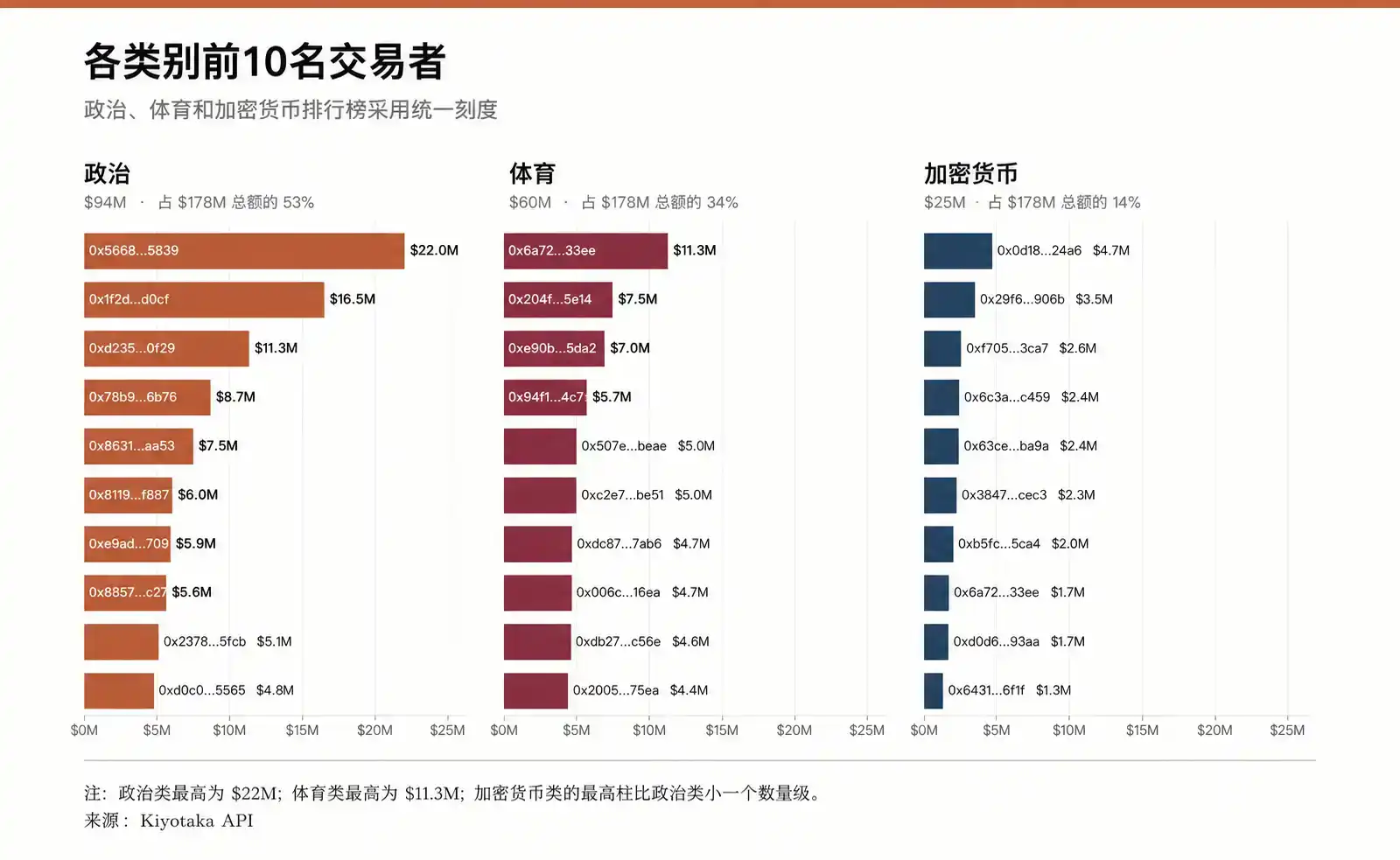
下文数据来自 Polymarket,时间截至 5 月 5 日。仅政治类市场的前 10 个钱包,就贡献了 9400 万美元的利润;体育类前 10 个钱包又贡献了 6000 万美元;第三大类别 Crypto 则贡献了 2500 万美元。这个数字甚至还不到政治类前三个钱包的总和。
政治类市场是另一个量级

按同一美元尺度比较各类别头部钱包。政治类无论是单个钱包峰值收益,还是 Top 10 钱包的总利润,都明显领先。
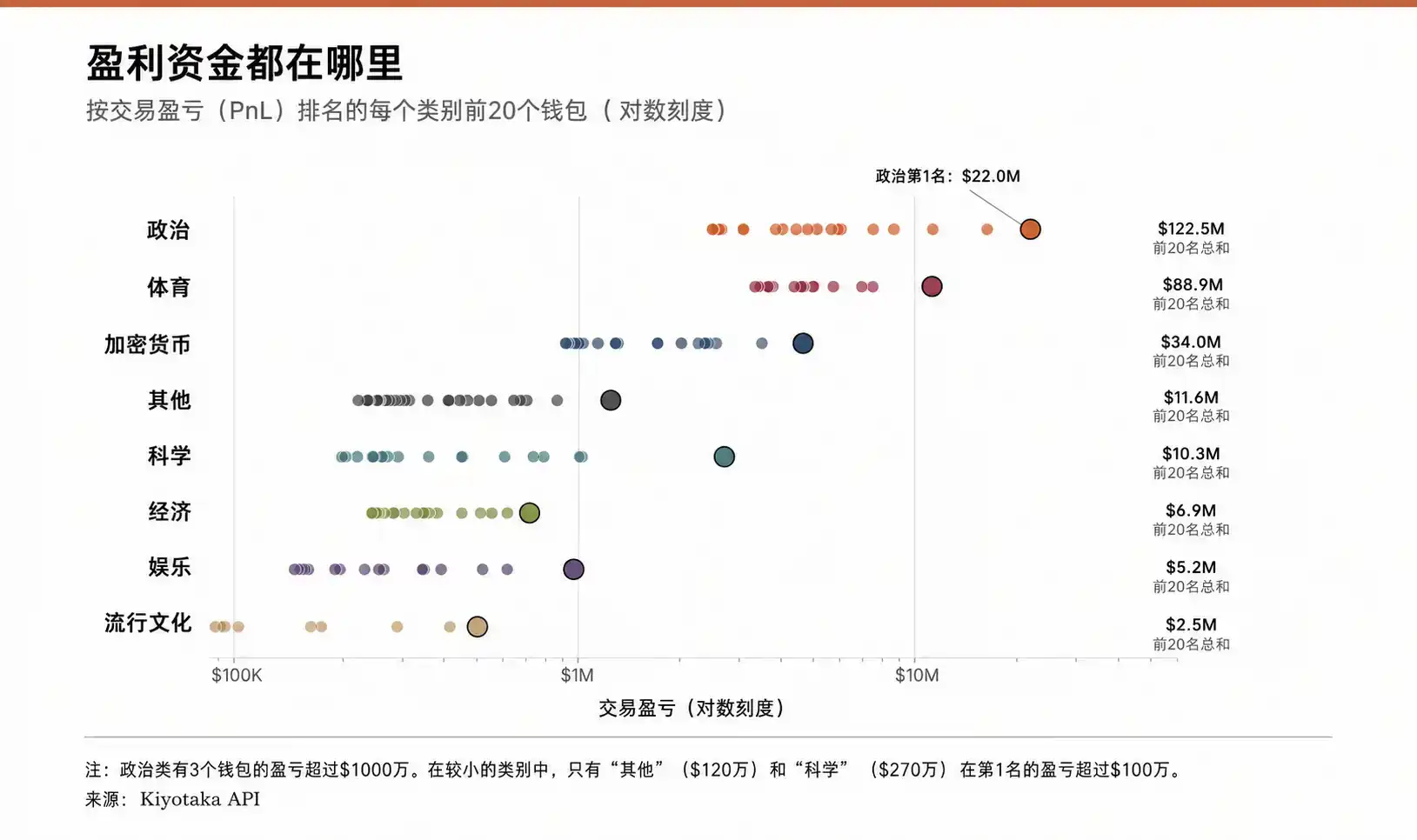
政治类第一名钱包已经赚到 2200 万美元。体育类第一名为 1130 万美元。Crypto 类第一名为 470 万美元。遗憾的是,这个数字甚至进不了政治类前 10。

这种差距并不是幂律分布造成的错觉。政治类第 10 名钱包约有 500 万美元收益,已经超过除体育之外所有其他类别的第一名。政治类不是「同一种分布更陡一点」,而是运行在完全不同的层级上。

如果把各类别 Top 20 钱包按总利润绘制在对数坐标上,除政治、体育、Crypto 三大类别外,只有 Science 和「Other」的第一名钱包能超过 100 万美元。
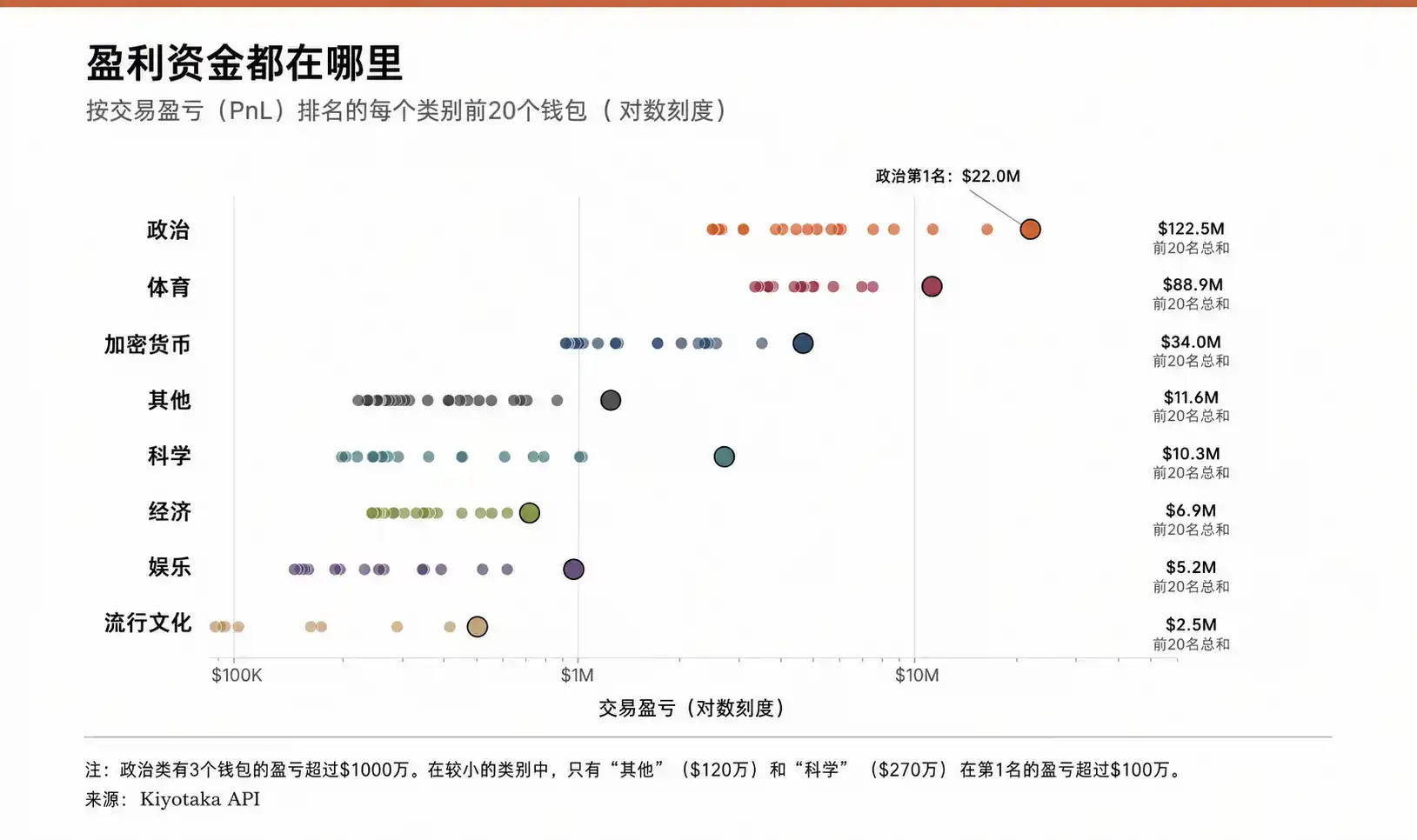
最直接的解释是:政治类市场数量更少,单笔下注规模更大,结算周期更长。一次对总统大选或争议性政策结果的正确判断,可以被放大成七位数甚至八位数的收益。体育市场通常在数小时内结算,价差更薄,单笔收益更小。市场结构决定了哪种策略能胜出。

高信念重仓下注 vs 高频多市场交易

如果把持仓数量与已实现利润放在一起看,排行榜会清晰分成两个群体。它们共用一条纵轴,但除此之外几乎没有共同点。

政治、体育和 Crypto 类 Top 10 钱包的持仓数量与交易盈亏的对比图显示:政治类的鲸鱼集中在低持仓数量一端;体育类的鲸鱼则主导高频交易一端。
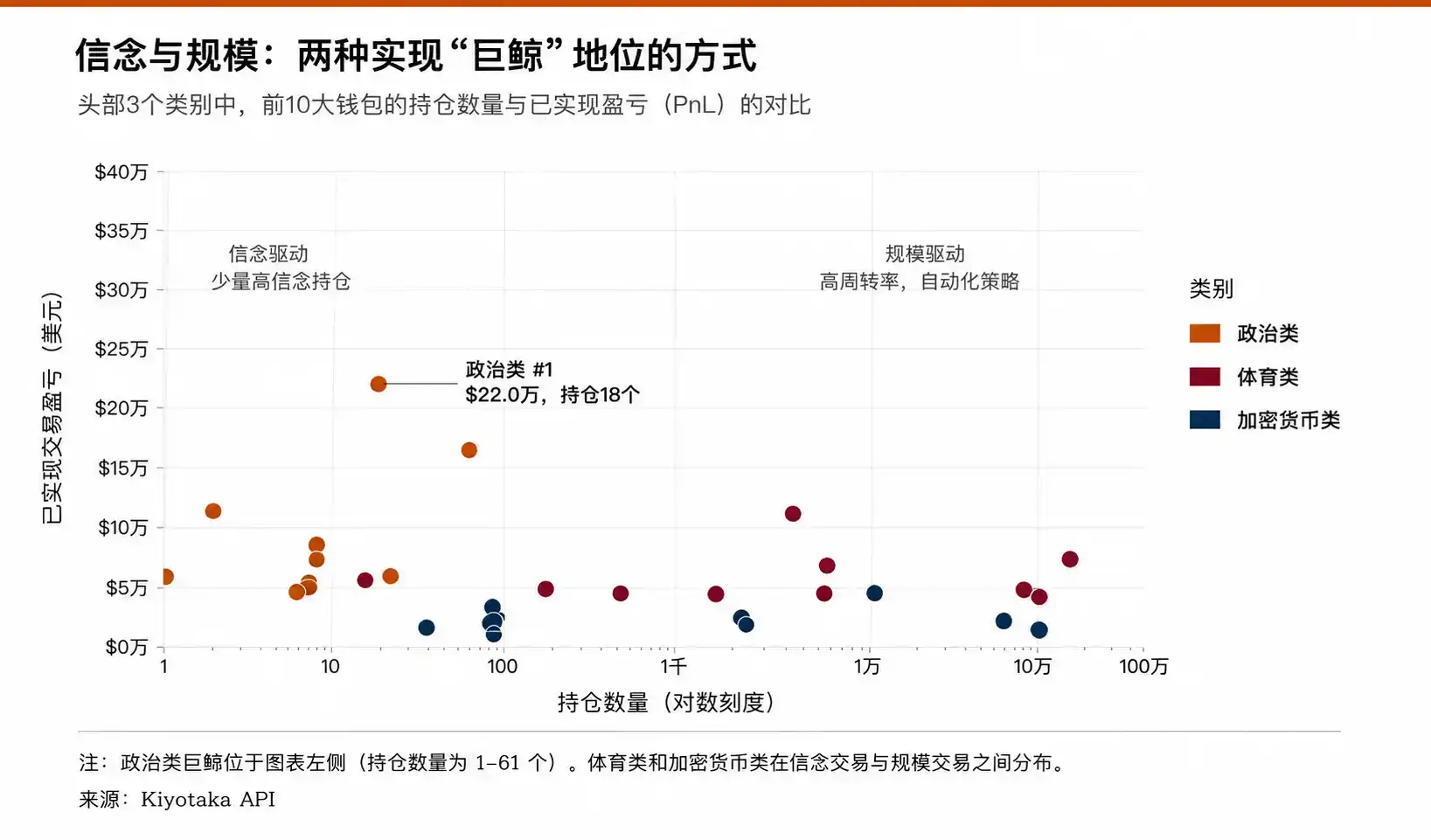
图表左侧,大约 1 到 100 个持仓数量之间,几乎坐满了政治类鲸鱼。第一名钱包 0x5668...5839 只用了 18 个持仓就赚到 2200 万美元。另一个钱包 0xd235...0f29 仅靠 2 个持仓就赚到 1130 万美元。

图表右侧,1000 到 150000 个持仓之间,则是体育类交易者的地盘。体育类第二名钱包 0x204f...5e14 在 151888 个持仓中赚到 750 万美元。这更像是自动化系统的痕迹,而不是一个「有观点的投资者」。

一个钱包用 18 个持仓赚了 2200 万美元。另一个钱包用 151888 个持仓赚了 750 万美元。它们在同一个排行榜上,但做的并不是同一门生意。

这是两种完全不同的工作。第一种需要极强的判断信念,并愿意在罕见的高风险事件上重仓。第二种需要工程纪律:一个单笔利润很薄的模型,被部署到足够多的市场中,让大数定律发挥作用。Crypto 介于两者之间,两种风格都有,只是绝对规模更小。

市场选择:集中与分散并存

引入 8 个具名钱包,也就是能从 Polymarket 公开资料中识别出名称的账户后,可以更直观看到策略分布。
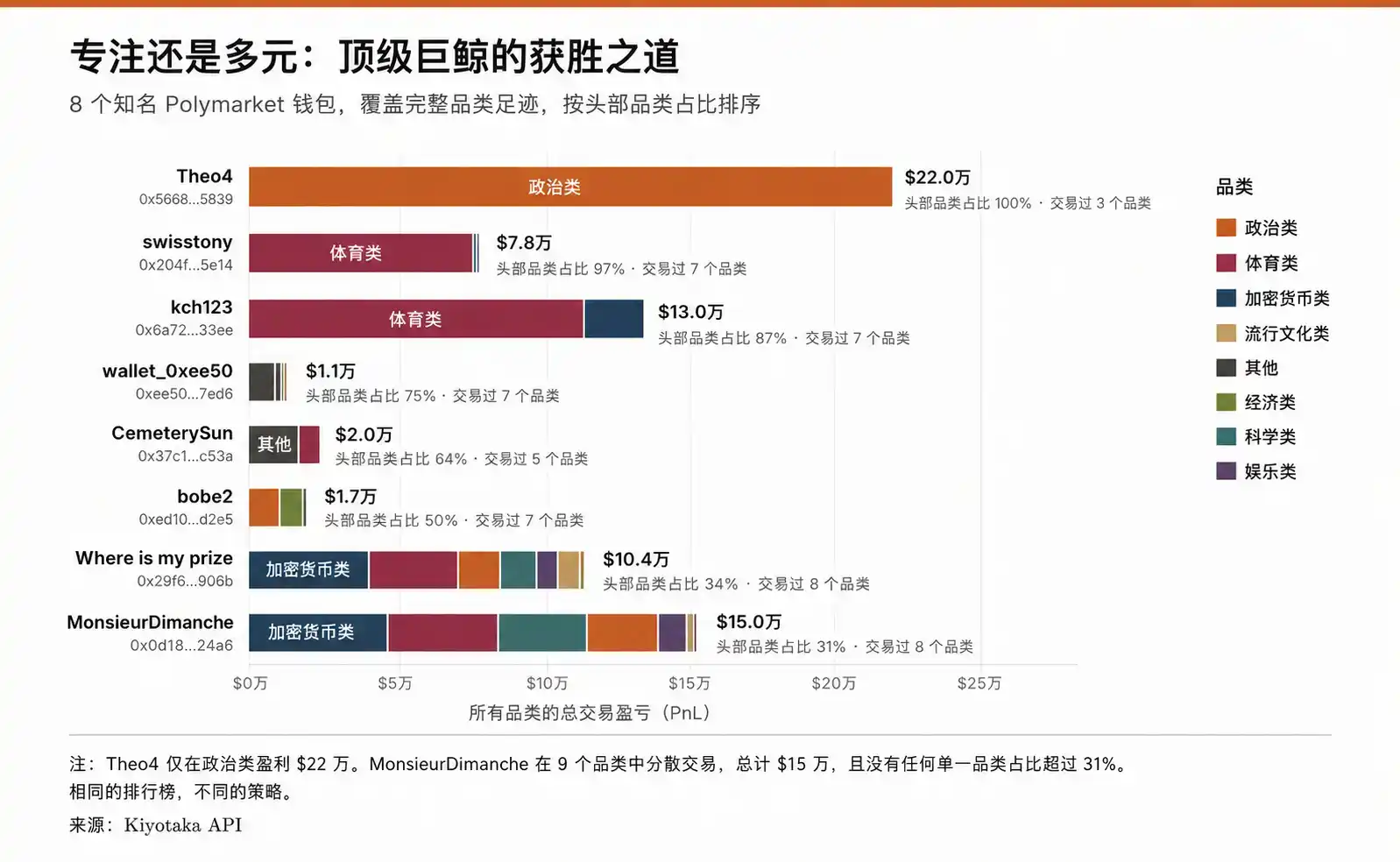
按「最大类别利润占总利润比例」排序这 8 个钱包,Theo4 完全集中在政治类;MonsieurDimanche 则横跨 9 个类别。

Theo4 的 2200 万美元收益 100% 来自政治类。swisstony 的 780 万美元收益中,97% 来自体育类。体育类第一名 kch123 的收益中,87% 也来自体育。这些都是不会轻易跨界的专家型交易者。

另一端,MonsieurDimanche 把 1500 万美元收益分散在 9 个类别里,没有任何单一类别贡献超过 31%。他不专注于任何一个类别,却依然站在排行榜顶层。

传统认知认为,专业化带来更深的优势,因此能带来更高回报。这个判断在头部确实成立,但也只勉强成立。Theo4 是具名钱包中收益类别最集中的,也是总利润第一。MonsieurDimanche 是最分散的,却排名第二。

持仓数量 vs 单笔交易利润

整个数据集中最有用的一张图,是把每个钱包的利润除以它的持仓数量,衡量每一笔下注平均赚到多少美元。
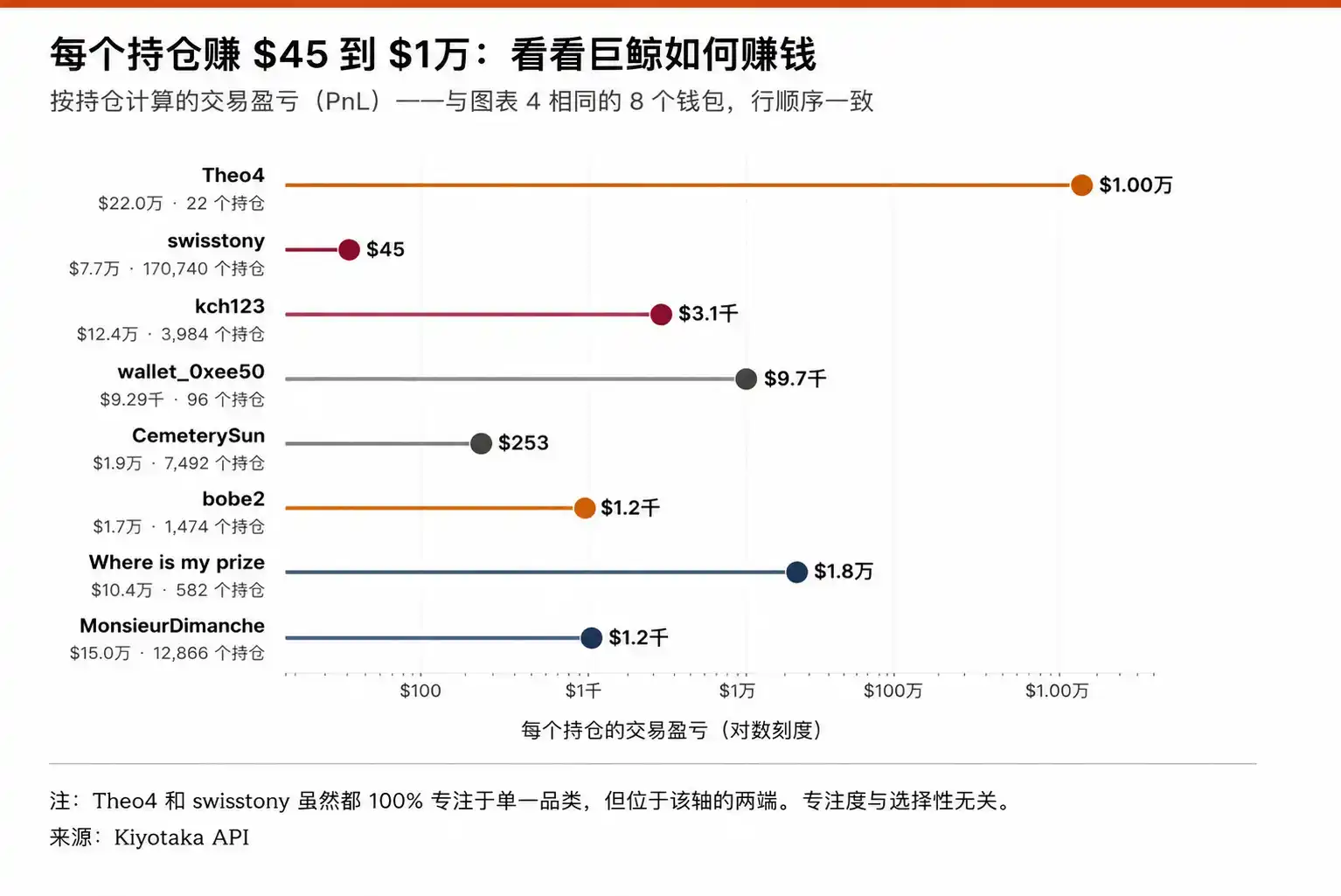
在 交易利润/ 持仓数量的对数图上,Theo4 和 swisstony 都几乎 100% 集中在单一类别,但二者在选择性上相差约 22000 倍。

Theo4 平均每个持仓赚 100 万美元。swisstony 平均每个持仓赚 45 美元。二者本质上都是单一类别交易者,在「集中度」这条轴上几乎无法区分。但在「选择性」这条轴上,他们相差约 22000 倍。

这是最重要的分析结论:持仓数量和单笔交易利润是两个相互独立的变量。把它们混为一谈,会遮蔽排行榜真正揭示的东西。一个钱包覆盖哪些市场类别,说明交易者在哪里下注;每单位利润对应多少持仓,说明交易者如何赚钱。两者并不相关。

八位数收益背后的三种打法

数据呈现出来的不是一种策略,而是三种。

第一种是政治专家。在结算慢、赔率空间大、影响重大的政治市场中,用少数高信念、高金额持仓博取巨大收益。交易少,仓位大,研究深。Theo4 是典型代表。这种打法的门槛主要是心理层面的:大多数交易者无法把仓位上到足以让策略真正产生回报的规模。它也不是传统意义上可规模化的路径。

第二种是体育市场的系统化交易者。用自动化模型为体育市场定价,哪怕只比共识价格好一点点,也能通过成千上万甚至数十万个合约累计收益。单笔利润很薄,但整体又是可以长期存在。swisstony 是典型代表。这种打法的门槛是工程能力和运营纪律,而不是单纯的市场洞察。

第三种是跨类别通才。能够在许多主题上形成校准良好的判断,并在专家型交易者忽视的市场里榨取利润。MonsieurDimanche 是典型代表。这种打法的门槛是知识广度,而且这种广度比建立一个单类别模型更难获得。

这些技能并不互通。政治专家不会因为交易得更频繁,就变成体育市场系统化交易者,因为他的优势不在这。体育市场系统化交易者也不会因为加大单笔仓位,就变成政治专家,因为他的单笔利润太薄,无法承受高度集中的持仓。预测市场奖励的是三种独立能力。擅长其中一种,几乎不能说明你也擅长另一种。

这在某种意义上是令人安心的。「如何在 Polymarket 上赚钱?」没有唯一答案。至少有三个答案。对某个人来说,哪一种最难,取决于他的性格、工程能力,以及他究竟能对多少事情形成多少高质量观点。而这些差异,并不会被排行榜抹平。

排行榜真正惩罚的,似乎是中间地带:那些既有足够广度以至于稀释了专业性,又有足够交易量以至于稀释了信念的交易者。也就是大多数人可能所在的位置。顶部的钱包都选择了一条赛道深耕,并且有足够的纪律使其一直留在那条赛道上。
İlgili Okumalar

After 50x Storage Surge, Justin Sun Always Looks to the Next Decade

Sun Yuchen, known for his controversial stunts like a $30 million lunch with Warren Buffett (canceled due to a kidney stone) and eating a $6.2 million duct-taped banana, is often overshadowed by a significant fact: his decade-long track record of spotting major investment trends. In 2016, he famously advised young people to invest in Bitcoin, Nvidia, Tesla, and Tencent instead of buying property. A hypothetical $20,000 investment in Nvidia and Tesla from that list would now be worth over 50 million RMB. His latest major call was on November 6, 2025, predicting a "50x storage opportunity" tied to the AI boom, which materialized with Sandisk's stock surging nearly 50-fold by 2026. Looking ahead, Sun now focuses on the next frontier: Physical AI. He identifies four key areas: 1. **Embodied AI/Robotics**: He sees this reaching its "iPhone moment," with companies like UBTech and Galaxy General leading in commercialization. 2. **Drones**: Viewed as the first commercially viable form of Physical AI, revolutionizing sectors from warfare (e.g., AeroVironment's Switchblade) to logistics. 3. **Spatial Computing**: Beyond VR, it's about AI understanding physical space, a foundational technology for robotics and autonomous systems, exemplified by Apple's Vision Pro. 4. **Space Exploration**: After a 2025 suborbital flight with Blue Origin, Sun advocates for space as the ultimate frontier, discussing blockchain's potential role in space asset management and data transactions. His investment philosophy involves betting on entire, inevitable trends rather than single companies. For robotics, he sees Tesla (the body/manufacturer) and Nvidia (the brain/AI platform) as complementary plays. In defense drones, he highlights companies making tanks obsolete (AeroVironment) and those augmenting fighter jets (Kratos). For space, he participated in Blue Origin's flight and anticipates SpaceX's potential IPO to redefine the sector's valuation. Sun Yuchen's vision frames the next two decades not as a revolution in information flow (like the internet), but in the fundamental operation of the physical world through AI-powered robots, autonomous systems, and spatial intelligence, ultimately extending human and AI activity into space. While many still focus on conventional assets, he continues to look toward the next technological horizon.

marsbit10 dk önce

After 50x Storage Surge, Justin Sun Always Looks to the Next Decade

marsbit10 dk önce

The Billionaires Behind the Most Expensive Midterm Election in History

"The Most Expensive Midterm Elections and Their Billionaire Backers" This analysis details the unprecedented scale of spending in the 2026 midterm elections, highlighting the key billionaire donors shaping the political landscape. Jeff Yass, founder of Susquehanna International Group, has contributed over $81 million, ranking third among individual donors behind George Soros ($102.6M) and Elon Musk ($84.8M). Yass is a major donor to Trump's MAGA Inc. and supports school choice and various candidates. Overall, federal committees have raised over $4.7 billion this cycle, with political ad spending projected to reach $10.8 billion. Republican-aligned groups are significantly out-raising their Democratic counterparts. "Dark money" from undisclosed sources continues to grow. The core stakes involve control of Congress and policy direction for Trump's final term. Donors are also motivated by specific issues: Sergey Brin and Chris Larsen are funding opposition to a proposed California wealth tax and supporting crypto-friendly policies. Other top donors include OpenAI's Greg Brockman and his wife Anna ($50M total to MAGA Inc. and an AI-focused PAC), Richard Uihlein ($45.3M to conservative causes), venture capitalists Marc Andreessen and Ben Horowitz (each over $44M to crypto/AI PACs and MAGA Inc.), Miriam Adelson ($42.6M to GOP leadership PACs), Paul Singer ($33.9M), and Diane Hendricks ($25.8M to MAGA Inc.). The article notes that the peak fundraising period is still ahead, with major primaries approaching.

marsbit12 dk önce

The Billionaires Behind the Most Expensive Midterm Election in History

marsbit12 dk önce

The Largest IPO in History Is Approaching, Surpassing SpaceX, 28 Years of AI Self-Iteration, Countdown to Intelligence Explosion

"Anthropic Nears Trillion-Dollar IPO, Fueled by Explosive Growth and 2028 'Intelligence Explosion' Warning Anthropic is considering a deal valuing the AI company near $1 trillion, potentially leading to one of the largest IPOs ever and surpassing SpaceX. Its revenue has skyrocketed, with Annual Recurring Revenue (ARR) reaching $45 billion in May 2026—a 500% increase in just five months. This vertical growth curve is attributed to its key products, Claude Code and Cowork, dominating AI coding and enterprise collaboration. Beyond commercial success, co-founder Jack Clark issued a pivotal warning in an interview: there is a greater than 50% chance that by the end of 2028, AI systems will achieve recursive self-improvement—the ability to autonomously build a 'better version' of themselves, initiating an 'intelligence explosion.' This prophecy underpins the company's astronomical valuation, as the market prices in the potential for transformative and disruptive AI. Further signaling its ambition, Anthropic formed a $1.5 billion joint venture with Goldman Sachs and Blackstone, aiming to disrupt traditional consulting firms like McKinsey by deploying Claude AI for complex strategic work. This move tests AI's capacity to replace high-level cognitive labor, a precursor to its predicted autonomous evolution. The narrative presents a dual future: unprecedented economic opportunity alongside significant risks like economic restructuring and security threats. Anthropic's meteoric rise and Clark's 2028 prediction frame the coming years as a countdown to a potential technological singularity."

marsbit24 dk önce

The Largest IPO in History Is Approaching, Surpassing SpaceX, 28 Years of AI Self-Iteration, Countdown to Intelligence Explosion

marsbit24 dk önce

İşlemler

Spot
Futures
活动图片