特朗普家族代币WLFI上线,代币分配谣言引发价格剧烈波动

marsbit2025-08-23 tarihinde yayınlandı2025-08-24 tarihinde güncellendi

谣言风暴:从社交媒体到30美元暴跌​​

Aave

2025年8月23日,一则关于“Aave将获得World Liberty Financial(WLFI)代币总量7%”的提案传闻在加密社区疯传。

疑似WLFI团队成员Dylan_0x(@0xDylan_)紧急辟谣,称该消息为“虚假关联”,并强调“WLFI公告从未承诺此类分配”。尽管其身份未经官方证实,市场已迅速反应:

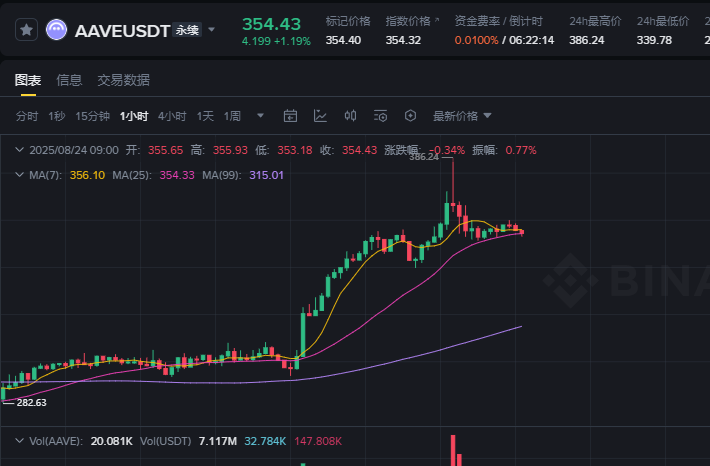
​​AAVE价格从385.99美元骤跌至365美元,单日跌幅超5%​​,市值蒸发近3亿美元。

Aave

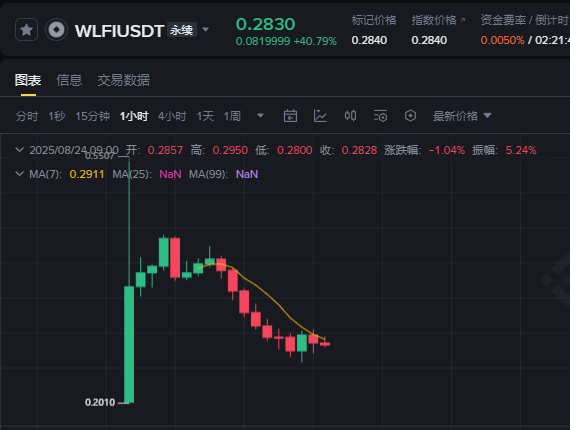
与此同时,币安数据显示,WLFI合约价格由上线0.55美元跌至当前0.28美元,上线最高点已下跌近40%。

这一波动源于吴忌寒引述的2024年10月WLFI社区提案。该提案曾明确约定:Aave DAO将获得WLFI流通代币的​​7%分配权​​及Aave v3上部署WLFI协议收入的​​20%分成​​。Aave创始人Stani Kulechov以“交易的艺术”回应争议,暗示条款效力未失效,但未能平息恐慌。链上数据显示,巨鲸账户在暴跌中集中抛售6826枚AAVE,亏损达29.1万美元,进一步加剧流动性危机。

WLFI的政治烙印:特朗普家族的“影子金融帝国”​​

World Liberty Financial(WLFI)绝非普通DeFi协议,其股权架构揭示了深层的政治资本运作:

  • ​​控制权垄断​​:特朗普家族通过DT Marks DeFi LLC控股WLF 60%股权,享有75%的代币销售收入及60%的营业利润。2025年1月收购后,联合创始人被边缘化,特朗普家族成为实际控制方。
  • ​​代币分配争议​​:白皮书草案显示,WLFI代币70%预留给内部人士(创始人、团队及服务商),仅30%面向公募。消息人士嘲讽这一比例“高得可笑”(LMAO)。
  • ​​金融政治化野心​​:WLFI稳定币USD1被定位为“特朗普支持者的美元”,旨在将政治认同转化为金融资产。其战略合作伙伴ALT5通过纳斯达克上市,将WLFI代币换股,使特朗普家族间接接入传统证券体系。


这种高度中心化的治理结构与DeFi“去信任化”理念背道而驰,也为Aave的合作埋下隐患——当协议收益分配依赖政治实体的单边决策,市场敏感度必然飙升。


Aave的脆弱性:清算危机与机构敞口埋雷​​

Aave的暴跌不仅是谣言冲击,更是其内在风险链的连锁反应:

  1. ​​历史清算创伤​​:2024年8月,以太坊暴跌触发Aave上3亿美元清算,导致AAVE单周下跌9%,抵押品价值缩水暴露风控缺陷。2025年2月,持有10.2万枚AAVE的巨鲸因循环借贷面临清算,浮亏358万美元,预示高杠杆策略在波动市场中的致命性。
  2. ​​机构敞口风险​​:Aave对Ethena的47亿美元敞口被Chaos Labs警告可能引发“流动性紧缩”。USDe持有者将大量代币存入Aave,而发行方Ethena同时借出支持资产,形成再抵押循环,放大系统性风险。
  3. ​​收益依赖症​​:尽管Aave的USDT存款规模突破81亿美元,但借贷利率波动剧烈。2025年7月USDT借贷APY飙升至16.01%,吸引套利资本涌入,进一步扭曲资金池健康度。


DeFi 领域因机构关注而崛起
Aave

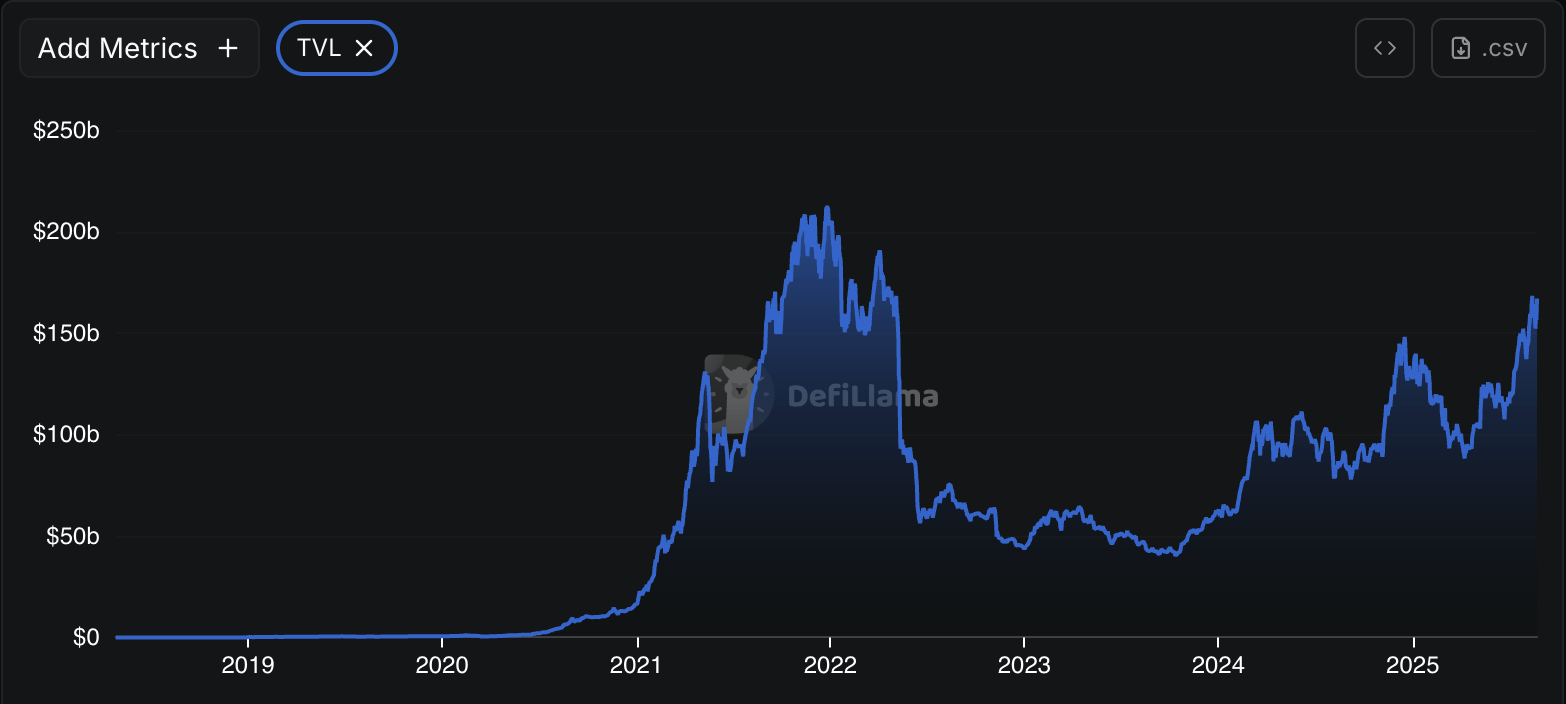
2024 年美国大选后,DeFi 的总锁定价值 (TVL) 大幅上涨。来源:DeFiLlama

根据 DeFiLlama 的数据, DeFi 协议中的总锁定价值 (TVL) 目前超过 1670 亿美元,并且正在接近 2021 年 12 月创下的 2120 亿美元的历史最高水平。

由于预期美国将为加密货币提供更加友好的监管环境,2024 年美国大选结果公布后,DeFi TVL 大幅上涨。

包括银行、资产管理公司、企业和金融服务公司在内的机构投资者越来越多地参与加密货币和 DeFi,塑造了当前市场周期中的许多叙事。

这种参与引发了加密社区关于政府对去中心化协议的监管侵犯以及传统金融机构可能对 DeFi 的占领的争论。
İlgili Okumalar

Top 10 Promising Emerging Hyperliquid Native Protocols to Watch

Title: A Review of 10 Emerging Native Protocols on Hyperliquid Hyperliquid is evolving beyond perpetual contracts into a comprehensive on-chain financial stack. This article highlights 10 key native protocols driving this growth: 1. **Monetrix**: A yield-optimizing protocol akin to Ethena, aggregating funding rates, HLP rewards, maker rebates, and HIP-3 into a single stablecoin yield. 2. **ROSETTA**: An automated stablecoin yield router, allocating USDC across top protocols (e.g., Felix, Aave, HLP) for optimal returns, factoring in gas and slippage. 3. **papertrade.xyz**: A fair-launched perpetuals protocol offering up to 1000x leverage, no funding rates, no slippage, and fully on-chain, oracle-based execution. 4. **alt.fun**: A launchpad where tokens are paired with leveraged perpetual positions (2x-5x), linking token price to trading activity and underlying position performance. 5. **Ventuals**: Pre-IPO perpetual contracts (built on HIP-3) allowing up to 10x leveraged speculation on valuations of private companies like SpaceX and Stripe. 6. **Liminal**: A delta-neutral yield protocol that captures funding rates via automated short positions and uses generated xTokens (xBTC, etc.) as DeFi collateral. 7. **Melt**: Brings tokenized stocks, commodities, and RWAs to Hyperliquid spot markets, enabling 24/7 trading alongside crypto assets. 8. **Chainsight**: An oracle and data infrastructure protocol providing low-latency (<3s) price feeds, volatility indices, and risk metrics for novel derivatives. 9. **rip.xyz**: Tokenized vault strategies on HyperEVM; its flagship rHYPURR offers liquidity and fractional exposure to a Hypurr NFT basket, priced hourly via NAV. 10. **Markets**: A perpetuals exchange (by Kinetiq) for trading stocks, forex, commodities, bonds, and crypto with up to 50x leverage, using USDH collateral and Kaiko oracles. These protocols form the foundational layer for generating real yield, liquidity, and innovative financial products natively on Hyperliquid.

marsbit54 dk önce

Top 10 Promising Emerging Hyperliquid Native Protocols to Watch

marsbit54 dk önce

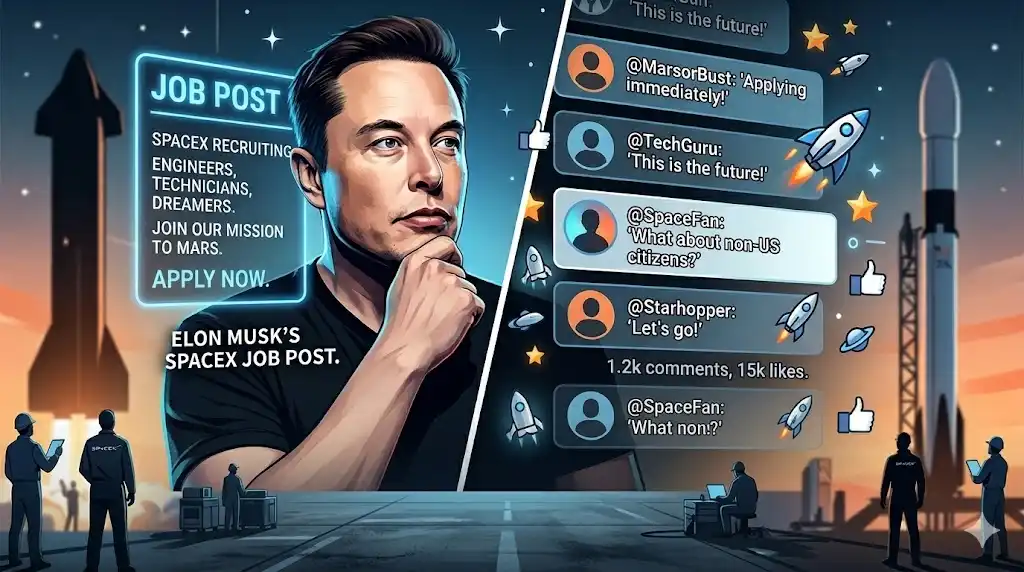
Musk Posted a Recruitment Ad for SpaceX, and After Reading the Comments Section, I Understood

On May 20th, SpaceX filed for a landmark IPO with a $1.75 trillion valuation. Shortly after, Elon Musk posted a recruitment call on X, seeking "world-class engineers and physicists" for SpaceX. The application process was starkly simple: email with three bullet points proving "exceptional ability," with real, complex projects as a plus. Musk promised to review qualifying emails himself. The post garnered millions of views and thousands of replies, revealing a spectrum of responses. Most comments, including a highly-upvoted humorous one listing absurd "skills," merely listed credentials or experiences in a conventional, non-differentiating way. This highlighted a key insight: a traditional resume listing degrees and skills often fails to demonstrate true exceptionalism. Effective self-presentation requires "performance efficiency." A standout reply came from an OpenAI engineering lead, who simply stated "codex." This demonstrated that for those who have built significant, recognized products, the product itself becomes the ultimate resume. The article argues that in the AI era, any tangible, shareable output—a tool, research, or online project—serves as a living, self-evident credential more powerful than a list of attributes. However, a twist emerged when applicants found the provided email address non-functional, leading to speculation that the post might also serve as an IPO publicity stunt, projecting an image of aggressive talent acquisition to investors. Ultimately, the episode served as a microcosm: some participate through performance, others through proof of work, while some question the reality of the stage itself. It underscores the enduring challenge of defining and demonstrating value in an age of abundant, yet often superficial, content.

marsbit1 saat önce

Musk Posted a Recruitment Ad for SpaceX, and After Reading the Comments Section, I Understood

marsbit1 saat önce

Cutting Off OpenAI, Anthropic Acquires the Tool Provider Used by a Quarter of Global Developers

Anthropic has acquired Stainless, a developer tool company that automatically generated official SDKs (Software Development Kits) for AI giants including OpenAI, Anthropic, Meta, and Cloudflare. The deal, reportedly valued at around $300 million, marks a strategic shift for Anthropic as it builds its "AI agent" infrastructure. Stainless acted as a "translator," converting complex API specifications into ready-to-use code libraries for developers. Its tools indirectly reached about a quarter of professional software developers globally. Following the acquisition, Stainless will shut down its public products and its team will join Anthropic to focus on internal platform development, notably for the Claude Platform. Existing SDKs remain with their respective client companies but will no longer receive updates from Stainless. This move is part of Anthropic's broader 18-month strategy to assemble a complete "agent stack." The stack consists of the Claude model at its core, the newly acquired Stainless for standardized API interfaces, and the Model Context Protocol (MCP), an open standard for connecting agents to external tools and data. This contrasts with OpenAI's focus on model generations and consumer-scale compute. Anthropic believes an agent's ultimate utility depends on its ability to connect to external systems. By internalizing the SDK layer and promoting MCP as a connection standard, Anthropic aims to lock in long-term ecosystem advantages and create path dependency, moving beyond the transient lead provided by any single model generation.

marsbit2 saat önce

Cutting Off OpenAI, Anthropic Acquires the Tool Provider Used by a Quarter of Global Developers

marsbit2 saat önce

İşlemler

Spot
Futures
活动图片