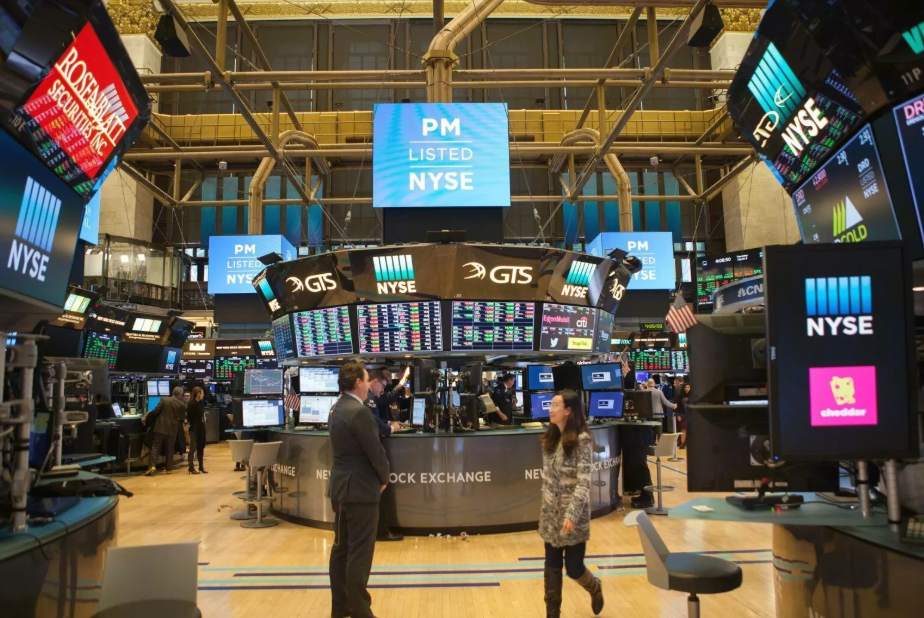
Market Panic Builds Ahead of Potential 'Black Monday,' Crypto Liquidations Spike to $900M

Decrypt2025-04-07 tarihinde yayınlandı2025-04-07 tarihinde güncellendi

Özet

Wall Street futures plunge, Asia sells off, and crypto liquidations surge as markets brace for a volatile start to the week.

U.S. stock futures tumbled Sunday evening, amplifying fears of a disorderly market open and fueling speculation of a potential “Black Monday”-style selloff as sentiment collapsed across equities and crypto.

S&P 500 futures dropped 5.98% by 10 p.m. ET, while Nasdaq 100 futures slid 6.2%. Dow futures were down 5.5%. The moves followed weeks of mounting trade tensions and macro uncertainty, with investors offloading risk across all asset classes.

Jim Cramer, host of CNBC’s Mad Money, referenced the historical parallel in a post Saturday, writing: “Surprised we can't get a short cover rally in case President Trump realizes that a Black Monday may not burnish a legacy.”

Asian markets reflected the deepening risk-off mood, with Japan’s Nikkei 225 falling as much as 8.9% in early trading. In Taiwan, the Taiex index plunged nearly 10% after a two-day holiday, triggering circuit breakers for major stocks including TSMC and Foxconn.

Authorities have also imposed a temporary ban on short-selling to stabilize the market.

In crypto, liquidations have spiked to roughly $892 million, which includes more than $300 million for Bitcoin long and short positions, CoinGlass data shows.

“Not only has Bitcoin broken below $80,000, but gold has also dropped under $3,000,” Marco Lim, managing director at Solowin Holdings and founding partner of MaiCapital, told Decrypt. “If USD/JPY breaks lower, we’re likely to see further unwinding of carry trades.”

In other words, investors may start pulling capital from higher-yielding assets, accelerating risk-off flows across global markets.

Meanwhile, volatility index futures ($VIX) have spiked above their August 2024 peak.

The Kobeissi Letter, a widely followed macro newsletter, said in a Sunday post on X that market action had “lost its orderly nature” and was now entering a fear-driven phase.

“Even the safe havens are getting dumped,” it wrote, as gold futures briefly fell below US$3,000/oz. The firm said sentiment was nearing levels last seen in March 2020.

Retail investors sold $1.5 billion in equities during a 2.5-hour window Friday—the largest intraday outflow on record.

Institutional capital also continued to rotate out of U.S. equities at pace, with March 2025 marking the sharpest exit in years.

The latest AAII sentiment survey showed 61.9% of investors were bearish, the third highest reading on record. Bullish sentiment stood at just 21.8%.

Crypto followed suit. Bitcoin fell below $80,000 on Sunday night, while Ethereum dropped under $1,800. The global crypto market cap fell 10% to $2.57 trillion, according to CoinGecko.

Kobeissi warned the selloff was likely near “capitulation,” but said any bounce would be tactical, not fundamental.

“Even the worst bear markets see relief rallies,” it noted.

Markets now await Monday’s U.S. open and fresh data on inflation due later in the week for the next directional catalyst.


İlgili Okumalar

Truth, Bubbles, and Illusions: Looking Back at the 2025 Crypto Report Card

Based on the article "Truth, Bubbles, and Illusions: A Look Back at the 2025 Crypto Report Card," here is a summary of its main points: The author reflects on their 2025 predictions for the crypto market. They admit to being wrong about Bitcoin's peak in Q4, as the cycle held, and wrong about a memecoin or AI agent supercycle, as retail investors favored traditional assets like gold and AI stocks instead. The AI x Crypto narrative saw mixed results with project development but poor token performance, and NFTs were declared "dead." Key insights from 2025 include: 1. **Bitcoin ETFs acted as a floor, not a ceiling:** Massive selling by long-term holders created a $95B supply overhang, causing BTC to underperform. However, its correlation with traditional risk assets fell, which is bullish long-term. 2. **Airdrops are not dead:** Nearly $4.5B was airdropped in 2025 (e.g., Story Protocol, Berachain). The game has shifted towards requiring more focused, high-conviction farming due to points fatigue and better Sybil detection. 3. **Fee switches set a price floor, not an engine for growth:** Token buybacks from fees establish a bottom price but don't guarantee appreciation, as seen with UNI's price action. The market treats everything as a trade. 4. **Stablecoins gained traction for payments, but "proxy trading" was difficult:** Stablecoins like USDT saw real-world adoption for payments. However, investing in related equities (e.g., Circle's IPO) proved challenging, as gains were often sold into. 5. **DeFi is more centralized than CeFi:** High concentration was observed in lending (Aave), L2s (multisigs), and oracles (Chainlink). Conflicts between equity holders (e.g., "Labs") and token holders raised questions about true ownership and governance. The overarching conclusion is that 2025 marked the "death of HODL culture." Everything became a short-term trade with very brief exit windows, and long-term conviction in tokens vanished.

比推4 dk önce

Truth, Bubbles, and Illusions: Looking Back at the 2025 Crypto Report Card

比推4 dk önce

A Game with No Winners: How to Break the Deadlock in the Altcoin Market?

The altcoin market is currently trapped in a "four-lose dilemma" due to flawed token distribution models. The prevalent low initial circulation strategy, designed to artificially maintain high fully diluted valuations (FDV), has backfired. It creates a scenario where centralized exchanges, token holders, project teams, and venture capitalists all ultimately suffer. Exchanges face community backlash from poor token performance, holders experience price collapse as supply unlocks, projects damage the industry's fundraising capacity, and VCs see their long-term investment channels deteriorate. Market responses, such as the 100% initial circulation of meme coins and the community-centric MetaDAO model, have failed to provide sustainable solutions, often creating new problems like extreme volatility or alienating talented founders. A potential path forward requires rebalancing interests: exchanges should shift from arbitrary lockups to KPI-based unlocks; holders should demand transparency and control over major decisions without micromanaging; projects must only issue tokens with clear utility and product-market fit; and VCs should stop forcing token launches on every project. The next 12 months will be challenging as the market absorbs the last wave of excess supply from the 2021-2022 funding boom. However, this digestion period, coupled with more selective token launches and evolving standards, could lead to a healthier market. The long-term viability of the altcoin model depends on avoiding a "lemon market" where only failing projects issue tokens, while successful ones opt for traditional equity. Despite current hardships, tokens retain unique advantages for driving growth and building loyal communities when implemented correctly.

marsbit35 dk önce

A Game with No Winners: How to Break the Deadlock in the Altcoin Market?

marsbit35 dk önce

İşlemler

Spot
Futures

Popüler Makaleler

Tartışmalar

HTX Topluluğuna hoş geldiniz. Burada, en son platform gelişmeleri hakkında bilgi sahibi olabilir ve profesyonel piyasa görüşlerine erişebilirsiniz. Kullanıcıların BTC (BTC) fiyatı hakkındaki görüşleri aşağıda sunulmaktadır.

活动图片