Bitcoin price recovers – But ONE hurdle keeps BTC bulls on edge

ambcrypto2026-07-10 tarihinde yayınlandı2026-07-10 tarihinde güncellendi

Özet

Bitcoin is showing signs of demand recovery after weeks of selling pressure, with the 30-day cumulative demand rebounding sharply. However, the recovery is uneven: futures market demand has recovered to neutral levels, while spot market demand remains weak, indicating long-term investors are still hesitant. This divergence suggests traders are positioning for price increases before significant capital enters the spot market. Downside fears in the options market have eased compared to previous sell-offs, indicating expectations are shifting from a sharp capitulation to a slower bottoming process. Despite this calmer sentiment, the recovery faces headwinds from long-term holders distributing coins and taking profits. Data shows supply is rotating from experienced holders to newer participants, and until this selling pressure subsides and spot accumulation strengthens, Bitcoin's recovery is likely to remain gradual rather than accelerating into a sustained bullish trend.

Bitcoin [BTC] is beginning to regain demand. This comes after weeks of persistent selling pressure weakened participation across both spot and derivatives markets.

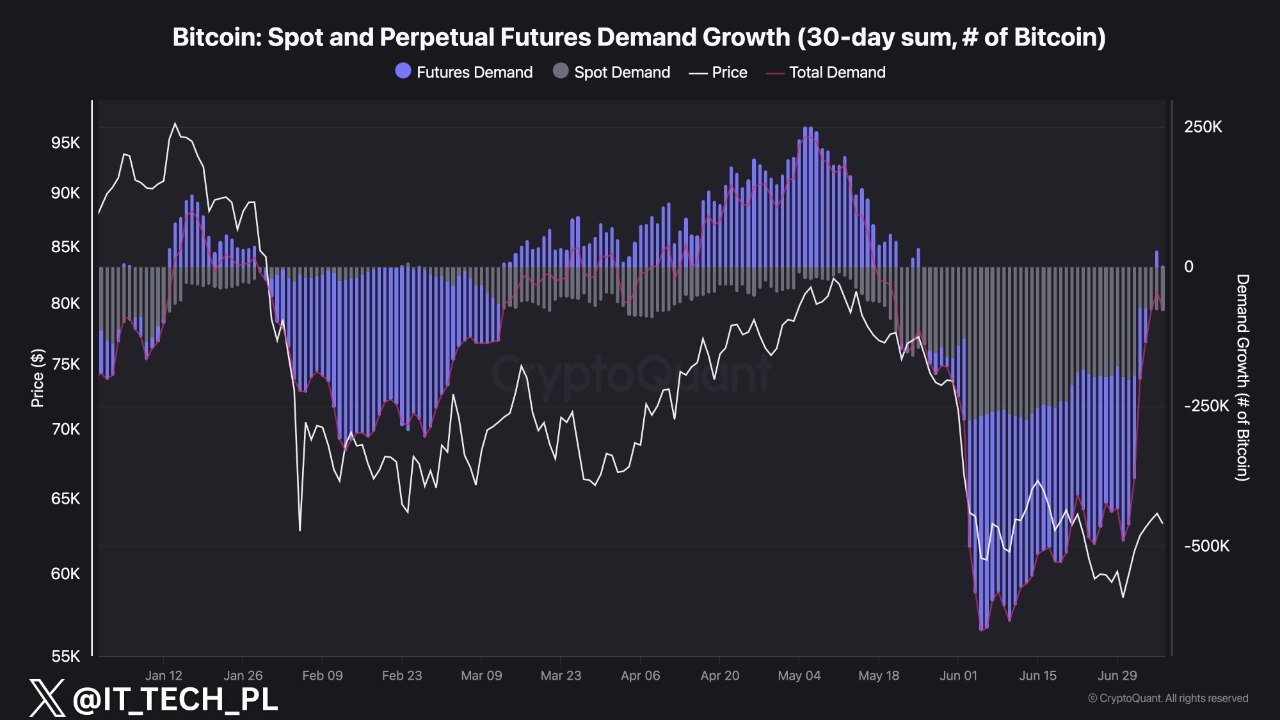
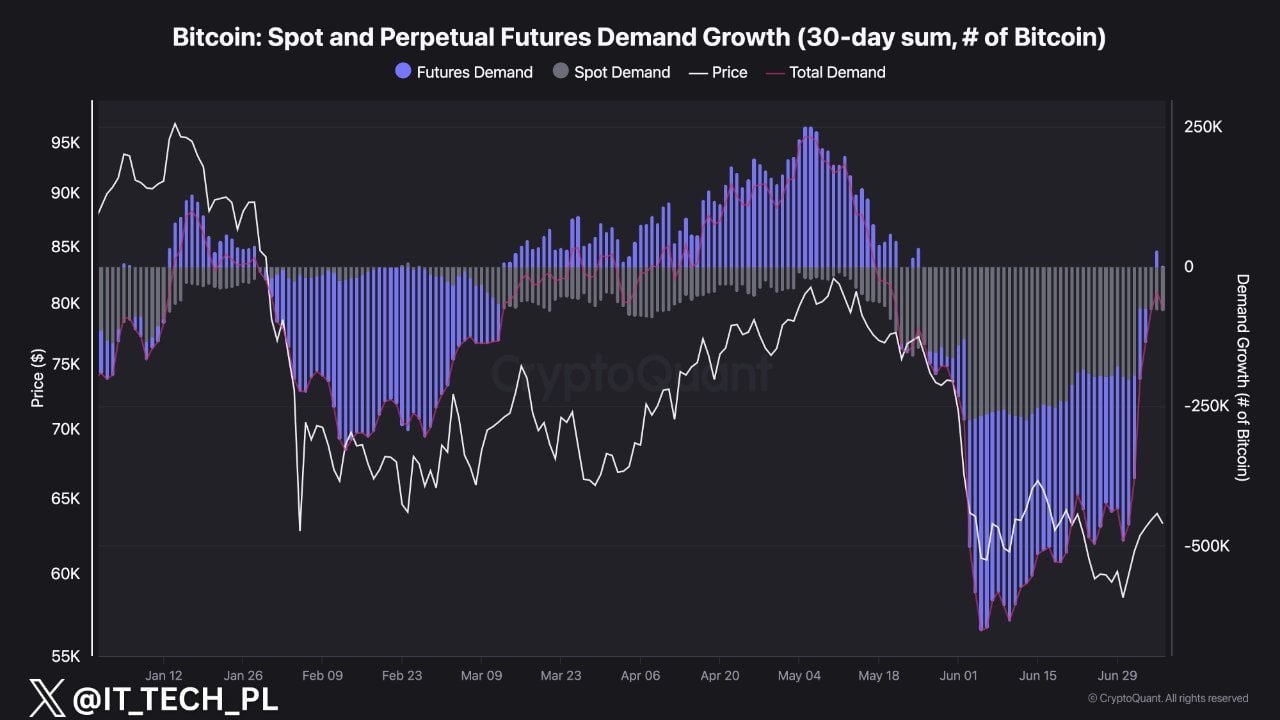
Over the past week, the 30-day cumulative demand rebounded sharply from nearly -500,000 BTC to around -75,000 BTC. This shift signaled that risk appetite is gradually returning.
Source: CryptoQuant

Notably, futures demand recovered from roughly -295,000 BTC to slightly above neutral. Despite that, spot demand remained weak near -78,000 BTC, showing long-term investors are still waiting for stronger confirmation. Moreover, that divergence suggests traders are positioning for higher prices before meaningful capital enters the spot market.

Although sentiment has clearly improved, Bitcoin’s recovery will remain vulnerable until spot accumulation strengthens, reinforcing derivatives-driven momentum with broader investor conviction.

Downside fears begin to ease

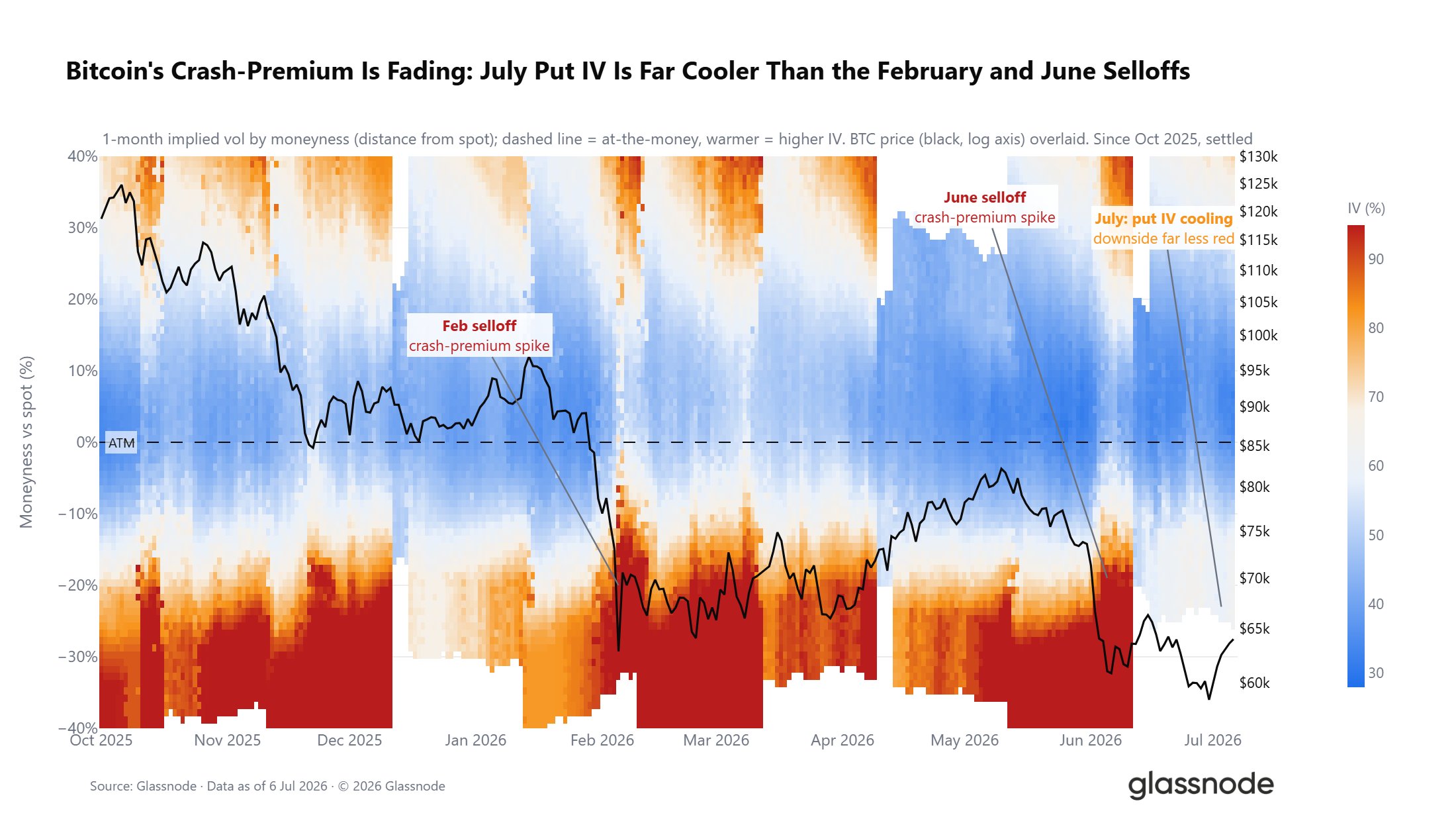
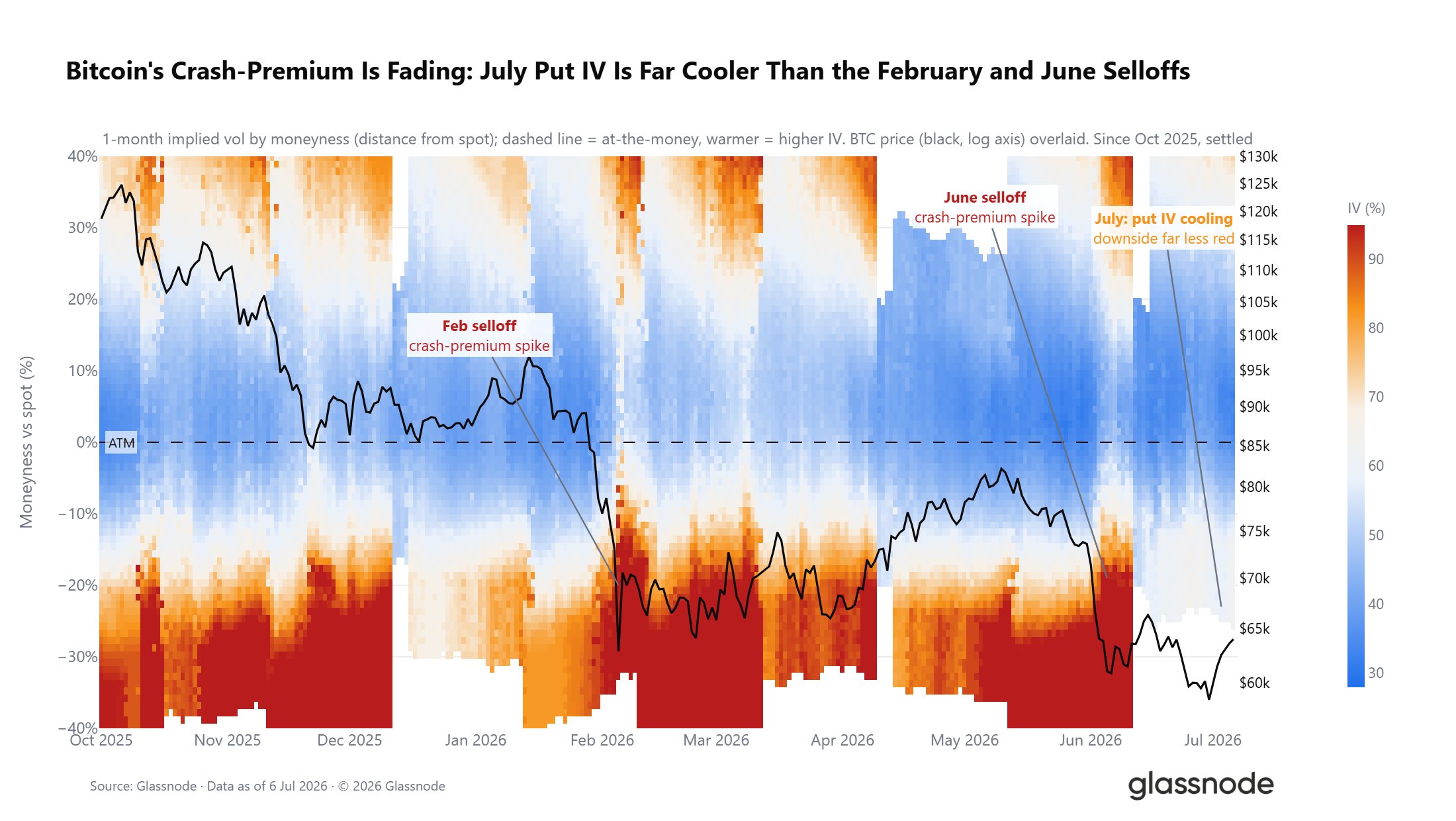
Bitcoin’s options market nuances cautious spot participation, although investors are no longer pricing downside risk as aggressively compared to the previous sell-offs.

During the February and June selloffs, put implied volatility surged as traders rushed to hedge against deeper losses. July presents a different picture. In contrast, in July, as Bitcoin traded between $60,000 and $65,000, downside premiums have cooled noticeably.

Such a divergence indicates that expectations are shifting from another capitulation toward a slower bottoming process.
Source: Glassnode

This shift reflects a market that has already experienced significant declines over several months. As a result, reducing the urgency for costly downside protection. Even so, investors should be cautious since calmer options pricing does not necessarily translate to renewed conviction.

Additionally, ETF participation remains inconsistent while spot accumulation has fallen behind derivative demand. Therefore, until fresh capital flows back into spot markets, improved sentiment could face challenges in generating widespread buying needed for a durable recovery.

Distribution remains a market headwind

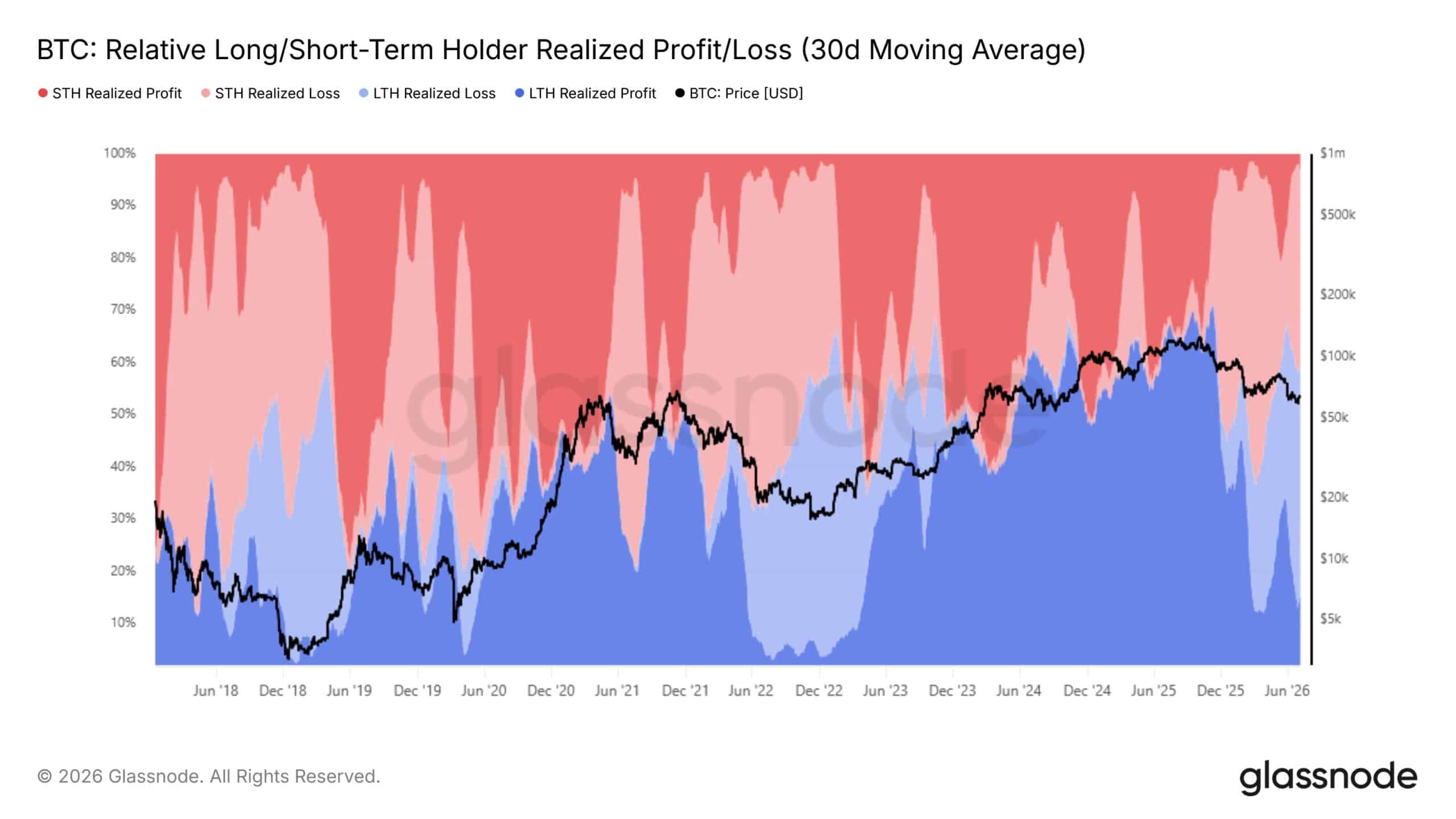
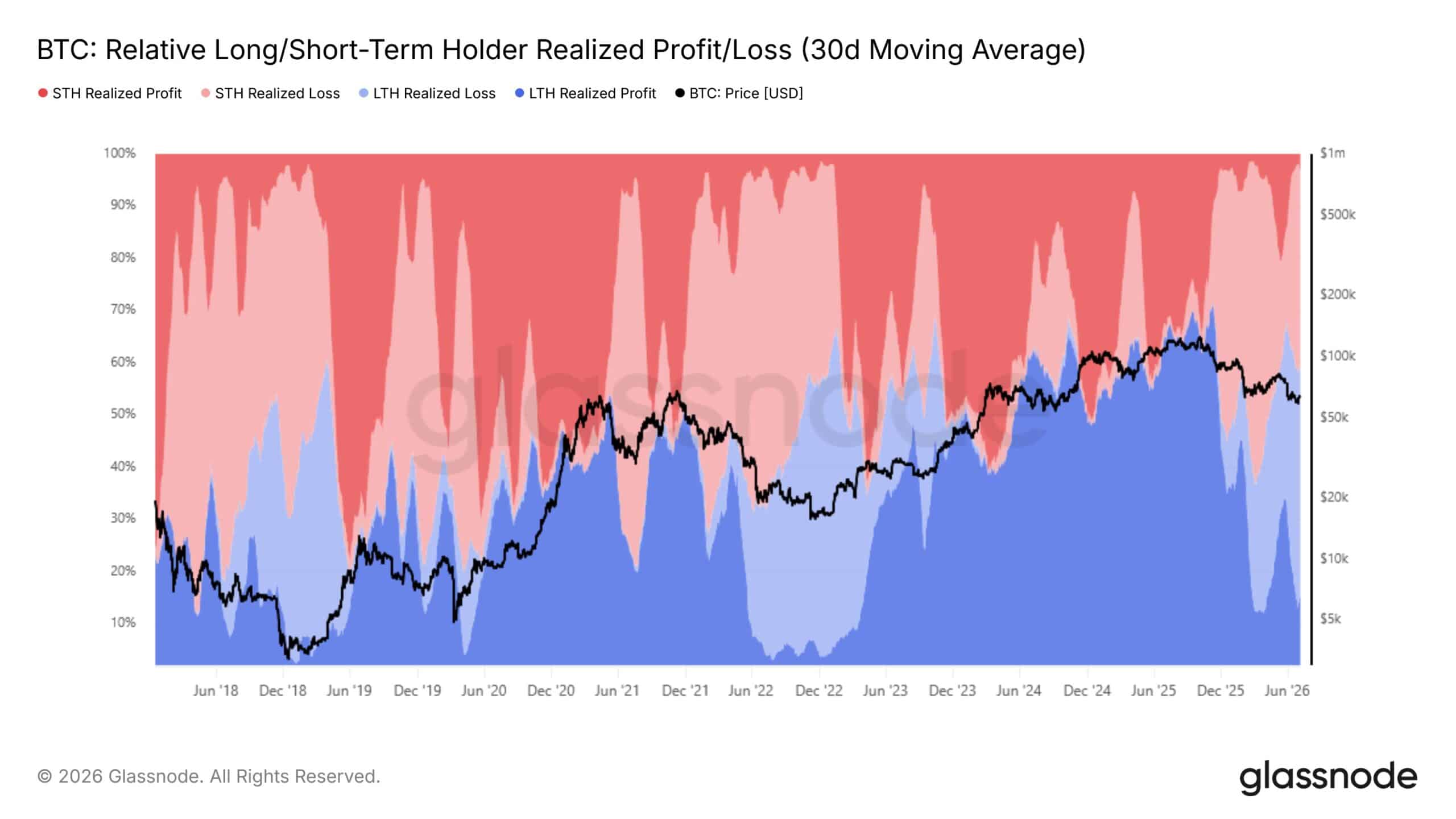
Even as downside fears continue easing, Bitcoin’s recovery is still meeting resistance from holders taking profits accumulated during the previous cycle. Long-term holder realized losses remain elevated on the 30-day Moving Average, although they have moderated from the extreme spikes recorded during the 2022 bear market.
Source: Glassnode

Meanwhile, realized profit and loss data shows short-term holders continue accounting for a larger share of market activity, reflecting uncertainty among newer investors as prices stabilize.

That combination suggests supply is gradually rotating from experienced holders to fresh participants rather than disappearing altogether. Furthermore, an increase in demand for bitcoin is absorbing most of the distribution of supply.

However, until long-term holder selling slows further, Bitcoin’s recovery is likely to remain gradual instead of accelerating into a sustained bullish trend.


Final Summary

  • Bitcoin recovery remains incomplete as spot demand continues trailing derivatives activity.
  • BTC still faces long-term holder selling despite easing downside fears and improving market sentiment.


Trend Kriptolar

İlgili Sorular

QAccording to the article, what is the key factor limiting the robustness of Bitcoin's price recovery?

AThe key limiting factor is the weakness in spot market demand and accumulation. While futures/derivatives demand has recovered, spot demand remains weak, indicating long-term investors are waiting for stronger confirmation. The recovery remains vulnerable until spot accumulation strengthens.

QWhat does the change in Bitcoin's options market in July indicate compared to the selloffs in February and June?

AThe change indicates that downside fears are easing. During the February and June selloffs, put implied volatility surged as traders aggressively hedged against losses. In July, with Bitcoin trading between $60k and $65k, downside premiums have cooled noticeably, suggesting expectations are shifting from another capitulation to a slower bottoming process.

QWhat source of supply is creating a headwind for Bitcoin's price recovery?

AThe headwind comes from long-term holders who are distributing (selling) coins, likely taking profits accumulated during the previous cycle. This selling pressure, along with ongoing uncertainty among newer short-term holders, prevents the recovery from accelerating into a sustained bullish trend.

QWhat specific metric showed a sharp rebound from nearly -500,000 BTC to around -75,000 BTC, signaling returning risk appetite?

AThe 30-day cumulative demand metric showed this sharp rebound. This shift signaled that risk appetite is gradually returning to the Bitcoin market.

QWhy might improved market sentiment alone be insufficient for a durable Bitcoin recovery, according to the article?

AImproved sentiment alone might be insufficient because ETF participation remains inconsistent and, crucially, spot accumulation (actual buying of Bitcoin) has fallen behind derivative demand. Without fresh capital flowing back into the spot markets, the improved sentiment may not generate the widespread buying needed for a durable recovery.

İlgili Okumalar

Stock Trading Has Become 'Crypto Trading', Welcome Back to the Native Home

"Stock Trading Becomes 'Coin Trading': A Market's Bizarre Reversal" The global stock market, particularly in tech sectors, is undergoing a radical transformation, increasingly mirroring the volatile, narrative-driven mechanics of the cryptocurrency world. This shift was starkly illustrated by the dramatic crash of South Korea's KOSPI index in July 2026, where leveraged ETFs tied to stocks like SK Hynix triggered massive, rapid liquidations, devastating hundreds of thousands of retail investors, many of them young. This "crypto-fication" of equities began as disillusioned cryptocurrency traders migrated to stock markets, bringing with them their speculative playbook: chasing high-beta narratives like AI and semiconductor cycles, relying on social media for investment cues, and employing heavy leverage. Ironically, while these traders sought the perceived safety of stocks with fundamentals, their methods turned parts of the equity market—especially in Korea, the US, and Japan—into arenas of extreme speculation. Stocks like SK Hynix experienced price collapses ("halving") in just over a month, a pace even faster than Bitcoin's historical crashes. The core of this change is the primacy of narrative over traditional valuation. Complex company analysis is reduced to viral slogans about AI's infinite demand, driving concentrated inflows into thematic sectors. This is amplified by leverage, particularly through risky single-stock leveraged ETFs, which create vicious cycles of forced selling during downturns. Meanwhile, social media algorithms promote stories of overnight riches, drawing in inexperienced investors. In a paradoxical twist, Bitcoin, through institutional adoption and ETFs, is becoming relatively more stable, with its volatility now sometimes lower than major tech stocks. The market has reached an absurd crossover: stocks are acting like speculative crypto assets, while crypto strives for the legitimacy of traditional finance. The article concludes that this represents a "degeneration" of market rationality, where trading a story's heat has supplanted investing in future profits, leaving a trail of financial wreckage in its wake.

marsbit7 dk önce

Stock Trading Has Become 'Crypto Trading', Welcome Back to the Native Home

marsbit7 dk önce

Santander Bank Announces It Holds a $4.3 Million Position in U.S. Spot Bitcoin ETFs

Spanish banking giant Banco Santander disclosed in regulatory filings that it holds approximately $4.3 million in US spot Bitcoin ETFs. While this amount is small relative to the bank's over $1 trillion in assets under management, it signifies a growing trend of traditional financial institutions increasing Bitcoin exposure through regulated channels. Santander, scoring around 35% on a 2026 Bitcoin Adoption Index for banks, is categorized at a "medium level" of integration, similar to Société Générale but behind more crypto-focused firms. The bank's interest in cryptocurrencies is not new; CEO Ana Botín has discussed Bitcoin-related products since 2021. Santander has been developing crypto custody and digital asset services across Europe for years, with its digital arm, Openbank, beginning to offer crypto trading in Germany in September 2025, with plans to expand to Spain. This investment comes as institutional crypto adoption accelerates in Europe. Santander is actively involved in crypto custody initiatives across the continent and appears to be positioning itself to strengthen its role in the sector, especially as regulations like MiCA become clearer. The industry is watching whether the bank's medium integration level reflects caution or structural limitations, as banks with higher adoption may gain an edge in attracting crypto-interested wealthy clients.

cryptonews.ru13 dk önce

Santander Bank Announces It Holds a $4.3 Million Position in U.S. Spot Bitcoin ETFs

cryptonews.ru13 dk önce

İşlemler

Spot

Popüler Makaleler

EDGE Nasıl Satın Alınır

HTX.com’a hoş geldiniz! edgeX (EDGE) satın alma işlemlerini basit ve kullanışlı bir hâle getirdik. Adım adım açıkladığımız rehberimizi takip ederek kripto yolculuğunuza başlayın. 1. Adım: HTX Hesabınızı OluşturunHTX'te ücretsiz bir hesap açmak için e-posta adresinizi veya telefon numaranızı kullanın. Sorunsuzca kaydolun ve tüm özelliklerin kilidini açın. Hesabımı Aç2. Adım: Kripto Satın Al Bölümüne Gidin ve Ödeme Yönteminizi SeçinKredi/Banka Kartı: Visa veya Mastercard'ınızı kullanarak anında edgeX (EDGE) satın alın.Bakiye: Sorunsuz bir şekilde işlem yapmak için HTX hesap bakiyenizdeki fonları kullanın.Üçüncü Taraflar: Kullanımı kolaylaştırmak için Google Pay ve Apple Pay gibi popüler ödeme yöntemlerini ekledik.P2P: HTX'teki diğer kullanıcılarla doğrudan işlem yapın.Borsa Dışı (OTC): Yatırımcılar için kişiye özel hizmetler ve rekabetçi döviz kurları sunuyoruz.3. Adım: edgeX (EDGE) Varlıklarınızı SaklayınedgeX (EDGE) satın aldıktan sonra HTX hesabınızda saklayın. Alternatif olarak, blok zinciri transferi yoluyla başka bir yere gönderebilir veya diğer kripto para birimlerini takas etmek için kullanabilirsiniz.4. Adım: edgeX (EDGE) Varlıklarınızla İşlem YapınHTX'in spot piyasasında edgeX (EDGE) ile kolayca işlemler yapın.Hesabınıza erişin, işlem çiftinizi seçin, işlemlerinizi gerçekleştirin ve gerçek zamanlı olarak izleyin. Hem yeni başlayanlar hem de deneyimli yatırımcılar için kullanıcı dostu bir deneyim sunuyoruz.

486 Toplam GörüntülenmeYayınlanma 2026.03.31Güncellenme 2026.06.02

EDGE Nasıl Satın Alınır

Tartışmalar

HTX Topluluğuna hoş geldiniz. Burada, en son platform gelişmeleri hakkında bilgi sahibi olabilir ve profesyonel piyasa görüşlerine erişebilirsiniz. Kullanıcıların EDGE (EDGE) fiyatı hakkındaki görüşleri aşağıda sunulmaktadır.

活动图片