SushiSwap: $40 Million Restructuring Proposal Sparks Community Outrage

cryptodailyPublished on 2024-04-09Last updated on 2024-04-10

Table of Contents

SushiSwap: $40 Million Restructuring Proposal Sparks Community Outrage

SushiSwap has voted on the so-called "Labs model" aimed at enhancing development speed and efficiency. Voting on the proposal, which began on April 3, concluded today with more than 62% voting "Yay" for restructuring SushiSwap's DAO and treasury.

However, the proposal unveiled on March 26 by the SushiSwap team has ignited a fierce debate within the community, flagging issues such as lack of transparency, power centralization, and unfair allocation of project resources. Crucially, the ability of the 'ruling party' to hold such an outsized share of the vote raised serious concerns about the viability of decentralization voting.

Sushi Labs vs Sushi DAO

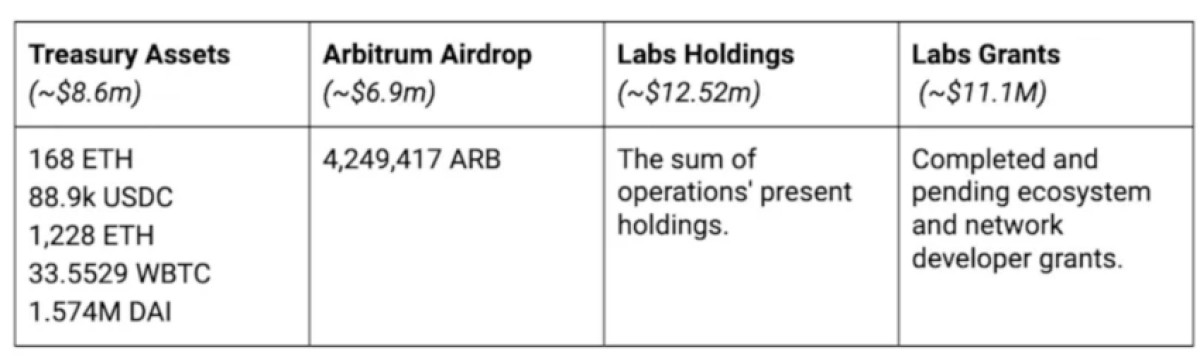
The proposal suggests creating "Sushi Labs" as a new entity with significant autonomy over project development and daily operations. This separate body would be granted a hefty financial package – a whopping 25 million SUSHI tokens, valued at roughly $38.5 million based on current market prices. Sushi Labs would receive a treasure trove of assets from the Sushi DAO treasury:

“We request that Sushi DAO award a grant of 25 million Sushi tokens to Sushi Labs, including assets from the Arbitrum airdrop, business development, and partner grants, Kanpai 2.0, Sushi 2.0, rewards, stablecoins, and ‘Sushi House’each address holdsfunds."
SushiSwap: $40 Million Restructuring Proposal Sparks Community Outrage
Deployment of Treasury Assets for Sushi Labs - source: SushiSwap

Titled "Evolving Sushi - Burū no Shinka [Signal]", the full text outlined a significant restructuring of the decentralized exchange (DEX)'s decentralized autonomous organization (DAO) and treasury.

This is not SushiSwap's first foray into utilizing treasury funds for ecosystem growth. In February 2023, the DEX launched Sushi Studios, a decentralized incubator that provides resources like funding and technical expertise to external developers and independently-funded projects. The DEX said the new platform aims to foster innovation without directly tapping into the DAO treasury. SushiSwap has not released any information on Sushi Studios since the launch. The community discussion thread was archived on March 6. It is uncertain whether the Sushi Studios framework is even still active.

SushiSwap's meteoric rise in August 2020 was almost immediately followed by controversy. The project's anonymous founder and former CEO, Chef Nomi, attempted to abruptly withdraw a large amount of SUSHI tokens, sparking fears of a "rug pull" and leading to a loss of community trust. Though Chef Nomi ultimately returned the funds, the incident eroded trust within the SushiSwap community from the get-go and cast a long shadow over the project's leadership and commitment to transparency.

Community members worry about Sushi Labs' potential power grab and argue that such a structure directly contradicts SushiSwap's core principle of decentralization. An opponent, identified as sushicitizens.eth, pledged a significant amount of SUSHI tokens (4.4 million or around $8 million at the time) against the proposal. Other members pointed out that the DEX neglected to announce the proposal on social media upon release.

The DAO Voting

The proposal utilized a Snapshot vote, a common method used in decentralized governance to determine voting power based on a specific point in time.

💡
Snapshot is a voting platform that allows DAOs and DeFi protocols to cast their votes without gas fees. Instead of voting by 'calling' on-chain smart contracts, in Snapshot users only need to connect their wallet to Snapshot's website and it will allow a vote to be cast on any open proposals on the site.

In the case of SushiSwap's proposal, a snapshot was taken to capture the SUSHI token holdings of all wallet addresses at a predefined time. The number of SUSHI tokens each address holds determines their voting power in the proposal.

The main issue is that the SushiSwap governance team (sushigov.eth) was top of the voting board, with 5.5 million SUSHI tokens cast in favor of the proposal. The ability to wield a large block of votes (about 73% for SushiSwap) swayed the vote and contradicted the DEX's ethos: decentralization.

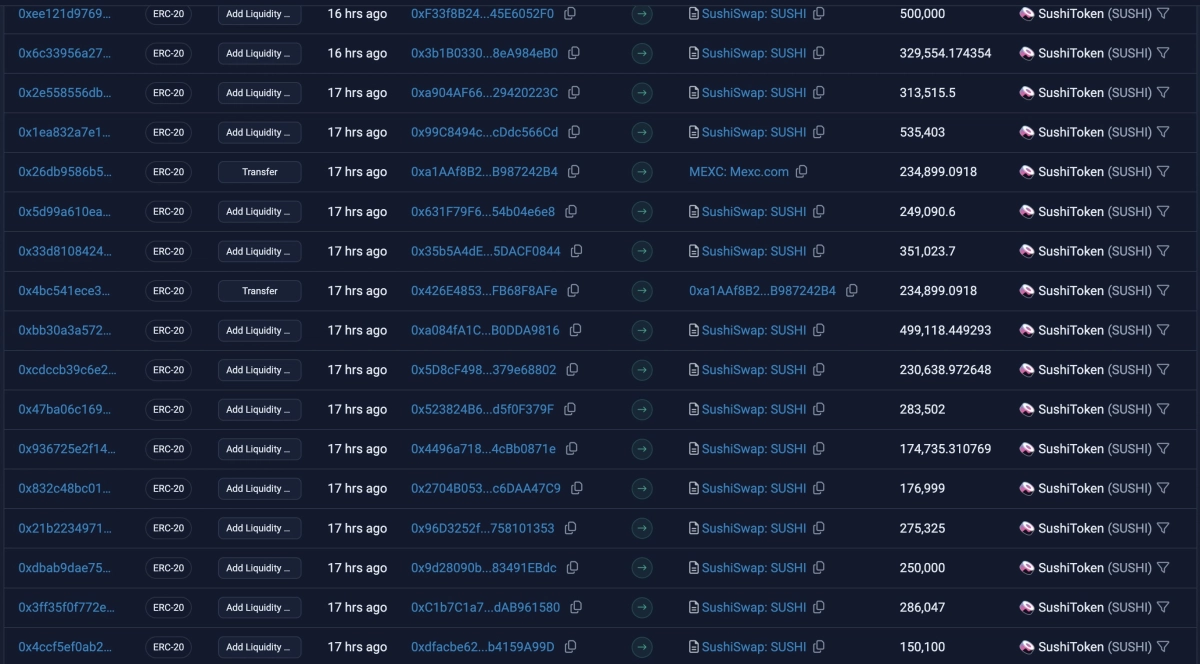
On April 3, a vocal opponent to the proposal, Naïm Boubziz, noted on X that suspicious transactions could be seen in the lead-up to the Snapshot vote. He pointed to instances where new wallets seemingly added liquidity to SUSHI pools just before the Snapshot date, potentially inflating their voting power. These same wallets withdrew liquidity shortly after the snapshot.
SushiSwap: $40 Million Restructuring Proposal Sparks Community Outrage
Transactions preceding the Snapshot vote - source: twitter.com

Community members also pointed out that 4 million SUSHI tokens, representing a substantial portion of the 5.5 million currently supporting the proposal, originated from the DEX's multisig wallet. This concentration of voting power raises questions about SushiSwap's transparency and potential conflicts of interest.

#Sushsiwap : Lol .

Sushiswap voted for themselves with the Ops multisig wallet.

Does this seem clearer to you now? https://t.co/NHtOQOXtt9 pic.twitter.com/OlDPSJ0BfN

— Naïm Boubziz (@BrutalTrade) April 8, 2024

Boubziz's accusations of potential manipulation surrounding the Snapshot vote have significantly escalated tensions within the SushiSwap community. While the exact intent behind the observed liquidity activity remains unclear without a formal investigation, these allegations raise serious questions about the fairness and integrity of the entire voting process.

In an April 8 post, the Sushi's CEO, also known as "Head Chef," confirmed that he had asked the Sushi team to vote using the OPs multisig wallet "due to the threat of a hostile takeover." Grey said that "Humpy," a SUSHI whale, has been pushing for "an extortive governance attack attempt" for almost half a year.

While Jared Grey cites the potential threat of a hostile takeover by a community member to justify the Sushi team's vote using the multisig wallet, this action raises a critical question: Doesn't this undermine the very foundation of a DAO?

DAOs are built on the principle of distributed power and community-driven decision-making. By centralizing a significant voting block in the hands of the Sushi team, Grey's decisions contradict the ethos of decentralization that SushiSwap claims to uphold. Overall, this incident highlights the ongoing tension between ensuring decentralized governance and safeguarding against potential attacks on projects through their DAOs.

Disclaimer: This article is provided for informational purposes only. It is not offered or intended to be used as legal, tax, investment, financial, or other advice.

Read on Observers Investment Disclaimer

Trending Cryptos

Related Reads

UNI Doubles in Two Months Against the Trend: A 5-Year-Overdue Value Realization

Amidst a generally stagnant crypto market in June and July, UNI, the governance token of Uniswap, saw a significant surge, nearly doubling in price from around $2.3 to $4.6. This rally represents a delayed but significant value reassessment, triggered by the practical implementation of its long-debated "fee switch" mechanism. The key turning point was the on-chain execution of the UNIfication proposal in December 2025. It activated a protocol fee on select pools, directed Unichain sequencer revenue (net of costs) to a communal treasury, executed a one-time burn of 100 million UNI, and established a system where all protocol revenue flows into a "TokenJar" contract. This treasury has a single exit: purchasing and permanently burning UNI via a "Firepit" contract. Initially, the market reacted tepidly as the generated revenue and corresponding burn rate were modest. The narrative shifted dramatically in July 2025 with two major developments. First, the launch of Robinhood Chain, tailored for tokenized stocks, rapidly became a primary source of volume and fees for Uniswap, at one point contributing nearly half of its weekly fees. Second, governance votes successfully expanded the fee mechanism to v4 pools and initiated a temperature check for fees on Robinhood Chain. The activation of v4 fees caused the protocol's daily revenue earmarked for UNI burns to nearly triple. The core of UNI's recent price action is the transition from a pure governance token to a cash-flow asset with a permanent, protocol-funded buyer. Its effectiveness is amplified by UNI's mature and widely distributed supply, with no major impending unlocks to dilute the impact of the buybacks. The sustainability of this rally now hinges on whether the transaction volume, particularly on Robinhood Chain, persists after its initial gas subsidies expire, determining if this is a genuine value realization or a subsidy-fueled spike.

marsbit1h ago

UNI Doubles in Two Months Against the Trend: A 5-Year-Overdue Value Realization

marsbit1h ago

Breaking: Google Earth Urgently Pulls Back Nano Banana 2 Image Generation Feature!

Google Earth's newly launched "Create image" feature, powered by the Nano Banana 2 AI image generation model, was abruptly withdrawn shortly after its release due to being "played" by users. The feature allowed users to generate and overlay AI-created visuals directly onto real-world satellite and 3D maps in Google Earth. The tool enabled creative applications like historical recreations (e.g., visualizing ancient Pompeii), generating informational graphics for landmarks, and envisioning architectural projects or futuristic cityscapes on real terrain. It operated under "geospatial grounding," meaning the AI respected the underlying geography, topography, and perspective of the chosen map view. The model also integrated with Gemini to retrieve relevant factual information. However, upon release, users quickly tested its limits. A prominent example involved reimagining Philadelphia's historic Independence Hall as a post-apocalyptic ruin overrun by "happy" zombies, evil clowns, and giant alien mechs. This highlighted both the feature's playful potential and its risks regarding the generation of inappropriate or misleading content on realistic maps, leading to its swift temporary removal. Google stated it would re-release the feature after implementing "enhanced guardrails." Analysts note this move strategically leverages Google's vast proprietary geospatial data, positioning its AI not just for artistic generation but for spatially accurate world visualization—a unique advantage in the competitive AI image generation landscape.

marsbit2h ago

Breaking: Google Earth Urgently Pulls Back Nano Banana 2 Image Generation Feature!

marsbit2h ago

Altman Admits: Overestimated AI Snatching Jobs! Huang Renxun: The Unemployment Narrative Is Completely Backwards

Sam Altman has revised his earlier predictions about AI rapidly replacing jobs, admitting he overestimated the speed at which AI would eliminate entry-level white-collar roles. Speaking on the "Invest Like the Best" podcast, he stated that people do not truly want an AI CEO, as accountability and human connection remain critical. He found that individuals prefer interacting with people who can be held responsible for decisions. Similarly, NVIDIA's Jensen Huang argued that the narrative of AI destroying jobs is misguided. He distinguishes between tasks and jobs, noting that while AI can automate specific tasks, entire jobs—encompassing communication, judgment, coordination, and accountability—are not eliminated. He cited examples like radiologists and software engineers, where demand for these roles has increased as AI handles repetitive tasks, allowing for business expansion and the creation of more positions. Data from a University of Maryland and LinkUp study supports this, showing that U.S. job postings for new graduates have actually risen, countering the fear of vanishing entry-level roles. However, a significant shift is occurring: the traditional entry-level tasks that help newcomers gain experience are being automated, making initial career access more challenging. The key insight is that as AI takes over standardized tasks, the enduring value of human work shifts toward areas of responsibility, trust-building, and final decision-making—aspects that AI cannot replicate. The real "moat" for professionals lies in these irreplaceable human elements.

marsbit2h ago

Altman Admits: Overestimated AI Snatching Jobs! Huang Renxun: The Unemployment Narrative Is Completely Backwards

marsbit2h ago

Trading

Spot

Hot Articles

How to Buy SUSHI

Welcome to HTX.com! We've made purchasing Sushi (SUSHI) simple and convenient. Follow our step-by-step guide to embark on your crypto journey.Step 1: Create Your HTX AccountUse your email or phone number to sign up for a free account on HTX. Experience a hassle-free registration journey and unlock all features.Get My AccountStep 2: Go to Buy Crypto and Choose Your Payment MethodCredit/Debit Card: Use your Visa or Mastercard to buy Sushi (SUSHI) instantly.Balance: Use funds from your HTX account balance to trade seamlessly.Third Parties: We've added popular payment methods such as Google Pay and Apple Pay to enhance convenience.P2P: Trade directly with other users on HTX.Over-the-Counter (OTC): We offer tailor-made services and competitive exchange rates for traders.Step 3: Store Your Sushi (SUSHI)After purchasing your Sushi (SUSHI), store it in your HTX account. Alternatively, you can send it elsewhere via blockchain transfer or use it to trade other cryptocurrencies.Step 4: Trade Sushi (SUSHI)Easily trade Sushi (SUSHI) on HTX's spot market. Simply access your account, select your trading pair, execute your trades, and monitor in real-time. We offer a user-friendly experience for both beginners and seasoned traders.

2.6k Total ViewsPublished 2024.03.29Updated 2026.06.02

How to Buy SUSHI

Discussions

Welcome to the HTX Community. Here, you can stay informed about the latest platform developments and gain access to professional market insights. Users' opinions on the price of SUSHI (SUSHI) are presented below.

活动图片