In a Bull Market, Trade New Coins. Will the 'Hook' Concept Become the Sector That Opens the Bull Market?

marsbitPubblicato 2026-05-09Pubblicato ultima volta 2026-05-09

Introduzione

In a recent surge of interest, the "Hook" concept on Uniswap v4 has captured significant attention from the retail crypto community, driven by projects like $upeg, $sato, and Slonks. Despite being introduced over a year ago, Hooks—customizable plugins for the Uniswap protocol—gained mainstream traction only recently. The article argues that earlier Uniswap efforts to promote Hooks focused too heavily on technical improvements and liquidity provider (LP) solutions, which failed to capture the imagination of everyday users. The breakthrough came with projects that introduced novel, engaging gameplay. $upeg combines trading with generative art, where each integer purchase creates a unique image, adding a layer of artistic creation and complexity to tokenomics. $sato leverages a bonding curve on Ethereum, appealing to the network's "diamond hands" culture with a decentralized, zero-intervention model that turns into a "belief game." Slonks uses an AI model to redraw CryptoPunks, creating a gamified ecosystem where users can burn or merge NFTs to earn $SLOP tokens based on how much the AI "deviated" from the original. These examples highlight Hooks' potential to transform Uniswap from a simple swap and LP platform into a vibrant ecosystem of innovative applications. While technically possible to build such projects independently, the synergy with Uniswap’s established user base and infrastructure provides mutual benefits. For "Hook" to become a true catalyst for a bull market, t...

Author: Cookie

Since late April, the Uniswap v4 hook concept has undoubtedly been the most market-watched 'new' concept.

The reason 'new' is put in quotes is not because Uniswap v4 hook is a brand new thing. In fact, Uniswap v4 launched as early as January 30th last year.

The new hook feature is not being ignored or unused. In terms of official support, there are both the Uniswap Hook Incubator and Uniswap Hook Designer Lab, providing funding, training, and incubation. In terms of adoption, there are projects like Flaunch and Bunni, and the overall TVL and trading volume data for the v4 ecosystem is not bad.

But it wasn't until the recent emergence of projects like $upeg, $sato, and Slonks that hooks sparked widespread discussion among the retail investor community. Based on this phenomenon, I will start with a 'bold statement'—

For a long time, Uniswap's promotion of hooks, at least regarding attracting retail investor attention, has been off-target.

And if this deviation is corrected, 'Hook' has the potential to become the sector that opens the bull market.

What Exactly Is 'Hook'?

Let's explain this in an easy-to-understand way, which will also answer another question—why did 'Hook' only attract retail attention now?

In the past, our general understanding of Uniswap was that we could provide LP (liquidity) and trade (Swap) on it. And indeed, before version v4 (before hooks were introduced), these were Uniswap's main profit points.

Many games support player communities in creating 'mods' or 'plugins' to change the game's mode, attracting a broader player base beyond the original modes offered by the developers. For example, in CS, without installing mods, players can only play the game mode of planting/defusing the C4. But with mods installed, players can compete in races, jumping contests, play football, basketball, or even camouflage themselves as part of the map waiting for others to discover them.

Hooks are like game mods. They allow Uniswap to move beyond just the game between LPs and traders. But for a long time, these plugins haven't been attractive to retail players. They either ported existing玩法from other chains or addressed pain points for LPs and traders.

It's like installing only quality-of-life plugins in CS, such as kill statistics. That does make it better, but it lacks the imagination to attract retail players.

What retail players want are new, original, and imaginative玩法that Uniswap doesn't offer officially but can be realized through hooks. The hook concept itself has been too abstract for retail players in the past.

So how is this 'imagination' embodied in the three trending projects, $upeg, $sato, and Slonks?

The Core of 'Imagination'

The core imagination of $upeg is 'Trading as Artistic Creation and Creating Supply Confusion'. First, its image creation concept is complete. It uses on-chain data as creative input rather than simply copying the artistic inspiration of existing NFT series, turning every integer purchase into a new creation. Second, more small, fragmented transactions make it harder to generate images. This makes it not just a simple transformation between image and token forms, nor solely 'to give images better liquidity by existing as tokens'. Instead, it shifts everyone's focus to a 'prediction of supply form'.

If $upeg exists on DEXs, CEXs, and NFT marketplaces, being both a token and an image, what impact will different liquidity sources and trading methods (spot, futures, LP, or buying pictures) have on its supply form?

This is a shift in attention perspective that previous image-token projects over the years never achieved.

Now look at $sato. Its core imagination is not 'using Uniswap v4 hook to make a bonding curve'. Instead, it precisely grasps why making a bonding curve on the Ethereum mainnet can attract people.

The points it gets right are:

Decentralization. This isn't another 'platform'; it's just a contract bound by code.

Massive internal market. Graduation requires a market cap of $100 million. Doing this on any chain other than Ethereum mainnet would seem like a fantasy. But not on Ethereum mainnet because the perception of this chain is 'old money' and 'diamond hands'. This perception deepens as the curve progresses.

Zero intervention. Upon curve completion and token graduation, the contract self-destructs. Subsequent actions like forming pools are left to the community.

Bonding curves aren't new, but $sato presents the one most fitting for Ethereum mainnet's characteristics, shifting players' attention from the bonding curve to a 'game of belief'.

As for Slonks, although much positive sentiment comes from aspects like 'combining AI concept' or 'developer being co-founder of ETHS', I believe its core appeal to retail players is 'providing a meme-worthy博弈mechanism'.

Slonks' images are generated by redrawing CryptoPunks using an on-chain neural network model. Since AI is drawing them, there will be deviations. The dev believes the chaos reflected in these deviations is art. The more it deviates from the original, the higher the 'slop (low quality) value'.

This value ranges from 0 to 576 because CryptoPunks are 24x24 pixels, with each pixel deviation representing one slop value. Since there are 10,000 Slonks NFTs, the theoretical maximum total slop value is 576 * 10,000 = 5,760,000, which is also the maximum supply of $SLOP.

Holders can either burn an NFT to receive corresponding $SLOP based on the NFT's slop value, merge two Slonks NFTs to get one even less similar Slonks NFT to redeem more $SLOP, or burn $SLOP to get back an AI-redrawn NFT with an unknown slop value.

Essentially, it's a '博弈game of comparing whose strategy and luck are better'.

Why is Hook Needed?

So the question arises. Couldn't $upeg, $sato, or Slonks be implemented without Uniswap v4 hook? Why use the hook layer?

Indeed, even without hooks, they could be implemented as standalone projects. But Uniswap needs these projects to attract the retail investor community, and these projects can develop better by leveraging Uniswap's ecosystem scale and concept.

It's not necessary, but it's a very fitting symbiotic relationship. If $upeg hadn't used hooks from the start, it might not have caught Uniswap team's attention, and this wave of hook narrative hype might not have happened.

As retail investors, although 'Uniswap v4 hook' is a concept easily understood by all, we shouldn't blindly jump on anything with 'hook'. We need to consider more whether a project with the 'hook' concept has fresh and unique玩法and a sufficiently complete narrative. This determines the probability of a 'hook' project receiving Uniswap's attention and support.

Only when players' selection criteria are high enough, Uniswap's determination to use hooks to become the app marketplace on Ethereum is strong enough, and developers' creativity is abundant enough, can we truly say that 'Hook' will become the sector that opens the bull market.


Crypto di tendenza

Domande pertinenti

QWhat is the core reason why the 'Hook' concept only recently gained widespread attention from retail traders, according to the article?

AThe article states that the recent attention is driven by projects like $upeg, $sato, and Slonks, which introduced novel, creative, and imaginative gameplay that directly appeals to retail traders, shifting away from the previous focus on incremental improvements or technical solutions for LPs and traders.

QWhat does the article suggest was the main issue with Uniswap's earlier promotion of the hook concept to retail traders?

AThe article suggests there was a 'deviation' or misalignment. The earlier promotion focused too much on technical, utility-driven plugins that solved pain points (like better statistics), lacking the 'originality and imagination' in gameplay that truly excites and engages the broader retail trader community.

QAccording to the author, what is the 'imaginative core' of the $sato project that made it successful?

AThe author identifies the core as it being a 'belief game' perfectly tailored for Ethereum Mainnet. Its success factors include full decentralization, a massive internal market cap goal ($100M) that fits the 'old money' and 'diamond hands' perception of ETH, and zero intervention from developers upon completion, creating a pure community-driven experiment.

QHow does the article describe the relationship between creative hook projects (like $upeg) and the Uniswap ecosystem?

AThe article describes it as a highly compatible, mutually beneficial relationship. While these projects could exist independently, they benefit from Uniswap's ecosystem scale and the 'hook' narrative. In turn, Uniswap needs such innovative projects to attract retail users and fulfill its vision of becoming a central application marketplace on Ethereum.

QWhat criteria does the article advise retail traders to use when evaluating a new 'hook' concept project?

AThe article advises traders to look beyond the 'hook' label itself. They should critically evaluate whether the project's gameplay is fresh and unique, and if its overall narrative is complete and compelling. These factors determine how much attention and support it might receive from Uniswap and the community, indicating its potential for success.

Letture associate

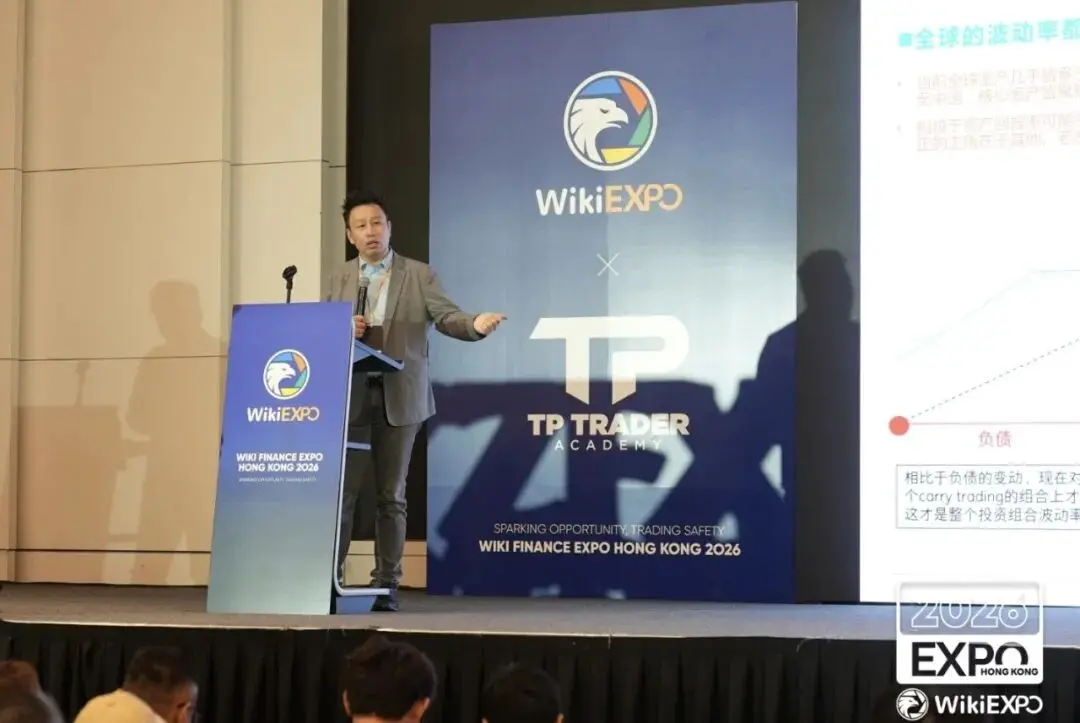
New Fire Group Chief Economist Fu Peng's Latest Speech: Crypto Assets Deeply Bound to Liquidity, Global Assets 'Shrink Circle' with Widening Divergence

The chief economist of Sinovation Group delivered a speech at Wiki Finance EXPO Hong Kong 2026, analyzing the global market through the lens of liquidity. He argues that all major assets, including cryptocurrencies, are fundamentally tied to global liquidity, which is now shifting from an era of extreme post-2008 ease to sustained tightening under new Fed leadership. This marks the end of widespread "asset flooding" and ushers in a "shrinking circle" dynamic: capital is abandoning speculative, low-quality assets and concentrating in a few high-conviction, value-driven core holdings. The only dominant global investment theme is AI, viewed as a 20-25 year productivity cycle. However, a critical inflection point has been reached in Q2, where major tech firms' free cash flow has turned negative. The market narrative has pivoted from rewarding pure capital expenditure growth to demanding proof of future revenue generation and returns. While the AI super-cycle's long-term thesis remains intact, the initial hardware-driven phase (e.g., Nvidia, memory chips) is maturing. The speaker warns of significant volatility risk not from industry fundamentals, but from excessive financial leverage built up in these "certain" assets. He emphasizes that investment strategy must evolve from broad diversification to focused, cyclical allocation within the AI value chain (upstream hardware, midstream, downstream applications), avoiding blind long-term holds on single names. For crypto, this liquidity paradigm shift means the era of speculative "air coin" mania is over; the market is maturing, with institutional participation increasing and volatility stabilizing for core assets like Bitcoin and Ethereum. The core takeaway is that understanding the top-down liquidity framework is essential for navigating the current era of market分化 and focused capital allocation.

链捕手18 min fa

New Fire Group Chief Economist Fu Peng's Latest Speech: Crypto Assets Deeply Bound to Liquidity, Global Assets 'Shrink Circle' with Widening Divergence

链捕手18 min fa

4 Hours, 118 Responses: Liang Wenfeng’s Internal Q&A Addresses Everything

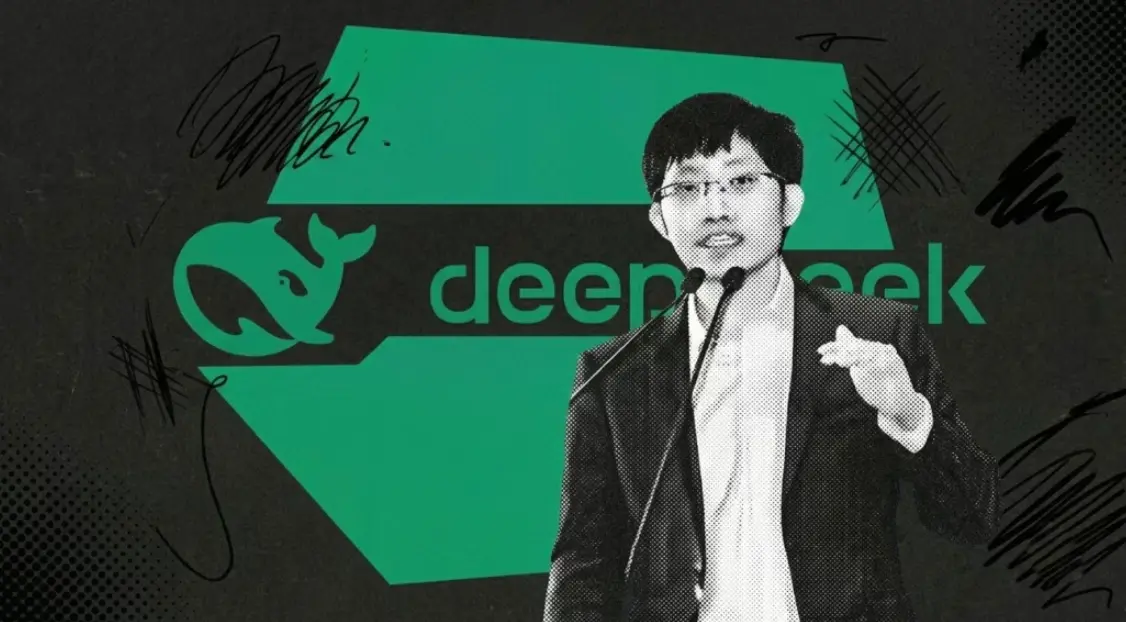
**DeepSeek Founder Liang Wenfeng's Candid Reflections on the Company's Path to AGI** DeepSeek has recently completed its first external funding round, raising over 500 billion RMB (approx. $74B) at a pre-money valuation of 3.675 trillion RMB ($543B). Founder Liang Wenfeng personally invested 200 billion RMB. This marks a strategic shift from its initial "no financing, no IPO, no commercialization" principle. In a recent investor Q&A, Liang articulated DeepSeek's core philosophy and roadmap. The company is driven by a powerful, unwritten vision for beneficial AGI rather than pure commercial maximization. He emphasizes "strategic restraint"—avoiding unnecessary conflicts, prioritizing long-term AGI success over short-term gains, and maintaining an open, cooperative stance even with competitors. Liang outlined the AGI technical roadmap: current focus on Agent capabilities, followed by solving "continual learning," which he sees as the key to unlocking models that can learn and adapt like humans. This could lead to a gradual "singularity" where AI accelerates its own research, and eventually to embodied intelligence. DeepSeek will strictly focus on this "AGI mainline," avoiding distractions like video generation which, while commercially viable, don't directly advance core intelligence. He identifies team stability as the single most critical factor for success, now bolstered by the recent funding. While talent is not a bottleneck, the primary constraint compared to the US is compute resources. Liang is optimistic about domestic AI chips, stating that Nvidia's CUDA moat is eroding and that within a year, the viability of the Chinese chip ecosystem will be proven, with Huawei's offerings being key. The main issue is production capacity. On competition, Liang believes the final differentiators will be cost, time-to-market, and user experience. He foresees Chinese companies playing a major role by offering systematically lower-cost AI services globally. DeepSeek's commercialization strategy involves offering API services at a "reasonable profit" and focusing on coding Agents. He remains committed to open-sourcing even their strongest models, seeing no downside as the barriers to effective deployment remain high. The company operates with a unique dual management structure combining top-down direction with significant bottom-up, unstructured research time for employees. Data quality and post-training are identified as major current challenges, with half of core researchers involved in data labeling efforts. Liang concludes that DeepSeek aims to be one of several trillion-dollar companies in the AI era, achieved through extreme focus on its chosen path.

链捕手25 min fa

4 Hours, 118 Responses: Liang Wenfeng’s Internal Q&A Addresses Everything

链捕手25 min fa

After Three Consecutive Quarters of Decline, Can the Crypto Market Find a Window for Stabilization in Q3?

The cryptocurrency market has just concluded its worst-performing quarter since 2022, with total capitalization dropping 12.6% to $2.1 trillion. All core metrics indicate capital is leaving the sector, not just rotating within it. Bitcoin fell 14.2% and Ethereum dropped 25.4% in Q2, breaking their previous correlation with US tech stocks. A key driver is the reversal in US spot Bitcoin ETF flows, which saw a net outflow of approximately $4.67 billion in Q2, including a record monthly outflow near $4.5 billion in June. While recent data suggests long-term holders are accumulating again, sustained ETF outflows mean continued selling pressure. Market focus is now singularly on the Federal Reserve. The upcoming July FOMC meeting is seen as the most critical event for Q3. A dovish signal could support Bitcoin reclaiming a $68,000-$84,000 range, while a hawkish stance might establish a new trading band around $50,000-$56,000. Additionally, regulatory uncertainty persists, with the progress of the crucial *CLARITY Act* stalling in the Senate, reducing its perceived 2026 passage probability to 40-45%. Despite the broad downturn, a few sectors showed growth. Prediction markets saw nominal volume surge 48.7% year-over-year to $113.8 billion, and tokenized collectibles transaction volume rose 143% quarterly to $1.4 billion. The Real-World Asset (RWA) tokenization sector also continued steady growth, now representing ~$28.1 billion in on-chain value. The market's foundation for an extreme crash appears limited, with Bitcoin price hovering near its 200-week moving average. However, the trading paradigm has shifted from narrative-driven speculation to decisions based on price action, policy developments, and interest rate expectations, making a broad sentiment-driven rally unlikely in the near term.

marsbitIeri 08:36

After Three Consecutive Quarters of Decline, Can the Crypto Market Find a Window for Stabilization in Q3?

marsbitIeri 08:36

Trading

Spot

Articoli Popolari

Come comprare COOKIE

Benvenuto in HTX.com! Abbiamo reso l'acquisto di Cookie DAO (COOKIE) semplice e conveniente. Segui la nostra guida passo passo per intraprendere il tuo viaggio nel mondo delle criptovalute.Step 1: Crea il tuo Account HTXUsa la tua email o numero di telefono per registrarti il tuo account gratuito su HTX. Vivi un'esperienza facile e sblocca tutte le funzionalità,Crea il mio accountStep 2: Vai in Acquista crypto e seleziona il tuo metodo di pagamentoCarta di credito/debito: utilizza la tua Visa o Mastercard per acquistare immediatamente Cookie DAOCOOKIE.Bilancio: Usa i fondi dal bilancio del tuo account HTX per fare trading senza problemi.Terze parti: abbiamo aggiunto metodi di pagamento molto utilizzati come Google Pay e Apple Pay per maggiore comodità.P2P: Fai trading direttamente con altri utenti HTX.Over-the-Counter (OTC): Offriamo servizi su misura e tassi di cambio competitivi per i trader.Step 3: Conserva Cookie DAO (COOKIE)Dopo aver acquistato Cookie DAO (COOKIE), conserva nel tuo account HTX. In alternativa, puoi inviare tramite trasferimento blockchain o scambiare per altre criptovalute.Step 4: Scambia Cookie DAO (COOKIE)Scambia facilmente Cookie DAO (COOKIE) nel mercato spot di HTX. Accedi al tuo account, seleziona la tua coppia di trading, esegui le tue operazioni e monitora in tempo reale. Offriamo un'esperienza user-friendly sia per chi ha appena iniziato che per i trader più esperti.

212 Totale visualizzazioniPubblicato il 2025.07.23Aggiornato il 2026.06.02

Come comprare COOKIE

Discussioni

Benvenuto nella Community HTX. Qui puoi rimanere informato sugli ultimi sviluppi della piattaforma e accedere ad approfondimenti esperti sul mercato. Le opinioni degli utenti sul prezzo di COOKIE COOKIE sono presentate come di seguito.

活动图片