Справочный обменный курс предназначен только для справки и не является фиксированным. Окончательный курс определяется на основе фактической цены исполнения.
Текущая статистика SUI
Реальлная цена SUI Network (SUI) сейчас составляет $0.65 USD и текущая рыночная капитализация составляет $-- USD.
Получайте обновления по SUI/USD в реальном времени на HTX. Оставайтесь в курсе последних данных и тенденций рынка, чтобы принимать разумные торговые решения. HTX – ваш надежный источник точной информации о ценах на криптовалюты.
Основные данные по SUI Network
Объем за 24ч (USD)
$--
Изменение цены сегодня
--
Оборотное предложение (SUI)
4.07B
Зарегистрируйтесь и торгуйте, чтобы выиграть вознаграждения на сумму до 1,500 USDT.Участвовать
Динамика цены SUI
Отслеживайте движение цены SUI Network, просматривая графики за периоды в 1 день, 30 дней, 60 дней, 90 дней, 1 год и за весь период с момента листинга на HTX.Просматривайте еще больше данных о ценах SUI Network
Время
Изменение
Изменение в %
Самая высокая цена
Самая низкая цена
No data
Рыночная информация по SUI
Получайте последнюю информацию о цене SUI Network на HTX: ценовые максимумы и минимумы за 24 часа, исторический максимум (ATH), и ежедневный процент изменения цены.
24ч Мин
$0
24ч Макс
$0
Исторический максимум
$0
Рыночная капитализация
$0.00
Объем за 24ч (USD)
$--
Объем в обращении
--
Что такое SUI?
Sui (или Sui Network) — это первый блокчейн 1 уровня, разработанный с нуля, позволяющий авторам и разработчикам создавать опыт, удовлетворяющий будущим миллиардам пользователей web3. Sui обладает горизонтальной масштабируемостью для поддержки широкого спектра разработок dApp-приложений с непревзойденной скоростью и низкими затратами. Первая в своем роде платформа предоставляет пользователям блокчейн общего назначения с высокой пропускной способностью, мгновенной скоростью расчетов, богатым набором ончейн активов и удобным web3-интерфейсом. Sui — это пошаговое усовершенствование блокчейна, разработанное снизу вверх для удовлетворения потребностей всех, кто занимается криптографией.
Купить SUI на HTX очень просто. Нажмите здесь, чтобы ознакомиться с полным руководством по покупке SUI Network.
Рынки SUI в реальном времени
Обзор цен SUI Network в реальном времени на спотовых рынках HTX. Переключайтесь между спотовым и фьючерсным рынками, чтобы мгновенно сравнивать текущие цены и изменения цен за 24 часа.
Основываясь на исторических показателях SUI Network, наш инструмент прогнозирования предполагает, что цена SUI Network (SUI) может достигнуть -- к -- году.
Прогноз цены SUI за -- год
Наш самый последний прогноз говорит о том, что цена SUI Network (SUI) вырастет до -- к -- году, а изменение цены составит --% и совокупный ROI составит приблизительно --%.
Купите свои первые SUI на HTXРегистрация
Часто задаваемые вопросы о SUI
Какая сегодня цена SUI Network (SUI)?
Текущая цена SUI Network (SUI) составляет $0.65 USD.
Какая рыночная капитализация SUI Network (SUI)?
Текущая рыночная капитализация SUI Network (SUI) составляет $0.00 USD, рассчитанная путем умножения его оборотного предложения на текущую цену.
Каково оборотное предложение SUI Network (SUI)?
Текущее оборотное предложение SUI Network (SUI) составляет -- SUI.
Каким был исторический максимум SUI Network (SUI)?
На 2026-08-18, исторический максимум SUI Network (SUI) составляет $0 USD.
Каков 24-часовой объем торгов SUI Network (SUI)?
24-часовой объем торгов SUI Network (SUI) на HTX составляет -- USD.
Могу ли я купить SUI Network (SUI) на HTX?
Да, HTX предлагает лучшие в отрасли торговые комиссии и высокую ликвидность, обеспечивая бесперебойную и безопасную торговлю SUI Network (SUI).
The Sui blockchain network has announced Tessera, a new infrastructure designed to provide transaction amount privacy for B2B payments and settlements. According to Sui, a major barrier to institutional blockchain adoption is the transparent display of transaction information on traditional blockchains, which deters companies from conducting transactions where competitors could see their prices and volumes.
To address this, Tessera utilizes Seal MPC and confidential data transfer technologies to hide transaction amounts from other market participants. However, the system is not designed to be completely unregulated. Parties involved in a transaction, regulators, and other authorized entities will be able to access transaction information when necessary, aiming to balance commercial confidentiality with regulatory oversight.
This initiative highlights growing efforts to apply blockchain technology beyond cryptocurrency transfers to corporate finance and B2B payment infrastructure, with transaction privacy being a critical component for enterprise adoption.
Sui developer Mysten Labs has introduced a prototype network called Tessera, designed for confidential inter-company settlements on a blockchain. The solution aims to conceal transaction amounts from public view while still allowing counterparties and regulators to access necessary information.
The public nature of transaction values is seen as a major barrier to corporate blockchain adoption. Tessera addresses this by utilizing multi-party computation (Seal MPC) and confidential transfers. In the prototype, a vetted group of companies can settle invoices using a confidential stablecoin, with network access governed by KYC procedures.
The blockchain records the sender, receiver, and timestamp of a payment, but the amount is hidden from external observers. Counterparties can see the full amount of their transactions, and regulators can be granted tailored access. For instance, a prudential regulator could see all operations, a tax authority only a specific participant's activity, and an arbiter only the disputed transaction for the duration of a case.
Network operators maintain consortium management functions, such as onboarding participants or freezing accounts. Tessera supports both one-time transfers and recurring payment channels. The prototype's code is open source.
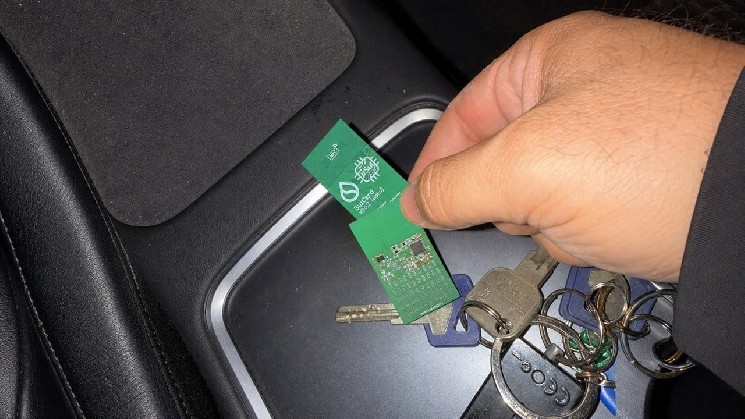
Kostas "Kryptos" Chalkias, co-founder and chief cryptographer at Mysten Labs behind the Sui blockchain, announced he is working on developing affordable, quantum-resistant hardware wallets for around $10. He revealed that over the past year, he rented a specialized facility to mass-produce these quantum-safe wallets. The goal is a keycard costing less than $10 and achieving quantum signature generation via NFC in 1-2 seconds, with Chalkias even considering sponsoring cards for users who cannot afford them.
He directly referenced the recent Coldcard hardware wallet vulnerability as motivation for his project, emphasizing that such a failure would never happen with his solution. The Coldcard incident, involving a firmware flaw that compromised private key generation, led to estimated losses of around 2,055 BTC (~$130 million).
While not a quantum attack, the Coldcard case highlighted the fundamental risk of cryptographic failures in hardware wallets, which Chalkias aims to preempt. His wallet project builds on Sui's broader quantum security roadmap. The Sui protocol plans to integrate two NIST-approved post-quantum signature schemes, one for everyday accounts and another for high-value Move-based vaults. Existing Sui accounts will be able to upgrade to a quantum-safe key derived from their current recovery phrase without requiring a full wallet migration, a flexibility Chalkias cites as a structural advantage over chains needing hard forks for similar upgrades.
Analysts report that activity on the Hashi bridge testnet from Sui has remained high since its launch on July 22. In just three weeks, total deposits exceeded 1.1 million BTC, with withdrawals reaching 165,000. This rapid growth suggests early interest from retail and institutional investors in moving native Bitcoin to the Sui network without converting it into a synthetic token—a model gaining attention after major bridge hacks in recent years.
First introduced by the Sui Foundation in March 2026, Hashi is a decentralized primitive designed to allow Bitcoin ($BTC) to serve as collateral for on-chain lending and borrowing markets. It has progressed from a closed devnet to the current public testnet. Notably, the Bitcoin DeFi (BTCFi) sector has faced challenges in 2026, with total value locked (TVL) in Layer-2 solutions down roughly 74% from 2025 highs. Hashi's approach of keeping BTC on its native chain, rather than "wrapping" it, is a direct response to this market skepticism. The early deposit and withdrawal figures provide Sui with an argument that this model is finding an audience despite the broader downturn.
Unlike traditional wrapped-asset bridges, Hashi does not move Bitcoin out of the Bitcoin network. Users deposit native $BTC, Sui validators confirm the transaction, and the protocol mints hBTC—a representative token usable as programmable collateral. The underlying Bitcoin remains in its own chain. Security is based on a multi-layered architecture featuring a 2-of-2 multisig protected by validators using Multi-Party Computation (MPC), and a "Guardian Layer" that acts as a circuit breaker, vetting large withdrawal requests.
Currently, over 25 organizations are stress-testing the system, including giants like BitGo and Cumberland, as well as SwissBorg, Fluid, and Ledger. Their involvement spans trading, custody infrastructure, and asset management platforms, indicating demand for compliant, non-custodial ways to utilize idle Bitcoin in DeFi. The protocol's revenue model relies on interest rate spreads between depositors and borrowers, rather than inflationary token emissions. If Hashi can capture even a small share of the $1.4 trillion Bitcoin market for on-chain lending, it would represent a significant example of interaction between the Bitcoin base layer and non-Bitcoin DeFi ecosystems.
Sui's Hashi bridge, launched on July 22, has seen over 1.1 million BTC deposited in its first three weeks of testnet activity, with 165,000 BTC withdrawn. This rapid growth suggests early interest from retail and institutional investors in moving native Bitcoin to the Sui network without wrapping it into a synthetic token—a direct response to security concerns following major bridge hacks in recent years.
Announced in March 2026, Hashi is a decentralized primitive designed to let native Bitcoin ($BTC) serve as collateral for on-chain lending and borrowing. Unlike traditional wrapped-asset bridges, Hashi does not move Bitcoin off its native chain. Instead, users deposit BTC, Sui validators confirm the transaction, and the protocol mints a representative hBTC token for use in DeFi, while the original Bitcoin remains secured on the Bitcoin blockchain.
Security is multi-layered, featuring a 2-of-2 multisig safeguarded by validators using Multi-Party Computation (MPC) and a customizable "Guardian Layer" that acts as a circuit breaker for large withdrawal requests. Over 25 institutions, including BitGo, Cumberland, and Ledger, are currently stress-testing the system, indicating demand for compliant, non-custodial ways to use idle Bitcoin in DeFi.
The protocol's revenue model relies on interest rate spreads between lenders and borrowers, rather than inflationary token emissions. If successful, Hashi could become a major link between Bitcoin's $1.4 trillion market and non-Bitcoin DeFi ecosystems.
cryptonews.ru7小时前
Треды
Приветствуем вас в Сообществе HTX. Здесь вы можете быть в курсе последних новостей платформы и получите доступ к профессиональной рыночной аналитике. Мнения пользователей о цене SUI Network (SUI) представлены ниже.