A taxa de câmbio de referência serve apenas para consulta e não está bloqueada. A taxa final será determinada pelo preço de execução real.
Estatísticas em Tempo Real de WELL
O preço ao vivo de Moonwell Artemis (WELL) é $0.0035 USD e a sua capitalização de mercado atual é de $-- USD.
Receba atualizações em tempo real de WELL/USD na HTX. Mantenha-se informado com os dados mais recentes e as tendências do mercado para tomar decisões de trading inteligentes. HTX, a sua fonte confiável de informações precisas sobre preços de criptomoedas.
Estatísticas Principais de Moonwell Artemis
Volume de 24h (USD)
$--
Variação de Preço Hoje
--
Oferta em Circulação (WELL)
50.00M
Registe-se e negoceie para ganhar recompensas no valor de até 1,500 USDT.Participe Agora
Desempenho do Preço de WELL
Acompanhe as variações de preço de Moonwell Artemis com visualizações de gráfico abrangendo 1 dia, 30 dias, 60 dias, 90 dias, 1 ano e o período desde que foi listado na HTX.Ver mais dados sobre os preços de Moonwell Artemis
Horário
Alterar
Variação (%)
Preço mais alto
Preço mais baixo
No data
Informações de Mercado de WELL
Obtenha os detalhes mais recentes do preço de Moonwell Artemis na HTX: alta e baixa em 24 horas, máxima histórica (ATH) e variação percentual diária do preço.
24h Baixo
$0
24h Alto
$0
Máximo histórico
$0
Capitalização de Mercado
$0.00
Volume de 24h (USD)
$--
Oferta Circulante
--
O que é WELL?
Moonwell Artemis é um protocolo DeFi de empréstimos e empréstimos sobrecolateralizados na rede Moonbeam.
É super fácil comprar WELL na HTX. Basta clicar aqui para ver um guia completo sobre como comprar Moonwell Artemis com facilidade.
Mercados em Tempo Real de WELL
Veja os preços em tempo real de Moonwell Artemis nos mercados à vista da HTX. Alterne entre os mercados à vista e de futuros para comparar instantaneamente os preços ao vivo e as variações de preço em 24 horas.
Com base no desempenho histórico de Moonwell Artemis, a nossa ferramenta de previsão estima que o preço de Moonwell Artemis (WELL) poderá atingir -- até --.
Preço Previsto de WELL em --
A nossa previsão mais recente indica que o preço de Moonwell Artemis (WELL) aumentará para -- até --, com uma variação de preço de --% e um ROI acumulado de aproximadamente --%.
Compre o seu primeiro WELL na HTXRegiste-se Agora
Perguntas Frequentes sobre WELL
Qual é o preço de Moonwell Artemis (WELL) hoje?
O preço atual de Moonwell Artemis (WELL) é $0.0035 USD.
Qual é a capitalização de mercado de Moonwell Artemis (WELL)?
A capitalização de mercado atual de Moonwell Artemis (WELL) é de $0.00 USD, calculada multiplicando a sua oferta em circulação pelo seu preço atual.
Qual é a oferta em circulação de Moonwell Artemis (WELL)?
A oferta em circulação atual de Moonwell Artemis (WELL) é de -- WELL.
Qual é a máxima histórica de Moonwell Artemis (WELL)?
Em 2026-08-23, a máxima histórica de Moonwell Artemis (WELL) é de $0 USD.
Qual é o volume de negociação em 24h de Moonwell Artemis (WELL)?
O volume de negociação em 24 horas de Moonwell Artemis (WELL) é de -- USD na HTX.
Posso comprar Moonwell Artemis (WELL) na HTX?
Sim, a HTX oferece taxas de trading líderes do setor e alta liquidez, garantindo uma experiência de compra de Moonwell Artemis (WELL) suave e segura.
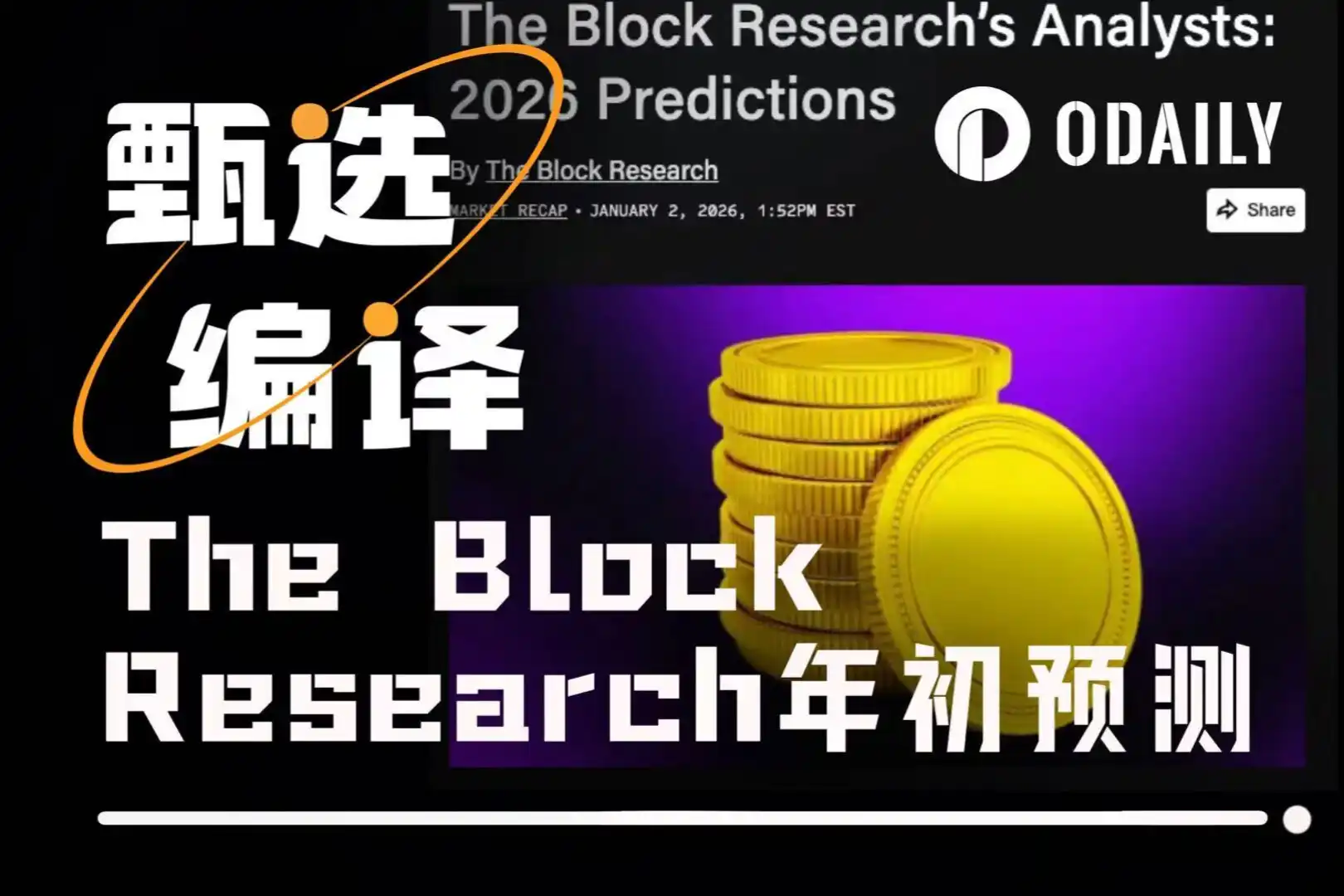
The Block Research's annual prediction report for 2026 presents a mix of bullish and cautious forecasts from its analysts. Key predictions include Bitcoin potentially reaching $140,000 and maintaining over 50% market dominance, while stablecoin market cap is expected to surge, possibly exceeding $500 billion. Notably, several analysts emphasize a shift from token launches to IPOs for crypto companies, with firms like Kraken and Consensys potentially going public. Prediction markets, led by platforms like Polymarket and Kalshi, are anticipated to be among the fastest-growing crypto sectors, with one likely launching its own blockchain. Other highlights include the rise of bank-issued deposit tokens, increased institutional stablecoin adoption for B2B payments, and a continued decline in NFT and memecoin activity. The report also foresees a K-shaped recovery, with quality projects attracting capital while low-quality ones fade.
On January 27, 2026, an attacker executed a well-orchestrated exploit against the PGNLZ token on BNB Smart Chain, resulting in approximately $100k in losses. The attacker initiated a flash loan of 1,059 BTCB from Moolah Protocol, used it as collateral on Venus Protocol to borrow 30 million USDT, and then exchanged 23,337,952 USDT for 982,506 PGNLZ on PancakeSwap. These PGNLZ tokens were intentionally burned (sent to a dead address), drastically reducing the liquidity pool supply.
This manipulation caused the price of PGNLZ to surge from approximately $0.10 to over $5,528 per token. The attacker then invoked a fee-on-transfer function, triggering a built-in burn mechanism (_executeBurnFromLP) that further depleted the pool, leaving only a minuscule amount of PGNLZ and artificially inflating the price to an extreme 40 billion times its original value.
Finally, the attacker drained the liquidity pool, repaid the flash loan, and netted a significant profit. The root cause was identified as a flawed deflationary economic model with insufficient validation during fee processing and LP burns, allowing price manipulation. The incident underscores the importance of rigorous economic model design and multi-audit practices before contract deployment.
No one truly teaches you how to do research. You're often given a desk, a pre-selected problem, and vague instructions to "create something new." Consequently, many people reverse-engineer the job based on visible outputs—papers, posts, announcements—learning only how to *appear* like a researcher rather than how to *become* one. True research capability is built from stacking small, trainable skills, nearly all of which can be developed through deliberate practice.
**Pick Your Own Problem:** Most researchers absorb problems from advisors or trends, lacking the underlying reasoning. Choosing a problem you genuinely care about, as John Schulman advises, leads to original work. Develop "taste" like a muscle: predict experiment outcomes, guess paper results from methods, and track which findings remain important over time.
**Upgrade Your Inputs:** Relying on shared reading lists (arXiv hot lists, filtered group chats) leads to unoriginal conclusions. Undervalued old literature often holds crucial insights (e.g., MoE, LSTM, backpropagation). Richard Sutton's "The Bitter Lesson" or Claude Shannon's 1952 talk on creative thinking are more predictive than lengthy modern surveys. Breadth matters as much as depth: draw from neuroscience, mechanism design, hardware knowledge, and honest statistics. Read papers directly, especially appendices and limitations sections.
**Write Everything Down:** As Paul Graham noted, writing exposes flaws in seemingly mature ideas. Writing is the cheapest defense against self-deception. Following Feynman's principle, Darwin programmatically wrote down facts contradicting his theory to combat memory bias. Maintain a detailed log of hypotheses, setups, predictions, results, and updated understandings. Reviewing past logs fosters essential humility.
A South Korean developer, remy_notes, was shocked to receive two invoices from Anthropic totaling over $17.8 million within 24 hours, despite being on a free plan with zero API usage and no linked credit card. His bank blocked the attempted charges. This case highlights a broader issue of billing errors in the AI industry. Auditing firm Vaudit, reviewing millions in AI bills, found significant erroneous overcharges, often related to issues like clients being billed for newer, pricier models instead of older ones they used, or being charged for failed requests and retry loops. While Anthropic claims overcharging is not widespread, major providers have refunded a large portion of disputed amounts. The incident adds to growing distrust, following previous billing controversies like the "HERMES.md bug" and a class-action lawsuit over opaque usage calculations for Anthropic's subscription plans. The complexity of AI pricing models creates a "black box" for users, leading to a new competitive frontier: billing transparency. As users turn to audits and lawsuits, clear and fair pricing is becoming a crucial part of the product experience.
The article discusses why Bitcoin's price remained stable despite a recent $100 million hack targeting individual cold wallets, citing insights from experts on "The Wolf of All Streets" channel. Analysts attribute this resilience to significant institutional shifts in the crypto market. Key points include:
1. **Market Maturation:** The crypto market has transitioned from being dominated by individual retail holders to institutional investors. Most new capital now enters via regulated channels like spot ETFs and custodial services (e.g., Coinbase, Anchorage), making vulnerabilities in individual cold wallets less impactful.
2. **Institutional Dominance:** Control over price dynamics has shifted from miners and crypto exchanges to Wall Street and institutional capital. These large players operate with long-term strategies, viewing price corrections as buying opportunities rather than reasons for panic.
3. **Increased Resilience:** Institutional involvement has reduced market sensitivity to negative news. Sellers are largely exhausted, and remaining holders are steadfast. Major financial institutions (e.g., Morgan Stanley, Wells Fargo) are incorporating crypto assets into portfolios, with research teams recommending allocations of 1–6% to Bitcoin.
4. **Risk Perception:** Bitcoin's integration into traditional financial indices has lowered perceived risk among professionals and institutions, further stabilizing its price against isolated security breaches.
cryptonews.ru18天前
Threads
Bem-vindo à Comunidade HTX. Aqui, você pode se manter informado sobre os desenvolvimentos mais recentes da plataforma e ter acesso a insights profissionais do mercado. As opiniões dos utilizadores sobre o preço de Moonwell Artemis (WELL) são apresentadas abaixo.
Perguntas Relacionadas
Bem-vindo à FAQ de Cripto. As perguntas e respostas dos utilizadores sobre Moonwell Artemis (WELL) são apresentadas abaixo.