How to Do Research Well: Deliberately Practice the Real Skills That Matter

marsbitPublicado em 2026-06-15Última atualização em 2026-06-15

Resumo

No one truly teaches you how to do research. You're often given a desk, a pre-selected problem, and vague instructions to "create something new." Consequently, many people reverse-engineer the job based on visible outputs—papers, posts, announcements—learning only how to *appear* like a researcher rather than how to *become* one. True research capability is built from stacking small, trainable skills, nearly all of which can be developed through deliberate practice. **Pick Your Own Problem:** Most researchers absorb problems from advisors or trends, lacking the underlying reasoning. Choosing a problem you genuinely care about, as John Schulman advises, leads to original work. Develop "taste" like a muscle: predict experiment outcomes, guess paper results from methods, and track which findings remain important over time. **Upgrade Your Inputs:** Relying on shared reading lists (arXiv hot lists, filtered group chats) leads to unoriginal conclusions. Undervalued old literature often holds crucial insights (e.g., MoE, LSTM, backpropagation). Richard Sutton's "The Bitter Lesson" or Claude Shannon's 1952 talk on creative thinking are more predictive than lengthy modern surveys. Breadth matters as much as depth: draw from neuroscience, mechanism design, hardware knowledge, and honest statistics. Read papers directly, especially appendices and limitations sections. **Write Everything Down:** As Paul Graham noted, writing exposes flaws in seemingly mature ideas. Writing is the chea...

No one ever really taught you how to do research. You get a desk, a problem someone else picked out, and a vague instruction to "make something new."

So most people reverse-engineer the job from what they can see—papers, posts, and announcements—and end up learning how to look like a researcher rather than how to be one. Real research ability is a stack of small skills, and almost every one of them can be cultivated through deliberate practice.

Choose Your Own Problems

Richard Hamming had a habit at Bell Labs that made him unwelcome at lunch. He would ask the person next to him what the important problems in their field were, and then ask them why they weren't working on those. People would switch tables.

The question stings because most of us don't have a good answer. We aren't choosing problems; we're absorbing them—from advisors, from last quarter's announcements by a big lab, from papers everyone is citing and sharing this week.

The trouble with absorbed problems is that you hold the conclusion but not the reasoning behind it. You know some famous lab cares about a direction, but you don't know why, what they expect to find, or what would make them abandon it.

You'll notice their pivot a year later. And on a problem that's already trending, you're racing against 1,000 people who started earlier and have more compute than you.

John Schulman's guide to ML research splits the work into two modes. In the first, you read the literature and look for things to improve. In the second, you choose an outcome you genuinely want to achieve and work backwards to design experiments.

He argues for the latter, the subtle reason being that it manufactures originality. A goal you actually care about will drag you into territory no review paper has ever covered.

As for "taste," people often discuss it as a talent. But it behaves more like a muscle.

Before running each experiment, predict its outcome; cover up a paper's results section and guess the data from its methods; note which results announced this month will still matter in two years, and later check your hit rate. One prediction plus one correction, repeated hundreds of times—every good model is trained that way, including the one in your head.

Upgrade Your Inputs

Shared reading lists produce shared ideas. If your information diet is just the arXiv trending list plus whatever filters through group chats, you'll inevitably reach the same conclusions as everyone else at the same time, making those conclusions nearly worthless.

Old material is severely undervalued. The field keeps replaying its own past with a delay: Mixture of Experts (MoE) traces back to 1991, LSTMs to 1997, backpropagation went mainstream in 1986.

Richard Sutton wrote The Bitter Lesson in 2019 in just over a thousand words, and it predicted the field's trajectory more accurately than reviews ten times its length. Claude Shannon gave a talk on creative thinking in 1952; his first move was to shrink the problem until it was almost trivial, solve the small version, then add the difficulty back bit by bit.

That single move will help you break through more walls than any modern productivity advice.

Breadth is as important as depth. Interpretability research unapologetically borrows from neuroscience; evaluation design is mechanism design in a lab coat; a practical awareness of how GPUs actually move memory lets you judge which architecture papers will fail before benchmarks are even run; and honest statistics is arguably the rarest skill in machine learning, where much published "rigor" is just "vibes with error bars."

One more thing. Read the papers themselves, not the posts that summarize them. The appendix is where secrets are buried, and the "Limitations" section is often the most honest part of the entire document.

Write Everything Down

Paul Graham observed that an idea always feels fully formed until you try to write it down. But words on a page expose the varnished-over holes in your brain: the untested assumptions, the steps that don't actually connect, the two claims that quietly contradict each other.

Feynman's rule was that the first person you must avoid fooling is yourself, because you're the easiest person to fool. Writing is the cheapest defense mechanism ever invented.

Darwin took it further and systematized it: any fact contrary to his theory was written down immediately, because he found his memory deleted inconvenient evidence far faster than favorable evidence. Your memory does the same with your failed runs.

Keep a log: hypotheses, setup, expectations, results, updated understanding. Rereading last month's entries will humble you like no reviewer ever could.


Criptomoedas em alta

Perguntas relacionadas

QWhat is the key difference between learning to 'look like' a researcher and learning to 'be' a researcher, according to the article?

ALearning to 'look like' a researcher involves reverse-engineering the work through visible outputs like papers and announcements, mimicking the surface actions. Learning to 'be' a researcher involves cultivating a stack of small, foundational skills through deliberate practice, focusing on genuine problem-solving and critical thinking rather than appearances.

QWhy does John Schulman advocate for choosing a result you truly want and working backwards, as opposed to finding gaps in the literature?

AJohn Schulman advocates for this approach because it fosters originality. A goal you genuinely care about will pull you into territory not covered by any review paper, leading to unique exploration and preventing you from merely running a crowded race against others on popular, pre-defined problems.

QAccording to the article, how can one practically develop 'taste' in research?

ATaste is developed like a muscle through deliberate, iterative practice. This includes predicting an experiment's outcome before running it, guessing a paper's results based only on its methods, noting which recent results will still be important in two years, and then verifying the accuracy of these predictions to continuously train and correct one's internal mental model.

QWhat are two specific strategies the article recommends for 'upgrading your input' as a researcher?

ATwo strategies are: 1) Valuing old literature, as the field often re-runs its past, and foundational ideas from papers, speeches, or lessons from decades ago can provide timeless insights and predictions. 2) Reading primary sources (the papers themselves, especially appendices and limitations sections) instead of relying solely on summaries or posts, and cultivating breadth in knowledge across adjacent fields.

QWhat defensive function does writing serve in the research process, as illustrated by the examples of Paul Graham and Darwin?

AWriting serves as a crucial, low-cost defense mechanism against self-deception. Paul Graham notes that writing exposes logical flaws and untested assumptions that feel complete in one's mind. Darwin programmatically wrote down facts contradicting his theory to prevent his memory from conveniently forgetting unfavorable evidence, a practice that applies equally to documenting experimental failures and flawed hypotheses.

Leituras Relacionadas

Analyzing the Impact of AI on Economic Growth and Productivity

**Title: Analyzing AI's Impact on Economic Growth and Productivity** This article examines three contrasting views on AI's influence on economic growth and productivity. **The Optimistic View** posits that AI, especially through automating R&D ("recursive self-improvement"), could dramatically accelerate growth, even triggering a technological "singularity" with explosive, potentially infinite, economic expansion. **The Moderate/Mainstream View** acknowledges AI's productivity benefits but emphasizes significant real-world constraints that could limit its impact. These include: limited cost savings per task, structural ceilings on which jobs and industries are "exposed" to AI, adoption bottlenecks (e.g., compute, energy, regulatory hurdles), and the "weak link" effect where non-automatable tasks cap overall gains. Consequently, the realized AI dividend may be far lower than optimistic projections, with estimates typically ranging from 0.1% to 1.3% annual productivity growth. **The Pessimistic View** stems from two strands. The first aligns with the moderate view but applies extremely conservative assumptions about task exposure and efficiency gains, yielding minimal projected impact. The second introduces a demand-side critique: if AI primarily replaces rather than augments labor, it could depress labor's share of income, weaken consumer demand, and create a "demand trap" that ultimately stifles growth, unless offset by redistribution policies. **The authors' assessment** is nuanced: * **Short-term (1-2 years):** AI will support growth primarily through investment spending, not significant productivity gains. * **Medium-term (3-5 years):** Three potential paths emerge based on AI demand and bottleneck severity: 1. **"Optimistic Path":** High demand, few bottlenecks. Rapid productivity gains but risk of major job displacement and social conflict without redistribution. 2. **"Moderate Path" (most likely):** High demand but significant, surmountable bottlenecks. Leads to moderate productivity gains, financial market volatility (K-shaped returns), and sectoral job losses. 3. **"Pessimistic Path":** Low demand or severe bottlenecks. Minimal productivity and growth impact, triggering financial market corrections but allowing a smoother societal transition with less labor disruption. * **Long-term:** AI holds potential for a major productivity revolution and prosperity. The conclusion stresses that no path is smooth. Technologically "optimistic" outcomes could be socially detrimental, while "pessimistic" technological diffusion might be more socially stable. Policymakers must monitor developments and prepare balanced responses to manage economic, financial, and social sustainability.

marsbitHá 16m

Analyzing the Impact of AI on Economic Growth and Productivity

marsbitHá 16m

The New Cold War is a Tech Stock War

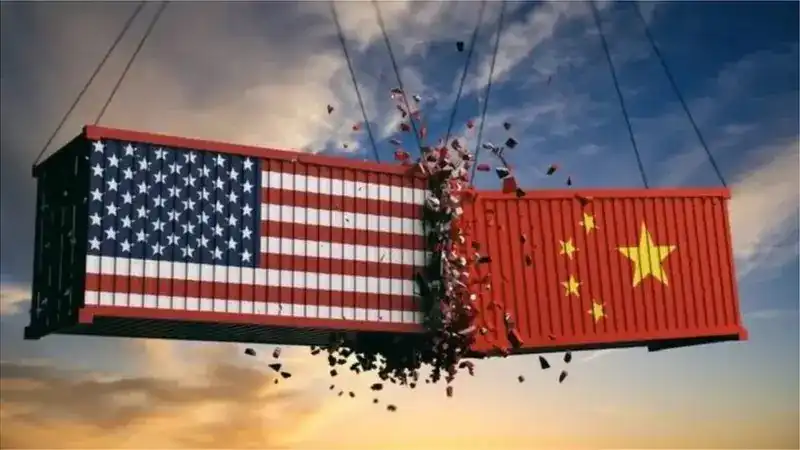
The New Cold War is a Tech Stock War The article argues that the contemporary geopolitical and economic rivalry between the US and China represents a "New Cold War," but one fundamentally fought through technology and financial markets, not physical barriers or conventional trade. Historically, US dominance was secured through financial systems. The Soviet Union, reliant on the rigid "Transferable Ruble," was ultimately undermined by its dependency on the US dollar for oil trade. Later, Japan's semiconductor challenge was countered not just by tariffs (e.g., Plaza Accord, 301 investigations) but by binding it to US Treasury bonds. China presents a more complex, "embedded" challenger. While it holds vast dollar reserves and US debt like Japan, its industrial base is stronger and more diversified than the Soviet Union's. Surviving the initial 2018 trade war phase, the conflict has evolved into a "tech-financial war." The core battlefield is now the stock market. US tech stocks (AI, semiconductors) are treated as sovereign assets, buoyed by bipartisan national will. China is pushing to strengthen its own financial markets to convert industrial strength into financial power and fund its tech ambitions. Companies like ChangXin (semiconductors), Moonshot AI, and DJI compete not just for market share but as financial proxies for their respective systems. The new paradigm is moving from globally efficient monopolies (Apple, Google) towards companies that achieve monopolistic profits within their respective geopolitical spheres. This competition over "pricing power" and financial valuation in segmented markets defines the current era, making the stock market the primary arena for this tech-centric struggle.

marsbitHá 26m

The New Cold War is a Tech Stock War

marsbitHá 26m

RWA Weekly: Ten European Financial Institutions Establish Tokenized Asset Cooperative; Ondo Launches New Execution Network Ondo Network

RWA Weekly: European Banks Form Tokenized Asset Cooperative; Ondo Launches New Execution Network Ondo Network Covering July 24-31, 2026, the RWA sector saw a steady on-chain total value locked (TVL) of $36.8 billion, with holder count hitting a record high. However, stablecoin transfer volumes fell sharply (~30%), indicating low on-chain settlement demand. Key regulatory moves include South Korea advancing stablecoin legislation and a push to scrap crypto taxes, Kenya lowering capital requirements for stablecoin issuers, and Zimbabwe approving seven projects for its crypto sandbox. In project developments, BIS-led Project Agorá successfully tested cross-border payments with tokenized funds across six currencies. Ten major European financial institutions formed the RL1 blockchain cooperative to build tokenized asset infrastructure. Other notable updates: Aviva launched a tokenized dollar liquidity fund on XRPL, POSCO International tokenized commercial invoices on Injective, and a Brazilian farmer used tokenized cattle as collateral for a loan. Additional progress includes BNY Mellon migrating its core transfer agent operations to blockchain, Securitize gaining SEC investment advisor registration, and Tether’s compliant stablecoin USA₮ launching on Celo. Ondo Finance introduced Ondo Network, a new execution layer focused on speed and privacy, moving away from its initial chain plans. An analysis highlights that despite the growing scale of on-chain RWAs (~$32B), approximately 90% remain underutilized in DeFi, pointing to a critical challenge in unlocking liquidity and fostering real-world application beyond mere issuance.

marsbitHá 26m

RWA Weekly: Ten European Financial Institutions Establish Tokenized Asset Cooperative; Ondo Launches New Execution Network Ondo Network

marsbitHá 26m

Trading

Spot

Artigos em Destaque

O que é $WELL

WELL3, $$WELL: Revolucionando a Saúde e o Bem-Estar com DePIN e IA Introdução Na paisagem em rápida evolução da tecnologia digital, o sector da saúde e do bem-estar está na vanguarda da inovação, esforçando-se para melhorar os cuidados com os pacientes e promover estilos de vida mais saudáveis. Um jogador inovador neste domínio é o WELL3, um projeto pioneiro de Web3 que visa revolucionar a forma como os indivíduos se envolvem com a sua saúde. Ao aproveitar tecnologias como a Rede de Infraestrutura Física Descentralizada (DePIN), Identidade Descentralizada (DID) e Inteligência Artificial (IA), o WELL3 pretende promover jornadas de saúde seguras e potenciadas por dados. Este artigo abrangente aprofunda-se nos principais aspectos do WELL3, $$WELL, explorando as suas funcionalidades, criadores, investidores e características únicas. O que é o WELL3, $$WELL? O WELL3 serve como uma plataforma inovadora destinada a redefinir a abordagem em relação à saúde e ao bem-estar. Focado na integração de DePIN e DID juntamente com sistemas de IA, o projeto foi concebido para criar experiências personalizadas para os utilizadores, garantindo a segurança e a privacidade dos dados de saúde dos indivíduos. Com um número impressionante de mais de um milhão de utilizadores pré-registados, a missão principal do WELL3 centra-se na melhoria do bem-estar através de jornadas de saúde seguras e orientadas por dados. No seu cerne, o WELL3 utiliza tecnologias avançadas de blockchain para garantir que os utilizadores tenham total controlo sobre a sua informação pessoal. Este projeto não só aborda os desafios da segurança e acessibilidade dos dados, mas também aspira a criar uma comunidade vibrante unida por um compromisso comum com uma melhor saúde. Características-chave do WELL3: DePIN e DID: Estas tecnologias permitem a propriedade e autenticação seguras dos dados, dando aos utilizadores total controlo sobre a sua informação. Integração de IA: Utilizando análises de IA, o WELL3 oferece insights e soluções personalizadas adaptadas às necessidades de saúde individuais. Envolvimento Comunitário: Facilita um ambiente de apoio onde os utilizadores podem conectar-se, partilhar experiências e motivar-se mutuamente em prol de um viver mais saudável. Criador do WELL3, $$WELL A identidade do criador do WELL3 permanece não especificada nas informações disponíveis. À medida que o projeto avança, detalhes adicionais poderão surgir, lançando luz sobre as mentes visionárias por trás desta iniciativa transformadora. Investidores do WELL3, $$WELL O WELL3 recebeu apoio de uma miríade de entidades de investimento influentes, destacando a sua credibilidade e potencial no espaço da saúde e bem-estar. Investidores notáveis incluem: Animoca Brands AWS Samsung The Spartan Group Blocore Fenbushi Capital Newman Group Soul Capital XY Finance Lumoz O apoio destas organizações estabelecidas demonstra uma forte crença na missão do WELL3, proporcionando-lhe os recursos necessários para inovar e expandir as suas ofertas. Como Funciona o WELL3, $$WELL? O WELL3 opera fundindo tecnologias de ponta numa estrutura multichain, garantindo uma experiência do utilizador fluida e inovadora. Abaixo estão alguns fatores que posicionam o WELL3 de forma única no mercado de bem-estar: 1. Propriedade de Dados Segura Com a integração de DePIN e DID, os utilizadores podem manter total controlo sobre a sua informação de saúde pessoal. Este nível de segurança é fundamental na era digital atual, onde as violações de dados e o acesso não autorizado são frequentes. Através do WELL3, a propriedade dos dados é descentralizada, permitindo que os utilizadores gerenciem a sua informação de forma proactiva. 2. Personalização através da IA O WELL3 implementa análises impulsionadas por IA para fornecer aos utilizadores insights de saúde personalizados. Ao aproveitar o poder da IA, a plataforma consegue oferecer recomendações e soluções individualizadas, incentivando os utilizadores a alcançarem os seus objetivos de saúde de forma mais eficaz. 3. Estrutura Multichain O projeto WELL3 foi concebido para funcionar em várias plataformas de blockchain, incluindo Bitcoin, Ethereum, Polygon, Solana, Blast e TON. Esta capacidade multichain assegura que os utilizadores possam interagir com a plataforma de forma fluida em diferentes redes, aumentando a acessibilidade e a usabilidade. 4. Token WELL Central para o ecossistema WELL3 está o Token WELL, que serve múltiplas funções, incluindo utilidade, governança e recompensas. O token permite a participação no ecossistema, apoia o compartilhamento de dados de saúde e incentiva os utilizadores com base no seu envolvimento com a plataforma. Cronologia do WELL3, $$WELL A trajetória do WELL3 exibe marcos significativos no seu desenvolvimento, cada um contribuindo para o sucesso geral do projeto. Aqui está uma breve cronologia dos eventos críticos na história do WELL3: 10 de Fevereiro de 2024: O WELL3 lançou o seu projeto NFT, rapidamente subindo à ribalta como a maior coleção de NFTs na cadeia opBNB com mais de 324.000 proprietários e atingindo 8 milhões de NFTs criados até 27 de Abril de 2024. Venda Pública: O projeto alcançou um valor total notável bloqueado (TVL) de aproximadamente 15.237,2 ETH em apenas sete dias, indicando um forte interesse e apoio do mercado. Lançamento do WELL ID: A plataforma viu mais de 900.000 utilizadores inscreverem-se para o WELL ID e a sua correspondente whitelist de NFTs Ring, marcando uma fase de adoção significativa dentro do ecossistema. Desenvolvimento de Parcerias: O WELL3 estabeleceu parcerias com entidades líderes, incluindo Animoca Brands, AWS, Samsung, entre outras, para melhorar o seu ecossistema e expandir o seu alcance. Volume de Transações: O WELL3 facilitou mais de 17 milhões de dólares em transações, refletindo a sua crescente utilidade e envolvimento dentro da comunidade de saúde e bem-estar. Pontos-chave sobre o WELL3, $$WELL Como uma iniciativa progressiva voltada para o mercado do bem-estar, o WELL3 identificou vários elementos vitais que contribuirão para o seu contínuo sucesso. Aqui estão algumas conclusões importantes a notar: Tokenomics O token $$WELL tem um suprimento máximo de 42 mil milhões, com 71% destinado a iniciativas comunitárias. Esta estratégia de distribuição enfatiza o compromisso do projeto com a sua base de utilizadores e sustentabilidade a longo prazo. Período de Bloqueio Para garantir a estabilidade dentro do ecossistema, os tokens são liberados em lotes ao longo de um período de bloqueio de 24 meses, promovendo confiança e segurança entre os utilizadores. Desenvolvimento do Ecossistema A visão do WELL3 estende-se à criação de um ecossistema abrangente e sustentável para incentivar a participação comunitária ativa, comportamentos que promovam a saúde e soluções digitais que abordem as necessidades prementes do domínio do bem-estar. Adequação ao Mercado A indústria do bem-estar, avaliada em 5,6 trilhões de dólares, apresenta uma oportunidade lucrativa que o WELL3 pretende explorar. Com uma taxa de crescimento anual prevista de 5-10%, o projeto está idealmente posicionado num contexto de crescente tendência em direção a um estilo de vida saudável. Dispositivos Wearables A introdução do WELL3 Ring, um dispositivo wearable incentivado por cripto, alinha-se com a crescente demanda por dados de saúde personalizados. Este dispositivo não só melhora a experiência do utilizador, mas também redefine o que significa estar envolvido com a própria saúde no contexto do Web3. Conclusão O WELL3 representa um avanço significativo na integração da tecnologia blockchain no sector da saúde e do bem-estar. Ao abordar questões cruciais em torno da propriedade dos dados, personalização e envolvimento comunitário, esta plataforma inovadora oferece uma solução visionária para melhorar o bem-estar individual. Com um forte apoio de investidores notáveis e um compromisso com tecnologias pioneiras, o WELL3 está programado para ter um impacto duradouro na paisagem do bem-estar. Para aqueles que procuram navegar pelas complexidades da saúde na era digital, o WELL3 é certamente uma iniciativa a acompanhar à medida que continua a evoluir e crescer.

74 Visualizações TotaisPublicado em {updateTime}Atualizado em 2024.12.03

O que é $WELL

Como comprar WELL

Bem-vindo à HTX.com!Tornámos a compra de Moonwell Artemis (WELL) simples e conveniente.Segue o nosso guia passo a passo para iniciar a tua jornada no mundo das criptos.Passo 1: cria a tua conta HTXUtiliza o teu e-mail ou número de telefone para te inscreveres numa conta gratuita na HTX.Desfruta de um processo de inscrição sem complicações e desbloqueia todas as funcionalidades.Obter a minha contaPasso 2: vai para Comprar Cripto e escolhe o teu método de pagamentoCartão de crédito/débito: usa o teu visa ou mastercard para comprar Moonwell Artemis (WELL) instantaneamente.Saldo: usa os fundos da tua conta HTX para transacionar sem problemas.Terceiros: adicionamos métodos de pagamento populares, como Google Pay e Apple Pay, para aumentar a conveniência.P2P: transaciona diretamente com outros utilizadores na HTX.Mercado de balcão (OTC): oferecemos serviços personalizados e taxas de câmbio competitivas para os traders.Passo 3: armazena teu Moonwell Artemis (WELL)Depois de comprar o teu Moonwell Artemis (WELL), armazena-o na tua conta HTX.Alternativamente, podes enviá-lo para outro lugar através de transferência blockchain ou usá-lo para transacionar outras criptomoedas.Passo 4: transaciona Moonwell Artemis (WELL)Transaciona facilmente Moonwell Artemis (WELL) no mercado à vista da HTX.Acede simplesmente à tua conta, seleciona o teu par de trading, executa as tuas transações e monitoriza em tempo real.Oferecemos uma experiência de fácil utilização tanto para principiantes como para traders experientes.

183 Visualizações TotaisPublicado em {updateTime}Atualizado em 2026.06.02

Como comprar WELL

Discussões

Bem-vindo à Comunidade HTX. Aqui, pode manter-se informado sobre os mais recentes desenvolvimentos da plataforma e obter acesso a análises profissionais de mercado. As opiniões dos utilizadores sobre o preço de WELL (WELL) são apresentadas abaixo.

活动图片