A taxa de câmbio de referência serve apenas para consulta e não está bloqueada. A taxa final será determinada pelo preço de execução real.
Estatísticas em Tempo Real de ORDER
O preço ao vivo de Orderly (ORDER) é $0.03 USD e a sua capitalização de mercado atual é de $-- USD.
Receba atualizações em tempo real de ORDER/USD na HTX. Mantenha-se informado com os dados mais recentes e as tendências do mercado para tomar decisões de trading inteligentes. HTX, a sua fonte confiável de informações precisas sobre preços de criptomoedas.
Estatísticas Principais de Orderly
Volume de 24h (USD)
$--
Variação de Preço Hoje
--
Oferta em Circulação (ORDER)
371.77M
Registe-se e negoceie para ganhar recompensas no valor de até 1,500 USDT.Participe Agora
Desempenho do Preço de ORDER
Acompanhe as variações de preço de Orderly com visualizações de gráfico abrangendo 1 dia, 30 dias, 60 dias, 90 dias, 1 ano e o período desde que foi listado na HTX.Ver mais dados sobre os preços de Orderly
Horário
Alterar
Variação (%)
Preço mais alto
Preço mais baixo
No data
Informações de Mercado de ORDER
Obtenha os detalhes mais recentes do preço de Orderly na HTX: alta e baixa em 24 horas, máxima histórica (ATH) e variação percentual diária do preço.
24h Baixo
$0
24h Alto
$0
Máximo histórico
$0
Capitalização de Mercado
$0.00
Volume de 24h (USD)
$--
Oferta Circulante
--
O que é ORDER?
Orderly Network é um L2 construído sobre a pilha OP que oferece uma camada de liquidez sem permissões para negociação Web3, com um livro de ordens partilhado entre diferentes blockchains — alimentado pela Orderly Chain e LayerZero. A nossa missão é capacitar a negociação em qualquer cadeia, qualquer ativo, qualquer interface. Orderly oferece livros de ordens de spot e futuros perpétuos para negociação em Arbitrum, Optimism, Polygon, Base, Mantle e Near, enquanto se expande para outras blockchains.
É super fácil comprar ORDER na HTX. Basta clicar aqui para ver um guia completo sobre como comprar Orderly com facilidade.
Mercados em Tempo Real de ORDER
Veja os preços em tempo real de Orderly nos mercados à vista da HTX. Alterne entre os mercados à vista e de futuros para comparar instantaneamente os preços ao vivo e as variações de preço em 24 horas.
Com base no desempenho histórico de Orderly, a nossa ferramenta de previsão estima que o preço de Orderly (ORDER) poderá atingir -- até --.
Preço Previsto de ORDER em --
A nossa previsão mais recente indica que o preço de Orderly (ORDER) aumentará para -- até --, com uma variação de preço de --% e um ROI acumulado de aproximadamente --%.
Compre o seu primeiro ORDER na HTXRegiste-se Agora
Perguntas Frequentes sobre ORDER
Qual é o preço de Orderly (ORDER) hoje?
O preço atual de Orderly (ORDER) é $0.03 USD.
Qual é a capitalização de mercado de Orderly (ORDER)?
A capitalização de mercado atual de Orderly (ORDER) é de $0.00 USD, calculada multiplicando a sua oferta em circulação pelo seu preço atual.
Qual é a oferta em circulação de Orderly (ORDER)?
A oferta em circulação atual de Orderly (ORDER) é de -- ORDER.
Qual é a máxima histórica de Orderly (ORDER)?
Em 2026-08-21, a máxima histórica de Orderly (ORDER) é de $0 USD.
Qual é o volume de negociação em 24h de Orderly (ORDER)?
O volume de negociação em 24 horas de Orderly (ORDER) é de -- USD na HTX.
Posso comprar Orderly (ORDER) na HTX?
Sim, a HTX oferece taxas de trading líderes do setor e alta liquidez, garantindo uma experiência de compra de Orderly (ORDER) suave e segura.
Bernstein revisits long-term agreements (LTAs) in the memory industry, highlighting new contracts with purchase commitments, minimum prices, and financial guarantees signed by Micron and SanDisk. These aim to provide an earnings floor for the coming years.
Micron has 16 strategic customer agreements, with 14 representing approximately $100 billion in minimum revenue and about $22 billion in cash deposits/commitments. SanDisk has contracts for around $42 billion in minimum revenue and over $11 billion in guarantees. Combined, these ~$33 billion in guarantees make it more costly for major clients to walk away.
However, Bernstein models that the potential revenue needing protection over 3-5 years is around $5.2 trillion. The existing guarantees thus cover only about 0.6% of that scale. While LTAs provide a cushion, they cannot fully shield profits in a severe downturn, as clients may still find it cheaper to breach contracts if spot prices fall deeply below floor prices.
LTAs are most suitable for large, credit-worthy customers like U.S. cloud service providers with stable, high-volume AI infrastructure needs. Consumer segments (phones, PCs) and some Chinese clients are less likely to adopt them, leaving an estimated 30-50% of the DRAM/NAND market exposed to spot price volatility.
AI demand (e.g., HBM for training, storage for inference) supports higher valuations and makes LTAs more attractive for locking in high-demand customers. Yet, Bernstein stresses that LTAs soften, but do not eliminate, the memory cycle. Their true test will come in the next downturn, revealing whether clients honor contracts and whether guarantees provide sufficient pain to maintain supplier discipline.
To purchase the experimental weight-loss drug retatrutide, Americans like Zach are turning to Bitcoin despite initial skepticism. Retatrutide, an unapproved triple-agonist from Eli Lilly, offers significant weight loss but is inaccessible through U.S. channels. Buying from domestic resellers costs around $3,600 annually, whereas Zach found a Chinese seller offering a year’s supply for $240—with Bitcoin as the only payment option. This price disparity led him to learn cryptocurrency for the transaction.
Online sellers of such “research chemicals” or peptides often use Bitcoin because traditional payment systems avoid the regulatory and legal risks. Chainalysis data shows crypto payments to grey-market peptide sellers reached $32 million in Q1 2026, suggesting an annualized volume exceeding $100 million, though this remains a fraction of the estimated $1-3 billion black market.
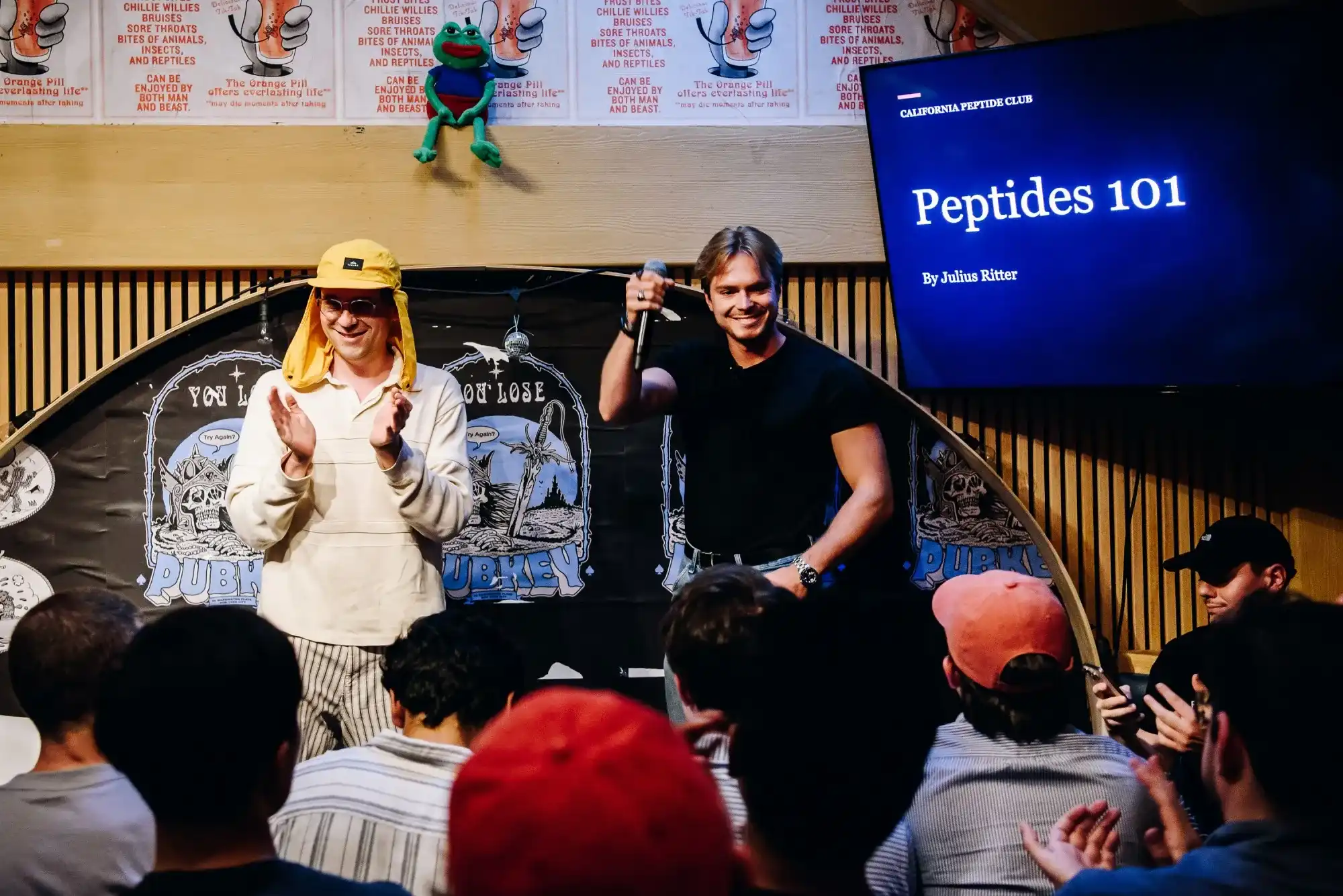
The trend intersects with communities like DeSciNYC, where events on peptides draw crowds interested in biohacking and longevity, indicating shared interests between crypto and wellness circles. However, potential FDA moves to legalize certain peptides could shift demand away from the black market and reduce the need for crypto payments.
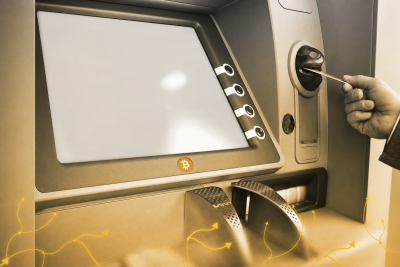
Cryptocurrency ATM operator Cryptolink has had its 96 terminals temporarily disabled across Australia. The Australian Transaction Reports and Analysis Centre (AUSTRAC) suspended the company's registration for three months due to repeated failures to comply with anti-money laundering and counter-terrorism financing (AML/CTF) rules.
Despite a previous fine and an agreement to hire independent auditors, Cryptolink allegedly stopped reporting large transactions (over ~USD 7,000) and failed to respond to regulatory requests. The company's terminals, primarily located in Sydney, Melbourne, and Brisbane, allowed users to buy and (where enabled) sell cryptocurrency for cash, with transaction limits up to ~USD 3,530.
This action is part of AUSTRAC's heightened scrutiny of the crypto sector, which it considers high-risk for financial crime. The regulator has signaled it will enforce strict compliance on all crypto service providers, including physical terminal operators.
A U.S. court has issued an order against former FTX top executives Ryan Salame and Caroline Ellison, banning them from obtaining CFTC licenses for ten and eight years respectively. This is the outcome of the CFTC's case following the collapse of the crypto exchange FTX in 2022. Ellison was sentenced to two years in prison in September 2024 and was released in January 2026. Salame received a three-year probation sentence. The CFTC stated their cooperation with the investigation led to the reduced sentences. Meanwhile, FTX founder Sam Bankman-Fried continues to serve his prison term and is not eligible for release until 2044, with his appeal for a reduced sentence recently denied. Separately, FTX has begun distributing approximately $900 million to affected creditors as part of its reorganization plan, with payments going through BitGo, Kraken, and Payoneer to verified customers.
A US court has banned former top executives of the collapsed cryptocurrency exchange FTX, Nishad Singh and Gary Wang, from trading. The order also requires them to cooperate with the US Commodity Futures Trading Commission (CFTC) and prohibits them from obtaining licenses from the regulator for ten and eight years, respectively. This concludes a lengthy CFTC proceeding against the former leaders of FTX, which collapsed in 2022.
Singh was sentenced to two years in prison in September 2024 and was released in January 2026. Wang received a three-year probation sentence without imprisonment. The CFTC cited their cooperation with the investigation as a reason for the reduced penalties, which allowed them to avoid harsher sentences.
FTX founder Sam Bankman-Fried continues to serve a prison sentence and will not be released until 2044. His recent attempts to appeal the sentence and seek a pardon were rejected by an appeals court, and the US Senate has recommended against granting him a presidential pardon.
Separately, since July 31, FTX has been distributing approximately $900 million to affected creditors as part of its reorganization plan. Payments are being made to accounts at BitGo, Kraken, and Payoneer, but are only available to clients who have completed KYC verification and provided tax forms.
cryptonews.ru19小时前
Threads
Bem-vindo à Comunidade HTX. Aqui, você pode se manter informado sobre os desenvolvimentos mais recentes da plataforma e ter acesso a insights profissionais do mercado. As opiniões dos utilizadores sobre o preço de Orderly (ORDER) são apresentadas abaixo.
Perguntas Relacionadas
Bem-vindo à FAQ de Cripto. As perguntas e respostas dos utilizadores sobre Orderly (ORDER) são apresentadas abaixo.