Zuck refuses to give up, secretly develops one of his own called 'Hatch', but the model uses Claude...

marsbitPublicado em 2026-08-27Última atualização em 2026-08-27

Resumo

Meta, led by Mark Zuckerberg, is developing a new AI agent platform called "Hatch" after its reported unsuccessful attempt to acquire Manus. Described as a "consumer version of OpenClaw," Hatch aims to automate tasks across various digital services. The platform is trained on simulated versions of services like DoorDash, Etsy, Reddit, Yelp, and Outlook, and is deeply integrated with Meta's own ecosystem, including Instagram, Facebook, and WhatsApp. Its goal is to enable end-to-end task completion, such as identifying a product in a social media post, comparing prices, and facilitating purchases. During development, Hatch is reportedly relying on Anthropic's Claude model. However, Meta plans to transition to its proprietary model, Muse Spark, for the official launch, with a newer model named Watermelon expected in October. This phased migration highlights potential technical challenges, as switching core models can affect performance and user experience. Priced at up to $199.99 per month, Hatch targets consumers willing to pay for significant time savings. Its key advantage is default distribution within Meta's vast suite of apps, potentially giving it access to rich user context. However, it faces major hurdles in real-world reliability, needing to handle complex, dynamic web environments, authentication changes, and anti-bot measures that differ from its controlled training simulations. The move represents Meta's strategic push to monetize AI directly beyond its core adver...

Looks like Zuck just can't let it go…

Right after handing Manus back, Meta has turned around and built its own agent platform called "Hatch".

Looks like Zuck just can't let it go…

According to reports from The Information, Hatch functionally emphasizes "setting a goal, automatically breaking it down, and delivering results", which sounds quite similar to Manus. However, Meta insists on a different marketing angle, calling it the "consumer version of OpenClaw".

Its top price tier is $199.99 per month, also matching Manus's highest tier of $200 per month.

Additionally, during its development phase, Hatch used the Claude model. The plan is to switch to Meta's own Muse Spark model only when the product officially launches, with a new model, Watermelon, slated for release in October.

Failed Acquisition? Do It Yourself

Unlike tools like Codex or Claude Code, which are essentially developer tools aimed at writing code, debugging, and building software,

Hatch focuses more on "consuming digital life."

For early training of Hatch, Meta configured environments that included simulated versions of internet services like DoorDash, Etsy, Reddit, Yelp, and Outlook.

This covers local services & delivery, goods trading, community information retrieval, and personal productivity management.

Coupled with Meta's own social network ecosystems of Instagram, Facebook, and WhatsApp,

In other words, Hatch's goal is to bridge the complete path of "Discovery—Comparison—Communication—Scheduling—Purchase."

For example, if a user sees a pair of shoes on Instagram Reels, Hatch could, in theory, identify the product cue, search for similar items, compare prices and delivery times, offer suggestions based on the user's budget and historical preferences, and request confirmation before payment.

However, there are also differences from Manus. Manus is an independent, general-purpose execution environment aimed at research, web automation, coding, and content creation. Hatch, on the other hand, places greater emphasis on long-term memory, personalized context, cross-service operations, and deep integration with Meta's social ecosystem of billions of users.

On the technical roadmap, using Claude during development easily leads others to assume that Muse Spark hasn't yet met the mark in multi-step reasoning, tool calling, and other agent tests.

But long-term dependence on a competitor's model clearly doesn't align with Meta's cost and strategic interests. Once a consumer-grade agent achieves high-frequency usage and long-chain reasoning, inference costs will skyrocket.

Meta's plan is a phased migration.

Use Claude as a transition during the R&D and internal testing phases, switch to the self-developed Muse Spark series of models in the initial productization stage, with subsequent expansion phases taken over by next-generation models like Watermelon, launching in October.

This seems like another potential pitfall—different model behaviors could make migration difficult, right?

However, it's still not confirmed whether Watermelon belongs to the Muse series or will directly become Hatch's core model.
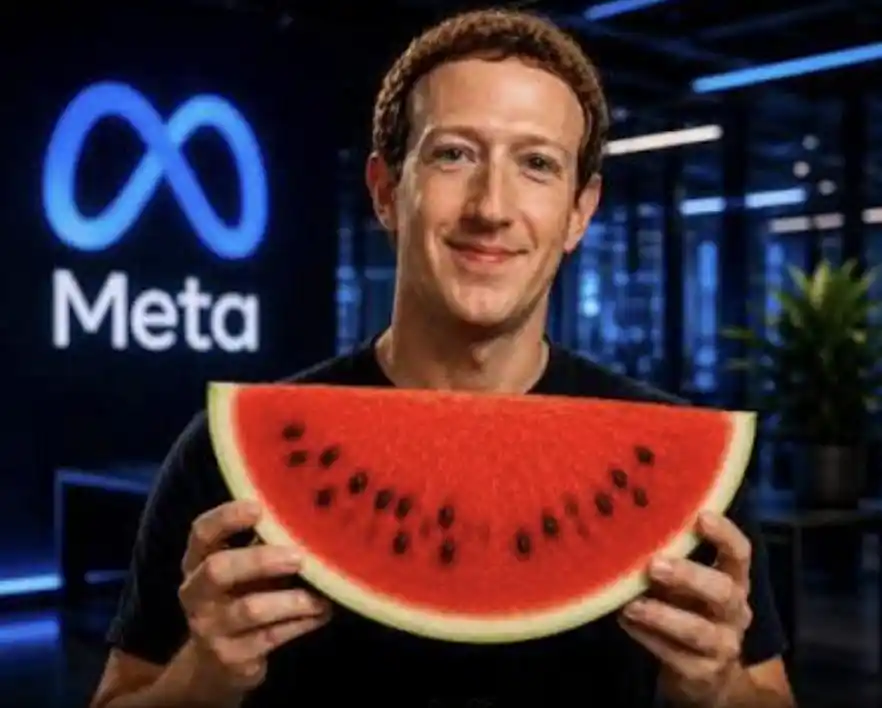
Meta's advertising business has long provided strong cash flow, but the rapid rise of AI infrastructure, model training, and inference costs demands that the company establish more direct AI monetization methods beyond ads.

Hatch's high-end subscription pricing finds its biggest trump card in "default distribution."

Users familiar with Meta's ecosystem don't need to download unfamiliar tools; they can directly use Hatch within Instagram, Facebook, WhatsApp, Messenger, the Meta AI app, or even smart glasses.

A typical challenge for general-purpose Agents is not understanding the user. Meta hopes to use Hatch to convert these scattered signals into the ability to "understand user intent," a capability that pure chat-based AI products lack.

However, a price tag of nearly $200 per month means users will evaluate based on "whether it can consistently save several or even dozens of hours of human effort."

This requires Hatch to maintain reliable performance in real-world scenarios with complex webpages, incomplete information, changing login statuses, payment confirmations, and error handling.

The real internet is far more complex than a simulated training environment. Webpage structures often change, and pop-ups, CAPTCHAs, anti-bot measures, regional differences, and inventory fluctuations can all cause task failures.

This article is from the WeChat public account "QbitAI," author: Meng Chen

Criptomoedas em alta

Perguntas relacionadas

QWhat is Meta's new AI agent platform called and how does it position itself?

AMeta's new AI agent platform is called 'Hatch.' It positions itself as the 'consumer version of OpenClaw' and focuses on 'consumer digital life,' aiming to automate tasks like discovery, comparison, communication, scheduling, and purchasing across internet services, with deep integration into Meta's social apps like Instagram, Facebook, and WhatsApp.

QWhich AI model is Hatch using in its development phase, and what are the plans for future models?

ADuring its development phase, Hatch is using Anthropic's Claude model. Meta plans to switch to its in-house model, Muse Spark, for the official product launch. Furthermore, a new model named 'Watermelon' is scheduled for release in October, although its specific role within the Hatch platform is not yet confirmed.

QHow does Hatch differ from other AI coding agents like Codex or Claude Code?

AHatch differs from AI coding agents like Codex or Claude Code, which are developer tools for writing, debugging, and building software. In contrast, Hatch is designed for 'consumer digital life,' automating everyday tasks such as shopping, service booking, and information retrieval across various apps and websites, emphasizing personalization and integration with Meta's social ecosystem.

QWhat is the pricing for Hatch, and what key advantage does Meta have in distributing it?

AHatch's highest pricing tier is $199.99 per month, which is comparable to the top tier of the Manus platform. Meta's key advantage in distributing Hatch is 'default distribution.' It can be directly integrated into and accessed through Meta's massive existing user base on platforms like Instagram, Facebook, WhatsApp, Messenger, Meta AI apps, and smart glasses, eliminating the need for users to download a separate, unfamiliar tool.

QWhat are some potential challenges Hatch might face according to the article?

AAccording to the article, Hatch faces several potential challenges: 1) High subscription cost requires proving it can reliably save users significant time. 2) Real-world internet complexity (changing website structures, pop-ups, CAPTCHAs, anti-bot measures, regional differences, inventory fluctuations) can cause task failures, making reliability difficult. 3) Transitioning from the Claude model to in-house models like Muse Spark and Watermelon may be difficult due to differences in model behavior, posing a potential risk.

Leituras Relacionadas

Yangtze Memory: Is It the Second ChangXin?

The largest IPO in the history of the STAR Market is approaching. Yangtze Memory Technologies (YMTC) has filed for a listing on the Shanghai Stock Exchange's STAR Market, aiming to raise 33 billion yuan. This surpasses the previous record set by competitor ChangXin Memory Technologies (CXMT), which raised 29.5 billion yuan and saw its market capitalization surge on its debut. Despite both being leading Chinese memory chipmakers founded in 2016 and operating under the IDM model, the two companies are fundamentally different. CXMT focuses on DRAM, the memory used for temporary data processing, while YMTC specializes in NAND Flash, used for long-term data storage. Industry reports indicate the global DRAM market is significantly larger and more concentrated among three major players, where CXMT ranks as the fourth-largest supplier. The NAND Flash market is more fragmented, with YMTC ranking third globally by shipment volume in Q2 2026, though fifth by revenue due to a stronger focus on consumer-grade products. Experts are divided on whether YMTC can replicate CXMT's explosive market debut. Some analysts believe it is highly unlikely, citing a cooler market environment and YMTC's perceived lower strategic scarcity within the AI supply chain compared to DRAM/HBM-focused companies. They warn that aggressive IPO pricing could lead to downward pressure post-listing. Industry forecasts suggest the DRAM market may remain tight, while the NAND Flash market could face price corrections due to new capacity and weaker demand. Other experts argue that while short-term market sentiment differs, the long-term investment value of both companies is comparable, hinging on future performance and potential breakthroughs in areas like HBM. They believe YMTC's IPO is unlikely to face significant cooling given still-elevated market interest in the semiconductor sector.

marsbitHá 17m

Yangtze Memory: Is It the Second ChangXin?

marsbitHá 17m

Tether Completes Full Audit by KPMG U.S., 150 Tons of Gold and 100,000 BTC Reserves Verified

Tether Announces Completion of Full Financial Audit by KPMG US, Confirming Gold and BTC Reserves Tether CEO Paolo Ardoino announced that the company has completed its first-ever full financial audit by the "Big Four" accounting firm KPMG US. The audit covers the financial statements of Tether International, S.A. de C.V. as of December 31, 2025. Ardoino stated that Tether's delay in obtaining a full audit was primarily due to the previous US administration's hostile stance towards the digital asset industry. With a more favorable regulatory environment, the company engaged KPMG US for the rigorous review. Ardoino emphasized the audit confirmed the strength of Tether's reserves, including over $6 billion in excess equity. He also revealed the company holds substantial physical assets: approximately 150 tons of gold and over 100,000 Bitcoin (BTC). The audit process reportedly involved physically verifying each gold bar. Addressing past criticism and ongoing skepticism, Ardoino pointed to Tether's ability to handle large-scale redemptions, citing the processing of around $7 billion within 48 hours during market stress in 2022. He stated the company plans to undergo annual full financial audits alongside its ongoing quarterly attestation reports. Regarding a potential private equity round, Ardoino clarified that Tether, as a highly profitable company, does not require external capital but acknowledges significant market interest in its shares. The company remains private and mission-focused, aiming to serve users outside the traditional financial system. Looking ahead, Ardoino expressed Tether's interest in potentially funding initiatives like the "Bitcoin Red Team," which uses AI to audit Bitcoin's code and wallet security for vulnerabilities.

marsbitHá 36m

Tether Completes Full Audit by KPMG U.S., 150 Tons of Gold and 100,000 BTC Reserves Verified

marsbitHá 36m

Wall Street's Imagination Can't Keep Up with Nvidia's 'Speed'

NVIDIA once again delivered stellar earnings, with revenue, operating profit, and EPS all hitting record highs for Q2 FY2027 (ended July 26, 2026). Revenue reached $96.221 billion, a 106% YoY increase, while net profit surged 126% to $59.688 billion. The core driver remained the Data Center segment, which grew 117% YoY to $89.023 billion, fueled by ongoing global AI infrastructure investments. The company segmented its Data Center revenue into Hyperscale (large cloud providers) and ACIE (AI cloud, enterprise, industrial, and sovereign AI) categories, with the latter showing faster growth. Notably, shipments of Hopper architecture products to mainland China accounted for less than 1% of Data Center revenue this quarter, and future guidance excludes contributions from China's Data Center compute market. CEO Jensen Huang stated that AI has reached a "tipping point," directly generating productivity and revenue. Financially, NVIDIA maintained robust profitability with a gross margin of 75%. The company also returned approximately $26 billion to shareholders via buybacks and dividends. Looking ahead, product transitions are key. The Blackwell Ultra platform is now in large-scale deployment, while the next-generation Vera Rubin platform, including NVIDIA's first CPU designed for AI agents, has entered full production. The company is also expanding its software ecosystem with tools like the DSX platform for building AI factories. However, NVIDIA's role is evolving beyond chip supplier. It is increasingly involved in financing and facilitating massive AI infrastructure projects, exemplified by its credit support for the SB Energy project in Ohio intended for OpenAI. The company aims to mobilize over $500 billion in third-party capital for such builds, though this raises questions about future capital intensity. For Q3 FY2027, NVIDIA forecasts revenue of approximately $108 billion, signaling continued growth but at a potentially moderated pace. While still dominant, the competitive landscape is intensifying with rivals like AMD and in-house chips from major cloud customers. Key challenges include maintaining growth through the Blackwell-to-Rubin transition, sustaining the pace of AI infrastructure investment, and defending market share as inference workloads grow and competition increases.

marsbitHá 36m

Wall Street's Imagination Can't Keep Up with Nvidia's 'Speed'

marsbitHá 36m

MiniMax Starts Earning Money by Relying on Others

MiniMax, a Chinese AI company known initially for its consumer-facing products like Conch AI, has undergone a significant business shift according to its first post-IPO semi-annual report. While overall revenue grew to $117 million (surpassing its full-year 2025 projection), the revenue structure flipped dramatically. Revenue from its open platform and enterprise AI services surged 703.1% to $73.93 million, now constituting 63.4% of total income. In contrast, revenue from its own AI-native products, though doubling to $42.64 million, dropped from 69.7% to 36.6% of the total. This indicates MiniMax is transitioning from a product-centric to a platform-centric model, embedding its AI capabilities into other companies' workflows and developer applications rather than solely relying on its own apps. The company is now monetizing its core model technology as a service. However, profitability remains a challenge. Despite revenue growth of 283.1%, R&D expenses were $297 million—2.55 times revenue—leading to an adjusted net loss of $293 million. A positive sign is improving gross margin, which rose from 12.1% to 17.9%, suggesting initial progress toward scaling efficiently. Geographically, MiniMax demonstrates a "developed in China, monetized globally" model, with 60.8% of its revenue coming from outside mainland China. The report highlights that MiniMax has successfully moved past proving demand and model capability. The critical next phase is demonstrating that its growing enterprise and developer customer base can generate sufficient, sustainable profit to offset the high inherent costs of AI model training and inference.

marsbitHá 47m

MiniMax Starts Earning Money by Relying on Others

marsbitHá 47m

Trading

Spot

Artigos em Destaque

Como comprar ONE

Bem-vindo à HTX.com!Tornámos a compra de Harmony (ONE) simples e conveniente.Segue o nosso guia passo a passo para iniciar a tua jornada no mundo das criptos.Passo 1: cria a tua conta HTXUtiliza o teu e-mail ou número de telefone para te inscreveres numa conta gratuita na HTX.Desfruta de um processo de inscrição sem complicações e desbloqueia todas as funcionalidades.Obter a minha contaPasso 2: vai para Comprar Cripto e escolhe o teu método de pagamentoCartão de crédito/débito: usa o teu visa ou mastercard para comprar Harmony (ONE) instantaneamente.Saldo: usa os fundos da tua conta HTX para transacionar sem problemas.Terceiros: adicionamos métodos de pagamento populares, como Google Pay e Apple Pay, para aumentar a conveniência.P2P: transaciona diretamente com outros utilizadores na HTX.Mercado de balcão (OTC): oferecemos serviços personalizados e taxas de câmbio competitivas para os traders.Passo 3: armazena teu Harmony (ONE)Depois de comprar o teu Harmony (ONE), armazena-o na tua conta HTX.Alternativamente, podes enviá-lo para outro lugar através de transferência blockchain ou usá-lo para transacionar outras criptomoedas.Passo 4: transaciona Harmony (ONE)Transaciona facilmente Harmony (ONE) no mercado à vista da HTX.Acede simplesmente à tua conta, seleciona o teu par de trading, executa as tuas transações e monitoriza em tempo real.Oferecemos uma experiência de fácil utilização tanto para principiantes como para traders experientes.

645 Visualizações TotaisPublicado em {updateTime}Atualizado em 2026.06.02

Como comprar ONE

Discussões

Bem-vindo à Comunidade HTX. Aqui, pode manter-se informado sobre os mais recentes desenvolvimentos da plataforma e obter acesso a análises profissionais de mercado. As opiniões dos utilizadores sobre o preço de ONE (ONE) são apresentadas abaixo.

活动图片