Tether Completes Full Audit by KPMG U.S., 150 Tons of Gold and 100,000 BTC Reserves Verified

marsbitPublicado em 2026-08-27Última atualização em 2026-08-27

Resumo

Tether Announces Completion of Full Financial Audit by KPMG US, Confirming Gold and BTC Reserves Tether CEO Paolo Ardoino announced that the company has completed its first-ever full financial audit by the "Big Four" accounting firm KPMG US. The audit covers the financial statements of Tether International, S.A. de C.V. as of December 31, 2025. Ardoino stated that Tether's delay in obtaining a full audit was primarily due to the previous US administration's hostile stance towards the digital asset industry. With a more favorable regulatory environment, the company engaged KPMG US for the rigorous review. Ardoino emphasized the audit confirmed the strength of Tether's reserves, including over $6 billion in excess equity. He also revealed the company holds substantial physical assets: approximately 150 tons of gold and over 100,000 Bitcoin (BTC). The audit process reportedly involved physically verifying each gold bar. Addressing past criticism and ongoing skepticism, Ardoino pointed to Tether's ability to handle large-scale redemptions, citing the processing of around $7 billion within 48 hours during market stress in 2022. He stated the company plans to undergo annual full financial audits alongside its ongoing quarterly attestation reports. Regarding a potential private equity round, Ardoino clarified that Tether, as a highly profitable company, does not require external capital but acknowledges significant market interest in its shares. The company remains private and m...

Author|The Block

Compilation| WuBlockchain

On August 14th, Tether CEO Paolo Ardoino provided a detailed explanation of the comprehensive independent audit conducted by KPMG U.S., one of the Big Four accounting firms, during an exclusive interview with The Starting Block. The audit covered the financial statements of Tether International, S.A. de C.V. for the year ended December 31, 2025. Ardoino stated that Tether's balance sheet is not complex, and the previous delay in completing a full audit was mainly due to the hostile attitude of the previous U.S. administration towards the digital asset industry. In the future, Tether plans to undergo a full financial audit annually while continuing to release quarterly attestation reports.

In addition, Ardoino responded to questions surrounding Tether's reserves, equity transparency, and private financing. He said Tether does not need external capital, but there is enormous market interest in its shares, and the company will carefully select potential shareholders aligned with its mission. He also revealed that Tether has accumulated approximately 150 tons of gold and over 100,000 Bitcoins, and intends to allocate budget to support work utilizing AI to audit Bitcoin code and wallet security.

Guest views do not represent WuBlockchain's perspective and do not constitute any investment advice. Please strictly adhere to local laws and regulations. Audio transcription and translation were completed by GPT and may contain errors.

Why Did Tether Only Complete a Full Financial Audit Now?

Gareth Jenkinson: Welcome back to The Starting Block. In this episode, we have an online exclusive interview with Tether CEO Paolo Ardoino. In the past 24 hours, Tether announced receiving a formal audit from a Big Four accounting firm, something critics have demanded for years. We invited Paolo to detail this audit. First, it's great to have you on the show again. How are you feeling?

Paolo Ardoino: Thank you very much, Gareth. For Tether and myself, this is undoubtedly a very important day. Tether was founded in 2014, and we have worked very hard over the years to build an excellent technology. Today, traditional financial institutions are also starting to pay attention to this technology.

Having a Big Four accounting firm complete the full financial audit we previously promised is like the final cherry on top of a beautiful cake. I can't describe how excited the entire team is. Everyone is thrilled. It feels very good.

Gareth Jenkinson: I entered this industry in 2017, much later than you. I still remember in the first couple of years, Tether faced a lot of criticism for not having an audit for a long time. Can you talk about why completing an audit was so difficult in the past and what efforts were made to finally achieve this?

Paolo Ardoino: First, I want to clarify that the entity audited is Tether International, S.A. de C.V., the issuer of USDT. Technically, auditing this entity is actually quite simple because our balance sheet only contains a few types of assets. Therefore, I don't think the operational complexity of conducting such an audit is high.

We have a very robust bookkeeping process, extremely strict management, and are very risk-averse. Everyone should recall what happened in the digital asset industry in 2022 and 2023. Our main competitor was once on the brink of crisis due to several banks and their exposure to those banks, but Tether navigated through these very difficult periods smoothly each time.

However, the situation is different when the world's most important country, the United States, has a government hostile to the industry, as was the case with the previous U.S. administration. Especially when important figures like Elizabeth Warren publicly criticized Tether, even hinting that audit firms should steer clear of us. This created some uncertainty for accounting firms.

The current U.S. government, however, has made it clear that digital assets are very important for the future of the United States and the world. It is excellent technology, and the U.S. wants to lead in this field. Therefore, we almost immediately re-engaged in discussions with several Big Four accounting firms and ultimately decided to sign with KPMG U.S.

Tether Chose KPMG U.S. to Undergo the Most Stringent Scrutiny Possible

Paolo Ardoino: Interestingly, in the past, even choosing a non-U.S. accounting firm like BDO for an attestation report would spark controversy. So, we decided to put ourselves under the most stringent scrutiny possible by partnering with KPMG U.S.

We proved our capability throughout this process and demonstrated that we can handle such scrutiny. The entire team was fully oriented towards completing this task. I have said many times that a full audit would be our top priority. I am very grateful that the change in the U.S. government's stance allowed these accounting firms to return to the negotiating table.

For a company like Tether, the balance sheet itself is not complex. Liabilities on one side are the tokens issued, and on the other side are all the reserves backing those tokens. According to attestation data as of December 31, 2025, we have over $6 billion in surplus equity, a figure also confirmed by the auditor.

These are all very important. Going forward, we will undergo a full financial audit annually while continuing to release quarterly attestation reports. I believe this sets the highest level of transparency standard in this industry.

Ardoino: Tether Redeemed Approximately $7 Billion Within 48 Hours

Gareth Jenkinson: Over the years, I've always found this interesting. One of the main criticisms of Tether has been: how do we know Tether isn't minting massive amounts of USDT without the collateral? This is why the market considered an audit so necessary.

However, even within the past 24 hours, I still see a lot of criticism. For example, some argue Tether should further disclose its equity structure and participants. Now that you've completed an audit by a Big Four firm, how do you view this ongoing atmosphere of criticism?

Paolo Ardoino: Today, I responded to an account I haven't engaged with in a long time: Bitfinex’ed. When I was a kid, I used to watch "Happy Days" on Italian TV. The show was popular worldwide, and it aired in Italy too. The character Fonzie could never say "I was wrong"; he would stutter every time he tried to admit a mistake.

I think many people have the same issue. It's a fundamental problem: many cannot admit they are wrong, so they must constantly find new excuses. Ultimately, that's their own issue. If a person cannot admit a mistake, they can never truly grow. Frankly, I don't care.

We have proven ourselves many times. We have executed larger-scale concentrated redemptions in a day, 24 hours, or 48 hours than any financial institution in history.

In 2022, we redeemed about $7 billion within 48 hours, which was about 10% of our reserve size at the time. Any financial institution or bank facing 10% or higher redemptions in a short period would be in crisis. This performance is unique to Tether.

Frankly, I am willing to keep myself vigilant and accept criticism because criticism makes us better, stronger, and gives us the will, strength, and motivation to wake up every day and prove all the critics wrong. That's good.

In a way, I even like being seen as the "villain" by some because then we can be heroes in the eyes of the 650 million users globally who are not served by the entire financial industry. I can live with myself. Every morning I wake up believing we are doing something good, I am doing the right thing, and my team is doing the right thing.

Therefore, no criticism can discourage us or force us to deviate from our path and mission.

Auditors Physically Counted Each Gold Bar in Tether's Reserves

Gareth Jenkinson: There's another interesting detail about this audit. It's said you had the auditors physically count every single gold bar in the reserves. It sounds humorous, almost like a joke, but is that actually what happened?

Paolo Ardoino: Our goal was to eliminate any possible doubts, except, of course, the stupid ones.

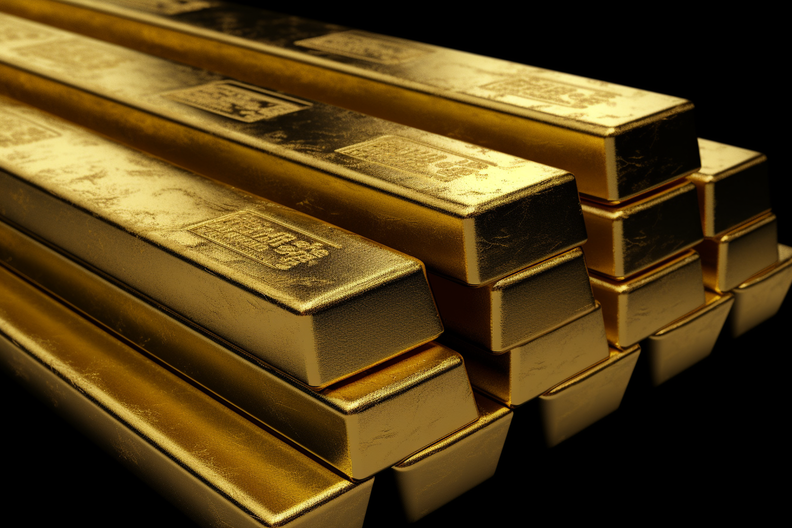
There's a good saying in Bitcoin: "Don't trust, verify." I think gold is a very good tool. Over the past few years, Tether has accumulated about 150 tons of gold and also holds a considerable amount of Bitcoin, over 100,000 coins.

Verifying Bitcoin is relatively easy because you can prove ownership of a Bitcoin address. But verifying gold requires manual work. To confirm the gold's existence, the accuracy of bar information, etc., auditors must be good at moving heavy objects and have decent muscles.

However, this work is necessary and correct. We are very proud of it because it proves once again that we have nothing to hide. As I said, we left no stone unturned, both literally and figuratively.

Tether Doesn't Need Capital, But There is Enormous Interest in Its Shares

Gareth Jenkinson: There have been media reports previously about Tether conducting a private equity funding round. Has this plan been shelved? Can you share more details? Is Tether still considering financing?

Paolo Ardoino: If you pay attention, you'll notice we never made any official announcement. Some media outlets decided the entire narrative themselves; they asked their own questions and then answered them, which is quite interesting.

We generally don't comment on such matters, but there is indeed enormous market interest in Tether shares. There are only 21 million Bitcoins, and Tether shares are similarly very scarce; we currently only have a handful of shareholders. This is very good, and I like this state.

We still receive significant attention. While not every day someone knocks on the door, people do continuously contact us saying they want to buy Tether shares.

However, what's special about Tether is that we don't need capital. We are a highly profitable company, able to choose where we allocate resources well, and have built excellent technology.

Providing AI Tools for Users Outside the Traditional Financial System via QVAC

Paolo Ardoino: Even in the AI field, when people thought the AI industry's development was complete or the winners were decided, we still presented our own story, vision, and technology: QVAC.

This shows we can still build AI tools to serve the approximately 4 billion people outside the traditional financial system. These people might also be overlooked by major AI companies because those who cannot afford bank account fees probably also cannot afford subscriptions to OpenAI or Anthropic.

But we can develop tools that run on edge devices to serve these users. These tools will serve these people, many of whom are already part of the current approximately 650 million USDT users.

These are very unique aspects of Tether. I want to wake up every day thinking about this mission, not having to optimize every penny daily, lest I have another dissatisfied shareholder.

Therefore, those who join Tether must be mission-oriented. We indeed consistently see many investors showing interest, including some mission-oriented investors who want to join us. But we will be very careful in deciding whom to add to the shareholder list.

I believe Tether's most important capability is execution, as we have been for the past 12 years.

We didn't go public; we decided to stay private. Because once a company is public, it faces performance reviews every three months. Look at our competitors; they have to report earnings every quarter. If they miss expectations by even a penny, they can be severely punished by the market.

At the same time, we have built a lot of great technology and brought many new users into the financial ecosystem. Tether is the largest financial inclusion success story in human history, bar none. In this sense, there is no second place that comes close. I need to optimize around this goal.

The company earning one cent more or less doesn't change my life; it's not important. I want to continue on this path. Therefore, we want people joining Tether to align with the company's mission. It's that simple.

Tether Intends to Fund Bitcoin Code and Wallet Security Research

Gareth Jenkinson: I also want to discuss recent events in the Bitcoin ecosystem, especially the Coldcard security incident and the significant impact it has had on the industry.

We see the emergence of Bitcoin Red Team. Researchers are using cutting-edge AI models to examine all open-source Bitcoin code to ensure vulnerabilities can be discovered, disclosed, and fixed as quickly as possible.

Is Tether, yourself, or some affiliated companies interested in participating in and supporting this work to help strengthen Bitcoin's security, especially against the types of security issues that have appeared in recent weeks?

Paolo Ardoino: First, I think we all should be very grateful to these excellent Bitcoin developers for the work done in recent weeks. Tether does indeed intend to provide a budget to support the continuation of this work.

I think quantum computing currently poses a much lower risk compared to software vulnerabilities. With AI nowadays, software vulnerabilities might be easier to discover.

Regarding Bitcoin specifically, and I'm not discussing other altcoins here. Facing quantum computing risks, Bitcoin can always add new quantum-resistant signature schemes in the future, allowing people to migrate funds to addresses using the new scheme. Therefore, we know there is a viable path to address quantum computing risks.

But before that, we must ensure that Bitcoin's own codebase and all the tools and wallets people use daily are secure and reliable. I think what happened with Coinkite and Coldcard made many people aware of the real dangers in this world.

Gareth Jenkinson: One last question still related to the audit by KPMG U.S. In the future, will Tether undergo such an audit annually? What is the specific plan?

Paolo Ardoino: Yes, we will continue down this path. We plan to undergo a full financial audit annually while continuing to release quarterly attestation reports. I believe this will set the highest standard of transparency for the entire industry.

Criptomoedas em alta

Perguntas relacionadas

QWho completed the comprehensive independent audit for Tether, and what did it cover?

AThe comprehensive independent audit for Tether was completed by KPMG U.S. It covered the financial statements of Tether International, S.A. de C.V. for the year ended December 31, 2025.

QAccording to CEO Paolo Ardoino, why was Tether's completion of a full audit delayed for years?

ACEO Paolo Ardoino stated that the delay in completing a full audit was primarily due to the hostile attitude of the previous U.S. administration towards the digital asset industry, which created uncertainty for auditing firms and discouraged them from engaging with companies like Tether.

QWhat are the key physical and digital assets that Tether holds in its reserves, as mentioned in the article?

ATether holds approximately 150 tons of gold and over 100,000 Bitcoin (BTC) in its reserves.

QWhat is Tether's future plan regarding financial transparency and audits?

ATether plans to undergo a full financial audit annually while continuing to publish quarterly attestation reports.

QHow does Tether's CEO respond to ongoing criticism about the company, and what example does he give to demonstrate Tether's resilience?

APaolo Ardoino responds to criticism by stating that it motivates the company to prove critics wrong. As an example of resilience, he cites that Tether processed approximately $7 billion in redemptions within 48 hours during 2022, which was about 10% of its reserves at the time, without encountering a crisis.

Leituras Relacionadas

US Stock Market Trends (Aug 27): PCE Exceeds Expectations, Pressures Broader Market; Nvidia Rises 4% After-Hours, Nasdaq Futures Up 1%

U.S. Market Trends (Aug 27): PCE Data Weighs on Indices, Nvidia Rises 4% After-Hours, Nasdaq Futures Up 1% U.S. stocks closed slightly lower on Wednesday amid narrow trading. The S&P 500, Nasdaq, and Dow Jones all edged down, ending the Dow's two-day winning streak. The key pressure came from July's PCE inflation data, which showed a 3.7% year-over-year increase, exceeding expectations. While the core PCE met forecasts at 3.3%, the hot headline number boosted Treasury yields and the dollar, dampening hopes for imminent Fed rate cuts. Gold fell below $4,600/oz. Oil prices continued to weaken despite mixed geopolitical signals. The market's real focus was after the close. Nvidia reported Q2 revenue of $96.2 billion, beating estimates, guided for current-quarter revenue to surpass $100 billion for the first time, and projected 70% revenue growth for the next fiscal year. Its shares rose approximately 4% after-hours, lifting Nasdaq futures by about 1%. Amazon's announcement to deploy an additional 2 million GPUs further validated the data center demand narrative for Nvidia. In other sectors, chip stocks like Western Digital and Arm gained. Among the "Magnificent Seven," moves were mixed. Salesforce surged on strong guidance and an expanded partnership with Anthropic. Meta settled a youth addiction case with 29 U.S. states for up to $18 billion, a figure seen as favorable compared to earlier fears. Bitcoin retreated from recent highs, while industrial metals like copper extended their rally. The core market tension remains between inflation concerns pressuring the broader market and strong AI earnings providing sector-specific momentum, setting the tone for early September trading.

marsbitHá 34m

US Stock Market Trends (Aug 27): PCE Exceeds Expectations, Pressures Broader Market; Nvidia Rises 4% After-Hours, Nasdaq Futures Up 1%

marsbitHá 34m

A Record $70 Billion Inflow in 5 Days! Investors Are No Longer Choosy, Buying Gold and Bitcoin Together

Investors are moving beyond "either/or" choices and are simultaneously pouring money into both gold and bitcoin ETFs. Over the past five trading sessions, ETFs tracking these assets attracted a record $7 billion in combined inflows, pushing some of the largest gold and bitcoin funds to the top of the U.S. weekly ETF inflow rankings. This surge was triggered by U.S. Treasury Secretary's announcement to at least double long-term bond buybacks, which initially pressured Treasury yields and the dollar, boosting prices for both assets. Gold has risen about 13% this month, while bitcoin reclaimed the $80,000 level. The synchronized rally signals the return of the "monetary debasement trade." Amid growing concerns over fiscal sustainability and easing financial conditions, investors are seeking scarce assets perceived as outside direct government control. Gold benefits from its traditional safe-haven role, while bitcoin's fixed supply of 21 million coins positions it as a potential hedge. The SPDR Gold ETF (GLD) attracted nearly $3.4 billion, and the iShares Bitcoin Trust (IBIT) saw $1.5 billion in inflows, both ranking in the weekly top ten. Analysts note the momentum behind the flows is as significant as the volume, indicating investors are aggressively adjusting previously underweight positions. While the narrative of hedging against fiscal stress and currency debasement is gaining traction, some analysts question its sustainability, suggesting equities might be a more reliable hedge in the long run.

华尔街日报Há 39m

A Record $70 Billion Inflow in 5 Days! Investors Are No Longer Choosy, Buying Gold and Bitcoin Together

华尔街日报Há 39m

Yangtze Memory: Is It the Second ChangXin?

The largest IPO in the history of the STAR Market is approaching. Yangtze Memory Technologies (YMTC) has filed for a listing on the Shanghai Stock Exchange's STAR Market, aiming to raise 33 billion yuan. This surpasses the previous record set by competitor ChangXin Memory Technologies (CXMT), which raised 29.5 billion yuan and saw its market capitalization surge on its debut. Despite both being leading Chinese memory chipmakers founded in 2016 and operating under the IDM model, the two companies are fundamentally different. CXMT focuses on DRAM, the memory used for temporary data processing, while YMTC specializes in NAND Flash, used for long-term data storage. Industry reports indicate the global DRAM market is significantly larger and more concentrated among three major players, where CXMT ranks as the fourth-largest supplier. The NAND Flash market is more fragmented, with YMTC ranking third globally by shipment volume in Q2 2026, though fifth by revenue due to a stronger focus on consumer-grade products. Experts are divided on whether YMTC can replicate CXMT's explosive market debut. Some analysts believe it is highly unlikely, citing a cooler market environment and YMTC's perceived lower strategic scarcity within the AI supply chain compared to DRAM/HBM-focused companies. They warn that aggressive IPO pricing could lead to downward pressure post-listing. Industry forecasts suggest the DRAM market may remain tight, while the NAND Flash market could face price corrections due to new capacity and weaker demand. Other experts argue that while short-term market sentiment differs, the long-term investment value of both companies is comparable, hinging on future performance and potential breakthroughs in areas like HBM. They believe YMTC's IPO is unlikely to face significant cooling given still-elevated market interest in the semiconductor sector.

marsbitHá 59m

Yangtze Memory: Is It the Second ChangXin?

marsbitHá 59m

Wall Street's Imagination Can't Keep Up with Nvidia's 'Speed'

NVIDIA once again delivered stellar earnings, with revenue, operating profit, and EPS all hitting record highs for Q2 FY2027 (ended July 26, 2026). Revenue reached $96.221 billion, a 106% YoY increase, while net profit surged 126% to $59.688 billion. The core driver remained the Data Center segment, which grew 117% YoY to $89.023 billion, fueled by ongoing global AI infrastructure investments. The company segmented its Data Center revenue into Hyperscale (large cloud providers) and ACIE (AI cloud, enterprise, industrial, and sovereign AI) categories, with the latter showing faster growth. Notably, shipments of Hopper architecture products to mainland China accounted for less than 1% of Data Center revenue this quarter, and future guidance excludes contributions from China's Data Center compute market. CEO Jensen Huang stated that AI has reached a "tipping point," directly generating productivity and revenue. Financially, NVIDIA maintained robust profitability with a gross margin of 75%. The company also returned approximately $26 billion to shareholders via buybacks and dividends. Looking ahead, product transitions are key. The Blackwell Ultra platform is now in large-scale deployment, while the next-generation Vera Rubin platform, including NVIDIA's first CPU designed for AI agents, has entered full production. The company is also expanding its software ecosystem with tools like the DSX platform for building AI factories. However, NVIDIA's role is evolving beyond chip supplier. It is increasingly involved in financing and facilitating massive AI infrastructure projects, exemplified by its credit support for the SB Energy project in Ohio intended for OpenAI. The company aims to mobilize over $500 billion in third-party capital for such builds, though this raises questions about future capital intensity. For Q3 FY2027, NVIDIA forecasts revenue of approximately $108 billion, signaling continued growth but at a potentially moderated pace. While still dominant, the competitive landscape is intensifying with rivals like AMD and in-house chips from major cloud customers. Key challenges include maintaining growth through the Blackwell-to-Rubin transition, sustaining the pace of AI infrastructure investment, and defending market share as inference workloads grow and competition increases.

marsbitHá 1h

Wall Street's Imagination Can't Keep Up with Nvidia's 'Speed'

marsbitHá 1h

Trading

Spot

Artigos em Destaque

O que é BITCOIN

Compreender o HarryPotterObamaSonic10Inu (ERC-20) e a Sua Posição no Espaço Cripto Nos últimos anos, o mercado de criptomoedas assistiu a um aumento na popularidade das moedas meme, cativando não apenas os traders, mas também aqueles que procuram envolvimento comunitário e valor de entretenimento. Entre estes tokens únicos está o HarryPotterObamaSonic10Inu (ERC-20), um projeto intrigante que mistura referências culturais no tecido das criptomoedas. Este artigo explora os principais aspetos do HarryPotterObamaSonic10Inu, examinando os seus mecanismos, a sua ética orientada pela comunidade e o seu envolvimento com o vasto panorama cripto. O que é o HarryPotterObamaSonic10Inu (ERC-20)? Como o nome sugere, o HarryPotterObamaSonic10Inu é uma moeda meme construída na blockchain Ethereum, classificada sob o padrão ERC-20. Ao contrário das criptomoedas tradicionais, que podem enfatizar a utilidade prática ou o potencial de investimento, este token prospera no valor de entretenimento e na força da sua comunidade. O projeto visa promover um ambiente onde utilizadores envolvidos possam reunir-se, partilhar ideias e participar em atividades inspiradas por diversos fenómenos culturais. Uma característica notável do HarryPotterObamaSonic10Inu é a zero taxa sobre transações. Este elemento atraente visa encorajar a negociação e o envolvimento da comunidade, isento de encargos adicionais que podem desencorajar os traders de pequena escala. A oferta total da moeda está fixada em mil milhões de tokens, uma cifra que marca a sua intenção de manter uma circulação substancial dentro da comunidade. Criador do HarryPotterObamaSonic10Inu (ERC-20) As origens do HarryPotterObamaSonic10Inu estão um pouco envoltas em mistério; os detalhes sobre o criador permanecem desconhecidos. O desenvolvimento deste token carece de uma equipa identificável ou de um plano explícito, o que não é raro no setor das moedas meme. Em vez disso, o projeto surgiu de forma orgânica, com o seu progresso a depender fortemente do entusiasmo e da participação da sua comunidade. Investidores do HarryPotterObamaSonic10Inu (ERC-20) No que diz respeito a investimentos externos e apoios, o HarryPotterObamaSonic10Inu também permanece ambíguo. O token não lista quaisquer fundações de investimento conhecidas ou apoio organizacional significativo. Em vez disso, o “sangue vital” do projeto é a sua comunidade de base, que informa o seu crescimento e sustentabilidade através da ação coletiva e do envolvimento no espaço cripto. Como Funciona o HarryPotterObamaSonic10Inu (ERC-20)? Como uma moeda meme, o HarryPotterObamaSonic10Inu opera principalmente fora dos quadros tradicionais que muitas vezes governam o valor dos ativos. Existem vários aspetos distintivos que definem como o projeto funciona: Transações Sem Taxas: Sem taxas sobre transações, os utilizadores podem comprar e vender o token livremente, sem a preocupação de custos ocultos. Envolvimento da Comunidade: O projeto prospera na interação da comunidade, aproveitando plataformas de redes sociais para criar entusiasmo e facilitar a participação. Discussões, partilha de conteúdo e envolvimento são elementos cruciais que ajudam a expandir o seu alcance e a fomentar a lealdade entre os apoiantes. Sem Utilidade Prática: Deve ser notado que o HarryPotterObamaSonic10Inu não oferece utilidade concreta dentro do ecossistema financeiro. Em vez disso, é classificado como um token principalmente para entretenimento e atividades comunitárias. Referência Cultural: O token incorpora de forma inteligente elementos da cultura popular para atrair interesse, conectando-se tanto com entusiastas de memes como com seguidores de criptomoedas. HarryPotterObamaSonic10Inu exemplifica como as moedas meme operam de forma diferente de projetos de criptomoedas mais tradicionais, entrando no mercado como construções sociais inovadoras em vez de ativos utilitários. Linha do Tempo do HarryPotterObamaSonic10Inu (ERC-20) A história do HarryPotterObamaSonic10Inu é marcada por vários marcos notáveis: Criação: O token surgiu de um meme viral, capturando a imaginação de muitos entusiastas de criptomoedas. Datas específicas de criação não estão disponíveis, sublinhando a sua ascensão orgânica. Listagem em Exchanges: O HarryPotterObamaSonic10Inu conseguiu entrar em várias exchanges, permitindo um acesso e negociação mais fáceis pela comunidade. Iniciativas de Envolvimento da Comunidade: Atividades contínuas direcionadas a melhorar a interação comunitária, incluindo concursos, campanhas em redes sociais e geração de conteúdo por fãs e defensores. Planos de Expansão Futura: O roteiro do projeto inclui o lançamento de uma coleção de NFTs, mercadorias e um site de eCommerce relacionado aos seus temas culturais, envolvendo ainda mais a comunidade e tentando adicionar mais dimensões ao seu ecossistema. Pontos-Chave sobre o HarryPotterObamaSonic10Inu (ERC-20) Natureza Orientada pela Comunidade: O projeto prioriza a contribuição coletiva e a criatividade, assegurando que o envolvimento dos utilizadores está na vanguarda do seu desenvolvimento. Classificação como Moeda Meme: Representa o epítome da criptomoeda baseada em entretenimento, destacando-se dos veículos de investimento tradicionais. Sem Afiliação Direta com o Bitcoin: Apesar da semelhança no nome do ticker, o HarryPotterObamaSonic10Inu é distinto e não tem qualquer relação com o Bitcoin ou outras criptomoedas estabelecidas. Foco na Colaboração: O HarryPotterObamaSonic10Inu é projetado para criar um espaço de colaboração e partilha de histórias entre os seus detentores, proporcionando uma via para a criatividade e o fortalecimento da comunidade. Perspectivas Futuras: A ambição de expandir além da sua premissa inicial para NFTs e mercadorias delineia um caminho para o projeto potencialmente entrar em avenidas mais mainstream dentro da cultura digital. À medida que as moedas meme continuam a capturar a imaginação da comunidade cripto, HarryPotterObamaSonic10Inu (ERC-20) destaca-se devido aos seus laços culturais e abordagem centrada na comunidade. Embora possa não se encaixar no molde típico de um token orientado para utilidade, a sua essência reside na alegria e camaradagem fomentadas entre os seus apoiantes, destacando a natureza em evolução das criptomoedas em uma era cada vez mais digital. À medida que o projeto continua a desenvolver-se, será importante observar como as dinâmicas comunitárias influenciam a sua trajetória no panorama em constante mudança da tecnologia blockchain.

2.4k Visualizações TotaisPublicado em {updateTime}Atualizado em 2024.12.03

O que é BITCOIN

Como comprar BTC

Bem-vindo à HTX.com!Tornámos a compra de Bitcoin (BTC) simples e conveniente.Segue o nosso guia passo a passo para iniciar a tua jornada no mundo das criptos.Passo 1: cria a tua conta HTXUtiliza o teu e-mail ou número de telefone para te inscreveres numa conta gratuita na HTX.Desfruta de um processo de inscrição sem complicações e desbloqueia todas as funcionalidades.Obter a minha contaPasso 2: vai para Comprar Cripto e escolhe o teu método de pagamentoCartão de crédito/débito: usa o teu visa ou mastercard para comprar Bitcoin (BTC) instantaneamente.Saldo: usa os fundos da tua conta HTX para transacionar sem problemas.Terceiros: adicionamos métodos de pagamento populares, como Google Pay e Apple Pay, para aumentar a conveniência.P2P: transaciona diretamente com outros utilizadores na HTX.Mercado de balcão (OTC): oferecemos serviços personalizados e taxas de câmbio competitivas para os traders.Passo 3: armazena teu Bitcoin (BTC)Depois de comprar o teu Bitcoin (BTC), armazena-o na tua conta HTX.Alternativamente, podes enviá-lo para outro lugar através de transferência blockchain ou usá-lo para transacionar outras criptomoedas.Passo 4: transaciona Bitcoin (BTC)Transaciona facilmente Bitcoin (BTC) no mercado à vista da HTX.Acede simplesmente à tua conta, seleciona o teu par de trading, executa as tuas transações e monitoriza em tempo real.Oferecemos uma experiência de fácil utilização tanto para principiantes como para traders experientes.

5.0k Visualizações TotaisPublicado em {updateTime}Atualizado em 2026.06.02

Como comprar BTC

O que é $BITCOIN

OURO DIGITAL ($BITCOIN): Uma Análise Abrangente Introdução ao OURO DIGITAL ($BITCOIN) OURO DIGITAL ($BITCOIN) é um projeto baseado em blockchain que opera na rede Solana, com o objetivo de combinar as características dos metais preciosos tradicionais com a inovação das tecnologias descentralizadas. Embora partilhe um nome com o Bitcoin, frequentemente referido como “ouro digital” devido à sua percepção como uma reserva de valor, o OURO DIGITAL é um token separado projetado para criar um ecossistema único dentro da paisagem Web3. O seu objetivo é posicionar-se como um ativo digital alternativo viável, embora os detalhes sobre as suas aplicações e funcionalidades ainda estejam em desenvolvimento. O que é o OURO DIGITAL ($BITCOIN)? OURO DIGITAL ($BITCOIN) é um token de criptomoeda explicitamente projetado para uso na blockchain Solana. Em contraste com o Bitcoin, que fornece um papel amplamente reconhecido como armazenamento de valor, este token parece focar em aplicações e características mais amplas. Aspectos notáveis incluem: Infraestrutura Blockchain: O token é construído na blockchain Solana, conhecida pela sua capacidade de lidar com transações de alta velocidade e baixo custo. Dinâmicas de Oferta: O OURO DIGITAL tem um fornecimento máximo limitado a 100 quatrilhões de tokens (100P $BITCOIN), embora os detalhes sobre o seu fornecimento circulante ainda não tenham sido divulgados. Utilidade: Embora as funcionalidades precisas não estejam explicitamente delineadas, existem indicações de que o token poderia ser utilizado para várias aplicações, potencialmente envolvendo aplicações descentralizadas (dApps) ou estratégias de tokenização de ativos. Quem é o Criador do OURO DIGITAL ($BITCOIN)? Neste momento, a identidade dos criadores e da equipa de desenvolvimento por trás do OURO DIGITAL ($BITCOIN) permanece desconhecida. Esta situação é típica entre muitos projetos inovadores no espaço da blockchain, particularmente aqueles alinhados com finanças descentralizadas e fenómenos de moedas meme. Embora tal anonimato possa fomentar uma cultura orientada pela comunidade, intensifica as preocupações sobre governança e responsabilidade. Quem são os Investidores do OURO DIGITAL ($BITCOIN)? As informações disponíveis indicam que o OURO DIGITAL ($BITCOIN) não tem apoiantes institucionais conhecidos ou investimentos proeminentes de capital de risco. O projeto parece operar num modelo peer-to-peer focado no apoio e adoção da comunidade, em vez de rotas de financiamento tradicionais. A sua atividade e liquidez estão principalmente situadas em exchanges descentralizadas (DEXs), como a PumpSwap, em vez de plataformas de negociação centralizadas estabelecidas, destacando ainda mais a sua abordagem de base. Como Funciona o OURO DIGITAL ($BITCOIN) A mecânica operacional do OURO DIGITAL ($BITCOIN) pode ser elaborada com base no seu design de blockchain e nas características da rede: Mecanismo de Consenso: Ao aproveitar o exclusivo proof-of-history (PoH) da Solana combinado com um modelo de proof-of-stake (PoS), o projeto assegura uma validação eficiente das transações, contribuindo para o alto desempenho da rede. Tokenomics: Embora mecanismos deflacionários específicos não tenham sido extensivamente detalhados, o vasto fornecimento máximo de tokens implica que pode atender a microtransações ou casos de uso de nicho que ainda estão por definir. Interoperabilidade: Existe o potencial para integração com o ecossistema mais amplo da Solana, incluindo várias plataformas de finanças descentralizadas (DeFi). No entanto, os detalhes sobre integrações específicas permanecem não especificados. Cronologia de Eventos Chave Aqui está uma cronologia que destaca marcos significativos relacionados ao OURO DIGITAL ($BITCOIN): 2023: O lançamento inicial do token ocorre na blockchain Solana, marcado pelo seu endereço de contrato. 2024: O OURO DIGITAL ganha visibilidade ao tornar-se disponível para negociação em exchanges descentralizadas como a PumpSwap, permitindo que os utilizadores o negociem contra SOL. 2025: O projeto testemunha atividade de negociação esporádica e potencial interesse em envolvimentos liderados pela comunidade, embora não tenham sido documentadas parcerias ou avanços técnicos notáveis até ao momento. Análise Crítica Forças Escalabilidade: A infraestrutura subjacente da Solana suporta altos volumes de transações, o que pode aumentar a utilidade do $BITCOIN em vários cenários de transação. Acessibilidade: O potencial preço de negociação baixo por token pode atrair investidores de retalho, facilitando uma participação mais ampla devido a oportunidades de propriedade fracionada. Riscos Falta de Transparência: A ausência de apoiantes, desenvolvedores ou um processo de auditoria publicamente conhecidos pode gerar ceticismo em relação à sustentabilidade e confiabilidade do projeto. Volatilidade do Mercado: A atividade de negociação depende fortemente do comportamento especulativo, o que pode resultar em volatilidade significativa dos preços e incerteza para os investidores. Conclusão O OURO DIGITAL ($BITCOIN) surge como um projeto intrigante, mas ambíguo, dentro do ecossistema em rápida evolução da Solana. Embora tente aproveitar a narrativa do “ouro digital”, a sua divergência do papel estabelecido do Bitcoin como reserva de valor sublinha a necessidade de uma diferenciação mais clara da sua utilidade pretendida e estrutura de governança. A aceitação e adoção futuras dependerão provavelmente da abordagem da atual opacidade e da definição mais explícita das suas estratégias operacionais e económicas. Nota: Este relatório abrange informações sintetizadas disponíveis até outubro de 2023, e desenvolvimentos podem ter ocorrido além do período de pesquisa.

545 Visualizações TotaisPublicado em {updateTime}Atualizado em 2025.05.13

O que é $BITCOIN

Discussões

Bem-vindo à Comunidade HTX. Aqui, pode manter-se informado sobre os mais recentes desenvolvimentos da plataforma e obter acesso a análises profissionais de mercado. As opiniões dos utilizadores sobre o preço de BTC (BTC) são apresentadas abaixo.

活动图片