Without Tencent, What's Left for Suiyuan?

marsbitPublicado em 2026-06-15Última atualização em 2026-06-15

Resumo

The article centers on the crucial question posed in the title: what is Seyond Technology really worth if its dominant customer, Tencent, were to stop purchasing its AI chips? As the last of China's "Four AI Chip Dragons" to secure approval for a public listing, Seyond's IPO filing reveals a profound and controversial dependency. In 2025, 74.9% to over 80% of its revenue came from Tencent. The piece argues that this extreme customer concentration is not merely a vulnerability but a strategic outcome of China's AI industry evolution. It contrasts Seyond's path with its peers (Moore Thread, Biren Technology, and MetaX), noting that while others raced to market with ambitious stories, Seyond focused first on securing and delivering for a major client. Its explosive revenue growth—with Q1 2026 up 1474.85% year-on-year—is driven by concentrated orders from Tencent, which itself faces massive, escalating AI compute demands for products like its Yuanbao and Hunyuan models. The relationship is framed as a deliberate, symbiotic cultivation of a supply chain. As both a major shareholder (20.26%) and primary client, Tencent is actively fostering Seyond to build a controllable, stable alternative to NVIDIA, similar to how global tech giants historically nurtured key suppliers. The high switching costs—involving software stacks and deployed systems—create a deep "ecological moat" for Seyond within Tencent's ecosystem. The analysis positions the AI chip landscape in three tiers: NVIDIA ...

If Tencent stopped procuring tomorrow, how much would Suiyuan be worth?

This is the question that runs through Suiyuan's IPO prospectus, unspoken by anyone, yet ever-present.

In 2025, 74.9% of Suiyuan's 9.9 billion yuan in revenue came from Tencent.

By another statistical measure, that figure even exceeds 80%.

In other words, for this soon-to-list AI chip star company on the STAR Market, nearly 8 out of every 10 yuan earned comes from the same customer.

On the 15th, news came from the Shanghai Stock Exchange that Suiyuan Technology's IPO application for the STAR Market was officially approved by the listing committee. This means it has successfully submitted its paper, completing the final encirclement of the domestic GPU "Four Little Dragons" in the capital market.

Last December, Moore Thread and Muxi Stock successively made landings on the STAR Market, both having grown into behemoths close to 300 billion yuan in market value; this January, Biren Technology also successfully listed on the Hong Kong stock market.

Although Suiyuan arrived last, its successful passing signals an extremely clear migration trend in China's AI chip industry to the outside world: The computing power industry has completely bid farewell to PPT-style financing-driven models and has fully entered an extremely brutal cycle of order delivery.

I. Why Was Suiyuan the Latest?

Suiyuan may be the least startup-like company among the Four Little Dragons.

Moore Thread aimed at a general-purpose GPU route from the start, telling the story of a Chinese GeForce; Biren focused on high-performance training chips, taking a hardcore parameter route; Muxi pushed forward in the training card direction, emphasizing technological catch-up.

The rhythm of these three was to first charge into the capital market, first maximize valuation, first amplify the story.

Suiyuan took a somewhat different path. From its inception, it anchored itself to one thing: big customer delivery. It's not about telling stories first, it's about doing business first.

The data makes it clear.

Revenue of 3 billion yuan in 2023, 7.2 billion in 2024, 9.9 billion in 2025. A three-year compound annual growth rate of 81%. An even more astonishing explosion occurred in Q1 2026, with single-quarter revenue soaring to 2.87 billion yuan, a staggering year-on-year increase of 1474.85%. Revenue for the first half of 2026 is projected to directly skyrocket past 10.6 billion yuan, surpassing the total of the entire previous year in just six months.

This extremely abnormal steep growth rate is by no means a natural, evenly distributed industry bounty, but rather the concentrated, targeted release of computing power orders from a super-large customer.

Suiyuan has reaped the dividends of China's computing power construction cycle. It traded delivery capability for orders, orders for revenue, and revenue for the confidence to go public.

The fact that it is the latest to list itself illustrates a principle: in the AI chip industry, what matters now is not who lists first, but who has real revenue in hand.

II. The Industrial Truth Behind 83.79%

There is a conspicuous set of numbers in the prospectus. In 2025, sales revenue from Tencent accounted for 74.9% of Suiyuan's total. According to the response to the second round of inquiries (including the AVAP model), this figure is 83.79%.

Viewed superficially in terms of structure: excessively high customer concentration, related-party transactions, doomed if Tencent reduces procurement.

Correct. These are all facts.

But viewed from an industrial perspective, the more worthwhile question is: Under Nvidia's technological monopoly and the squeeze from domestic competitors, why is Tencent so determined to buy so much from Suiyuan?

You have to understand, for major manufacturers like Tencent and ByteDance, the procurement logic used to be simple: buy Nvidia if possible, never use domestic; buy from the first tier if possible, never compromise with the second tier.

But today, Tencent is starting to procure from Suiyuan on a large scale. In 2023, Tencent's procurement from Suiyuan was only 1 billion yuan; in 2024, it climbed to 2.7 billion; by 2025, it switched to large-scale direct sales, pulling orders up to 7.68 billion yuan in one go. In three years, it increased nearly eightfold.

Behind this is not Tencent suddenly becoming a philanthropist; it's that Tencent's computing power demand has grown too large to rely solely on Nvidia anymore.

Yuanbao, Hunyuan, WeChat AI, Enterprise WeChat, Tencent Meeting, CodeBuddy, WorkBuddy – all these products burn GPUs in the background. And it's continuous burning, burning more and more.

Tencent's Q1 2026 financial report shows that new AI products alone dragged down operating profit by approximately 8.8 billion yuan for the quarter; capital expenditure reached 31.9 billion yuan, a significant year-on-year increase, with management expecting full-year investment in new AI businesses to double.

Under this demand pressure, what Tencent needs is no longer just a more powerful card, but a controllable, stable computing power supply system that won't be choked by supply chain issues.

Especially since over 80% of Suiyuan Technology's accelerator card and module revenue currently comes from inference products, which are most urgently needed for large model deployment. What Suiyuan sells is never just silicon wafers; it's the sense of security urgently needed by Tencent's large models.

III. The Dual Identity of Shareholder and Customer

Many are accustomed to interpreting the 83.79% as a one-way, transfusion-like dependency. But looked at the other way, it's Tencent actively nurturing Suiyuan.

Why? Because Tencent clearly understands one thing: if domestic AI chip companies don't have enough orders, they will never grow up. Without production scale, there's no process iteration; without iteration, they'll never catch up to Nvidia.

Why is Nvidia strong? Not because it was strong from day one. It's because Microsoft, Meta, Amazon continuously gave orders, continuously provided scenarios, continuously gave feedback. It was nurtured by one big customer after another.

What Tencent is doing for Suiyuan today is essentially the same thing.

This strongly resembles when Apple, to combat industry monopoly, poured resources into supporting TSMC. The relationship between the two had long transcended ordinary buyer-seller contracts; it was about using definitive orders to help the supplier refine the underlying process to the extreme, then making it an irreplaceable part of my supply chain.

Tencent, through its technology affiliate and related parties, collectively holds 20.26% of Suiyuan's shares, firmly sitting as the largest shareholder, while also being the largest customer. The deep binding of shareholder + customer dual identity. This structure is seen as a related-party transaction risk in traditional PE eyes, but in industrial logic, this is supply chain cultivation.

Suiyuan's response in the first round of inquiries was blunt enough: Tencent lacks both the motivation and the practical conditions to replace the company's products on a large scale with other suppliers at this stage.

Simply put, Tencent has already deployed Suiyuan's chips into numerous real business scenarios, possibly including the inference clusters for the Hunyuan large model, the daily dialogues of Yuanbao, and Tencent Cloud's AI computing power services for enterprise customers.

To switch isn't just about swapping a card; it's about redoing the entire software stack, drivers, scheduling system. The cost is extremely high.

This also explains why, although a small number of domestic competitors have entered Tencent's supply chain, as Suiyuan itself acknowledged, Tencent's main procurement position is still reserved for it. What Tencent needs isn't to buy from multiple suppliers to diversify risk; it's to get one company to run through the entire process, then replicate it on a large scale.

At this moment, the 74.9% sales concentration transforms from a weakness into Suiyuan's ecosystem moat.

IV. The Ecosystem Fragmentation of the Third Tier in AI Chips

If you look at the AI chip industry today in isolation, the landscape is already very clear.

First Tier: Nvidia. The rule-maker. Global ecosystem, CUDA lock-in, dictates capacity.

Second Tier: Huawei Ascend. A national-level player. Own ecosystem, tied to operators and state-owned enterprises, not entirely market-driven.

Third Tier: Suiyuan, Moore Thread, Muxi, Biren. Commercial players, survive on market orders.

In the past, people thought these companies in the third tier were competitors, all making domestic GPUs, all competing for the same batch of customers.

But today, it looks more like another pattern: each is binding to different ecosystems.

Moore Thread takes the general-purpose GPU route, targeting inference and PC scenarios, with the broadest product line. Muxi focuses on the training scenario, competing head-to-head with Moore Thread. Biren went to Hong Kong, leaning towards high-performance training.

And Suiyuan? It's increasingly taking on one identity: the computing power foundation of the Tencent ecosystem.

This IPO aims to raise 6 billion yuan, with clear investment directions: R&D and industrialization of fifth-generation AI chips, R&D of sixth-generation AI chips, and advanced software-hardware collaborative innovation.

Note, it's not taking money to make general-purpose GPUs to grab the consumer market, but continuing to drill deeper down the line of cloud AI training and inference. The product roadmap and Tencent's demand roadmap are highly aligned, clearly not a coincidence, but the result of co-design.

Suiyuan's shareholder list is also worth a glance. National Integrated Circuit Industry Investment Fund Phase II, Tencent, Summitview Capital, Shanghai Guofang, Shanghai ChanTou. This is a standard combination of state capital + industrial capital. The national team provides endorsement, the industrial side provides orders. This structure in the chip industry means it stands firm on both policy and market legs.

Looking at the entire industry landscape, this is somewhat similar to AWS having its own Graviton chips, Google having TPUs, Meta having its own ASICs. The future may not be everyone buying the same kind of GPU, but each super cloud vendor having its own computing power system.

If this trend holds, Suiyuan's biggest competitor may not be Moore Thread or Muxi. It's another question: will Tencent continue to support it in the future, will Tencent venture into chip-making itself.

V. The 80/20 Rule of China's AI Industry

Over the past five years, the market evaluated AI chip companies based on financing amounts, valuations, technical parameters, computing power metrics on PPTs, and architectural innovations.

In the next five years, the industry will look at another set of metrics: order volume, delivery capability, customer structure, depth of ecosystem binding.

What makes Suiyuan Technology most worthy of attention across the industry is no longer its financial pain of losing 4.3 billion yuan over three years, nor when its fifth-generation chip will roll off the production line. It's why Tencent is willing to place over eighty percent of its massive computing power pie entirely on this company's table.

Behind this question lies the next stage of China's AI industry. The past was about who could make the chip; the future is about who can enter the supply chain of super customers.

Suiyuan is the first among domestic chip companies to truly step into this deep-water zone of the supply chain.

Moore Thread, Muxi, and Biren have all already gone public, and have valuations in the capital market. Suiyuan is the last to submit its paper, but what it holds in its hand is different from the first three: it has a procurement order from China's largest internet company, written for three years with the amount doubling year after year.

In the current market environment, the substance of this purchase order speaks more clearly to the company's value than any top-tier technical white paper.

Words from 【Beyond the Layout】:

For years, the story told about China's AI chips has been about how to catch up with Nvidia.

But perhaps the endpoint of catching up is not making a chip as strong as Nvidia's.

It's finding a customer willing to keep buying your chips.

Nvidia is Nvidia not just because its technology is strong. It's because the world's largest companies place orders worth tens of billions of dollars with it every quarter.

Technology can be chased. But trust, scenarios, and orders must be earned, one by one.

This, perhaps, is the only long-termism for domestic chips in this computing power Long March.

This article is from the WeChat public account "Beyond the Layout," author: Huahua

Perguntas relacionadas

QWhat is the central question raised by the article about Enflame Technology's IPO prospectus, and what is the core evidence supporting it?

AThe central question is how much Enflame Technology would be worth if its major customer, Tencent, were to stop its purchases. The core evidence is that in 2025, 74.9% (or over 80% by another accounting method) of Enflame's 9.9 billion yuan in revenue came from Tencent, indicating a critical dependency.

QAccording to the article, why did Enflame Technology take the latest among the 'Four Little Dragons' to get listed, and what does this timing signify about the industry shift?

AEnflame was the latest to list because it prioritized securing and fulfilling orders from major clients, particularly Tencent, over rapidly pursuing capital market hype. This signifies that the AI chip industry in China has shifted from a phase driven by storytelling and fundraising to one dominated by the brutal reality of securing and delivering on actual orders.

QBeyond simple dependency, how does the article reinterpret the meaning of Tencent accounting for over 83% of Enflame's sales?

AThe article reinterprets this high concentration not just as a risk, but as a strategic 'ecological moat' or supply chain cultivation. Tencent, as both a major shareholder and the largest customer, is actively nurturing Enflame with guaranteed orders to build a controllable, stable, and non-interruptible domestic compute supply system, similar to how major U.S. tech firms fostered their suppliers. The high switching costs due to deep software and system integration further solidify this partnership.

QHow does the article categorize the current landscape of the AI chip industry, and what specific role does it assign to Enflame Technology within this structure?

AThe article categorizes the industry into three layers: 1) Nvidia (the global rule-maker), 2) Huawei Ascend (a national-level player with its own ecosystem), and 3) Commercial players like Enflame, Moore Thread, Biren, and MetaX. Within the third layer, Enflame is increasingly seen as 'the compute foundation for the Tencent ecosystem,' specializing in cloud AI training and inference chips that are co-designed with Tencent's roadmap, rather than a direct competitor for the general GPU market.

QWhat fundamental shift in the evaluation criteria for Chinese AI chip companies does the article predict for the next five years?

AThe article predicts a shift from evaluating companies based on fundraising amounts, valuations, technical specs, and PPT promises to judging them by tangible metrics like order volume, delivery capability, customer structure, and the depth of their ecosystem partnerships. Enflame's value is exemplified by its multi-year, rapidly scaling purchase order from Tencent, which is portrayed as more telling than any technical whitepaper in the current market.

Leituras Relacionadas

Conversation with Co-founder of Hyperdash: Why is Hyperliquid Still Severely Undervalued?

Interview Summary with Hanson Birringer, Co-founder of Hyperdash: Why Hyperliquid Remains Undervalued In an interview on *The Rollup*, Hanson Birringer, Co-founder and Chief Revenue Officer of Hyperdash—a trading data analytics platform for Hyperliquid—shared his investment thesis on the Hyperliquid ecosystem. He described Hyperliquid as a pure play on three key crypto super-trends: perpetual contracts, real-world assets (RWAs), and stablecoins. The platform is an open-source, decentralized, and high-performance financial system uniquely positioned to bridge traditional institutional capital with decentralized finance. Birringer highlighted Hyperliquid's leadership in perpetual DEX trading and its recent innovation of RWA perpetual contracts. He emphasized the significance of USDC becoming a core quoting asset, which, by allocating 90% of its backend yield from assets like US treasuries to a protocol buyback fund, creates substantial, programmatic buy pressure for the Hype token. He addressed regulatory challenges, noting that Hyperliquid's policy team is actively engaging with US regulators like the CFTC to establish clear rules for decentralized venues. Once achieved, regulated brokers could route orders directly to Hyperliquid's backend, tapping into its low-cost liquidity layer. Regarding revenue, Birringer was optimistic, citing the immense size of traditional financial markets. Even capturing a small fraction of global trading volume in products like RWA perpetuals could lead to exponential growth for the protocol. The recently launched Grayscale Hyperliquid ETF, seeded by their SPV (Hyper Holdings Global), provides a compliant on-ramp for institutional investors drawn to the clear "cash flow + token buyback" model. Finally, he discussed Hyperdash's acquisition of Imperator, enhancing its data and node infrastructure to serve both retail traders and traditional asset managers. His bullish case rests on Hyperliquid's potential to provide unprecedented global access to dollar-based capital markets. He struggled to articulate a bear case, seeing the long-term trends of internet adoption and financial inclusion as powerful tailwinds.

marsbitHá 44m

Conversation with Co-founder of Hyperdash: Why is Hyperliquid Still Severely Undervalued?

marsbitHá 44m

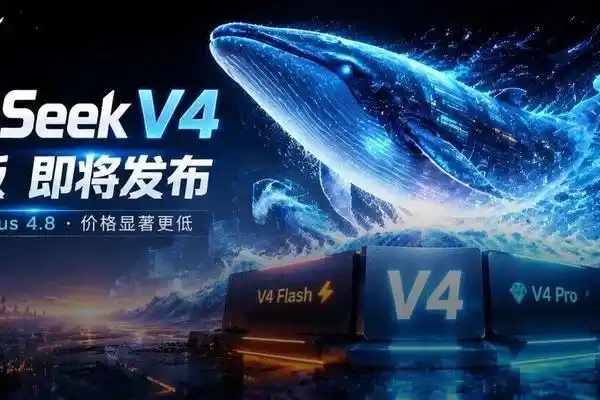
DeepSeek V4 'Full-Blooded Edition' Leaked, Could Be Released As Early As Tomorrow

The highly anticipated full release of DeepSeek V4 is imminent, expected to launch as early as tomorrow after nearly three months of waiting. A select group has already received access to the GA (General Availability) beta, which includes two versions: DeepSeek V4 Flash and DeepSeek V4 Pro. Early testers report that V4's overall performance is close to the level of Opus 4.8, with coding capabilities rivaling GPT-5.6 Sol. Its agent abilities are significantly enhanced, and 3D/SVG generation has improved notably. While it may not surpass the recently released Kimi K3 in performance, its expected price point is significantly lower. The official release will introduce a new "peak/off-peak" pricing model for its API. For example, deepseek-v4-pro will cost $0.87 per million output tokens during standard times and $1.74 during peak hours. The flash version is even more aggressive at $0.28/$0.56 per million tokens, with cached input tokens priced extremely low at $0.0028. This makes V4 a strong contender in terms of cost-effectiveness, potentially offering Opus-level capabilities at a fraction of the cost, continuing DeepSeek's reputation as a "price disruptor" in the AI market. Initial demos showcasing V4's capabilities have begun circulating, including generated 3D simulation games, HTML games blending elements of Minecraft and No Man's Sky, and classic games like a "Cut the Rope" clone. The final GA version is set to replace the older deepseek-chat and deepseek-reasoner models, which will be retired on July 24th.

marsbitHá 53m

DeepSeek V4 'Full-Blooded Edition' Leaked, Could Be Released As Early As Tomorrow

marsbitHá 53m

WEEX Labs Weekly Observation: The 'Power Restructuring' of AI Infrastructure and the 'Deep Dive Movement' into the Real Economy

WEEX Labs Weekly Review: AI Infrastructure's "Power Restructuring" and the "Deep Dive" into the Real Economy Mid-July 2026 marks a pivotal shift in the global AI industry. The allocation of computing power is transferring from cloud giants to compute resource owners, while the core value of AI is solidifying around its penetration into physical industry, moving beyond the race for model parameters. The era of fragmented model development is over, replaced by a capital-intensive, integrated chain driven by hard tech. Key developments this week include Meta's planned entry into the cloud computing market with "MetaCompute." This move by social media giants with massive GPU clusters challenges traditional cloud providers like AWS, integrating compute, models, and data into one-stop services, which will squeeze smaller rental providers and shift enterprise focus towards underlying model ecosystems. Chinese foundational models like DeepSeek-V4 and Tencent's Hy-3 are pushing towards "utility" status through open-source releases and extreme cost reductions via MoE architectures. This lowers entry barriers for enterprises, allowing them to focus resources on private deployment and deep business integration. Embodied intelligence, particularly humanoid robots, is transitioning from lab demos to real-world factory applications, driven by policies promoting large-scale, practical deployment in logistics and manufacturing. The value focus is shifting from spectacle to stable industrial data and real operational efficiency. Global governance, through forums like WAIC, is evolving from theoretical ethics to practical operational frameworks for "Sovereign AI," raising geopolitical compliance barriers and making auditability and data sovereignty core design requirements from the outset. WEEX Labs Insights: The current transformation shows AI's prosperity is deeply embedding into the fabric of global manufacturing. Strategic recommendations include: 1) leveraging open-source models for private, proprietary knowledge bases; 2) maintaining cloud provider diversity to avoid vendor lock-in from integrated model ecosystems; and 3) seeking opportunities in the "embodied infrastructure" supporting robots, such as data collection, industrial simulation, and factory AI adaptation services.

marsbitHá 1h

WEEX Labs Weekly Observation: The 'Power Restructuring' of AI Infrastructure and the 'Deep Dive Movement' into the Real Economy

marsbitHá 1h

Is WEEX TradFi Reliable? What You Should Know Before Your First Trade of U.S. Stock Tokens

In recent years, cryptocurrency users have expanded their focus beyond Bitcoin and Ethereum to include popular traditional financial (TradFi) assets like Nvidia, Apple, and Tesla stocks. This shift raises key questions: What do these TradFi assets represent on crypto trading platforms? How do they differ from traditional stock ownership? And how can users assess the reliability of platforms offering such products? TradFi products, such as those offered by WEEX TradFi (including NVDA, MSFT, AAPL, TSLA, and QQQ tokens), are blurring the lines between crypto and traditional markets. They allow users to trade based on the price movements of traditional assets within a familiar digital asset trading environment. However, it's crucial to understand that trading a "stock token" is not equivalent to owning the actual stock. Users are participating in price speculation, not gaining shareholder rights like dividends or voting. A key feature of these products is 7x24 trading, offering flexibility beyond traditional market hours. While convenient, this also introduces unique risks, such as potential liquidity gaps and volatility when underlying markets are closed. For users evaluating TradFi products, reliability hinges on transparency and risk management. Critical factors include understanding the product mechanism, how prices track the underlying assets, and the associated risks—especially when using leverage. Popular stocks and indices are still subject to company performance, macroeconomic shifts, and sector trends. Ultimately, TradFi represents a new gateway connecting crypto users to global markets. The future points toward integrated trading environments where the distinction between "crypto investor" and "traditional investor" fades. For newcomers, a platform's reliability stems not from promises, but from a clear understanding of the product, a comprehensive view of risks, and informed judgment of the platform's capabilities.

marsbitHá 1h

Is WEEX TradFi Reliable? What You Should Know Before Your First Trade of U.S. Stock Tokens

marsbitHá 1h

Trading

Spot
活动图片