Who Will Take the Flag? How Ethereum Will Navigate the Post-Foundation Era After Losing Its 'Big Brother'

marsbitPublicado em 2026-05-26Última atualização em 2026-05-26

Resumo

**Summary:** Ethereum Foundation (EF) is transitioning to a less central role, prompting debates about its future influence and Ethereum's path forward. Vitalik Buterin has clarified that EF, holding only 0.16% of ETH supply, will focus on core protocol research and public goods, not on supporting ETH's price. He outlined a strategy of organizational streamlining and emphasized technology development around the "CROPS" principles (Censorship-Resistance, Robustness, Openness, Privacy, Security), rather than engaging in direct performance wars with chains like Solana. The article contrasts EF's "long-termist," non-profit model with the more aggressive, fund-driven approaches of newer foundations (e.g., Solana, Aptos) or corporate-backed models like Coinbase's Base. It notes challenges for Ethereum, including talent drain to better-funded competitors and community frustration over ETH's market performance. Despite EF stepping back, Ethereum's mainstream adoption is advancing, highlighted by the potential inclusion of Ethereum DAT companies in major Russell indexes. The piece suggests Ethereum's next phase will rely more on ecosystem self-drive and large external stakeholders (like BitMine, a major ETH holder) for growth, moving into a "post-foundation era." Ultimately, the core question remains how Ethereum can reignite positive momentum through its unique value proposition while navigating this new, less centrally guided landscape.

Author:Nancy,PANews

While leading public chains like Solana and Base are fully engaged in competing for developers, traffic, and ecosystem expansion, the Ethereum Foundation (EF) has chosen to actively take a back seat.

Persistent loss of core talent, combined with multiple rounds of ETH selling pressure, has continuously fueled FUD sentiment surrounding the EF. This seemingly passive strategy is steadily eroding market trust in the EF.

On May 25, Vitalik Buterin published a lengthy response to recent controversies. He proposed that the EF is merely a special node with a specific mission, outlined the EF's future streamlining strategy and technical roadmap, and explicitly stated that maintaining the ETH price does not fall within the EF's responsibility.

After losing its 'leading big brother,' how will Ethereum continue forward in the post-foundation era?

From Executionism to Long-Termism: Diverging Styles of Public Chain Foundations

Recently, controversies over the loss of core foundation members, frequent ETH sales, and debates about ecosystem execution capability have been fermenting, intensifying external skepticism towards the EF, even sparking discussions about starting anew.

Meanwhile, Vitalik's latest disclosure reveals that the EF currently holds only about 0.16% of the total ETH supply, far lower than the common 10%—50% range for many public chain foundations.
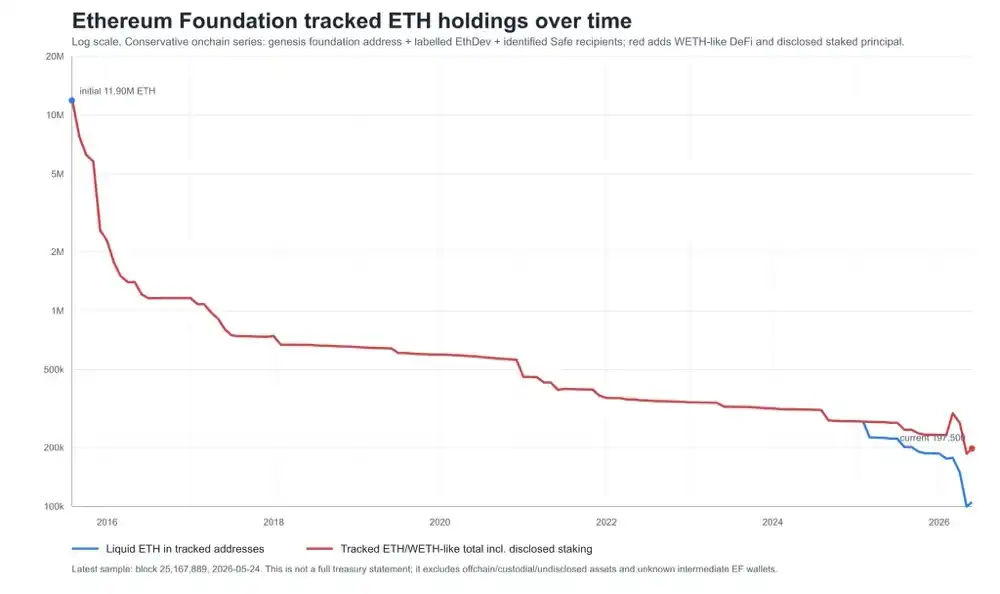
In other words, the EF's initial allocation of approximately 6 million ETH (8.3% of the initial total supply) has been largely depleted over the past decade, leaving around 100,000 ETH. Today, the EF can no longer sustain the role of supporting the vast ecosystem's high-speed operation, whether in terms of financial reserves, personnel scale, or organizational execution capability.

As one of the industry's most representative pure foundations, the EF has long focused on protocol research, public goods development, and open-source ecosystem support. Although the EF does not directly control the Ethereum network, its early accumulation of ETH reserves and the sustained influence of key developers like Vitalik have long positioned it as a crucial coordinating and driving force within the Ethereum ecosystem.

However, as the Ethereum ecosystem matures, the EF and Vitalik are intentionally diminishing their centralized influence, transitioning to a more low-key, backstage supporting role. This shift stems from adherence to neutrality and long-termism on one hand, and is constrained by practical pressures on the other.

As the EF's role within Ethereum diminishes, the singular growth path that ecosystem projects once relied on—heavily dependent on foundation resources and support—is gradually becoming obsolete. Ecosystem expansion is shifting towards community-driven innovation and diverse external collaboration.

Indeed, the foundation models of different public chains not only shape their respective governance cultures but also determine the ecosystem's maturity, degree of decentralization, and long-term evolutionary path.

In contrast, other emerging public chains are still in a phase of intense expansion, where foundations play a more aggressive and dominant role. For example, emerging chains like Solana, Aptos, and TON adopt more flexible foundation-driven models. By holding a high proportion of tokens early on, they implement high-intensity resource investment, continuous incentive programs, and support from DAT companies, sometimes with founding teams directly involved, to maintain high execution efficiency and growth speed.

Base represents another path. As a Coinbase-supported L2, it does not rely on a traditional independent foundation structure. Instead, it leverages parent company resources and commercial networks to drive ecosystem development, supplemented by ecosystem funds to promote developer and application integration. The advantage of this model lies in its high resource integration efficiency, enabling rapid user growth and product implementation.

Chains like Polygon and Avalanche employ a hybrid architecture with both a foundation and Labs. The foundation is responsible for governance transparency and community public affairs, while Labs focuses on product development and commercial execution. This avoids excessive centralization in a single entity while enhancing decision-making and implementation speed. The Hyperliquid Foundation follows a more financially-native governance path, deeply integrating governance rights, economic incentives, and ecosystem development funds through token mechanisms. It also allocates some resources for policy research and external communication, enhancing the ecosystem's self-sustainability and adaptability.

More importantly, as emerging public chains are still in fierce expansion and competition, they generally offer high cash salaries and substantial token incentives to aggressively attract developer resources, holding a clear advantage in the short-term talent war. In comparison, Ethereum is not competitive in terms of compensation. It relies more on developers' idealism, open-source culture identification, and the long-term ecosystem reputation to sustain contributions. Meanwhile, many core developers who entered the Ethereum ecosystem early have already gained considerable financial returns during the last bull market. Some members have gradually stepped back from frontline development and maintenance roles, leading to a noticeable shortage of sustained execution manpower within the ecosystem.

It can be said that the EF's transformation is both a result of Ethereum's developmental evolution and a long-term survival choice made under constraints of funding and execution capability.

Foundation to Reduce Token Sales; ETH Value Growth Needs More Major Holders

"The Ethereum Foundation has done a lot of technical work, but the market views it as a company, so this expectation gap leads to dissatisfaction. In other words, it's all about the price," the crypto KOL Lanhu Notes pinpointed the crux of the issue.

For the Ethereum community, almost all controversies eventually circle back to the issue of ETH's stagnant price.
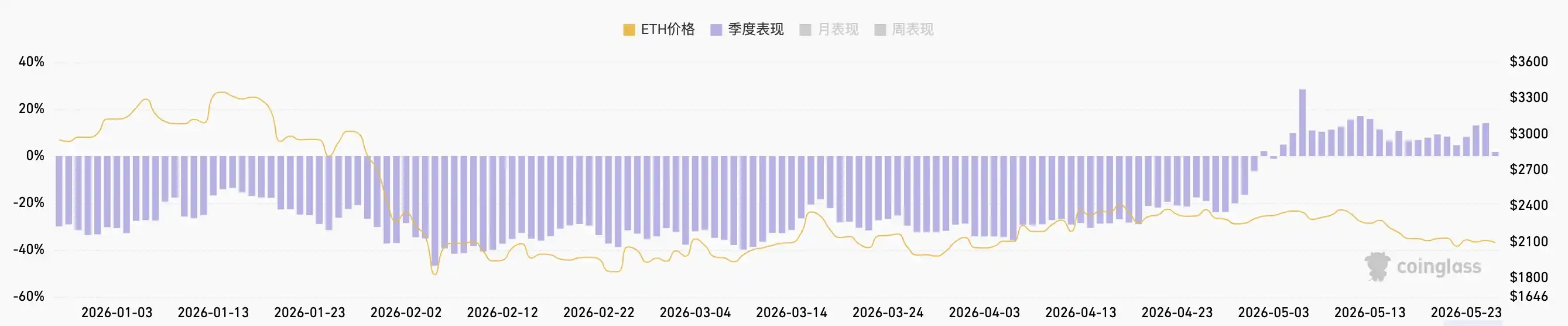
Crypto journalist Laura Shin pointed out that since the Dencun upgrade, Ethereum's series of roadmap choices have consistently lacked sufficient consideration for tokenomics, overly focusing on ideology while neglecting capital markets and price performance, leading to dissatisfaction within the community and among investors. Having external organizations participate can only aid business expansion, not fundamentally solve market issues at the asset level of ETH.

More importantly, the competition has just begun. Laura Shin believes we are currently at a critical stage for real-world adoption. However, compared to competitors actively capturing market share, attracting developers, and capital, the Ethereum Foundation seems increasingly reliant on past successes. Especially when the most competitive talents within the ecosystem continue to leave, this laissez-faire attitude may ultimately help competitors grow stronger and even give rise to new challengers.

Vitalik also responded to market skepticism in his long post. He emphasized that ETH is Ethereum's most valuable product, and the scale of ETH value currently carried and secured by the Ethereum network has reached approximately $250 billion. He disclosed that over 90% of his personal net worth is allocated to ETH, with the remainder primarily consisting of about $40 million in on-chain fiat assets, which he has fully invested in open-source biotech, software, and hardware projects.

However, Vitalik also stated that although the foundation will reduce ETH sales in the future, maintaining the ETH price is not within the EF's scope of responsibility. In his view, the Ethereum ecosystem already contains numerous individuals and institutions with financial resources far exceeding the EF. To truly drive ETH asset value growth, more ecosystem 'heroes' need to work together. The EF is also planning to establish connections with such organizations, providing them with necessary initial support.

Blockchain researcher William Mougayar expressed a similar view. He believes ETH is essentially an asset, Ethereum is a shared computing infrastructure, and the Ethereum Foundation is merely a non-profit organization responsible for promoting protocol development. One of its long-term goals is even to "gradually make the founders themselves less important."

As the EF actively recedes into the background, ETH is entering a new stage that relies more on ecosystem self-drive.

While the community is anxious about ETH's price, Ethereum's mainstream adoption is accelerating. Two Ethereum DAT companies, BitMine and Sharplink, are expected to be included in the US Russell Indexes on June 29 this year. Specifically, BMNR will be included in the Russell 1000 Index and Russell 3000 Index, while SBET will be included in the Russell 2000 Index and Russell 3000 Index.

According to BitMine Chairman Tom Lee, based on BitMine's current market capitalization of $107.5 billion, if successfully included, BitMine would attract at least $2.15 billion in buying funds.

Lanhu Notes further pointed out that global funds tracking the Russell 2000 and Russell 3000 indexes are in the trillions of dollars. Once officially included, relevant index funds are compelled to allocate the corresponding stocks. This opens the floodgates of passive funds for SBET and BMNR, allowing a large number of ordinary investors who previously had no exposure to the crypto market to automatically hold these stocks, pushing Ethereum into the mainstream channel of traditional finance. Passive fund buying creates real demand, often providing short-term support for stock prices around the inclusion date, and in the long term, increases stock liquidity and institutional holding ratios. It should be noted that while these funds are buying stocks, not ETH itself, it may indirectly strengthen market demand for ETH.

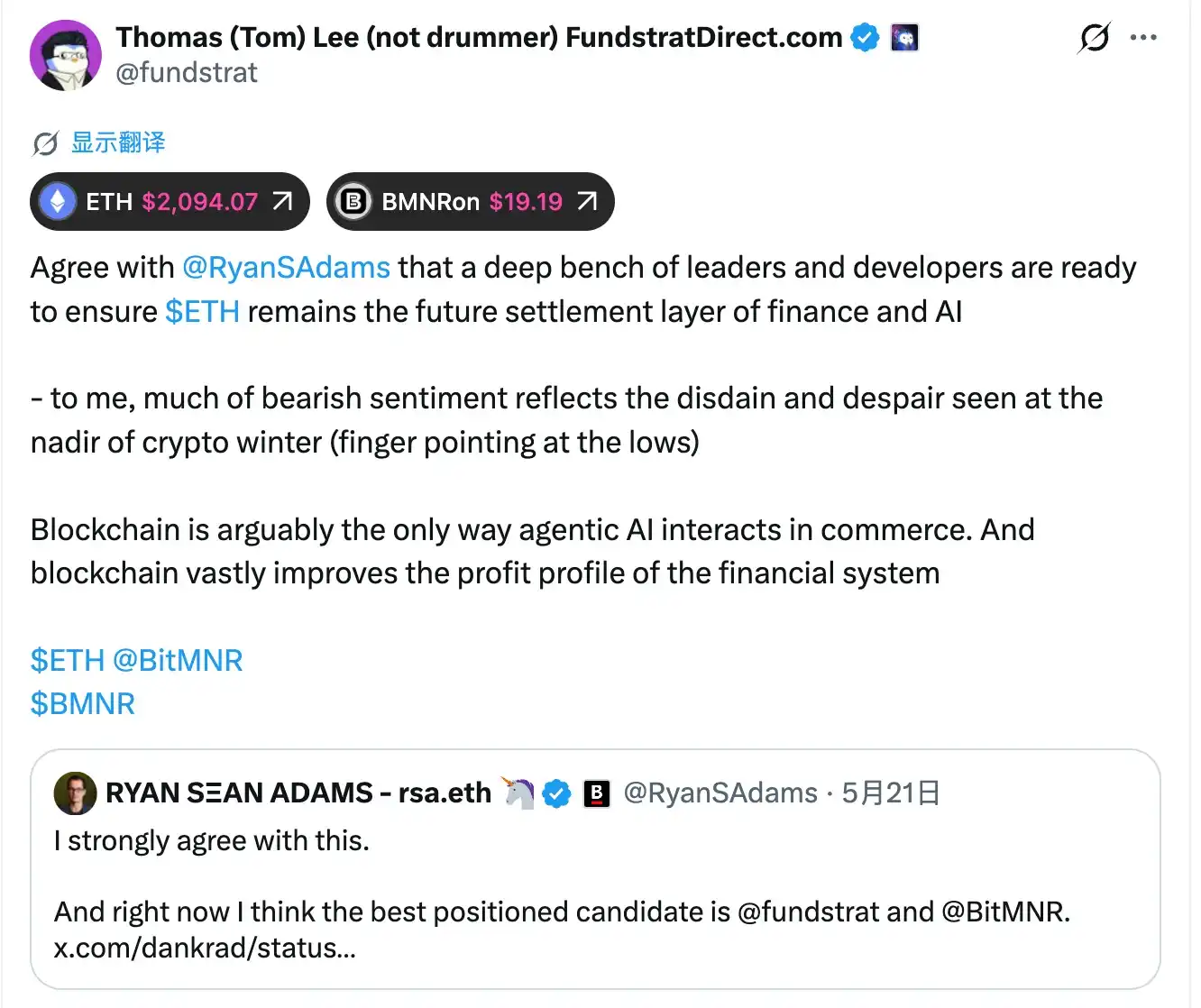
In the post-foundation era, who might be the next leader of the Ethereum community? Tom Lee has begun volunteering. His affiliated Fundstrat and BitMine are seen by the community as the best candidates. BitMine holds approximately 5.28 million ETH, accounting for 4.37% of the total supply, making it the largest ETH treasury globally.
Rejecting the Performance War, Adhering to CROPS Values

Beyond the new positioning of the Ethereum Foundation, Vitalik also shared his personal thoughts on Ethereum's future technical roadmap.

In Vitalik's view, Ethereum must build unique and hard-to-replicate competitiveness. With AI technology rapidly evolving and the entire tech industry experiencing explosive growth, if Ethereum merely clings to the existing EVM architecture and only meets short-term user demands through periodic hard forks, it will gradually lose its appeal.

He believes that simply chasing high-speed scaling, with only a slight advantage in decentralization over other chains, will ultimately relegate Ethereum to mediocrity. Ethereum needs to scale while also focusing on CROPS: the five dimensions of censorship resistance, liveness & protection against economic capture, open, privacy, and security.

Indeed, over the past few years, market attention on public chain competition has almost entirely focused on performance, cost, and user growth. Whether it's Solana, Sui, or various modular narratives, the competition essentially revolves around being "faster, cheaper, and easier to use."

However, Vitalik clearly does not want Ethereum to continue being drawn into this performance race. Because, looking at realistic outcomes, it's difficult for Ethereum to completely outperform the new generation of high-performance public chains in terms of performance. And if it continuously sacrifices its own characteristics for performance, it will gradually lose its core value foundation.

Vitalik specifically emphasized that for underlying infrastructure-level public chains like Ethereum and Bitcoin, even if 34% of nodes go offline, they absolutely cannot rely on social consensus or hard forks to 'bail out.' This might be acceptable for chains like Hyperledger, BNB, or Solana, but it is unacceptable for Ethereum, Bitcoin, Zcash, and others.

Simultaneously, state scaling is also a key research direction for Ethereum. And well-designed L2 networks can continue to provide value for the ecosystem. Especially in vertical scenarios like transactions and privacy, dedicated L2s still hold significant importance. Furthermore, with the advancement of erasure code P2P technology and other optimization solutions, Ethereum's future block intervals are also expected to be shortened further.

Compared to ecosystem prosperity, the current Vitalik seems more concerned with Ethereum maintaining its irreplaceability—a technical roadmap imbued with Vitalik's values.

In Vitalik's view, if a company appears too dogmatic in adhering to its principles, the worst outcome is merely a slowdown in its own development, while technological progress will continue to be driven by other companies. The best outcome, however, is that a company truly aligned with the community's values can gain spontaneous support, talent, and marketing resources from the community—support that is difficult to obtain through money alone. He believes that some AI companies have previously attempted to achieve similar effects through effective altruism, but due to the corruptibility of consequentialism, the results were limited.

In the post-foundation era, even as the EF gradually recedes from the center stage of Ethereum under the banner of neutrality and long-termism, whether it can truly quell negative market sentiment remains unknown. A more critical question is how Ethereum, caught in a downtrend cycle, can initiate an upward trajectory through roadmap reforms—a topic of greater concern to the market.


Leituras Relacionadas

Investors Frantically Snap Up AI Firms with 'No Profits': A High-Stakes Gamble on 'the Right to Define the Future'

"Investors are pouring billions into Chinese AI startups with no profits, betting on the future of the industry. A state-backed fund is reportedly in talks to lead DeepSeek's funding at a $45B valuation, just weeks after it was valued at $10B. Along with companies like Zhipu AI, MiniMax, and Kimi (backed by Meituan and Alibaba), their combined valuation exceeds $140B. This isn't a typical venture capital play. Investors are paying for 'future definition rights'—a chance to set the standards for the next tech era. Morgan Stanley notes a 6-12 month window for this scarcity premium before more AI companies go public. Despite massive losses, these companies show strong growth. Zhipu AI's API revenue grew 60x, Kimi's annual recurring revenue doubled to $200M in a month, and MiniMax turned its gross margin positive, with over 70% of revenue from overseas. Their valuations vastly exceed profitable firms like iFlytek. Crucially, technical progress underpins this growth. DeepSeek's latest model boasts costs just 1% of a leading competitor's, while Zhipu AI has raised API prices due to high demand. However, gaps with top global models remain. Tech giants like Tencent and Alibaba, investing heavily while describing their own AI efforts as 'leaky boats,' are also investing in these startups as a hedge. Key risks loom: the closing scarcity window, computing power bottlenecks limiting growth, and the sustainability of DeepSeek's cost-advantage model. With state capital now a major player, the success of these companies has become a strategic national concern. The next year will test if their soaring valuations can be justified by future profits."

marsbitHá 25m

Investors Frantically Snap Up AI Firms with 'No Profits': A High-Stakes Gamble on 'the Right to Define the Future'

marsbitHá 25m

SEC Slams the Brakes at the Last Minute, Halting "Tokenized U.S. Stocks"

On May 22, the U.S. SEC postponed the release of a key "innovation exemption" draft that would have permitted crypto-native platforms to issue and trade tokenized U.S. stocks on decentralized venues without full traditional exchange compliance. This would have legalized a "third-party token" model used overseas, where platforms issue tokens tracking stock prices without the underlying company's involvement, raising unresolved questions about shareholder rights, dividends, and sanctions enforcement. Meanwhile, the SEC had already approved a different, compliant path for tokenization led by Nasdaq and NYSE. Their model integrates tokenized stocks into existing settlement systems (like DTCC), preserving all shareholder rights. This creates a fundamental conflict: crypto platforms seek a permissionless, 24/7 on-chain parallel market, while traditional exchanges advocate for an upgraded, regulated version of the current system. Intense lobbying from traditional exchange groups like the World Federation of Exchanges argued the exemption would create an unfair regulatory advantage and dilute investor protection. Even some compliant crypto firms favored delay. Internally, SEC commissioners were divided on the scope and pace of the exemption. The delay highlights a critical policy crossroads. With significant trading volume already occurring overseas, the SEC's decision will determine whether the U.S. embraces a dual-track system for tokenized equities or sidelines itself from an emerging global infrastructure. The core unresolved question remains the legal status and rights of holders of third-party tokenized stocks. The SEC paused because the draft framework risked creating a major new asset class with profound, unanswered legal implications.

marsbitHá 34m

SEC Slams the Brakes at the Last Minute, Halting "Tokenized U.S. Stocks"

marsbitHá 34m

Is a Super IPO Wave Coming? Will It Drain and Crash the U.S. Stock Market?

The article discusses concerns about a potential "super IPO wave" hitting the U.S. stock market, with major companies like SpaceX, OpenAI, and Anthropic preparing to go public. While these large IPOs could collectively raise hundreds of billions, raising fears of a market "blood drain," analysis suggests the impact may be limited. Key points include: * Historical data shows IPO waves often coincide with strong market returns, as they typically occur during periods of high investor demand. * Model estimates suggest even the largest IPOs might only cause a market dip of around 1%. They are more likely to trigger a routine market pullback rather than end a bull market. * The current demand side remains supportive due to high household cash balances, strong corporate earnings growth, continued stock fund inflows, and robust share buyback announcements. * The main risk lies in concentrated investor positions, particularly in large-cap tech stocks, which are at elevated levels. A shift in funds towards new issuances could pressure these crowded sectors. * Recent fund flows show strength concentrated in U.S. and tech stocks, while other regions like Europe and Japan are experiencing outflows. The conclusion is that the IPO wave itself is unlikely to crash the market unless it coincides with a weakening in underlying demand factors like earnings or fund inflows into U.S. equities. The focus should be on whether demand can continue to absorb the new supply.

marsbitHá 39m

Is a Super IPO Wave Coming? Will It Drain and Crash the U.S. Stock Market?

marsbitHá 39m

Vitalik is Personally 'Dismantling' the Ethereum Foundation

Vitalik Buterin recently published an extensive article addressing core concerns about Ethereum's future direction and the role of the Ethereum Foundation (EF). He clarifies that the EF is not his personal domain nor the central authority of Ethereum; it operates as just one node within the broader ecosystem. The board makes collective decisions, with significant operational work led by Aya Miyaguchi, allowing Vitalik to focus on technical matters. The article critiques the perception that the EF should act like a conventional, fast-moving tech company. Buterin warns that merely chasing higher TPS, lower latency, or better marketing—like other chains—risks diluting Ethereum's foundational values. He draws a parallel to Google's evolution away from its "Don't be evil" ethos. Instead, the EF's renewed mandate is to focus on preserving and strengthening Ethereum's core principles, summarized as CROPS: **C**ensorship-resistance, **R**esistance to capture, **O**pen source, **P**rivacy, and **S**ecurity. The foundation will concentrate its limited resources (holding only ~0.16% of ETH) on these long-term, non-commercializable fundamentals, while ecosystem growth, applications, and market-facing activities should be driven by external teams and capital. Buterin outlines key technical priorities aligned with this vision: 1) Advancing formal verification to mathematically prove the absence of bugs; 2) Enhancing consensus security to maintain operation without reliance on social coordination during outages; and 3) Reducing dependency on intermediaries (like RPCs) to strengthen user sovereignty and privacy. He acknowledges ETH as Ethereum's most valuable asset, crucial for security, but stresses that promoting its value is a task for the wider ecosystem, not the EF. Ultimately, Buterin's message is a strategic refocus: the EF will become a smaller, more focused entity guarding Ethereum's essential, harder-to-achieve properties, ensuring it remains distinct not just in performance but in its commitment to decentralization, resistance, and security.

marsbitHá 44m

Vitalik is Personally 'Dismantling' the Ethereum Foundation

marsbitHá 44m

Trading

Spot
Futuros

Artigos em Destaque

O que é ETH 2.0

ETH 2.0: Uma Nova Era para o Ethereum Introdução ETH 2.0, amplamente conhecido como Ethereum 2.0, marca uma atualização monumental à blockchain do Ethereum. Esta transição não é meramente uma mudança estética; visa melhorar fundamentalmente a escalabilidade, segurança e sustentabilidade da rede. Com uma mudança do mecanismo de consenso em Proof of Work (PoW), intensivo em energia, para um Proof of Stake (PoS) mais eficiente, o ETH 2.0 promete uma abordagem transformadora ao ecossistema blockchain. O que é ETH 2.0? ETH 2.0 é um conjunto de atualizações distintas e interconectadas focadas na otimização das capacidades e desempenho do Ethereum. Esta reformulação foi projetada para abordar desafios críticos que o mecanismo atual do Ethereum enfrentou, particularmente em relação à velocidade das transações e à congestão da rede. Objetivos do ETH 2.0 Os principais objetivos do ETH 2.0 giram em torno da melhoria de três aspectos centrais: Escalabilidade: Com o objetivo de melhorar significativamente o número de transações que a rede pode manejar por segundo, o ETH 2.0 procura ultrapassar a limitação atual de aproximadamente 15 transações por segundo, alcançando potencialmente milhares. Segurança: Medidas de segurança melhoradas são integrais ao ETH 2.0, especialmente através da resistência aprimorada contra ciberataques e da preservação do ethos descentralizado do Ethereum. Sustentabilidade: O novo mecanismo PoS foi projetado não apenas para melhorar a eficiência, mas também para reduzir drasticamente o consumo de energia, alinhando a estrutura operacional do Ethereum com considerações ambientais. Quem é o Criador do ETH 2.0? A criação do ETH 2.0 pode ser atribuída à Ethereum Foundation. Esta organização sem fins lucrativos, que desempenha um papel crucial no apoio ao desenvolvimento do Ethereum, é liderada pelo co-fundador notável Vitalik Buterin. A sua visão de um Ethereum mais escalável e sustentável tem sido a força motriz por trás desta atualização, envolvendo contribuições de uma comunidade global de desenvolvedores e entusiastas dedicados a melhorar o protocolo. Quem são os Investidores do ETH 2.0? Embora os detalhes sobre os investidores do ETH 2.0 não tenham sido tornados públicos, é sabido que a Ethereum Foundation recebe apoio de várias organizações e indivíduos no espaço da blockchain e tecnologia. Esses parceiros incluem firmas de capital de risco, empresas de tecnologia e organizações filantrópicas que compartilham um interesse mútuo em apoiar o desenvolvimento de tecnologias descentralizadas e infraestrutura de blockchain. Como Funciona o ETH 2.0? ETH 2.0 é notável por introduzir uma série de características chave que o diferenciam do seu predecessor. Proof of Stake (PoS) A transição para um mecanismo de consenso PoS é uma das mudanças de destaque do ETH 2.0. Ao contrário do PoW, que depende da mineração intensiva em energia para a verificação de transações, o PoS permite que os utilizadores validem transações e criem novos blocos de acordo com a quantidade de ETH que apostam na rede. Isso leva a uma maior eficiência energética, reduzindo o consumo em aproximadamente 99,95%, tornando o Ethereum 2.0 uma alternativa consideravelmente mais ecológica. Shard Chains As shard chains são outra inovação crítica do ETH 2.0. Estas cadeias menores operam em paralelo com a cadeia principal do Ethereum, permitindo que várias transações sejam processadas simultaneamente. Esta abordagem melhora a capacidade geral da rede, abordando preocupações de escalabilidade que têm atormentado o Ethereum. Beacon Chain No coração do ETH 2.0 está a Beacon Chain, que coordena a rede e gere o protocolo PoS. Ela atua como uma espécie de organizador: supervisiona os validadores, garante que as shards permaneçam conectadas à rede e monitora a saúde geral do ecossistema blockchain. Linha do Tempo do ETH 2.0 A jornada do ETH 2.0 tem sido marcada por vários marcos chave que traçam a evolução desta atualização significativa: Dezembro de 2020: O lançamento da Beacon Chain marcou a introdução do PoS, preparando o caminho para a migração para o ETH 2.0. Setembro de 2022: A conclusão de “The Merge” representa um momento crucial em que a rede Ethereum fez a transição com sucesso de um quadro PoW para um PoS, anunciando uma nova era para o Ethereum. 2023: O lançamento esperado das shard chains visa melhorar ainda mais a escalabilidade da rede Ethereum, solidificando o ETH 2.0 como uma plataforma robusta para aplicações e serviços descentralizados. Características Chave e Benefícios Escalabilidade Melhorada Uma das vantagens mais significativas do ETH 2.0 é a sua escalabilidade melhorada. A combinação de PoS e shard chains permite que a rede expanda a sua capacidade, permitindo que acomode um volume de transações muito maior em comparação com o sistema legado. Eficiência Energética A implementação do PoS representa um enorme passo em direção à eficiência energética na tecnologia blockchain. Ao reduzir drasticamente o consumo de energia, o ETH 2.0 não só reduz os custos operacionais, mas também se alinha mais estreitamente com os objetivos globais de sustentabilidade. Segurança Aprimorada Os mecanismos atualizados do ETH 2.0 contribuem para uma segurança melhorada em toda a rede. O uso do PoS, juntamente com medidas de controle inovadoras estabelecidas através das shard chains e da Beacon Chain, assegura um maior grau de proteção contra potenciais ameaças. Custos Mais Baixos para os Utilizadores À medida que a escalabilidade melhora, os efeitos sobre os custos de transação também serão evidentes. Aumentada a capacidade e reduzida a congestão, espera-se que isso se traduza em taxas mais baixas para os utilizadores, tornando o Ethereum mais acessível para transações do dia a dia. Conclusão ETH 2.0 marca uma evolução significativa no ecossistema da blockchain do Ethereum. Ao abordar questões fundamentais como a escalabilidade, o consumo de energia, a eficiência das transações e a segurança geral, a importância desta atualização não pode ser subestimada. A transição para o Proof of Stake, a introdução das shard chains e o trabalho fundamental da Beacon Chain são indicativos de um futuro em que o Ethereum pode atender à crescente demanda do mercado descentralizado. Em uma indústria movida pela inovação e progresso, o ETH 2.0 representa um testemunho das capacidades da tecnologia blockchain em pavimentar o caminho para uma economia digital mais sustentável e eficiente.

100 Visualizações TotaisPublicado em {updateTime}Atualizado em 2024.12.03

O que é ETH 2.0

O que é ETH 3.0

ETH3.0 e $eth 3.0: Uma Análise Profunda do Futuro do Ethereum Introdução No ambiente em rápida evolução da criptomoeda e da tecnologia blockchain, o ETH3.0, frequentemente denotado como $eth 3.0, emergiu como um tema de considerável interesse e especulação. O termo abrange dois conceitos principais que merecem esclarecimento: Ethereum 3.0: Esta representa uma potencial atualização futura destinada a aumentar as capacidades da atual blockchain do Ethereum, focando especialmente na melhoria da escalabilidade e desempenho. ETH3.0 Meme Token: Este distinto projeto de criptomoeda procura aproveitar a blockchain do Ethereum na criação de um ecossistema centrado em memes, promovendo o envolvimento na comunidade de criptomoedas. Compreender esses aspectos do ETH3.0 é essencial não apenas para entusiastas de criptomoedas, mas também para aqueles que observam as tendências tecnológicas mais amplas no espaço digital. O que é ETH3.0? Ethereum 3.0 Ethereum 3.0 é promovido como uma atualização proposta para a rede Ethereum já estabelecida, que tem sido a espinha dorsal de muitas aplicações descentralizadas (dApps) e contratos inteligentes desde a sua criação. As melhorias vislumbradas concentram-se principalmente na escalabilidade—integrando tecnologias avançadas como sharding e provas de conhecimento zero (zk-proofs). Essas inovações tecnológicas visam facilitar um número sem precedentes de transações por segundo (TPS), potencialmente alcançando milhões, abordando assim uma das limitações mais significativas enfrentadas pela tecnologia blockchain atual. A melhoria não é meramente técnica, mas também estratégica; visa preparar a rede Ethereum para uma adoção generalizada e utilidade em um futuro marcado por uma maior demanda por soluções descentralizadas. ETH3.0 Meme Token Em contraste com o Ethereum 3.0, o ETH3.0 Meme Token aventura-se por um domínio mais leve e divertido, combinando a cultura dos memes da internet com a dinâmica das criptomoedas. Este projeto permite que os usuários comprem, vendam e negociem memes na blockchain do Ethereum, proporcionando uma plataforma que fomenta o envolvimento da comunidade através da criatividade e interesses compartilhados. O ETH3.0 Meme Token visa demonstrar como a tecnologia blockchain pode interseccionar com a cultura digital, criando casos de uso que são tanto divertidos quanto financeiramente viáveis. Quem é o Criador do ETH3.0? Ethereum 3.0 A iniciativa em direção ao Ethereum 3.0 é impulsionada principalmente por um consórcio de desenvolvedores e pesquisadores dentro da comunidade Ethereum, notavelmente incluindo Justin Drake. Conhecido por suas percepções e contribuições para a evolução do Ethereum, Drake tem sido uma figura proeminente nas discussões sobre a transição do Ethereum para uma nova camada de consenso, referida como “Beam Chain”. Esta abordagem colaborativa ao desenvolvimento significa que o Ethereum 3.0 não é fruto de um único criador, mas sim uma manifestação da engenhosidade coletiva focada no avanço da tecnologia blockchain. ETH3.0 Meme Token Os detalhes sobre o criador do ETH3.0 Meme Token são atualmente indetectáveis. A natureza dos tokens de meme frequentemente leva a uma estrutura mais descentralizada e impulsionada pela comunidade, o que poderia explicar a falta de atribuição específica. Isso alinha-se com a ethos da comunidade de criptomoedas mais ampla, onde a inovação geralmente surge de esforços colaborativos em vez de esforços individuais. Quem são os Investidores do ETH3.0? Ethereum 3.0 O apoio ao Ethereum 3.0 provém principalmente da Fundação Ethereum, juntamente com uma comunidade entusiástica de desenvolvedores e investidores. Esta associação fundacional proporciona um grau significativo de legitimidade e melhora as perspectivas de uma implementação bem-sucedida, uma vez que aproveita a confiança e credibilidade construída ao longo de anos de operações de rede. Em um clima em rápida mudança no mundo das criptomoedas, o apoio da comunidade desempenha um papel crucial no impulso ao desenvolvimento e adoção, posicionando o Ethereum 3.0 como um sério candidato a futuros avanços na blockchain. ETH3.0 Meme Token Embora as fontes atualmente disponíveis não forneçam informações explícitas sobre as fundações ou organizações de investimento que apoiam o ETH3.0 Meme Token, é indicativo do modelo típico de financiamento para tokens de meme, que frequentemente depende de apoio base e engajamento da comunidade. Os investidores em tais projetos costumam consistir em indivíduos motivados pelo potencial de inovação impulsionada pela comunidade e pelo espírito de cooperação encontrado dentro da comunidade cripto. Como Funciona o ETH3.0? Ethereum 3.0 As características distintivas do Ethereum 3.0 residem em sua proposta de implementação de sharding e tecnologia zk-proof. Sharding é um método de partição da blockchain em partes menores e gerenciáveis ou “shards”, que podem processar transações simultaneamente em vez de sequencialmente. Esta descentralização do processamento ajuda a prevenir congestionamentos e garante que a rede permaneça responsiva mesmo sob carga pesada. A tecnologia de prova de conhecimento zero (zk-proof) contribui com outra camada de sofisticação ao permitir a validação de transações sem revelar os dados subjacentes envolvidos. Este aspecto não apenas melhora a privacidade, mas também aumenta a eficiência geral da rede. Há também conversas sobre a incorporação de uma Máquina Virtual Ethereum de conhecimento zero (zkEVM) nesta atualização, amplificando ainda mais as capacidades e utilidade da rede. ETH3.0 Meme Token O ETH3.0 Meme Token distingue-se ao capitalizar sobre a popularidade da cultura dos memes. Estabelece um mercado para que os usuários participem da negociação de memes, não apenas para entretenimento, mas também para potencial ganho econômico. Ao integrar recursos como staking, provisão de liquidez e mecanismos de governança, o projeto fomenta um ambiente que incentiva a interação e participação da comunidade. Ao oferecer uma mistura única de entretenimento e oportunidade econômica, o ETH3.0 Meme Token visa atrair um público diversificado, variando de entusiastas de criptomoedas a conhecedores casuais de memes. Cronologia do ETH3.0 Ethereum 3.0 11 de novembro de 2024: Justin Drake sugere a próxima atualização do ETH 3.0, centrada nas melhorias de escalabilidade. Este anúncio sinaliza o início de discussões formais sobre a futura arquitetura do Ethereum. 12 de novembro de 2024: A proposta antecipada para Ethereum 3.0 deve ser revelada no Devcon em Bangkok, preparando o cenário para um feedback mais amplo da comunidade e potenciais próximos passos no desenvolvimento. ETH3.0 Meme Token 21 de março de 2024: O ETH3.0 Meme Token é oficialmente listado no CoinMarketCap, marcando sua entrada no domínio público das criptomoedas e aumentando a visibilidade de seu ecossistema baseado em memes. Pontos Chave Em conclusão, Ethereum 3.0 representa uma evolução significativa dentro da rede Ethereum, focando em superar limitações quanto à escalabilidade e desempenho através de tecnologias avançadas. As atualizações propostas refletem uma abordagem proativa às futuras demandas e usabilidade. Por outro lado, o ETH3.0 Meme Token encapsula a essência da cultura impulsionada pela comunidade no espaço das criptomoedas, aproveitando a cultura dos memes para criar plataformas envolventes que incentivam a criatividade e participação dos usuários. Compreender os distintos propósitos e funcionalidades do ETH3.0 e $eth 3.0 é fundamental para qualquer pessoa interessada nos desenvolvimentos contínuos dentro do espaço cripto. Com ambas as iniciativas a pavimentar caminhos únicos, elas sublinham coletivamente a natureza dinâmica e multifacetada da inovação em blockchain.

100 Visualizações TotaisPublicado em {updateTime}Atualizado em 2024.12.03

O que é ETH 3.0

Como comprar ETH

Bem-vindo à HTX.com!Tornámos a compra de Ethereum (ETH) simples e conveniente.Segue o nosso guia passo a passo para iniciar a tua jornada no mundo das criptos.Passo 1: cria a tua conta HTXUtiliza o teu e-mail ou número de telefone para te inscreveres numa conta gratuita na HTX.Desfruta de um processo de inscrição sem complicações e desbloqueia todas as funcionalidades.Obter a minha contaPasso 2: vai para Comprar Cripto e escolhe o teu método de pagamentoCartão de crédito/débito: usa o teu visa ou mastercard para comprar Ethereum (ETH) instantaneamente.Saldo: usa os fundos da tua conta HTX para transacionar sem problemas.Terceiros: adicionamos métodos de pagamento populares, como Google Pay e Apple Pay, para aumentar a conveniência.P2P: transaciona diretamente com outros utilizadores na HTX.Mercado de balcão (OTC): oferecemos serviços personalizados e taxas de câmbio competitivas para os traders.Passo 3: armazena teu Ethereum (ETH)Depois de comprar o teu Ethereum (ETH), armazena-o na tua conta HTX.Alternativamente, podes enviá-lo para outro lugar através de transferência blockchain ou usá-lo para transacionar outras criptomoedas.Passo 4: transaciona Ethereum (ETH)Transaciona facilmente Ethereum (ETH) no mercado à vista da HTX.Acede simplesmente à tua conta, seleciona o teu par de trading, executa as tuas transações e monitoriza em tempo real.Oferecemos uma experiência de fácil utilização tanto para principiantes como para traders experientes.

3.1k Visualizações TotaisPublicado em {updateTime}Atualizado em 2025.03.21

Como comprar ETH

Discussões

Bem-vindo à Comunidade HTX. Aqui, pode manter-se informado sobre os mais recentes desenvolvimentos da plataforma e obter acesso a análises profissionais de mercado. As opiniões dos utilizadores sobre o preço de ETH (ETH) são apresentadas abaixo.

活动图片













