When 'Odysseus' Encounters the Algorithm

marsbitPublicado em 2026-08-10Última atualização em 2026-08-10

Resumo

Christopher Nolan's "Odyssey," a $250 million IMAX epic, premiered in July 2026, quickly grossing over $1 billion and setting box office and critical records. The film's production was defined by its physical scale: shooting across six countries with practical effects, custom-built IMAX cameras, and extensive use of film. Concurrently, the AI-generated film "Odysseus: The Fall," created by the independent studio Fountain0 for just $50,000, demonstrated the technical feasibility of AI in long-form filmmaking. This stark 5,000x cost difference highlights a broader industry conflict between traditional, experience-driven production and algorithmic efficiency. While the AI film achieved technical success, it revealed current limitations, such as unstable long shots, inconsistent characters, and a lack of nuanced emotional performance. More importantly, its infinite, low-cost nature lacks the scarcity and immersive "event" status that fuels the theatrical premium for films like Nolan's. The market strongly favored the traditional model's brand security, physical assets, and premium theatrical experience. The analysis suggests AI will not replace auteurs like Nolan but will significantly disrupt mid-tier productions and technical, labor-intensive roles (e.g., pre-visualization, VFX). This could erode the career pathways for future directors. Paradoxically, as AI content proliferates, the perceived value of "handcrafted," physically-shot cinema may rise, akin to artisanal goods. ...

By | Wan Dian Research

Athena's owl takes flight at dusk, while Nolan's camera roars at noon.

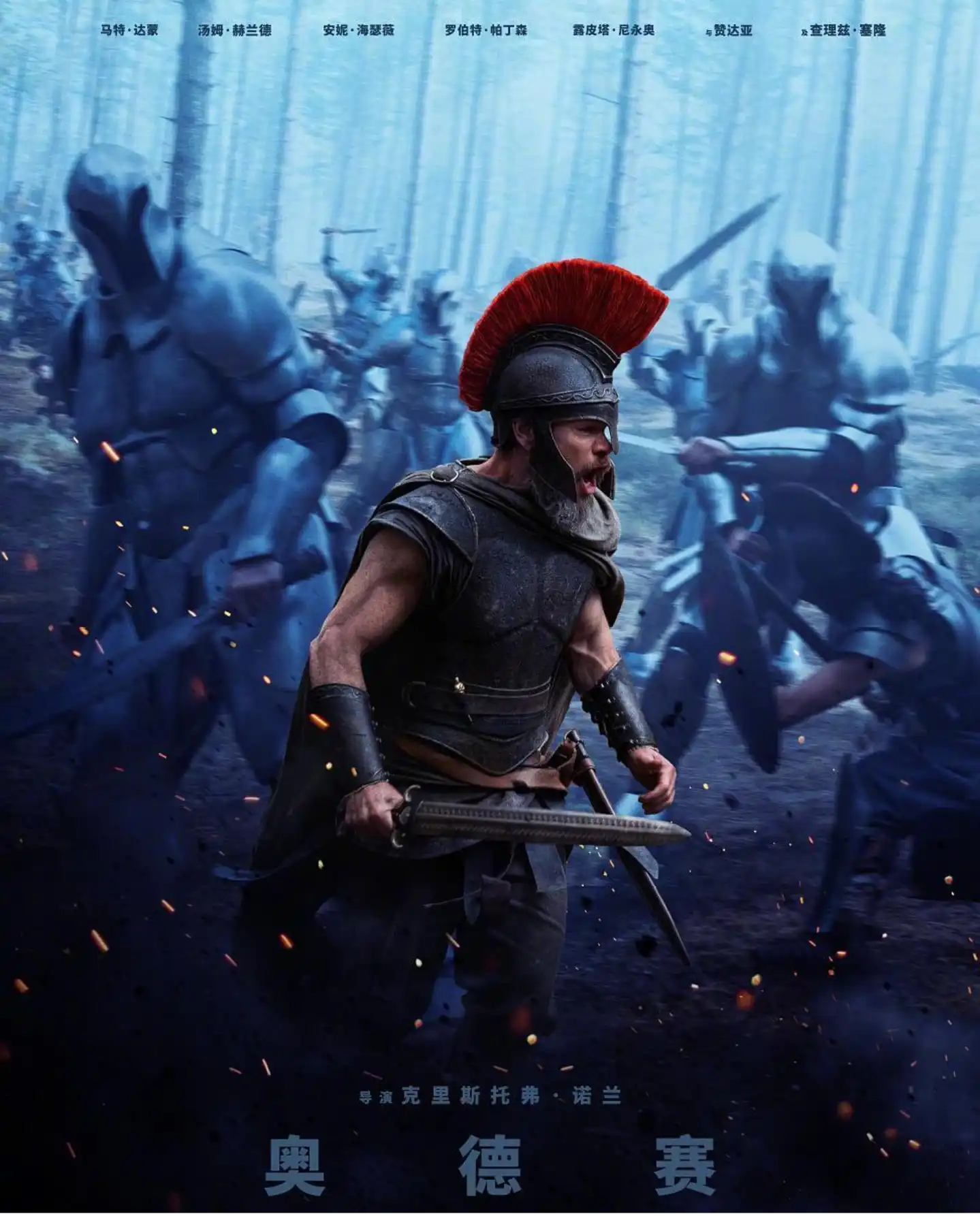
On July 17, 2026, Christopher Nolan's "Odyssey" was released in cinemas worldwide. As of August 9, this epic film with a budget of $250 million and a runtime of 172 minutes has grossed over $1.008 billion globally, becoming the director's second-highest-grossing work, second only to "The Dark Knight Rises." It opened with a global weekend box office of $264 million, setting a new personal record for Nolan. It holds a 98% fresh rating on Rotten Tomatoes and a 99% audience score, both Nolan's highest career scores. In mainland China, the film had not yet officially premiered (scheduled for August 14), but advance screenings and pre-sales had already generated over 60 million yuan. Showings with only 0.4% of the screenings accounted for over 17% of the box office, with IMAX screenings in first-tier cities reaching a 94% occupancy rate. Industry insiders predict the final box office will land between $1.2 and $1.5 billion.
Meanwhile, another version of Odysseus was quietly setting sail in the digital world. Independent studio Fountain0 released a 135-minute feature film titled "Odysseus: The Fall," with a total cost of only $50,000, generated 100% by artificial intelligence. A team of 12 people completed it in three months, with zero live-action filming, zero studio use, and zero large crew. Almost simultaneously, Elon Musk announced on the X platform that his AI platform Grok Imagine would produce an AI-generated "Odyssey" feature film "faithful to Homer's original" by the end of the year.

A 5000-fold cost difference, same subject matter, same release window. This is not just a clash of artistic genres, but a divergence in industrial philosophy. However, delving deeper into Hollywood's balance sheets reveals that Christopher Nolan's $250 million is not a consumptive "expense," but a "leveraged investment" that moves the entire industry—securing exclusive IMAX agreements, long-tail home video rights, and copyright library value for the next half-century.

In contrast, while AI's $50,000 is cheap, its training datasets exist in legal gray areas, and the generated footage cannot claim strong copyright protection. "Low cost" without property barriers is, in the eyes of capital markets, precisely a liability lacking a moat.

Nolan's filming method is almost a deliberate provocation to efficiency-first proponents.

A 91-day shoot spanned six countries: Morocco, Greece, Italy, Iceland, Scotland, and the United States. The film used over 640 kilometers (over 2.1 million feet) of IMAX film—enough to stretch from Toronto to New York—and produced 5,300 costumes. For this film, IMAX spent two years developing its first new film camera in 25 years, named "Kelly" in honor of the late Chief Quality Officer David Kelly and his wife. The camera uses carbon fiber components (sourced from Formula 1 racing) and for the first time enables IMAX film to capture dialogue and close-up shots—previously, the immense operating noise of IMAX cameras made any dialogue scene impossible.

The Cyclops scene was not CGI. The crew built a 60-foot-tall practical animatronic puppet in Greece's Psychro Cave, combining mechanical effects and string-puppet techniques. The six-headed sea monster and massive whirlpool were also filmed practically—manned speedboats circled to create a physical water vortex, providing real-time dynamic references for the visual effects team. Actors wore bronze armor while submerged in 9°C seawater. As Matt Damon put it, "This is absolutely the biggest movie I've ever made in my career. It feels like it was made the way they would have 100 years ago, just with IMAX this time."

Independent studio Fountain0's working method belongs to another civilization.

They used large language models to generate the script and video diffusion models to render the visuals. Algorithms replaced the director, cinematographer, art director, lighting technicians, and even the entire post-production team. No morning meetings, no weather delays, no actor scheduling conflicts, no workers' compensation insurance. The total cost of $50,000 is roughly equivalent to a single day's catering expenses on Nolan's set. The film rents for $9.99 per view. It proves for the first time that generating a full-length narrative film with AI is technically feasible.

The capital markets have already cast their preliminary vote.

Nolan's "Odyssey" has grossed $257 million from IMAX screenings, accounting for nearly a quarter of its global total. IMAX's stock price surged 6.61% on August 3, breaking the $50 barrier for the first time to hit a record high; it's up 37.99% year-to-date and has doubled over the past 12 months. Thanks to this film, Universal Pictures became the first film studio in 2026 to surpass $4 billion in global box office. With a $20 million advance plus 20% of the box office gross, Nolan stands to earn between $75 million and $100 million personally.

Meanwhile, Fountain0's AI feature film garnered about 1.2 million views in its first week on streaming platforms. Converted to a subscription model, this translates to direct revenue of less than $1 million. Musk's Grok Imagine version has yet to materialize, and the capital markets have reacted tepidly—Tesla's stock price showed no significant movement, and xAI's valuation hasn't been repriced as a result.

The market favors a certain narrative.

Nolan spent two decades, over ten films, and a cumulative global box office exceeding $6 billion to build a predictable brand for investors. Securing a top-tier Hollywood deal of a "$20 million advance plus 20% of the box office" as a director is extremely rare in industry history. AI filmmaking, however, has yet to establish any sustainable business model. There is no director brand premium, no theatrical window, no IMAX exclusive revenue share, no peripheral merchandise chain. It remains in the ambiguous zone between "tech demo" and "complete product." More crucially, Nolan's seemingly "inefficient" practical filming method is, in essence, a "physical performance bond" delivered to investors. In an industry with an extremely high failure rate, footage shot on film is a definite physical asset. In contrast, AI's generation of a perfect shot depends on a probability-based lottery; this black-box unpredictability would be seen as a potential budget black hole and delay bomb in production audits.

The most honest answer to whether AI can replace traditional filmmaking currently is: it depends on how you define "replace."

First, look at AI's limitations. A frame-by-frame analysis of Fountain0's final product reveals no single shot lasting longer than three seconds. The high-frequency cuts are not an avant-garde editing style but a passive compromise of the technology—current mainstream AI video models cannot support long, stable single-shot generation; the longer a shot lingers, the more obvious the loss of detail becomes. Character consistency across scenes cannot be guaranteed; the same character may appear with different facial contours in different shots. Physical simulation remains superficial, with stiff, jerky body movements lacking force logic and natural texture. The deeper constraint lies in "visual entropy": the human brain is extremely sensitive to instantaneous changes in micro-expressions, and great performances often involve actors' extreme deviations from biological randomness. However, current diffusion models are essentially about "averaging probabilities"; algorithms, for stability, automatically avoid those low-probability moments of brilliance—this condemns AI to long-term mediocrity above the mean in the core domain of emotional close-ups. These are structural issues that might be resolved through iteration in the next three to five years.

But the deeper challenge lies in the consumption experience. All 70mm film screenings at London's BFI IMAX until September 10 are sold out. Some flew halfway across the world from Atlanta, others drove 12 hours to watch a midnight screening before catching an early flight back. IMAX CEO Richard Gelfond said, "In New York, you have to wait until September to get a ticket for a 70mm showing; it's almost become a luxury brand." People are paying not just the ticket price but also their time, travel, and attention. These investments themselves become part of the experience—scarcity creates a sense of ritual, and ritual creates a premium. It's more than just ritual. In the era of infinite supply on streaming platforms, "the physical expenditure of being present" is evolving into a new marker of class distinction. This "embodied cognition" generated by physical presence creates physiological memories that no digital algorithm can encode—the social sharing value it generates has long surpassed the price of the movie ticket itself.

AI-generated content is inherently an infinite supply. As long as the servers are on, it can generate Odysseus forever, the Cyclops forever, any shot forever. But infinite supply destroys scarcity, and scarcity is precisely the foundation of the entertainment industry's premium pricing. When algorithms make images as free and limitless as air, people are instead willing to pay more for a real silver screen.

This is not to say AI will be without impact. On the contrary, its efficiency advantages will profoundly transform the middle and later stages of the film and television industry chain.

Pre-visualization (Previs) already uses AI to generate storyboards and dynamic previews; background filling, scene extensions, and dynamic fixes in post-production VFX are increasingly handled by algorithms; virtual production technology combining game engines with AI, as seen in series like "The Mandalorian," has significantly reduced location costs. These applications don't compete for the "director" title but are eroding the profit margins of repetitive, labor-intensive segments in the traditional film industry.

Oxford University economist Carl Benedikt Frey offers a noteworthy observation: technological replacement is never all or nothing; it tends to replace "tasks that can be codified," not entire professions.

AI can replace background artists, but it's difficult to replace the person who decides "why shoot this shot." It can optimize production cost structures, but it struggles to create a new narrative paradigm. Nolan's choice to shoot dialogue scenes on IMAX film—seemingly absurd from an efficiency standpoint—is precisely this "irrational" choice that creates unique value distinct from streaming content. In a content market dominated by algorithm recommendations and short-video formats, this distinction itself becomes a scarce resource.

But a colder point must be added: AI may not replace Nolan at the finish line, but it will block Nolan's apprentices at the starting line. When producers can use AI to generate "good enough" previews for medium-budget genre films, young directors who traditionally gained experience through $50-$100 million practical shooting projects will find it extremely difficult to secure budgets for green-screen shoots. AI isn't replacing masters at the endpoint; it's draining the soil for new masters to grow at the source. When the future holds only Nolan's "handcrafted luxury goods" and AI's "infinite fast-fashion products," the middle ground of cinema as a popular art will severely erode.

Interestingly, AI might reinforce the value of figures like Nolan in another dimension.

When AI-generated feature films become cheap and common, "live-action filming" itself may gain a premium label akin to "handmade." Just as after the Industrial Revolution, handmade goods didn't disappear but instead found a new market position as "artisan." Those elements irreplicable by algorithms—an actor's gaze, the light on a real set, the serendipity created by a group of people in the same physical space—might become even more precious as AI imagery proliferates.

Odysseus wandered the sea for ten years before returning home. Today's film and television industry is also adrift.

One path leads toward the infinite convenience of algorithm generation, the other toward the finite scarcity of film and giant screens. Nolan chose the latter, and the market affirmed it with $1 billion. But this is not the final verdict. AI video models are iterating monthly—perhaps in three years, an AI-generated Odysseus will have consistent facial features, realistic physics, and single-shot narratives lasting two hours. When that happens, will Nolan-style film epics become even more expensive due to increased scarcity, or will they become expensive nostalgia?

If we are honest enough, we must admit the essence of this confrontation is the incommensurability between the "logic of efficiency" and the "logic of experience." Algorithms pursue the "optimal solution"—producing the visual stimuli most aligned with audience expectations within the shortest computational power. Nolan pursues the "unique solution"—that soul-stirring moment possible only on that screen, at that instant, with that specific film grain.

While industrial capital frantically chases the certainty of algorithms, they overlook a brutal truth: humans are willing to pay a premium for "unexpected surprises" but will only pay cheap subscription fees for "precise conformity to expectations." Odysseus rejected the immortality and ease offered by Calypso, choosing instead the thorns and risks of the journey home. This is perhaps the oldest metaphor for the current predicament of film and television: what we ultimately choose are always the difficult voyages that make us truly feel "alive," not the smooth algorithmic path to nothingness.


Criptomoedas em alta

Perguntas relacionadas

QWhat are the key differences in cost, production methods, and market performance between Christopher Nolan's 'Odyssey' and the AI-generated 'Odysseus: The Fall'?

AChristopher Nolan's 'Odyssey' had a budget of $250 million, involved a 91-day live-action shoot across six countries, used 640 km of IMAX film, and utilized elaborate practical effects like a 60-foot animatronic cyclops. As of August 9th, 2026, its global box office exceeded $1.008 billion. In contrast, 'Odysseus: The Fall' by Fountain0 cost only $50,000, was produced in three months by a 12-person team using AI models for the script and visuals with zero live-action filming. It earned an estimated less than $1 million in its first week through streaming rentals.

QAccording to the article, what are the main technological and artistic limitations of current AI-generated feature-length films?

ACurrent AI films face several key limitations: 1) No single shot can last longer than three seconds due to model instability; 2) Inconsistent character appearance across different scenes; 3) Stiff and illogical physical movements and animations; 4) An inability to capture nuanced, low-probability emotional expressions (like great acting moments), as diffusion models inherently average towards probabilistic stability, leading to visual mediocrity. These are considered structural issues that may take 3-5 years to potentially resolve.

QHow does the article contrast the 'efficiency logic' of AI with the 'experience logic' of traditional filmmaking like Nolan's?

AThe article contrasts 'efficiency logic'—where AI aims to produce the most expected visual stimuli with minimal computational power—with 'experience logic'—exemplified by Nolan's pursuit of a 'unique solution' that creates soul-stirring moments achievable only through specific mediums (like IMAX film), locations, and moments. It argues that while capital chases algorithmic certainty, humans are willing to pay a premium for the 'unexpected surprise' and embodied experience (scarce, ritualistic, physically demanding) that traditional filmmaking can offer, as opposed to the cheap subscription fee for algorithmically precise, infinitely reproducible content.

QWhat is the article's argument about how AI might impact the future ecosystem for filmmakers, particularly newcomers?

AThe article argues that AI may not replace master filmmakers like Nolan at the peak of their careers, but it risks 'draining the soil' for the growth of new masters. If studios can use AI to generate 'good enough' previews for mid-budget genre films, it will become extremely difficult for young directors to secure the $50-100 million budgets needed for live-action projects to gain crucial experience. This could lead to a polarized ecosystem with only Nolan-like 'handcrafted luxury' at one end and AI's 'infinite fast-fashion' at the other, causing the middle ground of film as a popular art form to severely erode.

QIn what ways does the article suggest AI could paradoxically strengthen the value of traditional, live-action filmmaking?

AThe article suggests that as AI-generated content becomes cheap and ubiquitous, 'live-action filmmaking' itself could gain a premium label, similar to 'artisan' or 'handcrafted' goods after the Industrial Revolution. Elements that algorithms cannot replicate—such as an actor's gaze, natural lighting on location, and the spontaneous creativity of a group of people sharing a physical space—may become more珍贵 and valued precisely because of the flood of AI imagery, creating a new market distinction based on authenticity and human craft.

Leituras Relacionadas

Wall Street 'Conspiracy Theory': Did Powell Deliberately Push Up Long-Term U.S. Treasury Yields?

Bank of America refutes market speculation that Federal Reserve Chair Warsh deliberately pushed up long-term U.S. Treasury yields via press conferences to tighten financial conditions. Their report argues such action contradicts the Fed's established policy framework and would lack FOMC support. According to the report, some market participants interpreted the post-July FOMC meeting rise in long-end yields and inflation breakevens as a deliberate strategy by Warsh to combat inflation by tightening financial conditions. Analysts Mark Cabana and Aditya Bhave directly reject this, stating the FOMC's core policy tool remains the federal funds rate, as outlined in its long-term strategy statements. They emphasize Warsh cannot unilaterally alter the Fed's operational approach, which would require full FOMC consensus—a high bar. The analysis highlights the Fed's precise control over overnight rates versus its limited, indirect influence on long-term yields, which operate through policy expectations and the hard-to-manage term premium channel. The recent sharp move in long-end rates serves as a reminder of the risks of operating outside the Fed's direct control. The report concludes the FOMC is unlikely to abandon its proven, controllable tools for unverified methods, dismissing the "four-dimensional chess" theory of long-rate manipulation as market overinterpretation.

marsbitHá 52m

Wall Street 'Conspiracy Theory': Did Powell Deliberately Push Up Long-Term U.S. Treasury Yields?

marsbitHá 52m

Third Quarter Beijing Office Market: Investment and Owner-occupier Acquisition Demand to Recover in Parallel

Third Quarter Beijing Office Market: Investment and Owner-Occupier Acquisition Demand to Recover in Parallel Structural shifts in the domestic economy are reshaping office leasing demand. While expansion in high-tech sectors like AI, semiconductors, and new energy will drive demand, traditional industries may downsize to cut costs. Rents are expected to continue declining due to new supply and landlords' concessions, but prime submarkets attracting high-tech tenants will see slower rental declines and faster absorption. Tenants increasingly favor submarkets with strong industry clusters and supportive policies. The adoption of AI may also lead some firms to reduce their office footprint as they optimize workforce efficiency. The investment sales market is showing signs of recovery. Investor-buyers are becoming more active, targeting properties with stable rental income in key tech hubs. Simultaneously, owner-occupier demand is emerging from high-tech firms seeking headquarters. They prefer buildings in relevant industry locations with good renovation potential. Market Strategy for Q3 2026: * For Tenants: Those for whom office image is critical should consider prime buildings in the CBD. Leverage strong brand positions to negotiate favorable terms, including landlord contributions to fit-out costs. * For Landlords: Transition to service providers by offering industry-specific support like financing connections. Proactively engage expiring tenants with renewal incentives and dedicated account management. * For Buyers: Investor-buyers should target stable, well-occupied assets in submarkets like Zhongguancun. Owner-occupiers from high-tech sectors can seek value in properties with good locational fit but financially pressured sellers, carefully assessing renovation costs. Q2 2026 Market Snapshot: The average effective rent for Beijing Grade A offices fell 2.7% QoQ to RMB 197/sqm/month, with vacancy at a high 16.3%. High-tech sectors drove major leases in submarkets like Zhongguancun and Wangjing-Jiuxianqiao. Total investment sales volume reached RMB 14.2 billion, boosted by investor interest in tech areas and owner-occupier acquisitions by high-tech firms. The average sales price rose 24% QoQ to RMB 38,312/sqm, partly due to premium prices paid for owner-occupier purchases in key financial submarkets.

marsbitHá 52m

Third Quarter Beijing Office Market: Investment and Owner-occupier Acquisition Demand to Recover in Parallel

marsbitHá 52m

BofA Research Report Insights: Bull & Bear Indicator Rises to 9.7, Liquidity Backstop and Midterm Elections Form Market's Core Contradiction

Bank of America's Bull & Bear indicator rose to 9.7 in early August, its highest since 2021 and nearing a "sell" signal. Weekly flows showed $52.9B into cash, $32.9B into equities, and $23.1B into bonds. The report highlights a core market contradiction: clear policy intent to backstop financial conditions (evidenced by recent coordinated FX intervention, termed a "poor man's LTCM event") versus extreme bullish sentiment, widening credit spreads for AI mega-cap firms, and rising political uncertainty ahead of the midterm elections. Fund flows were mixed: while equity inflows are on a record annualized pace, the tech sector saw its first outflow in six weeks. Bank of America's strategy advises a "summer retreat or rotation"—exiting risk assets or rotating into defensive sectors (consumer staples), duration assets (REITs, small caps, biotech), and the USD to hedge against potential financial tightening. The midterm election is identified as the key macro variable for H2 2026, acting as a referendum on populist fiscal policies. A Republican-held Senate is viewed as market-positive. The report also notes that AI capital expenditure momentum requires the Mag 7 index to recover above 50 to counter threats from cheap Chinese computing. Near-term market direction may hinge on July payroll data, influencing the Fed's Jackson Hole stance. Overall, while liquidity backstops provide downside protection, the extreme Bull & Bear reading suggests limited upside.

marsbitHá 55m

BofA Research Report Insights: Bull & Bear Indicator Rises to 9.7, Liquidity Backstop and Midterm Elections Form Market's Core Contradiction

marsbitHá 55m

Trading

Spot

Artigos em Destaque

O que é $S$

Compreender o SPERO: Uma Visão Abrangente Introdução ao SPERO À medida que o panorama da inovação continua a evoluir, o surgimento de tecnologias web3 e projetos de criptomoeda desempenha um papel fundamental na formação do futuro digital. Um projeto que tem atraído atenção neste campo dinâmico é o SPERO, denotado como SPERO,$$s$. Este artigo tem como objetivo reunir e apresentar informações detalhadas sobre o SPERO, para ajudar entusiastas e investidores a compreender as suas bases, objetivos e inovações nos domínios web3 e cripto. O que é o SPERO,$$s$? O SPERO,$$s$ é um projeto único dentro do espaço cripto que procura aproveitar os princípios da descentralização e da tecnologia blockchain para criar um ecossistema que promove o envolvimento, a utilidade e a inclusão financeira. O projeto é concebido para facilitar interações peer-to-peer de novas maneiras, proporcionando aos utilizadores soluções e serviços financeiros inovadores. No seu núcleo, o SPERO,$$s$ visa capacitar indivíduos ao fornecer ferramentas e plataformas que melhoram a experiência do utilizador no espaço das criptomoedas. Isso inclui a possibilidade de métodos de transação mais flexíveis, a promoção de iniciativas impulsionadas pela comunidade e a criação de caminhos para oportunidades financeiras através de aplicações descentralizadas (dApps). A visão subjacente do SPERO,$$s$ gira em torno da inclusão, visando fechar lacunas dentro das finanças tradicionais enquanto aproveita os benefícios da tecnologia blockchain. Quem é o Criador do SPERO,$$s$? A identidade do criador do SPERO,$$s$ permanece algo obscura, uma vez que existem recursos publicamente disponíveis limitados que fornecem informações detalhadas sobre o(s) seu(s) fundador(es). Esta falta de transparência pode resultar do compromisso do projeto com a descentralização—uma ética que muitos projetos web3 partilham, priorizando contribuições coletivas em vez de reconhecimento individual. Ao centrar as discussões em torno da comunidade e dos seus objetivos coletivos, o SPERO,$$s$ incorpora a essência do empoderamento sem destacar indivíduos específicos. Assim, compreender a ética e a missão do SPERO é mais importante do que identificar um criador singular. Quem são os Investidores do SPERO,$$s$? O SPERO,$$s$ é apoiado por uma diversidade de investidores que vão desde capitalistas de risco a investidores-anjo dedicados a promover a inovação no setor cripto. O foco desses investidores geralmente alinha-se com a missão do SPERO—priorizando projetos que prometem avanço tecnológico social, inclusão financeira e governança descentralizada. Essas fundações de investidores estão tipicamente interessadas em projetos que não apenas oferecem produtos inovadores, mas que também contribuem positivamente para a comunidade blockchain e os seus ecossistemas. O apoio desses investidores reforça o SPERO,$$s$ como um concorrente notável no domínio em rápida evolução dos projetos cripto. Como Funciona o SPERO,$$s$? O SPERO,$$s$ emprega uma estrutura multifacetada que o distingue de projetos de criptomoeda convencionais. Aqui estão algumas das características-chave que sublinham a sua singularidade e inovação: Governança Descentralizada: O SPERO,$$s$ integra modelos de governança descentralizada, capacitando os utilizadores a participar ativamente nos processos de tomada de decisão sobre o futuro do projeto. Esta abordagem promove um sentido de propriedade e responsabilidade entre os membros da comunidade. Utilidade do Token: O SPERO,$$s$ utiliza o seu próprio token de criptomoeda, concebido para servir várias funções dentro do ecossistema. Esses tokens permitem transações, recompensas e a facilitação de serviços oferecidos na plataforma, melhorando o envolvimento e a utilidade gerais. Arquitetura em Camadas: A arquitetura técnica do SPERO,$$s$ suporta modularidade e escalabilidade, permitindo a integração contínua de funcionalidades e aplicações adicionais à medida que o projeto evolui. Esta adaptabilidade é fundamental para manter a relevância no panorama cripto em constante mudança. Envolvimento da Comunidade: O projeto enfatiza iniciativas impulsionadas pela comunidade, empregando mecanismos que incentivam a colaboração e o feedback. Ao nutrir uma comunidade forte, o SPERO,$$s$ pode melhor atender às necessidades dos utilizadores e adaptar-se às tendências do mercado. Foco na Inclusão: Ao oferecer taxas de transação baixas e interfaces amigáveis, o SPERO,$$s$ visa atrair uma base de utilizadores diversificada, incluindo indivíduos que anteriormente podem não ter participado no espaço cripto. Este compromisso com a inclusão alinha-se com a sua missão abrangente de empoderamento através da acessibilidade. Cronologia do SPERO,$$s$ Compreender a história de um projeto fornece insights cruciais sobre a sua trajetória de desenvolvimento e marcos. Abaixo está uma cronologia sugerida que mapeia eventos significativos na evolução do SPERO,$$s$: Fase de Conceituação e Ideação: As ideias iniciais que formam a base do SPERO,$$s$ foram concebidas, alinhando-se de perto com os princípios de descentralização e foco na comunidade dentro da indústria blockchain. Lançamento do Whitepaper do Projeto: Após a fase conceitual, um whitepaper abrangente detalhando a visão, os objetivos e a infraestrutura tecnológica do SPERO,$$s$ foi lançado para atrair o interesse e o feedback da comunidade. Construção da Comunidade e Primeiros Envolvimentos: Esforços ativos de divulgação foram feitos para construir uma comunidade de primeiros adotantes e investidores potenciais, facilitando discussões em torno dos objetivos do projeto e angariando apoio. Evento de Geração de Tokens: O SPERO,$$s$ realizou um evento de geração de tokens (TGE) para distribuir os seus tokens nativos a apoiantes iniciais e estabelecer liquidez inicial dentro do ecossistema. Lançamento da dApp Inicial: A primeira aplicação descentralizada (dApp) associada ao SPERO,$$s$ foi lançada, permitindo que os utilizadores interagissem com as funcionalidades principais da plataforma. Desenvolvimento Contínuo e Parcerias: Atualizações e melhorias contínuas nas ofertas do projeto, incluindo parcerias estratégicas com outros players no espaço blockchain, moldaram o SPERO,$$s$ em um jogador competitivo e em evolução no mercado cripto. Conclusão O SPERO,$$s$ é um testemunho do potencial do web3 e das criptomoedas para revolucionar os sistemas financeiros e capacitar indivíduos. Com um compromisso com a governança descentralizada, o envolvimento da comunidade e funcionalidades inovadoras, abre caminho para um panorama financeiro mais inclusivo. Como em qualquer investimento no espaço cripto em rápida evolução, potenciais investidores e utilizadores são incentivados a pesquisar minuciosamente e a envolver-se de forma ponderada com os desenvolvimentos em curso dentro do SPERO,$$s$. O projeto demonstra o espírito inovador da indústria cripto, convidando a uma exploração mais aprofundada das suas inúmeras possibilidades. Embora a jornada do SPERO,$$s$ ainda esteja a desenrolar-se, os seus princípios fundamentais podem, de facto, influenciar o futuro de como interagimos com a tecnologia, as finanças e uns com os outros em ecossistemas digitais interconectados.

328 Visualizações TotaisPublicado em {updateTime}Atualizado em 2024.12.17

O que é $S$

O que é AGENT S

Agent S: O Futuro da Interação Autónoma no Web3 Introdução No panorama em constante evolução do Web3 e das criptomoedas, as inovações estão constantemente a redefinir a forma como os indivíduos interagem com plataformas digitais. Um projeto pioneiro, o Agent S, promete revolucionar a interação humano-computador através do seu framework aberto e agente. Ao abrir caminho para interações autónomas, o Agent S visa simplificar tarefas complexas, oferecendo aplicações transformadoras em inteligência artificial (IA). Esta exploração detalhada irá aprofundar-se nas complexidades do projeto, nas suas características únicas e nas implicações para o domínio das criptomoedas. O que é o Agent S? O Agent S é um framework aberto e agente, especificamente concebido para abordar três desafios fundamentais na automação de tarefas computacionais: Aquisição de Conhecimento Específico de Domínio: O framework aprende inteligentemente a partir de várias fontes de conhecimento externas e experiências internas. Esta abordagem dupla capacita-o a construir um rico repositório de conhecimento específico de domínio, melhorando o seu desempenho na execução de tarefas. Planeamento ao Longo de Longos Horizontes de Tarefas: O Agent S emprega planeamento hierárquico aumentado por experiência, uma abordagem estratégica que facilita a decomposição e execução eficientes de tarefas intrincadas. Esta característica melhora significativamente a sua capacidade de gerir múltiplas subtarefas de forma eficiente e eficaz. Gestão de Interfaces Dinâmicas e Não Uniformes: O projeto introduz a Interface Agente-Computador (ACI), uma solução inovadora que melhora a interação entre agentes e utilizadores. Utilizando Modelos de Linguagem Multimodais de Grande Escala (MLLMs), o Agent S pode navegar e manipular diversas interfaces gráficas de utilizador de forma fluida. Através destas características pioneiras, o Agent S fornece um framework robusto que aborda as complexidades envolvidas na automação da interação humana com máquinas, preparando o terreno para uma infinidade de aplicações em IA e além. Quem é o Criador do Agent S? Embora o conceito de Agent S seja fundamentalmente inovador, informações específicas sobre o seu criador permanecem elusivas. O criador é atualmente desconhecido, o que destaca ou o estágio nascente do projeto ou a escolha estratégica de manter os membros fundadores em anonimato. Independentemente da anonimidade, o foco permanece nas capacidades e no potencial do framework. Quem são os Investidores do Agent S? Como o Agent S é relativamente novo no ecossistema criptográfico, informações detalhadas sobre os seus investidores e financiadores não estão explicitamente documentadas. A falta de informações disponíveis publicamente sobre as fundações de investimento ou organizações que apoiam o projeto levanta questões sobre a sua estrutura de financiamento e roteiro de desenvolvimento. Compreender o apoio é crucial para avaliar a sustentabilidade do projeto e o seu impacto potencial no mercado. Como Funciona o Agent S? No núcleo do Agent S reside uma tecnologia de ponta que lhe permite funcionar eficazmente em diversos ambientes. O seu modelo operacional é construído em torno de várias características-chave: Interação Humano-Computador Semelhante: O framework oferece planeamento avançado em IA, esforçando-se para tornar as interações com computadores mais intuitivas. Ao imitar o comportamento humano na execução de tarefas, promete elevar as experiências dos utilizadores. Memória Narrativa: Utilizada para aproveitar experiências de alto nível, o Agent S utiliza memória narrativa para acompanhar os históricos de tarefas, melhorando assim os seus processos de tomada de decisão. Memória Episódica: Esta característica fornece aos utilizadores orientações passo a passo, permitindo que o framework ofereça suporte contextual à medida que as tarefas se desenrolam. Suporte para OpenACI: Com a capacidade de funcionar localmente, o Agent S permite que os utilizadores mantenham o controlo sobre as suas interações e fluxos de trabalho, alinhando-se com a ética descentralizada do Web3. Fácil Integração com APIs Externas: A sua versatilidade e compatibilidade com várias plataformas de IA garantem que o Agent S possa integrar-se perfeitamente em ecossistemas tecnológicos existentes, tornando-o uma escolha apelativa para desenvolvedores e organizações. Estas funcionalidades contribuem coletivamente para a posição única do Agent S no espaço cripto, à medida que automatiza tarefas complexas e em múltiplos passos com mínima intervenção humana. À medida que o projeto evolui, as suas potenciais aplicações no Web3 podem redefinir a forma como as interações digitais se desenrolam. Cronologia do Agent S O desenvolvimento e os marcos do Agent S podem ser encapsulados numa cronologia que destaca os seus eventos significativos: 27 de Setembro de 2024: O conceito de Agent S foi lançado num artigo de pesquisa abrangente intitulado “Um Framework Agente Aberto que Usa Computadores como um Humano”, mostrando a base para o projeto. 10 de Outubro de 2024: O artigo de pesquisa foi disponibilizado publicamente no arXiv, oferecendo uma exploração aprofundada do framework e da sua avaliação de desempenho com base no benchmark OSWorld. 12 de Outubro de 2024: Uma apresentação em vídeo foi lançada, proporcionando uma visão visual das capacidades e características do Agent S, envolvendo ainda mais potenciais utilizadores e investidores. Estes marcos na cronologia não apenas ilustram o progresso do Agent S, mas também indicam o seu compromisso com a transparência e o envolvimento da comunidade. Pontos-Chave Sobre o Agent S À medida que o framework Agent S continua a evoluir, várias características-chave destacam-se, sublinhando a sua natureza inovadora e potencial: Framework Inovador: Concebido para proporcionar um uso intuitivo de computadores semelhante à interação humana, o Agent S traz uma abordagem nova à automação de tarefas. Interação Autónoma: A capacidade de interagir autonomamente com computadores através de GUI significa um avanço em direção a soluções computacionais mais inteligentes e eficientes. Automação de Tarefas Complexas: Com a sua metodologia robusta, pode automatizar tarefas complexas e em múltiplos passos, tornando os processos mais rápidos e menos propensos a erros. Melhoria Contínua: Os mecanismos de aprendizagem permitem que o Agent S melhore a partir de experiências passadas, aprimorando continuamente o seu desempenho e eficácia. Versatilidade: A sua adaptabilidade em diferentes ambientes operacionais, como OSWorld e WindowsAgentArena, garante que pode servir uma ampla gama de aplicações. À medida que o Agent S se posiciona no panorama do Web3 e das criptomoedas, o seu potencial para melhorar as capacidades de interação e automatizar processos significa um avanço significativo nas tecnologias de IA. Através do seu framework inovador, o Agent S exemplifica o futuro das interações digitais, prometendo uma experiência mais fluida e eficiente para os utilizadores em diversas indústrias. Conclusão O Agent S representa um ousado avanço na união da IA e do Web3, com a capacidade de redefinir a forma como interagimos com a tecnologia. Embora ainda esteja nas suas fases iniciais, as possibilidades para a sua aplicação são vastas e cativantes. Através do seu framework abrangente que aborda desafios críticos, o Agent S visa trazer interações autónomas para o primeiro plano da experiência digital. À medida que avançamos mais profundamente nos domínios das criptomoedas e da descentralização, projetos como o Agent S desempenharão, sem dúvida, um papel crucial na formação do futuro da tecnologia e da colaboração humano-computador.

926 Visualizações TotaisPublicado em {updateTime}Atualizado em 2025.01.14

O que é AGENT S

Como comprar S

Bem-vindo à HTX.com!Tornámos a compra de Sonic (S) simples e conveniente.Segue o nosso guia passo a passo para iniciar a tua jornada no mundo das criptos.Passo 1: cria a tua conta HTXUtiliza o teu e-mail ou número de telefone para te inscreveres numa conta gratuita na HTX.Desfruta de um processo de inscrição sem complicações e desbloqueia todas as funcionalidades.Obter a minha contaPasso 2: vai para Comprar Cripto e escolhe o teu método de pagamentoCartão de crédito/débito: usa o teu visa ou mastercard para comprar Sonic (S) instantaneamente.Saldo: usa os fundos da tua conta HTX para transacionar sem problemas.Terceiros: adicionamos métodos de pagamento populares, como Google Pay e Apple Pay, para aumentar a conveniência.P2P: transaciona diretamente com outros utilizadores na HTX.Mercado de balcão (OTC): oferecemos serviços personalizados e taxas de câmbio competitivas para os traders.Passo 3: armazena teu Sonic (S)Depois de comprar o teu Sonic (S), armazena-o na tua conta HTX.Alternativamente, podes enviá-lo para outro lugar através de transferência blockchain ou usá-lo para transacionar outras criptomoedas.Passo 4: transaciona Sonic (S)Transaciona facilmente Sonic (S) no mercado à vista da HTX.Acede simplesmente à tua conta, seleciona o teu par de trading, executa as tuas transações e monitoriza em tempo real.Oferecemos uma experiência de fácil utilização tanto para principiantes como para traders experientes.

1.7k Visualizações TotaisPublicado em {updateTime}Atualizado em 2026.06.02

Como comprar S

Discussões

Bem-vindo à Comunidade HTX. Aqui, pode manter-se informado sobre os mais recentes desenvolvimentos da plataforma e obter acesso a análises profissionais de mercado. As opiniões dos utilizadores sobre o preço de S (S) são apresentadas abaixo.

活动图片