Whale sell-offs hit PUMP despite buybacks: Will it derail the 16% recovery?

ambcryptoPublicado em 2026-01-01Última atualização em 2026-01-01

Resumo

Despite ongoing buyback efforts by the protocol, significant whale sell-offs are threatening PUMP's recovery. A major holder sold 750 million tokens at a 51% loss, part of a broader capitulation trend. Although the project uses 100% of its revenue for buybacks, including a record $2.74 million purchase, the price remains depressed. Market sentiment is at a record low, with Open Interest in futures markets plummeting 85%. While a recent 16% Santa rally and a MACD golden cross offer some hope, a sustained recovery is contingent on reclaiming the 50-day Moving Average and a revival in speculative demand.

Some notable key players are exiting their Pump [PUMP] positions at a loss, a whale capitulation that could derail the ongoing recovery attempt.

The native token of the Solana-based memecoin launchpad, Pumpfun, crashed by 78% in 2025. It appeared some big players were ready to cut their losses and move on.

On the 1st of January, a 6-month whale holder reportedly moved 750 million PUMP tokens (worth $1.47 million) in Hyperliquid, likely for a sell-off.

This would result in a 51% loss, as the investor had spent $3 million on the PUMP position.

In fact, several whale wallets ramped up sell-off from mid-November.

Pump buyback fails to lift price

Pump.fun is one of the protocols that dedicate revenue for token value accrual via buybacks.

Although the pace of weekly buybacks had declined to less than $10 million by late 2025, this accounted for 100% of the revenue generated during that period.

In fact, the biggest buyback yet (1.46 billion PUMP worth $2.74 million) was made recently. Despite a few whales also bidding for the token at current lows, the recovery has been somewhat lukewarm.

Will PUMP recovery extend?

However, Front Runners projected that the token may have bottomed out.

“Price is still so depressed that this level of buybacks should start showing up in the chart relatively soon (chart looks quite bottomed out).”

Even so, market sentiment was at record lows, going by the speculative interest in the Futures market.

The Open Interest (OI), or the overall number of opened contracts in the derivatives market, has declined from $1 billion to $142 million — An 85% decline.

This implied that overall demand for PUMP across the Futures markets crashed in Q3 and dropped further in Q4 2025. Unless these conditions improve, a recovery may be delayed.

On the price charts, however, the December recovery triggered a MACD golden cross that could further raise recovery hopes.

The altcoin has recovered 16% during the Santa rally, but a recovery extension could be confirmed only if the 50-day Moving Average (MA) is reclaimed.


Final Thoughts

  • Whales were selling into the recent PUMP price recovery but a loss, signalling capitulation.
  • Speculative interest in the token crashed by 85% and was yet to fully recover.

Perguntas relacionadas

QWhat is the main reason the article suggests the PUMP token recovery might be derailed?

AThe main reason is that some notable key players (whales) are exiting their PUMP positions at a loss, a capitulation that could derail the ongoing recovery attempt.

QHow much did the 6-month whale holder lose when they sold 750 million PUMP tokens on January 1st?

AThe whale holder incurred a 51% loss, as they had spent $3 million on the position and sold the tokens for $1.47 million.

QDespite the protocol's buyback efforts, why has the PUMP price recovery been described as 'lukewarm'?

AThe recovery has been lukewarm because, despite the protocol's significant buybacks and some whales bidding at current lows, whale sell-offs and a massive 85% decline in speculative interest (Open Interest) have counteracted the positive impact.

QWhat technical indicator on the price charts has given some hope for a further PUMP recovery?

AThe December recovery triggered a MACD golden cross, which could further raise recovery hopes.

QAccording to the article, what key level must the price reclaim to confirm an extension of the recovery?

AA recovery extension could be confirmed only if the 50-day Moving Average (MA) is reclaimed.

Leituras Relacionadas

Has Hook Summer Really Arrived? sato, Lo0p, FLOOD Ignite the New Narrative of Uniswap v4

"Hook Summer" Arrives? Sato, Lo0p, FLOOD Ignite Uniswap v4 Narrative Amidst a slight market recovery, attention within the Ethereum ecosystem has shifted to Meme coins built on Uniswap v4's Hook protocol. Following ASTEROID, tokens like sato, sat1, Lo0p, and FLOOD have become market focal points, with market caps ranging from millions to tens of millions, bringing concentrated liquidity to a narrative-dry market. Uniswap v4 Hooks are "plugin smart contracts" that allow developers to inject custom logic at key points in a liquidity pool's lifecycle (initialization, adding/removing liquidity, swaps, etc.), making the AMM programmable. Recent representative projects include: * **sato**: Market cap peaked over $38M; uses a v4 curve mechanism for minting/burning, locking ETH as reserve. * **sat1**: Market cap briefly exceeded $10M, positioning as an "optimized sato," but later declined significantly. * **Lo0p**: Market cap neared $6.6M; a "lending AMM protocol" allowing users to borrow ETH against deposited LO0P tokens without immediate selling pressure. * **FLOOD**: Market cap approached $6M; channels trading reserves into Aave v3 to generate yield, which is retained in the pool. The emergence of these Hook-based tokens could drive long-term growth for the Uniswap ecosystem by attracting users and liquidity to v4 pools. Combined with Uniswap's activated fee switch (partially used to burn UNI), the long-term outlook for UNI appears positive. However, short-term UNI price appreciation is not directly guaranteed. Factors include the sustainability and lifecycle of these new tokens, their price volatility, overall market conditions, and regulatory pressures. Currently, Uniswap v4's TVL ($595M) lags behind v3 and v2, indicating Hook adoption still requires time to mature. In summary, the Hook ecosystem serves as "long-term nourishment" for UNI, but acts more as a "catalyst" than a direct "booster" in the short term. Note: These are early-stage experimental tokens and may carry unknown risks.

marsbitHá 22m

Has Hook Summer Really Arrived? sato, Lo0p, FLOOD Ignite the New Narrative of Uniswap v4

marsbitHá 22m

Has Hook Summer Truly Arrived? sato, Lo0p, FLOOD Ignite the New Uniswap v4 Narrative

With the broader market showing signs of recovery, a new wave of interest has emerged around Ethereum-based meme coins. Following ASTEROID, tokens like sato, sat1, Lo0p, and FLOOD, built upon the Uniswap v4 Hook protocol, are capturing market attention. Their market capitalizations range from millions to tens of millions of dollars, injecting much-needed focused liquidity into a market lacking narratives. This article explores whether this trend signifies an incoming "Hook Summer" and its potential impact on UNI's price. Hooks are essentially plug-in smart contracts for Uniswap v4 liquidity pools, allowing developers to inject custom logic at key points in a pool's lifecycle (like initialization, adding/removing liquidity, swaps). This transforms the AMM into programmable building blocks. Key highlighted projects include: * **sato**: Peaked over $38M market cap. It utilizes a v4 curve for minting/burning; buying locks ETH as reserve to mint new tokens, while selling redeems ETH from the reserve and burns tokens. * **sat1**: Market cap briefly exceeded $10M, promoted as an "optimized sato," but later declined significantly. * **Lo0p**: Reached nearly $6.6M. It's a lending AMM protocol where buying LO0P tokens locks them as collateral, allowing users to borrow ETH from the pool reserve at 40% LTV, aiming to improve capital efficiency for idle ETH in LPs. * **FLOOD**: Peaked near $6M. Its mechanism directs asset reserves from buys into Aave v3 to generate yield, with fees and interest retained in the pool to potentially influence the token's price long-term. In the long term, the development of the Hook ecosystem can attract users and liquidity to Uniswap v4, benefiting UNI's fundamentals—especially combined with the recent activation of the protocol fee switch, where a portion of fees is used to burn UNI. However, in the short term, these Hook-based tokens are unlikely to directly drive significant UNI price appreciation. Their impact is moderated by factors like token sustainability, price volatility, and broader market and regulatory conditions. Currently, Uniswap v4's TVL ($595M) still trails behind v2 and v3, indicating adoption and growth will take time. The article concludes that while the Hook ecosystem provides long-term "nourishment" for UNI, its short-term role is more of a "catalyst" than a "booster." Readers are cautioned that these are early-stage experimental tokens and may carry unknown risks.

Odaily星球日报Há 35m

Has Hook Summer Truly Arrived? sato, Lo0p, FLOOD Ignite the New Uniswap v4 Narrative

Odaily星球日报Há 35m

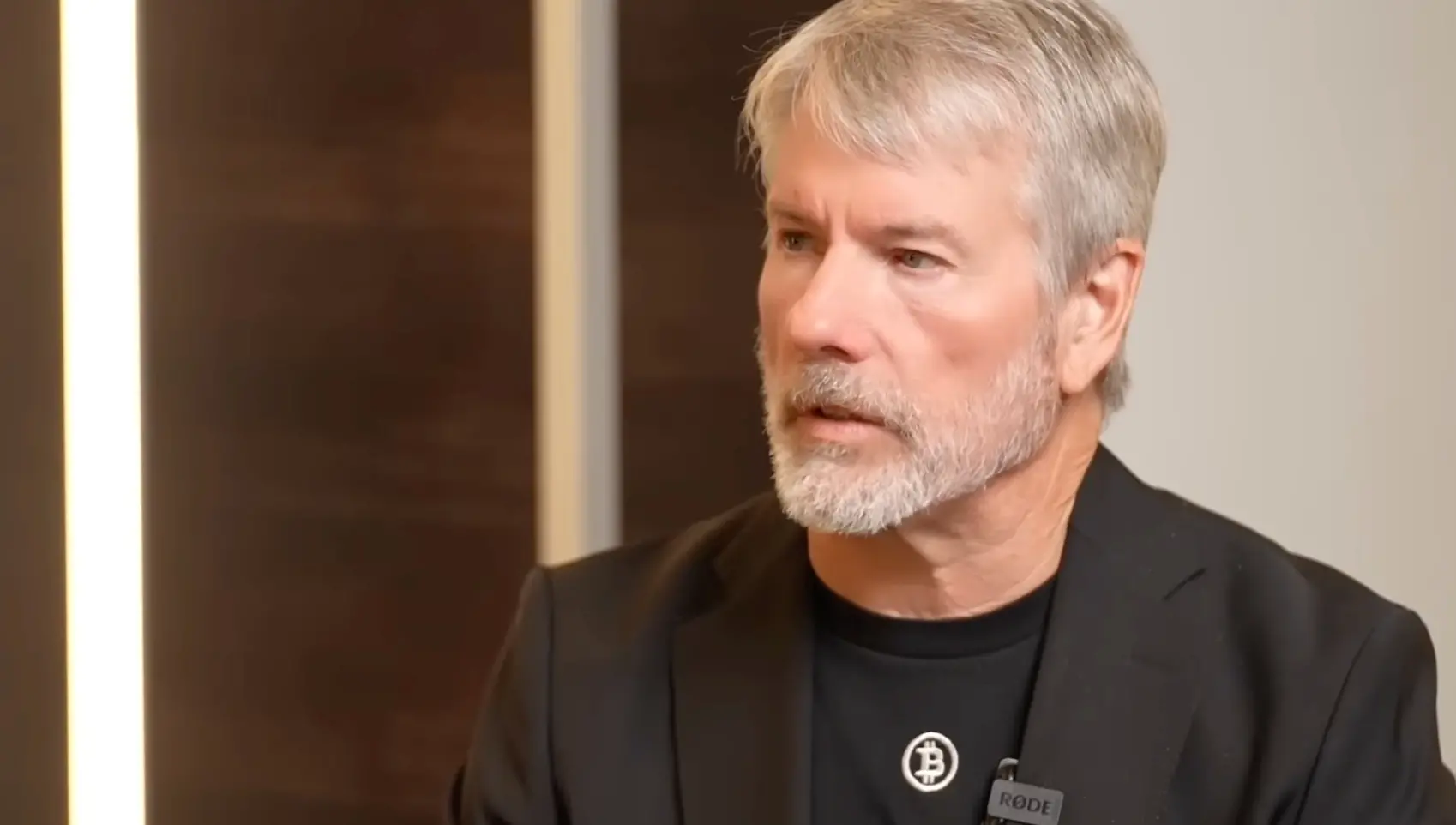
Interview with Michael Saylor: I Did Say I Would Sell Bitcoin, But Never a Net Sale

Interview with Michael Saylor: I Said We'd Sell Bitcoin, But Never Be a Net Seller In a recent podcast, MicroStrategy Executive Chairman Michael Saylor clarified the company's stance on potentially selling Bitcoin. Following MicroStrategy's earnings call statement about being prepared to sell BTC to fund dividends for its STRC (Strategic) credit product, Saylor emphasized the distinction between selling and being a "net seller." Saylor explained the core business model: MicroStrategy sells credit instruments like STRC and uses the proceeds to buy Bitcoin, which is viewed as "digital capital" expected to appreciate around 30-40% annually. A portion of these capital gains can then be used to pay the dividends on the credit products. He stressed that even if the company sells some Bitcoin for dividends, it simultaneously buys much more with new credit issuance. For example, after raising $3.2 billion from STRC sales in April, the dividend obligation was only $80-90 million, making the company a net buyer. The clarification aims to counter market narratives questioning the value of Bitcoin on MicroStrategy's balance sheet if it were never sold, and to dismiss claims of a "Ponzi scheme." Saylor reiterated his personal philosophy for investors: "Don't be a net seller of bitcoin" and ensure your Bitcoin holdings increase each year. Saylor also discussed Bitcoin's role as the foundation for "digital credit," noting that STRC has become the largest and most liquid preferred stock issue in the U.S., offering high risk-adjusted returns (Sharpe ratio). He highlighted Bitcoin's deep liquidity, stating that even large purchases by MicroStrategy do not move the market significantly, which is driven by macro factors, geopolitical tensions, and capital flows from ETFs and credit products. Finally, Saylor reflected on his early inspiration from sci-fi books, which motivated his path to MIT, and maintained his fundamental thesis on Bitcoin remains unchanged: it is superior digital capital enabling superior digital credit.

链捕手Há 39m

Interview with Michael Saylor: I Did Say I Would Sell Bitcoin, But Never a Net Sale

链捕手Há 39m

Trading

Spot
Futuros

Artigos em Destaque

Como comprar PUMP

Bem-vindo à HTX.com!Tornámos a compra de Pump.fun (PUMP) simples e conveniente.Segue o nosso guia passo a passo para iniciar a tua jornada no mundo das criptos.Passo 1: cria a tua conta HTXUtiliza o teu e-mail ou número de telefone para te inscreveres numa conta gratuita na HTX.Desfruta de um processo de inscrição sem complicações e desbloqueia todas as funcionalidades.Obter a minha contaPasso 2: vai para Comprar Cripto e escolhe o teu método de pagamentoCartão de crédito/débito: usa o teu visa ou mastercard para comprar Pump.fun (PUMP) instantaneamente.Saldo: usa os fundos da tua conta HTX para transacionar sem problemas.Terceiros: adicionamos métodos de pagamento populares, como Google Pay e Apple Pay, para aumentar a conveniência.P2P: transaciona diretamente com outros utilizadores na HTX.Mercado de balcão (OTC): oferecemos serviços personalizados e taxas de câmbio competitivas para os traders.Passo 3: armazena teu Pump.fun (PUMP)Depois de comprar o teu Pump.fun (PUMP), armazena-o na tua conta HTX.Alternativamente, podes enviá-lo para outro lugar através de transferência blockchain ou usá-lo para transacionar outras criptomoedas.Passo 4: transaciona Pump.fun (PUMP)Transaciona facilmente Pump.fun (PUMP) no mercado à vista da HTX.Acede simplesmente à tua conta, seleciona o teu par de trading, executa as tuas transações e monitoriza em tempo real.Oferecemos uma experiência de fácil utilização tanto para principiantes como para traders experientes.

334 Visualizações TotaisPublicado em {updateTime}Atualizado em 2026.05.09

Como comprar PUMP

Discussões

Bem-vindo à Comunidade HTX. Aqui, pode manter-se informado sobre os mais recentes desenvolvimentos da plataforma e obter acesso a análises profissionais de mercado. As opiniões dos utilizadores sobre o preço de PUMP (PUMP) são apresentadas abaixo.

活动图片