Vitalik and Aya Hong Kong Conversation: The Ethereum Ecosystem Is Entering a Multi-Node Future

marsbitPublicado em 2026-07-13Última atualização em 2026-07-13

Resumo

"Vitalik Buterin and Aya Miyaguchi's dialogues in Hong Kong, along with subsequent events, signal Ethereum's shift into a multi-node future. Over two months, key developments included the Ethereum Foundation's restructuring to focus on longevity and core protocol values (CROPS), the establishment of independent non-profit organizations like Ethlabs for R&D and Ethereum Institutional as an institutional gateway, and continued efforts by Etherealize to connect Ethereum with traditional finance. These moves reflect a broader transition where the EF is deliberately doing less, embracing a 'subtraction' philosophy and a 'walk-away test' to ensure the ecosystem's resilience isn't dependent on a single central body. Instead, specialized nodes are emerging to handle different functions like protocol development, institutional adoption, and regional community coordination. The opening of the ETH HK Hub in Asia exemplifies this trend, positioning Hong Kong as a key node for builder coordination and institutional outreach. The core takeaway is that Ethereum's strength and future evolution increasingly depend on a decentralized network of independent, collaborative organizations rather than a single central coordinator."

Author: @cynthiaju333 ; Review: @NPC_Leo
Over the past two months, a series of important events have occurred within the Ethereum ecosystem: the Ethereum Foundation (hereinafter referred to as EF) completed an organizational restructuring; Ethlabs was established as an independent non-profit R&D organization; Ethereum Institutional officially launched as an independent entity serving as an institutional on-ramp; and Etherealize continues to push the narrative of Ethereum for Wall Street and capital markets. The community has engaged in extensive discussions around EF's organizational restructuring, the establishment of new community-driven teams, initiatives for institutional adoption, and the division of R&D labor and governance structures.

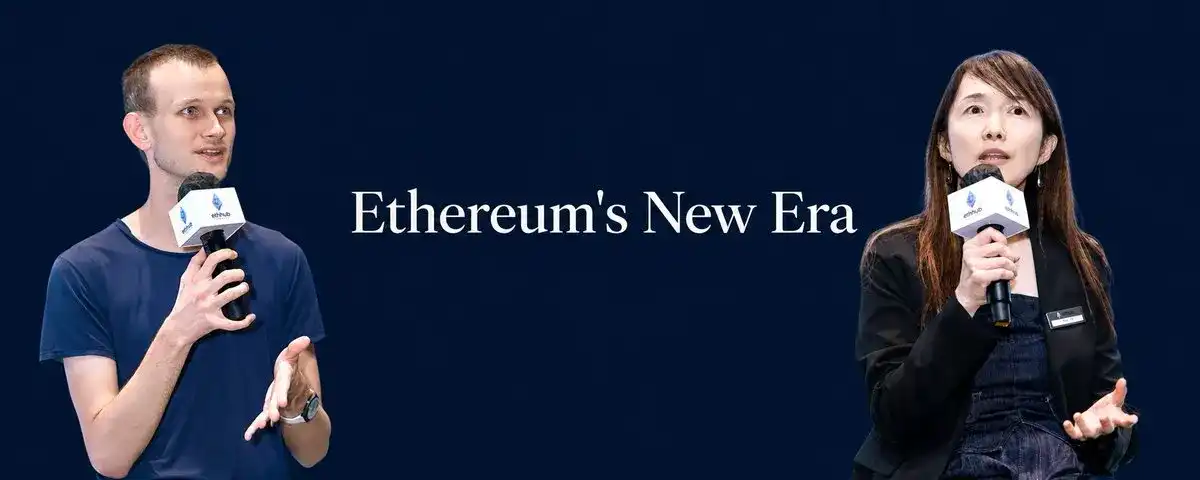
On April 21, 2026, the ETH HK Hub officially opened in Hong Kong, hosting two significant conversations. One was a Chinese-language dialogue between Vitalik Buterin and Hong Kong Legislative Council Member Duncan Chiu. They discussed the development of the Chinese-speaking community over the past twelve years, touching on Layer 2, core protocol development, the anti-quantum roadmap, Layer 1 scaling, and the directions truly worthy of builders' investment in Ethereum. The other was an English-language roundtable between EF Chairperson Aya Miyaguchi, Council Member Duncan Chiu, and QZ, Partner at an ecosystem fund. This conversation focused on the role of EF, the philosophy of subtraction, the Walk-away Test, and Hong Kong's position within the Ethereum ecosystem.

Looking back from over two months later, how can we more deeply understand the changes occurring across the entire Ethereum community? The two conversations with Vitalik and Aya provide important context and reference points, making it easier to grasp that Ethereum is entering a new stage of development, a future of community multi-nodes and the possible continued evolution of its direction.

What Happened to Ethereum Over the Past Two Months?

On May 24, Vitalik Buterin posted a lengthy thread on his X account, publicly sharing his personal views on EF's future direction. He emphasized that EF will pursue "longevity over breadth", reduce ETH sales and the Foundation's financial expenditures, and focus more on the core values of CROPS (Censorship-Resistance/Opposition-resistance, Open Source, Privacy, Security). He also pointed out that EF is not the center of Ethereum, but rather "one node, with a defined purpose", and advocated for an ecosystem structure of pluralism where multiple focused nodes collaborate.

On June 23, EF officially announced a new organizational structure on its official blog. The new structure includes layers for Protocol, Access, Users, Community, and Institutions, along with supporting structures for operations and management. Through this restructuring, EF aims to align its organizational form more closely with long-term strategic goals, ensuring Ethereum's sustainable development in the future.

Almost simultaneously, the independent non-profit R&D organization Ethlabs announced its establishment, co-founded by five former senior EF researchers: Ansgar Dietrichs, Barnabé Monnot, Caspar Schwarz-Schilling, Josh Rudolf, and Julian Ma, with funding support from Bitmine, Sharplink, Joe Lubin, SNZ, and others. Its goal is to prepare Ethereum for the next phase's needs, such as institutional adoption, agentic finance, DeFi, stablecoins, and RWAs, and to coordinate with EF in advancing Ethereum protocol development across different domains, jointly building a multi-node ecosystem.

On July 1, EF's Global Policy & Strategy team released a guide for governments and institutions: "Ethereum for Governments & Institutions: Why Neutral Infrastructure Is Crucial Now." This report actively helps policymakers and large institutions worldwide better understand Ethereum. Its core premise is: the world today needs "shared, neutral digital public infrastructure not controlled by any single centralized entity," and Ethereum is a public, programmable network designed precisely for this purpose.

On the same day, Ethereum Institutional officially launched as an independent non-profit organization, positioning itself as the "dedicated institutional front door" to the Ethereum ecosystem. It has taken over the institution-facing work conducted by the Ethereum Foundation's go-to-market team over the past year, operating with a clearer mission, broader geographic coverage, and long-term financial independence. Key focus areas include institutional education and outreach, institutional insights, ETH and ecosystem marketing, standards and best practices, and institutional events.

Concurrently, Etherealize continues to drive connections between Ethereum and traditional finance. Its website positions itself as "Rewiring Wall Street with Ethereum", building financial infrastructure for tokenization, Ethereum-native settlement, and institutional-grade privacy protection aimed at multi-trillion dollar markets. Wall Street's interest in Ethereum is shifting from proof-of-concepts and pilot projects to viewing public chains as production infrastructure; discussions have also expanded beyond stablecoins to include tokenized stocks, bonds, real estate, and investment funds.

Viewed together, these events point to a larger shift: Ethereum is transitioning from a phase where the Ethereum Foundation (EF) primarily undertook significant coordination and public narrative-building, to a new phase where multiple specialized organizations collectively assume different capabilities. EF is becoming more focused on protocol governance, credible neutrality, self-sovereignty, and long-term resilience. Ethlabs is taking on R&D for next-stage adoption and infrastructure capability building. Ethereum Institutional is handling institutional education, standards development, market awareness promotion, and serving as an entry point for global financial institutions. Etherealize continues to advance Ethereum's narrative in capital markets and traditional finance.

These organizations are not part of a single centralized plan, nor should they be simply understood as EF's outsourcing or replacements. Together, they reflect a clearer division of capabilities emerging within the Ethereum ecosystem: protocol neutrality, institutional adoption, capital market narrative, application-oriented R&D, and local community coordination are now being undertaken by different nodes.

More accurately, Ethereum is entering a new stage of development and ecosystem structure. And if we return to the scene of the ETH HK Hub on April 21st, we find that what Vitalik and Aya discussed that day were precisely the long-term principles underlying these changes.

EF Chairperson Aya on the Philosophy of Subtraction

During the roundtable at the ETH HK Hub, Aya Miyaguchi repeatedly mentioned a concept: the Walk-away Test.

Her point is that EF's long-term goal is not to become a larger, more controlling central organization, but to ensure that the entire system can continue to function even without EF.

She said: "Ethereum must pass the Walk-away Test—the whole system must still be able to function normally even without the Ethereum Foundation."

Aya recalled that when she joined EF, it was during the ICO boom. Many people suggested the Foundation expand rapidly, establish roles like CTO and CMO like a traditional tech company, and take on more centralized functions.

But EF did not do that.

She explained: "If the Foundation builds everything for the entire ecosystem, participants will become dependent. In the long run, this will weaken competition, and without competition, optimal solutions cannot emerge."

This is rooted in a fundamental belief of Ethereum: the health of the system does not come from the strength of a single organization, but from the ecosystem's own ability to continually generate new capabilities, new organizations, and new builders.

So when Aya says: "Success means the Foundation does less, and Ethereum becomes stronger."

This statement gains more specific context two months later.

From this perspective, the emergence of Ethlabs, Ethereum Institutional, Etherealize, and global Ethereum community Hubs is more like a manifestation of EF's philosophy of subtraction: as the foundational protocol matures, what the ecosystem needs is no longer an all-powerful command and dispatch center, but multiple independent organizations with shared beliefs, each assuming different responsibilities.

Vitalik on the Boundaries of Protocol Coordination

In his dialogue at the ETH HK Hub, Vitalik also made a crucial distinction that appears very relevant today.

He said, "Core protocol development and L2 development are completely different in terms of difficulty. L2 is more like a free market. If an outsider builds something better, they have a chance to win."

But the core protocol is different. Core protocol development requires long-term coordination with existing developers and must achieve consensus among client teams, researchers, the community, and upgrade roadmaps.

Therefore, the truly important question is: Do these efforts still serve Ethereum's long-term protocol goals? Do they still uphold credible neutrality, security, privacy, censorship-resistance, and the fundamental attributes of Ethereum as public infrastructure?

The most core work for Ethereum remains the continuous evolution of a decentralized protocol through long-term coordination.

Why Hong Kong?

In Aya's roundtable, she mentioned that "the community Hubs emerging in Hong Kong are themselves an embodiment of EF's philosophy of subtraction."

If Ethereum's future is not driven by a single center but built collectively by multiple independent nodes, then a local Hub is not just an event venue or a community event organizer. It is more like a new type of ecosystem infrastructure.

It connects not only developers, but also institutions, researchers, capital, policymakers, public goods builders, and new participants entering Ethereum from traditional finance, AI, hardware, stablecoins, RWAs, and payments.

Hong Kong happens to be at the intersection of these forces. It is an international financial center and a place where Eastern and Western capital, policy, and technological contexts converge; it connects Chinese-speaking builders with the global Ethereum community and is close to Shenzhen's hardware, AI, and manufacturing ecosystems.

Therefore, when Hong Kong and Singapore appear in Ethereum Institutional's global layout, when SNZ appears among Ethlabs' supporters, when ETH HK Hub becomes Asia's first physical Ethereum community center, they all point to a trend: Asia is becoming an important node for Ethereum's institutional adoption and builder coordination.

This is also the role that SNZ and ETH HK Hub hope to play. Our role is to establish a long-term coordination node in Hong Kong and Asia, where builders, researchers, institutions, capital, policymakers, and the global Ethereum community can meet, and extend the dialogues from each event into longer-term construction.

Two Months Later, What Has Really Changed?

Over the past two months, many have asked: What's happening with EF? Who left? Who started new organizations? Will Ethlabs replace EF? Does Ethereum Institutional mean Ethereum is actively vying for the institutional market?

If we start from the two conversations on April 21st, perhaps the answer becomes clearer.

EF is focusing more on what it should most protect: protocol neutrality, long-term security, openness, privacy, censorship-resistance, and self-sovereignty. At the same time, more specialized organizations have emerged within the ecosystem, taking on R&D, institutional adoption, capital market narrative, local community coordination, developer education, and policy communication respectively.

EF doing less does not mean Ethereum is doing less. On the contrary, it requires more people, more organizations, more regions, and more builders to step forward.

Perhaps the main theme of the past two months is that Ethereum continues to prove what it has always believed:

A resilient ecosystem relies on continually generating new nodes, new ways of collaboration, and new builders.

The existence of ETH HK Hub is precisely to participate in such a future.

ETH HK Hub is jointly operated by SNZ and ETHTAO, with support from the Ethereum Foundation.

Criptomoedas em alta

Perguntas relacionadas

QAccording to the article, what is the 'Walk-away Test' that Ethereum Foundation Chair Aya Miyaguchi discussed?

AThe 'Walk-away Test' is the idea that the Ethereum ecosystem must be resilient enough to continue functioning and thriving even in the absence of the Ethereum Foundation. Success for EF is measured by it doing less while the Ethereum network becomes stronger and more independent.

QWhat significant shift in Ethereum's ecosystem structure does the article describe based on the events of the past two months?

AThe article describes a shift from a stage where the Ethereum Foundation (EF) bore significant coordination and public narrative responsibilities to a new 'multi-node' future. This involves multiple specialized, independent organizations (like Ethlabs, Ethereum Institutional, and Etherealize) taking on distinct roles such as R&D, institutional adoption, capital market narratives, and local community coordination, while the EF focuses more narrowly on core protocol values.

QWhat are the core long-term protocol goals for Ethereum that Vitalik Buterin emphasized should be maintained?

AVitalik Buterin emphasized that core development must continue to serve Ethereum's long-term protocol goals, which include maintaining credible neutrality, security, privacy, anti-censorship capabilities, and the fundamental properties of Ethereum as a public infrastructure.

QWhy is Hong Kong considered a significant node in Ethereum's evolving multi-node ecosystem according to the article?

AHong Kong is seen as a significant node because it is an international financial hub at the confluence of Eastern and Western capital, policy, and technology. It connects Chinese-speaking builders with the global Ethereum community and is near hardware, AI, and manufacturing ecosystems like Shenzhen, making it a crucial location for institutional adoption and builder coordination in Asia.

QWhat is the stated purpose of the newly formed independent non-profit organization 'Ethereum Institutional'?

AEthereum Institutional's purpose is to act as a dedicated institutional front door for the Ethereum ecosystem. It focuses on institutional education and对接, institutional insights, ETH and ecosystem marketing, standards and best practices, and institutional events, aiming to foster wider institutional adoption.

Leituras Relacionadas

AI Token Factory Explosion: Tsinghua University Team Raises 10 Billion in Half a Year

Qijing Tech, a company founded by a Tsinghua University team of faculty and students, has rapidly become a significant player in China's AI infrastructure sector, focusing on high-quality AI token production. Over the past six months, the startup has secured over 1 billion RMB in funding. The company specializes in AI inference—the efficient use of AI models—positioning itself as a "high-quality AI token factory." Unlike many competitors initially focused on model training, Qijing Tech believes inference is where real economic value is generated. Its core technology optimizes the entire AI token production chain through innovations like "full-system heterogeneous collaboration," aiming for stable, efficient, and low-cost output suitable for enterprise use. This strategy has attracted significant investor interest. Major funding rounds have been led by institutions such as Henan Investment Group Huirong Fund, with continued backing from existing investors. The company's "less models, deeper optimization" approach, concentrating resources on key models and high-value scenarios, is resonating in a market where a few top models dominate token usage. The results are promising. Since early 2026, Qijing Tech reports a threefold increase in token production efficiency per unit of computing power and a thirtyfold increase in total high-quality token output. Monthly revenue for June 2026 alone surpassed its entire 2025 revenue. Operating on a "Token as a Service" (TaaS) model, Qijing Tech engages in both direct token sales and collaborative operations, helping partners like state-owned enterprises transition from traditional computing power leasing to high-value token production. As AI token usage in China surges, Qijing Tech aims to be a key enabler in the emerging AI token economy, building the essential infrastructure for the AI era.

marsbitHá 17m

AI Token Factory Explosion: Tsinghua University Team Raises 10 Billion in Half a Year

marsbitHá 17m

Financing Weekly Report | SBI Makes Consecutive Moves, Bets $125 Million on Gauntlet; Crypto Capital Continues to Flow to Trading and Infrastructure

Weekly crypto financing highlights show capital continues to flow into trading, compliance, and digital asset infrastructure, with traditional financial institutions like Japan's SBI Holdings playing a larger role. SBI made two major investments: a $125M exclusive investment in DeFi risk management and asset allocation platform Gauntlet, and leading a $76M Series C round for crypto exchange EDX Markets. Other notable crypto deals included: QIZ Security ($17M seed) for post-quantum cryptography management; TrueDAO ($10M strategic) for AI-powered DeFi infrastructure; KOR Protocol ($7.5M Series A) for an on-chain creative asset clearing platform; Tether's $20M strategic investment in Brazil's Mercado Bitcoin; and M1X Global ($5.5M seed) for sovereign financial infrastructure. The AI sector saw larger individual rounds. Prime Intellect raised $130M Series A for its decentralized AI protocol stack. AI legal services firm Norm raised $120M, reaching a $1.2B valuation. Voice AI company Gradium's total funding surpassed $100M. The report also notes a shift towards business models focused on specific enterprise-level AI infrastructure and application scenarios. Overall, the crypto primary market remains subdued, with nine deals totaling over $261M last week, centered on centralized finance, DeFi, and infrastructure.

marsbitHá 17m

Financing Weekly Report | SBI Makes Consecutive Moves, Bets $125 Million on Gauntlet; Crypto Capital Continues to Flow to Trading and Infrastructure

marsbitHá 17m

Valuation $1 Billion, Nvidia Doubles Down! Is Prime Intellect Washing Off Its Web3 Label?

Prime Intellect, a decentralized AI infrastructure company founded in 2024, recently announced a $130 million Series A funding round at a $1 billion valuation, with investments from NVIDIA, Intel, and Dell's venture arms. The company claims its annualized recurring revenue (ARR) has exceeded $100 million within a year, serving over 6,000 enterprise clients. Initially rooted in Web3 and decentralized science (DeSci), Prime Intellect has evolved into a full-stack AI training and deployment platform. Its core technology enables distributed training of large language models across globally dispersed, heterogeneous GPU clusters. Key milestones include releasing open-source models like INTELLECT-1 and INTELLECT-3, and launching Prime Intellect Lab, a platform allowing users to train and optimize agentic models without managing their own GPU infrastructure. The company's deep collaboration with hardware giants, particularly NVIDIA, extends beyond investment to joint optimization of software (e.g., integrating NVIDIA Dynamo) and hardware systems. A notable commercial case involves fintech company Ramp using Prime Lab to train a specialized agent, demonstrating the platform's applied value. While achieving rapid commercial growth, Prime Intellect has systematically downplayed its earlier Web3 and token-based incentives from its official documentation, repositioning itself as a mainstream AI infrastructure provider focused on enterprise adoption and potential IPO.

Foresight NewsHá 1h

Valuation $1 Billion, Nvidia Doubles Down! Is Prime Intellect Washing Off Its Web3 Label?

Foresight NewsHá 1h

Trading

Spot

Artigos em Destaque

O que é ETH 2.0

ETH 2.0: Uma Nova Era para o Ethereum Introdução ETH 2.0, amplamente conhecido como Ethereum 2.0, marca uma atualização monumental à blockchain do Ethereum. Esta transição não é meramente uma mudança estética; visa melhorar fundamentalmente a escalabilidade, segurança e sustentabilidade da rede. Com uma mudança do mecanismo de consenso em Proof of Work (PoW), intensivo em energia, para um Proof of Stake (PoS) mais eficiente, o ETH 2.0 promete uma abordagem transformadora ao ecossistema blockchain. O que é ETH 2.0? ETH 2.0 é um conjunto de atualizações distintas e interconectadas focadas na otimização das capacidades e desempenho do Ethereum. Esta reformulação foi projetada para abordar desafios críticos que o mecanismo atual do Ethereum enfrentou, particularmente em relação à velocidade das transações e à congestão da rede. Objetivos do ETH 2.0 Os principais objetivos do ETH 2.0 giram em torno da melhoria de três aspectos centrais: Escalabilidade: Com o objetivo de melhorar significativamente o número de transações que a rede pode manejar por segundo, o ETH 2.0 procura ultrapassar a limitação atual de aproximadamente 15 transações por segundo, alcançando potencialmente milhares. Segurança: Medidas de segurança melhoradas são integrais ao ETH 2.0, especialmente através da resistência aprimorada contra ciberataques e da preservação do ethos descentralizado do Ethereum. Sustentabilidade: O novo mecanismo PoS foi projetado não apenas para melhorar a eficiência, mas também para reduzir drasticamente o consumo de energia, alinhando a estrutura operacional do Ethereum com considerações ambientais. Quem é o Criador do ETH 2.0? A criação do ETH 2.0 pode ser atribuída à Ethereum Foundation. Esta organização sem fins lucrativos, que desempenha um papel crucial no apoio ao desenvolvimento do Ethereum, é liderada pelo co-fundador notável Vitalik Buterin. A sua visão de um Ethereum mais escalável e sustentável tem sido a força motriz por trás desta atualização, envolvendo contribuições de uma comunidade global de desenvolvedores e entusiastas dedicados a melhorar o protocolo. Quem são os Investidores do ETH 2.0? Embora os detalhes sobre os investidores do ETH 2.0 não tenham sido tornados públicos, é sabido que a Ethereum Foundation recebe apoio de várias organizações e indivíduos no espaço da blockchain e tecnologia. Esses parceiros incluem firmas de capital de risco, empresas de tecnologia e organizações filantrópicas que compartilham um interesse mútuo em apoiar o desenvolvimento de tecnologias descentralizadas e infraestrutura de blockchain. Como Funciona o ETH 2.0? ETH 2.0 é notável por introduzir uma série de características chave que o diferenciam do seu predecessor. Proof of Stake (PoS) A transição para um mecanismo de consenso PoS é uma das mudanças de destaque do ETH 2.0. Ao contrário do PoW, que depende da mineração intensiva em energia para a verificação de transações, o PoS permite que os utilizadores validem transações e criem novos blocos de acordo com a quantidade de ETH que apostam na rede. Isso leva a uma maior eficiência energética, reduzindo o consumo em aproximadamente 99,95%, tornando o Ethereum 2.0 uma alternativa consideravelmente mais ecológica. Shard Chains As shard chains são outra inovação crítica do ETH 2.0. Estas cadeias menores operam em paralelo com a cadeia principal do Ethereum, permitindo que várias transações sejam processadas simultaneamente. Esta abordagem melhora a capacidade geral da rede, abordando preocupações de escalabilidade que têm atormentado o Ethereum. Beacon Chain No coração do ETH 2.0 está a Beacon Chain, que coordena a rede e gere o protocolo PoS. Ela atua como uma espécie de organizador: supervisiona os validadores, garante que as shards permaneçam conectadas à rede e monitora a saúde geral do ecossistema blockchain. Linha do Tempo do ETH 2.0 A jornada do ETH 2.0 tem sido marcada por vários marcos chave que traçam a evolução desta atualização significativa: Dezembro de 2020: O lançamento da Beacon Chain marcou a introdução do PoS, preparando o caminho para a migração para o ETH 2.0. Setembro de 2022: A conclusão de “The Merge” representa um momento crucial em que a rede Ethereum fez a transição com sucesso de um quadro PoW para um PoS, anunciando uma nova era para o Ethereum. 2023: O lançamento esperado das shard chains visa melhorar ainda mais a escalabilidade da rede Ethereum, solidificando o ETH 2.0 como uma plataforma robusta para aplicações e serviços descentralizados. Características Chave e Benefícios Escalabilidade Melhorada Uma das vantagens mais significativas do ETH 2.0 é a sua escalabilidade melhorada. A combinação de PoS e shard chains permite que a rede expanda a sua capacidade, permitindo que acomode um volume de transações muito maior em comparação com o sistema legado. Eficiência Energética A implementação do PoS representa um enorme passo em direção à eficiência energética na tecnologia blockchain. Ao reduzir drasticamente o consumo de energia, o ETH 2.0 não só reduz os custos operacionais, mas também se alinha mais estreitamente com os objetivos globais de sustentabilidade. Segurança Aprimorada Os mecanismos atualizados do ETH 2.0 contribuem para uma segurança melhorada em toda a rede. O uso do PoS, juntamente com medidas de controle inovadoras estabelecidas através das shard chains e da Beacon Chain, assegura um maior grau de proteção contra potenciais ameaças. Custos Mais Baixos para os Utilizadores À medida que a escalabilidade melhora, os efeitos sobre os custos de transação também serão evidentes. Aumentada a capacidade e reduzida a congestão, espera-se que isso se traduza em taxas mais baixas para os utilizadores, tornando o Ethereum mais acessível para transações do dia a dia. Conclusão ETH 2.0 marca uma evolução significativa no ecossistema da blockchain do Ethereum. Ao abordar questões fundamentais como a escalabilidade, o consumo de energia, a eficiência das transações e a segurança geral, a importância desta atualização não pode ser subestimada. A transição para o Proof of Stake, a introdução das shard chains e o trabalho fundamental da Beacon Chain são indicativos de um futuro em que o Ethereum pode atender à crescente demanda do mercado descentralizado. Em uma indústria movida pela inovação e progresso, o ETH 2.0 representa um testemunho das capacidades da tecnologia blockchain em pavimentar o caminho para uma economia digital mais sustentável e eficiente.
121 Visualizações TotaisPublicado em {updateTime}Atualizado em 2024.12.03

O que é ETH 2.0

O que é ETH 3.0

ETH3.0 e $eth 3.0: Uma Análise Profunda do Futuro do Ethereum Introdução No ambiente em rápida evolução da criptomoeda e da tecnologia blockchain, o ETH3.0, frequentemente denotado como $eth 3.0, emergiu como um tema de considerável interesse e especulação. O termo abrange dois conceitos principais que merecem esclarecimento: Ethereum 3.0: Esta representa uma potencial atualização futura destinada a aumentar as capacidades da atual blockchain do Ethereum, focando especialmente na melhoria da escalabilidade e desempenho. ETH3.0 Meme Token: Este distinto projeto de criptomoeda procura aproveitar a blockchain do Ethereum na criação de um ecossistema centrado em memes, promovendo o envolvimento na comunidade de criptomoedas. Compreender esses aspectos do ETH3.0 é essencial não apenas para entusiastas de criptomoedas, mas também para aqueles que observam as tendências tecnológicas mais amplas no espaço digital. O que é ETH3.0? Ethereum 3.0 Ethereum 3.0 é promovido como uma atualização proposta para a rede Ethereum já estabelecida, que tem sido a espinha dorsal de muitas aplicações descentralizadas (dApps) e contratos inteligentes desde a sua criação. As melhorias vislumbradas concentram-se principalmente na escalabilidade—integrando tecnologias avançadas como sharding e provas de conhecimento zero (zk-proofs). Essas inovações tecnológicas visam facilitar um número sem precedentes de transações por segundo (TPS), potencialmente alcançando milhões, abordando assim uma das limitações mais significativas enfrentadas pela tecnologia blockchain atual. A melhoria não é meramente técnica, mas também estratégica; visa preparar a rede Ethereum para uma adoção generalizada e utilidade em um futuro marcado por uma maior demanda por soluções descentralizadas. ETH3.0 Meme Token Em contraste com o Ethereum 3.0, o ETH3.0 Meme Token aventura-se por um domínio mais leve e divertido, combinando a cultura dos memes da internet com a dinâmica das criptomoedas. Este projeto permite que os usuários comprem, vendam e negociem memes na blockchain do Ethereum, proporcionando uma plataforma que fomenta o envolvimento da comunidade através da criatividade e interesses compartilhados. O ETH3.0 Meme Token visa demonstrar como a tecnologia blockchain pode interseccionar com a cultura digital, criando casos de uso que são tanto divertidos quanto financeiramente viáveis. Quem é o Criador do ETH3.0? Ethereum 3.0 A iniciativa em direção ao Ethereum 3.0 é impulsionada principalmente por um consórcio de desenvolvedores e pesquisadores dentro da comunidade Ethereum, notavelmente incluindo Justin Drake. Conhecido por suas percepções e contribuições para a evolução do Ethereum, Drake tem sido uma figura proeminente nas discussões sobre a transição do Ethereum para uma nova camada de consenso, referida como “Beam Chain”. Esta abordagem colaborativa ao desenvolvimento significa que o Ethereum 3.0 não é fruto de um único criador, mas sim uma manifestação da engenhosidade coletiva focada no avanço da tecnologia blockchain. ETH3.0 Meme Token Os detalhes sobre o criador do ETH3.0 Meme Token são atualmente indetectáveis. A natureza dos tokens de meme frequentemente leva a uma estrutura mais descentralizada e impulsionada pela comunidade, o que poderia explicar a falta de atribuição específica. Isso alinha-se com a ethos da comunidade de criptomoedas mais ampla, onde a inovação geralmente surge de esforços colaborativos em vez de esforços individuais. Quem são os Investidores do ETH3.0? Ethereum 3.0 O apoio ao Ethereum 3.0 provém principalmente da Fundação Ethereum, juntamente com uma comunidade entusiástica de desenvolvedores e investidores. Esta associação fundacional proporciona um grau significativo de legitimidade e melhora as perspectivas de uma implementação bem-sucedida, uma vez que aproveita a confiança e credibilidade construída ao longo de anos de operações de rede. Em um clima em rápida mudança no mundo das criptomoedas, o apoio da comunidade desempenha um papel crucial no impulso ao desenvolvimento e adoção, posicionando o Ethereum 3.0 como um sério candidato a futuros avanços na blockchain. ETH3.0 Meme Token Embora as fontes atualmente disponíveis não forneçam informações explícitas sobre as fundações ou organizações de investimento que apoiam o ETH3.0 Meme Token, é indicativo do modelo típico de financiamento para tokens de meme, que frequentemente depende de apoio base e engajamento da comunidade. Os investidores em tais projetos costumam consistir em indivíduos motivados pelo potencial de inovação impulsionada pela comunidade e pelo espírito de cooperação encontrado dentro da comunidade cripto. Como Funciona o ETH3.0? Ethereum 3.0 As características distintivas do Ethereum 3.0 residem em sua proposta de implementação de sharding e tecnologia zk-proof. Sharding é um método de partição da blockchain em partes menores e gerenciáveis ou “shards”, que podem processar transações simultaneamente em vez de sequencialmente. Esta descentralização do processamento ajuda a prevenir congestionamentos e garante que a rede permaneça responsiva mesmo sob carga pesada. A tecnologia de prova de conhecimento zero (zk-proof) contribui com outra camada de sofisticação ao permitir a validação de transações sem revelar os dados subjacentes envolvidos. Este aspecto não apenas melhora a privacidade, mas também aumenta a eficiência geral da rede. Há também conversas sobre a incorporação de uma Máquina Virtual Ethereum de conhecimento zero (zkEVM) nesta atualização, amplificando ainda mais as capacidades e utilidade da rede. ETH3.0 Meme Token O ETH3.0 Meme Token distingue-se ao capitalizar sobre a popularidade da cultura dos memes. Estabelece um mercado para que os usuários participem da negociação de memes, não apenas para entretenimento, mas também para potencial ganho econômico. Ao integrar recursos como staking, provisão de liquidez e mecanismos de governança, o projeto fomenta um ambiente que incentiva a interação e participação da comunidade. Ao oferecer uma mistura única de entretenimento e oportunidade econômica, o ETH3.0 Meme Token visa atrair um público diversificado, variando de entusiastas de criptomoedas a conhecedores casuais de memes. Cronologia do ETH3.0 Ethereum 3.0 11 de novembro de 2024: Justin Drake sugere a próxima atualização do ETH 3.0, centrada nas melhorias de escalabilidade. Este anúncio sinaliza o início de discussões formais sobre a futura arquitetura do Ethereum. 12 de novembro de 2024: A proposta antecipada para Ethereum 3.0 deve ser revelada no Devcon em Bangkok, preparando o cenário para um feedback mais amplo da comunidade e potenciais próximos passos no desenvolvimento. ETH3.0 Meme Token 21 de março de 2024: O ETH3.0 Meme Token é oficialmente listado no CoinMarketCap, marcando sua entrada no domínio público das criptomoedas e aumentando a visibilidade de seu ecossistema baseado em memes. Pontos Chave Em conclusão, Ethereum 3.0 representa uma evolução significativa dentro da rede Ethereum, focando em superar limitações quanto à escalabilidade e desempenho através de tecnologias avançadas. As atualizações propostas refletem uma abordagem proativa às futuras demandas e usabilidade. Por outro lado, o ETH3.0 Meme Token encapsula a essência da cultura impulsionada pela comunidade no espaço das criptomoedas, aproveitando a cultura dos memes para criar plataformas envolventes que incentivam a criatividade e participação dos usuários. Compreender os distintos propósitos e funcionalidades do ETH3.0 e $eth 3.0 é fundamental para qualquer pessoa interessada nos desenvolvimentos contínuos dentro do espaço cripto. Com ambas as iniciativas a pavimentar caminhos únicos, elas sublinham coletivamente a natureza dinâmica e multifacetada da inovação em blockchain.

124 Visualizações TotaisPublicado em {updateTime}Atualizado em 2024.12.03

O que é ETH 3.0

Como comprar ETH

Bem-vindo à HTX.com!Tornámos a compra de Ethereum (ETH) simples e conveniente.Segue o nosso guia passo a passo para iniciar a tua jornada no mundo das criptos.Passo 1: cria a tua conta HTXUtiliza o teu e-mail ou número de telefone para te inscreveres numa conta gratuita na HTX.Desfruta de um processo de inscrição sem complicações e desbloqueia todas as funcionalidades.Obter a minha contaPasso 2: vai para Comprar Cripto e escolhe o teu método de pagamentoCartão de crédito/débito: usa o teu visa ou mastercard para comprar Ethereum (ETH) instantaneamente.Saldo: usa os fundos da tua conta HTX para transacionar sem problemas.Terceiros: adicionamos métodos de pagamento populares, como Google Pay e Apple Pay, para aumentar a conveniência.P2P: transaciona diretamente com outros utilizadores na HTX.Mercado de balcão (OTC): oferecemos serviços personalizados e taxas de câmbio competitivas para os traders.Passo 3: armazena teu Ethereum (ETH)Depois de comprar o teu Ethereum (ETH), armazena-o na tua conta HTX.Alternativamente, podes enviá-lo para outro lugar através de transferência blockchain ou usá-lo para transacionar outras criptomoedas.Passo 4: transaciona Ethereum (ETH)Transaciona facilmente Ethereum (ETH) no mercado à vista da HTX.Acede simplesmente à tua conta, seleciona o teu par de trading, executa as tuas transações e monitoriza em tempo real.Oferecemos uma experiência de fácil utilização tanto para principiantes como para traders experientes.

3.3k Visualizações TotaisPublicado em {updateTime}Atualizado em 2026.06.02

Como comprar ETH

Discussões

Bem-vindo à Comunidade HTX. Aqui, pode manter-se informado sobre os mais recentes desenvolvimentos da plataforma e obter acesso a análises profissionais de mercado. As opiniões dos utilizadores sobre o preço de ETH (ETH) são apresentadas abaixo.

活动图片