US Probes Crypto Exchanges For Suspected Sanctions Violations Linked To Iran

bitcoinistPublicado em 2026-02-04Última atualização em 2026-02-04

Resumo

U.S. authorities are investigating whether cryptocurrency exchanges have enabled Iranian entities to bypass international sanctions, following a surge in crypto activity linked to Iran. Blockchain data indicates that transaction volumes reached an estimated $8–10 billion over the past year, with both government-linked actors and everyday users increasingly turning to digital assets. Analysts report record inflows into Iranian wallets, reaching $7.8 billion in 2025. The Treasury Department is examining if platforms facilitated sanctions evasion, including moving money offshore or accessing hard currency. Iran’s largest exchange, Nobitex, acknowledged some users transfer funds internationally but stated it employs monitoring systems to detect suspicious activity. Data also shows a gradual movement of assets out of Iranian exchanges, often into self-custodied wallets, rather than abrupt capital flight.

Crypto activity in Iran has expanded rapidly over the past year, drawing renewed attention from US authorities who are now examining whether certain digital asset platforms may have played a role in helping Iranian officials and state‐linked actors bypass international sanctions.

Rising Iran Crypto Volumes

According to a blockchain researcher cited by Reuters, cryptocurrency transaction volumes tied to Iran surged to an estimated range of $8 billion to $10 billion over the past year, as both government‐connected entities and everyday users increasingly turned to digital assets.

Estimates from blockchain analytics firms TRM Labs and Chainalysis show that crypto usage in Iran has grown steadily despite mounting restrictions on the country’s access to the global financial system.

TRM Labs estimates that crypto activity in Iran reached roughly $10 billion last year, compared with $11.4 billion in 2024. Chainalysis reported similar growth, saying wallets linked to Iran received a record $7.8 billion in 2025, up from $7.4 billion in 2024 and $3.17 billion in 2023.

US authorities are now investigating if crypto platforms, which weren’t mentioned in the report, have enabled sanctioned Iranian organizations to move money offshore, access hard cash, or pay for items in ways that circumvent sanctions.

Ari Redbord, global head of policy at TRM Labs, said the US Treasury is actively examining whether digital asset services were used to facilitate sanctions evasion. Redbord said he had direct knowledge of the Treasury Department’s concerns.

A Treasury spokesperson declined to comment directly on the investigation but pointed Reuters to a statement issued in September announcing new measures targeting so‐called “shadow banking” networks that support Iran, including those that officials say rely on cryptocurrencies to avoid sanctions.

What Blockchain Data Shows

Inside Iran, crypto adoption has spread widely among the public. Nobitex, the country’s largest cryptocurrency exchange, told Reuters that industry estimates suggest around 15 million Iranians have some level of exposure to digital assets.

The exchange said it has approximately 11 million customers, with most activity coming from retail users and smaller investors. According to Nobitex, many Iranians use crypto primarily as a way to store value amid the continued decline of the rial.

Data from analytics firm Nansen suggests that some Iranian users moved funds out of Nobitex during 2025. The firm said balances of major cryptocurrencies on the exchange fell sharply from a peak reached around the middle of the year.

Analyst Nicolai Sondergaard said the data indicates that digital assets in Iran have increasingly served as a gradual exit channel rather than a one‐time flight of capital. According to Nansen’s analysis, funds did not leave the crypto ecosystem entirely but instead moved steadily toward platforms outside the country throughout 2025.

Nobitex acknowledged that some customers may use digital assets to move funds internationally, but said it does not track the final destination or purpose of those transactions.

The exchange stated that it employs robust monitoring systems designed to detect potentially suspicious activity and protect user assets. It also said concerns about asset safety following the June hacking incident may have influenced user behavior.

In many cases, Nobitex explained, customers transferred assets to self‐custodied wallets rather than directly to overseas exchanges. The exchange said this approach allows users to secure their holdings temporarily while assessing risks and deciding whether to redeposit funds later.

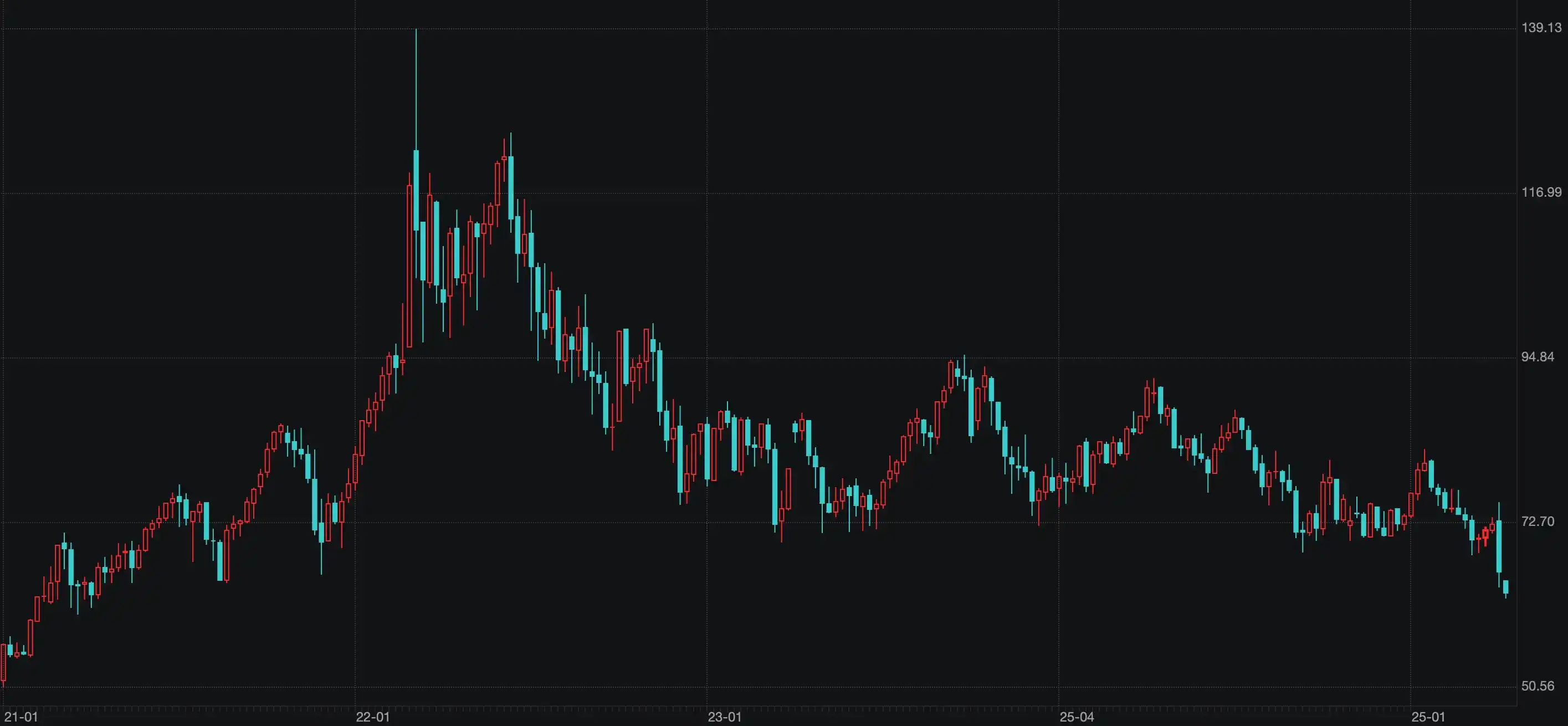
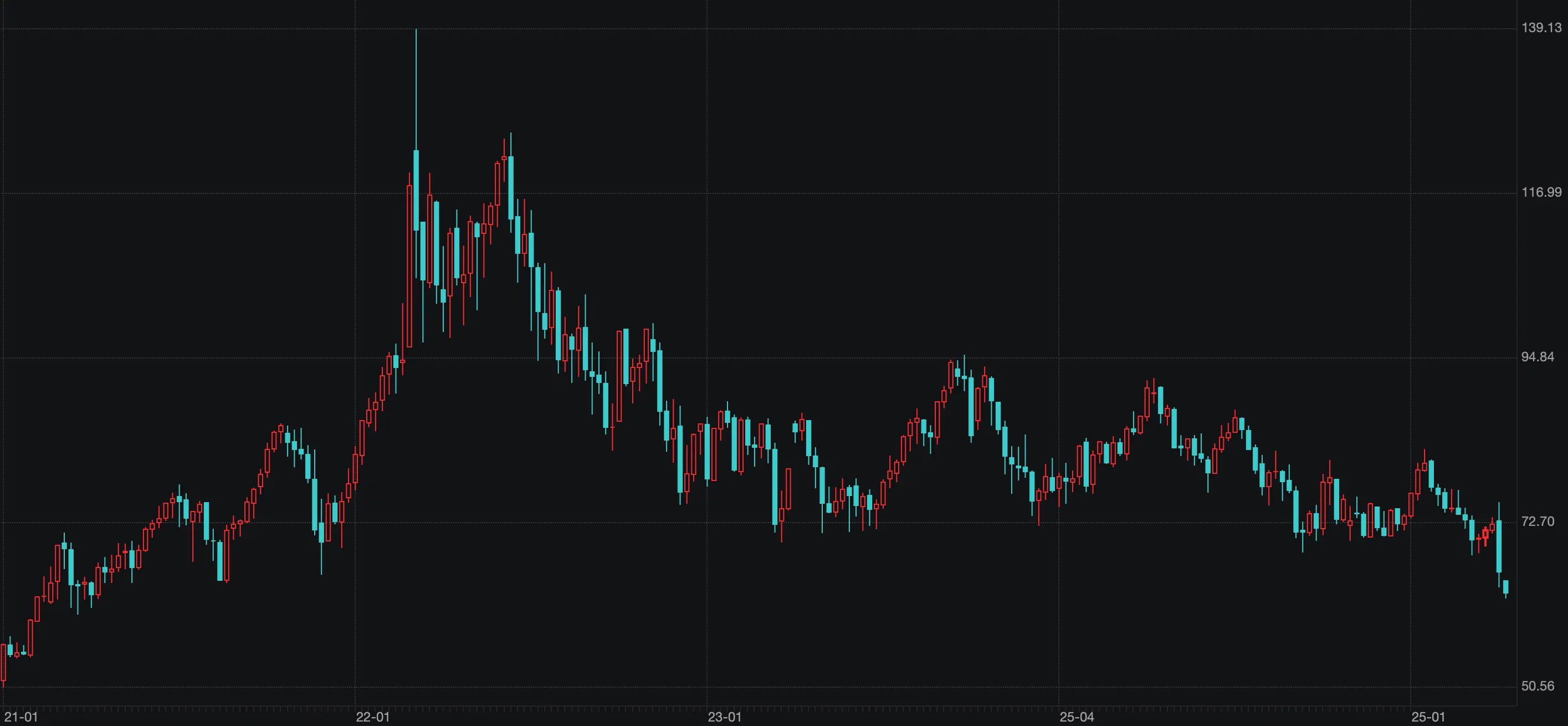
The 1-D chart shows the drop in the total crypto market cap below $2.6 trillion. Source: TOTAL on TradingView.com

Featured image from OpenArt, chart from TradingView.com

Perguntas relacionadas

QWhat is the estimated range of cryptocurrency transaction volumes tied to Iran over the past year, as cited in the article?

AThe estimated range is $8 billion to $10 billion.

QWhich two blockchain analytics firms provided data showing the growth of crypto usage in Iran?

ATRM Labs and Chainalysis.

QAccording to the article, what is the primary reason many Iranians use cryptocurrency, as stated by the Nobitex exchange?

AMany Iranians use crypto primarily as a way to store value amid the continued decline of the rial.

QWhat US government department is actively examining whether digital asset services were used to facilitate sanctions evasion, according to Ari Redbord of TRM Labs?

AThe US Treasury Department.

QWhat did data from analytics firm Nansen suggest about the movement of funds from the Nobitex exchange in 2025?

AThe data suggested that funds did not leave the crypto ecosystem entirely but moved steadily toward platforms outside the country throughout 2025, serving as a gradual exit channel.

Leituras Relacionadas

Will MicroStrategy Fall Into a Death Spiral? How Will the Macro Outlook Evolve in the Second Half of the Year?

**Summary:** The discussion centers on recent Bitcoin price declines and the evolving financial strategy of MicroStrategy (MSTR). The core argument is that the primary pressure is not from one-off Bitcoin sales by MSTR, but from the market's new expectation that MSTR may need to engage in *sustained, small-scale* Bitcoin sales to cover cash flow obligations for its growing portfolio of preferred shares and debt instruments (like STRC). This shift is driven by its stated goal of maintaining "bitcoins per share neutrality." The market is now testing whether it can absorb this potential ongoing selling pressure without entering a severe "death spiral" with Bitcoin's price. A resolution may involve MSTR softening its approach to avoid damaging both its stock and Bitcoin. The conversation then explores the parallel rise of AI-related stocks. The guest posits that AI is fundamentally restructuring labor, with "tokens" (representing access to AI models/compute) becoming a new form of capital and a substitute for human execution. This drives corporate efficiency and profits, benefiting upstream hardware providers (semiconductors, data centers), which explains the sustained rally. This represents the early stages of a "machine economy." Regarding crypto exchanges offering US stock trading, this is seen as a natural evolution. With few crypto-native assets generating lasting value, exchanges are pivoting to distribute valuable real-world assets (RWAs). This doesn't necessarily harm crypto's long-term prospects, as blockchain infrastructure may become crucial for future machine-to-machine economies. The analysis concludes that the era of rampant altcoin speculation is likely over, heavily damaged by the liquidity shock of the "1011" event (likely referring to a major market crash). Meme-driven capital has largely migrated to US equities. Looking ahead, macroeconomic uncertainty is rising due to potential large IPOs (e.g., SpaceX) and the US elections. While short-term market corrections are possible, the long-term trends of AI-driven productivity gains and the maturation of blockchain towards real-world utility and institutional adoption remain intact.

marsbitHá 3m

Will MicroStrategy Fall Into a Death Spiral? How Will the Macro Outlook Evolve in the Second Half of the Year?

marsbitHá 3m

Will MicroStrategy Fall into a Death Spiral? What Will the Macro Trend Be in the Second Half of the Year?

The podcast features investor Didier discussing the recent Bitcoin downturn and the evolving strategy of MicroStrategy (MSTR). He argues the core pressure is not macro factors or ETF outflows, but the market pricing in an expectation that MSTR will engage in continuous, small-scale Bitcoin sales to fund its increasing preferred stock and debt obligations under its "bitcoin-per-share neutrality" principle. This creates a structural headwind. However, he is cautiously optimistic a "death spiral" is avoidable without new major shocks, as market support is likely to emerge at a certain price point. Didier then posits that the AI-driven bull market in US stocks (semiconductors, data centers) is fundamentally driven by AI agents and tokens becoming the "new labor force," displacing human roles and boosting corporate margins. This shift toward a machine economy is still in its early stages. He comments on crypto exchanges adding US stock trading, viewing it as a natural move toward valuable real-world assets as truly valuable crypto-native assets remain scarce. For crypto-native traders, he suggests existing strategies (e.g., meme-chasing or value investing) can translate to similar assets in US markets. The discussion notes the severe liquidity damage from the "1011 event" (likely referring to a major market crash) has essentially ended the altcoin cycle, with speculative momentum shifting to the more liquid US stock market. Regarding the macroeconomic outlook for H2 2024, Didier expresses increased caution due to potential market pressure from upcoming mega-IPOs (e.g., SpaceX) and US midterm election risks. Long-term, he remains bullish on AI's productivity gains and its convergence with blockchain/Web3, which he sees maturing into a more institutional, real-asset-focused phase.

链捕手Há 6m

Will MicroStrategy Fall into a Death Spiral? What Will the Macro Trend Be in the Second Half of the Year?

链捕手Há 6m

Dylan Patel: Founder of SemiAnalysis, Praised by Jensen Huang, is a 'Beekeeper' and 'Forum Enthusiast'

Dylan Patel, founder of the independent research firm SemiAnalysis, has an unconventional background. A former beekeeper from rural Georgia, he entered the semiconductor world as a self-taught "forum warrior," discussing chip technology anonymously online from a young age. He launched the SemiAnalysis blog in May 2020, which later transitioned to a paid subscription model. The firm has grown from a one-person operation to a global team of around 60, with a dedicated teardown lab. Its detailed, technically-focused analysis on semiconductor supply chains, AI infrastructure, and products has earned significant industry recognition. Notably, NVIDIA founder Jensen Huang has publicly cited their reports. In a landmark case, a critical 2024 report on AMD's MI300X GPU software stack led to a 90-minute call with AMD CEO Lisa Su, who thanked him for the constructive feedback. SemiAnalysis later acknowledged AMD's improvements. The firm's influence on markets was seen when a report on NVIDIA's Rubin memory configuration was partially shared, affecting memory stock prices. Dylan Patel emphasized the importance of context, contrasting the shared excerpt with the report's actual title. SemiAnalysis, now a multi-faceted consultancy with revenue projected to reach $100 million, is known for its deep technical insights that influence major industry players and investment decisions.

marsbitHá 56m

Dylan Patel: Founder of SemiAnalysis, Praised by Jensen Huang, is a 'Beekeeper' and 'Forum Enthusiast'

marsbitHá 56m

Dylan Patel: SemiAnalysis, Praised by Jensen Huang, is Founded by a 'Beekeeper and Forum Warrior'

Dylan Patel, founder of the independent research firm SemiAnalysis, has an unconventional background. Growing up in rural Georgia, he later worked as a beekeeper in Minnesota. His entry into semiconductors began as a self-taught "forum warrior," engaging anonymously in online tech communities from a young age. In May 2020, he started the SemiAnalysis blog on WordPress, later moving it to Substack as a paid subscription service. The firm has since evolved from a one-person operation into a global company with around 60 employees, featuring a dedicated chip teardown lab. Its revenue, reaching $20 million last year, is projected to surpass $100 million this year. SemiAnalysis is highly regarded in the AI and semiconductor industry for its deep technical analysis. NVIDIA founder Jensen Huang has publicly praised its reports. In a notable instance, a critical report on AMD's MI300X GPU software shortcomings prompted a 90-minute call with CEO Lisa Su, who thanked Patel for the "constructive feedback." A later report acknowledged AMD's subsequent improvements. The firm's analyses have significant market impact. For example, a June report discussing potential memory configuration changes in NVIDIA's next-generation servers was cited as a factor in pressure on memory-related stocks. Patel plans to establish a venture capital firm, having already made personal investments in about 20 startups. SemiAnalysis combines roles as a consultancy, model platform, and tech lab, focusing on the practical bottlenecks in AI infrastructure.

Odaily星球日报Há 1h

Dylan Patel: SemiAnalysis, Praised by Jensen Huang, is Founded by a 'Beekeeper and Forum Warrior'

Odaily星球日报Há 1h

Ethereum Q1 Report: On-chain Activity Hits Record High, Tokenized Assets Lead the Industry

Ethereum Q1 2026 Report: On-chain activity hits record high, tokenized assets lead the industry. In Q1 2026, Ethereum's network experienced a unique divergence: on-chain activity soared while USD-denominated metrics declined. Monthly active users reached 13.2 million, transactions hit 200.4 million, and TPS averaged 25.78, all setting new highs. However, total value locked (TVL) fell 11.0% to $316.2B, DEX volume dropped 24.0% to $134.5B, and ETH's fully diluted market cap fell 30.3% to $290B. A key driver was the Blob Parameter Fork (BPO#2) in January, which increased data capacity and caused a sharp 47.9% drop in layer-1 transaction fees despite higher usage. Etherean's tokenized asset market cap reached $203.4B, up 42.9% year-over-year. While stablecoins ($178.9B) saw a slight dip, tokenized funds ($19.4B, +73.1% YoY), commodities ($4.7B, +325.9% YoY), and stocks ($365.1M) grew strongly. Ethereum dominates cross-chain comparisons, holding 71% of TVL, 79.2% of active loans, 61.8% of stablecoins, and 73% of tokenized funds among top chains. The report highlights a "Jevons Paradox" scenario: network expansion reduces per-transaction costs but unleashes latent demand, driving long-term growth. Ethereum's strategy mirrors Amazon's early focus on scale over profit. Its open, neutral foundation is seen as critical for institutional adoption, as evidenced by growing activity from firms like BlackRock and JPMorgan. The roadmap targets further scalability, aiming for thousands of TPS by 2029 to solidify its role as a global financial settlement layer.

marsbitHá 1h

Ethereum Q1 Report: On-chain Activity Hits Record High, Tokenized Assets Lead the Industry

marsbitHá 1h

Trading

Spot
Futuros
活动图片