US Media Reveals the Inside Story of Sora's Shutdown: Losing Millions Daily, User Base Halved, and Facing Talent Poaching from Competitors

marsbitPublicado em 2026-03-30Última atualização em 2026-03-30

Resumo

OpenAI has abruptly shut down its Sora video-generation tool, a project once hailed as the next consumer AI frontier after ChatGPT. Initially launched with high expectations, including a major partnership with Disney, Sora allowed users to insert themselves into various video scenes. However, it quickly became a significant financial drain, reportedly losing about $1 million daily. Its user base peaked at roughly one million before halving, and it consumed excessive computational resources needed for OpenAI's core priorities, such as its upcoming "Spud" AI model and enterprise productivity tools. Facing stiff competition from rivals like Anthropic and a strategic shift towards AI agents and coding tools ahead of its IPO, OpenAI decided to reallocate resources. Key researchers behind Sora were also targeted in a Silicon Valley talent war, with Meta's CEO personally attempting to recruit them. The shutdown shocked Disney, which had planned to invest $1 billion and use Sora across its operations. The deal has now collapsed, and Disney is exploring other AI partnerships. OpenAI will focus its efforts on robotics and other long-term projects.

Earlier this month, when OpenAI CEO Sam Altman arrived in Los Angeles to attend Vanity Fair's post-Oscars party, his company was just weeks away from licensing the Sora video generation tool to major Hollywood studios.

Following the massive success of ChatGPT, Sora was hyped as the next consumer-facing AI frontier. This simple app allowed users to place themselves and their friends into various video scenes, whether dribbling like the Harlem Globetrotters or engaging in a lightsaber duel with the Star Wars character Darth Vader.

Then-Disney CEO Bob Iger was also optimistic about its prospects, agreeing to invest $1 billion in OpenAI and allowing characters from the studio's Marvel, Pixar Animation, and other properties to appear in Sora-generated videos. Equally important, amid widespread industry concerns about AI's threat to creative work, he lent the emerging technology the valuable seal of approval from Disney.

Computational Burden

However, OpenAI suddenly decided to shut down Sora.

Disney executives were shocked, many of them learning of the decision less than an hour before it was announced. What they didn't know was that Sora had quietly become a major burden for OpenAI in the months following its launch, especially as the startup was tightening its business focus ahead of its initial public offering (IPO).

At the time, OpenAI was just weeks away from completing a new AI model codenamed "Spud" and needed to free up more computational resources to support the coding tools and enterprise products running on that model. AI chips are the most precious resource for any top research lab, and at OpenAI, Sora was consuming too many of them.

Moreover, Sora was not yet profitable, and every user who "stitched" themselves into a WWII newsreel or a Hollywood chase scene was consuming finite computing resources.

Strategic Miscalculation

Today, Sora looks like a costly strategic miscalculation, and the key employees who led the project are at the center of the AI talent war sweeping Silicon Valley.

Altman described the decision to shut down Sora as a difficult but necessary sacrifice for the company to achieve its larger goals. In a memo to employees, he wrote that he was encouraged to see everyone willing to make "tough trade-offs" for the company's benefit.
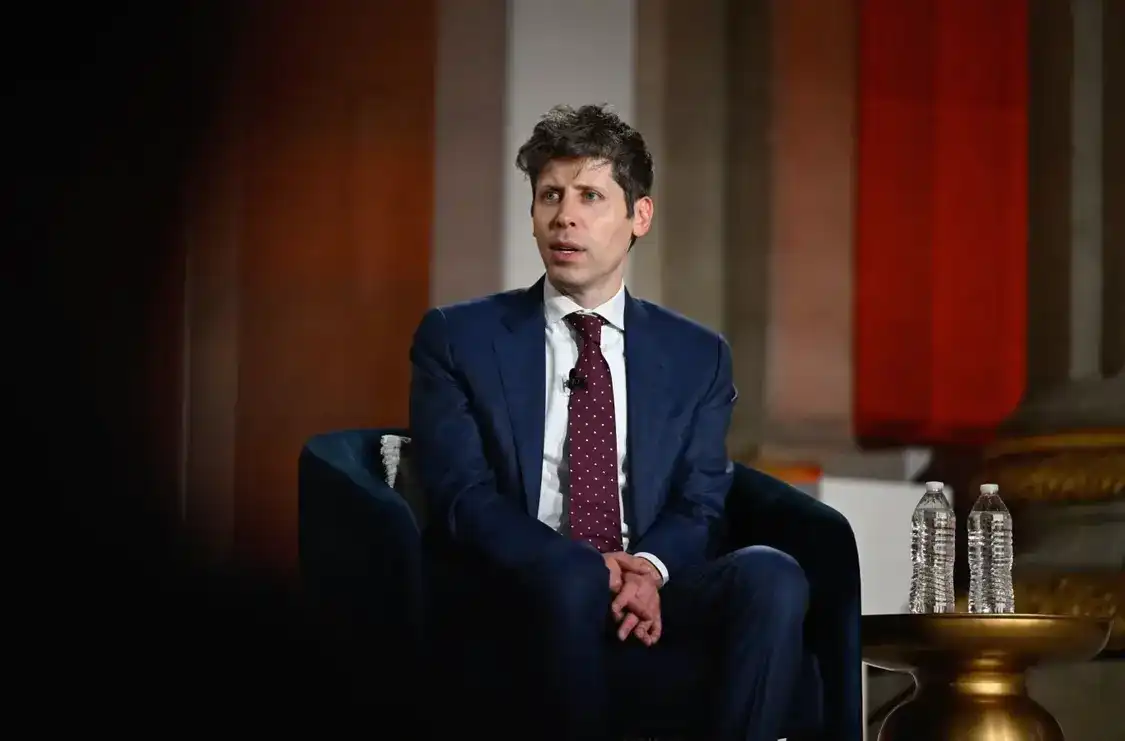
Altman

The decision marked a stunning conclusion to a project Altman had once pinned high hopes on. He had dreamed of using Sora to position OpenAI as the creative pioneer of the AI era and bring in substantial new revenue streams for the company.

Two years ago, OpenAI first showcased Sora to the world, presenting dreamlike landscapes generated by the technology, reminiscent of Hayao Miyazaki's fantasy worlds or the surrealist paintings of Salvador Dalí. When OpenAI launched the standalone Sora app for consumers last September, Altman compared it to the company's initial release of ChatGPT.

However, the app never became as popular as its developers envisioned. It was more akin to low-quality AI-generated content than an AI creative marvel. By the end of last year, its usage had plateaued.

Shortly after its launch, the global user base peaked at around 1 million but never reached that level again. According to data from AI research firm Similarweb, user numbers dropped below 500,000 in the following months.

A person familiar with the matter revealed that Sora was losing approximately $1 million per day. As OpenAI tightened its purse strings ahead of the IPO, company executives began scrutinizing Sora more strictly, and the results were not to their satisfaction.

At the time, OpenAI's research team was about to begin training a new model designed to power video generation features for ChatGPT. Unlike language models that learn from text, video models need to understand the entire dynamic world, making their creation significantly more expensive. After carefully calculating the required costs, OpenAI decided to cancel Sora.

OpenAI plans to shift its focus to a new type of "super app" it is building, which will integrate so-called AI agent tools capable of autonomously performing tasks for users, such as writing software, analyzing data, and booking travel. These productivity-focused products are gradually gaining widespread adoption in the labor market, and OpenAI currently lags behind competitor Anthropic in the race for this market, posing a threat to its leading position in the AI competition.

Altman told employees that the Sora team would next focus on longer-term strategic initiatives like robotics.

An OpenAI spokesperson said the company is rigorously prioritizing computational resources based on the areas that can deliver the greatest long-term economic value. She stated: "This careful focus on where we deploy compute allows us to achieve growth, accelerate innovation, and serve businesses and developers more efficiently."

Zuckerberg's Talent Poaching

Sora was the brainchild of Tim Brooks and Bill Peebles. The two researchers became close friends while pursuing their PhDs at UC Berkeley. They joined OpenAI in early 2023 with the goal of building models capable of simulating the physical world by generating high-quality video from text.

Sora was part of OpenAI's World Simulations team, led by Aditya Ramesh. This department operated independently from OpenAI's core research team, which builds the large language models powering ChatGPT.

Last spring, Meta CEO Mark Zuckerberg launched a full-scale talent war against OpenAI, personally contacting dozens of OpenAI's top researchers with lucrative compensation packages to lure them to his new AI lab. One of his targets was Peebles, who received an offer and briefly considered joining Meta.

According to people familiar with the matter, OpenAI managed to retain Peebles by giving him a raise. Shortly thereafter, his responsibilities on the Sora project expanded. Peebles oversaw the training of a new version of the video generation model and the development of the Sora consumer app.

Disney's AI Dream

Despite Sora's daily losses of $1 million, OpenAI had tried to find a viable path for it. Last December, it announced a multi-year agreement with Disney, securing licensing rights to use over 200 characters from the entertainment giant's film library. As part of the deal, Disney agreed to become a major customer of OpenAI and invest $1 billion in it.

Iger, in an interview with CNBC, said the deal gave Disney an opportunity to participate in the rapid development of AI and new forms of media entertainment. Altman said he hoped the collaboration would offer users a new way to engage in creative expression with AI.
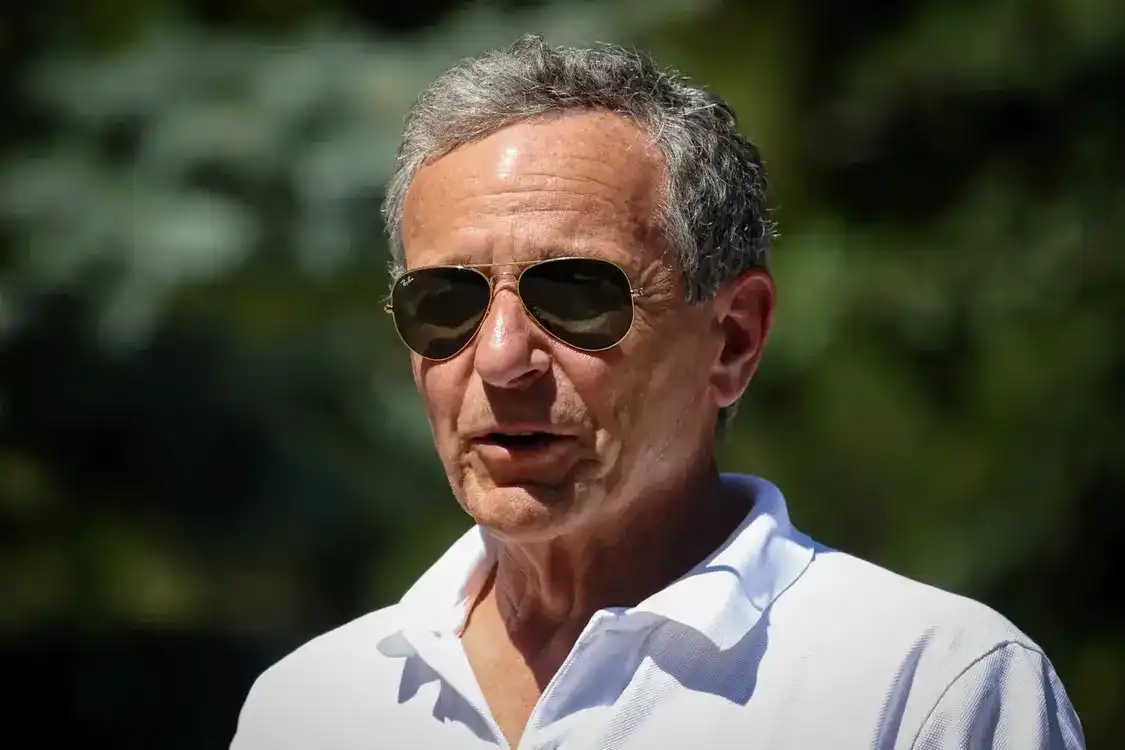
Then-Disney CEO Iger

For Disney, the deal demonstrated a viable business model for AI licensing around its intellectual property. Just a day before announcing the agreement with OpenAI, Disney had sent a cease-and-desist letter to Google, accusing the tech giant of "massive copyright infringement of Disney's works."

Cloud Service Solution

In February, Iger said on an earnings call that short videos generated by Sora would soon appear on the Disney+ streaming platform, which was preparing to launch a vertical video feed. According to people familiar with the matter, Disney was also in talks with OpenAI about using ChatGPT company-wide.

In recent weeks, OpenAI began piloting an enterprise version of Sora, allowing companies like Disney to use the tool with security guarantees. Disney had expected to roll out this tool as early as this spring. It would have allowed select Disney executives to use Sora for everything from marketing campaign design to special effects production, without OpenAI having access to their work.

However, OpenAI was already considering how to withdraw from the Sora project. The gap with competitor Anthropic widened further. Anthropic's recent technical progress reignited concerns that AI could replace traditional software and services, briefly causing a dip in software stocks. OpenAI realized it needed to devote more resources to building these so-called productivity tools and began deprioritizing certain areas.

After initially planning to continue offering video generation features through ChatGPT, the company ultimately decided to shut down Sora completely.

Disney's planned $1 billion investment in OpenAI ultimately did not materialize, and the relationship between the two is effectively stalled.

According to a person familiar with the matter, under new CEO Josh D'Amaro, Disney is actively discussing the application of other AI tools with more than a dozen partners.

Real-time Information Push

Disney said in a statement: "As the emerging AI field develops rapidly, we respect OpenAI's decision to exit the video generation business and realign its priorities. We appreciate the constructive collaboration between our teams and the lessons learned from it."

On Sora's X account, its team posted a message reminiscent of a digital obituary: "To everyone who ever created, shared, and built a community around Sora: thank you."


Perguntas relacionadas

QWhat were the main reasons behind OpenAI's decision to shut down Sora?

AOpenAI shut down Sora primarily due to its excessive consumption of limited and expensive AI computing resources (chips), its failure to become profitable (reportedly losing about $1 million daily), and a strategic shift in company priorities. The resources were needed for the upcoming 'Spud' AI model, coding tools, and enterprise products, especially as OpenAI focused on its IPO preparation and fell behind competitors like Anthropic in productivity-focused AI agent tools.

QHow did the user base of the Sora consumer app perform after its launch?

AThe Sora consumer app initially reached a peak of around 1 million users shortly after its launch. However, its user base subsequently declined and never reached that peak again, dropping to under 500,000 users in the following months, according to data from AI research firm Similarweb.

QWhat was the significance of the deal between OpenAI and Disney regarding Sora?

AThe deal was significant as it involved Disney investment of $1 billion in OpenAI and granted OpenAI a license to use over 200 characters from Disney's film library (including Marvel and Pixar) for Sora-generated videos. It was seen as a major endorsement from a creative industry leader and an attempt to establish a viable business model for AI-generated content. However, the investment ultimately did not materialize after Sora was shut down.

QWho were the key researchers behind the Sora project, and what external challenge did they face?

AThe Sora project was the brainchild of researchers Tim Brooks and Bill Peebles. A key external challenge was a talent war from Meta CEO Mark Zuckerberg, who personally contacted dozens of OpenAI's top researchers, including Peebles, offering lucrative compensation to join Meta's AI lab. OpenAI managed to retain Peebles by giving him a raise.

QWhat is OpenAI's new strategic focus after shutting down the Sora project?

AOpenAI is shifting its strategic focus towards developing a new 'super app' that integrates AI agent tools capable of autonomously performing tasks for users, such as writing code, analyzing data, and booking travel. The company is also prioritizing resources for its upcoming 'Spud' AI model and enterprise products, areas where it feels it is lagging behind competitors and which offer greater long-term economic value.

Leituras Relacionadas

Gensyn AI: Don't Let AI Repeat the Mistakes of the Internet

In recent months, the rapid growth of the AI industry has attracted significant talent from the crypto sector. A persistent question among researchers intersecting both fields is whether blockchain can become a foundational part of AI infrastructure. While many previous AI and Crypto projects focused on application layers (like AI Agents, on-chain reasoning, data markets, and compute rentals), few achieved viable commercial models. Gensyn differentiates itself by targeting the most critical and expensive layer of AI: model training. Gensyn aims to organize globally distributed GPU resources into an open AI training network. Developers can submit training tasks, nodes provide computational power, and the network verifies results while distributing incentives. The core issue addressed is not decentralization for its own sake, but the increasing centralization of compute power among tech giants. In the era of large models, access to GPUs (like the H100) has become a decisive bottleneck, dictating the pace of AI development. Major AI companies are heavily dependent on large cloud providers for compute resources. Gensyn's approach is significant for several reasons: 1) It operates at the core infrastructure layer (model training), the most resource-intensive and technically demanding part of the AI value chain. 2) It proposes a more open, collaborative model for compute, potentially increasing resource utilization by dynamically pooling idle GPUs, similar to early cloud computing logic. 3) Its technical moat lies in solving complex challenges like verifying training results, ensuring node honesty, and maintaining reliability in a distributed environment—making it more of a deep-tech infrastructure company. 4) It targets a validated, high-growth market with genuine demand, rather than pursuing blockchain integration without purpose. Ultimately, the boundaries between Crypto and AI are blurring. AI requires global resource coordination, incentive mechanisms, and collaborative systems—areas where crypto-native solutions excel. Gensyn represents a step toward making advanced training capabilities more accessible and collaborative, moving beyond a niche controlled by a few giants. If successful, it could evolve into a fundamental piece of AI infrastructure, where the most enduring value in the AI era is often created.

marsbitHá 9h

Gensyn AI: Don't Let AI Repeat the Mistakes of the Internet

marsbitHá 9h

Why is China's AI Developing So Fast? The Answer Lies Inside the Labs

A US researcher's visit to China's top AI labs reveals distinct cultural and organizational factors driving China's rapid AI development. While talent, data, and compute are similar to the West, Chinese labs excel through a pragmatic, execution-focused culture: less emphasis on individual stardom and conceptual debate, and more on teamwork, engineering optimization, and mastering the full tech stack. A key advantage is the integration of young students and researchers who approach model-building with fresh perspectives and low ego, prioritizing collective progress over personal credit. This contrasts with the US culture of self-promotion and "star scientist" narratives. Chinese labs also exhibit a strong "build, don't buy" mentality, preferring to develop core capabilities—like data pipelines and environments—in-house rather than relying on external services. The ecosystem feels more collaborative than tribal, with mutual respect among labs. While government support exists, its scale is unclear, and technical decisions appear driven by labs, not state mandates. Chinese companies across sectors, from platforms to consumer tech, are building their own foundational models to control their tech destiny, reflecting a broader cultural drive for technological sovereignty. Demand for AI is emerging, with spending patterns potentially mirroring cloud infrastructure more than traditional SaaS. Despite challenges like a less mature data industry and GPU shortages, Chinese labs are propelled by vast talent, rapid iteration, and deep integration with the open-source community. The competition is evolving beyond a pure model race into a contest of organizational execution, developer ecosystems, and industrial pragmatism.

marsbitHá 10h

Why is China's AI Developing So Fast? The Answer Lies Inside the Labs

marsbitHá 10h

3 Years, 5 Times: The Rebirth of a Century-Old Glass Factory

Corning, a 175-year-old glass company, is experiencing a dramatic revival as a key player in AI infrastructure, driven by surging demand for high-performance optical fiber in data centers. AI data centers require vastly more fiber than traditional ones—5 to 10 times as much per rack—to handle high-speed data transmission between GPUs. This structural demand shift, coupled with supply constraints from the lengthy expansion cycle for fiber preforms, has created a significant supply-demand gap. Nvidia has invested in Corning, along with Lumentum and Coherent, in a $4.5 billion total commitment to secure the optical supply chain for AI. Corning's competitive edge lies in its expertise in producing ultra-low-loss, high-density, and bend-resistant specialty fiber, which is critical for 800G+ and future 1.6T data rates. Its deep involvement in co-packaged optics (CPO) with partners like Nvidia further solidifies its position. While not the largest fiber manufacturer globally, Corning's revenue from enterprise/data center clients now exceeds 40% of its optical communications sales, and it has secured multi-year supply agreements with major hyperscalers including Meta and Nvidia. Financially, Corning's optical communications revenue has surged, doubling from $1.3 billion in 2023 to over $3 billion in 2025. Its stock price has risen nearly 6-fold since late 2023. Key future catalysts include the rollout of Nvidia's CPO products and the scale of undisclosed customer agreements. However, risks include high current valuations and potential disruption from next-generation technologies like hollow-core fiber. The company's long-term bet on light over electricity, maintained even through the telecom bubble crash, is now being validated by the AI boom.

marsbitHá 11h

3 Years, 5 Times: The Rebirth of a Century-Old Glass Factory

marsbitHá 11h

Trading

Spot
Futuros
活动图片