US Banking Regulator Chief Gould: Opening Doors to Crypto, Also Drawing Fire

marsbitPublicado em 2026-03-26Última atualização em 2026-03-26

Resumo

Jonathan V. Gould, the head of the U.S. Office of the Comptroller of the Currency (OCC), is driving a significant shift in banking regulation by advocating for the integration of cryptocurrency and digital asset activities into the federally supervised banking system. With a background spanning Congress, financial consulting, and crypto industry roles—including a stint as chief legal officer at Bitfury—Gould believes that banks should not exclude new technologies but instead manage risks through clear, legally grounded, and technologically neutral supervision. Under his leadership, the OCC has issued interpretive letters allowing national banks to engage in certain crypto activities like digital asset custody, stablecoin services, and distributed ledger participation. Gould has also overseen conditional approvals for crypto firms such as Circle and Ripple to become national trust banks, bringing them under federal oversight. His approach emphasizes that digital assets should be regulated within the banking system to ensure safety, transparency, and compliance—not in a regulatory vacuum. However, Gould faces criticism from both traditional banking groups, who fear regulatory arbitrage and increased systemic risk, and Democratic lawmakers like Elizabeth Warren, who question potential conflicts of interest and the independence of the licensing process. Despite the pushback, Gould maintains that his strategy is about modernizing regulation—not eliminating risks, but managing th...

Author: Zen, PANews

In the US financial regulatory system, the Comptroller of the Currency (OCC) is not the position that most frequently appears in mainstream media headlines, but it is almost always at the forefront of changes in banking rules.

The OCC currently oversees over a thousand banks and related institutions, and the Comptroller is also a member of the FDIC (Federal Deposit Insurance Corporation) board, a member of the Financial Stability Oversight Council. Their judgments do not just affect a few banks, but influence how the US banking system confronts risk, innovation, and new technologies.

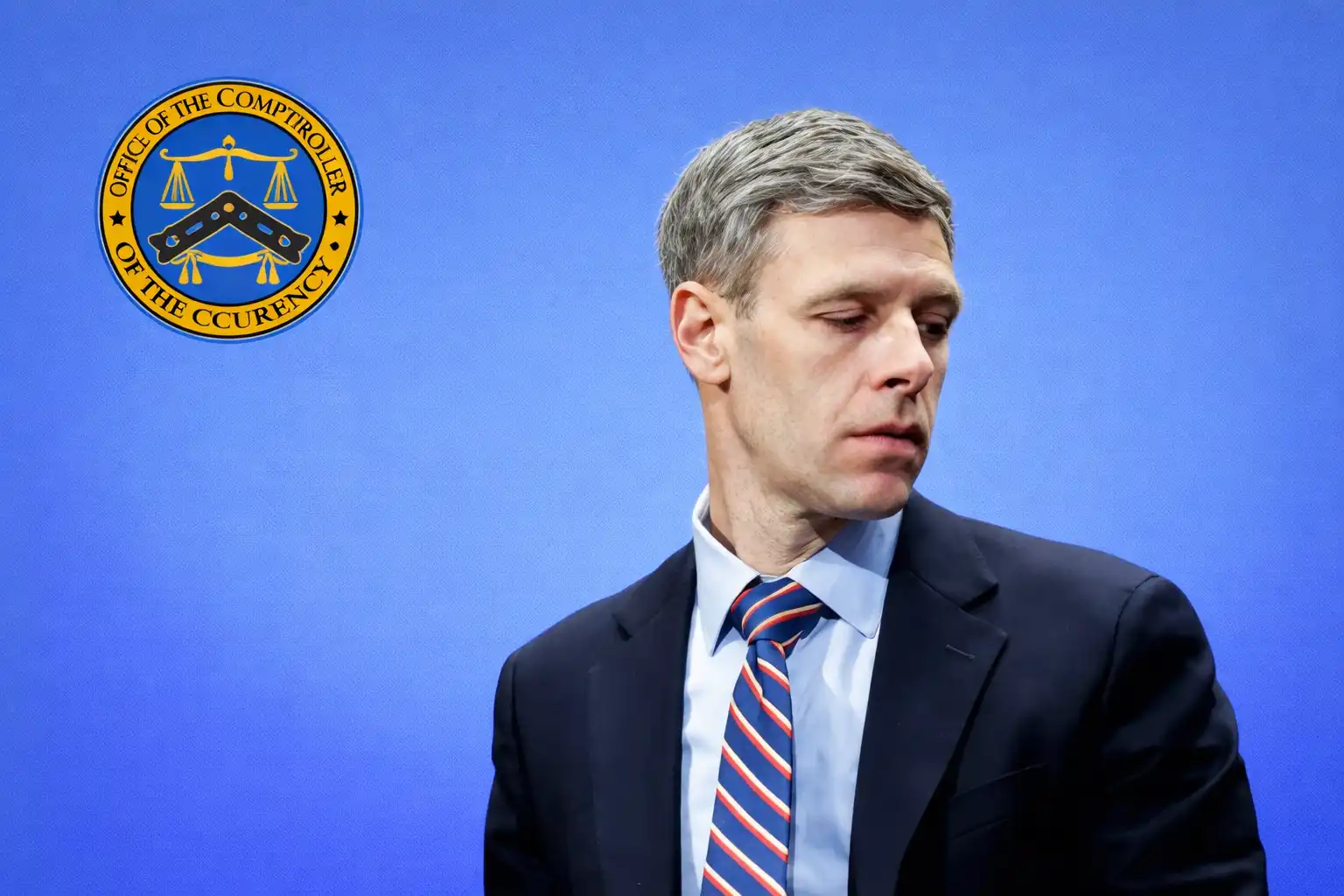
Currently at the helm of this key department, which regulates national banks and federal savings associations, is Jonathan V. Gould. His distinct regulatory approach has, over the past year, drawn the collective attention of Wall Street, Silicon Valley, and the crypto industry.

Gould does not believe the banking system should maintain safety by排斥 (excluding) new things, nor does he believe cryptocurrencies should inherently be banished from the regulated financial system. His core philosophy is that any activity permitted by law, and which can be conducted under safe and sound conditions, is best done within the banking system, because only then can regulators truly constrain and utilize it.

This has also made him one of the most noteworthy and controversial figures in Trump's second-term financial regulatory landscape.

From Financial Law Elite to Regulator

Looking at Jonathan V. Gould's career path, he is not a technocrat focused on a single field, but rather a Washington financial law elite who has moved repeatedly between Congress, regulatory agencies, law firms, consulting companies, and financial institutions.

Gould graduated from Princeton University and later received a law degree from Washington and Lee University. Early in his career, he worked on bank regulatory legal matters at the law firm Alston & Bird. From 2005 to 2008, he began working for the government, serving as Legal Counsel for the US Senate Committee on Banking, Housing, and Urban Affairs, participating in financial regulatory legislation.

Around the time of the 2008 financial crisis, Gould joined Promontory Financial Group as a Director. At this regulatory consulting firm, Gould began directly facing the survival challenges of the post-crisis banking industry, exploring how to help financial institutions meet new regulatory requirements. In 2014, he joined asset management giant BlackRock's subsidiary, BlackRock Solutions, as a senior executive, further expanding his knowledge of risk management and financial modeling.

A few years later, Gould returned to the Senate Banking Committee in 2018, becoming its Chief Legal Counsel, participating in drafting financial legislation like the 2018 Economic Growth Act. In December of the same year, he joined the OCC as Senior Deputy Comptroller and Chief Counsel. The OCC is one of the core regulatory agencies of the US federal banking system, responsible for supervising national banks, federal savings associations, and some foreign bank branches in the US.

His first stint at the OCC is what truly made Gould famous and known to the cryptocurrency industry. During this time, he was responsible for the agency's legal and licensing functions. Under his leadership, the OCC began issuing charters to new types of banking business models and issued formal legal opinions on the regulatory compliance of digital asset-related businesses. During this period, the OCC, under his guidance, began issuing charters to innovative banks and published compliance guidance for some crypto activities, such as confirming activities that are "permissible under safe and sound conditions".

After leaving the OCC, Gould further embraced the crypto industry. He served as Chief Legal Officer at the well-known crypto mining company Bitfury in 2022, and then joined the law firm Jones Day as a partner in the Financial Markets practice half a year later. In February 2025, Trump nominated Gould for the position of Comptroller of the Currency, and he officially took office on July 15th, becoming the 32nd Comptroller of the Currency.

A More Crypto-Friendly Regulator

Gould is often perceived as a regulator who is more lenient towards banks and more friendly towards crypto. However, this is not entirely accurate; in reality, he opposes vague, spillover, and politicized regulation, not regulation itself.

During his Senate confirmation hearing for Comptroller of the Currency, two of Gould's statements were particularly representative: one was that banks must be allowed to engage in "prudent risk-taking"; the other was that since the 2008 crisis, regulators have often tried to eliminate risk rather than manage it, and this short-sightedness affects credit supply, the system's ability to absorb shocks, and the adoption of new technologies and innovation.

After formally assuming the role of OCC head, Gould's approach was further institutionalized. He clearly stated that the OCC would return to a risk-based supervision grounded in law, materiality, and examiner judgment. The focus of its examinations would be on issues that truly affect safety and soundness, not arbitrary checklist tools. He also advocated for making regulatory tools more predictable and proportionate, while advancing the reconsideration of Basel capital rules, BSA/AML modernization, and targeted relief for community banks.

In March 2025, the OCC issued an interpretive letter reaffirming that national banks and federal savings associations could engage in certain crypto-related activities, including digital asset custody, certain stablecoin activities, and participation in distributed ledger networks, while revoking the previous stricter pre-approval "no objection" requirement. This move was widely seen as an important signal that federal bank regulation was reopening channels to crypto businesses.

Gould is clearly not satisfied with merely allowing traditional banks limited exposure to crypto businesses. His further goal is to provide digital asset companies themselves a path into the federal banking system. Under his tenure, the OCC has conditionally approved applications from companies like Circle and Ripple to establish or convert to national trust banks. These charters, while not allowing deposit-taking or lending, enable businesses to conduct asset custody, settlement, and some payment-related activities under a federal framework.

Regarding the intent of these policies, Gould expressed it very clearly at the Blockchain Association's policy summit last year. He pointed out that entities engaged in digital assets and other new technology activities should have a path to become federally regulated banks, provided they are willing and meet the OCC's licensing requirements. He also emphasized that digital custody should not be treated differently from traditional electronic custody simply because the assets are in digital form; otherwise, the banking system would fall into technologically irrelevant discrimination, ultimately causing the system to lose relevance.
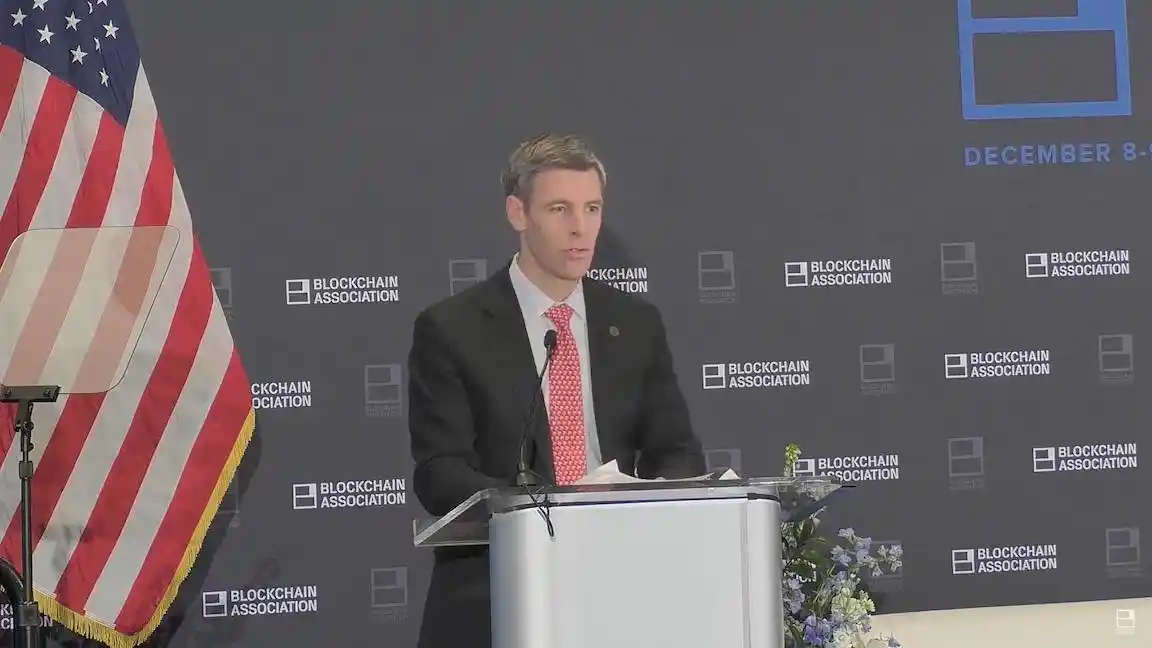
Gould at the Blockchain Association Policy Summit

In February of this year, when the OCC published proposed rules to implement the GENIUS Act, Gould further stated that the OCC had seriously considered a regulatory framework that would allow the stablecoin industry to "prosper in a safe and sound manner." The core of the proposed rules is to formally bring certain payment stablecoin issuers under the OCC's regulatory and enforcement purview, covering bank subsidiaries, federally chartered non-bank issuers, and some state-chartered issuers, and to stipulate reserve, capital, reporting, and examination frameworks.

The significance behind this is substantial. It indicates that Gould does not view stablecoins as a wild business that should be forever kept on the financial periphery, but rather as a payment tool that can be institutionalized and made prudent. More importantly, the OCC's rule design is not only prepared for traditional banks but also explicitly considers non-bank stablecoin issuers wishing to convert into federally regulated entities. This shows that Gould's openness is not just verbal promise but is reflected in the regulatory architecture design.

However, the OCC proposal also makes it clear that there will be reserve requirements, examination authority, capital assessment, information reporting, and, when necessary, interim or crypto-frequency examinations, and the OCC retains the power to deviate from the regular cycle to conduct examinations in emergency or financial stability risk situations. In other words, what Gould supports is always a licensed, continuously supervised, examinable stablecoin ecosystem, not a regulatory vacuum.

Criticized for Opening the Regulatory Gate Too Wide

Precisely because of his more open regulatory model, Gould has consistently faced controversy. Critics' doubts about him primarily center on one question—is he rebuilding a more modern regulatory framework, or is he making concessions to the crypto industry and certain political capital, opening the door too wide?

Criticism comes mainly from two directions. First, from traditional banking. Some banking organizations oppose the OCC granting national trust bank charters to crypto companies, arguing that this could allow the latter to conduct quasi-banking activities under lighter regulation and increase systemic risk. Critics worry that what Gould calls "innovative access" could ultimately evolve into regulatory arbitrage.

Second, from Democrats regarding potential conflicts of interest. In February 2026, Elizabeth Warren challenged Gould during a Senate hearing regarding the bank charter application of World Liberty Financial, a crypto project supported by the Trump family.

Although Gould expressed willingness to consider allowing senior congressional members confidential access to the application documents, he emphasized that charter approvals would follow established procedures, handled by OCC professionals according to public manuals. Faced with质疑 (queries/accusations), the legally-trained Gould is also very adept at responding. He largely avoids engaging directly in verbal battles, instead repeatedly emphasizing procedure and rules. However, in the current US political environment, this is not enough to eliminate external doubts about regulatory independence.

This skepticism also reveals a new divergence within the US financial regulatory system. Faced with digital assets, stablecoins, and fintech, should regulation lean more towards exclusion or admission? Gould's answer is clearly the latter. He believes the banking system should not maintain safety by isolating itself from reality, but should rely on clearer legal boundaries, more targeted risk management, and a more technology-neutral regulatory philosophy to bring those new financial activities that already exist into the system.

In this sense, Gould is not simply a "crypto-friendly" advocate; he is more like someone who wants to rewrite the relationship between banks and new financial technologies. It's not about abandoning regulation, but changing the starting point of regulation; not about keeping banks away from crypto, but about bringing crypto into banks; not about pretending risk doesn't exist, but about acknowledging its existence and then deciding who manages it.

In the coming years, regardless of where US crypto policy heads, Jonathan V. Gould is likely to be the person who cannot be bypassed.


Criptomoedas em alta

Perguntas relacionadas

QWho is Jonathan V. Gould and what is his current role in the US financial regulatory system?

AJonathan V. Gould is the 32nd Comptroller of the Currency, leading the Office of the Comptroller of the Currency (OCC), which regulates over a thousand banks and related institutions in the US. He is also a member of the FDIC board and the Financial Stability Oversight Council.

QWhat is Gould's core regulatory philosophy regarding new technologies like cryptocurrency?

AGould believes the banking system should not maintain safety by排斥 new things, nor should cryptocurrency be天然 excluded from the regulated financial system. His core idea is that any activity allowed by law and conducted under safe and sound conditions should be brought into the banking system so regulators can properly约束 and utilize it.

QWhat significant action did the OCC take under Gould's leadership in March 2025 regarding crypto?

AIn March 2025, the OCC issued an interpretive letter reaffirming that national banks and federal savings associations could engage in certain crypto-related activities, including digital asset custody, some stablecoin activities, and participation in distributed ledger networks. It also revoked the stricter prior 'non-objection' requirement for supervision.

QWhat are the two main sources of criticism Gould faces for his regulatory approach?

ACriticism comes from two main directions: 1) Traditional banking organizations oppose the OCC granting national trust bank charters to crypto companies, fearing lighter regulation and increased systemic risk. 2) Democrats, like Senator Elizabeth Warren, have质疑 potential conflicts of interest, notably regarding a bank charter application from the Trump-family-supported crypto project World Liberty Financial.

QHow does Gould's approach aim to change the relationship between banks and new financial technologies?

AGould aims to rewrite this relationship not by abandoning regulation, but by changing its starting point. He doesn't want to keep banks away from crypto but to bring crypto into the banking system under a framework of clear legal boundaries, targeted risk management, and technology-neutral监管哲学, acknowledging risks exist and deciding who should manage them.

Leituras Relacionadas

Analyzing the Impact of AI on Economic Growth and Productivity

**Title: Analyzing AI's Impact on Economic Growth and Productivity** This article examines three contrasting views on AI's influence on economic growth and productivity. **The Optimistic View** posits that AI, especially through automating R&D ("recursive self-improvement"), could dramatically accelerate growth, even triggering a technological "singularity" with explosive, potentially infinite, economic expansion. **The Moderate/Mainstream View** acknowledges AI's productivity benefits but emphasizes significant real-world constraints that could limit its impact. These include: limited cost savings per task, structural ceilings on which jobs and industries are "exposed" to AI, adoption bottlenecks (e.g., compute, energy, regulatory hurdles), and the "weak link" effect where non-automatable tasks cap overall gains. Consequently, the realized AI dividend may be far lower than optimistic projections, with estimates typically ranging from 0.1% to 1.3% annual productivity growth. **The Pessimistic View** stems from two strands. The first aligns with the moderate view but applies extremely conservative assumptions about task exposure and efficiency gains, yielding minimal projected impact. The second introduces a demand-side critique: if AI primarily replaces rather than augments labor, it could depress labor's share of income, weaken consumer demand, and create a "demand trap" that ultimately stifles growth, unless offset by redistribution policies. **The authors' assessment** is nuanced: * **Short-term (1-2 years):** AI will support growth primarily through investment spending, not significant productivity gains. * **Medium-term (3-5 years):** Three potential paths emerge based on AI demand and bottleneck severity: 1. **"Optimistic Path":** High demand, few bottlenecks. Rapid productivity gains but risk of major job displacement and social conflict without redistribution. 2. **"Moderate Path" (most likely):** High demand but significant, surmountable bottlenecks. Leads to moderate productivity gains, financial market volatility (K-shaped returns), and sectoral job losses. 3. **"Pessimistic Path":** Low demand or severe bottlenecks. Minimal productivity and growth impact, triggering financial market corrections but allowing a smoother societal transition with less labor disruption. * **Long-term:** AI holds potential for a major productivity revolution and prosperity. The conclusion stresses that no path is smooth. Technologically "optimistic" outcomes could be socially detrimental, while "pessimistic" technological diffusion might be more socially stable. Policymakers must monitor developments and prepare balanced responses to manage economic, financial, and social sustainability.

marsbitHá 4m

Analyzing the Impact of AI on Economic Growth and Productivity

marsbitHá 4m

The New Cold War is a Tech Stock War

The New Cold War is a Tech Stock War The article argues that the contemporary geopolitical and economic rivalry between the US and China represents a "New Cold War," but one fundamentally fought through technology and financial markets, not physical barriers or conventional trade. Historically, US dominance was secured through financial systems. The Soviet Union, reliant on the rigid "Transferable Ruble," was ultimately undermined by its dependency on the US dollar for oil trade. Later, Japan's semiconductor challenge was countered not just by tariffs (e.g., Plaza Accord, 301 investigations) but by binding it to US Treasury bonds. China presents a more complex, "embedded" challenger. While it holds vast dollar reserves and US debt like Japan, its industrial base is stronger and more diversified than the Soviet Union's. Surviving the initial 2018 trade war phase, the conflict has evolved into a "tech-financial war." The core battlefield is now the stock market. US tech stocks (AI, semiconductors) are treated as sovereign assets, buoyed by bipartisan national will. China is pushing to strengthen its own financial markets to convert industrial strength into financial power and fund its tech ambitions. Companies like ChangXin (semiconductors), Moonshot AI, and DJI compete not just for market share but as financial proxies for their respective systems. The new paradigm is moving from globally efficient monopolies (Apple, Google) towards companies that achieve monopolistic profits within their respective geopolitical spheres. This competition over "pricing power" and financial valuation in segmented markets defines the current era, making the stock market the primary arena for this tech-centric struggle.

marsbitHá 14m

The New Cold War is a Tech Stock War

marsbitHá 14m

RWA Weekly: Ten European Financial Institutions Establish Tokenized Asset Cooperative; Ondo Launches New Execution Network Ondo Network

RWA Weekly: European Banks Form Tokenized Asset Cooperative; Ondo Launches New Execution Network Ondo Network Covering July 24-31, 2026, the RWA sector saw a steady on-chain total value locked (TVL) of $36.8 billion, with holder count hitting a record high. However, stablecoin transfer volumes fell sharply (~30%), indicating low on-chain settlement demand. Key regulatory moves include South Korea advancing stablecoin legislation and a push to scrap crypto taxes, Kenya lowering capital requirements for stablecoin issuers, and Zimbabwe approving seven projects for its crypto sandbox. In project developments, BIS-led Project Agorá successfully tested cross-border payments with tokenized funds across six currencies. Ten major European financial institutions formed the RL1 blockchain cooperative to build tokenized asset infrastructure. Other notable updates: Aviva launched a tokenized dollar liquidity fund on XRPL, POSCO International tokenized commercial invoices on Injective, and a Brazilian farmer used tokenized cattle as collateral for a loan. Additional progress includes BNY Mellon migrating its core transfer agent operations to blockchain, Securitize gaining SEC investment advisor registration, and Tether’s compliant stablecoin USA₮ launching on Celo. Ondo Finance introduced Ondo Network, a new execution layer focused on speed and privacy, moving away from its initial chain plans. An analysis highlights that despite the growing scale of on-chain RWAs (~$32B), approximately 90% remain underutilized in DeFi, pointing to a critical challenge in unlocking liquidity and fostering real-world application beyond mere issuance.

marsbitHá 14m

RWA Weekly: Ten European Financial Institutions Establish Tokenized Asset Cooperative; Ondo Launches New Execution Network Ondo Network

marsbitHá 14m

South Korean Stock Market Sees Sharp Rebound After Forceful De-leveraging, SK Hynix Rises 30%

On July 31, South Korean stocks staged a historic rebound. The benchmark KOSPI index surged 18.27%, with chipmaker SK Hynix hitting a 30% gain limit. This followed a brutal, near-40% decline in the KOSPI over the previous month, driven largely by a deleveraging spiral involving leveraged ETFs. Analysts attributed the sharp sell-off to structural liquidity issues rather than deteriorating corporate fundamentals. The rally was triggered by a confluence of positive catalysts. Firstly, strong earnings from U.S. cloud giants Microsoft and Amazon alleviated fears of an "AI bubble burst," boosting global tech sentiment. Secondly, SK Group Chairman Chey Tae-won made a rare personal purchase of SK Hynix shares, seen as a strong vote of confidence. Thirdly, the South Korean government announced a 20 trillion won ($139 billion) AI investment fund. In response to the market turmoil, South Korean regulators are tightening controls on leveraged ETFs, admitting oversight shortcomings. Measures include raising minimum cash保证金 requirements for散户 investors and suspending new product launches. While the rebound signals eased liquidity pressure, analysts note deep structural issues remain. The market's future stability is seen as dependent on global tech capital expenditure trends and memory chip price cycles, with some viewing the surge as a technical correction rather than a definitive trend reversal.

marsbitHá 34m

South Korean Stock Market Sees Sharp Rebound After Forceful De-leveraging, SK Hynix Rises 30%

marsbitHá 34m

Trading

Spot

Artigos em Destaque

Como comprar T

Bem-vindo à HTX.com!Tornámos a compra de Threshold Network Token (T) simples e conveniente.Segue o nosso guia passo a passo para iniciar a tua jornada no mundo das criptos.Passo 1: cria a tua conta HTXUtiliza o teu e-mail ou número de telefone para te inscreveres numa conta gratuita na HTX.Desfruta de um processo de inscrição sem complicações e desbloqueia todas as funcionalidades.Obter a minha contaPasso 2: vai para Comprar Cripto e escolhe o teu método de pagamentoCartão de crédito/débito: usa o teu visa ou mastercard para comprar Threshold Network Token (T) instantaneamente.Saldo: usa os fundos da tua conta HTX para transacionar sem problemas.Terceiros: adicionamos métodos de pagamento populares, como Google Pay e Apple Pay, para aumentar a conveniência.P2P: transaciona diretamente com outros utilizadores na HTX.Mercado de balcão (OTC): oferecemos serviços personalizados e taxas de câmbio competitivas para os traders.Passo 3: armazena teu Threshold Network Token (T)Depois de comprar o teu Threshold Network Token (T), armazena-o na tua conta HTX.Alternativamente, podes enviá-lo para outro lugar através de transferência blockchain ou usá-lo para transacionar outras criptomoedas.Passo 4: transaciona Threshold Network Token (T)Transaciona facilmente Threshold Network Token (T) no mercado à vista da HTX.Acede simplesmente à tua conta, seleciona o teu par de trading, executa as tuas transações e monitoriza em tempo real.Oferecemos uma experiência de fácil utilização tanto para principiantes como para traders experientes.

509 Visualizações TotaisPublicado em {updateTime}Atualizado em 2026.06.02

Como comprar T

Discussões

Bem-vindo à Comunidade HTX. Aqui, pode manter-se informado sobre os mais recentes desenvolvimentos da plataforma e obter acesso a análises profissionais de mercado. As opiniões dos utilizadores sobre o preço de T (T) são apresentadas abaixo.

活动图片