Trip.com Overseas Version Launches Stablecoin Payments, Supports USDT and USDC

marsbitPublicado em 2025-12-25Última atualização em 2025-12-25

Resumo

Trip.com, the overseas version of Chinese travel giant Ctrip, has launched a stablecoin payment option for its global users, supporting both USDT and USDC. The feature, confirmed by sources to Foresight News, is already operational. A user in Vietnam successfully booked a hotel using USDT in under 10 minutes, noting that prices for some bookings were even lower than on the main Ctrip platform or with traditional payment methods. The service is integrated via Singapore-based licensed crypto payment institution Triple-A and supports multiple blockchains including Ethereum, Tron, and Solana. A key advantage noted is enhanced privacy; for hotel bookings, only a name and email are required, though flights still need standard compliance information. This move is seen as a response to growing global user concerns and a major trust incident Ctrip faced recently. The article positions this within a broader trend of major corporations—including PayPal, Ant Group, Grab, and manufacturers like BYD and Toyota—adopting stablecoins. The driving forces are varied: for some, it's about becoming stablecoin issuers; for others, it's a pragmatic solution for users in regions with high inflation and limited access to international credit cards. The piece highlights severe currency devaluation in countries like Bolivia, Iran, and Turkey, where stablecoins are becoming a necessary alternative to unstable local currencies. Ultimately, stablecoin adoption is presented not as an idealistic choice, b...

Written by: Joe Zhou, Foresight News

Trip.com, the overseas version of Ctrip, is quietly entering the stablecoin payment arena.

On December 25, 2025, Foresight News learned that Trip.com's overseas version has launched stablecoin payment functionality for global users, currently supporting two dollar-denominated stablecoins: USDT and USDC. Two sources close to Trip confirmed this information to Foresight News.

After downloading and logging into Trip.com in Vietnam, the author successfully booked a hotel in Nha Trang, Vietnam, using USDT in less than 10 minutes.

More notably, after comparing prices from multiple local hotels, it was found that paying with USDT on the Trip.com App for some hotels was even cheaper than using the official Ctrip website or traditional payment methods.

Ctrip's Overseas Version Already Supports USDT/USDC

On December 24, 2025, the author booked a hotel in Nha Trang, Vietnam, using USDT on the Trip.com overseas app and successfully purchased a flight ticket from Nha Trang to Ho Chi Minh City with USDT on December 25th. The author has already checked into the hotel.

The author discovered that the flight ticket purchased with USDT on Trip.com was approximately 18% cheaper than the one bought on Ctrip. The hotel booked with USDT saved about 2.35% in costs.
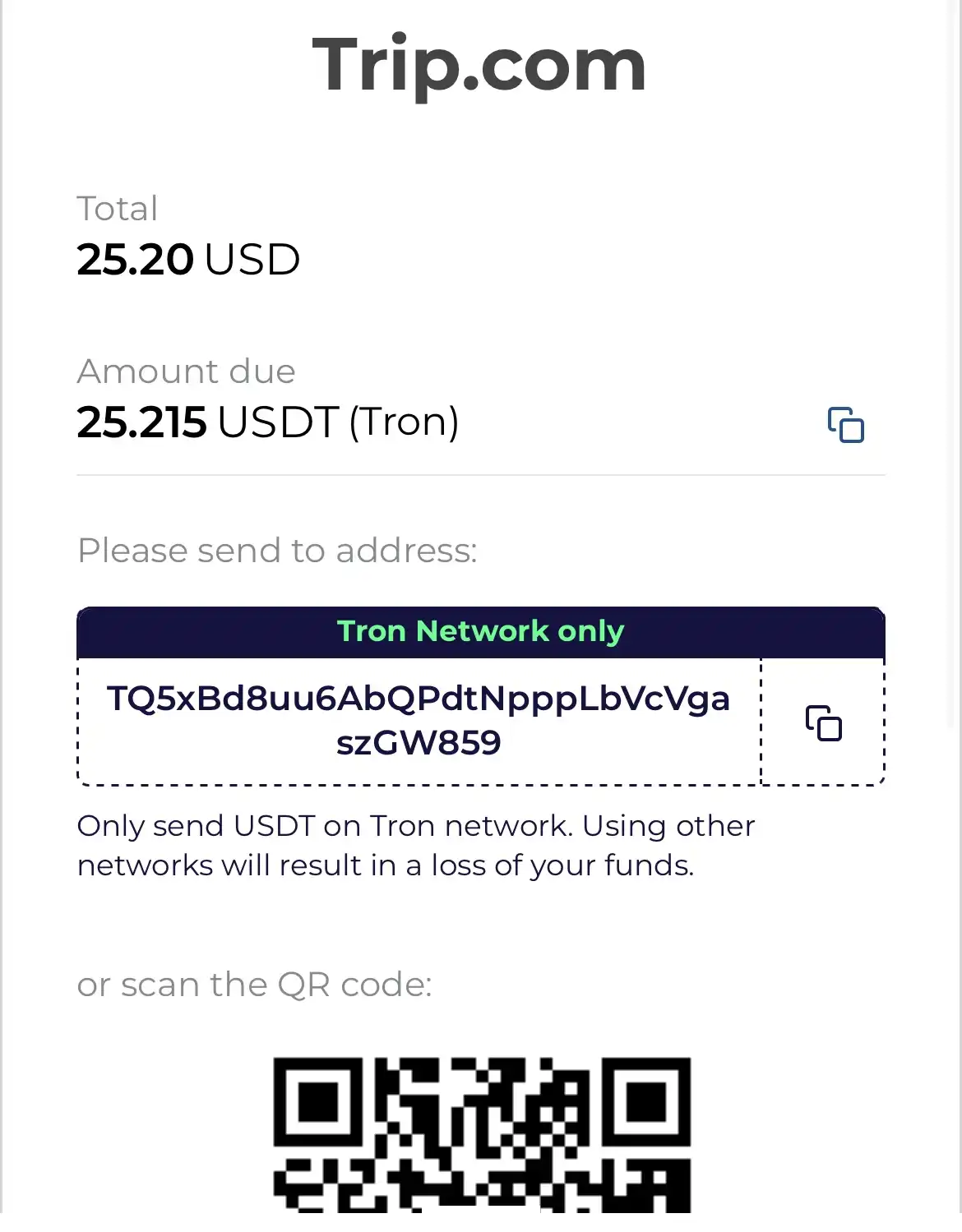
Trip has enabled USDT and USDC payments

Currently, Trip.com's crypto payments support multiple public chains including Ethereum, Tron, Polygon, Solana, Arbitrum One, and TON.

During the actual payment process, the author noticed the involvement of another payment company, Triple-A. This company provides crypto payment-related services to Trip.com. Public information shows that Triple-A is a licensed crypto payment institution headquartered in Singapore, primarily offering payment gateway and settlement services for cryptocurrencies and stablecoins.

Furthermore, the author learned that Triple-A is also collaborating with Singapore's internet giant Grab as a technical partner for crypto payment channels, enabling GrabPay users to directly top up their wallet balances using crypto assets within the Grab app.

Additionally, the author noted a detail:

When booking a hotel on Trip.com using USDT, detailed personal information is not required; only a name and email are needed to complete the order. This means that for hotel bookings using USDT, the platform can hardly obtain users' complete private information. Of course, purchasing flight tickets still requires filling in information such as nationality, passport number, and phone number—this is a compliance requirement of the aviation industry itself.

Privacy and data security have become major societal issues.

Just this month, the Ctrip Group encountered a relatively significant 'public trust incident'. In December, Ctrip Group signed a marketing cooperation agreement with the Cambodia National Tourism Board in Shanghai. After the news was announced, it raised concerns among some users about local security, telecom fraud risks, and personal information security, leading to numerous screenshots of users uninstalling the Ctrip App on social media.

In many regions overseas, users are far more sensitive to privacy and information security than in the domestic market. This might also be an important practical background for Trip.com's push for stablecoin payments.

For travelers worldwide without international credit cards, stablecoin payments offer a new path. According to public information, there are approximately 125 to 130 million credit card holders globally, with even fewer holding international credit cards. This means over 80% of the world's population cannot smoothly use the international credit card system.

Credit cards are not merely 'payment tools' but an entry point to the credit system, yet most people globally are not within this system. In many countries and regions, such as Southeast Asia, Latin America, Africa, and India, many individuals cannot be incorporated into the credit system, making it impossible for them to own credit cards.

Stablecoin payments are providing these individuals with a global payment path that bypasses the credit system.

Of course, the practical issues with stablecoins still exist: transaction fees remain relatively high and unstable.

During the actual payment process, the author found significant differences in fees between different wallets. When paying via Binance to Trip.com's USDT收款码, a fee of 1 USDT was required, with a minimum transfer threshold of 10 USDT; whereas using Bitget Wallet, the first transaction showed a 0 fee, but the second showed a fee of 2.39 USDT, with no minimum transfer amount set. These differences may be related to the public chain used (Tron) and its fee mechanism.

Why Are Giants Entering the Stablecoin Arena?

Ctrip Group is not the first company to enter the stablecoin赛道.

Previously, several global internet and payment giants have clearly布局 stablecoins, including Ant Group, JD.com, PayPal, Stripe, Meta (Facebook), Grab, and TADA.

Several banking giants have also publicly stated their entry into the stablecoin field, such as Bank of America and Morgan Stanley.

Some实体 manufacturing companies are also integrating stablecoin payments. Public reports indicate that some BYD dealers in Bolivia already support USDT payments; manufacturing companies like Toyota and Yamaha also accept stablecoin settlements in overseas markets. Tether CEO Paolo Ardoino has publicly confirmed this.

Advertisement for cooperation between BYD dealers and USDT

Internet giants,实体 manufacturing giants, and banking giants are all deploying stablecoins... their use cases for stablecoins vary.

An obvious trend is that payment giants like PayPal and Ant Group are no longer satisfied with merely being stablecoin payment gateways but hope to directly become stablecoin issuers. PayPal has already launched PYUSD; Ant Group is also推进 the application for a Hong Kong dollar stablecoin license. The boundary between payment institutions and currency issuance is being reshaped.

For实体 manufacturing enterprises like BYD and Toyota, there is no ideological judgment about stablecoins or crypto payments, only one practical question: which method are users more willing to pay with.

Fiat Currency Continues to Depreciate, Stablecoins Become a "Practical Solution"

In Bolivia, the official fiat currency, the Boliviano (BOB), depreciated against the US dollar by 65%–137% from late 2024 to mid-2025. It can be said that Bolivia's fiat currency depreciates every day.

In this environment, any company operating overseas cannot long bear the exchange loss from settling in the local currency. USDT has gradually become the de facto payment tool locally.

Bolivia is not an isolated case but a phenomenon playing out simultaneously in many countries worldwide.

The author visited Iran, Turkey, Egypt, and other countries this year and found that the cumulative depreciation of these economies' national currencies against the US dollar over the past three years generally exceeded 80%; over a five-year period, the currencies of Iran, Turkey, and Egypt have all depreciated by more than 200% against the dollar.

Currency depreciation is evolving from a 'local risk' in a few countries to a broader, more structural global phenomenon.
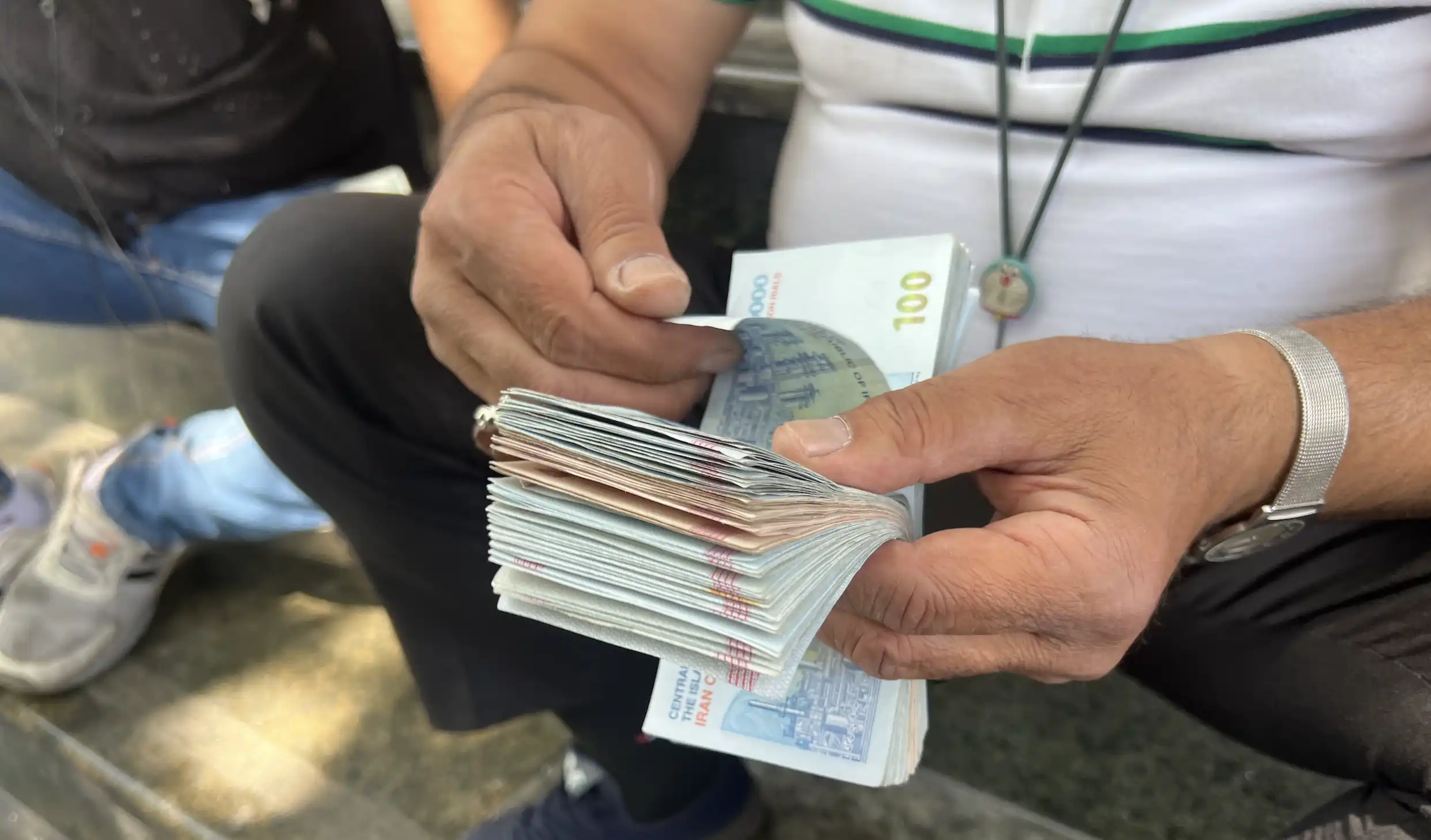
At a black market in Tehran, Iran, the author witnesses a currency exchange

More残酷ly, in the aforementioned countries, the speed of local currency depreciation has long surpassed the income growth rate of ordinary people. In real transactions, monetary disorder is directly changing payment methods.

This is precisely why consumer internet platforms like Trip.com Overseas and Grab; payment giants like PayPal and Ant Group; and实体 manufacturing companies like BYD and Toyota are beginning to experiment with introducing USDT and other stablecoins in different markets.

The world is partially crumbling, with some regions becoming unbalanced first.

When the existing financial system can no longer perform the functions of stability, settlement, and trust, a new economic system is pushed to the forefront by reality.

The new economic system is not designed but is 'forced' out by reality where the old system fails. The spread of stablecoins is not because they are ideal, but because in some places, they are already the least bad option available.


Criptomoedas em alta

Perguntas relacionadas

QWhat is the main development announced regarding Trip.com, and which stablecoins does it support?

ATrip.com, the overseas version of Ctrip, has launched stablecoin payments, supporting both USDT and USDC.

QWhich payment processing company is providing the crypto payment services for Trip.com, and what other major company are they known to partner with?

AThe payment processing company providing crypto payment services for Trip.com is Triple-A, which is also a technical partner for crypto payments with the Singaporean internet giant Grab.

QWhat is one of the key user benefits mentioned for using stablecoin payments on Trip.com, particularly for hotel bookings?

AA key benefit for hotel bookings is enhanced privacy, as users only need to provide a name and email address to complete an order, unlike traditional payments which require more personal information.

QAccording to the article, what is a major global economic problem that is driving the adoption of stablecoins like USDT in various countries?

AA major driver is the rapid devaluation of local fiat currencies in many countries, such as Bolivia, Iran, Turkey, and Egypt, where currencies have depreciated significantly against the US dollar, making stablecoins a more reliable payment method.

QBesides internet and payment companies, which other type of industry is mentioned as adopting stablecoin payments, and what is their primary motivation?

AManufacturing companies like BYD and Toyota are adopting stablecoin payments. Their primary motivation is not ideological but practical: using the payment method that customers are most willing to use to complete purchases.

Leituras Relacionadas

Base Under Pressure

**Title: The Pressure Mounts for Base** Base, the Ethereum Layer 2 scaling solution backed by Coinbase, is facing significant pressure and public scrutiny from its leadership following the launch of Robinhood Chain. Base co-founder Jesse Pollak recently acknowledged strategic missteps, admitting that the chain's past focus on social and creator tokens (e.g., through Farcaster, Zora) failed to deliver sustainable adoption. He has refocused on core infrastructure, handing leadership of the Base App back to Coinbase's Cobie. While Base remains a top L2 contender alongside OP Mainnet and Arbitrum, and boasts the highest TVL (nearly $12B), its weaknesses are being highlighted by the new competitor. Key criticisms include its slow progress on decentralization. Base has faced issues with its single sequencer causing block production halts, and L2BEAT is reportedly considering downgrading its decentralization rating from Stage 1 to Stage 0. This contrasts sharply with the rapid initial success of Robinhood Chain, whose DEX quickly entered the top five by volume. The leadership styles of the parent companies are also being compared: Robinhood's CEO actively engages with new projects, while a recent incident where Coinbase's Brian Armstrong briefly changed his profile picture—sparking and then crashing a related meme token—drew community ire and mockery. Pollak stated Base is working with Coinbase on tokenized stocks backed 1:1 by real equity, differentiating it from Robinhood's derivatives model. However, the article argues that Base's most urgent task is to address its long-standing technical and trust issues. With more traditional finance players likely to emulate Robinhood's path, Base must use this competitive pressure to solidify its position as long-term financial infrastructure.

Foresight NewsHá 11m

Base Under Pressure

Foresight NewsHá 11m

White House Concession Removes Ethical Hurdle, Clarity Act Races Against Final Window Before Recess?

On July 21st, industry sources reported that the Trump administration has agreed to include an ethics provision in the "Clarity Act" (Digital Asset Market Clarity Act of 2025). This concession addresses the long-standing conflict-of-interest concerns regarding government officials and the crypto industry, potentially removing the final major obstacle to the bill's progress. Additionally, Patrick Witt, the executive director of the White House's Digital Asset Advisory Committee, confirmed he will remain in his role to help finalize the bill, alleviating previous concerns about his potential departure. The Clarity Act aims to establish a unified federal regulatory framework for the U.S. digital asset market. Its core objective is to resolve regulatory ambiguity by defining different types of digital assets (digital commodities, investment contract assets, and permitted payment stablecoins) and clarifying the respective oversight roles of the SEC and CFTC. This would end the long-running jurisdictional dispute between the two agencies and provide clearer compliance paths for the industry. With the ethics issue moving toward resolution, the most urgent challenge now is time. The U.S. Congress is set to begin its August recess in mid-August, leaving only a few working weeks to finalize the text and advance the bill through the Senate. Industry advocates, like the Blockchain Association's Kristin Smith, stress that this is a critical moment. If negotiations conclude successfully in the coming weeks, the Clarity Act could pass a key hurdle before the recess; otherwise, it may face significant delays. If enacted, the Clarity Act could mark a historic turning point in crypto regulation. By providing a clearer and more predictable legal framework, it aims to reduce uncertainty for businesses, developers, and traditional financial institutions looking to enter the digital asset space, potentially setting a global benchmark for market structure regulation.

Odaily星球日报Há 16m

White House Concession Removes Ethical Hurdle, Clarity Act Races Against Final Window Before Recess?

Odaily星球日报Há 16m

AI Era, Industrial Revolution, and Future Civilization Interview — Zhang Dingwen: The Future Does Not Belong to Chasers

"AI Era, Industrial Revolution and Future Civilization: An Interview with Zhang Dingwen – The Future Does Not Belong to Those Who Chase" In this interview, entrepreneur Zhang Dingwen reflects on his entrepreneurial journey and philosophy, moving beyond discussions of financing or success to emphasize understanding the "era" itself. He argues that true entrepreneurs should not chase short-term trends ("winds"), but position themselves in the direction of long-term technological and societal evolution. Zhang shares key lessons from his early days, including the realization that user value does not automatically translate to commercial value. For him, the core of entrepreneurship is not building a company but constantly upgrading one's own "cognition" – the ability to interpret information, ask the right questions, and understand the underlying "causes" behind business outcomes, not just the effects. His thinking has evolved from a focus on creating good products to a strategic focus on building "entrances" – platforms that naturally connect users to digital services. He sees smart wearables, like watches, not merely as hardware but as potential future gateways combining technological, financial, social, and even fashion attributes to create sustained user relationships and ecosystems. Ultimately, Zhang's vision transcends individual products or companies. He discusses business competition in three stages: product, platform, and finally, "civilization" – where the greatest companies influence how society operates by defining new rules and ways of life. He believes the mission of a truly great enterprise is to solve problems of its time, build enduring trust, and contribute lasting value, leaving behind not just wealth but a positive impact on how the world works. The future, he concludes, belongs not to the fastest, but to those with the correct long-term direction and a commitment to continuous learning and evolution.

marsbitHá 27m

AI Era, Industrial Revolution, and Future Civilization Interview — Zhang Dingwen: The Future Does Not Belong to Chasers

marsbitHá 27m

Cryptocurrency & Stock Market Barometer丨Strategy Cash Reserves Increase to $3.23 Billion, Halting BTC Purchases; Vanguard and Other Asset Managers Increase Holdings in Strategy Stock (July 21)

Market Overview & Warnings: The article warns of high volatility in South Korean stocks and continued dependence on U.S. stocks on geopolitics. Chinese A-shares remain under pressure. It advises against using leverage in current equity markets. For crypto-linked stocks, most have limited growth except Robinhood, with caution advised. U.S. Stock Market: Bearish bets on U.S. stocks, particularly targeting AI-related companies, have reached record highs since 2010, signaling deep skepticism about the sustainability of the AI-driven rally. Tech and chip stocks led a market decline, with the Philadelphia Semiconductor Index potentially entering a bear market. Increased expectations for Federal Reserve interest rate hikes and geopolitical tensions contributed to the negative sentiment. Bitcoin Treasury Company Updates: * Strategy: Increased its cash reserves to $3.23 billion and paused Bitcoin purchases. Several major asset managers, including Vanguard Group and Capital Group, increased their holdings of Strategy (MSTR) stock. * Global corporate Bitcoin buying slowed significantly to just $1.33 million last week. * Other notable activity: Strive purchased 21 BTC; ORANGE JUICE raised $40 million for Bitcoin acquisitions; Bitcoin Japan Corp. raised $60 million, allocating $4.08 million for its first BTC purchase. Other Crypto Treasury Holdings: * Ethereum: BitMine increased its ETH holdings to 5.78 million, nearing its 5% of supply goal. Its total crypto assets, cash, and securities are valued at $11.5 billion. * Solana: No significant corporate treasury activity reported. * Altcoins: HypeStrat made no adjustments to its treasury; its mNAV ratio fell to a long-term low. (Note: This summary is for informational purposes only and does not constitute investment advice.)

marsbitHá 28m

Cryptocurrency & Stock Market Barometer丨Strategy Cash Reserves Increase to $3.23 Billion, Halting BTC Purchases; Vanguard and Other Asset Managers Increase Holdings in Strategy Stock (July 21)

marsbitHá 28m

Trading

Spot

Artigos em Destaque

O que é USDC(WORMHOLE)

USD Coin (Wormhole): Uma Visão Abrangente Introdução No mundo em rápida evolução das criptomoedas, o USD Coin (Wormhole), referido como $USDC(Wormhole), destaca-se como uma solução pioneira no panorama DeFi (Finanças Descentralizadas). Operando em várias plataformas de blockchain, incluindo Solana, o USD Coin (Wormhole) é mais do que apenas uma representação digital do dólar americano. Ele incorpora o espírito inovador das finanças modernas, permitindo transações intercadeias sem problemas e uma maior interoperabilidade entre diversos ecossistemas de blockchain através do avançado protocolo Wormhole. O que é o USD Coin (Wormhole)? O USD Coin (Wormhole) é uma versão tokenizada do dólar americano, projetada para facilitar transações sem atritos entre diferentes redes de blockchain. O seu objetivo principal é aumentar a liquidez e melhorar a funcionalidade do ecossistema DeFi. Ao aproveitar o protocolo Wormhole, que estabelece uma rede robusta de comunicação intercadeias, os utilizadores podem transferir tokens USDC sem esforço entre várias plataformas. Esta capacidade intercadeias marca um avanço significativo no uso de criptomoedas, promovendo um ecossistema mais interconectado e eficiente, onde os ativos podem fluir livremente entre diferentes blockchains. A proposta de valor do USD Coin (Wormhole) reside não apenas na sua estabilidade, estando atrelado ao dólar americano, mas também na sua capacidade de preencher lacunas entre ambientes de blockchain díspares. Esta abordagem inovadora promove um maior nível de participação entre utilizadores e desenvolvedores, pavimentando o caminho para novas e emocionantes aplicações nas finanças descentralizadas. Quem é o criador do USD Coin (Wormhole)? As origens do USD Coin (Wormhole) estão intrinsecamente ligadas à rede Wormhole, que foi desenvolvida pela Jump Crypto. Embora criadores individuais específicos não sejam documentados de forma proeminente, a Jump Crypto é notável pelo seu envolvimento no avanço da tecnologia blockchain e no suporte às suas aplicações nas finanças. Ao criar a rede Wormhole, a Jump Crypto desempenhou um papel vital na promoção de transferências de ativos intercadeias, aumentando a eficiência e diversidade do uso de criptomoedas. Quem são os investidores do USD Coin (Wormhole)? O sucesso do USD Coin (Wormhole) é apoiado por investimentos de vários fundos e organizações notáveis dentro do reino das criptomoedas. Os principais investidores incluem: Coinbase Ventures: Um relevante braço de capital de risco apoiado por uma das principais exchanges de criptomoedas da indústria, a Coinbase Ventures fornece capital essencial e suporte estratégico a projetos promissores de blockchain. Arrington XRP Capital: Especializando-se em ativos digitais, a Arrington XRP Capital reconhece o potencial de projetos inovadores como o USD Coin (Wormhole) e investiu de acordo para apoiar o seu desenvolvimento. Jump Trading: Como a organização-mãe da Jump Crypto, a Jump Trading traz não apenas investimento, mas uma vasta experiência em tecnologia de negociação e dinâmicas de mercado para fortalecer o projeto Wormhole. Como Funciona o USD Coin (Wormhole)? A estrutura operacional do USD Coin (Wormhole) é cuidadosamente projetada para facilitar transações intercadeias eficazes, maximizando a segurança e a eficiência. Aqui está uma visão simplificada de como funciona: Bloqueio de Ativos: Quando um utilizador deseja transferir USDC de uma blockchain para outra, ele primeiro bloqueia os seus tokens na blockchain de origem. Este processo assegura que os ativos estejam seguros e que sejam queimados ou movidos mais tarde. Mintagem de Tokens: Após os tokens serem bloqueados, uma quantidade equivalente de USDC é criada na blockchain de destino. Isso proporciona ao utilizador acesso aos seus fundos em uma nova plataforma, refletindo a flexibilidade que o protocolo Wormhole permite. Transferência Intercadeias: O protocolo Wormhole facilita de forma eficiente todo o processo de transferência. Ele assegura que, uma vez que o USDC é criado na cadeia de destino, os tokens equivalentes sejam queimados na cadeia de origem. O resultado é uma transferência de valor sem interrupções entre dois ambientes distintos de blockchain. Esta metodologia intercadeias assegura que as transações permaneçam seguras e transparentes, melhorando significativamente a liquidez dentro dos diferentes ecossistemas DeFi. Linha do Tempo do USD Coin (Wormhole) Compreender a evolução do USD Coin (Wormhole) fornece um contexto vital para a sua importância na arena das criptomoedas. Aqui está uma linha do tempo destacando marcos importantes na história do projeto: 2021: O projeto Wormhole é lançado, estabelecendo uma estrutura para transferências de ativos intercadeias e preparando o caminho para o desenvolvimento do USD Coin (Wormhole). 2022: A rede Wormhole enfrenta um desafio significativo com uma violação de segurança que resulta no roubo de 325 milhões de dólares. No entanto, o incidente é posteriormente tratado e reembolsado pela Jump Crypto, demonstrando o compromisso do projeto com a segurança e a transparência. 2023: O USD Coin (Wormhole) integra-se com o Protocolo de Transferência Intercadeias da Circle (CCTP), aprimorando suas capacidades para transferências intercadeias e solidificando ainda mais a sua posição dentro do ecossistema DeFi. 2024: O desenvolvimento contínuo e a expansão da rede Wormhole prosseguem, visando aumentar a utilidade e o alcance do USD Coin (Wormhole) e aprimorar sua estrutura operacional. Características Principais O sucesso do USD Coin (Wormhole) pode ser atribuído a várias características principais que o diferenciam de outras ofertas de criptomoedas: Interoperabilidade Intercadeias No cerne do USD Coin (Wormhole) está a sua capacidade de facilitar transferências sem problemas entre várias redes de blockchain. Esta interoperabilidade serve como um pilar para as finanças descentralizadas, permitindo que várias plataformas interajam entre si, acelerando assim a evolução dos serviços financeiros. Segurança Wormhole utiliza uma Rede de Guardiões bem projetada, composta por validadores de nós que garantem transações intercadeias seguras. Esta supervisão coletiva minimiza o risco de fraudes e proporciona aos utilizadores a confiança de que os seus ativos estão protegidos durante as transferências intercadeias. Aumento da Liquidez Ao permitir que o USDC circule livremente entre diferentes blockchains, o USD Coin (Wormhole) aumenta a liquidez no ecossistema DeFi. Esta liquidez aumentada pode promover uma negociação mais eficiente, contribuir para melhores estratégias de preços e melhorar a dinâmica geral do mercado que abrange vários ativos digitais. Conclusão O USD Coin (Wormhole) é uma inovação crucial no espaço blockchain, reforçando as capacidades das finanças descentralizadas (DeFi) e estabelecendo um ecossistema financeiro mais conectado. Com sua estrutura robusta para transações intercadeias, características de segurança e forte apoio de investidores respeitáveis, o USD Coin (Wormhole) está posicionado para desempenhar um papel fundamental no futuro das criptomoedas. À medida que o panorama das finanças digitais continua a evoluir, o USD Coin (Wormhole) não apenas abraça o futuro da interconectividade entre redes de blockchain, mas também reafirma o poder da tokenização e da tecnologia blockchain na transformação de como percebemos e utilizamos o valor em um mundo digital. Ao navegar pelas complexidades da funcionalidade intercadeias, demonstra uma abordagem sofisticada para capacitar a inclusão financeira e a inovação no mundo das criptomoedas.

109 Visualizações TotaisPublicado em {updateTime}Atualizado em 2024.12.03

O que é USDC(WORMHOLE)

O que é $USDC

Classic USDC: Uma Visão Abrangente Introdução ao Classic USDC No panorama em rápida evolução do mercado de criptomoedas, as stablecoins surgiram como componentes críticos, especialmente na provisão de estabilidade em meio à volatilidade que caracteriza os ativos digitais. Um desses projetos é o Classic USDC, uma iniciativa de moeda digital que visa oferecer um meio de troca estável e fiável. Ao manter uma paridade de 1:1 com o dólar dos EUA, o Classic USDC esforça-se por oferecer aos utilizadores um ativo digital de confiança, adequado para várias aplicações dentro dos ecossistemas web3 e de criptomoedas. O que é o Classic USDC? Classic USDC é fundamentalmente uma stablecoin, que é um tipo de criptomoeda projetada para minimizar a volatilidade de preços normalmente vista no mercado de ativos digitais. Especificamente, o Classic USDC aspira a representar de perto o valor do dólar dos EUA, garantindo que os utilizadores possam leverage esta moeda digital para transações, poupanças e outras atividades financeiras sem o receio de flutuações súbitas de preços que podem afetar muitas criptomoedas. O objetivo principal do Classic USDC é fornecer um equivalente digital fiável e digno de confiança do dólar dos EUA, projetado para integração perfeita em uma ampla gama de aplicações web3, plataformas de finanças descentralizadas (DeFi) e outros sistemas financeiros relacionados com cripto. Ao fornecer uma moeda digital estável, o Classic USDC procura facilitar o comércio cotidiano, tornar a tecnologia blockchain mais amigável para o utilizador e incentivar a adoção de criptomoedas para uso mainstream. Criador do Classic USDC A identidade do criador ou da equipa de desenvolvimento por trás do Classic USDC permanece largamente desconhecida, e a falta de transparência levou a um certo grau de incerteza em relação às origens do projeto. Enquanto muitas iniciativas de criptomoedas destacam proeminentemente seus fundadores e equipas de desenvolvimento, o Classic USDC não fornece informações claras sobre os seus criadores, o que levanta desafios para potenciais utilizadores ou investidores que ponderam a credibilidade e fiabilidade do projeto. Investidores do Classic USDC Além da ambiguidade em torno dos seus criadores, o Classic USDC também carece de especificidade em relação aos seus investidores. O apoio financeiro a um projeto pode frequentemente conferir-lhe credibilidade e estabilizar suas operações; no entanto, a ausência de fundações ou organizações de investimento documentadas que apoiem o Classic USDC levanta questões sobre sua estrutura de financiamento. Esta falta de clareza pode potencialmente dificultar a confiança dos stakeholders no projeto. Como Funciona o Classic USDC? A mecânica operacional do Classic USDC depende fortemente do seu sistema de reservas, que é fundamental para as bases de qualquer stablecoin. O Classic USDC compromete-se a manter uma reserva de ativos que correspondem diretamente ao valor da moeda digital em circulação. Especificamente, para cada token Classic USDC emitido, uma quantidade equivalente de ativos de apoio é retida em reserva, seja em dinheiro ou equivalentes de quase dinheiro. Esta estratégia é projetada para manter o valor do Classic USDC, oferecendo segurança aos utilizadores de que a troca dos seus tokens por dólares dos EUA é viável a qualquer momento. Esta estrutura de reserva tem como objetivo melhorar a estabilidade e fiabilidade do Classic USDC, posicionando-o como uma alternativa segura no mercado de criptomoedas. Ao garantir que o valor do Classic USDC está consistentemente correlacionado com o dólar dos EUA, o projeto aspira a gerar confiança entre os utilizadores que podem estar cautelosos em relação às dinâmicas mais amplas do mercado. Linha do Tempo do Classic USDC A história do Classic USDC é marcada por vários marcos-chave que refletem sua jornada e evolução dentro do ecossistema de criptomoedas: 2021: A invenção do Classic USDC é notada, introduzindo uma nova opção de moeda digital projetada para estabilidade. Durante este ano, os primeiros registros da atividade do token surgiram e os seus níveis de preço iniciais foram estabelecidos. 2024: O Classic USDC começa a experienciar flutuações notáveis de preço, à medida que o mercado de cripto no geral enfrenta várias tendências e a percepção dos utilizadores. Previsões sobre seu potencial futuro surgem, indicando um forte interesse por parte de observadores e analistas do mercado que vislumbram oportunidades de crescimento. Projeções Futuras Especialistas especulam que o Classic USDC pode alcançar níveis mais elevados de adoção e estabilidade nos próximos anos, com potenciais desenvolvimentos adicionais antecipados para 2025 e 2026. No entanto, estas projeções devem ser abordadas com otimismo cauteloso, pois o mercado de criptomoedas é inerentemente imprevisível, e vários fatores externos podem influenciar a trajetória do Classic USDC. Pontos Chave Sobre o Classic USDC Estabilidade: A proposta central do Classic USDC gira em torno da provisão de uma moeda digital que paralelize o valor do dólar dos EUA, garantindo assim estabilidade em um mercado frequentemente volátil. Sistema de Reserva: O compromisso do projeto em manter uma reserva de ativos para respaldar o seu valor sublinha a sua fiabilidade e solidez operacional. Integração Web3 e Cripto: O Classic USDC é projetado para facilitar uma fácil integração em várias aplicações, visando melhorar a experiência do utilizador e ampliar a aceitação de criptomoedas em transações do dia a dia. Poteial de Crescimento Futuro: Embora ainda esteja em emergente, o Classic USDC possui avenidas prospectivas para crescimento à medida que a consciência e a utilização de stablecoins aumentam nos contextos web3 e cripto. Conclusão O Classic USDC apresenta-se como uma iniciativa notável de stablecoin dentro da esfera das criptomoedas, esforçando-se por fornecer aos utilizadores uma moeda digital fiável que incorpore a estabilidade do dólar dos EUA. Apesar das incertezas em torno dos seus criadores e suporte financeiro, os princípios subjacentes do Classic USDC—centrados em garantias apoiadas por reservas—procuram posicioná-lo como uma opção confiável para indivíduos e empresas que navegam na economia digital. Com um olhar voltado para o futuro, os analistas de mercado estão ansiosos para observar como o Classic USDC evolui em resposta às dinâmicas mutáveis do panorama das criptomoedas, potencialmente estabelecendo-se como um jogador significativo no reino das stablecoins.

78 Visualizações TotaisPublicado em {updateTime}Atualizado em 2024.12.03

O que é $USDC

Como comprar USDC

Bem-vindo à HTX.com!Tornámos a compra de USD Coin (USDC) simples e conveniente.Segue o nosso guia passo a passo para iniciar a tua jornada no mundo das criptos.Passo 1: cria a tua conta HTXUtiliza o teu e-mail ou número de telefone para te inscreveres numa conta gratuita na HTX.Desfruta de um processo de inscrição sem complicações e desbloqueia todas as funcionalidades.Obter a minha contaPasso 2: vai para Comprar Cripto e escolhe o teu método de pagamentoCartão de crédito/débito: usa o teu visa ou mastercard para comprar USD Coin (USDC) instantaneamente.Saldo: usa os fundos da tua conta HTX para transacionar sem problemas.Terceiros: adicionamos métodos de pagamento populares, como Google Pay e Apple Pay, para aumentar a conveniência.P2P: transaciona diretamente com outros utilizadores na HTX.Mercado de balcão (OTC): oferecemos serviços personalizados e taxas de câmbio competitivas para os traders.Passo 3: armazena teu USD Coin (USDC)Depois de comprar o teu USD Coin (USDC), armazena-o na tua conta HTX.Alternativamente, podes enviá-lo para outro lugar através de transferência blockchain ou usá-lo para transacionar outras criptomoedas.Passo 4: transaciona USD Coin (USDC)Transaciona facilmente USD Coin (USDC) no mercado à vista da HTX.Acede simplesmente à tua conta, seleciona o teu par de trading, executa as tuas transações e monitoriza em tempo real.Oferecemos uma experiência de fácil utilização tanto para principiantes como para traders experientes.

330 Visualizações TotaisPublicado em {updateTime}Atualizado em 2026.06.02

Como comprar USDC

Discussões

Bem-vindo à Comunidade HTX. Aqui, pode manter-se informado sobre os mais recentes desenvolvimentos da plataforma e obter acesso a análises profissionais de mercado. As opiniões dos utilizadores sobre o preço de USDC (USDC) são apresentadas abaixo.

活动图片