Trading Moment: South Korean Stocks Fall into Technical Bear Market, Hong Kong Tech Leads Strongly, BTC Pulls Back Slightly

marsbitPublicado em 2026-07-08Última atualização em 2026-07-08

Resumo

Market Roundup: Tech Leads in Hong Kong, South Korea Enters Technical Bear Market, BTC Dips Global markets displayed divergent trends. Hong Kong's Hang Seng Tech Index surged over 5%, led by major tech stocks like Alibaba (+12%) and Xiaomi (+10%), as southbound capital inflows exceeded HK$11 billion. In contrast, South Korea's KOSPI tumbled 5.35%, entering a technical bear market (down >20% from June peak), heavily dragged by chip giants Samsung and SK Hynix. Japan's Nikkei 225 fell 2.11% for a third day, pressured by tech and rising bond yields. Bitcoin saw a slight pullback after its recent rebound, testing key support near $63,000. Analysts note the rally appears corrective, driven by macro factors rather than a structural shift. Sustained ETF inflows are seen as crucial for a trend reversal. Key near-term levels are support at $63,000 and resistance at $64,600-$65,000. U.S. spot Bitcoin ETFs recorded a third consecutive day of net inflows (+$21.44M). In mainland China, A-share indices closed lower, though semiconductor and computing power sectors saw gains. Market focus now turns to upcoming U.S. Fed minutes, Chinese macroeconomic data, and global liquidity conditions, which will be pivotal for near-term direction across these asset classes.

Every Monday, Wednesday, and Friday, we focus on the crypto market, Japan, South Korea, A-shares, and Hong Kong stocks, reviewing the market with data and seizing opportunities through trends. Presented by PANews.

BTC Tests 200-week Moving Average After Days of Rebound
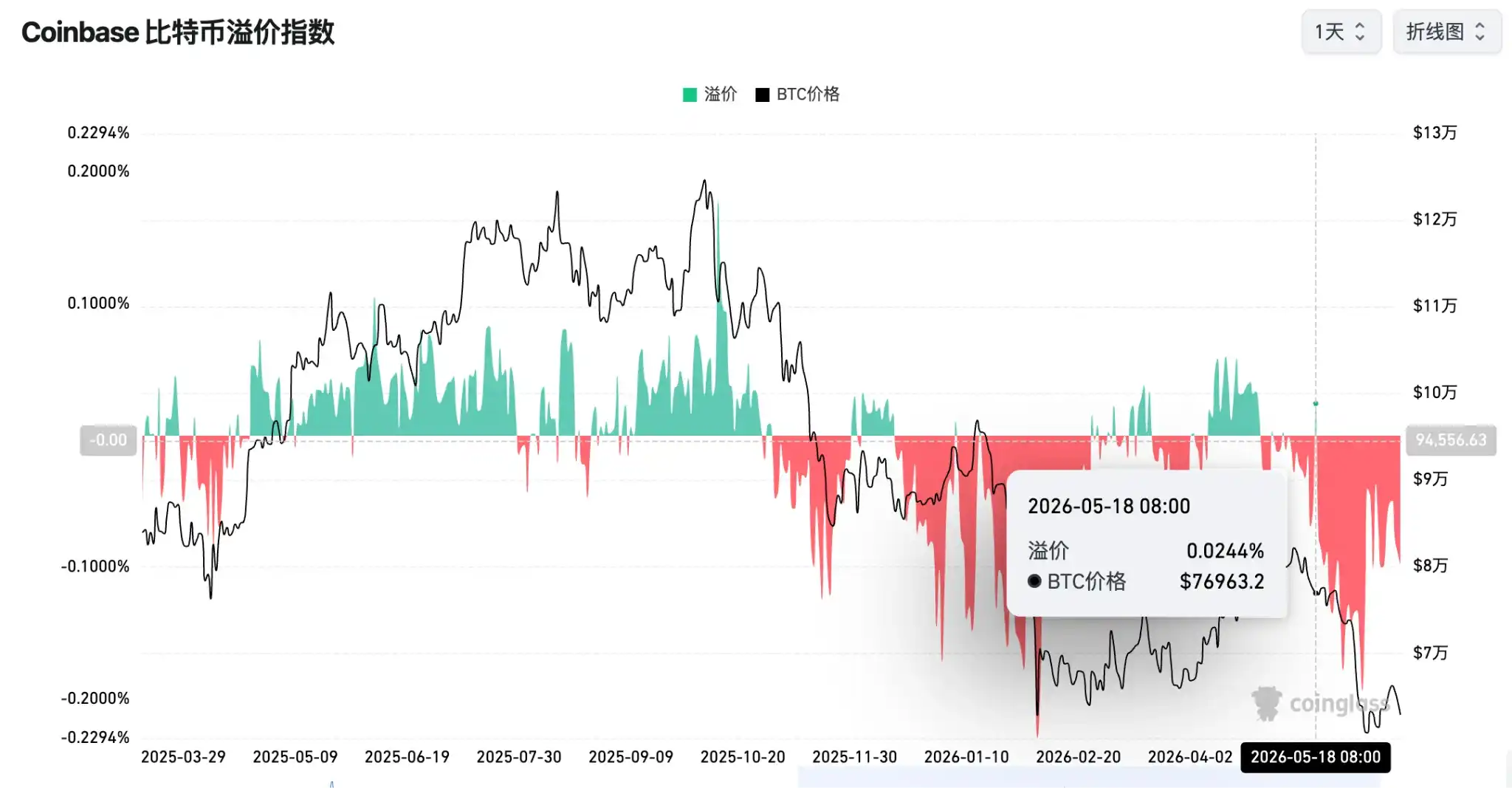
Bitcoin has entered a period of consolidation and repair after rebounding over 11%, with market sentiment easing from extreme panic but still facing tests of support. The Coinbase Bitcoin Premium Index has been in negative premium for 50 consecutive days, setting a record for the longest duration, reflecting significant selling pressure in the U.S. market and an overall risk appetite that has not fully recovered. Market maker Wintermute noted that this rebound is more of a "textbook repair" driven by macro easing, a dovish Fed tone, and institutional adoption benefits for Ethereum, rather than a structural shift. Short-term prices may rise slightly, but continued capital inflows are needed to confirm the trend.

On-chain data also fails to give a clear optimistic signal. A CryptoQuant analyst indicated that the Bitcoin NUPL indicator remains at 0.158. Although close to levels seen in early 2023, the 30-day and 100-day EMAs have not yet entered the negative territory typical of historical bear market bottoms, suggesting there may be further downside risks in this cycle. The Galaxy research team believes Bitcoin is gradually entering a value zone with limited downside, but prices could still fall back to the $40,000-$46,000 range if global liquidity tightens.

From a technical perspective, several traders are watching the support level near $63,000. If it holds steadily, there is potential to challenge the resistance zone around $64,600 to $65,000 again. If it falls below $63,000, the market may retest support near $60,000 or even $58,000. Short-term movements will remain highly dependent on capital flows and macro policy changes.

Looking ahead, Federal Reserve policy will be the core variable affecting the trend of digital assets. The market will focus on the latest meeting minutes, the U.S. Dollar Index, Treasury yields, and ETF fund flow changes. If institutional funds resume net inflows and U.S. market risk appetite improves, Bitcoin may continue its challenge towards $65,000 or higher. Conversely, the $63,000 support level will face a test.

Key Points Today:

  • Bitcoin L2 network Botanix will gradually shut down, users need to withdraw assets by July 9.

  • Base will activate the B20 token standard on the mainnet on July 9.

  • Movement (MOVE) will unlock approximately 165 million tokens worth about $2 million on July 9.

  • Upbit 24-hour trading volume ranking: XRP, SLX, BTC, ETH, AI.

  • Bitcoin Spot ETF: +$21.435 million, net inflows for 3 consecutive days.

  • Ethereum Spot ETF: +$26.9252 million, net inflows for 4 consecutive days.

  • HYPE Spot ETF: +$4.3227 million.

  • SOL Spot ETF: +$1.6720 million.

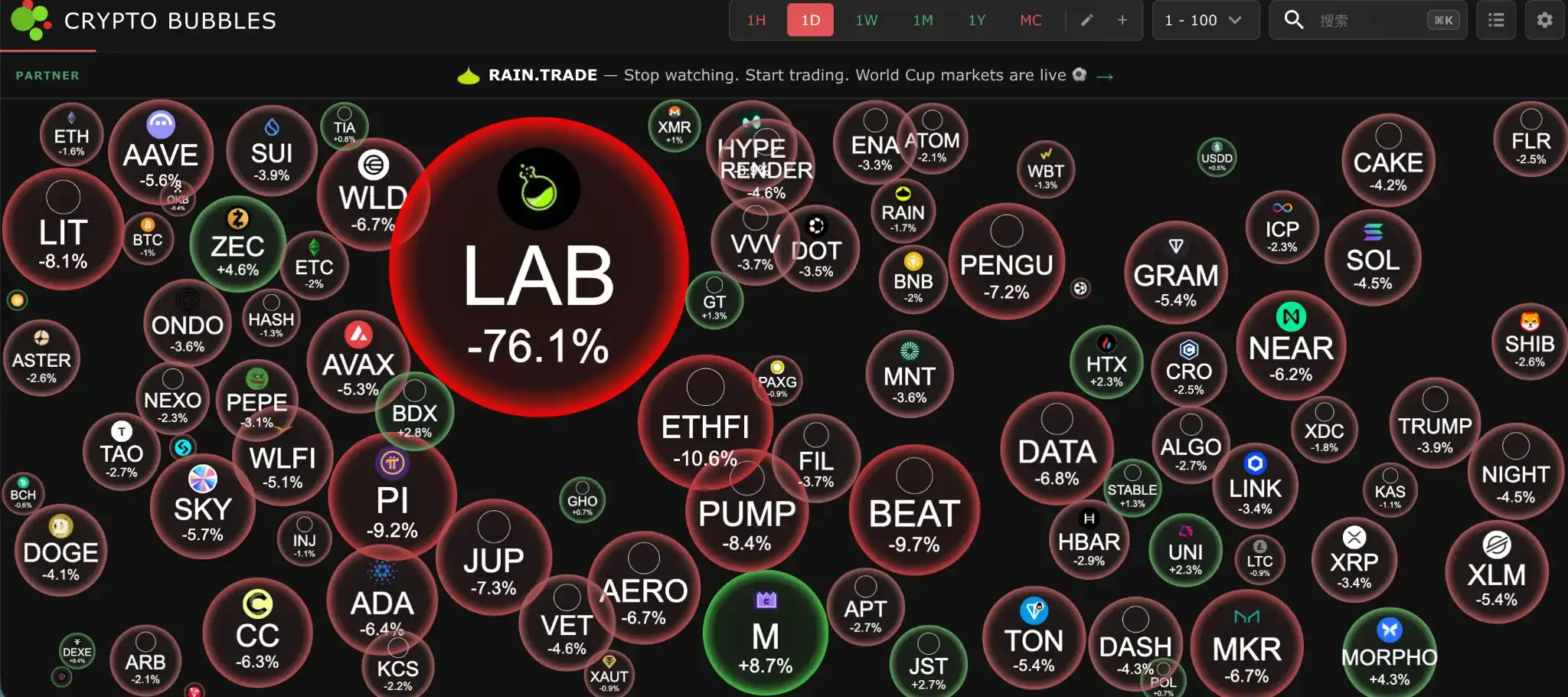
Today's Biggest Gainers among Top 100 Cryptos by Market Cap: M up 8.7%, ZEC up 4.6%, MORPH up 4.3%, BDX up 2.8%, JST up 2.7%.
Nikkei Technically Pressured, Falls for 3 Consecutive Days

Following a sharp overnight decline in the Nasdaq, the Tokyo Stock Exchange came under pressure today. The Nikkei 225 index experienced intense volatility throughout the day, ultimately closing down 2.11%, marking its third consecutive day of decline. Tech stocks led the losses, dragged down by U.S. chip stocks and in resonance with the South Korean market.

Worsening Middle East tensions have pushed up energy costs. Japan's reliance on crude oil from the Strait of Hormuz is as high as 93.5%, sparking fears of imported inflation that directly impacts corporate profits. High-valuation tech stocks suffered heavy blows: semiconductor giant Tokyo Electron fell 3.7%, capacitor maker Taiyo Yuden, a key supplier for AI servers, plummeted 8.5%, and Advantest dropped 4.7%, indicating market doubts about the sustainability of the semiconductor boom cycle.

Japan's macro-financial environment has entered a danger zone. The yield on 10-year government bonds rose to 2.86%, a 30-year high, while the 30-year bond yield exceeded 3.98%. A Daiwa Securities strategist pointed out that investor confidence in the AI sector has not recovered, and a Goldman Sachs economist warned Japan could fall into a vicious cycle of debt and high-interest payments. The market is highly focused on the potential for "fiscal dominance" by the Bank of Japan under fiscal pressure. The next 48 hours require close attention to U.S. wholesale inventory data and the Fed meeting minutes for guidance on global liquidity.

Chip Stock Volatility Drags Market, South Korean Stocks Fall into Technical Bear Market

South Korean stocks were among the most volatile markets in Asia. Affected by adjustments in the global AI industry chain, foreign capital profit-taking, and concentrated deleveraging, it closed down 5.35%. The index has now plunged more than 20% from its late-June all-time high, technically confirming entry into a technical bear market. The Ministry of Finance urgently stated it will closely monitor risks with the central bank and regulators, naming chip stock concentration as the main cause of market instability.

The previously profitable chip giants became the main source of market bleeding. Samsung Electronics shares plunged 6.25%, and SK Hynix fell 5.68%. Over-concentration in the semiconductor sector amplified volatility, with leveraged ETFs acting as volatility amplifiers. A South Korean economist publicly criticized that KOSPI has gradually become a "casino," and leveraged ETFs linked to single stocks are a policy failure, not only amplifying market fluctuations but also eroding corporate value and investor wealth.

IBK Investment & Securities researcher Byun Jun-ho noted that semiconductor stock prices are undergoing violent corrections following the inflection point of slowing earnings growth, and a peak in investment sentiment is an undeniable fact. A Fidelity International portfolio manager cautioned that the AI semiconductor boom entirely depends on annual capital expenditures of around $1 trillion by a few tech giants. Once this scale is proven unsustainable, the downside could be unimaginable.

A-shares Consolidate and Pull Back, Hong Kong Tech Leads Strongly
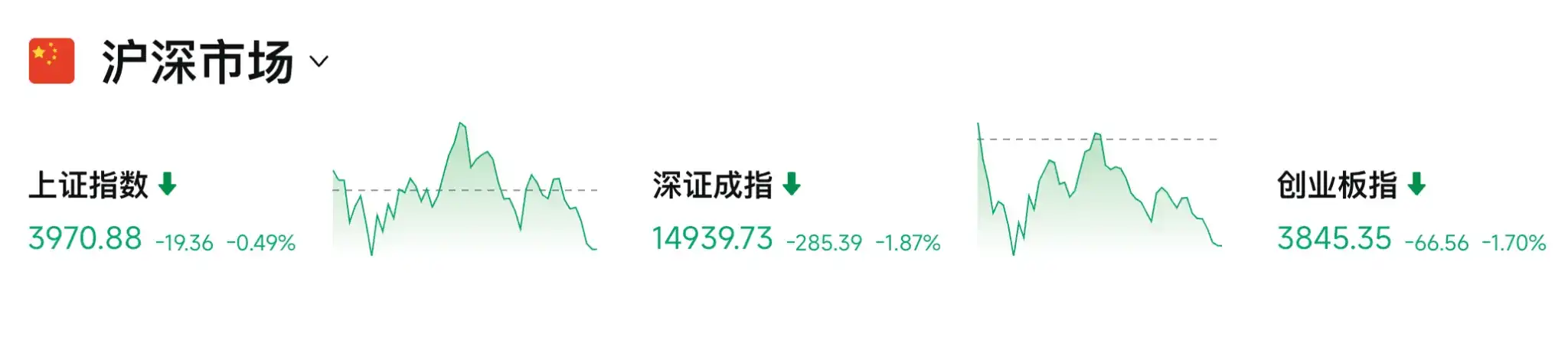
A-shares showed a consolidating and declining trend on Wednesday, with the Shanghai Composite Index down 0.49%, the Shenzhen Component Index down 1.87%, and the ChiNext Index down 1.7%.

More stocks fell than rose. Computing power, AI server, and cloud computing sectors bucked the trend and surged, with stocks like Inspur Information, Sangfor Technologies, Wangsu Science & Technology, and Yunsail Zhilian hitting the daily limit-up. Sectors like lithium batteries, lab-grown diamonds, and humanoid robots saw noticeable adjustments.

The semiconductor self-reliance theme saw a full-scale counterattack. CanSemi hit the limit-up, while Huahong Grace surged over 10% to a record high, driven by international investment banks raising target prices.
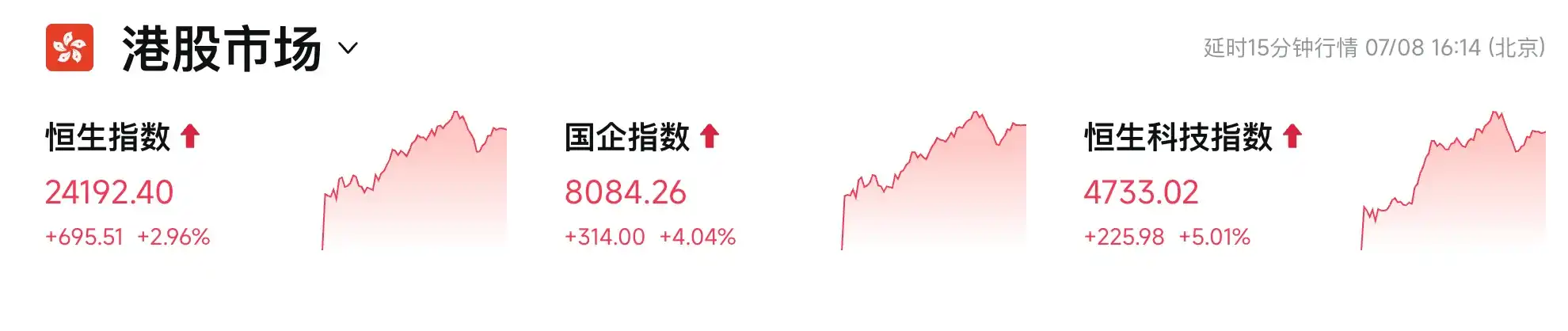
Hong Kong stocks, however, opened higher and rallied strongly. The Hang Seng Index rose about 700 points, reclaiming the 24,000 level, with the Hang Seng Tech Index surging over 5% and tech and internet stocks soaring across the board.

  • Alibaba surged over 12%, with its market cap returning to HK$2 trillion, leading the market. Reports suggest Taobao Flash Sales' losses are narrowing faster than expected, and Agent product integration is progressing.

  • Xiaomi Group's stock skyrocketed over 10%, returning above HK$25. The company officially announced the launch of a new car brand "SkyNomad," with its first model set for release in the second half of the year.

  • At the sensitive moment of the first batch of cornerstone lock-up shares being lifted for Zhipu AI, instead of the usual sell-off, nearly 70% of national-level strategic capital and local government guidance funds pledged long-term holdings with strong backing. J.P. Morgan ruthlessly raised its target price to HK$2,000,刺激其股价盘中逆势暴涨18% (stimulating its stock price to surge 18% against the trend intraday).

  • SMIC, Lenovo, Kuaishou, and other chip and tech stocks rose broadly.

Southbound capital recorded a net purchase of over HK$11 billion, indicating funds flowing from South Korea and Japan to Hong Kong stocks' "import substitution" and low-valuation AI assets. Institutional views suggest a resonance between Hong Kong stocks' valuation attractiveness and fund rebalancing, with short-term catalysts including Fed minutes and Chinese macro data.

In the next day or two, focus on China's June CPI/PPI data. The central bank and market participants expect policy implementation in the third quarter to improve liquidity, making tech and consumption recovery worth tracking closely. Overall, the market is seeking a new balance amid global volatility, with Hong Kong's resilience likely to persist.


Criptomoedas em alta

Perguntas relacionadas

QWhat major indexes and markets were discussed in the article, and what was their general performance trend?

AThe article discussed the performance of Bitcoin (BTC), the Nikkei 225 (Japan), the KOSPI (South Korea), and the A-share and Hong Kong stock markets. The trends were mixed: BTC rebounded but faced a slight pullback; the Nikkei 225 fell for three consecutive days; the KOSPI entered a technical bear market; A-shares experienced a volatile decline; while Hong Kong's Hang Seng Tech Index led gains with a strong rally.

QAccording to analysts and data in the article, what are the key technical support and resistance levels for Bitcoin mentioned?

AAnalysts in the article noted key technical levels for Bitcoin. The support level is around $63,000. If this holds, Bitcoin could challenge the resistance zone between $64,600 and $65,000. However, if $63,000 is breached, the market may test support near $60,000 or even $58,000.

QWhy did the South Korean KOSPI index fall into a technical bear market, and which sectors were most affected?

AThe South Korean KOSPI index fell into a technical bear market, dropping more than 20% from its recent peak, due to adjustments in the global AI supply chain, foreign capital taking profits, and leveraged fund liquidations. The semiconductor sector was the most severely impacted, with giants like Samsung Electronics and SK Hynix experiencing significant declines, amplifying market volatility.

QWhich specific stocks led the gains in the Hong Kong stock market, and what were the reasons for their strong performance?

AIn the Hong Kong stock market, technology stocks led the gains. Alibaba surged over 12% due to positive news about its Taobao flash sales reducing losses faster than expected. Xiaomi's stock soared over 10% following the announcement of its new car brand 'SkyNomad'. Zhipu AI's stock also surged nearly 18% after receiving commitments from strategic investors and an upgraded price target from J.P. Morgan.

QWhat are the future factors that the article suggests could influence the market trends discussed?

AThe article suggests several future factors could influence market trends. For digital assets like Bitcoin, the core variable will be Federal Reserve policy, including meeting minutes, the US dollar index, Treasury yields, and ETF fund flows. For Asian markets, key factors include US wholesale inventory data, Fed guidance on global liquidity, China's June CPI/PPI data, and potential policy support in the third quarter to improve liquidity.

Leituras Relacionadas

Former Huawei 'Genius Teen' Who Questioned DeepSeek Interview Lands in 'Crossfire' from Web3 Investor

Former Huawei "Genius Youth" Li Bojie recently drew public attention by criticizing his interview experience with DeepSeek. The controversy escalated when Du Jun, co-founder of Web3 investment firm ABCDE Capital, publicly accused Li of being "the founder with the least sense of contractual spirit" he had ever cooperated with, sparking a dispute over Li's startup project, Metagent. Li detailed a frustrating DeepSeek interview where he was accused of potential plagiarism, leading him to end the session. The spotlight then shifted to his venture, Metagent, a Web3+AI project aiming to tokenize AI agents. ABCDE invested $1.5 million, with an initial $500k disbursed. Du Jun claimed the project's progress was severely lacking, with a poor-quality demo and minimal social media activity. He alleged Li stopped communicating, deleted his Telegram, and failed to provide proper financial reporting. In response, Li argued the remaining $1 million was never received, crippling operations and forcing salary cuts. He stated he left Metagent in October 2024 due to family reasons and Web3 compliance concerns, with board approval. He claimed to have fulfilled disclosure duties and that his subsequent projects avoided conflicting fields. Other investors, including ArkStream Capital, shared negative due diligence experiences, citing unprofessional contracts and evasive answers on tokenomics. Metagent's social media went silent in June 2024, effectively stalling. Li has since moved to a new consumer AI agent platform, Pine AI (formerly Logenic AI), which has raised $25 million in Series A funding. He served as its Chief Scientist but recently left, clarifying he was not the founder and departed due to a shift in research interests.

Foresight NewsHá 19m

Former Huawei 'Genius Teen' Who Questioned DeepSeek Interview Lands in 'Crossfire' from Web3 Investor

Foresight NewsHá 19m

SemiAnalysis: Anthropic's Q3 Profit to Exceed $1 Billion

Research firm SemiAnalysis reveals that Anthropic is reshaping the AI commercialization landscape with profitability and growth rates far exceeding competitors. Leveraging a high-margin, API-centric business model, Anthropic has become a leader in the B2B AI market. The report projects that Anthropic will achieve a GAAP EBIT of $1 billion in Q3 2026, with a 6% margin. Its Annual Recurring Revenue (ARR) has surged from $9 billion at the end of 2025 to over $60 billion currently. If it maintains a Net New ARR (NNARR) of approximately $15 billion per month, its ARR could reach $300 billion by the end of 2027, implying a $6 trillion enterprise value and making it the world's most valuable company. Anthropic secretly filed for an IPO on June 1st. SemiAnalysis argues the timing is strategically urgent due to narrowing capital market windows as rivals like Alphabet and Meta secure major funding. The superior financials and business model suggest Anthropic should go public before OpenAI to seize the competitive initiative. The performance inflection stems from the explosive adoption of Claude Code, which now accounts for over 7% of all GitHub commits, driving monthly NNARR from $3 billion in January to $11 billion in March. Anthropic's revenue structure differs significantly from OpenAI's. Approximately 75-85% of Anthropic's ARR comes from usage-based API fees, with consumer subscriptions constituting only about 5%. In contrast, over 65% of OpenAI's Q1 2026 revenue was from subscriptions, with ~40% from consumers. The API model's key advantage is no per-user revenue cap, enabling growth within existing accounts. Anthropic's Net Revenue Retention (NRR) is an extraordinary 500%. This drives superior gross margins, now in the mid-60% range versus -94% in 2024, with API margins exceeding 80%. Core drivers are improved inference efficiency and a largely enterprise-focused model without the cost of serving hundreds of millions of free users. The report introduces "EBTIT" (Earnings Before Training & Interest & Taxes) to measure re-investment capacity, projecting Anthropic's cumulative EBTIT through 2028 will be $250 billion higher than OpenAI's. Over 65% of lab ARR currently comes from programming use cases. Cybersecurity is seen as the next major vertical, with upcoming model releases like Fable expected to further increase token pricing and expand NNARR. Indirect sales via hyperscaler platforms (AWS Bedrock, Azure Foundry) now account for 15-20% of ARR. A core constraint is compute supply. By 2030, combined unconstrained compute demand from Anthropic and OpenAI could exceed 100 GW, far outstripping projected new capacity. IPO proceeds are seen as crucial to lock in future compute resources. Key risks include potential price cuts by OpenAI, competitive pressure from Google DeepMind and Meta in coding models, potential government restrictions on frontier model releases, and margin dilution from growing indirect "Token-as-a-Service" sales. Regulatory actions that narrow the capability gap between open-source and proprietary models are highlighted as a fundamental threat to Anthropic's moat.

marsbitHá 32m

SemiAnalysis: Anthropic's Q3 Profit to Exceed $1 Billion

marsbitHá 32m

Trading

Spot

Artigos em Destaque

O que é BITCOIN

Compreender o HarryPotterObamaSonic10Inu (ERC-20) e a Sua Posição no Espaço Cripto Nos últimos anos, o mercado de criptomoedas assistiu a um aumento na popularidade das moedas meme, cativando não apenas os traders, mas também aqueles que procuram envolvimento comunitário e valor de entretenimento. Entre estes tokens únicos está o HarryPotterObamaSonic10Inu (ERC-20), um projeto intrigante que mistura referências culturais no tecido das criptomoedas. Este artigo explora os principais aspetos do HarryPotterObamaSonic10Inu, examinando os seus mecanismos, a sua ética orientada pela comunidade e o seu envolvimento com o vasto panorama cripto. O que é o HarryPotterObamaSonic10Inu (ERC-20)? Como o nome sugere, o HarryPotterObamaSonic10Inu é uma moeda meme construída na blockchain Ethereum, classificada sob o padrão ERC-20. Ao contrário das criptomoedas tradicionais, que podem enfatizar a utilidade prática ou o potencial de investimento, este token prospera no valor de entretenimento e na força da sua comunidade. O projeto visa promover um ambiente onde utilizadores envolvidos possam reunir-se, partilhar ideias e participar em atividades inspiradas por diversos fenómenos culturais. Uma característica notável do HarryPotterObamaSonic10Inu é a zero taxa sobre transações. Este elemento atraente visa encorajar a negociação e o envolvimento da comunidade, isento de encargos adicionais que podem desencorajar os traders de pequena escala. A oferta total da moeda está fixada em mil milhões de tokens, uma cifra que marca a sua intenção de manter uma circulação substancial dentro da comunidade. Criador do HarryPotterObamaSonic10Inu (ERC-20) As origens do HarryPotterObamaSonic10Inu estão um pouco envoltas em mistério; os detalhes sobre o criador permanecem desconhecidos. O desenvolvimento deste token carece de uma equipa identificável ou de um plano explícito, o que não é raro no setor das moedas meme. Em vez disso, o projeto surgiu de forma orgânica, com o seu progresso a depender fortemente do entusiasmo e da participação da sua comunidade. Investidores do HarryPotterObamaSonic10Inu (ERC-20) No que diz respeito a investimentos externos e apoios, o HarryPotterObamaSonic10Inu também permanece ambíguo. O token não lista quaisquer fundações de investimento conhecidas ou apoio organizacional significativo. Em vez disso, o “sangue vital” do projeto é a sua comunidade de base, que informa o seu crescimento e sustentabilidade através da ação coletiva e do envolvimento no espaço cripto. Como Funciona o HarryPotterObamaSonic10Inu (ERC-20)? Como uma moeda meme, o HarryPotterObamaSonic10Inu opera principalmente fora dos quadros tradicionais que muitas vezes governam o valor dos ativos. Existem vários aspetos distintivos que definem como o projeto funciona: Transações Sem Taxas: Sem taxas sobre transações, os utilizadores podem comprar e vender o token livremente, sem a preocupação de custos ocultos. Envolvimento da Comunidade: O projeto prospera na interação da comunidade, aproveitando plataformas de redes sociais para criar entusiasmo e facilitar a participação. Discussões, partilha de conteúdo e envolvimento são elementos cruciais que ajudam a expandir o seu alcance e a fomentar a lealdade entre os apoiantes. Sem Utilidade Prática: Deve ser notado que o HarryPotterObamaSonic10Inu não oferece utilidade concreta dentro do ecossistema financeiro. Em vez disso, é classificado como um token principalmente para entretenimento e atividades comunitárias. Referência Cultural: O token incorpora de forma inteligente elementos da cultura popular para atrair interesse, conectando-se tanto com entusiastas de memes como com seguidores de criptomoedas. HarryPotterObamaSonic10Inu exemplifica como as moedas meme operam de forma diferente de projetos de criptomoedas mais tradicionais, entrando no mercado como construções sociais inovadoras em vez de ativos utilitários. Linha do Tempo do HarryPotterObamaSonic10Inu (ERC-20) A história do HarryPotterObamaSonic10Inu é marcada por vários marcos notáveis: Criação: O token surgiu de um meme viral, capturando a imaginação de muitos entusiastas de criptomoedas. Datas específicas de criação não estão disponíveis, sublinhando a sua ascensão orgânica. Listagem em Exchanges: O HarryPotterObamaSonic10Inu conseguiu entrar em várias exchanges, permitindo um acesso e negociação mais fáceis pela comunidade. Iniciativas de Envolvimento da Comunidade: Atividades contínuas direcionadas a melhorar a interação comunitária, incluindo concursos, campanhas em redes sociais e geração de conteúdo por fãs e defensores. Planos de Expansão Futura: O roteiro do projeto inclui o lançamento de uma coleção de NFTs, mercadorias e um site de eCommerce relacionado aos seus temas culturais, envolvendo ainda mais a comunidade e tentando adicionar mais dimensões ao seu ecossistema. Pontos-Chave sobre o HarryPotterObamaSonic10Inu (ERC-20) Natureza Orientada pela Comunidade: O projeto prioriza a contribuição coletiva e a criatividade, assegurando que o envolvimento dos utilizadores está na vanguarda do seu desenvolvimento. Classificação como Moeda Meme: Representa o epítome da criptomoeda baseada em entretenimento, destacando-se dos veículos de investimento tradicionais. Sem Afiliação Direta com o Bitcoin: Apesar da semelhança no nome do ticker, o HarryPotterObamaSonic10Inu é distinto e não tem qualquer relação com o Bitcoin ou outras criptomoedas estabelecidas. Foco na Colaboração: O HarryPotterObamaSonic10Inu é projetado para criar um espaço de colaboração e partilha de histórias entre os seus detentores, proporcionando uma via para a criatividade e o fortalecimento da comunidade. Perspectivas Futuras: A ambição de expandir além da sua premissa inicial para NFTs e mercadorias delineia um caminho para o projeto potencialmente entrar em avenidas mais mainstream dentro da cultura digital. À medida que as moedas meme continuam a capturar a imaginação da comunidade cripto, HarryPotterObamaSonic10Inu (ERC-20) destaca-se devido aos seus laços culturais e abordagem centrada na comunidade. Embora possa não se encaixar no molde típico de um token orientado para utilidade, a sua essência reside na alegria e camaradagem fomentadas entre os seus apoiantes, destacando a natureza em evolução das criptomoedas em uma era cada vez mais digital. À medida que o projeto continua a desenvolver-se, será importante observar como as dinâmicas comunitárias influenciam a sua trajetória no panorama em constante mudança da tecnologia blockchain.

1.7k Visualizações TotaisPublicado em {updateTime}Atualizado em 2024.12.03

O que é BITCOIN

Como comprar BTC

Bem-vindo à HTX.com!Tornámos a compra de Bitcoin (BTC) simples e conveniente.Segue o nosso guia passo a passo para iniciar a tua jornada no mundo das criptos.Passo 1: cria a tua conta HTXUtiliza o teu e-mail ou número de telefone para te inscreveres numa conta gratuita na HTX.Desfruta de um processo de inscrição sem complicações e desbloqueia todas as funcionalidades.Obter a minha contaPasso 2: vai para Comprar Cripto e escolhe o teu método de pagamentoCartão de crédito/débito: usa o teu visa ou mastercard para comprar Bitcoin (BTC) instantaneamente.Saldo: usa os fundos da tua conta HTX para transacionar sem problemas.Terceiros: adicionamos métodos de pagamento populares, como Google Pay e Apple Pay, para aumentar a conveniência.P2P: transaciona diretamente com outros utilizadores na HTX.Mercado de balcão (OTC): oferecemos serviços personalizados e taxas de câmbio competitivas para os traders.Passo 3: armazena teu Bitcoin (BTC)Depois de comprar o teu Bitcoin (BTC), armazena-o na tua conta HTX.Alternativamente, podes enviá-lo para outro lugar através de transferência blockchain ou usá-lo para transacionar outras criptomoedas.Passo 4: transaciona Bitcoin (BTC)Transaciona facilmente Bitcoin (BTC) no mercado à vista da HTX.Acede simplesmente à tua conta, seleciona o teu par de trading, executa as tuas transações e monitoriza em tempo real.Oferecemos uma experiência de fácil utilização tanto para principiantes como para traders experientes.

4.2k Visualizações TotaisPublicado em {updateTime}Atualizado em 2026.06.02

Como comprar BTC

O que é $BITCOIN

OURO DIGITAL ($BITCOIN): Uma Análise Abrangente Introdução ao OURO DIGITAL ($BITCOIN) OURO DIGITAL ($BITCOIN) é um projeto baseado em blockchain que opera na rede Solana, com o objetivo de combinar as características dos metais preciosos tradicionais com a inovação das tecnologias descentralizadas. Embora partilhe um nome com o Bitcoin, frequentemente referido como “ouro digital” devido à sua percepção como uma reserva de valor, o OURO DIGITAL é um token separado projetado para criar um ecossistema único dentro da paisagem Web3. O seu objetivo é posicionar-se como um ativo digital alternativo viável, embora os detalhes sobre as suas aplicações e funcionalidades ainda estejam em desenvolvimento. O que é o OURO DIGITAL ($BITCOIN)? OURO DIGITAL ($BITCOIN) é um token de criptomoeda explicitamente projetado para uso na blockchain Solana. Em contraste com o Bitcoin, que fornece um papel amplamente reconhecido como armazenamento de valor, este token parece focar em aplicações e características mais amplas. Aspectos notáveis incluem: Infraestrutura Blockchain: O token é construído na blockchain Solana, conhecida pela sua capacidade de lidar com transações de alta velocidade e baixo custo. Dinâmicas de Oferta: O OURO DIGITAL tem um fornecimento máximo limitado a 100 quatrilhões de tokens (100P $BITCOIN), embora os detalhes sobre o seu fornecimento circulante ainda não tenham sido divulgados. Utilidade: Embora as funcionalidades precisas não estejam explicitamente delineadas, existem indicações de que o token poderia ser utilizado para várias aplicações, potencialmente envolvendo aplicações descentralizadas (dApps) ou estratégias de tokenização de ativos. Quem é o Criador do OURO DIGITAL ($BITCOIN)? Neste momento, a identidade dos criadores e da equipa de desenvolvimento por trás do OURO DIGITAL ($BITCOIN) permanece desconhecida. Esta situação é típica entre muitos projetos inovadores no espaço da blockchain, particularmente aqueles alinhados com finanças descentralizadas e fenómenos de moedas meme. Embora tal anonimato possa fomentar uma cultura orientada pela comunidade, intensifica as preocupações sobre governança e responsabilidade. Quem são os Investidores do OURO DIGITAL ($BITCOIN)? As informações disponíveis indicam que o OURO DIGITAL ($BITCOIN) não tem apoiantes institucionais conhecidos ou investimentos proeminentes de capital de risco. O projeto parece operar num modelo peer-to-peer focado no apoio e adoção da comunidade, em vez de rotas de financiamento tradicionais. A sua atividade e liquidez estão principalmente situadas em exchanges descentralizadas (DEXs), como a PumpSwap, em vez de plataformas de negociação centralizadas estabelecidas, destacando ainda mais a sua abordagem de base. Como Funciona o OURO DIGITAL ($BITCOIN) A mecânica operacional do OURO DIGITAL ($BITCOIN) pode ser elaborada com base no seu design de blockchain e nas características da rede: Mecanismo de Consenso: Ao aproveitar o exclusivo proof-of-history (PoH) da Solana combinado com um modelo de proof-of-stake (PoS), o projeto assegura uma validação eficiente das transações, contribuindo para o alto desempenho da rede. Tokenomics: Embora mecanismos deflacionários específicos não tenham sido extensivamente detalhados, o vasto fornecimento máximo de tokens implica que pode atender a microtransações ou casos de uso de nicho que ainda estão por definir. Interoperabilidade: Existe o potencial para integração com o ecossistema mais amplo da Solana, incluindo várias plataformas de finanças descentralizadas (DeFi). No entanto, os detalhes sobre integrações específicas permanecem não especificados. Cronologia de Eventos Chave Aqui está uma cronologia que destaca marcos significativos relacionados ao OURO DIGITAL ($BITCOIN): 2023: O lançamento inicial do token ocorre na blockchain Solana, marcado pelo seu endereço de contrato. 2024: O OURO DIGITAL ganha visibilidade ao tornar-se disponível para negociação em exchanges descentralizadas como a PumpSwap, permitindo que os utilizadores o negociem contra SOL. 2025: O projeto testemunha atividade de negociação esporádica e potencial interesse em envolvimentos liderados pela comunidade, embora não tenham sido documentadas parcerias ou avanços técnicos notáveis até ao momento. Análise Crítica Forças Escalabilidade: A infraestrutura subjacente da Solana suporta altos volumes de transações, o que pode aumentar a utilidade do $BITCOIN em vários cenários de transação. Acessibilidade: O potencial preço de negociação baixo por token pode atrair investidores de retalho, facilitando uma participação mais ampla devido a oportunidades de propriedade fracionada. Riscos Falta de Transparência: A ausência de apoiantes, desenvolvedores ou um processo de auditoria publicamente conhecidos pode gerar ceticismo em relação à sustentabilidade e confiabilidade do projeto. Volatilidade do Mercado: A atividade de negociação depende fortemente do comportamento especulativo, o que pode resultar em volatilidade significativa dos preços e incerteza para os investidores. Conclusão O OURO DIGITAL ($BITCOIN) surge como um projeto intrigante, mas ambíguo, dentro do ecossistema em rápida evolução da Solana. Embora tente aproveitar a narrativa do “ouro digital”, a sua divergência do papel estabelecido do Bitcoin como reserva de valor sublinha a necessidade de uma diferenciação mais clara da sua utilidade pretendida e estrutura de governança. A aceitação e adoção futuras dependerão provavelmente da abordagem da atual opacidade e da definição mais explícita das suas estratégias operacionais e económicas. Nota: Este relatório abrange informações sintetizadas disponíveis até outubro de 2023, e desenvolvimentos podem ter ocorrido além do período de pesquisa.

123 Visualizações TotaisPublicado em {updateTime}Atualizado em 2025.05.13

O que é $BITCOIN

Discussões

Bem-vindo à Comunidade HTX. Aqui, pode manter-se informado sobre os mais recentes desenvolvimentos da plataforma e obter acesso a análises profissionais de mercado. As opiniões dos utilizadores sobre o preço de BTC (BTC) são apresentadas abaixo.

活动图片