These Uncommon Items in the Crypto World Are All on Xianyu

marsbitPublicado em 2026-01-08Última atualização em 2026-01-08

Resumo

The article explores the unexpected presence of cryptocurrency-related items on Xianyu, a Chinese second-hand marketplace. It begins with the discovery of crypto exchange merchandise, such as branded apparel, accessories, and unique promotional items like Binance's playing card set, OKX's moon lamps, Bitget's Messi-branded football, and HTX's "fortune basin." Notably, a Binance-themed bottle of Moutai is highlighted as a premium listing. The piece also covers the sale of small Bitcoin mining devices, referred to as "lottery machines" on the platform, which have an extremely low probability of mining a block. Additionally, it discusses the availability of Solana Saga and Seeker phones, noting the logistical and technical challenges for Chinese buyers, including activation hurdles and VPN requirements for setup. Finally, the author mentions listings for "private key/seed phrase collision tools," dismissing them as practically impossible scams. The article concludes by marveling at the diverse and unconventional crypto-related goods found on Xianyu, suggesting that the platform's potential is vastly underutilized.

Xianyu, a platform for trading idle items. We usually don't associate Xianyu with cryptocurrency until one day, this product popped up on my Xianyu recommendation page:
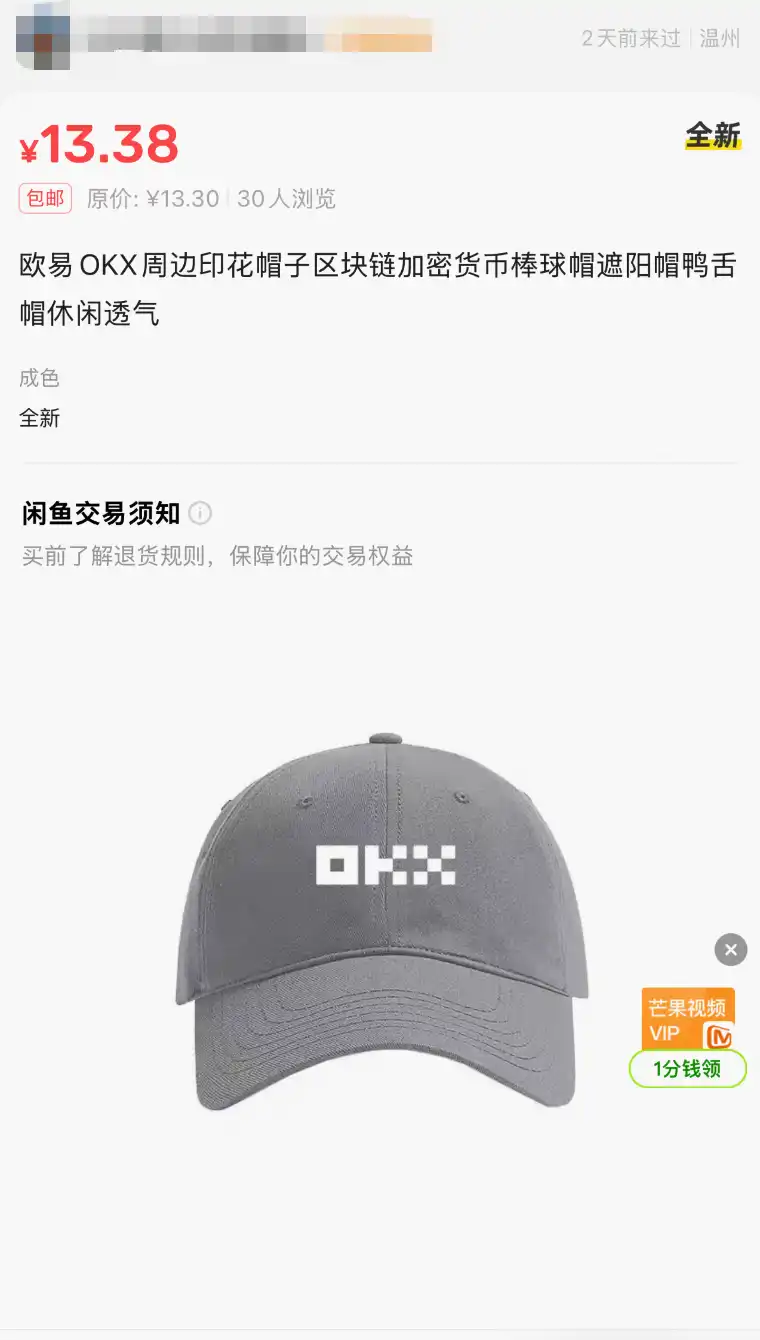
For crypto players, we are no strangers to the peripherals that trading platforms or various project teams give out from time to time to maintain customer relations and public relations. On X, we often see KOLs posting about peripherals. But, I really never thought these peripherals would appear on Xianyu.

At the same time, I became more curious—what other crypto-related products are available on Xianyu?

Peripherals

Searching the names of major trading platforms on Xianyu, the most numerous items are definitely the peripherals once given out by these trading platforms. The types of these peripheral products are diverse, with clothing and hats being the most common, followed by backpacks, water bottles, and suitcases. As essential tools for traders, keyboard and mouse sets can firmly occupy a seat right after the giants mentioned above.

But the creativity and thought of the trading platforms go far beyond that. We have selected some uniquely designed peripheral gifts from various major trading platforms.

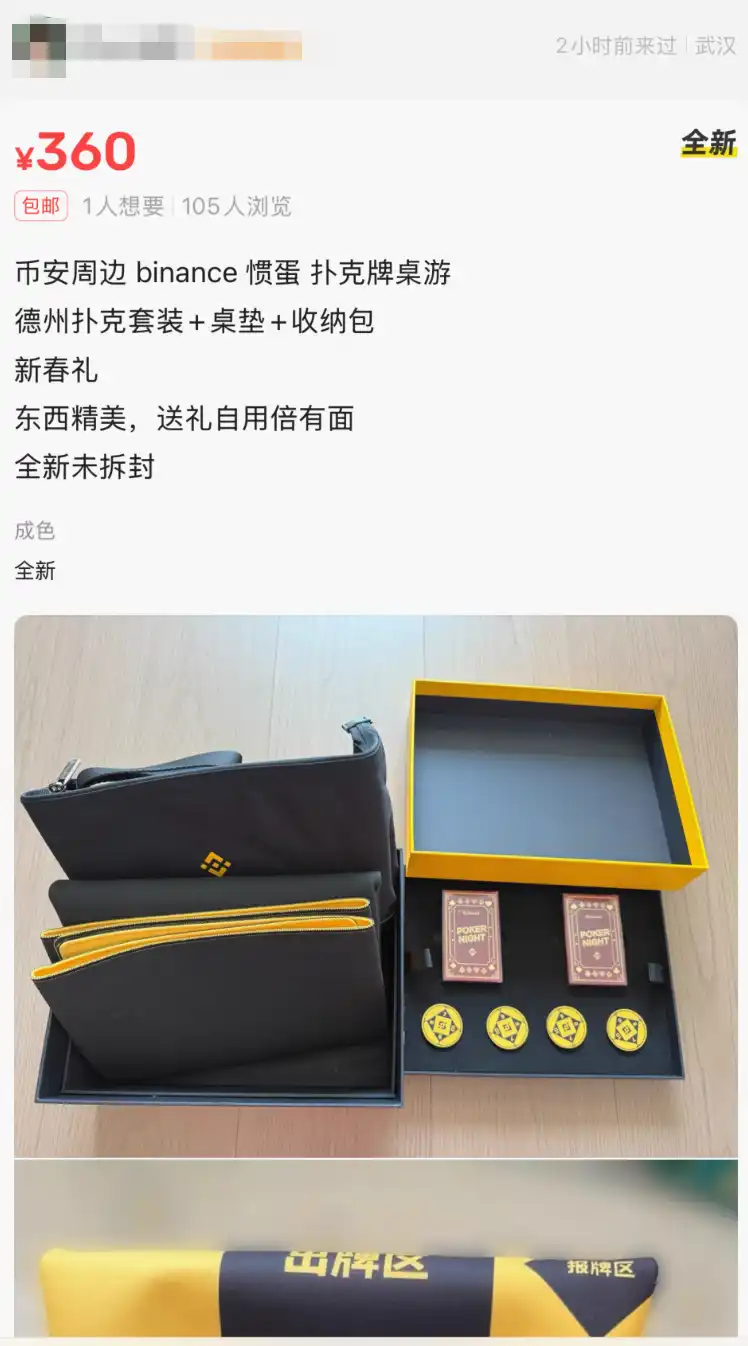
Leisure and entertainment, the Guandan set from Binance:
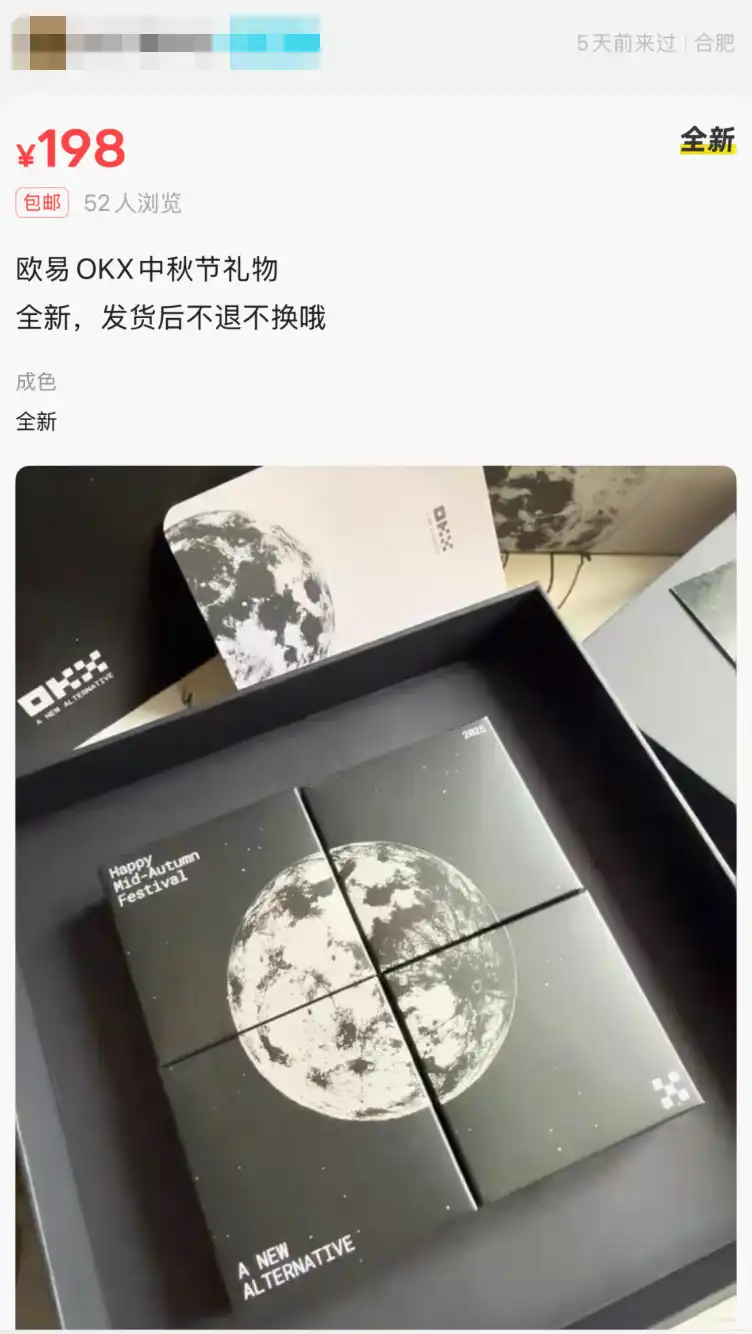
Life ambiance, the Mid-Autumn Festival Moon Lamp from OKX:
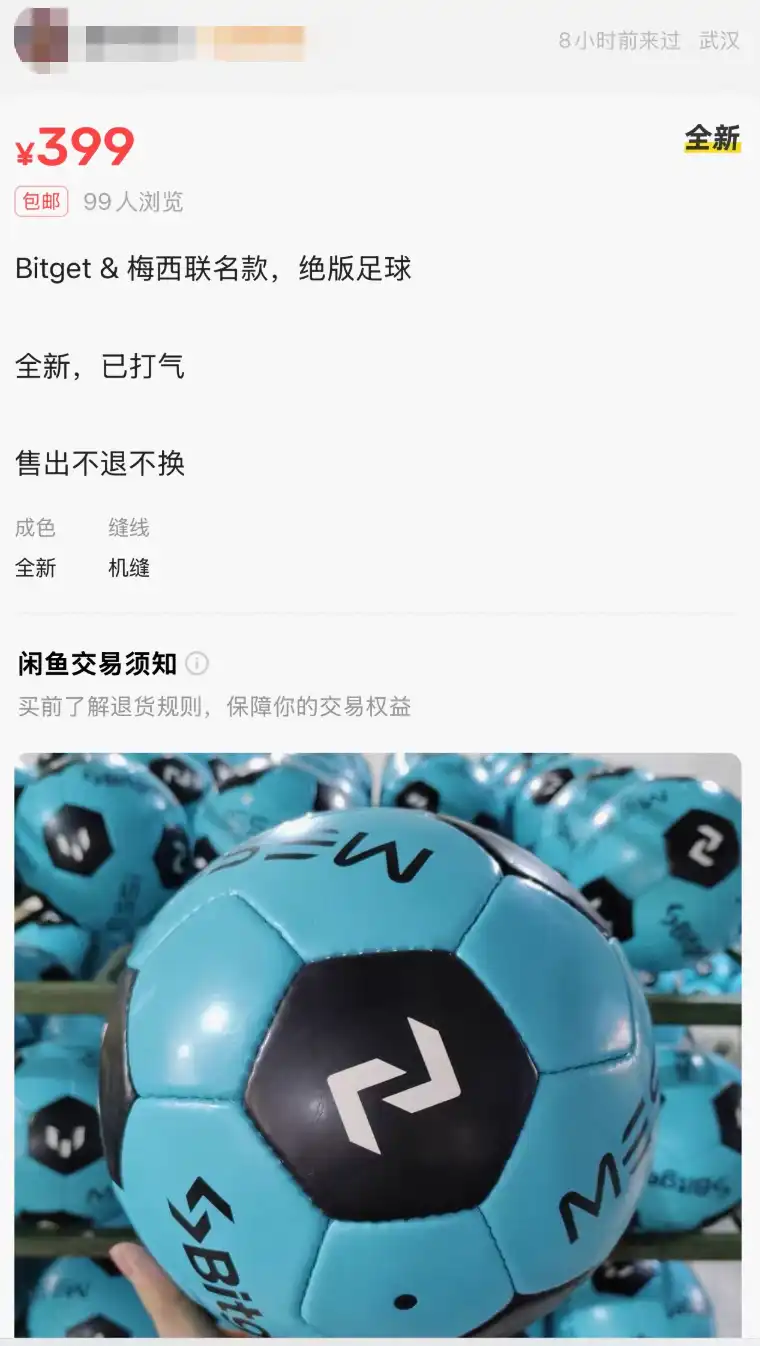
Physical exercise, the Messi co-branded football from Bitget:
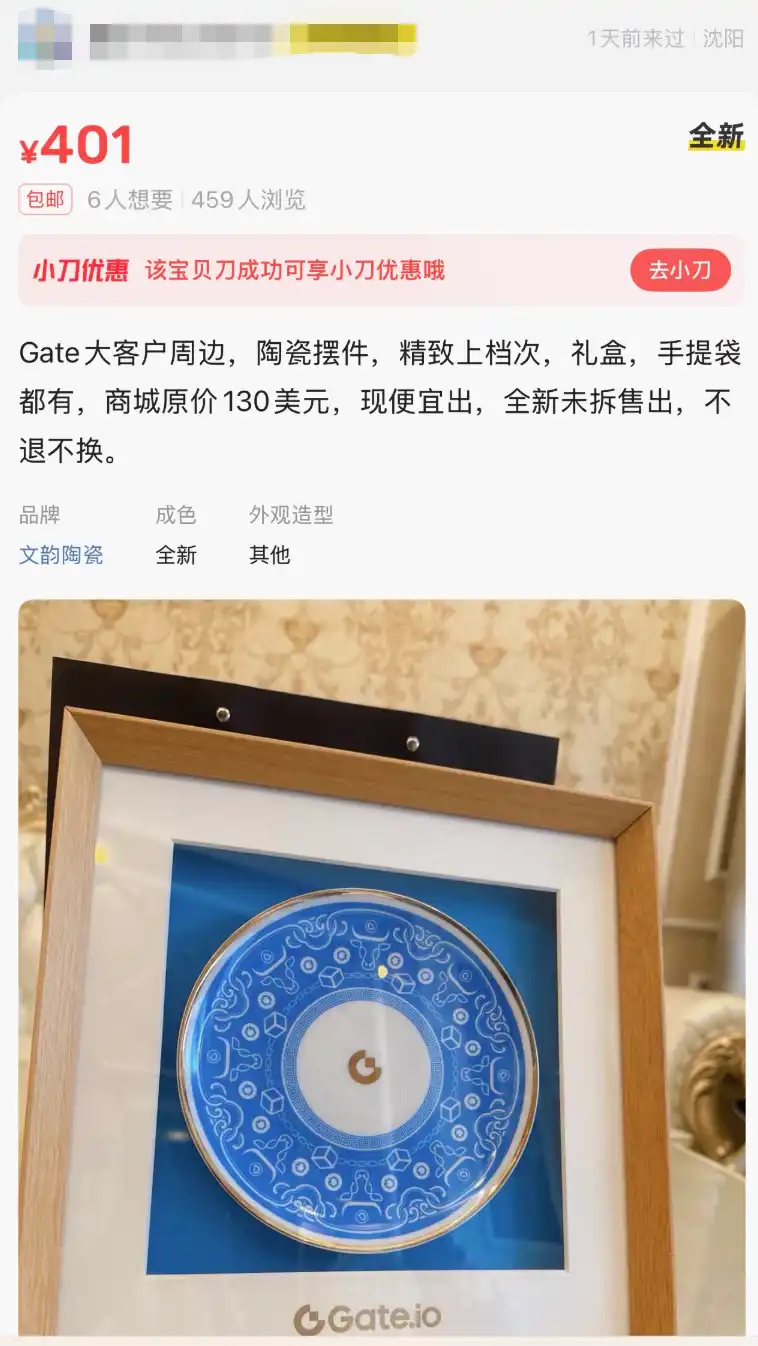
Cultural and artistic creations, the ceramic ornament from Gate:
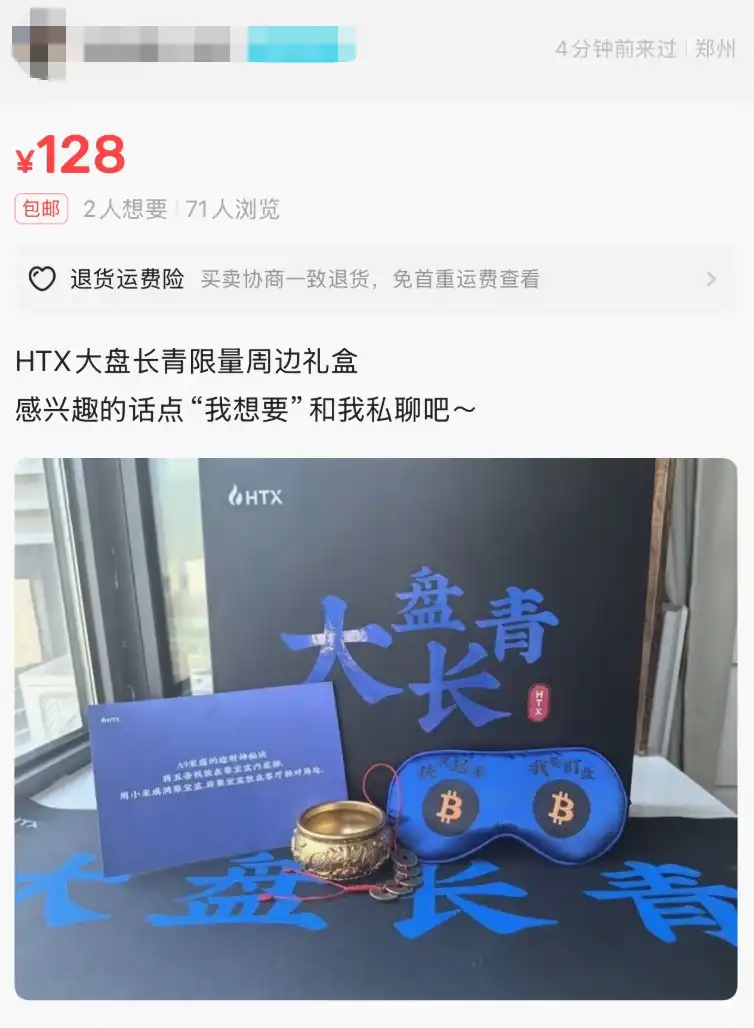
Metaphysical Feng Shui, the Evergreen Treasure Basin for Bull Market from HTX:
Writing this, I'm wondering why there isn't a KOL on X who has made a video with the theme "A Day with a Trading Platform," incorporating so many of these rich peripherals...

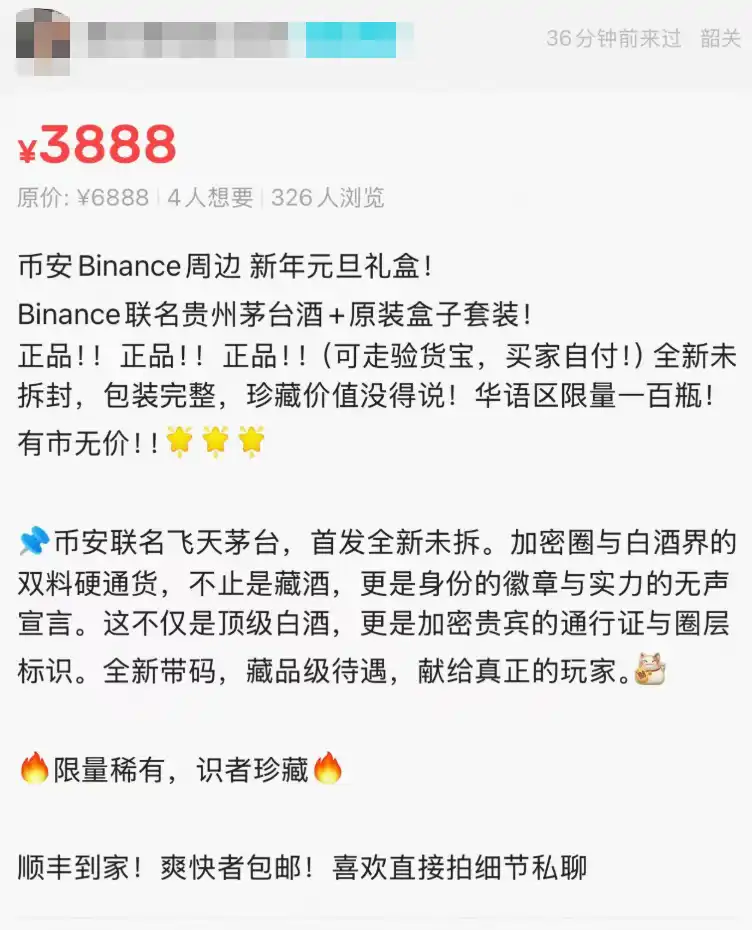
Finally, based on the search results on Xianyu, the piece that deserves the finale is this bottle of Moutai from Binance:
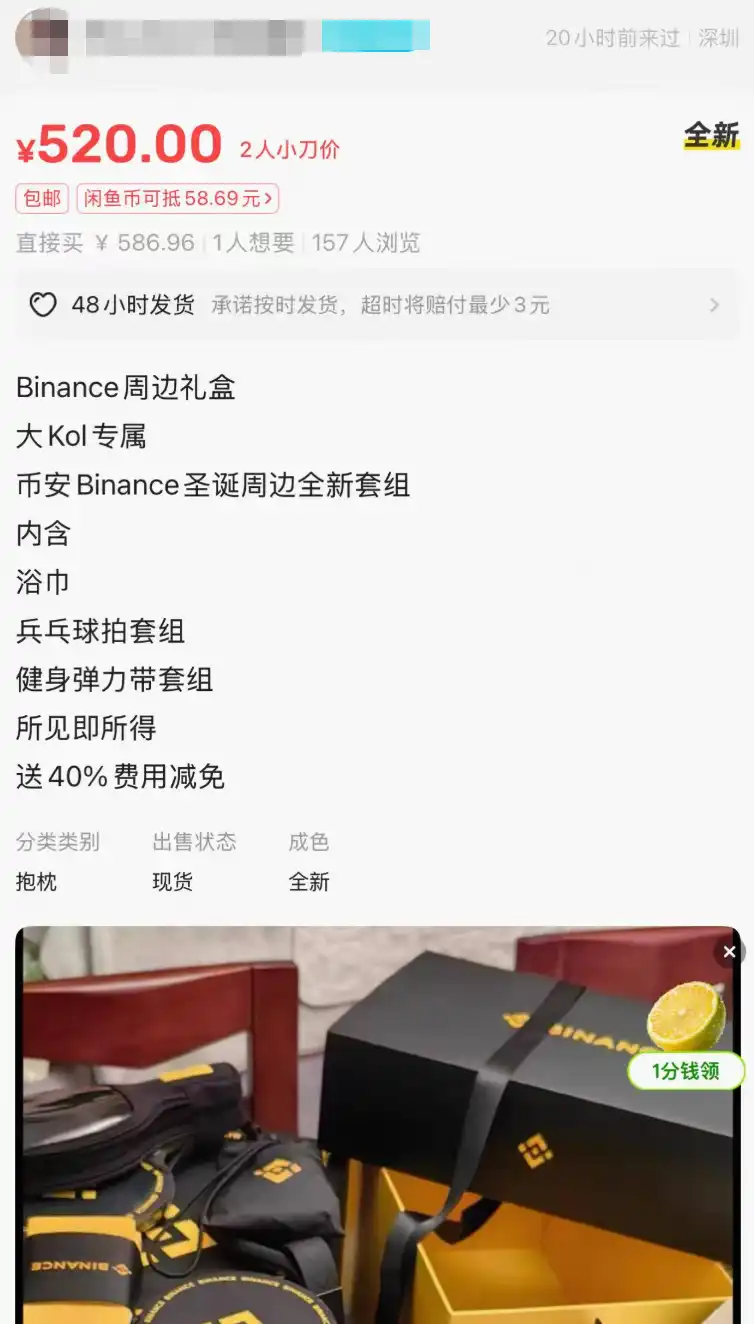
Furthermore, the shrewdest seller has to be the one below. If my understanding is correct, "40% fee reduction" should be related to rebates. If this gift set priced at 520 yuan is actually sold, doubt no more, this shopkeeper really loves you...
Mining Rigs

You read that right, you can really buy Bitcoin mining rigs on Xianyu. However, you need to tweak the keyword a bit, change it to "Lotto Miner".
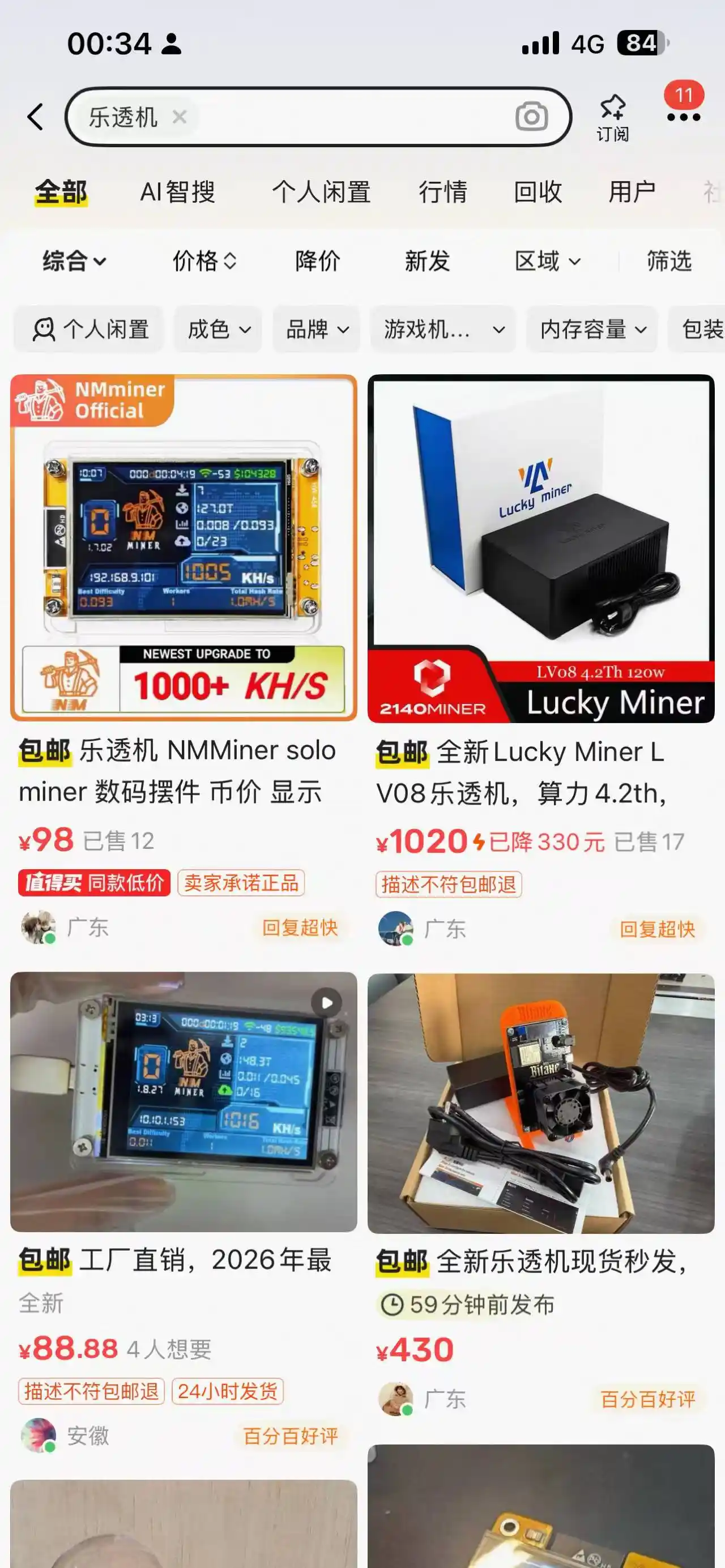
The so-called "Lotto Miner" refers to small, low-power, standalone Bitcoin mining devices. Taking the Lucky Miner priced at 1020 yuan with a hashrate of 4.2 TH/s in the image above as an example, the current Bitcoin network hashrate is approximately 979 EH/s. Based on the hashrate proportion, the theoretical probability of "winning the lottery" (successfully mining a Bitcoin block alone) is 0.000000429%.

In comparison, spending 2 yuan to buy a Welfare Lottery Double Color Ball ticket gives a theoretical probability of winning the jackpot of about 0.0000056428%. This means the lottery miner's winning rate is even less than one-tenth of the Double Color Ball's.

However, both can provide you with spiritual value, for the security and decentralization of the Bitcoin network, or for welfare causes. And, although this probability is extremely low, since the beginning of 2024, we have still seen several cases worldwide where a lotto miner took home a Bitcoin block reward.

Solana Phone

Actually, at the end of 2023, the first-generation Solana phone "Saga" was once popular on Xianyu. Because at that time, this phone came with a 30 million $BONK airdrop. As the price of $BONK rose, the value of this airdrop far exceeded the phone's selling price, and it also added the expectation of being a "golden shovel".

This time, we are two years later, and what's on Xianyu is already the second-generation Solana phone "Seeker". Moreover, the Solana phone itself is about to issue a token; $SKR will TGE on January 21st. It's important to note that this time might be the exact opposite of the first generation. The first generation required the phone to be unactivated to receive $BONK, while the second generation requires it to be activated for $SKR, with allocation determined based on the usage of phone ecosystem applications. Buying the second generation now only ensures you can participate in Season 2 of the $SKR airdrop.

Similar to the first generation, the Solana phone is a big hassle for Chinese people, from receiving it to using it. It is produced in Shenzhen but is destined to travel around the world before being handed to you by a proxy receiver. When you finally get it, you will find that if you don't know how to set up a VPN, you will be stuck forever on the Wi-Fi setup screen during boot.

So, you might need to find a transit station for your Solana phone before bringing it home:
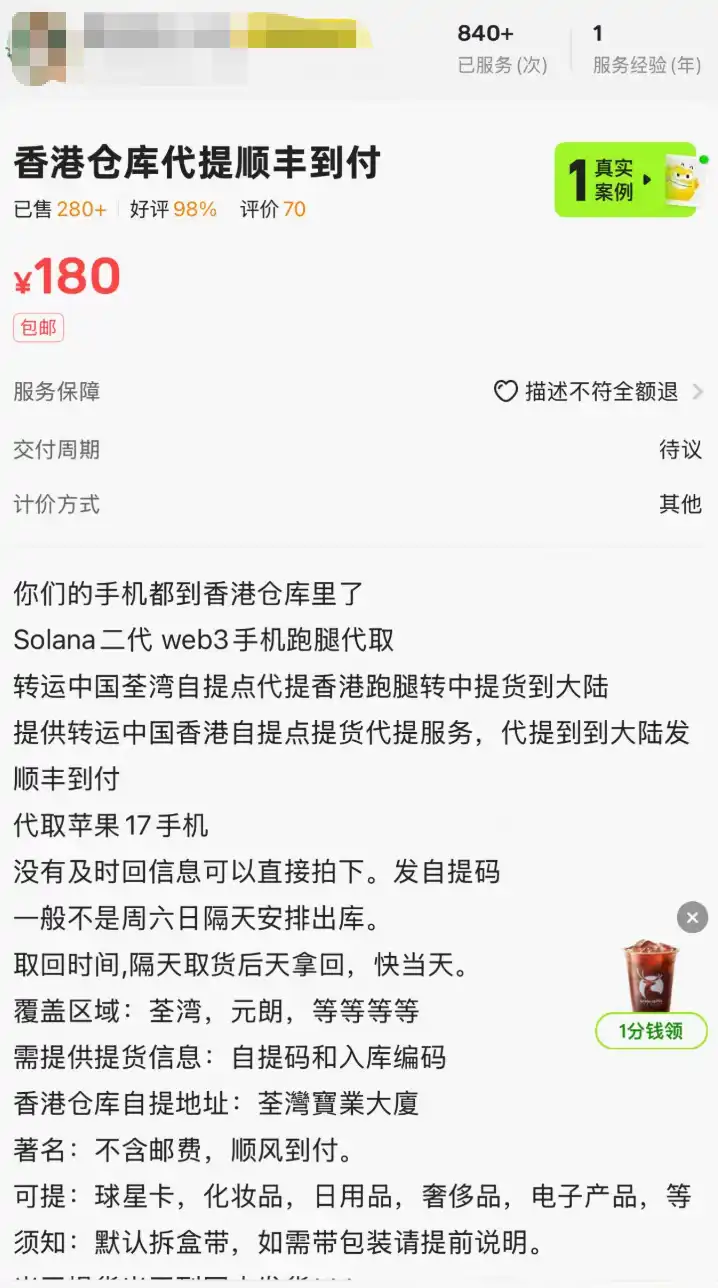
You might also need to find a way to turn it on:
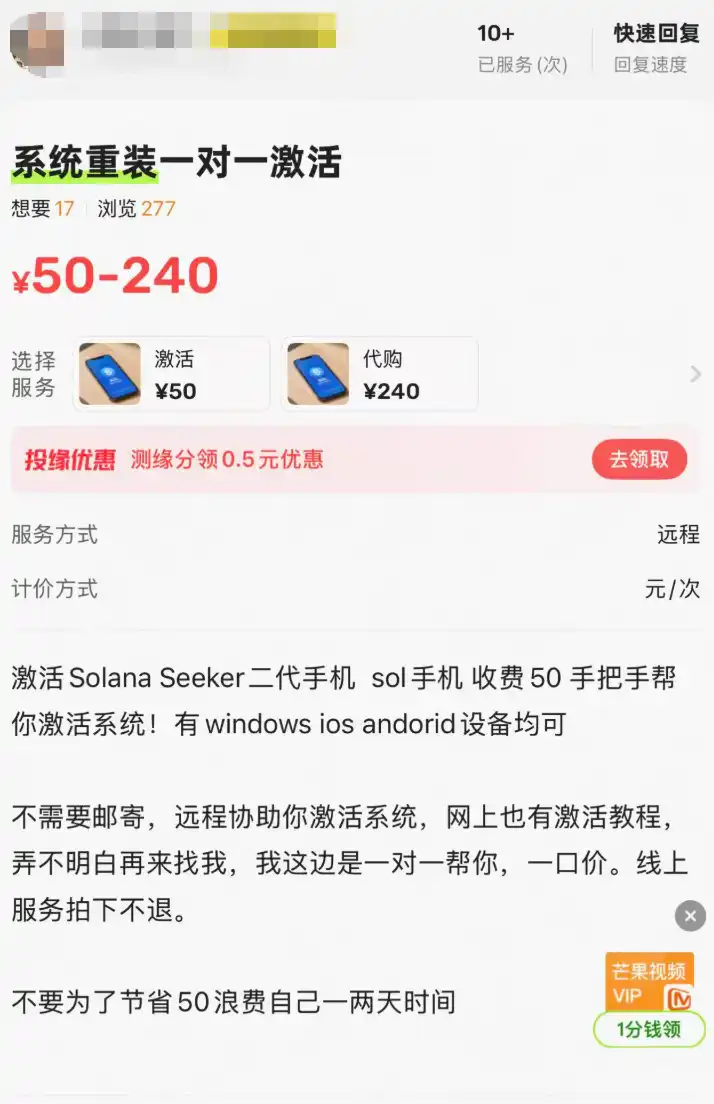
It's really not easy.

Private Key/Mnemonic Phrase Collision Tools

No need to worry. If such black technology existed, the crypto world would have been destroyed like a global nuclear war, and people in the circle wouldn't occasionally remember the threat from future quantum computers.

Selling hopes that are too unrealistic can be called a scam. So, can selling a probability similar to picking out a specific atom that meets certain conditions from the vast universe be considered a scam? I'm not sure either. Anyway, it's pretty much the same principle as nuclear weapons not being available to ordinary folks...
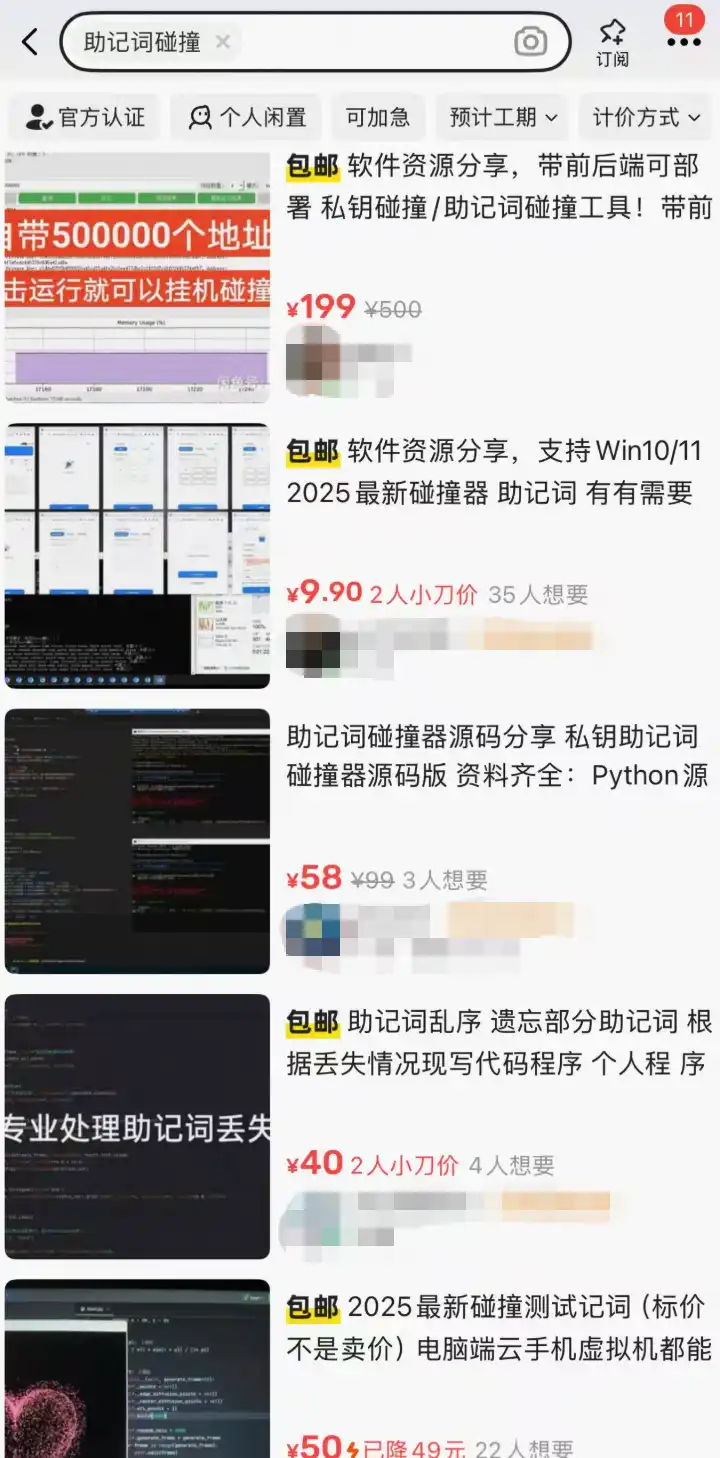
Humanity's development of Xianyu is really less than 1%.


Perguntas relacionadas

QWhat unusual cryptocurrency-related items can be found on Xianyu, according to the article?

AThe article mentions various cryptocurrency-related items on Xianyu, including branded merchandise from exchanges like Binance, OKX, Bitget, Gate, and HTX (such as card game sets, moon lamps, soccer balls, ceramic ornaments, and treasure basins), Bitcoin lottery miners ('乐透机'), Solana phones (Saga and Seeker), and even private key/mnemonic collision tools.

QHow does the probability of winning a Bitcoin block with a 'Lucky Miner' compare to winning a lottery ticket?

AThe probability of winning a Bitcoin block with a 4.2 TH/s 'Lucky Miner' is approximately 0.000000429%, which is less than one-tenth the probability of winning the top prize in a Chinese welfare lottery (双色球) with a 2-yuan ticket, which is about 0.0000056428%.

QWhat was the key difference between the first-generation Solana phone (Saga) and the second-generation (Seeker) regarding airdrops?

AThe first-generation Solana phone (Saga) required the phone to be unactivated to claim the 30 million $BONK airdrop, while the second-generation phone (Seeker) requires activation and determines $SKR token allocation based on usage of the phone's ecosystem applications.

QWhat challenges do Chinese buyers face when purchasing a Solana phone from Xianyu?

AChinese buyers face logistical challenges as the phone, though produced in Shenzhen, often needs to be shipped internationally and received by a proxy. Additionally, users may be stuck on the Wi-Fi setup screen during initial boot-up if they don't know how to configure a VPN.

QWhat is the article's view on the sale of 'private key/mnemonic collision tools' on Xianyu?

AThe article suggests that such tools are practically useless, comparing the probability of success to 'picking a specific atom that meets certain conditions in the vast universe.' It implies that while it may not be an outright scam, it sells an impossibly slim hope, similar to how nuclear weapons are inaccessible to ordinary people.

Leituras Relacionadas

Agent Race Ends, Super Workbench Takes Over

The era of fragmented AI agents is ending. Over the past month, China's tech giants—Tencent, Alibaba, and ByteDance—have simultaneously shifted strategy: instead of launching new, standalone AI agents, they are consolidating their various agent projects into unified "super workbenches." Tencent integrated its QClaw teams into WorkBuddy, a strategic product hailed as a potential third flagship after QQ and WeChat. Alibaba is merging its QoderWork, Wukong, and MuleRun agents into a new "Qianwen Office" platform under DingTalk's leadership. ByteDance rebranded its TRAE SOLO coding agent to TRAE Work, signaling a broader focus on workflow collaboration. This convergence marks a pivotal industry consensus. The initial exploration phase, where companies rapidly built numerous overlapping agents for different scenarios, proved costly and inefficient. With open-source tools eroding technical barriers, competition has shifted from agent creation to resource consolidation and cost control. Historically, platform wars are won not by creating more products, but by simplifying them—as seen with browsers unifying web access and super-apps consolidating services. Now, the "super workbench" aims to become the unified AI entry point for work. This reflects a deeper market realization: the primary audience for AI is no longer just programmers (a market in the tens of millions) but all knowledge workers (a market of billions). The real opportunity lies in augmenting everyday tasks—managing emails, documents, data, and meetings—across the entire workday. The core battleground is becoming control over the primary AI entry point that employees use daily. Tencent's WorkBuddy leverages WeChat and Tencent Docs; Alibaba's Qianwen Office taps into DingTalk's organizational data; ByteDance's TRAE Work integrates with Feishu's workflows. Whoever owns this "super workbench" gains strategic control over orchestrating enterprise data and APIs. This shift is redefining enterprise software. Traditional SaaS applications, valued for their user interfaces, will recede into the background. Their core functionalities will be exposed as standardized "Skills" or APIs for the super workbench's agents to invoke. Software value will shift from selling user seats to charging based on API calls and outcomes delivered. The evolution of agents is moving through clear stages: first as novel standalone products, then as consolidated primary work entry points, and finally as pervasive, invisible capabilities embedded into the digital fabric. The recent moves by major tech firms signal the transition from the first stage into the second, accelerating toward the third. In the end, the most successful agent technology may become invisible—like electricity or the HTTP protocol—a fundamental, unnamed infrastructure powering work itself.

marsbitHá 17m

Agent Race Ends, Super Workbench Takes Over

marsbitHá 17m

Michael Saylor: 110 Reasons to Oppose BIP-110

Michael Saylor presents 110 arguments against Bitcoin Improvement Proposal (BIP) 110, a soft fork aimed at restricting certain non-monetary data storage uses (like inscriptions) on the Bitcoin blockchain. He acknowledges the proponents' valid concerns—such as node costs, fee pressure, and preserving Bitcoin's monetary focus—but fundamentally disagrees with the proposed solution. Saylor argues that BIP 110 represents a dangerous precedent of using consensus rules to enforce value judgments on transaction validity, moving away from Bitcoin's core principles of neutrality and permissionless innovation. His key objections are organized into eleven categories: 1) It violates neutrality and hard consensus by banning currently valid transactions. 2) It fails to meet the high burden of proof required for a consensus change, lacking concrete data on the alleged crisis. 3) Its seven bundled technical restrictions are overly broad, targeting generic script functionalities and blocking future upgrade paths. 4) It sacrifices compatibility and future optionality by closing off designed upgrade hooks. 5) Its temporary rules add significant complexity (grandfathering, expiry states) without sufficient justification. 6) The economic and security impacts, particularly on miner revenue and fee markets, are uncertain and unmodeled. 7) Superior, market-based tools (fee markets, relay/mining policies) already exist to manage blockchain load. 8) It stifles innovation by creating a chilling effect for developers. 9) Its modified activation mechanism (55% threshold, forced signaling) is aggressive and risks network splits. 10) The precedent it sets—using consensus to suppress disliked but legal uses—is more dangerous than the problem it aims to solve. 11) A better path exists: improving measurements, refining resource-based policies, and allowing market forces to work. Saylor concludes that Bitcoin's strength lies in its neutral rules, open markets, and hard consensus. Changing these foundational elements to target specific use cases is an unnecessary and risky "iatrogenic" intervention. He advocates for guarding Bitcoin's neutrality rather than acting as its redeemer.

marsbitHá 33m

Michael Saylor: 110 Reasons to Oppose BIP-110

marsbitHá 33m

Trading

Spot
活动图片

