The Playground of Whales: Why Retail Investors Are Fleeing DeFi

marsbitPublicado em 2026-01-27Última atualização em 2026-01-27

Resumo

The article "Whales' Playground: Why Retail Investors Are Fleeing DeFi" argues that the era of decentralized finance as a tool for financial democratization has ended. Despite lower transaction costs due to Layer 2 solutions and reduced Ethereum gas fees, retail participation is declining. Key reasons include: - **Low Gas Trap**: Cheap transactions have turned DeFi into a high-effort, low-reward "digital factory," where users perform repetitive tasks for minimal airdrop rewards. - **Unpredictable Rules**: Projects frequently change terms retroactively (e.g., altering tokenomics, adding lock-ups, or labeling users as "sybils"), violating the "code is law" principle and eroding trust. - **Lock-up Traps**: High APY incentives often lock users’ funds long-term, while whales and insiders exit early, leaving retail investors exposed to token devaluation. - **Risk-Reward Mismatch**: Low returns (5-10%) come with high risks like smart contract exploits, phishing, depegging, and rug pulls, making DeFi less attractive than holding core assets like Bitcoin. The conclusion urges retail investors to protect capital, avoid futile interactions, and seek better opportunities elsewhere, as DeFi has become a playground dominated by whales and manipulative projects.

Author: Chen Xiaomeng

The era of DeFi that once championed financial empowerment has, in reality, come to an end.

A few years ago, we were complaining that the几十dollar Gas fees on the Ethereum mainnet were blocking retail investors. Now, Layer 2 has become a ghost chain, and even the mainnet's Gas fees have dropped to almost negligible levels after upgrades.

The barrier is gone. We expected a狂欢of retail investors, but instead, we got a silent mass exodus.

Why? Because everyone has finally come to their senses:

In this market, we take on the stress of selling cocaine, but only earn the profits of selling flour.

I. The Low Gas Trap: From Noble Chain to Electronic Factory
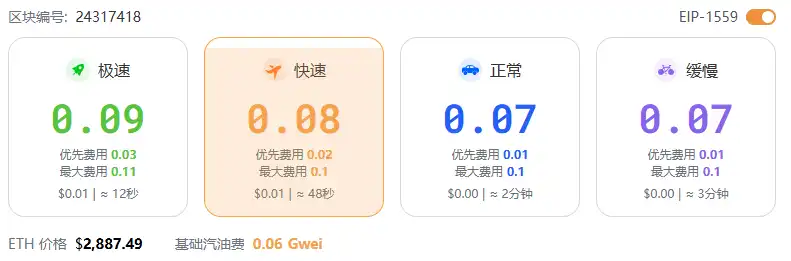
When Gas was expensive, it at least helped filter out low-quality interactions, forcing you to carefully consider every move. Now that Gas is cheap, DeFi has turned into a massive electronic assembly line.

Because interaction costs are low, projects assume you should perform a massive number of interactions. So, for that tiny potential airdrop expectation, retail investors are forced to become skilled laborers on the chain: cross-chain, swap, stake, provide LP... mechanically repeating these actions hundreds of times a day.

But this doesn't lead to higher returns. Instead, low Gas has become a tool for projects to infinitely inflate their activity metrics.

This is on-chain manual labor.

II. The Capricious Dictator: Code is No Longer Law

"Code is Law" was once DeFi's most captivating narrative. But now, DeFi protocols not only have backdoors in their code, but the teams' words are also a sickle随时waiting to fall.

This is the most hated pain point for retail investors today—the uncertainty of the rules.

Project teams have long learned how to be ruthless. They invented impossible-to-fulfill "points systems," like carrots dangling in front of a donkey, luring you to constantly invest money and time. After you've diligently grinded for half a year, eagerly awaiting the payout, the team suddenly issues an announcement:

  • "For the fairness of the community, we will strictly crack down on Sybil attacks."

  • "Our VE model needs to be modified."

  • "For the development of the community, we have added a 45-day cooldown period."

Yesterday you were their early supporter; today, because your IP address changed slightly or your funds were held for one day less, you are labeled a Sybil. The right to interpret the rules belongs solely to the project team—they change them as they please.

This feeling is like going to work for a boss who promised daily wages. After you finish the job, the boss suddenly announces: "For the long-term development of the company, we're withholding your pay. We'll see how you perform next year."

In traditional business, this is called fraud; in DeFi, it's called DAO governance.

III. The Locked-In Prisoner: Capital Hunting Under High APY
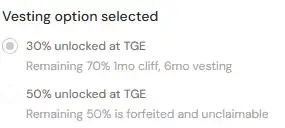
To maintain token prices, DeFi protocols are now extremely keen on locking users' funds. Various Ve models keep emerging, often requiring locks of one year, two years, or even four years.

Projects lure you with extremely tempting APY. It looks like high returns, but the outcome is already written:

  • Liquidity dries up: Your principal is locked, unable to move.

  • Whales front-run: Project teams, early investors, and whales often have special vesting schedules or can hedge their profits off-chain.

  • Price tanks to zero: When you can finally unlock, you find that while you earned a 50% return in token terms, the price has already dropped by 90%.

The essence of locking is retail investors using their liquidity to help whales cash out. You covet the interest; they eye your principal.

IV. Extreme Mismatch of Risk and Reward

Let's do some realistic math.

Current DeFi protocols, excluding those shady projects that might rug pull at any moment, offer stablecoin yields of only around 5% - 10% for mainstream ones. This seems higher than banks, but what are the risks behind it?

  • Smart contract vulnerabilities: Hackers could drain the pool at any time.

  • Front-end hijacking: Phishing sites are everywhere.

  • Depegging risk: Algorithmic stablecoins or bridged assets can go to zero instantly.

  • Project Rug Pull: Even projects with billions in TVL can disappear overnight with the funds.

Earning a 5% return while bearing a 100% risk of losing your principal. This is a classic case of high risk for low reward. This yield doesn't even cover the mental distress fee from the constant anxiety during operations. In comparison, simply buying and holding Bitcoin, or even using centralized exchange理财products, offers far better value than折腾on-chain.

Conclusion: Refuse to Become On-Chain Fuel

DeFi's innovation has stalled, but its harvesting tactics have evolved.

At this stage, for most retail investors with less than $100,000, DeFi has lost its golden attribute. It is no longer a wilderness full of opportunities, but a playground carefully designed by whales and unscrupulous project teams.

Every button, every rule, every lock-up suggestion here is designed to诱you into handing over your chips.

So, the best strategy now might be just one: Admit that current DeFi truly isn't working. Stop those meaningless interactions. Stop locking up funds for meager returns. Protect your principal. Convert it into truly valuable core assets, and then watch coldly as the whales fight amongst themselves.

Stop being an on-chain laborer. Your time and capital deserve a better place.

Perguntas relacionadas

QWhy are retail investors leaving DeFi despite lower transaction fees?

ARetail investors are leaving because low fees have turned DeFi into a high-effort, low-reward environment where they perform repetitive tasks for minimal returns, while project owners exploit the system to inflate engagement metrics without fair compensation.

QHow do DeFi projects change rules arbitrarily, and what impact does this have?

ADeFi projects frequently alter rules, such as modifying tokenomics, adding lock-up periods, or labeling users as sybils, which creates uncertainty and distrust, making investors feel cheated after investing time and resources based on initial promises.

QWhat risks do investors face with high APY lock-up schemes in DeFi?

AInvestors risk illiquidity, front-running by whales, and significant token price depreciation, often resulting in capital losses despite high nominal yields, as locked assets become vulnerable to market manipulations and project failures.

QHow does risk-reward mismatch discourage participation in DeFi?

AWith stablecoin yields around 5-10%, investors bear risks like smart contract hacks, front-end attacks, stablecoin depegging, and rug pulls, making the potential returns insufficient to justify the high probability of total capital loss compared to safer alternatives like Bitcoin or centralized exchanges.

QWhat is the author's recommended strategy for retail investors in the current DeFi landscape?

AThe author advises retail investors to stop futile interactions and lock-ups, preserve capital, and allocate it to core assets like Bitcoin, avoiding DeFi's exploitative structures dominated by whales and predatory projects.

Leituras Relacionadas

Has Hook Summer Really Arrived? sato, Lo0p, FLOOD Ignite the New Narrative of Uniswap v4

"Hook Summer" Arrives? Sato, Lo0p, FLOOD Ignite Uniswap v4 Narrative Amidst a slight market recovery, attention within the Ethereum ecosystem has shifted to Meme coins built on Uniswap v4's Hook protocol. Following ASTEROID, tokens like sato, sat1, Lo0p, and FLOOD have become market focal points, with market caps ranging from millions to tens of millions, bringing concentrated liquidity to a narrative-dry market. Uniswap v4 Hooks are "plugin smart contracts" that allow developers to inject custom logic at key points in a liquidity pool's lifecycle (initialization, adding/removing liquidity, swaps, etc.), making the AMM programmable. Recent representative projects include: * **sato**: Market cap peaked over $38M; uses a v4 curve mechanism for minting/burning, locking ETH as reserve. * **sat1**: Market cap briefly exceeded $10M, positioning as an "optimized sato," but later declined significantly. * **Lo0p**: Market cap neared $6.6M; a "lending AMM protocol" allowing users to borrow ETH against deposited LO0P tokens without immediate selling pressure. * **FLOOD**: Market cap approached $6M; channels trading reserves into Aave v3 to generate yield, which is retained in the pool. The emergence of these Hook-based tokens could drive long-term growth for the Uniswap ecosystem by attracting users and liquidity to v4 pools. Combined with Uniswap's activated fee switch (partially used to burn UNI), the long-term outlook for UNI appears positive. However, short-term UNI price appreciation is not directly guaranteed. Factors include the sustainability and lifecycle of these new tokens, their price volatility, overall market conditions, and regulatory pressures. Currently, Uniswap v4's TVL ($595M) lags behind v3 and v2, indicating Hook adoption still requires time to mature. In summary, the Hook ecosystem serves as "long-term nourishment" for UNI, but acts more as a "catalyst" than a direct "booster" in the short term. Note: These are early-stage experimental tokens and may carry unknown risks.

marsbitHá 29m

Has Hook Summer Really Arrived? sato, Lo0p, FLOOD Ignite the New Narrative of Uniswap v4

marsbitHá 29m

Has Hook Summer Truly Arrived? sato, Lo0p, FLOOD Ignite the New Uniswap v4 Narrative

With the broader market showing signs of recovery, a new wave of interest has emerged around Ethereum-based meme coins. Following ASTEROID, tokens like sato, sat1, Lo0p, and FLOOD, built upon the Uniswap v4 Hook protocol, are capturing market attention. Their market capitalizations range from millions to tens of millions of dollars, injecting much-needed focused liquidity into a market lacking narratives. This article explores whether this trend signifies an incoming "Hook Summer" and its potential impact on UNI's price. Hooks are essentially plug-in smart contracts for Uniswap v4 liquidity pools, allowing developers to inject custom logic at key points in a pool's lifecycle (like initialization, adding/removing liquidity, swaps). This transforms the AMM into programmable building blocks. Key highlighted projects include: * **sato**: Peaked over $38M market cap. It utilizes a v4 curve for minting/burning; buying locks ETH as reserve to mint new tokens, while selling redeems ETH from the reserve and burns tokens. * **sat1**: Market cap briefly exceeded $10M, promoted as an "optimized sato," but later declined significantly. * **Lo0p**: Reached nearly $6.6M. It's a lending AMM protocol where buying LO0P tokens locks them as collateral, allowing users to borrow ETH from the pool reserve at 40% LTV, aiming to improve capital efficiency for idle ETH in LPs. * **FLOOD**: Peaked near $6M. Its mechanism directs asset reserves from buys into Aave v3 to generate yield, with fees and interest retained in the pool to potentially influence the token's price long-term. In the long term, the development of the Hook ecosystem can attract users and liquidity to Uniswap v4, benefiting UNI's fundamentals—especially combined with the recent activation of the protocol fee switch, where a portion of fees is used to burn UNI. However, in the short term, these Hook-based tokens are unlikely to directly drive significant UNI price appreciation. Their impact is moderated by factors like token sustainability, price volatility, and broader market and regulatory conditions. Currently, Uniswap v4's TVL ($595M) still trails behind v2 and v3, indicating adoption and growth will take time. The article concludes that while the Hook ecosystem provides long-term "nourishment" for UNI, its short-term role is more of a "catalyst" than a "booster." Readers are cautioned that these are early-stage experimental tokens and may carry unknown risks.

Odaily星球日报Há 41m

Has Hook Summer Truly Arrived? sato, Lo0p, FLOOD Ignite the New Uniswap v4 Narrative

Odaily星球日报Há 41m

Interview with Michael Saylor: I Did Say I Would Sell Bitcoin, But Never a Net Sale

Interview with Michael Saylor: I Said We'd Sell Bitcoin, But Never Be a Net Seller In a recent podcast, MicroStrategy Executive Chairman Michael Saylor clarified the company's stance on potentially selling Bitcoin. Following MicroStrategy's earnings call statement about being prepared to sell BTC to fund dividends for its STRC (Strategic) credit product, Saylor emphasized the distinction between selling and being a "net seller." Saylor explained the core business model: MicroStrategy sells credit instruments like STRC and uses the proceeds to buy Bitcoin, which is viewed as "digital capital" expected to appreciate around 30-40% annually. A portion of these capital gains can then be used to pay the dividends on the credit products. He stressed that even if the company sells some Bitcoin for dividends, it simultaneously buys much more with new credit issuance. For example, after raising $3.2 billion from STRC sales in April, the dividend obligation was only $80-90 million, making the company a net buyer. The clarification aims to counter market narratives questioning the value of Bitcoin on MicroStrategy's balance sheet if it were never sold, and to dismiss claims of a "Ponzi scheme." Saylor reiterated his personal philosophy for investors: "Don't be a net seller of bitcoin" and ensure your Bitcoin holdings increase each year. Saylor also discussed Bitcoin's role as the foundation for "digital credit," noting that STRC has become the largest and most liquid preferred stock issue in the U.S., offering high risk-adjusted returns (Sharpe ratio). He highlighted Bitcoin's deep liquidity, stating that even large purchases by MicroStrategy do not move the market significantly, which is driven by macro factors, geopolitical tensions, and capital flows from ETFs and credit products. Finally, Saylor reflected on his early inspiration from sci-fi books, which motivated his path to MIT, and maintained his fundamental thesis on Bitcoin remains unchanged: it is superior digital capital enabling superior digital credit.

链捕手Há 45m

Interview with Michael Saylor: I Did Say I Would Sell Bitcoin, But Never a Net Sale

链捕手Há 45m

Trading

Spot
Futuros
活动图片