The Person Who Made $69 Million from NFTs Four Years Ago Is Still Making Money

深潮Publicado em 2025-12-10Última atualização em 2025-12-10

Resumo

Four years after making $69 million from an NFT sale, Beeple continues to innovate and profit in the digital art space. Despite the decline in the NFT market, he recently launched "Regular Animals" at Art Basel—a collection of 256 eerie robotic dogs with human faces resembling figures like Musk, Warhol, and Picasso. These AI-driven sculptures use cameras and visual algorithms to create art based on their surroundings. The NFTs, initially given away for free, now trade for over 10 ETH (around $35,000) on OpenSea, valuing the giveaway near $9 million. A physical series of 1,024 pieces is also available, with listings reaching $6,500 on eBay—though the digital versions remain more valuable. Beeple, who once struggled to sell art for over $100, now operates a large studio with a team of artists and engineers, including a former Boeing engineer and a renowned art curator. His work continues to bridge crypto and traditional art, gaining attention from outlets like WSJ.

Written by: Cookie, Lüdong

beeple, the man who sold one NFT for a staggering $69 million, has long been seen as a symbol of the golden age of NFTs that once was.
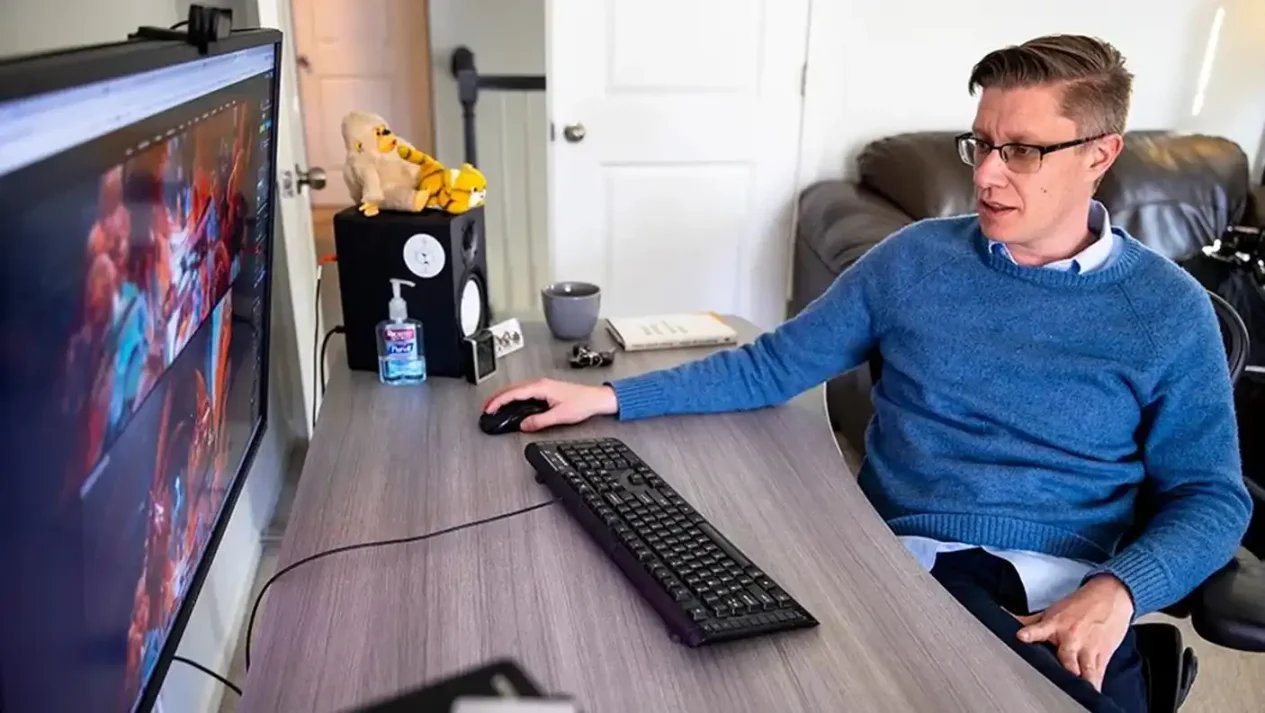
Although the glory of NFTs has faded, beeple and his team have remained active in the NFT space. At this year's Art Basel, he brought another "golden dog" to the currently quiet NFT market—Regular Animals.

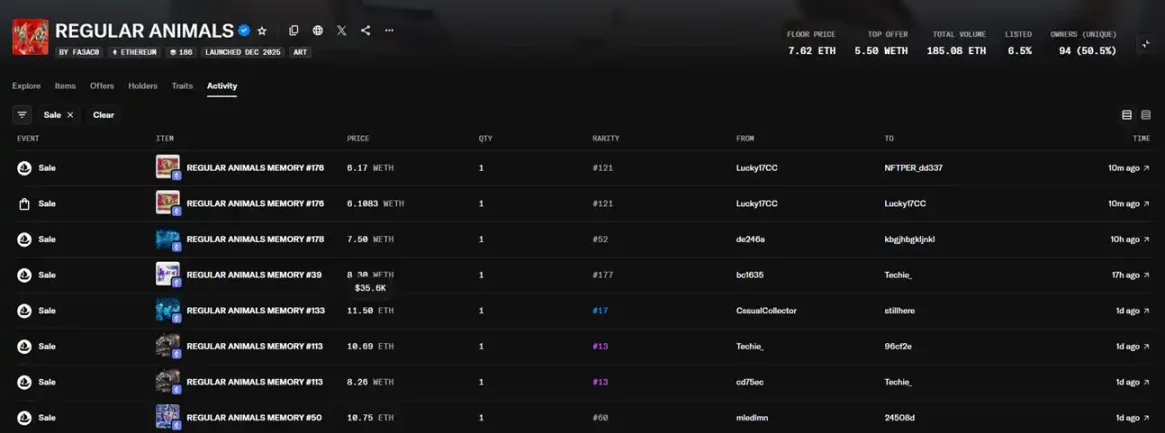
Yesterday, multiple Regular Animals were sold on OpenSea for over 10 ETH (approximately $35,000) each. These artworks were given away for free at Art Basel, with a total of 256 pieces. At this price, beeple essentially gave away nearly ten million dollars worth of NFTs at Art Basel.
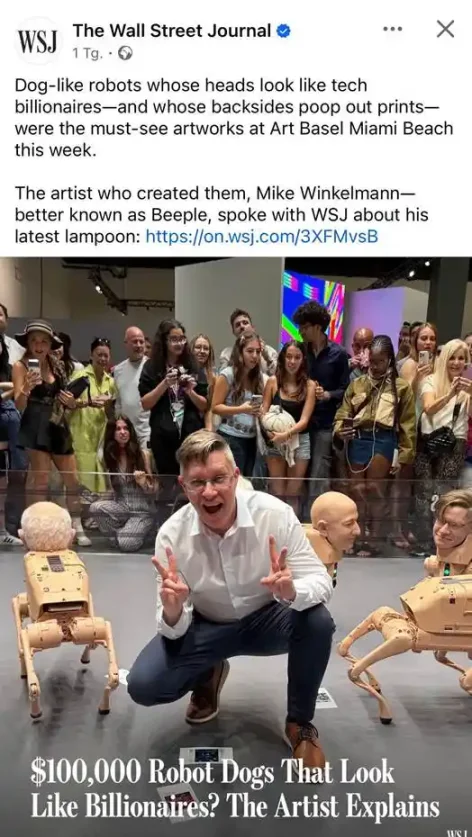
The project that beeple and his team brought to Art Basel is Regular Animals. These are robotic dogs, as shown in the image below. They look somewhat eerie because these robotic dogs have human faces, and they are faces of well-known figures such as Musk, Andy Warhol, Zuckerberg, Picasso, and even beeple himself.
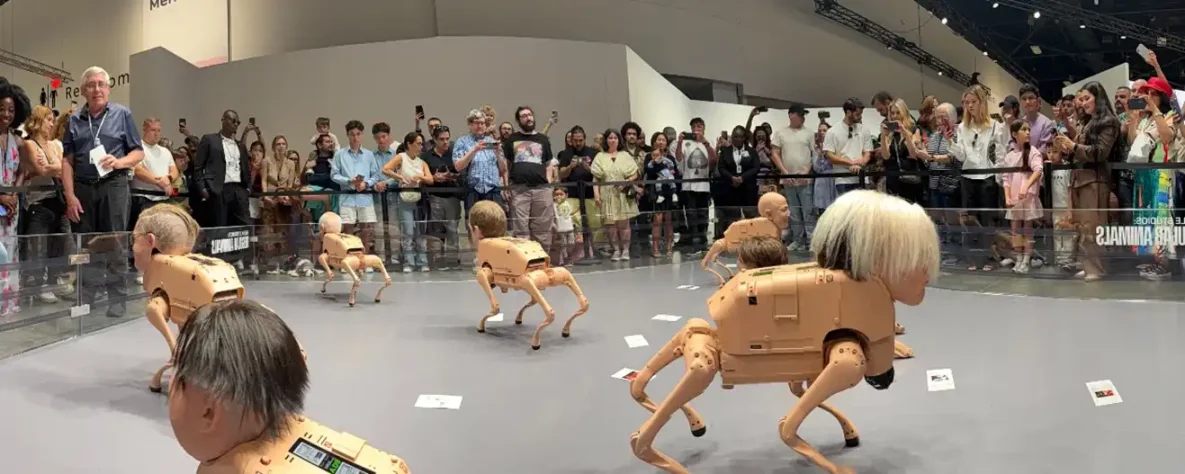
Of course, it's not just about the eerie visual effect. These robotic dogs use the cameras on their heads to observe their surroundings and employ an evolving visual algorithm to create artworks.
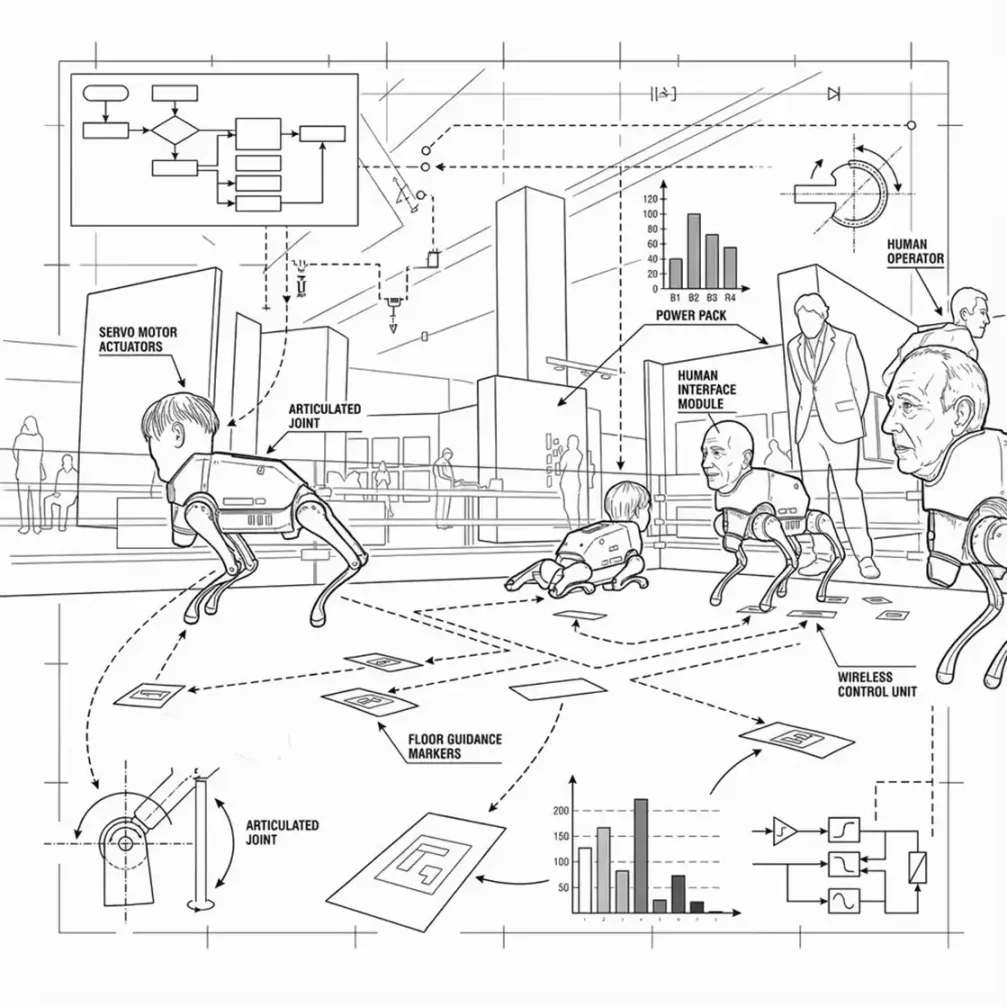
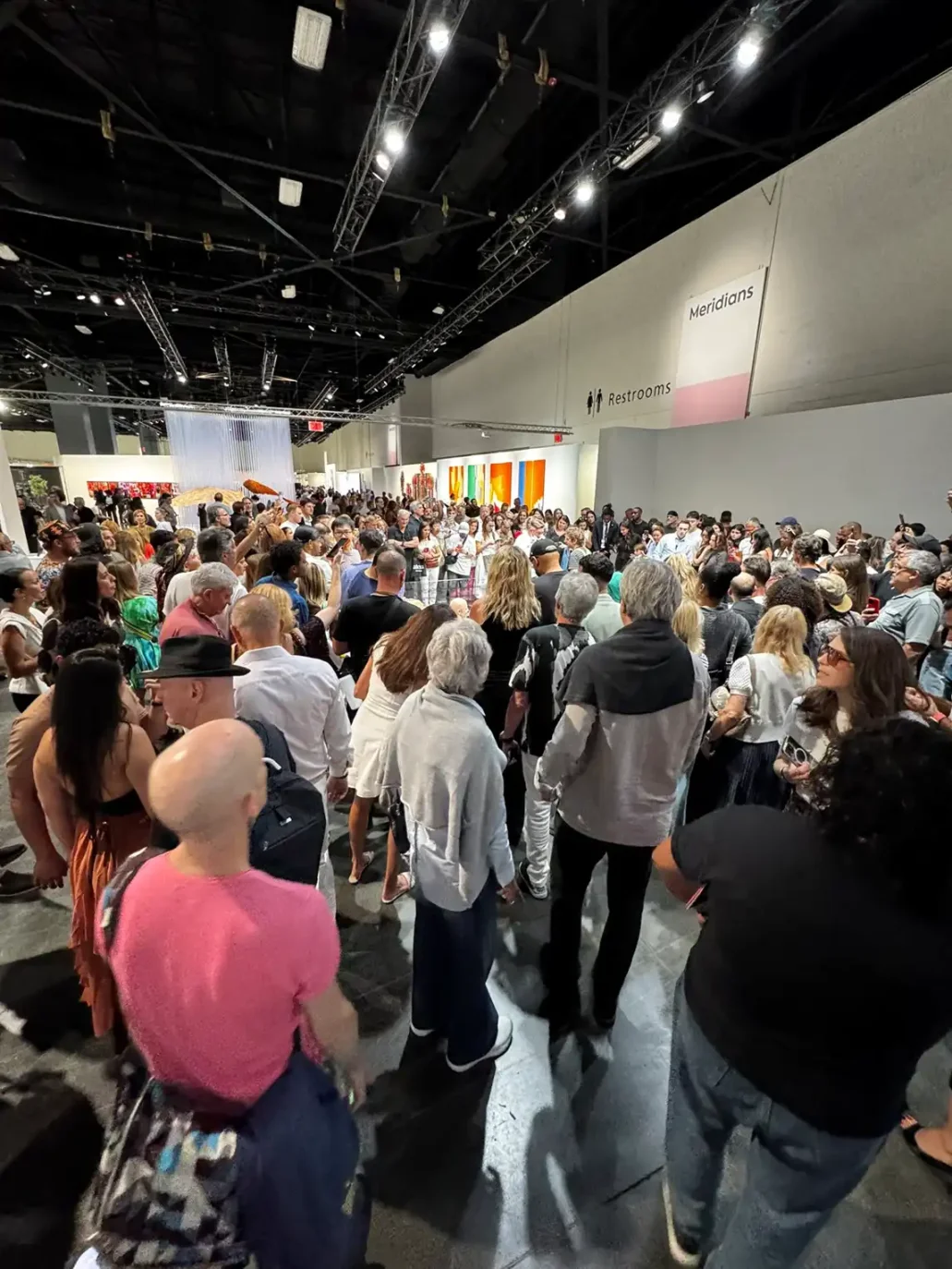
The selection of these famous figures is not arbitrary. The reason for choosing the aforementioned celebrities is that they have influenced how we view the world, whether through algorithms, art, or politics. As humans, we observe the world through these perspectives, and so do these robotic dogs. At Art Basel, these robotic dogs and humans observed each other, and each moment of observation became an artwork created by the robotic dogs. These artworks are also like autobiographies of these robotic dogs.
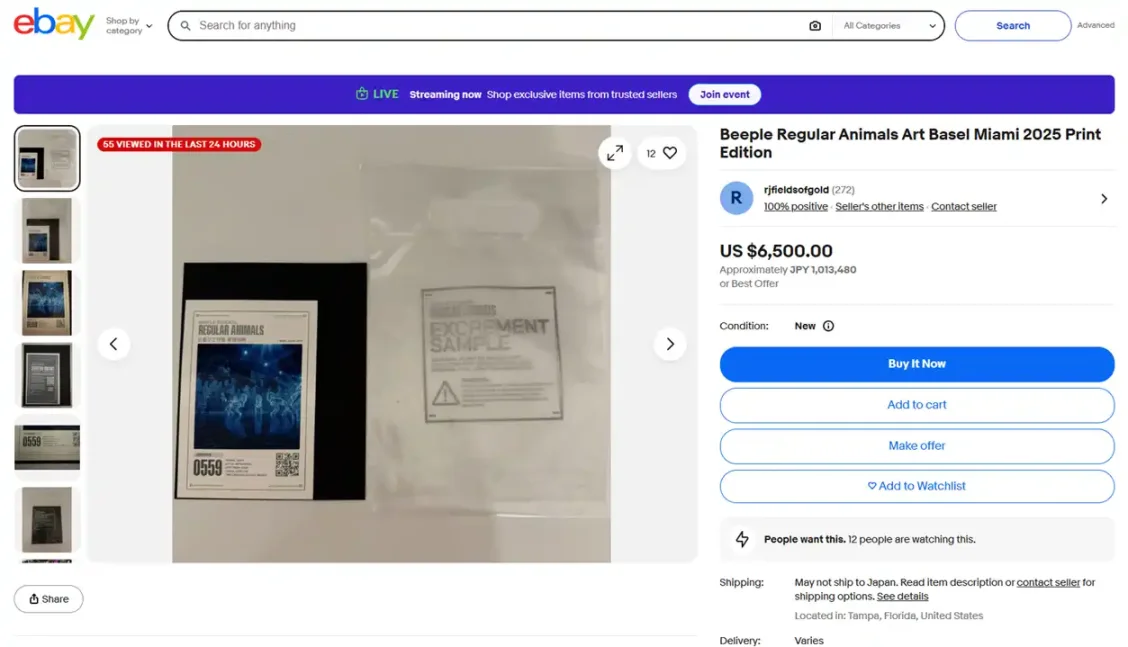
Interestingly, Regular Animals also has a physical series, with a total of 1,024 pieces. On eBay, someone has already listed one for a fixed price of $6,500. The market's valuation is that NFTs are far more valuable than physical paintings, reminiscent of Damien Hirst's "The Currency" series years ago, which forced owners to choose between physical and NFT versions.
Before achieving great success in the NFT field, beeple had been creating art every day since 2007 but had never sold anything for more than $100. After gaining fame and fortune, beeple did not squander it like some artists or crypto project teams. Instead, he acquired a studio/gallery of about 460 square meters, built a team of dozens of 3D artists, engineers, and researchers (even including a former Boeing engineer), invited Carolyn Christov-Bakargiev, the former director of the Castello di Rivoli Museum of Contemporary Art, as an advisor, and continuously exhibited at art shows around the world while creating new artworks.

This exhibition of beeple's robotic dogs has not only gained attention in the crypto circle due to its price but has also been covered by traditional media outlets like WSJ.
Perguntas relacionadas

QWho is Beeple and what is he known for in the NFT world?

ABeeple is an artist who gained fame for selling an NFT for $69 million, symbolizing the golden era of NFTs.

QWhat is the name of Beeple's latest NFT project featured at the Basel Art Show?

ABeeple's latest project is called 'Regular Animals,' which features robotic dogs with human faces of famous personalities.

QHow many Regular Animals NFTs were distributed for free at the Basel Art Show, and what was their estimated total value?

A256 Regular Animals NFTs were distributed for free at the Basel Art Show, with an estimated total value of nearly $9 million based on secondary market sales.

QWhat unique ability do the Regular Animals robotic dogs have?

AThe Regular Animals robotic dogs use cameras to observe their surroundings and employ an evolving visual algorithm to create artworks, which serve as their autobiographies.

QHow has Beeple's approach to his career evolved since his NFT success?

ABeeple has established a large studio, assembled a team of artists and engineers, and continues to create and exhibit artworks globally, focusing on innovation rather than extravagance.

Leituras Relacionadas

Analysis of 13F Holdings of Seven Major Funds: What Are Buffett, Duan Yongping, Li Lu, and Dan Bin Thinking?

A summary of Q2 2026 13F filings from seven major funds (Berkshire Hathaway, Duquesne Family Office, H&H International Investment, Himalaya Capital, ARK Investment, Oriental Harbor Investment Master Fund, Situational Awareness LP) reveals AI remains the central investment theme, with significant capital reallocation within the sector. Berkshire Hathaway, under Greg Abel, made its largest net stock purchases in years, heavily increasing its stake in Alphabet, signaling a strategic tilt towards tech while maintaining core holdings in consumer and financial stocks. Duquesne Family Office (Stanley Druckenmiller) rotated within semiconductors, selling Micron, Broadcom, and Intel but adding to positions in TSMC, STMicroelectronics, and AMD, while also reinvesting in cloud giants Alphabet and Amazon and cautiously re-entering Chinese tech via Baidu. H&H International Investment (Duan Yongping) and Himalaya Capital (Li Lu) both significantly increased their stakes in PDD, with Li Lu also concentrating his portfolio by selling out of several financial and energy holdings to focus on core positions like Alphabet and Berkshire. H&H also took profits from high-flying AI/tech names like Nvidia and Google, viewing the moves as valuation adjustments rather than a loss of conviction. ARK Investment (Cathie Wood) aggressively bought SpaceX upon its IPO and continued hunting for disruptive innovation across AI, energy, and biotech, while reducing its Tesla holding. Oriental Harbor Investment Master Fund (Dan Bin) executed a dramatic shift towards AI hardware, launching major new positions in Intel, SanDisk, AMD, and others while selling down software/platform holdings like Google and clearing out consumer names Apple and Tesla. Situational Awareness LP's filing, reflecting pre-liquidation positions, showed a story of missed hedging opportunities leading to significant losses. The consensus is that AI growth is continuing, but capital is actively rotating to identify the next profit centers within the value chain—from semiconductors and infrastructure to eventual commercialization. The filings, while lagging, offer a snapshot of how sophisticated investors are positioning for AI's next phase.

Odaily星球日报Há 52m

Analysis of 13F Holdings of Seven Major Funds: What Are Buffett, Duan Yongping, Li Lu, and Dan Bin Thinking?

Odaily星球日报Há 52m

Arthur Hayes Makes a High-Profile Comeback, Flop Labs Aims to Become the "Fuel" for the Agent Economy

Arthur Hayes, co-founder of BitMEX, has announced his return as head of a new project called Flop Labs, declaring "FLOP is food for your AI agent." This marks his first high-profile return to a leadership role since stepping back from BitMEX. Flop Labs aims to be a native monetary network and verifiable computation settlement layer for the AI Agent economy, distinguishing itself from existing AI Agent projects. Its core concept is "Proof-of-Useful-Inference," which seeks to integrate useful AI inference tasks into the blockchain consensus mechanism, allowing FLOP tokens to serve as the native currency for Agents to purchase computing resources and store memory. The ecosystem involves four key roles: Miners (provide GPU compute), Validators (verify services), Agents (consume services), and KOLs/Partners (community growth). The project promises a 100% fair launch with no presale or VC involvement. A large airdrop is planned for Q4 2026, with the genesis block targeted for Q1 2027. While the announcement has generated community excitement, particularly around the airdrop, the project is in an early conceptual stage. It currently lacks a published whitepaper, detailed tokenomics, technical specifics on its consensus mechanism, or smart contract audits. Arthur Hayes has defended the venture, separating his belief in the potential of the Agentic Economy from concerns about an AI stock bubble. The success of Flop Labs will hinge on its ability to deliver substantive technical progress and ecosystem development in the coming months.

Odaily星球日报Há 1h

Arthur Hayes Makes a High-Profile Comeback, Flop Labs Aims to Become the "Fuel" for the Agent Economy

Odaily星球日报Há 1h

Trading

Spot
活动图片