Original | Odaily Planet Daily(@OdailyChina)
Author | Azuma(@azuma_eth)
In mid-August, major funds successively released their 13F quarterly reports, disclosing their static holdings as of June 30.
- Odaily Note: The so-called 13F is a quarterly disclosure document mandated by the U.S. Securities and Exchange Commission (SEC) for funds with assets under management exceeding $100 million. The SEC requires qualifying funds to submit this document within 45 days after the end of each calendar quarter. The report must highlight the fund's holdings in U.S. listed stocks, call/put options, convertible bonds, and specific ETFs as of the end of the previous quarter.
Although 13F filings have a certain lag in disclosure timing, making it unsuitable for simply copying trades, they remain an extremely important window into the positioning and movements of top-tier funds, offering a direct glimpse into the minds of sophisticated market players. Particularly, the consensus and divergence among different funds may well contain clues about future market trends.
In the following analysis, we will examine the 13F reports of seven leading funds: Berkshire Hathaway (Buffett, Abel), Duquesne Family Office (Stanley Druckenmiller), H&H International Investment (Duan Yongping), Himalaya Capital (Li Lu), ARK Investment (Cathie Wood), Oriental Harbor Investment Master Fund (Dan Bin), and Situational Awareness LP (Leopold Aschenbrenner). We will focus on their core positions and major moves, hoping to provide insights for your investment strategy.
Berkshire Hathaway (Buffett, Abel)
Report Summary
As of June 30, Berkshire Hathaway disclosed a total of 29 holdings in its 13F report (13F only covers disclosable U.S. listed securities and does not represent the fund's total asset size). It initiated 1 new position, increased 7, decreased 6, and liquidated 1. The nominal total holding value was approximately $299.3 billion.
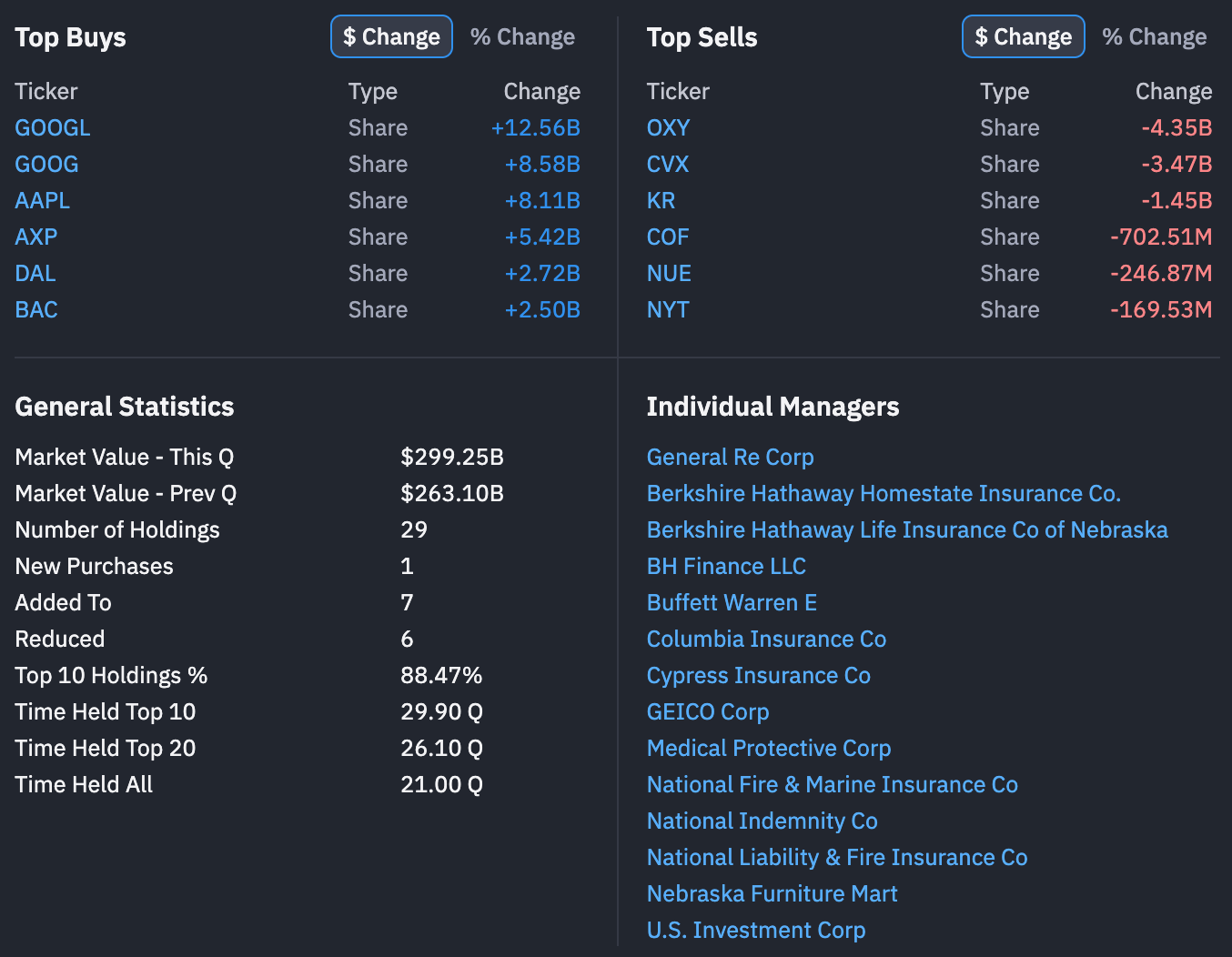
Notably, this is the second 13F report since Buffett stepped down as CEO and Greg Abel officially took the helm. It also marks the first quarter of significant net stock purchases after Berkshire ended a streak of 14 consecutive quarters of net stock sales, with net purchases approaching $20 billion for the quarter.
Core Holdings
Berkshire's holdings remain highly concentrated, with its top ten holdings accounting for approximately 88.47% of the portfolio:
- Apple (AAPL): Approximately $65.95 billion, firmly holding the top spot with a 22.0% portfolio share;
- American Express (AXP): Approximately $51.28 billion, 17.1% share;
- Alphabet (Google, GOOGL + GOOG): Approximately $37.76 billion, including about $28.16 billion in GOOGL (Class A common stock, with voting rights) and $9.61 billion in GOOG (Class C common stock, without voting rights). This holding has moved into the top three;
- Coca-Cola (KO): Approximately $32.51 billion, 10.9% share;
- Bank of America (BAC): Approximately $27.54 billion, 9.2% share;
- Chevron (CVX), Occidental Petroleum (OXY), Chubb (CB), Moody's (MCO), Kraft Heinz (KHC) rank sixth through tenth.
Structurally, Berkshire has not significantly changed its portfolio framework, which remains centered on consumer goods, finance, and energy. However, the inclusion of Alphabet has notably increased the weight of tech stocks in the portfolio.
Quarterly Changes
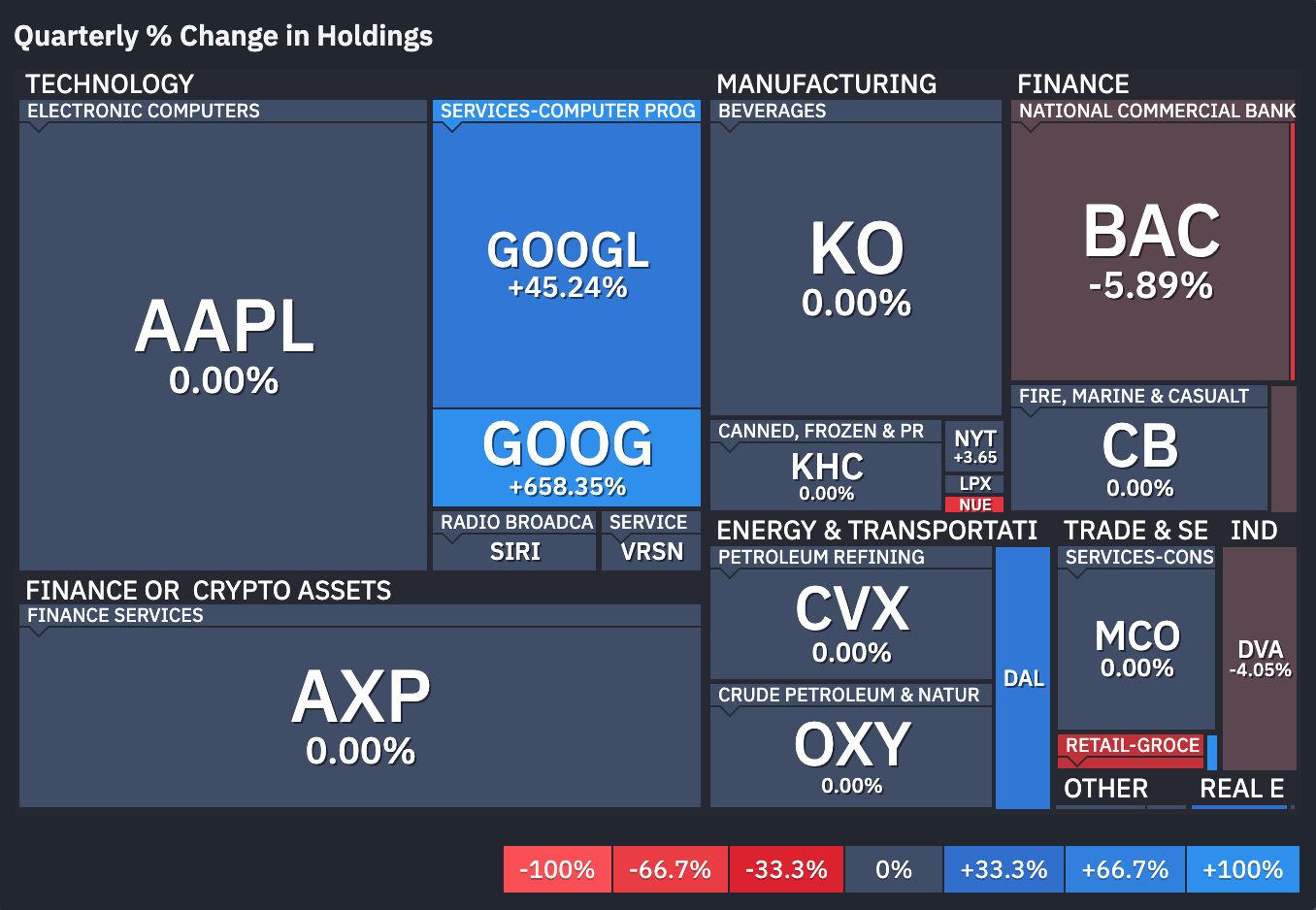
The most notable action by Berkshire in Q2 was undoubtedly its major bet on Alphabet — increasing its holdings in Alphabet Class A shares (GOOGL) by approximately 24.54 million shares, a 45.2% increase, and in Class C shares (GOOG) by approximately 23.60 million shares, a massive 658.3% increase. Combined, the holdings of both classes increased by about 48.10 million shares, propelling Alphabet into the fund's top three holdings. Besides Alphabet, Berkshire also significantly increased its positions in Delta Air Lines (DAL), Lennar (LEN), and Macy's (M), among others.
On the other hand, reductions were primarily in the financial, consumer, and cyclical sectors. Bank of America (BAC) holdings were reduced by approximately 30.23 million shares, a 5.9% decrease, marking the second consecutive quarter of reduction; Capital One (COF) was reduced by about 58%, Kroger (KR) by about 22%. Ally Financial (ALLY), DaVita (DVA), and Nucor (NUE) also saw decreases.
Summary Analysis
The Berkshire of the Abel era is undergoing a subtle style shift. The clearest signal in Q2 is the tilt from traditional finance and consumer goods towards tech/growth. The heavy investment in Alphabet not only further breaks the stereotype of Buffett "avoiding tech stocks" but also reflects the new management's deep recognition of Alphabet's moat in AI and search — essentially still a classic "value confirmation" rather than trend-chasing.
However, Berkshire's core DNA remains unchanged: the "anchor" holdings like Apple, American Express, and Coca-Cola largely maintained their share counts. Energy sector holdings Chevron and Occidental Petroleum were not sold (their reduced portfolio share was mainly due to dilution from new additions).
Overall, Berkshire's Q2 adjustments show a logic of "aggressively adding tech leaders, structurally reducing financials/consumer staples, holding energy core, and tentatively exploring real estate and airlines." While maintaining extremely high concentration, Abel is quietly steering the portfolio towards a digital future, yet the Buffett hallmarks of "long-term commitment" and "heavy bets" remain clearly visible.
Duquesne Family Office (Stanley Druckenmiller)
Though not as famous as Buffett and Berkshire, Stanley Druckenmiller is perhaps the most noteworthy fund manager on Wall Street today.
Who is Druckenmiller? He is a legendary American macro hedge fund manager who served as the chief investment officer for Soros' Quantum Fund from 1988 to 2000, becoming Soros' most successful trader... Currently, his most crucial identity lies in the fact that current U.S. Treasury Secretary Scott Bessent and Federal Reserve Chairman Kevin Warsh are his protégés (having had mentorship or long-term working relationships with him).
Therefore, compared to Berkshire's more long-term oriented 13F, the quarterly report from Duquesne Family Office resembles more of a macro trading map — especially at a time when AI, interest rates, and the U.S. economic outlook are changing rapidly.
Report Summary
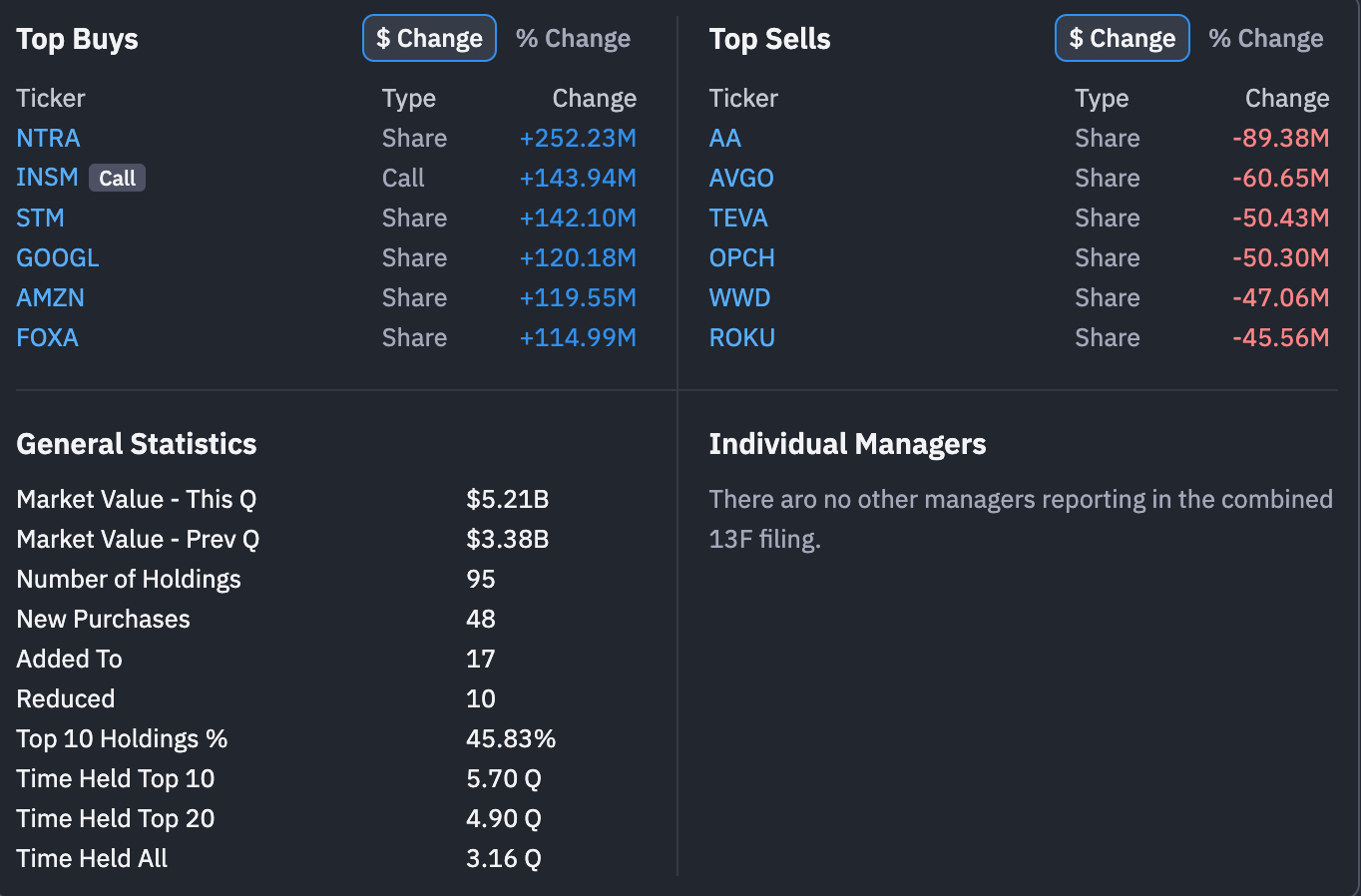
As of June 30, Duquesne Family Office disclosed a total of 95 holdings in its 13F. It initiated 48 new positions, increased 16, decreased 11, and liquidated 23. The nominal total holding value was approximately $5.21 billion, a noticeable increase from $3.38 billion last quarter.
Core Holdings
The 13F report shows Duquesne Family Office's top ten holdings account for approximately 45.8%:
- Genetic testing company Natera (NTRA) remains Duquesne Family Office's largest stock holding, with approximately 3.19 million shares held at the end of Q2, valued at about $865 million, representing about 16.6% of the portfolio;
- The second and third largest holdings are now Taiwan Semiconductor Manufacturing Company (TSM) and STMicroelectronics (STM), accounting for about 5.4% and 4.4% of the portfolio, respectively;
- Additionally, biopharmaceutical company Insmed (INSM, held in both stock and options), Argentine national oil company YPF Sociedad Anónima (REPYY), Amazon (AMZN), and others are among the top ten holdings.
Quarterly Changes
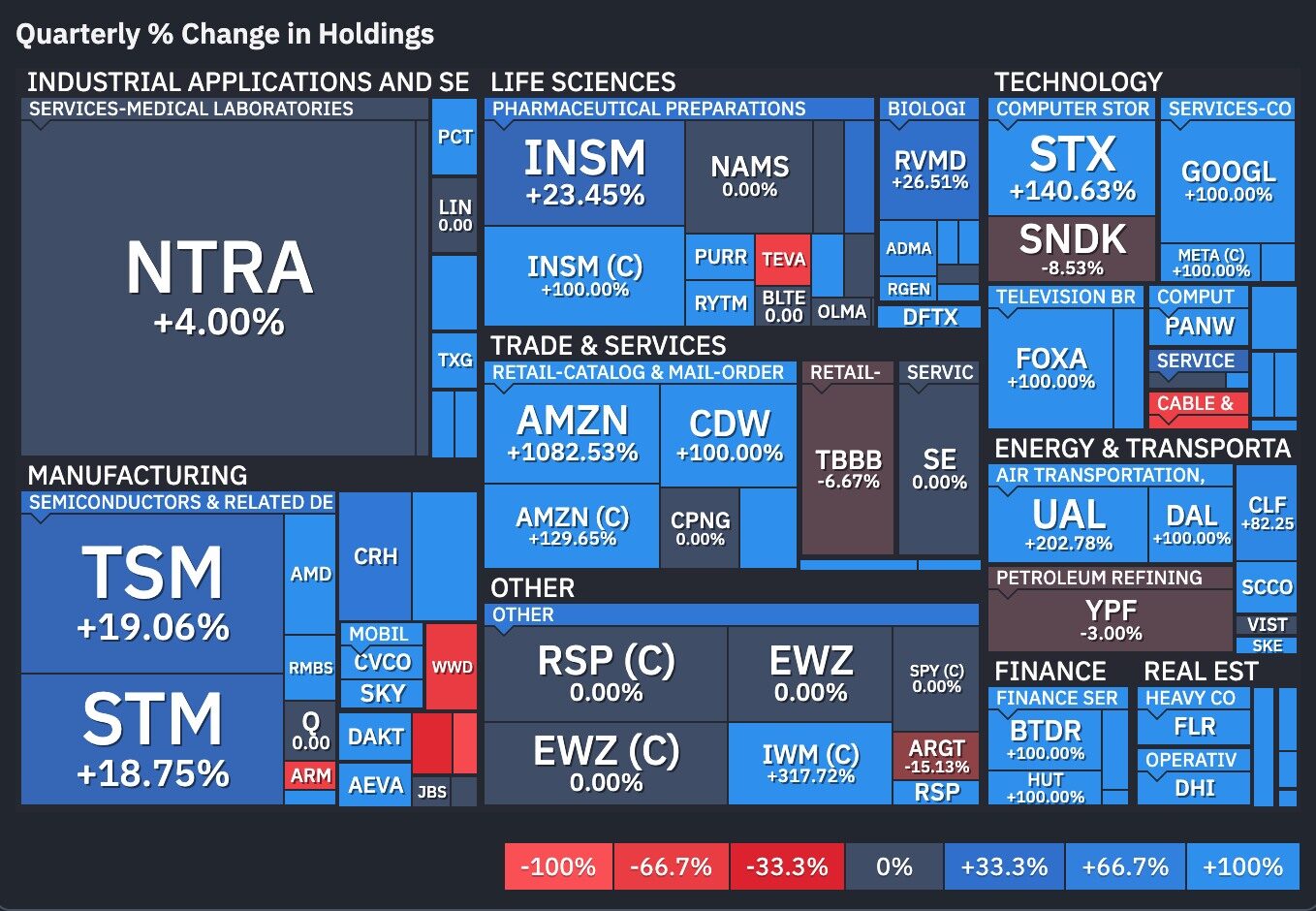
In Q2, the most noteworthy change for Duquesne Family Office lies in the internal rotation within the AI supply chain.
Duquesne Family Office completely liquidated its positions in Micron (MU), Broadcom (AVGO), and Intel (INTC), with Broadcom having been initiated just in Q1. However, this does not mean Druckenmiller has abandoned semiconductors. On the contrary, he continued to increase holdings in TSMC and STM and initiated a new position in AMD. Simultaneously, the fund has begun extending its reach to the periphery of AI infrastructure, buying into Bitcoin miners transitioning towards data centers like Hut 8 (HUT), Bitdeer (BTDR), and Riot Platforms (RIOT).
It appears Druckenmiller chose to realize gains from some previously high-flying positions and reallocate capital to targets he deemed to offer better risk-reward profiles.
Furthermore, in Q2, Duquesne Family Office repurchased Alphabet (GOOGL), which it had just liquidated in Q1, and significantly increased its stake in Amazon (AMZN), which it had reduced in Q1 — perhaps betting that the big tech companies, which have borne substantial AI capital expenditures, will gradually transition from "payers for AI infrastructure" to "beneficiaries of AI commercialization."
Beyond these AI-related changes, Duquesne Family Office, like Berkshire, expressed bullishness on the airline sector, initiating a position in Delta Air Lines (DAL) and increasing its United Airlines (UAL) holding. Notably, Duquesne Family Office also re-initiated a position in Baidu ADR (BIDU) of about 88,000 shares in Q2. This marks its first holding in a U.S.-listed Chinese stock in two and a half years, since liquidating Alibaba at the end of 2023.
Summary Analysis
If this 13F were condensed into one sentence: Druckenmiller hasn't left AI; he's re-selecting the winners for AI's next phase. At least based on Q2-end holdings, Druckenmiller retains a substantial AI exposure, but is reallocating from some highly crowded hardware segments towards cloud platforms, data centers, AI applications, and other directions.
Meanwhile, the reappearance of Baidu is another noteworthy signal. Although the 88,000-share position is not large, this tentative re-entry after a long period of avoiding Chinese stocks indicates a renewed focus on Chinese tech assets.
To reiterate, due to Druckenmiller's relatively high portfolio turnover, Duquesne Family Office's 13F report is even less suitable for simple "copycat" investing and is better used to observe directional positioning.
H&H International Investment (Duan Yongping)
Next, we turn to H&H International Investment, managed by legendary Chinese investor Duan Yongping. From this 13F report, it's evident that Duan Yongping's holdings remain highly concentrated, but signs emerged in Q2 of a shift from some high-valuation tech stocks back towards Chinese internet stocks.
Report Summary
As of June 30, H&H International Investment disclosed a total of 18 holdings in its 13F, with a nominal total holding value of approximately $19.101 billion (roughly RMB 130 billion), down from about $20 billion at the end of Q1.
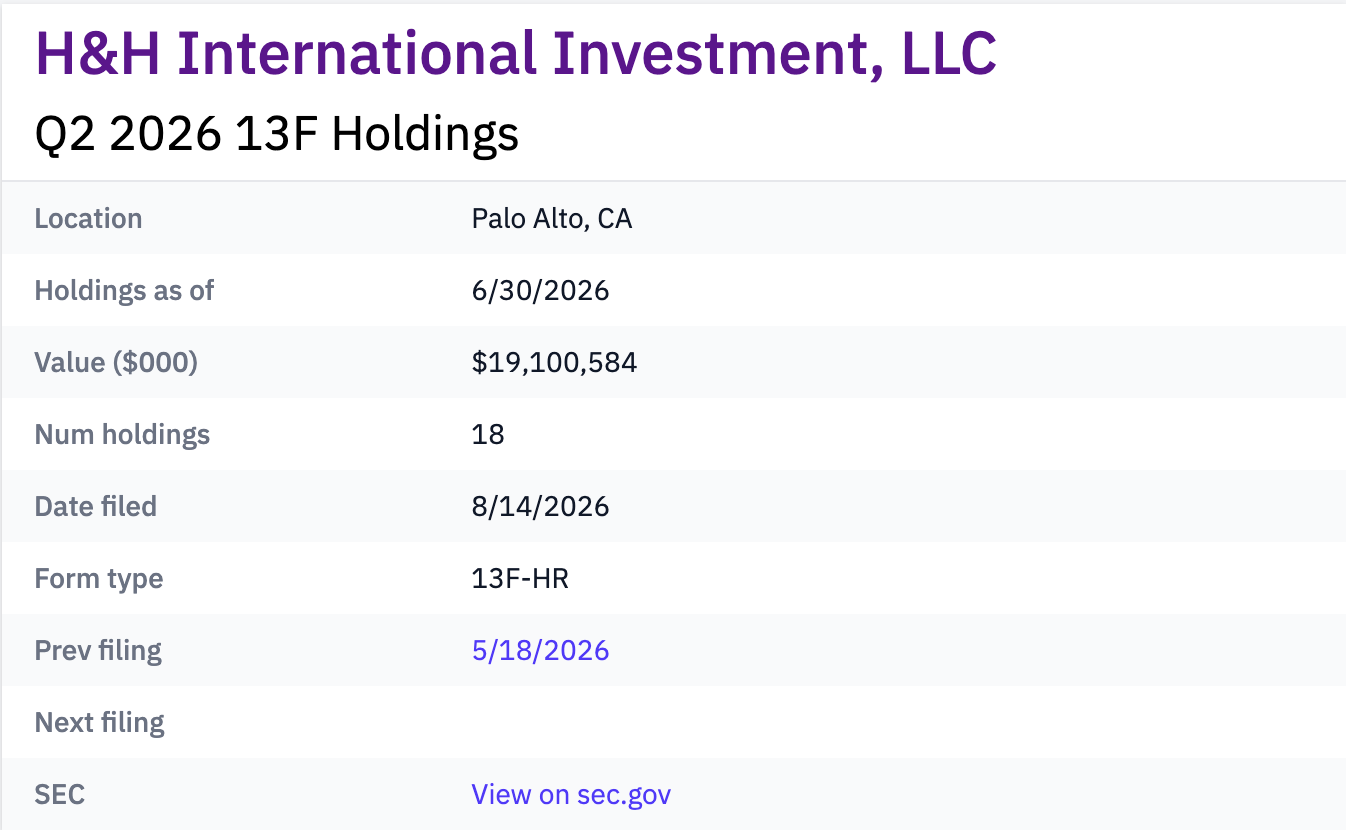
It should be noted that 13F only discloses U.S. equity long holdings. Therefore, assets like Tencent, Pop Mart, Kweichow Moutai held by Duan Yongping, as well as numerous short put options used to collect premiums, are not included in this table.
Core Holdings
H&H International Investment's holdings remain highly concentrated, with its top five holdings accounting for over 88% of the portfolio.
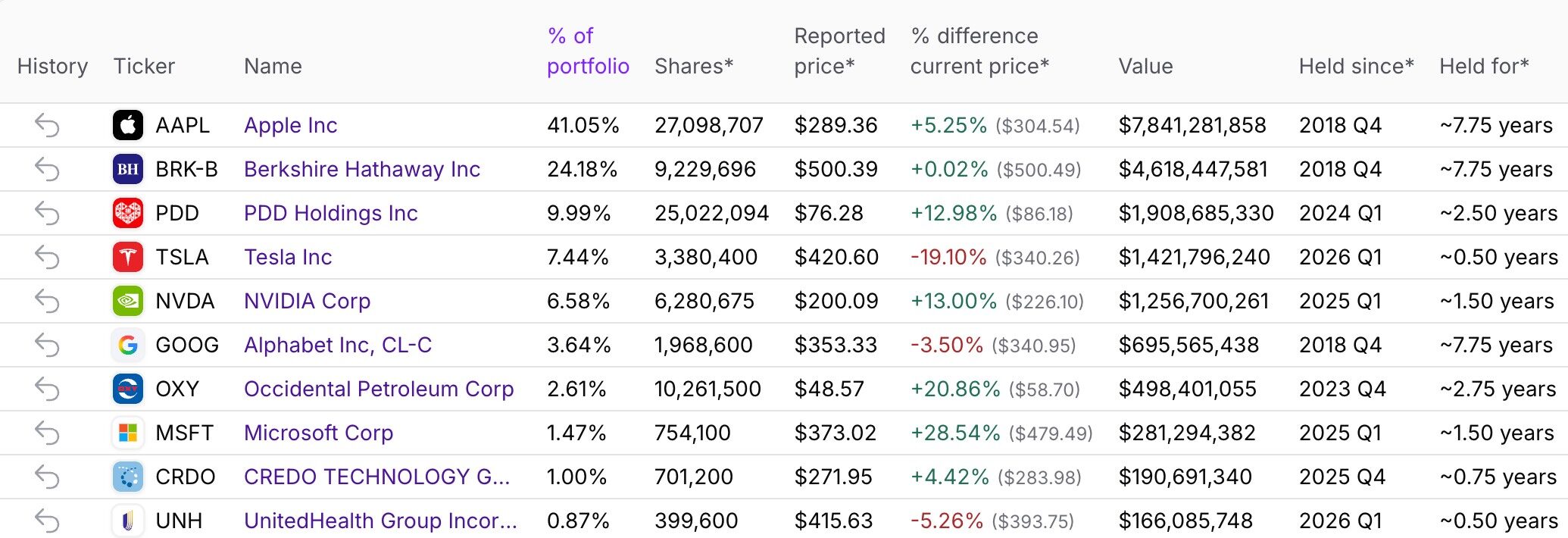
- Apple (AAPL): Approximately $7.841 billion, 41.05% share, firmly the largest holding;
- Berkshire Hathaway (BRK.B): Approximately $4.618 billion, 24.18% share, forming the "anchor" together with Apple;
- Pinduoduo (PDD): Approximately $1.91 billion, 9.99% share, jumping to become the third-largest holding, marking a significant increase in the weight of Chinese internet stocks within Duan's system;
- Tesla (TSLA): Approximately $1.42 billion, 7.44% share;
- NVIDIA (NVDA): Approximately $1.26 billion, 6.58% share.
Quarterly Changes
The most important operation for H&H International Investment in Q2 was the substantial increase in its Pinduoduo (PDD) holding — adding 5.2738 million shares, a 26.71% increase, elevating it to the third-largest holding. It also slightly increased its Berkshire Hathaway Class B (BRK-B) holdings, which can be interpreted as long-term affirmation of the value investing framework. Additionally, Alibaba (BABA), which Duan had just liquidated in Q1, was repurchased in Q2 with 301,400 shares (worth approximately $28.93 million).
On the reduction side, AI and tech leaders were the primary targets for profit-taking in Q2. NVIDIA (NVDA) was cut by 7.5631 million shares, a significant reduction of 54.63%; Google (GOOG) was reduced by over 1.7 million shares, a 46.88% cut; Microsoft was reduced by 25.78%; Apple was also reduced by 1.8469 million shares — marking the second consecutive quarter of selling (reduced by 3.4129 million shares in Q1). Furthermore, TSMC (TSM) and CrowdStrike (CRWD) were completely liquidated.
It's worth mentioning that Duan Yongping is not simply bearish on the tech stocks he reduced. In late July, he publicly stated he "would still add some Google" and expressed willingness to seek opportunities to buy NVIDIA at lower prices through selling puts. In other words, the reductions were more about price and safety margin judgments rather than a complete rejection of the companies themselves.
Summary Analysis
To summarize this 13F in one sentence — Sell a bit when prices rise a lot, buy a bit when prices get cheap, and continue holding good companies.
Overall, H&H International Investment's adjustment logic in Q2 is relatively clear — minor tweaks to anchor holdings, increasing exposure to Chinese internet stocks, and taking profits on high-flying AI names. Apple and Berkshire remain core anchor holdings, though Apple's share count has declined for two consecutive quarters. Meanwhile, Pinduoduo has become the new third-largest holding, and Alibaba has returned to the portfolio. While NVIDIA and Google were reduced, it's not due to bearishness but rather locking in paper gains. Duan has already expressed a desire to buy back at lower prices later.
This suggests that in Q2, Duan Yongping wasn't entirely pivoting to a new theme but rather rebalancing between valuations to find safety margins — appropriately realizing gains from high-flying AI and tech leaders and reallocating to Chinese internet stocks that have undergone prolonged adjustments and with which he is more familiar.
Himalaya Capital (Li Lu)
Similar to Duan Yongping, another legendary Chinese investor, Li Lu, who manages Himalaya Capital, also chose to significantly increase its Pinduoduo (PDD) holding in Q2.
Report Summary
As of June 30, 2026, Himalaya Capital disclosed a total of 8 holdings in its 13F. It increased 2 holdings and liquidated 6. The number of holdings decreased significantly from 14 in Q1, but the nominal total holding value increased from $3.201 billion in Q1 to $3.703 billion. The portfolio has become further concentrated, with the top five holdings now accounting for a whopping 94.77%.
Core Holdings
The 13F report shows Himalaya Capital's current 8 holdings present a pattern of "Google as anchor, Pinduoduo rising, and finance as foundation."
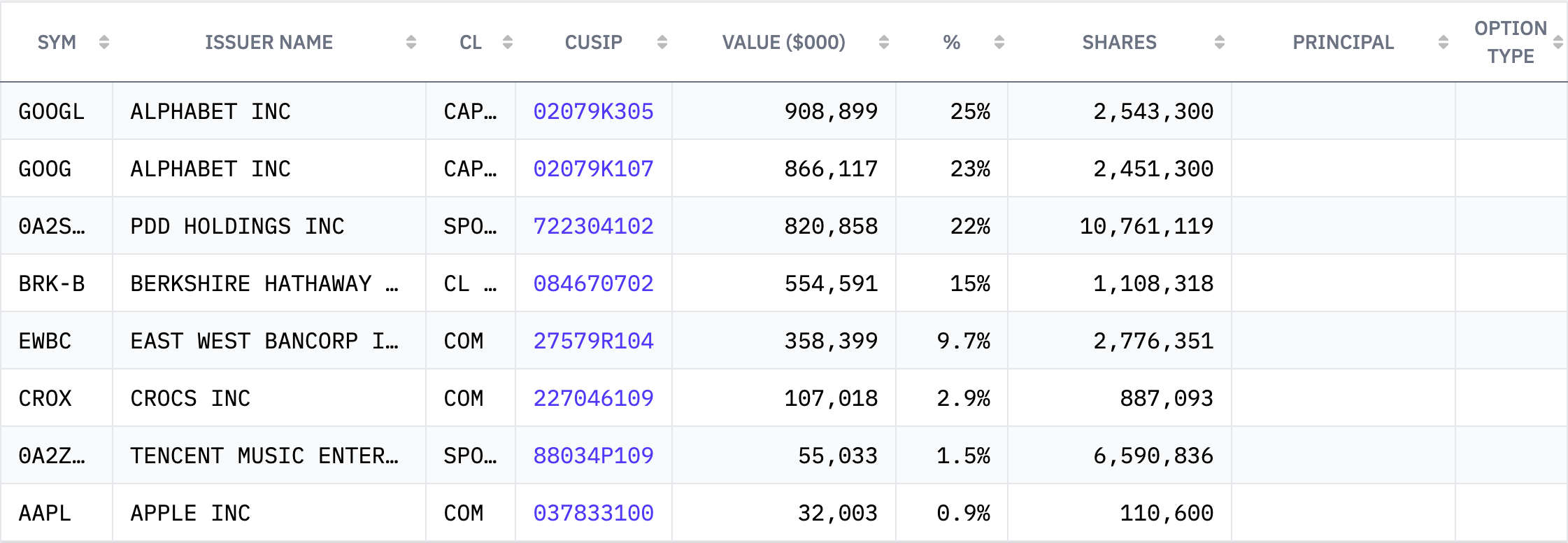
- Google (GOOGL + GOOG): Approximately $1.775 billion, 47.64% share, held since its initial purchase in 2020, serving as the unshakeable "anchor" in Li Lu's portfolio;
- Pinduoduo (PDD): Approximately $821 million, 22.17% share, skyrocketing to become the second-largest holding after aggressive buying;
- Berkshire Hathaway (BRK.B): Approximately $555 million, 14.98% share, continued to be increased;
- East West Bancorp (EWBC): Approximately $358 million, 9.68% share, unchanged.
- Additionally, Crocs (CROX, 2.90%) and Tencent Music (TME, 1.50%) remained unchanged. Apple (AAPL) is now just a tiny observation position at 0.88%.
Quarterly Changes
In Q2, Himalaya Capital only increased two holdings, while liquidating six existing ones at once — an unusually decisive move among top funds.
Pinduoduo (PDD) was the most significant addition for Himalaya Capital in Q2 — increasing holdings by 6.1531 million shares, a massive 133.53% increase, from 4.608 million shares to 10.7611 million shares. At quarter-end, it was valued at approximately $821 million, catapulting it to the second-largest holding. Additionally, Berkshire Hathaway (BRK.B) saw a 23.46% increase, effectively delegating more capital to Buffett and Abel's management.
Simultaneously, Himalaya Capital liquidated and exited six holdings in one go — Bank of America (BAC), Occidental Petroleum (OXY), S&P Global (SPGI), Moody's (MCO), MSCI (MSCI), and H&R Block (HRB). This indicates a decisive retreat from traditional finance, index/data services, and the oil & gas sector. Notably, Bank of America was once a core anchor holding; this quarter, aligning with Berkshire's "reducing banks" direction, but Li Lu chose complete liquidation rather than a small reduction.
Summary Analysis
If Li Lu's Q2 operations were condensed into one sentence, it might be — Sharply reduce holdings outside one's circle of competence and further concentrate limited capital into a few truly understandable companies.
On one hand, maintaining a heavy position in Google (GOOGL, GOOG) and adding to Pinduoduo (PDD) represents Li Lu's long-term views on U.S. tech leaders and Chinese internet assets, respectively. Meanwhile, liquidating holdings related to finance, energy, and index services suggests Li Lu is further concentrating his investment portfolio. The current concentration level closely aligns with his classic value investing style.
Of course, similar to Duan Yongping's case, 13F only discloses eligible U.S. market securities, so this document cannot represent Li Lu's entire portfolio. For example, Hong Kong-listed assets like BYD, Postal Savings Bank of China, and CRRC do not appear in this 13F.
ARK Investment (Cathie Wood)
Report Summary
As of June 30, ARK Investment, managed by "female Buffett" and "Cathie Wood," disclosed a total of 191 holdings in its 13F. It initiated 15 new positions, increased 78, decreased 96, and liquidated 6. The nominal total holding value was approximately $15.4 billion, a significant increase of over $2 billion from the previous quarter.
In Q2, ARK Investment's adjustments were relatively aggressive, showcasing "Cathie Wood's" typical high-turnover style.
Core Holdings
The 13F report shows ARK Investment's top ten holdings account for 39.45% of the portfolio, a relatively moderate concentration, with a core asset mix reflecting relatively high risk appetite.
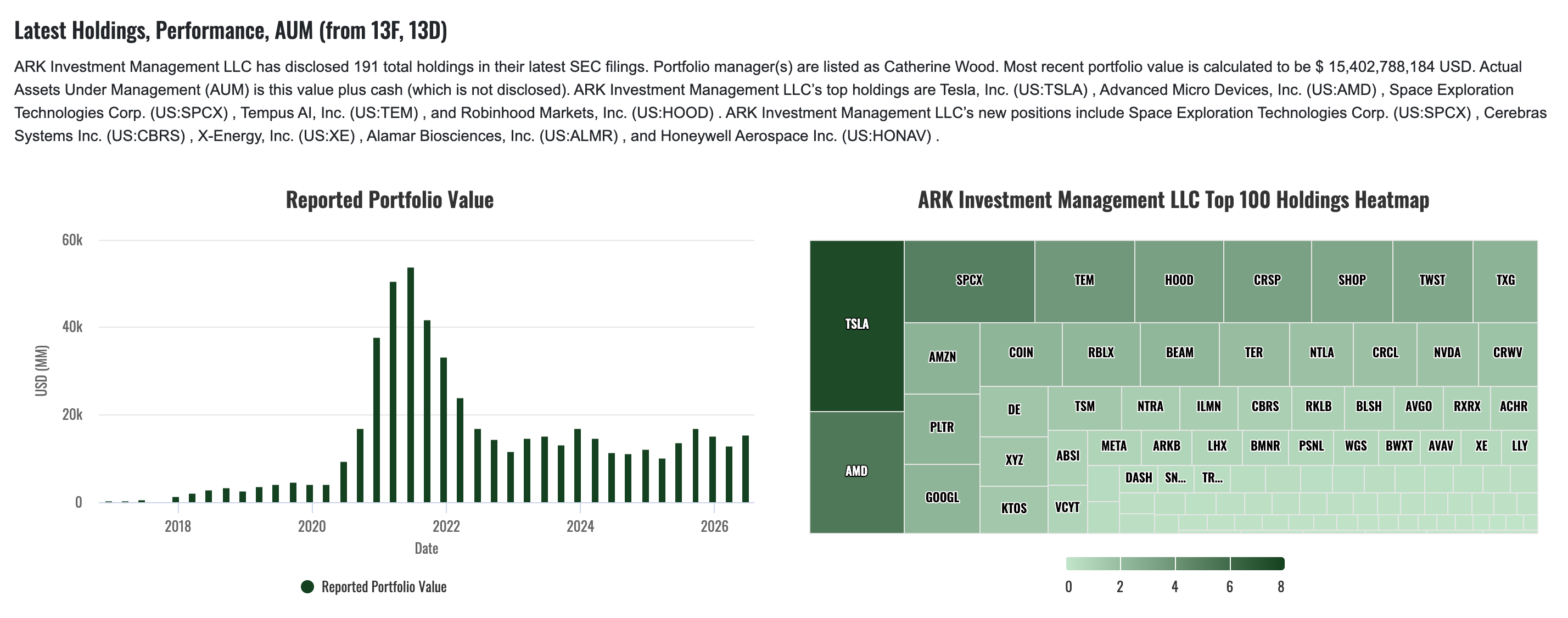
- Tesla (TSLA): Approximately $1.161 billion, 7.5% share, remains the largest holding but has been reduced for the third consecutive quarter;
- AMD (AMD): Approximately $820 million, 5.3% share, a core holding in the AI computing power sector;
- SpaceX (SPCX): Approximately $765 million, 5% share, newly added this quarter and directly entering the core portfolio;
- Tempus AI (TEM): Approximately $580 million, 3.8% share, positioned as a precision medicine + AI diagnostics benchmark;
- Robinhood (HOOD): Approximately $525 million, 3.4% share, fintech and retail investor ecosystem gateway.
Quarterly Changes
In Q2, ARK Investment's most crucial operation was the "buy-on-listing" of SpaceX (SPCX). On June 12, SpaceX's first trading day, multiple ARK ETFs collectively purchased approximately 3.29 million shares. By quarter-end, this number had risen to 4.478 million shares. SPCX's weight in the fund's portfolio once reached nearly 7%.
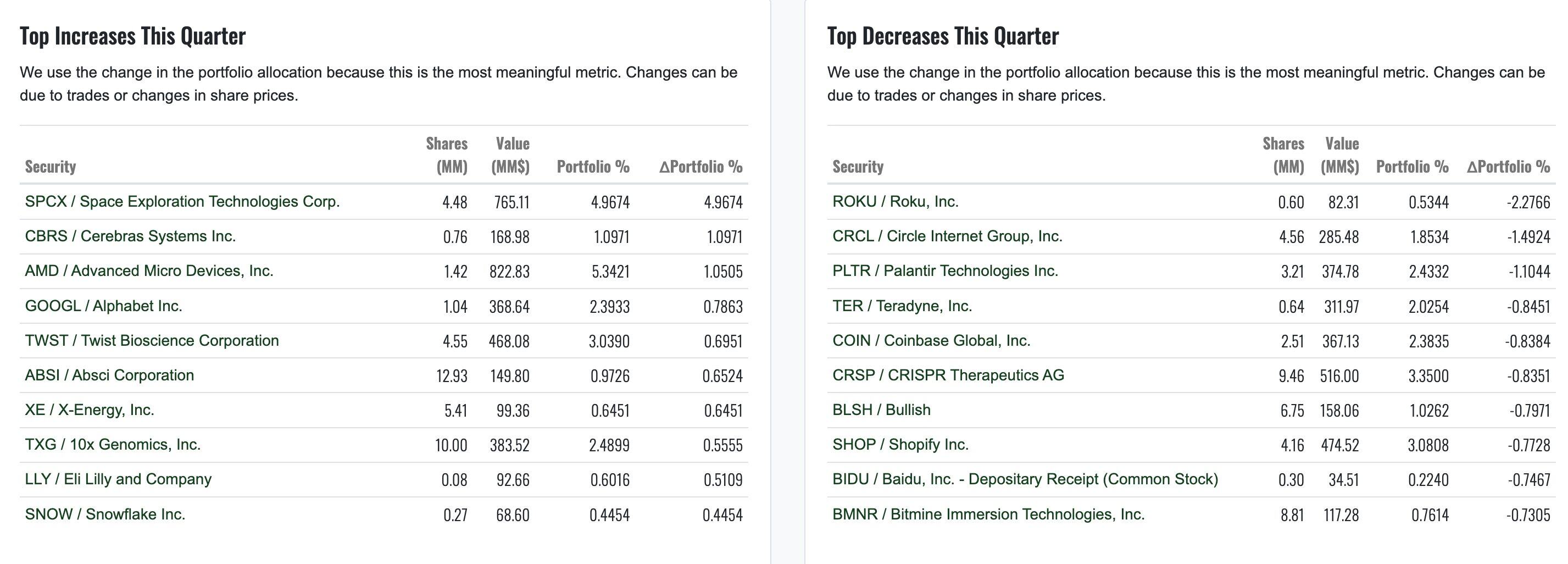
Beyond SPCX, ARK Investment's investment map in Q2 showed clear signs of extending along industry chains. Cerebras Systems (CBRS) was newly initiated, representing a bet on AI computing architecture; Google (GOOG) was increased, strengthening platform AI exposure; the purchase of X-Energy (XE) signals the fund's early positioning in nuclear power as a baseload power source for the AI era; increasing Eli Lilly (LLY) strengthens the life sciences theme...
On the reduction side, the most notable action was the reduction of Tesla (TSLA) for the third consecutive quarter, perhaps indicating "Cathie Wood's" assessment of Tesla's relative decline in the AI narrative.
Summary Analysis
Overall, ARK Investment's Q2 operations demonstrate a logic of "aggressively embracing the SpaceX IPO, expanding AI and energy frontiers, reducing traditional core holdings, and maintaining high turnover in hunting for innovation."
ARK Investment maintains a relatively high risk appetite among top funds. It remains focused on finding technologies that can change industry structures — from AI computing power to aerospace to nuclear energy to life sciences. "Disruptive innovation" remains the fund's most favored theme.
Oriental Harbor Investment Master Fund (Dan Bin)
Compared to the previously mentioned funds, the latest 13F report from Oriental Harbor Investment Master Fund, managed by another well-known Chinese investor Dan Bin, can be described as quite "aggressive" — not simply adding or subtracting a few stocks, but almost completely reworking its AI holdings.
Report Summary
As of June 30, Oriental Harbor Investment Master Fund disclosed 13 holdings in its 13F report. It initiated 7 new positions, increased 1, decreased 5, and liquidated 6. The nominal total holding value was approximately $1.65 billion, an increase of about 45.6% from about $1.133 billion in Q1.
Core Holdings
The 13F report shows that at the end of Q2, Oriental Harbor Investment Master Fund's top five holdings accounted for approximately 73% of the portfolio, indicating further concentration. Moreover, AI hardware and semiconductor supply chain-related stocks now account for over 70% of the portfolio's weight, signaling a clear shift in portfolio style.
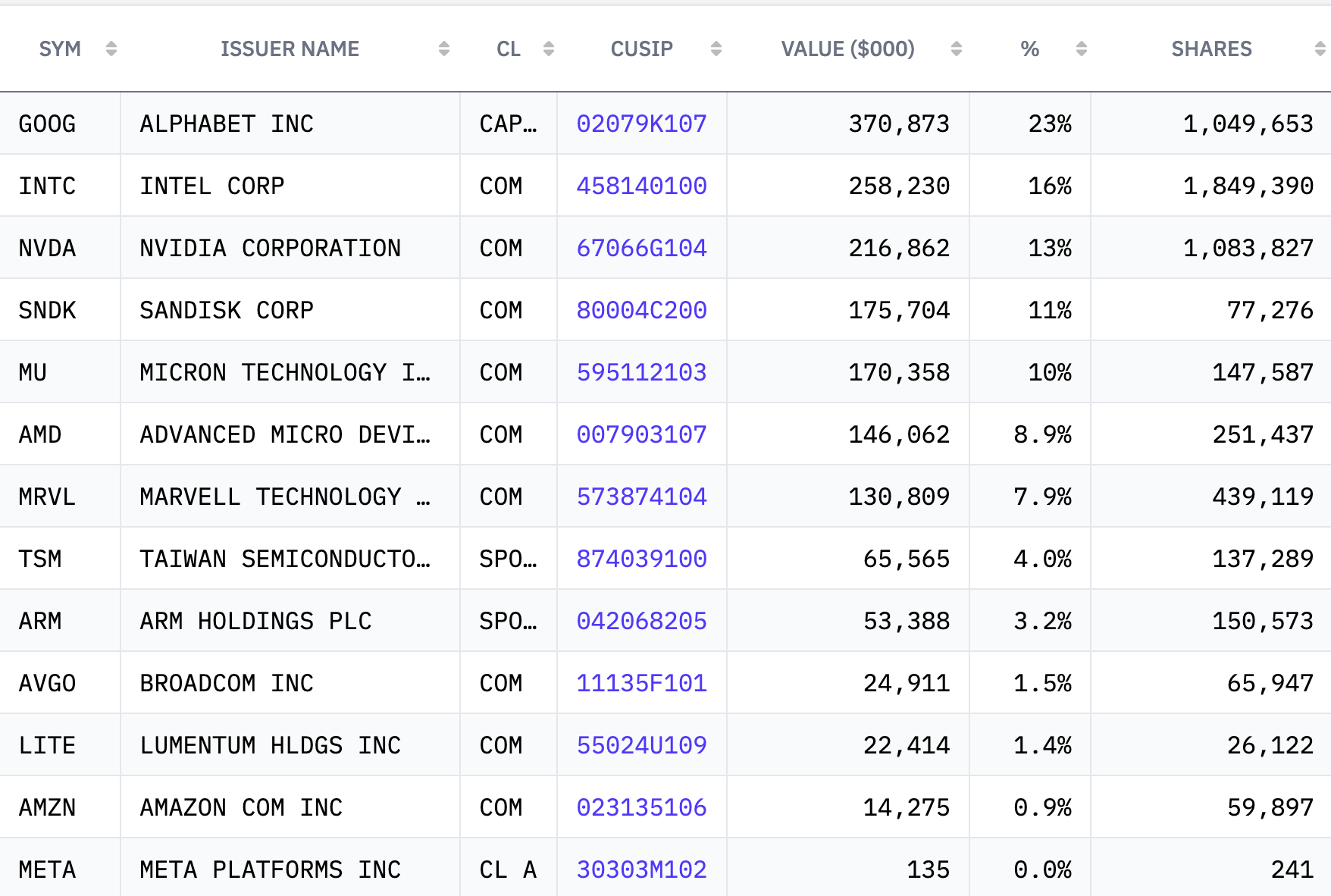
- Google (GOOG): Approximately $371 million, about 23% share, firmly the largest holding;
- Intel (INTC): Approximately $258 million, 16% share, newly initiated in Q2 and immediately becoming the second-largest holding;
- NVIDIA (NVDA): Approximately $217 million, 13% share, having fallen from first to third in portfolio share;
- SanDisk (SNDK): Approximately $176 million, 11% share, newly initiated and ranking fourth;
- Micron (MU): Approximately $170 million, about 10% share, doubled in size;
- Ranked sixth to tenth are AMD (8.9%), Marvell Technology (MRVL, 7.9%), TSMC (4%), ARM (3.2%), and Broadcom (AVGO, 1.5%).
Apart from Google, nine of the top ten holdings belong to the AI computing infrastructure or semiconductor supply chain. The "selling picks and shovels" hardware logic has completely replaced the previous configuration focused on software platforms.
Quarterly Changes
This quarter, Oriental Harbor Investment Master Fund launched a "saturation attack" on the AI hardware supply chain, initiating seven related positions in one go — Intel (INTC), SanDisk (SNDK), AMD, Marvell Technology (MRVL), ARM, Broadcom (AVGO), and Lumentum (LITE), all pointing to computing chips, memory, optical communications, and upstream semiconductors. Intel directly became the second-largest holding, while SanDisk and AMD entered the top six holdings, clearly indicating an intent to increase exposure to the memory sector.
While fully embracing hardware, Dan Bin performed a "clean break" with some existing holdings. NVIDIA (NVDA), TSMC, and Amazon (AMZN) were all reduced. Google, while still the top holding, was reduced by 155,200 shares compared to Q1, and the 2x leveraged Google ETF was liquidated, significantly reducing its overall portfolio weight.
Furthermore, in Q2, Oriental Harbor Investment Master Fund completely liquidated its positions in Apple (AAPL) and Tesla (TSLA), two consumer electronics leaders, perhaps indicating Dan Bin's short-term pessimism about a consumer recovery. The fund also liquidated its position in stablecoin issuer Circle (CRCL).
Summary Analysis
Overall, the core takeaway from this 13F report is that Dan Bin remains betting that AI capital expenditures will continue to flow to the hardware side. While the market debates AI bubbles, Dan Bin believes the hardware segment, the "pick and shovel sellers," remains the direction with the highest certainty.
This aligns with Dan Bin's recent public statements — he still views AI as the super-theme for the next decade, having stated that the market still hasn't fully grasped AI's long-term potential. During the late July memory sector sell-off, Dan Bin notably declared, "Must dare to buy big during big declines, have used up all remaining bullets."
Situational Awareness LP (Leopold Aschenbrenner)
The story of "AI Stock God" Leopold Aschenbrenner and his fund Situational Awareness LP has been detailed in our previous article "Today, the World Finally Sees Why the 'AI Stock God' Fell."
Due to its stellar performance in past quarters, Situational Awareness LP's 13F was highly anticipated. However, sadly, the fund experienced its darkest moment in late July — due to significant declines in AI-related stocks combined with high leverage, the fund suffered major losses, was forced to liquidate large-scale public market holdings, and has sold most of its equity portfolio at a discount to Citadel, owned by Ken Griffin.
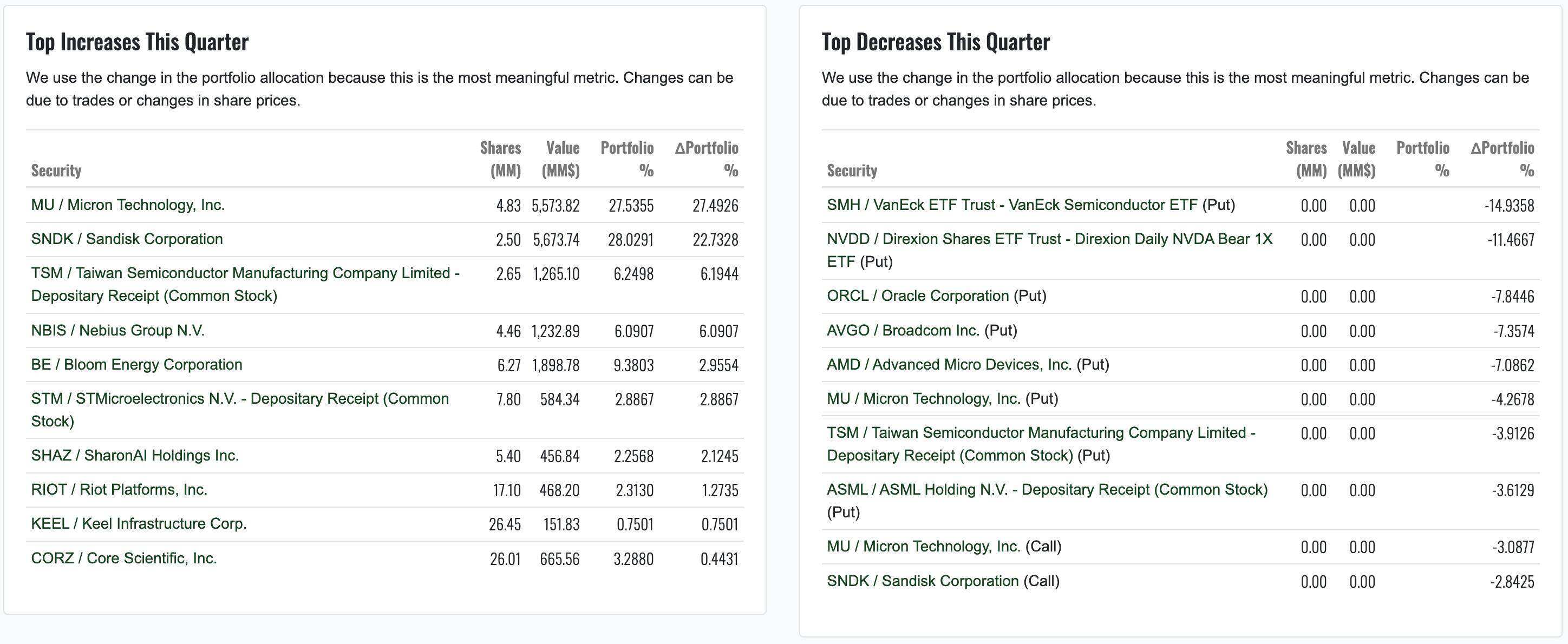
Dissecting Situational Awareness LP's 13F report reveals an even more regrettable story. At the end of Q1, the fund had built a nominal value of over $8 billion in put options on chip and memory leaders (covering SMH, NVDA, ORCL, AVGO, AMD, ASML, etc.), which should have effectively hedged against the market downturn. However, by prematurely shifting to a fully bullish stance, Leopold Aschenbrenner personally dismantled this insurance wall, ultimately allowing Ken Griffin to acquire the fund's once-glorious track record at a discount.
AI Theme Unchanged, What's Changing Is Where Money Flows
Looking at these seven funds' 13Fs together, a relatively clear consensus point emerges — AI remains at the center of top investors' focus, with capital clearly re-pricing around the AI supply chain. "AI will continue to grow" seems uncontroversial, but the question is, who can truly turn investment into profits in the next phase?
Berkshire started buying Google aggressively; Druckenmiller is rotating within semiconductors and re-betting on cloud computing and AI infrastructure; Dan Bin is even more aggressive, sharply shifting his overseas portfolio towards chips, memory, and optical communications; ARK continues hunting for the next growth assets along AI, SpaceX, energy, and life sciences. Meanwhile, Duan Yongping and Li Lu aren't simply chasing AI hype; after reducing some high-flying tech stocks, they reallocated capital to assets they understand better and perceive as having higher safety margins.
Merely observing each fund's 13F, it's difficult to derive a definitive "next bull stock." However, the capital movements of different funds themselves constitute a game of rotation around AI investment logic — GPU, chips, memory, networking, optical communications, data centers, power, cloud computing, commercialization... From selling picks and shovels, to providing computing power, to ultimately sharing in AI commercialization profits, capital is constantly searching for the next profit realization point on the AI value chain.
Finally, it's crucial to reiterate that all these holdings are as of June 30, 2026. 13F filings inherently have a lag of up to 45 days, especially for active managers like Druckenmiller and Dan Bin. Therefore, rather than treating it as a "copycat list," it's better viewed as a cross-section to observe how different pools of capital interpret the next phase of the market.