The 'PayPal Mafia' of the AI Era: From Interns to Billionaires

marsbitPublicado em 2026-04-15Última atualização em 2026-04-15

Resumo

"The article profiles a group of exceptionally talented individuals, many of whom first connected through high school Olympiad competitions and later as interns at quantitative trading firm Hudson River Trading (HRT). This circle, once inspired by the "PayPal Mafia," has now emerged as a powerful force in the AI industry. Key figures include: - **Alexandr Wang**: Founder of Scale AI (acquired by Meta for $14.3B), now leads Meta's AI division and recently launched the Muse Spark model. - **Scott Wu**: CEO of Cognition, creator of the AI software engineer Devin; company valued at $10.2B. - **Johnny Ho**: Co-founder of Perplexity (valued at $20B), with a personal net worth of $2.1B. - **Jesse Zhang**: CEO of Decagon, an AI customer service automation company valued at $4.5B. - **Demi Guo**: Co-founder and CEO of Pika, a generative AI video startup. - **Steven Hao**: CTO of Cognition, with a net worth of $1.3B. The group is characterized by their shared background in elite academic competitions, a deep understanding of engineering efficiency, and a unified vision for an AI-driven future, drawing parallels to the influential "PayPal Mafia" of the previous era."

Author|Azuma(@azuma_eth)
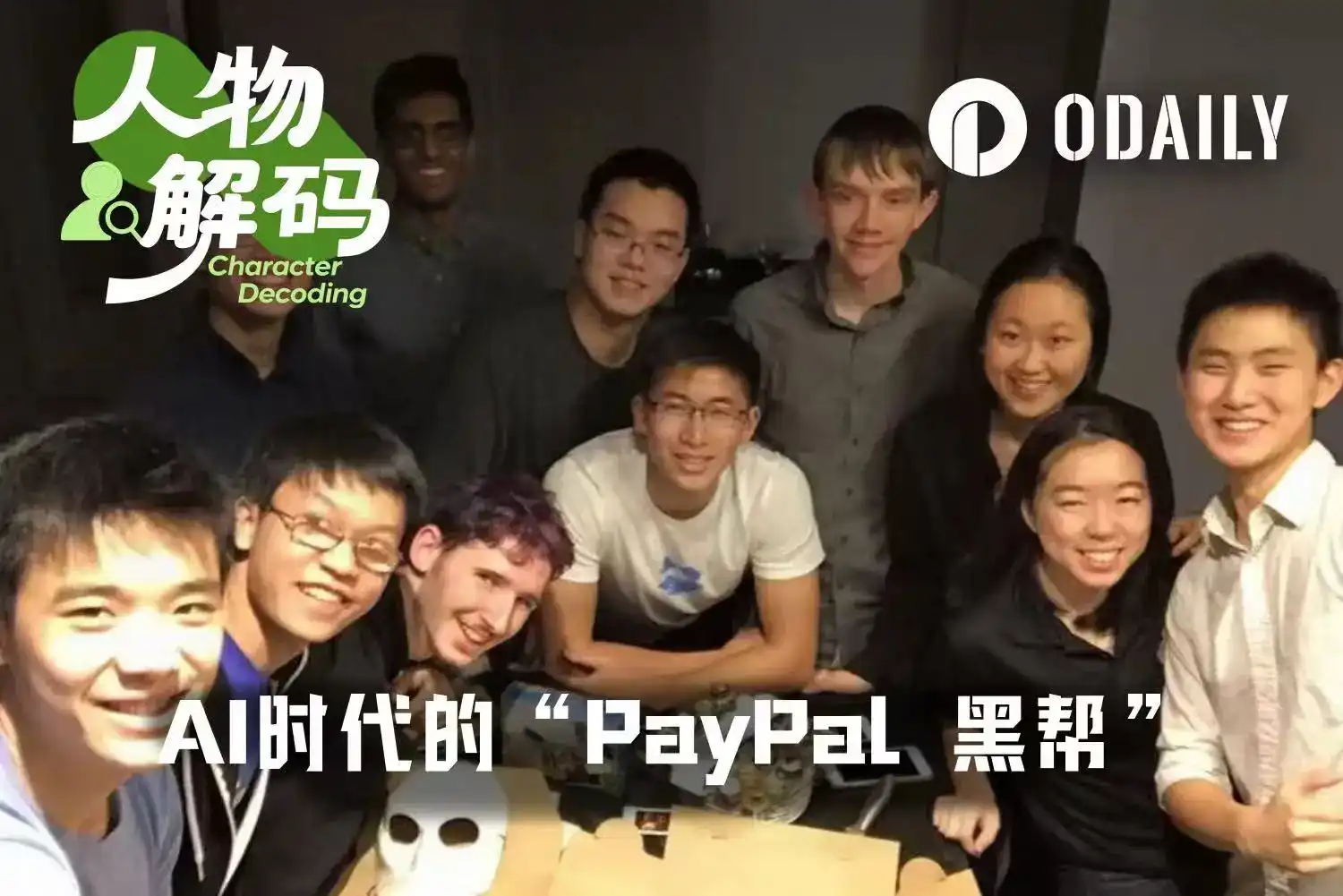
Yesterday, a feature interview with Hyperliquid founder Jeff Yan by "Colossos" magazine went viral across the internet (see "Jeff Yan's 'Hyper Life'").

In the interview, Jeff Yan revealed a little-known story — during his junior year at Harvard, he participated in the inaugural internship program of the quantitative trading giant "Hudson River Trading" (HRT). Ten interns were selected that year. Aside from Jeff Yan, who chose the cryptocurrency track, several others from the same intern cohort have now become prominent figures in the AI field, including Meta AI business line head Alexandr Wang, Decagon founder and CEO Jesse Zhang, and Cognition founder and CEO Scott Wu.
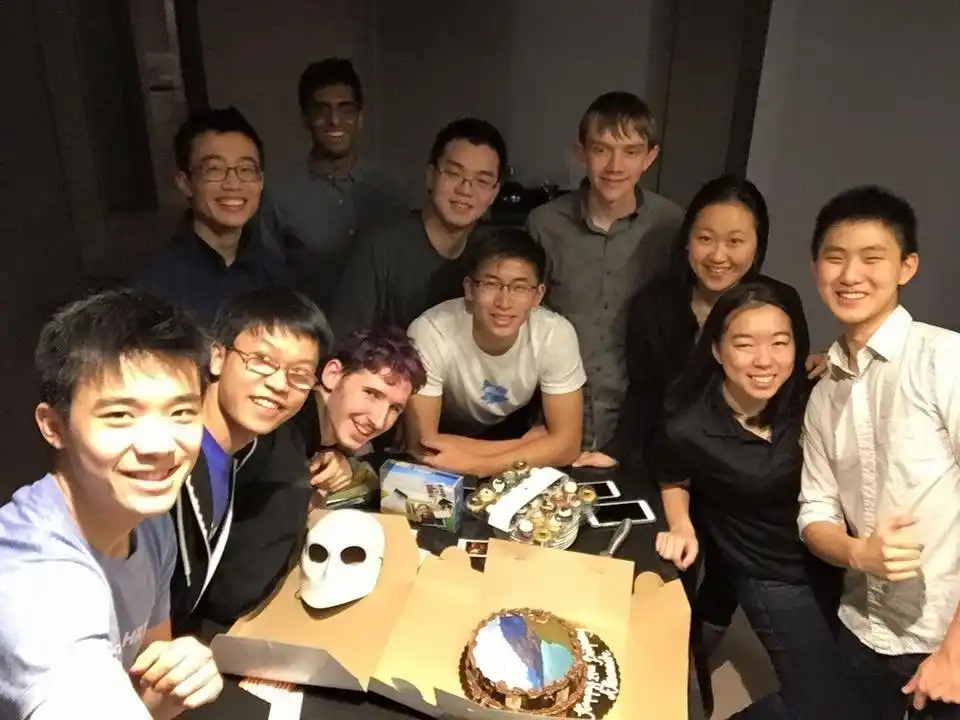
Odaily Note: A group photo of that year's interns shared by Jesse Zhang

According to additional disclosures by Scott Wu himself, the HRT internship program was not the starting point of their friendship. As early as high school, many of them had already met through Olympic competitions (Jeff Yan, Scott Wu, and several others had won gold medals). That small circle included many more notable names, including but not limited to Perplexity co-founder and CSO Johnny Ho, Pika co-founder and CEO Demi Guo, and Steven Hao, Alexandr Wang's former partner in founding Scale AI......

During the formative years of Jeff Yan, Scott Wu, and others, the "PayPal Mafia," represented by Elon Musk and Peter Thiel, was already dominating the business world. People began searching for the next similar special network. Jeff Yan's small circle had also discussed this topic. The 19-year-old Alexandr Wang once said to his friends: "Why can't it be us?"

Ten years later, Alexandr Wang's bold statement seems to be coming true. Leveraging AI, this group of young people from the Hudson River are stirring up the era in their own way.

Alexandr Wang: Zuckerberg's AI Brain

Alexandr Wang is perhaps the most well-known figure in this small circle. Born in 1997 in Los Alamos, New Mexico, Alexandr Wang is the descendant of Chinese immigrants. His parents were physicists at the Los Alamos National Laboratory — where the United States' first atomic bomb was secretly developed during World War II.

Alexandr Wang was passionate about mathematics and programming from a young age. He qualified for the Mathematical Olympiad Program in 2013, the USA Physics Team in 2014, and reached the finals of the USA Computing Olympiad in 2012 and 2013.

In 2015, Alexandr Wang dropped out of the Massachusetts Institute of Technology and founded Scale AI a year later, which annotates data used for training AI in computer vision and audio transcription. Riding the wave of the AI boom, Scale AI's valuation soared, reaching $7.3 billion by 2021. Alexandr Wang, owning 15% of the shares, saw his net worth surpass $1 billion.

In June 2025, Meta, which had clearly fallen behind in the AI race, acquired 49% of Scale AI for $14.3 billion. Zuckerberg's附加条件 was that — the soul of Scale AI, the then 28-year-old Alexandr Wang, must join Meta. Alexandr Wang subsequently joined Meta and began leading Meta's AI development team, the "Meta Superintelligence Labs" (MSL).

On the night of April 8th, Zuckerberg's big gamble paid off. MSL officially released its first self-developed AI model, Muse Spark. Muse Spark is a native multimodal reasoning model supporting tool use, visual chain-of-thought, and multi-Agent orchestration. It is the most powerful model Meta has released to date. During training, MSL observed predictable scaling improvements in the model during pre-training, reinforcement learning, and test-time reasoning phases.

Scott Wu: Olympiad Prodigy, Creator of a $10 Billion AI Unicorn
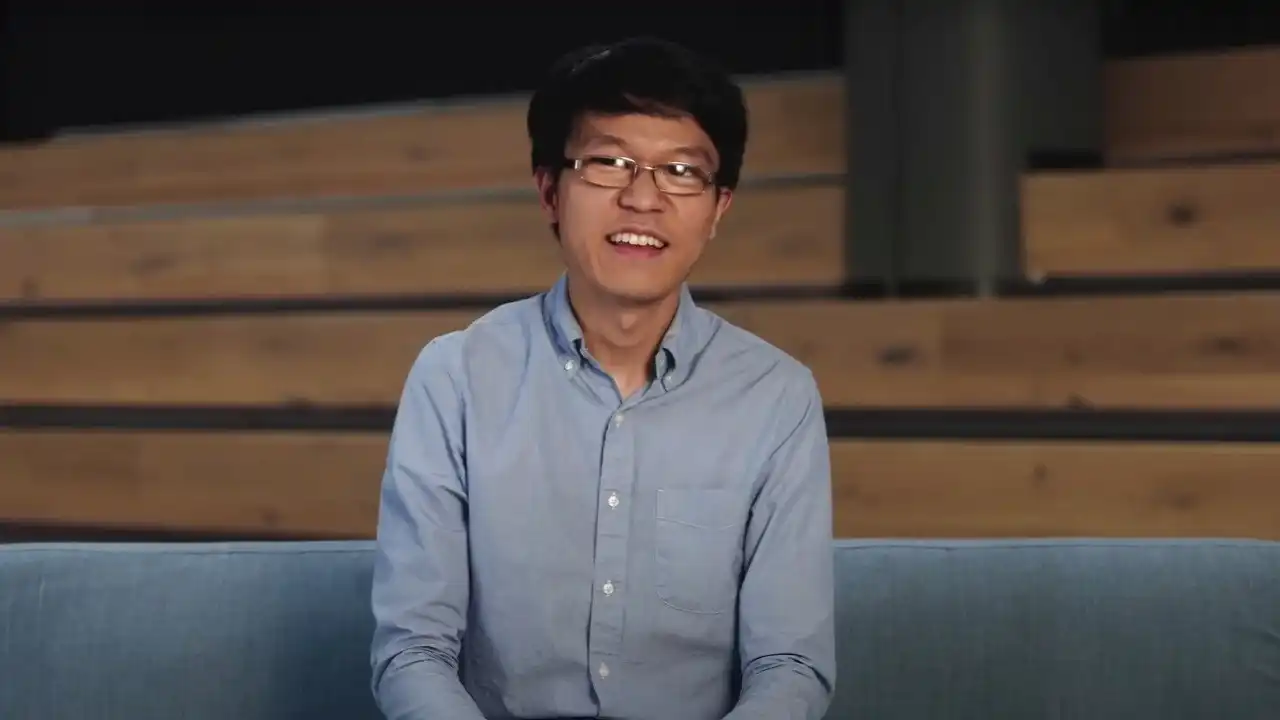
Scott Wu was born in 1997 in Louisiana to a family of Chinese immigrants. Growing up, Scott Wu actively participated in programming and mathematics competitions, winning three gold medals in the International Olympiad in Informatics, including first place in 2014.

After high school, Scott Wu attended Harvard University but dropped out after two years. While an undergraduate at Harvard College, he was a team member in the 2016 International Collegiate Programming Contest (ICPC), where his team won a gold medal and placed third overall.

In 2019, Scott Wu co-founded the social platform Lunchclub as its CTO. In 2023, Scott Wu, along with friends Steven Hao and Walden Yan (both Olympic gold medalists), co-founded Cognition, where he serves as CEO.

In 2024, the Cognition team launched the world's first autonomous AI software engineer, Devin. This product can independently complete code writing, testing, and deployment, and supports the decomposition and collaboration of complex tasks. It significantly outperformed GPT-4 in the SWE-bench benchmark test. In May of the same year, Cognition raised $175 million in a round led by Peter Thiel's Founders Fund, valuing the company at $2 billion post-money. In September 2025, Cognition raised another $400 million, skyrocketing its valuation to $10.2 billion.

By early 2026, Cognition's annualized revenue had reached $400 million.

Johnny Ho: Net Worth $2.1 Billion, Once Considered Acquiring TikTok and Chrome
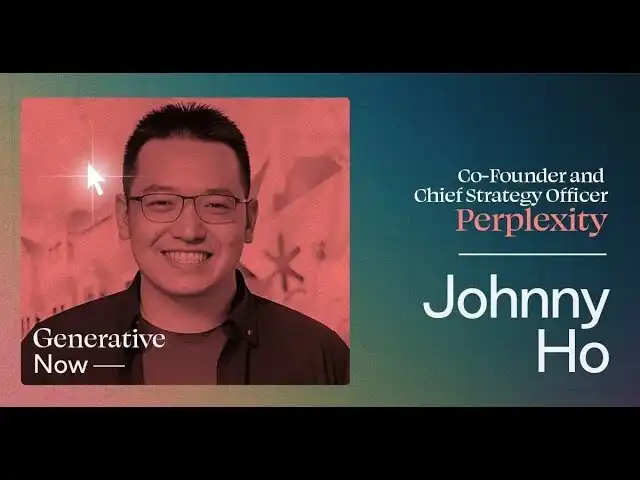
Like Scott Wu, Harvard graduate Johnny Ho won three gold medals in the International Olympiad in Informatics, achieving a perfect score and first place in 2012.

In August 2022, Johnny Ho co-founded Perplexity with Aravind Srinivas, Andy Konwinski, and Denis Yarats. Perplexity is positioned as an AI search engine company, offering a conversational search engine service that displays citation sources for answers and provides related question suggestions.

In 2023, Perplexity's monthly visits reached 10 million; by April 2024, its monthly active users reached approximately 15 million. That same year, Perplexity embarked on a疯狂融资 spree. In its fourth funding round at the end of the year, it raised $5 [Note: Likely a typo, probably meant $500 million or similar, but translating as written], reaching a valuation of $9 billion. In July 2025, Perplexity completed another $100 million in new funding, raising its valuation to $18 billion.

It is worth mentioning that Perplexity has initiated several bold "minnow-swallowing-whale" level acquisition proposals (with VCs willing to provide funds), including an offer to acquire TikTok in early 2025, proposing to merge Perplexity, TikTok's US operations, and new capital partners into a new entity, and in August 2025, proposing to Google to acquire its core product, the Chrome browser, for $34.5 billion.

According to the latest data from Forbes, Perplexity's current valuation has reached $20 billion, and Johnny Ho's personal wealth has reached $2.1 billion.

Jesse Zhang: AI Startup Valued at $4.5 Billion in Three Years
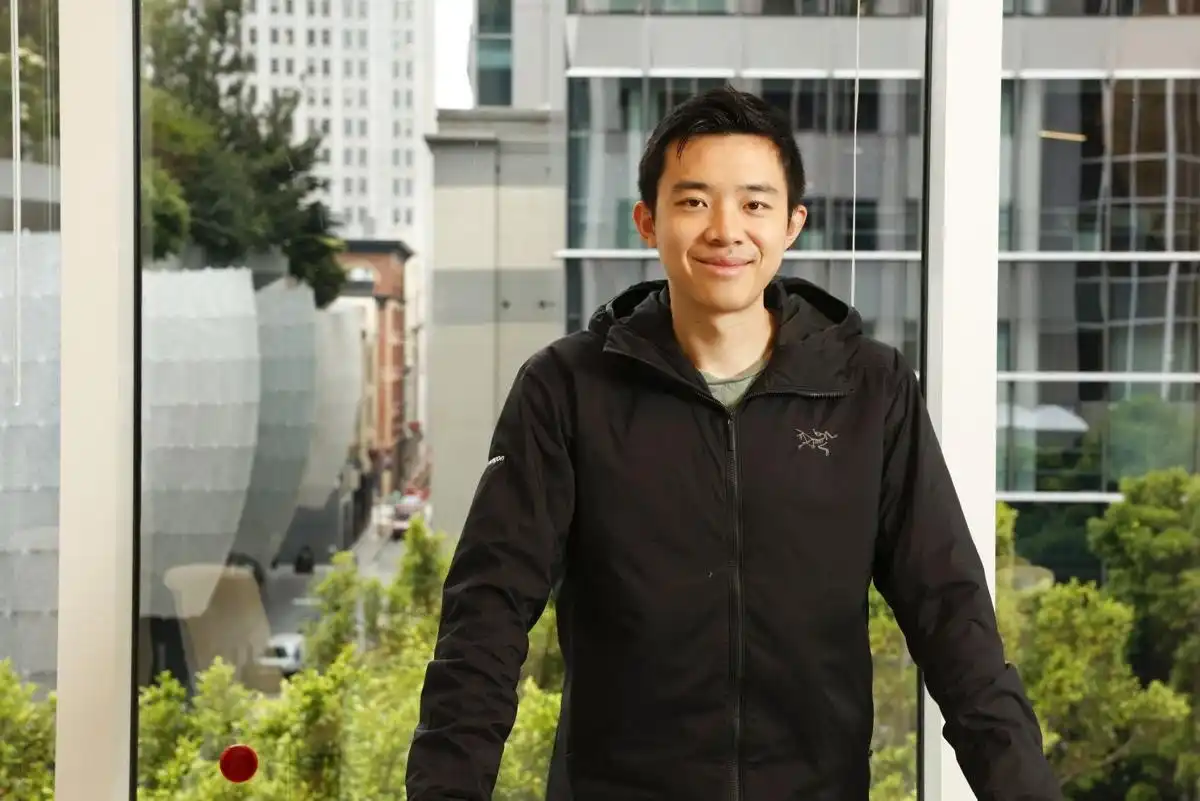
Jesse Zhang was also born in 1997 and grew up in the San Francisco Bay Area. From high school, Jesse Zhang was a typical "competition fanatic" — selected twice for the Mathematical Olympiad Program (MOP), a finalist in the Intel STS, and participated in MIT's RSI research program. After entering Harvard, Jesse Zhang completed the four-year university curriculum in just three years.

In 2018, Jesse Zhang and friends founded Lowkey, a platform for sharing gaming highlights. The project received seed funding from Y Combinator and Series A funding from a16z. In 2021, Lowkey was acquired by Pokémon GO developer Niantic for an undisclosed amount.

In 2023, Jesse Zhang co-founded Decagon with partner Ashwin Sreenivas, focusing on using AI Agents to automate enterprise customer service, solving the problems of high labor costs and low efficiency in call centers.

In June 2024, shortly after its founding, Decagon quickly raised $35 million, including a $5 million seed round led by a16z and a $30 million Series A led by Accel. Four months later, Decagon raised $65 million in a Series B round. In June 2025, a Series C round raised $131 million, pushing the valuation to $1.5 billion. In January 2026, a Series D round raised $250 million, skyrocketing the valuation to $4.5 billion... In tandem with the rising valuation was Decagon's revenue capability. By the end of 2025, the company's disclosed annual revenue had exceeded $30 million.

Demi Guo: Hangzhou '95er, Pioneer in AI Video Generation

Demi Guo was born in 1999 in Hangzhou, China, and moved to Silicon Valley, USA with her family during childhood.

Demi Guo won a silver medal at the 2015 International Olympiad in Informatics. She graduated from Harvard University with a bachelor's degree in mathematics and a master's degree in computer science, then dropped out of a PhD program at Stanford University to focus on entrepreneurship in generative AI video content creation.

In April 2023, Demi Guo co-founded Pika with Chenlin Meng, with Demi Guo serving as CEO. Pika focuses on the development of video generation AI technology. Its core products include the Pika 1.0 and Pika 2.0 models, which support 3D animation, anime, cartoon, and cinematic style generation, offering features like video extension, canvas expansion, and element replacement.

Regarding funding, Pika had already completed a $20 million seed round before its launch. It then completed a $35 million Series A round in November 2023, led by Lightspeed Venture Partners. In June 2024, Pika completed an $80 million Series B round at a valuation of $470 million, led by Spark Capital, with participation from Greycroft, Lightspeed Venture Partners, and actor Jared Leto, among others.

Steven Hao: AI Tech Guru with a Net Worth Over $1 Billion

Steven Hao, a graduate of MIT's mathematics department, also won a gold medal in the International Olympiad in Informatics (IOI). He was a partner of Alexandr Wang at Scale AI and has now joined Scott Wu's Cognition as CTO. Both companies have been详细介绍 in the previous sections, so they won't be elaborated on here.

According to Forbes data, the 30-year-old Steven Hao's personal wealth is estimated to have reached $1.3 billion.

Epilogue: We Might Be Witnessing a New Legend

I thought about giving this small circle a new name similar to the "PayPal Mafia," like calling them the "Hudson River Mafia," or the broader "Olympiad Mafia"... Although the era, background, and story trajectory are completely different, they seem to share the same core spirit as the previous generation's "PayPal Mafia" — behind the camaraderie of high-stakes competitions, what truly connects them is a shared pursuit of intellectual density, engineering efficiency, and system re-architecting capabilities, along with a profound judgment of where the future begins.

The new generation of entrepreneurs has stepped onto the stage. Before them lies the question, far more difficult than any Olympiad problem: "How will AI reshape the world?" This is their battlefield and their stage.

Perguntas relacionadas

QWho are the key members of the AI-era group compared to the 'PayPal Mafia', and what are their notable achievements?

AThe key members include Jeff Yan (founder of Hyperliquid), Alexandr Wang (head of Meta's AI division, founder of Scale AI), Scott Wu (CEO of Cognition, creator of Devin), Johnny Ho (co-founder of Perplexity), Jesse Zhang (CEO of Decagon), Demi Guo (CEO of Pika), and Steven Hao (CTO of Cognition). Their achievements include building billion-dollar AI companies, leading major AI innovations, and driving advancements in areas like AI search, autonomous coding, video generation, and customer service automation.

QWhat was the origin of the connection between these AI entrepreneurs?

ATheir connection began during high school through international Olympiad competitions (e.g., mathematics, informatics) where many won gold medals. Later, they reinforced their ties as interns in Hudson River Trading (HRT)'s first internship program during their college years at Harvard and MIT.

QHow did Alexandr Wang become involved with Meta, and what role does he play there?

AMeta acquired 49% of Scale AI for $14.3 billion in 2025, with the condition that Alexandr Wang join Meta. He now leads Meta's AI development team, the Meta Superintelligence Labs (MSL), which released the powerful multimodal AI model Muse Spark in April 2026.

QWhat is Cognition known for, and what milestones has it achieved under Scott Wu's leadership?

ACognition, co-founded by Scott Wu, is known for creating Devin, the first autonomous AI software engineer. The company reached a $10.2 billion valuation by September 2025, with annualized revenue of $400 million by early 2026, following funding rounds led by investors like Peter Thiel's Founders Fund.

QWhat bold acquisition proposals did Perplexity, co-founded by Johnny Ho, attempt?

APerplexity proposed acquiring TikTok's U.S. operations in early 2025, aiming to merge it with Perplexity and new capital partners. In August 2025, it also offered to buy Google's Chrome browser for $34.5 billion, though neither deal was completed. The company's valuation grew to $20 billion by 2026.

Leituras Relacionadas

Three Scenarios for BTC's Future Direction and a Duel Between Two Strong Forces | Special Invited Analysis

**Title: Three Scenarios for BTC's Future Trajectory and a Key Duel | Invited Analysis** The market remains at a critical juncture. Over the past week, Bitcoin (BTC) consolidated broadly between $79,500 and $80,600, validating previous technical analysis. The current focus is on whether this marks the start of a new uptrend or a pause within a larger correction. **BTC Multi-Cycle Analysis & Three Possible Scenarios** BTC's daily chart structure, following its peak at $126,200 in October 2025, presents three primary technical scenarios based on Elliott Wave theory: 1. **Bullish Scenario (End of Correction):** The corrective A-B-C wave from $126,200 ended at the $60,000 low in February 2026. The current price action is the start of a major Wave I uptrend. A subsequent Wave II pullback would not break below $60,000. 2. **Bearish Scenario 1 (Complex Correction):** The correction is unfolding as an A-B-C-D-E pattern. The current move from $60,000 is a D-wave rally. After its completion, a final E-wave decline could potentially breach the $60,000 level. 3. **Bearish Scenario 2 (Larger Correction):** The entire move down from $126,200 to $60,000 was a large A-wave. The current rally is a B-wave correction within a larger A-B-C structure, to be followed by a C-wave decline below $60,000. *Analysis suggests Scenario 2 is less probable due to time disproportions between waves. The battle is effectively between the Bullish Scenario (1) and Bearish Scenario (3).* **Key BTC Levels & Weekly Strategy** On the 4-hour chart, BTC trades above a crucial consolidation zone ("Central Pivot C"). * **Key Resistance:** $83,500-$84,500; $89,000-$90,500. * **Key Support:** $78,500-$79,500 (pivot upper bound); $73,500-$75,000; $69,500-$70,500. **Weekly Outlook:** The market direction hinges on BTC's ability to hold above or break below the $78,500-$79,500 support zone. * **Mid-term Strategy:** Neutral/Wait-and-see stance due to unclear direction. * **Short-term Tactics:** Two contingency plans using 30% max capital: * **Plan A (Bullish):** Look for long entries if price holds above $78,500-$79,500 with confirming signals. Initial stop-loss below $78,500. * **Plan B (Bearish):** Consider short positions if price breaks below $73,500-$75,000 with confirming signals. Initial stop-loss above $76,500. **HYPE Analysis & Strategy** HYPE's daily chart shows a seven-segment structure from its January low of $20.46, forming a "rising pivot" zone. * **Key Level to Watch:** $45.76 (previous high). A break above would confirm the bullish structure remains intact. * **Short-term Strategy:** Focus on pivot zone boundaries ($38.41 upper, $34.44 lower). * **Long:** Consider on support near $38.41 with bullish confirmation signals. * **Short:** Consider on a break below $34.44 with bearish confirmation signals. * Position size must be below 30% with strict stop-loss discipline. **Risk Management Reminder:** Always set an initial stop-loss upon entry. Move stop-loss to breakeven at +1% profit, then trail it upwards to lock in profits dynamically. All views are based on technical analysis for informational purposes only and do not constitute investment advice. The market is inherently risky.

Odaily星球日报Há 3m

Three Scenarios for BTC's Future Direction and a Duel Between Two Strong Forces | Special Invited Analysis

Odaily星球日报Há 3m

Sequoia Interview with Hassabis: Information is the Essence of the Universe, AI Will Open Up Entirely New Scientific Branches

Demis Hassabis, co-founder and CEO of Google DeepMind and Nobel laureate, discusses the path to AGI and its profound implications in a Sequoia Capital interview. He outlines his lifelong dedication to AI, tracing his journey from game development (e.g., *Theme Park*)—a perfect AI testing ground—to neuroscience and finally founding DeepMind in 2009. He emphasizes the critical lesson of being "5 years, not 50 years, ahead of time" for successful entrepreneurship. Hassabis reiterates DeepMind's two-step mission: first, solve intelligence by building AGI; second, use AGI to tackle other complex problems. He highlights the transformative potential of "AI for Science," particularly in biology where tools like AlphaFold have revolutionized protein folding. He envisions AI-powered simulations drastically shortening drug discovery from years to weeks and enabling personalized medicine. Furthermore, he predicts AI will spawn new scientific disciplines, such as an engineering science for understanding complex AI systems (mechanistic interpretability) and novel fields enabled by high-fidelity simulators for complex systems like economics. He posits a fundamental worldview where information, not just matter or energy, is the essence of the universe, making AI's information-processing core uniquely suited to understanding reality. He defends classical Turing machines as potentially sufficient for modeling complex phenomena, including quantum systems, as demonstrated by AlphaFold. On consciousness, Hassabis suggests first building AGI as a powerful tool, then using it to explore deep philosophical questions. He believes components like self-awareness and temporal continuity are necessary for consciousness but that defining it fully remains an open challenge. He predicts AGI could arrive around 2030 and, once achieved, would be used to probe the deepest questions of science and reality, much as envisioned in David Deutsch's *The Fabric of Reality*.

链捕手Há 21m

Sequoia Interview with Hassabis: Information is the Essence of the Universe, AI Will Open Up Entirely New Scientific Branches

链捕手Há 21m

Morgan Stanley 2026 Semiconductor Report: Buy Packaging, Buy Testing, Buy China Chips, Avoid Traditional Tracks

Morgan Stanley 2026 Semiconductor Report: Buy Packaging, Buy Testing, Buy Chinese Chips; Avoid Traditional Segments. The core theme is the shift in AI compute supply from NVIDIA dominance to a three-track system of GPU + ASIC + China-local chips. The key opportunity is capturing share in this expansion, while non-AI semiconductors face marginalization due to resource reallocation to AI. Key investment conclusions, in order of priority: 1. **Advanced Packaging (CoWoS/SoIC) - Highest Conviction**: TSMC is the primary beneficiary of explosive demand, driven by massive cloud capex. Its pricing power and AI revenue share are rising significantly. 2. **Test Equipment - Undervalued & High-Growth Certainty**: Chip complexity is causing test times to double generationally, structurally driving handler/socket/probe card demand. Companies like Hon Hai Precision (Foxconn), WinWay, and MPI offer compelling value. 3. **China AI Chips (GPU/ASIC) - Long-Term Irreversible Trend**: Export controls are accelerating domestic substitution. Companies like Cambricon, with firm customer orders and SMIC's 7nm capacity support, are positioned to benefit from lower TCO (30-60% vs NVIDIA) and growing local cloud demand. 4. **Avoid Non-AI Semiconductors (Consumer/Auto/Industrial)**: These segments face a weak, structurally hindered recovery due to AI's resource "crowding-out" effect on capacity and supply chains. 5. **Memory - Severe Internal Divergence**: Strongly favor HBM (Hynix primary beneficiary) and NOR Flash (Macronix). Be cautious on interpreting price rises in DDR4/NAND as true demand recovery. The report emphasizes a 2026-2027 time window, stating the AI capital expenditure cycle is far from over. Key macro variables include persistent export controls and AI's systemic "crowding-out" effect on traditional semiconductor supply chains.

marsbitHá 1h

Morgan Stanley 2026 Semiconductor Report: Buy Packaging, Buy Testing, Buy China Chips, Avoid Traditional Tracks

marsbitHá 1h

Circle:Sluggish Market? The Top Stablecoin Stock Continues to Expand

Circle, the issuer of the stablecoin USDC, reported its Q1 2026 earnings on May 11th, Eastern Time. Against a backdrop of weak crypto market sentiment, USDC's average circulation in Q1 was $752 billion, with a modest 2% sequential increase to $770 billion by quarter-end. New minting volumes declined due to the poor crypto market, but remained high, indicating demand expansion beyond crypto trading. USDC's market share remained stable at 28% of the total stablecoin market, while competition from Tether's USDT persists. A key highlight was "Other Revenue," which reached $42 million, more than doubling year-over-year, though sequential growth slowed to 13%. This revenue stream, including fees from services like Web3 software, the Cipher payment network (CPN), and the Arc blockchain, is critical for diversifying away from interest income. Circle's internally held USDC share increased to 18%, helping to improve gross margin by 130 basis points to 41.4% by reducing external sharing costs. However, profitability was pressured as total revenue growth slowed, primarily due to the significant weight of interest income, which is tied to USDC规模 and Treasury rates. Adjusted EBITDA was $133 million with a 19.2% margin. Management maintained its full-year 2026 guidance for adjusted operating expenses ($570-$585 million) and other revenue ($150-$170 million). The long-term target for USDC's CAGR remains 40%, though near-term volatility is expected. The article concludes that while Circle's current valuation of $28 billion appears reasonable after a recent recovery, further upside depends on the pace of stable币 adoption and potential positive sentiment from the advancement of regulatory clarity acts like CLARITY.

链捕手Há 1h

Circle:Sluggish Market? The Top Stablecoin Stock Continues to Expand

链捕手Há 1h

Tech Stocks' Narrative Is Increasingly Relying on Anthropic

The narrative of tech stocks is increasingly relying on Anthropic. Anthropic, the AI company behind Claude, has become central to the financial stories of major tech giants. Elon Musk dissolved xAI, merging it into SpaceX as SpaceXAI, and secured an exclusive deal to rent the massive "Colossus 1" supercomputing cluster to Anthropic. In return, Anthropic expressed interest in future space-based compute collaborations. Google and Amazon are also deeply invested. Google plans to invest up to $40 billion and provide significant compute power, while Amazon holds a 15-16% stake. Both companies reported massive quarterly profit surges largely due to valuation gains from their Anthropic holdings. Crucially, Anthropic has committed to multi-billion dollar cloud compute contracts with both Google Cloud and AWS. This creates a clear divide: the "A Camp" (Anthropic-Google-Musk) versus the "O Camp" (OpenAI-Microsoft). The A Camp's strategy intertwines equity, compute orders, and profits, making Anthropic a "systemic financial node." Its performance directly impacts its partners' financials and stock prices. In contrast, OpenAI, while leading in user traffic, faces commercialization challenges, lower per-user revenue, and a recently restructured relationship with Microsoft. The AI industry is shifting from a race for raw compute (symbolized by Nvidia) to a focus on monetizable applications, where Anthropic currently excels. However, this concentration of market hope on one company amplifies systemic risk. The rise of powerful open-source models like DeepSeek-V4 poses a significant threat, as they could undermine the value proposition of closed-source models like Claude. The article suggests ongoing geopolitical efforts to suppress such competitors will be a long-term strategic focus for Anthropic's allies.

marsbitHá 1h

Tech Stocks' Narrative Is Increasingly Relying on Anthropic

marsbitHá 1h

Trading

Spot
Futuros

Artigos em Destaque

Como comprar ERA

Bem-vindo à HTX.com!Tornámos a compra de Caldera (ERA) simples e conveniente.Segue o nosso guia passo a passo para iniciar a tua jornada no mundo das criptos.Passo 1: cria a tua conta HTXUtiliza o teu e-mail ou número de telefone para te inscreveres numa conta gratuita na HTX.Desfruta de um processo de inscrição sem complicações e desbloqueia todas as funcionalidades.Obter a minha contaPasso 2: vai para Comprar Cripto e escolhe o teu método de pagamentoCartão de crédito/débito: usa o teu visa ou mastercard para comprar Caldera (ERA) instantaneamente.Saldo: usa os fundos da tua conta HTX para transacionar sem problemas.Terceiros: adicionamos métodos de pagamento populares, como Google Pay e Apple Pay, para aumentar a conveniência.P2P: transaciona diretamente com outros utilizadores na HTX.Mercado de balcão (OTC): oferecemos serviços personalizados e taxas de câmbio competitivas para os traders.Passo 3: armazena teu Caldera (ERA)Depois de comprar o teu Caldera (ERA), armazena-o na tua conta HTX.Alternativamente, podes enviá-lo para outro lugar através de transferência blockchain ou usá-lo para transacionar outras criptomoedas.Passo 4: transaciona Caldera (ERA)Transaciona facilmente Caldera (ERA) no mercado à vista da HTX.Acede simplesmente à tua conta, seleciona o teu par de trading, executa as tuas transações e monitoriza em tempo real.Oferecemos uma experiência de fácil utilização tanto para principiantes como para traders experientes.

452 Visualizações TotaisPublicado em {updateTime}Atualizado em 2025.07.17

Como comprar ERA

Discussões

Bem-vindo à Comunidade HTX. Aqui, pode manter-se informado sobre os mais recentes desenvolvimentos da plataforma e obter acesso a análises profissionais de mercado. As opiniões dos utilizadores sobre o preço de ERA (ERA) são apresentadas abaixo.

活动图片