The Most Sensitive Moment for U.S. Bonds: $16 Billion Long-Term Bond Auction + Fed Minutes Set to Test Markets Early Tomorrow

marsbitPublicado em 2026-08-19Última atualização em 2026-08-19

Resumo

U.S. Treasury Market Faces Critical Test with 20-Year Bond Auction and Fed Minutes Global bond markets are enduring a severe sell-off, with the U.S. facing a dual test. On August 20th, the Treasury will auction $16 billion in 20-year bonds, while the Federal Reserve will release the minutes from its July meeting. Market fears center on a weak auction coinciding with hawkish Fed minutes, potentially pushing the entire yield curve higher and impacting tech stocks and emerging markets. The 20-year bond auction will price near a 5.28% yield, its highest borrowing cost since its reintroduction six years ago. This sale is a key test of investor demand amid soaring U.S. deficits and total debt approaching $40 trillion. Weak demand would signal worsening long-term debt supply dynamics. Meanwhile, the Fed minutes have gained importance as Chair Wash has reduced forward guidance. The July meeting revealed a split, with three officials voting for a rate hike. Analysts expect the minutes to show wider internal support for tightening, which could reignite market expectations for a September rate hike. The convergence of these events could pressure both short-term rates (via Fed policy) and long-term rates (via weak auction demand). This would raise capital costs, particularly hurting high-valuation tech stocks. The bond sell-off is global, with yields hitting multi-year highs in Germany, France, and Japan, largely driven by widespread fiscal deficit concerns, though the scale of the U...

Author: Zhang Yaqi


The global bond market is experiencing its most intense selling wave in decades, and the U.S. market is about to face a dual pressure test on the same day.

At 2 a.m. Beijing Time on August 20, the U.S. Treasury will sell $16 billion worth of 20-year bonds, and the Fed's July meeting minutes will be released at the same time. These two events exert pressure on different parts of the yield curve—the former concerns long-term rates, the latter influences short-term expectations.

The market's greatest fear is this scenario: A weak auction and hawkish minutes land on the same day, reinforcing each other, pushing the entire yield curve upward, and subsequently spreading the impact to tech stocks, emerging markets, and highly leveraged trades.

Prior to this, global long-term interest rates have already approached multi-year or even multi-decade highs. The yield on the U.S. 30-year Treasury bond briefly hit 5.327% during Tuesday's session, its highest since June 2007; the 10-year yield rose to 4.747%, a new high since January 2025. Meanwhile, U.S. stocks have fallen for three consecutive trading days, with the S&P 500, Nasdaq Composite, and Dow Jones Industrial Average all under pressure.

The First Test: Who is Still Willing to Lend to the U.S. for 20 Years

This 20-year bond auction will be priced at a yield close to 5.28%—the secondary market rate for existing 20-year bonds on Tuesday, and also the highest borrowing cost for this maturity since its reintroduction six years ago.

The significance of this auction has long transcended a routine financing operation. The U.S. fiscal deficit has approached $1.8 trillion in this fiscal year, and the total national debt is about to break $40 trillion for the first time. Last week's 30-year bond auction had a high-yield award of 5.216%, the highest in about 25 years. The Congressional Budget Office also raised its 2026 fiscal year budget deficit forecast last week to $2.1 trillion, $200 billion higher than its February projection.

What the market is truly testing is whether buyers will return to the table at such high yield levels. If the final awarded yield is significantly higher than pre-auction levels and bid demand is weak, it would indicate a further deterioration in the supply-demand balance for long-term debt, putting greater upward pressure on long-term yields.

According to Yulia Alekseeva, MissionSquare's Head of Fixed Income, fiscal deficit concerns are the "most significant and persistent driver" of the recent sell-off in long-term bonds. She also noted that a large volume of long-duration corporate bonds issued by "hyperscalers" for data center construction is exacerbating supply pressures. Goldman Sachs trading desk data shows that AI-related debt issuance has reached $489 billion, with the bond supply pressure so great that Rich Privorotsky, Head of European Cash Trading at Goldman Sachs, issued a warning:

"To some extent, the Fed might even be forced to raise rates in the face of weakening data to flatten the yield curve and re-anchor long-term rates."

The Second Test: Can the Wash Minutes Unravel the Policy Puzzle

The market weight of the Fed's July meeting minutes is far greater than usual.

After taking office, Fed Chair Wash significantly cut forward guidance, policy statements became more concise, and press conferences rarely provided directional interpretation for the market. Michael Gregory, Deputy Chief Economist at BMO Capital Markets, noted in a client report that the minutes' importance has "significantly increased" under the new paradigm of "shorter policy statements, ambiguous press conferences, and reduced forward guidance." FHN Financial macro strategist Will Compernolle also stated that the minutes "may now reveal internal discussions not disclosed during Wash's vague press conference last month."

The July meeting left a clear suspense: The Fed held rates steady at 3.5% to 3.75%, but three of the 12 voting members directly supported a rate hike. Alex Pelle, U.S. Economist at Mizuho, expects that these three votes are just "the tip of the iceberg," and the minutes will show that among the 19 senior officials, the group supporting rate hikes is more extensive than widely believed. "Since the beginning of the year, there have been more hawkish officials at each Fed meeting," Pelle said.

The June minutes already presented two paths: If inflationary pressures ease promptly, most officials favor holding rates steady and eventually easing policy; if AI-related spending, Middle East conflicts, and tariffs continue to push inflation higher, most officials believe further rate hikes may be needed. Kurt Lewis, Head of Central Bank Policy at Piper Sandler and a former Fed official, points out that this means more than half of the committee members have factored both scenarios into consideration, which is "significant."

Currently, the Atlanta Fed's Market Probability Tracker shows that the probability of a September rate hike has dropped to 59% from 82% after the July meeting, with recent softer inflation data being the main reason. But if the minutes reveal a stronger hawkish force than the market expects, the recently cooled rate hike expectations could reignite.

Pressure on Tech Stocks: The Cascading Impact of a Whole Yield Curve Shift

Jonathan Krinsky, Chief Technical Strategist at BTIG, warned in a report: "We do not believe the equity market is prepared for a rapid rise at the long end—say, the 30-year yield moving towards 6%." He noted that since early August, the 30-year Treasury yield has broken out of a three-year trading range, and technical signals suggest this sell-off is not over.

John Velis, Americas FX and Macro Strategist at BNY, stated that behind the surge in long-term rates lie both the long-term direction of monetary policy and the surge in funding demand driven by tech and AI capital expenditures. "This is not directly crowding out Treasury investment, but it is broadly raising the cost of capital," he said.

Looking at historical precedents, according to statistics from the X account Oddstats, the only time in history the 30-year Treasury yield rose from the 4% range to the 6% range within six months occurred in June 1999. Less than four months later, the S&P 500 fell into correction territory; nine months later, the index recorded its last all-time high before the dot-com bubble burst. Notably, the 30-year yield was still below 4.6% as recently as March this year.

If hawkish minutes and a weak auction land on the same day, the logical consequence is clear: Short-term rates face pressure from heightened rate hike expectations, long-term rates continue to rise due to insufficient demand for long-term bonds, and the entire yield curve is repriced. High-valuation tech stocks will bear the brunt—rising long-term rates increase the discount rate while lowering the theoretical valuation of stocks, and rising short-term rates mean corporate financing costs climb in tandem.

This is Not Just an American Story

This bond market storm has already spread to major developed economies. Germany's 30-year bond yield rose to a 15-year high of 3.763%, France's same-maturity bond yield touched its highest level since 2008, and Japan's 30-year bond yield climbed to 4.1285%, surpassing the 30-year high set earlier this spring. According to Bloomberg compiled data, the average yield for a benchmark portfolio of investment-grade sovereign bonds has soared to about 4.5%, the highest on record since 2015.

Luis Alvarado, Co-Head of Global Fixed Income at Wells Fargo Investment Institute, stated that "virtually all major fixed income markets are showing the same trend, the deficit issue is global, it's not a story unique to the United States." However, he also emphasized that the size of the U.S. Treasury market far exceeds the combined size of Japanese, British, EU, and other Asian government bond markets, giving U.S. problems stronger transmission effects.

Charles Luke, Chief Investment Officer at City National Bank and RBC Rochdale, pointed out that as global interest rates climb, some capital is flowing back to other markets, "which naturally puts some pressure on overseas buyers of Treasuries." He said bluntly: "I think the Treasury is indeed somewhat nervous at this moment."


Criptomoedas em alta

Perguntas relacionadas

QWhat are the two major events mentioned in the article that will test the US market on August 20?

AThe two major events are: 1) The US Treasury's auction of $16 billion in 20-year bonds, and 2) The release of the minutes from the Federal Reserve's July meeting, both scheduled for the early hours of August 20 (Beijing time).

QWhat is the market's primary concern regarding the 20-year Treasury auction?

AThe market's primary concern is whether there will be sufficient buyer demand (auction participation) at the high yield levels near 5.28%. A weak auction with high yield and low demand would signal a worsening supply-demand imbalance for long-term debt, putting further upward pressure on long-end yields.

QWhy is the Fed's July meeting minutes considered more significant than usual?

AThe minutes are more significant because under the new Fed Chair Walsh, forward guidance has been sharply reduced, policy statements are briefer, and press conferences provide fewer directional clues. Therefore, the minutes are now a crucial source for understanding the internal policy discussions that were not clarified in public remarks.

QAccording to analysts, what could be the combined impact if a weak auction and hawkish Fed minutes occur on the same day?

AThe combined impact could lead to upward pressure on both short-end rates (from hawkish policy expectations) and long-end rates (from weak long-term debt demand), resulting in a repricing and upward shift of the entire yield curve. This would particularly pressure high-valuation tech stocks by raising discount rates for their future cash flows and increasing corporate financing costs.

QIs the bond market sell-off described in the article limited to the United States?

ANo, it is not limited to the US. The bond market sell-off has spread to major developed economies, with German, French, and Japanese long-term government bond yields also hitting multi-year highs. The article attributes this to a global trend of fiscal deficit concerns, though the US market's size gives its dynamics a stronger spillover effect.

Leituras Relacionadas

BONK Crypto Treasury Company Has Only $2.14 Million Cash Left, 70% of Revenue Comes from Founder's Own Platform

BONK Inc. (BNKK), the NASDAQ-listed company associated with the Solana meme coin BONK, reported stark financials for the first half of the year. While revenue skyrocketed 6,218% year-over-year to $5.5 million, the company posted a net loss of $7.88 million and its cash reserves plummeted to just $214,000. Its auditors issued a "going concern" warning, citing cumulative losses of $191.4 million, negative operating cash flow, and critically low liquidity. A critical detail is that $3.92 million, or 71%, of its revenue came from an "affiliate revenue share" with LetsBonk.fun, a meme coin launchpad. This platform is linked to founder Mitchell Rudy, whose entity, Lucky Dog Holdings, beneficially owns approximately 40.2% of common stock and all C Series preferred shares. These preferred shares grant the holder the right to elect half of the company's board. The company's financial structure is further intertwined with Rudy; it sold $50 million worth of stock to his entities, accepting payment in BONK tokens. Fluctuations in the value of these and other held digital assets led to an $8.17 million unrealized loss, the primary driver of the net loss. With operating cash outflows of $4.17 million for the half-year, the remaining cash covers roughly nine days of operations at the current burn rate, highlighting severe financial strain despite top-line growth.

marsbitHá 25m

BONK Crypto Treasury Company Has Only $2.14 Million Cash Left, 70% of Revenue Comes from Founder's Own Platform

marsbitHá 25m

CryptoQuant Noted a Signal of a Bitcoin Reversal

CryptoQuant has highlighted a potential reversal signal for Bitcoin, suggesting the bearish phase might be nearing its end as on-chain metrics show initial signs of spot demand recovery. Their analysis indicates that the 30-day spot demand metric has recovered from -206,000 BTC in late July to approximately -5,000, close to turning positive for the first time since February 2026. Historically, such a reversal has been followed by a median 60-day price gain of 18.1%, with a win rate of 78% (increasing to 87% when valuations are depressed). However, they caution that this is a favorable sign, not a guarantee. Analysts from Bitfinex Alpha note that two of three conditions for a sustainable Bitcoin recovery are already met: improved Federal Reserve rate expectations and relatively accommodative financial conditions, thanks to easing inflation and reduced odds of a near-term rate hike. The missing third catalyst is a capital rotation from traditional markets (like stocks and AI infrastructure) into cryptocurrencies. If this occurs, Bitcoin could reclaim $70,000. Conversely, continued negative flows might see support tested around $57,000. Current headwinds include significant weekly outflows from US spot Bitcoin ETFs (roughly $385 million) and reduced stablecoin supply. Wintermute offers a more cautious outlook, pointing to the same large ETF outflows and ongoing miner selling pressure. They note that Bitcoin has failed to rally despite the improved Fed outlook, which is typically bullish for risk assets. As an example, they cite miner Riot Platforms, which sold a substantial portion of its Bitcoin reserves in Q2 as its mining cost (~$91,000 per BTC) remains far above the current market price, forcing sales for liquidity. This combination of ETF outflows and miner selling is suppressing new demand.

cryptonews.ruHá 26m

CryptoQuant Noted a Signal of a Bitcoin Reversal

cryptonews.ruHá 26m

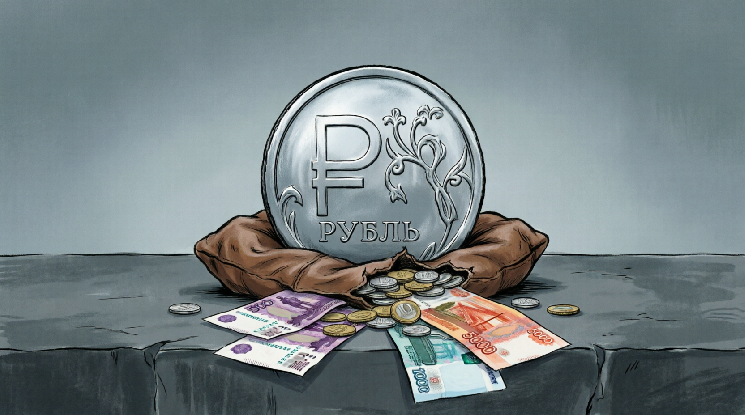
Is a Strong Ruble Good? Not for the Budget: Treasury Already Short 1.5 Trillion

The Russian budget has lost about 1.5 trillion rubles in revenue since the start of 2026 due to the ruble being stronger than the government's planned exchange rate. The budget was based on an average annual rate of 92.2 rubles per US dollar, but the actual average for the first seven and a half months was just 76.9 rubles. This discrepancy creates a significant shortfall, as every ruble of appreciation against the dollar reduces annual budget revenues by 140–160 billion rubles. When accounting for oil and gas revenues, the sensitivity is even higher, with potential annual losses reaching up to 2.5 trillion rubles. So far this year, the budget has already missed out on roughly 1.7 trillion rubles. The ruble's exchange rate has shown considerable volatility in 2026, ranging from a low near 71 rubles per dollar in May to over 85 rubles by mid-August. Despite this recent weakening, the year's average remains well below the budget target, creating a structural deficit in oil and gas revenues. Forecasts suggest the final average rate for 2026 will be around 80–82 rubles, which would result in a budget shortfall of about 1.6 trillion rubles. A strong ruble reduces import costs and inflation but also cuts the ruble earnings of exporters and threatens the funding of social obligations. The gap between the planned and actual rate is attributed not only to oil price dynamics but also to the fiscal rule mechanism, which can influence the currency's direction. The Ministry of Finance recently halted foreign currency sales under this rule, removing dollar supply from the market and contributing to pressure on the exchange rate. The budget policy is now forced to adapt to a stronger ruble than originally planned.

cryptonews.ruHá 28m

Is a Strong Ruble Good? Not for the Budget: Treasury Already Short 1.5 Trillion

cryptonews.ruHá 28m

Trading

Spot

Artigos em Destaque

Como comprar AUCTION

Bem-vindo à HTX.com!Tornámos a compra de Auction (AUCTION) simples e conveniente.Segue o nosso guia passo a passo para iniciar a tua jornada no mundo das criptos.Passo 1: cria a tua conta HTXUtiliza o teu e-mail ou número de telefone para te inscreveres numa conta gratuita na HTX.Desfruta de um processo de inscrição sem complicações e desbloqueia todas as funcionalidades.Obter a minha contaPasso 2: vai para Comprar Cripto e escolhe o teu método de pagamentoCartão de crédito/débito: usa o teu visa ou mastercard para comprar Auction (AUCTION) instantaneamente.Saldo: usa os fundos da tua conta HTX para transacionar sem problemas.Terceiros: adicionamos métodos de pagamento populares, como Google Pay e Apple Pay, para aumentar a conveniência.P2P: transaciona diretamente com outros utilizadores na HTX.Mercado de balcão (OTC): oferecemos serviços personalizados e taxas de câmbio competitivas para os traders.Passo 3: armazena teu Auction (AUCTION)Depois de comprar o teu Auction (AUCTION), armazena-o na tua conta HTX.Alternativamente, podes enviá-lo para outro lugar através de transferência blockchain ou usá-lo para transacionar outras criptomoedas.Passo 4: transaciona Auction (AUCTION)Transaciona facilmente Auction (AUCTION) no mercado à vista da HTX.Acede simplesmente à tua conta, seleciona o teu par de trading, executa as tuas transações e monitoriza em tempo real.Oferecemos uma experiência de fácil utilização tanto para principiantes como para traders experientes.

350 Visualizações TotaisPublicado em {updateTime}Atualizado em 2026.06.02

Como comprar AUCTION

Discussões

Bem-vindo à Comunidade HTX. Aqui, pode manter-se informado sobre os mais recentes desenvolvimentos da plataforma e obter acesso a análises profissionais de mercado. As opiniões dos utilizadores sobre o preço de AUCTION (AUCTION) são apresentadas abaixo.

活动图片