Every year during the college application season, the "wind vane" of employment is re-examined.
Each generation has its own dividends, each generation has its own obsessions. The ultimate dream of the post-80s generation was to sit in a CBD office building, sipping coffee in a high-rise; the post-90s generation flocked into big tech companies, digging for gold in the wave of the internet.
However, when the post-00s generation hold their application forms, the gears of the times have undergone a dramatic reversal:
This generation of young people no longer single-mindedly "grinds" for academic credentials within the ivory tower, but instead are fastening tool belts en masse. Electricians, welders, HVAC technicians, auto mechanics... These once "rough jobs" looked down upon by the highly educated have become the hottest commodities.
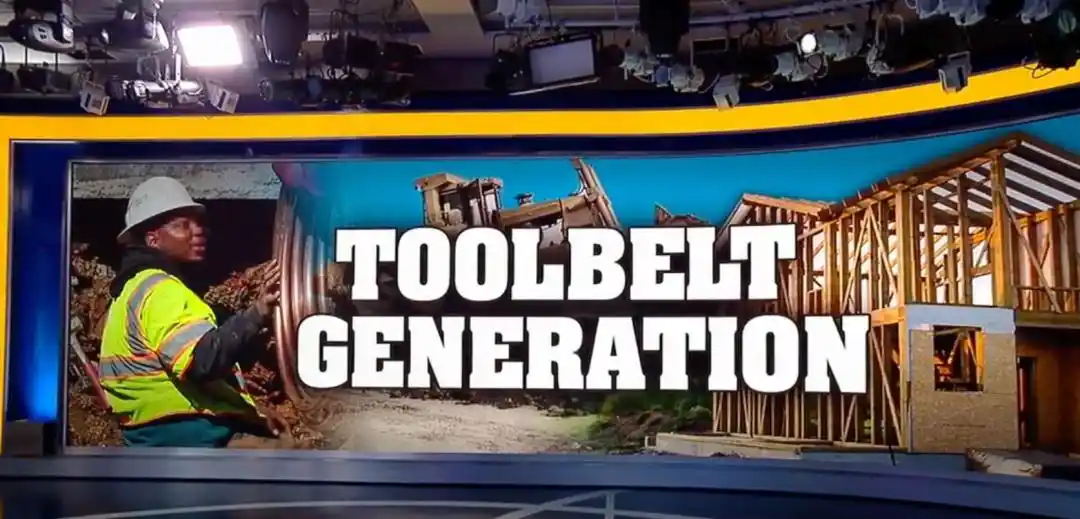
This surreal phenomenon of "academic credentials becoming less important, while technical skills are gaining prestige" is not unique to China. Globally, the post-00s generation are being dubbed with a new title: "The Toolbelt Generation".
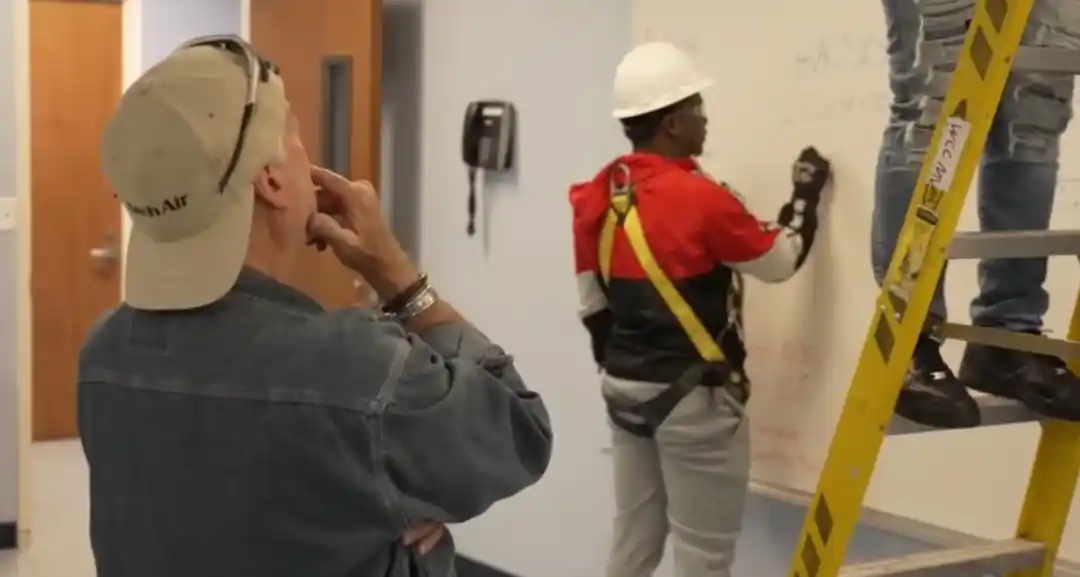
For decades, the world believed in the elite rule of "those who work with their minds govern others," but now, the golden career path most favored by the post-00s and their parents has become blue-collar work.
Globally, blue-collar wages are soaring.
The highest known annual salary for blue-collar workers has even reached 2 million yuan.
Vocational Schools: A "Lifeline" for Youth Employment
"Vocational schools" are becoming hot commodities worldwide.
In South Korea, vocational high schools have an "acceptance rate as high as 134%," making competition fiercer than for regular high schools;
In Brazil, over the past 5 years, young people participating in vocational training have increased by 68.4%, with medical nursing and IT skills becoming the new top choices for the youth;
And in the United States, the birthplace of Silicon Valley, the vocational school trend has directly ignited the capital markets.
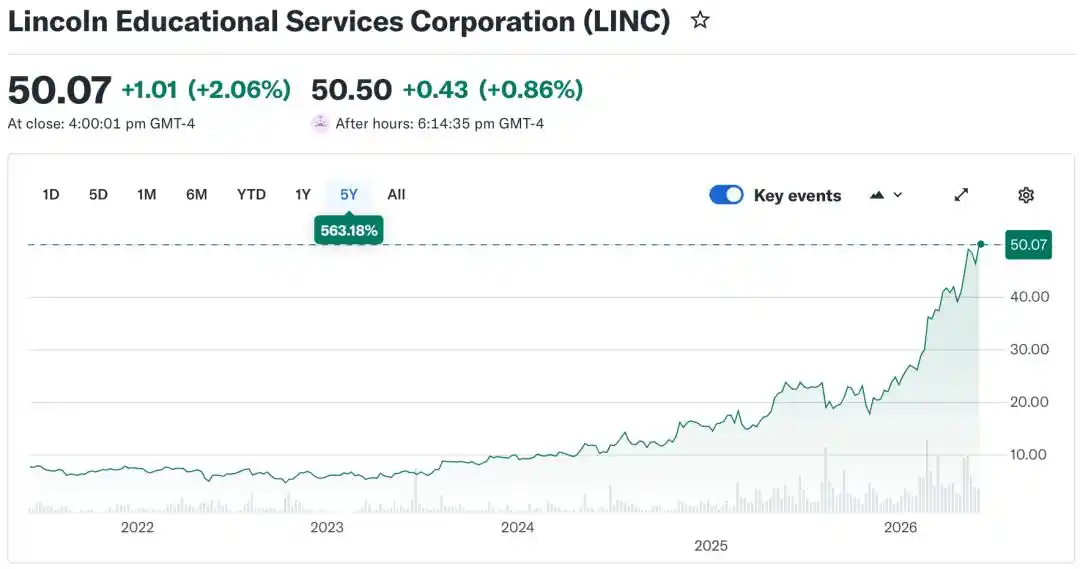
Enrollment at institutions specializing in training skilled tradespeople has surged by nearly 20% in 5 years. The stock price of Lincoln Educational Services (LINC), a major player in trade school education, has skyrocketed fivefold in 5 years, carving out a unique "vocational school stock" bull run on Wall Street.
Many young people embracing blue-collar jobs are "career changers."
Countless young people who could have been enjoying air conditioning and typing away in CBD offices are actively choosing to "escape the cubicle farm," turning instead to technical training centers:
A 22-year-old American college student studying computer science suddenly drops out mid-degree to become an electrician;
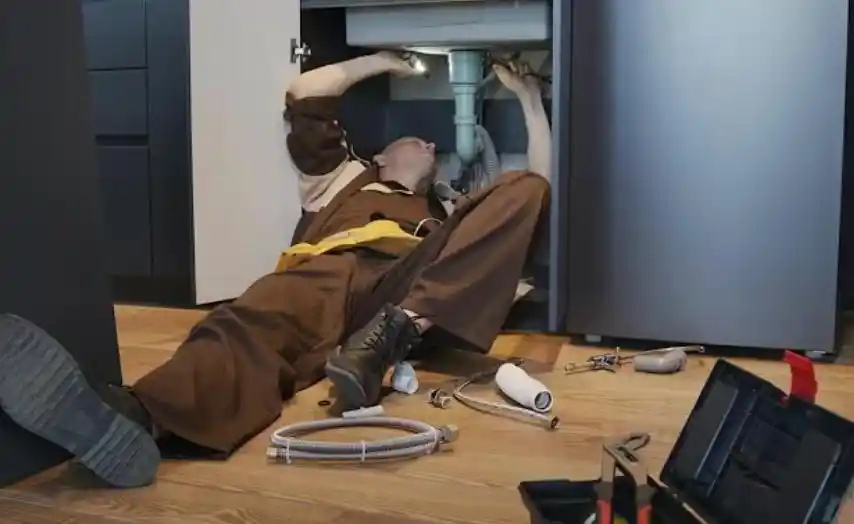
An 18-year-old Ukrainian girl abandons her plans for a glamorous white-collar career, goes to London to learn plumbing;
Even Ford CEO Jim Farley's 17-year-old son turned down a prestigious "business summer school" program and instead worked as an assembly line worker in a factory.
Recent U.S. surveys show that over 40% of the younger generation have already transitioned to blue-collar work or are preparing to do so.
This global "academic retreat" is primarily driven by AI.
For this generation just entering the workforce, finding a white-collar job is not only difficult but also highly susceptible to AI replacement.
A Stanford University in-depth study found: Since the birth of ChatGPT in 2022, in industries like software development, customer service, and clerical work, the group hit hardest by AI are precisely the 22-25-year-old workplace newcomers.
Their average employment rate plummeted by 16%, far exceeding that of more experienced senior employees.

In the eyes of young people, the endgame for white-collar work is no longer promotion and pay raises, but being replaced by AI.
72% of young people firmly believe: Within the next 5 years, "entry-level" white-collar positions will be completely wiped out by AI.
65% of young people pessimistically believe: Even with a prestigious university degree, they simply cannot compete with the algorithms.
Thus, blue-collar jobs have become a safe harbor for youth employment.
Unlike purely keyboard-based work, blue-collar jobs are currently still very difficult for large language models and algorithms to replace.
As Lowe's CEO Marvin Ellison said:
"No matter how capable AI is, it can't physically help you patch a hole in your roof, fix a short circuit in your home, or stop your water heater from leaking."
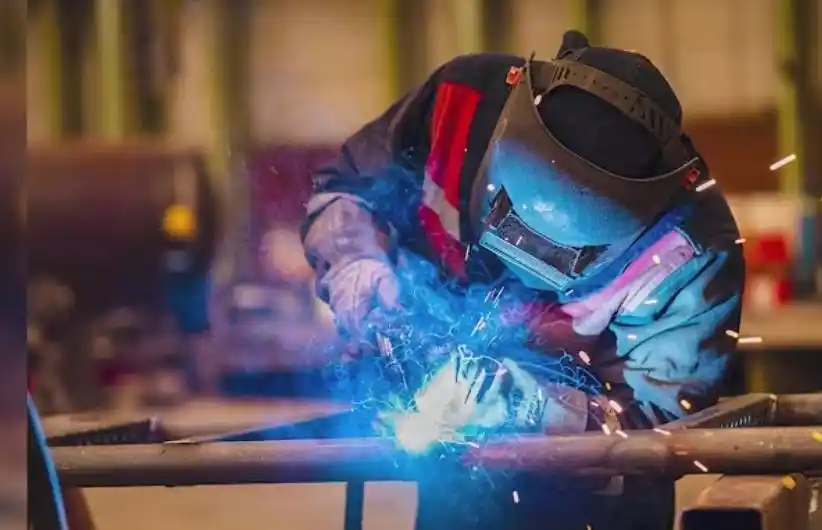
This "irreplaceability of human experience" is becoming the blue-collar youth's most formidable trump card.
A young diesel engine repair technician shared his practical experience: "Sometimes when we encounter a fault on-site, the computer system can't detect it at all, but a person can judge it based on experience."
Moreover, reality is also telling young people:
In this AI-dominated era, some blue-collar jobs haven't been made obsolete by technology;
On the contrary, due to the breakneck speed of technological advancement, they have become more important than ever before.
AI Infrastructure Projects, Mass-Producing 'Top-Tier Blue-Collar Workers'
After all, the physical body of AI is built by blue-collar workers.
If large language models are the soul of AI, then data centers are its "physical body."
Ensuring AI development requires massive infrastructure projects. Building data centers doesn't rely on product managers in office buildings, but on large numbers of electricians, plumbers, cooling technicians, and fiber optic technicians.
Industry forecasts predict that from 2025 to 2030, the global number of data centers will double directly, with total investment reaching a staggering $3 billion.
In this craziest AI infrastructure boom in human history, top-tier blue-collar workers have become the most crucial labor force.
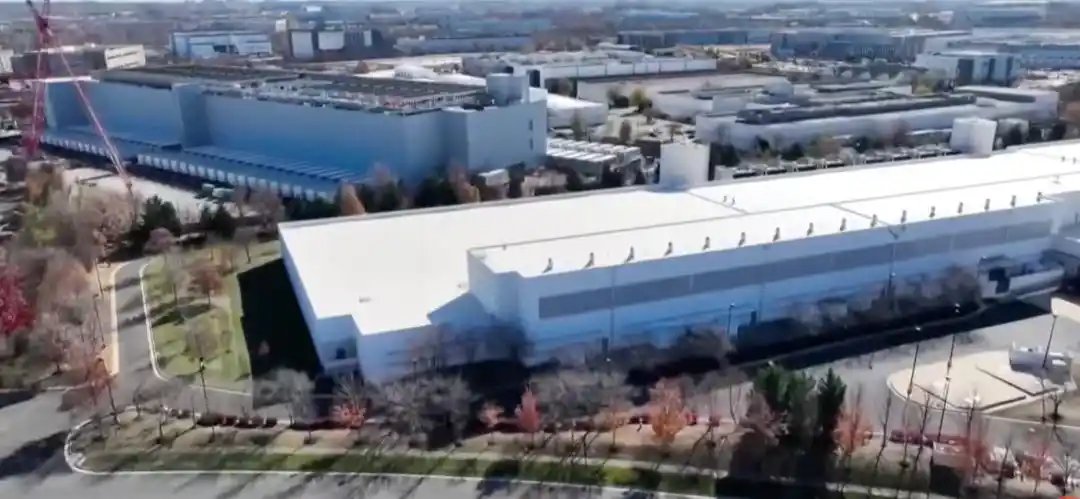
In Texas, USA, a talent war for AI infrastructure is already underway.
Ordinary residential contractors can only offer an hourly wage of $20, while AI data centers start at $35 from the get-go, plus unlimited overtime benefits.
This monetary power's overwhelming advantage has directly delayed local real estate project timelines by two months, and also driven up the market value of AI blue-collar workers.
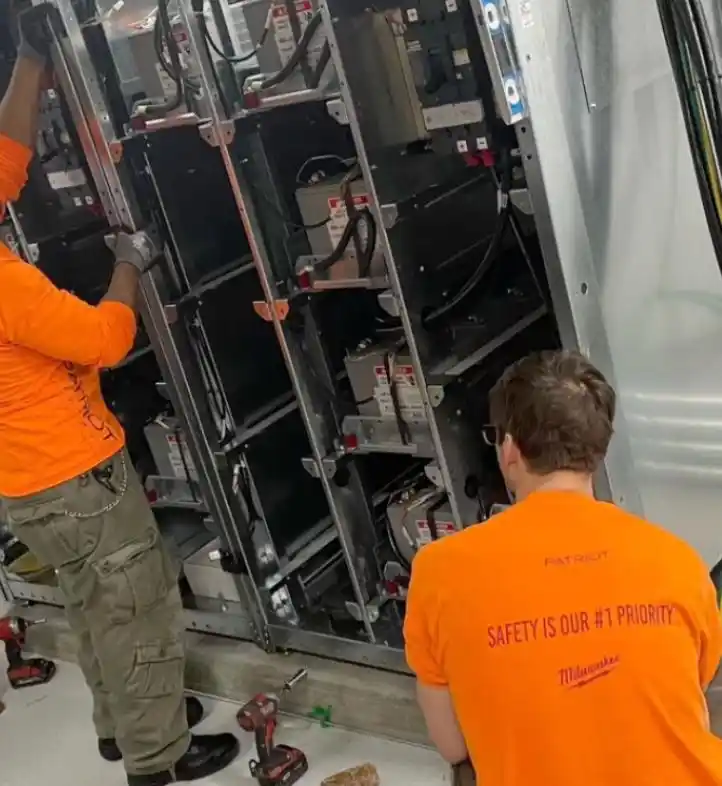
On this new track, an experienced electrician skilled in liquid cooling and fiber optic cabling can easily earn an annual income exceeding $200,000 to $300,000 (approximately RMB 1.36 to 2.04 million yuan).
This level of compensation is enough to make ordinary software engineers on Silicon Valley's assembly lines sweat.
Even without riding the AI wave, developed economies globally are mired in the same "skilled trades shortage."
Technicians who can be licensed, get their hands dirty, and shoulder safety responsibilities are becoming worth their weight in gold. Analysis shows that over the past 4 years, the wages for skilled tradespeople in the U.S., Netherlands, Germany, and the UK have skyrocketed by 30%, 21%, 18%, and 9% respectively.
Even the worship trends on the internet are changing.
In this era of everyone being a content creator, young people are no longer chasing the "big tech elite" persona, but are instead tuning in to watch "construction site influencers."
Lexi Abreu, a girl who amassed over 2 million followers online, originally studied medicine before switching careers to become an electrician. She went viral by posting videos documenting her daily life on construction sites, becoming a job-seeking idol for many young people.
In the lens of "Lexis," blue-collar work is respectable, interesting, and fulfilling.
Most importantly, it reeks of money.

Blue-collar influencers in their videos never talk to you about vague "workplace blessings" or "corporate visions"; they get straight to the point with simple, brutal accounting:
"How much I earned from my shift today, how much from overtime";
"What my annual salary is this year, how much of a raise I'll get next year".......
This "substantial" focus on the material level has won over countless young people.
Of course, any era's "success stories" narrative comes with a filter of overgeneralization.
The more alluring the blue-collar myth is, the more brutal the flip side of the coin becomes.
Those annual salaries reaching hundreds of thousands of dollars are built upon 4 a.m. darkness, hours of commuting, extreme outdoor weather, and sharply increased risk of work-related injuries.
Simply put, blue-collar workers earn their money the hard way.
This point remains largely the same in any era and any country.

Moreover, the tides of change have never cared about the "color of a common person's collar":
Technological development will phase out entry-level white-collar jobs, and economic cycles will also weed out entry-level blue-collar jobs.
Looking back at the 2008 financial crisis, the U.S. construction industry lost over 2 million jobs overnight, taking more than a decade to recover.
How long this current wave of blue-collar红利 riding the AI风口 will last is anyone's guess.
But even knowing all this, young people worldwide are still rushing headlong into blue-collar positions.
Even though blue-collar work is hard, its "cost-performance ratio" is still far higher than that of white-collar work.
Is the Advent of AI Causing Universities to 'Go Bankrupt' in Terms of Credibility?
Young people in many countries are facing a common question:
Is a university diploma still worth the money today?
In the past, a graduation certificate from a prestigious university was the golden ticket to a refined middle-class life.

But now, young people in Europe and America are finding that to attend university, they are taking on the heaviest usurious loan of their lives —
Ranging from a few thousand dollars a year to nearly $100,000.
In the UK in 2024, the average graduate carries £53,000 (approximately RMB 480,000 yuan) in debt.
In Australia, the average student loan debt has skyrocketed nearly 3-fold over the past 20 years, reaching an average of A$27,000 (approximately RMB 126,000 yuan).
What's even more despairing is that when they finally become suited and booted office white-collar workers, they find "recouping the investment" is a distant dream.

Entry-level positions are being replaced en masse by AI, starting salaries are too low to make ends meet, the debt snowball keeps growing......
Data shows that currently in the U.S., only 55% of universities enable students to recoup their educational costs within 5 years of graduation.
A staggering 70% of surveyed college students in BestColleges' U.S. sampling survey the year before last stated: "College simply isn't worth the price."
In contrast, the cost-performance ratio of blue-collar work is much higher.
To borrow the U.S. Department of Labor's definition, the core advantage of blue-collar work boils down to four words: Earn While You Learn.
Tuition costs at most $10,000, training cycles are only a few months. You earn a salary while taking classes. No black hole of student debt, you recoup costs as soon as you're qualified.
In the face of生存, workplace prestige simply can't compete with hard cash.
And this has created a奇妙的历史轮回.

After the Industrial Revolution, it took humanity two hundred years to move from fields, mines, and workshops into offices, making the white-collar worker the symbol of商业文明.
But when the prefix of the revolution changed from Steam Engine to AI, and the value of a diploma was repeatedly diluted by artificial intelligence, the new generation of job seekers instead重新意识到:
The more developed artificial intelligence becomes, the more society反而 lacks people.
Thus, highly educated young people are returning to construction sites, workshops—places their父辈们曾千方百计想要逃离. After all, when AI is writing poetry in cubicles, humans can only go repair roofs under the scorching sun.
A diploma might be rendered废纸 by AI, but physical labor skills will never depreciate.
This article is from the WeChat public account "Phoenix Weekly" (ID: phoenixweekly), author: Kai Si, editor: Octopus