The Foundation of SpaceX's Trillion-Dollar Valuation: Who is Dividing Up Musk's Annual Tens of Billions in Capital Expenditure?

marsbitPublicado em 2026-06-16Última atualização em 2026-06-16

Resumo

SpaceX's trillion-dollar valuation is built on its three core businesses: Starlink (profitable, 60% of revenue), rockets (driving down launch costs), and AI (a major investment area). This creates a financial cycle: Starlink funds rocket development, which enables low-cost launches for AI hardware, generating future revenue. This cycle fuels annual capital expenditures of tens of billions, flowing to a vast supply chain. Suppliers are categorized by their replaceability. The first group includes irreplaceable players like NVIDIA (GPU/CUDA ecosystem), Eutelsat (critical radio spectrum), Filtronic (specialized amplifiers), Materion (strategic beryllium), and STMicroelectronics (antenna chips). The second group consists of hard-to-replace suppliers due to high switching costs, such as Honeywell (flight control), Carpenter Technology (specialty alloys), Hexcel (carbon fiber), Broadcom (data exchange), and Linde (industrial gases). The third group comprises high-volume, cost-critical suppliers for mass-produced items like Starlink terminals. Key names include Wistron NeWeb (primary manufacturer) and several A-share companies like Shenzhen Sunway (connectors), Pies New Materials (forgings), Western Superconducting (alloys), and Yingliu (castings). Other niche players include Trimble (timing), Astronics (power distribution), and CTS (thermal management). The article argues that investing in these suppliers, rather than SpaceX stock directly, offers an alternative opportunity. Th...

Author: nini

If you missed the Apple supply chain in 2010, the Tesla supply chain in 2020, or even the Nvidia supply chain you've been regretting these past two years,

the SpaceX supply chain is just getting started.

Of course, I think chasing SpaceX itself doesn't seem very cost-effective. Its stock rose 19% on its first day of trading, from a price of 135 to 160, with a price-to-sales ratio approaching 100 times, and the company is still losing huge sums of money. Retail investors rushing in on the first day face significant pressure.

So what I'm suggesting are the companies that supply it.

History has repeatedly validated the same logic: super terminals' frenzied nurturing of the supply chains behind them. When Apple made the iPhone 4 in 2010, Luxshare Precision had revenue of 10 billion yuan; a decade later it hit 92.5 billion, with its stock price rising 30-fold. When Tesla's Shanghai Gigafactory went into operation in 2019, CATL's market cap was just over 100 billion yuan; five years later, it surpassed 1 trillion. Nvidia exploded in popularity these past two years, and Zhongji Innolight's market cap rose from tens of billions to over 100 billion.

Apple, Tesla, Nvidia—each time the super terminal stood center stage, but the ones who really made big money were the supply chain companies behind them.

SpaceX spends tens of billions of dollars annually buying chips, materials, components, and industrial gases. These purchase orders gradually become real revenue on the books of certain companies. After the prospectus was made public, this supply chain has data that can be checked for the first time.

We can first look at where SpaceX's money comes from and where it goes

Its business mainly consists of these three parts. First, Starlink. Last year's revenue was 11.3 billion USD, accounting for 60% of the group, with over 10 million global subscribers—this is the only consistently profitable part of SpaceX, one could even say all the money-losing ventures after this are funded by it.

Second, rockets. The Falcon and Starship programs have an annual R&D investment of 3 billion USD, resulting in the world's lowest commercial launch cost, with a plan for 100 launches in 2026 and demand for 1,500 Raptor engines. Third, AI. It lost over 6 billion last year. On the ground, it's building the Colossus supercomputer, packed with 220,000 GPUs, and planning orbital data centers in space.

So, the flow of money is simple: money earned from Starlink → invested into rockets to bring launch costs down → low-cost launches send AI hardware into space → AI computing power is rented out to generate more revenue. It's roughly that kind of cycle.

This cycle scatters tens of billions of dollars in purchase orders annually. So whose pockets does this money go into?

Categorized by replaceability, suppliers fall into three types.

First type: Irreplaceable, at least in the short term

  1. NVIDIA. The Colossus supercomputer's 220,000 GPUs are all from them. But NVIDIA's real moat isn't the hardware; it's CUDA. The world's AI training basically uses this software ecosystem to write code. Hardware can be swapped, but the migration cost of a decade's worth of code can't be recovered in a year or two. We can understand it as: as long as SpaceX is building supercomputers, NVIDIA is collecting money.
  2. Eutelsat, ticker SATS. It holds the radio spectrum licenses for satellite communications. What is spectrum? Think of it as lanes in the sky. Physical laws determine there are only so many; whoever occupies them first gets them. No matter how advanced your technology is, you can't create a band out of thin air. Musk's satellite-to-phone functionality must pass through here; without paying the toll, signals would collide with other satellites. Plus, SATS holds about 3% of SpaceX shares. The day before the IPO, it rose 11%, with options trading volume 11 times the usual.
  3. Filtronic, ticker FTC, listed in London (note: not searchable on U.S. markets). They make millimeter-wave signal amplifiers for Starlink satellites, making signals travel farther and clearer. In 2024, they signed a 47.3 million GBP contract; SpaceX contributes 83% of its revenue, and they have subscription rights for up to 10%. This thing seems small, but aerospace-grade certification requires years of repeated testing in vacuum, radiation, and extreme temperature ranges. Once certified, SpaceX won't easily switch because the re-certification cycle can't keep up with production ramp-up. And Filtronic's stock price has nearly doubled in a year.
  4. Materion, ticker MTRN. The world's only fully integrated beryllium metal producer, from mine to finished product, controlling about 56% of global supply. Beryllium is one-third lighter than aluminum, six times stronger than steel, with a melting point near 1300°C—light, strong, and high-temperature resistant; few metals on Earth satisfy all three conditions simultaneously. The F-35 fighter jet, the Webb Space Telescope's mirror, and Starship's load-bearing structures all use it. The U.S. Department of Defense lists beryllium as a strategic material; Materion is the sole certified supplier for the F-35, with certification spanning over a decade. This shows its scarcity.
  5. STMicroelectronics (STM). They make phased array antenna chips for SpaceX, with cumulative deliveries exceeding 5 billion units, covering over ten thousand satellites. STM predicts its low-earth orbit satellite business will reach 2 billion USD by 2028 and 2.9 billion USD by 2030.

Second type: Technically replaceable, but the cost of switching is too high

  1. Honeywell, ticker HON. Rocket flight control and inertial navigation systems—everything about where the rocket is, where it's flying, and what attitude it maintains is controlled by them. Decades of certification accumulated from Apollo to the Space Shuttle to commercial spaceflight. Changing suppliers is like transplanting the rocket's brain; all underlying code must be rewritten from scratch, and new certification must be run from the beginning. SpaceX launches over a hundred times a year; it can't stop the launch schedule to save on procurement costs.
  2. Carpenter Technology, ticker CRS. Provides specialty steel alloys for the Raptor engine. Vacuum melting, repeated purification, impurity control to parts-per-million levels. A tiny deviation means disaster in the combustion chamber. This material process isn't something that can be passed on by blueprints alone; building equivalent production lines might take decades.
  3. Hexcel, ticker HXL. Supplies aerospace carbon fiber. Every extra kilogram on the rocket means one less kilogram of payload. Carbon fiber frames are half the weight of metal with no loss of strength. They've collaborated with SpaceX for over a decade; the material formula and weaving processes are specifically tailored for SpaceX's needs. Switching to another would require re-validating the entire material system from scratch.
  4. Broadcom (AVGO) handles the terabit-level data exchange between satellites and ground. To prevent traffic jams with high-speed data distribution, you rely on it. The Linde Group invested 100 million USD in an air separation plant near Starbase, Texas in 2025, dedicated to supplying liquid oxygen and nitrogen. This is because the massive amounts of high-purity industrial gases consumed in rocket launches cost less the closer the source is; the location itself is a moat.

Third type: Requiring stable mass production at the lowest possible cost

You might not have seen a Starlink dish in person, but think about it: they plan to deploy a full 30 million units globally. Each one contains thousands of components and dozens of assembly steps, must be produced on an assembly line like a smartphone, and must withstand aerospace-grade vibration and temperature extremes.

At this scale, technology isn't the primary factor anymore; the most important thing is who can deliver stably and who can drive costs down the most.

The logic of Foxconn manufacturing for Apple applies here exactly. Wistron NeWeb Corp, ticker 6285, is the world's largest contract manufacturer for Starlink terminals and routers. The quality control standards were honed over years of collaboration with SpaceX, so it's not something just any factory can take on.

Moving up are several A-share listed companies. Sunway Communication (300136) is the global exclusive supplier of high-frequency connectors inside Starlink terminals; SpaceX-related orders in 2025 are approximately 1.05 billion yuan. Parker Hannifin Aerospace China (605123) is the sole Chinese supplier of forgings for Starship bodies and engines, with orders around 680 million yuan, accounting for 35% of its revenue. Western Superconducting Technologies (002149) is the exclusive supplier of niobium alloy for Raptor engines, with orders around 1.02 billion yuan. Yingliu Co., Ltd. (603308) makes core castings for Raptor turbopumps, accounting for 42% of its own revenue—SpaceX's orders are already the largest revenue source for this company.

Looking at smaller players. Tianyin Electromechanical can be likened to making the star trackers on Starlink satellites; satellites use them to look at stars to determine their attitude, and their market share exceeds 60%. Tongyu Communication makes Starlink ground antenna modules, with projected 2026 orders of 300 million yuan.

There are also a few on the U.S. markets. Trimble (TRMB) manages time; tens of thousands of satellites flying overhead must have their clocks synchronized to the same beat, a microsecond off and communications fail. Astronics (ATRO) manages rocket power distribution. CTS (CTSH) manages heat dissipation. These aren't exactly cutting-edge tech, but they are indispensable cogs in the entire system.

You might ask, these companies have always existed; why now?

Three reasons.

  • First, procurement volume is just starting to ramp up. There's a plan for 100 launches in 2026, Starship testing is accelerating, and AI data centers are scheduled to begin orbital deployment in 2028. The target for Starlink terminals is 30 million units; there are only 10 million subscribers now. The rate at which SpaceX is scattering money hasn't peaked yet.
  • Second, transparency has opened up for the first time. SpaceX was previously a private company, making procurement data a black box. After the prospectus was made public, quarterly and annual reports will continue to disclose information, allowing the order growth rates of supply chain companies to be tracked and verified.
  • Third, consider historical patterns. The Apple supply chain took a decade from the iPhone 4 to its peak. The Tesla supply chain has been going for seven years from Model 3 mass production to now. The position of the SpaceX supply chain today is more like Tesla in 2018—mass production just starting, suppliers just being finalized, order growth just beginning its steep climb. And with Starship still in testing, Starlink still expanding, and AI data centers not yet built, it's currently equivalent to its 2018.

Finally

Buying SpaceX on its first day of trading, in my view, is paying for Musk's dream—and a very expensively priced space dream at that. Of course, you could say you simply believe in Musk, and that's your dream too.

But perhaps we can look at it from another angle.

Looking along the supply chain, what we're betting on is something else. Because regardless of how SpaceX's stock price moves, someone has to take its annual tens of billions in purchase orders. These orders are independent of the stock price; they are monthly revenue arriving on schedule.

This article does not constitute investment advice. Some issues remain here, such as the cyclical nature of beryllium metal, geopolitical discounts for Taiwanese companies, insufficient liquidity in small companies, and the possibility of re-shuffling certifications due to technological iteration. Each company needs to be judged separately.

But if you didn't get an allocation on SpaceX's IPO day,

then you can adopt a different strategy: don't chase the high-flyer. Let's go look at the quiet suppliers.

The giant has ignited its engines. This time, the shovels are within your reach~

Perguntas relacionadas

QAccording to the article, what is the core logic of the 'super terminal' model for investment returns, and which historical companies serve as examples?

AThe core logic is that while super terminal companies (like Apple, Tesla, Nvidia) capture the spotlight, the greatest investment returns have often come from their supply chain partners. The article cites examples like Luxshare (Apple), CATL (Tesla), and Zhongji InnoLight (Nvidia), whose revenues and valuations soared as the terminal companies scaled.

QWhat are the three main categories of SpaceX suppliers mentioned in the article, and what is the defining characteristic of the first category ('Cannot be replaced in the short term')?

AThe three categories are: 1) Suppliers who cannot be replaced in the short term. 2) Suppliers who are technically replaceable, but the cost of switching is too high. 3) Suppliers needed for stable mass production at the lowest cost. The defining characteristic of the first category is a near-insurmountable barrier, such as a dominant software ecosystem (Nvidia's CUDA), control of a scarce physical resource like radio spectrum (Eutelsat), or a critical material where the supplier holds a global monopoly (Materion's Beryllium).

QWhich company is described as the sole global supplier of high-frequency connectors for Starlink terminals, and what is its approximate 2025 SpaceX-related order value?

AThe company is Sunway Communication (stock code 300136). Its approximate 2025 SpaceX-related order value is 1.05 billion RMB (about 105 million USD implied by the 10.5亿 figure).

QThe article suggests SpaceX's supply chain investment opportunity is just beginning. What are the three reasons given to support this timing?

AThe three reasons are: 1) Procurement volume is only just starting to increase, with plans for 100 launches in 2026, Starlink terminal targets of 30 million units, and future AI data center deployment. 2) Transparency is opening for the first time due to the IPO, allowing supply chain order growth to be tracked via financial reports. 3) Historical parallels suggest the supply chain is at a stage similar to Tesla's in 2018, with scaling just beginning and order growth starting to accelerate.

QWhat alternative investment strategy does the author propose for those who missed the SpaceX IPO or find its valuation too high?

AThe author proposes looking at the companies in SpaceX's supply chain instead. The argument is that regardless of SpaceX's stock price volatility, it must continue issuing hundreds of billions in annual procurement orders, which translate into stable, recurring revenue for its suppliers. This approach is framed as 'not chasing the rocket, but buying the shovels.'

Leituras Relacionadas

Conversation with Co-founder of Hyperdash: Why is Hyperliquid Still Severely Undervalued?

Interview Summary with Hanson Birringer, Co-founder of Hyperdash: Why Hyperliquid Remains Undervalued In an interview on *The Rollup*, Hanson Birringer, Co-founder and Chief Revenue Officer of Hyperdash—a trading data analytics platform for Hyperliquid—shared his investment thesis on the Hyperliquid ecosystem. He described Hyperliquid as a pure play on three key crypto super-trends: perpetual contracts, real-world assets (RWAs), and stablecoins. The platform is an open-source, decentralized, and high-performance financial system uniquely positioned to bridge traditional institutional capital with decentralized finance. Birringer highlighted Hyperliquid's leadership in perpetual DEX trading and its recent innovation of RWA perpetual contracts. He emphasized the significance of USDC becoming a core quoting asset, which, by allocating 90% of its backend yield from assets like US treasuries to a protocol buyback fund, creates substantial, programmatic buy pressure for the Hype token. He addressed regulatory challenges, noting that Hyperliquid's policy team is actively engaging with US regulators like the CFTC to establish clear rules for decentralized venues. Once achieved, regulated brokers could route orders directly to Hyperliquid's backend, tapping into its low-cost liquidity layer. Regarding revenue, Birringer was optimistic, citing the immense size of traditional financial markets. Even capturing a small fraction of global trading volume in products like RWA perpetuals could lead to exponential growth for the protocol. The recently launched Grayscale Hyperliquid ETF, seeded by their SPV (Hyper Holdings Global), provides a compliant on-ramp for institutional investors drawn to the clear "cash flow + token buyback" model. Finally, he discussed Hyperdash's acquisition of Imperator, enhancing its data and node infrastructure to serve both retail traders and traditional asset managers. His bullish case rests on Hyperliquid's potential to provide unprecedented global access to dollar-based capital markets. He struggled to articulate a bear case, seeing the long-term trends of internet adoption and financial inclusion as powerful tailwinds.

marsbitHá 37m

Conversation with Co-founder of Hyperdash: Why is Hyperliquid Still Severely Undervalued?

marsbitHá 37m

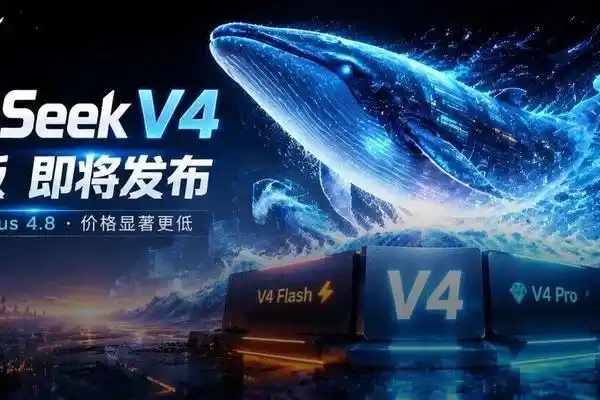
DeepSeek V4 'Full-Blooded Edition' Leaked, Could Be Released As Early As Tomorrow

The highly anticipated full release of DeepSeek V4 is imminent, expected to launch as early as tomorrow after nearly three months of waiting. A select group has already received access to the GA (General Availability) beta, which includes two versions: DeepSeek V4 Flash and DeepSeek V4 Pro. Early testers report that V4's overall performance is close to the level of Opus 4.8, with coding capabilities rivaling GPT-5.6 Sol. Its agent abilities are significantly enhanced, and 3D/SVG generation has improved notably. While it may not surpass the recently released Kimi K3 in performance, its expected price point is significantly lower. The official release will introduce a new "peak/off-peak" pricing model for its API. For example, deepseek-v4-pro will cost $0.87 per million output tokens during standard times and $1.74 during peak hours. The flash version is even more aggressive at $0.28/$0.56 per million tokens, with cached input tokens priced extremely low at $0.0028. This makes V4 a strong contender in terms of cost-effectiveness, potentially offering Opus-level capabilities at a fraction of the cost, continuing DeepSeek's reputation as a "price disruptor" in the AI market. Initial demos showcasing V4's capabilities have begun circulating, including generated 3D simulation games, HTML games blending elements of Minecraft and No Man's Sky, and classic games like a "Cut the Rope" clone. The final GA version is set to replace the older deepseek-chat and deepseek-reasoner models, which will be retired on July 24th.

marsbitHá 46m

DeepSeek V4 'Full-Blooded Edition' Leaked, Could Be Released As Early As Tomorrow

marsbitHá 46m

WEEX Labs Weekly Observation: The 'Power Restructuring' of AI Infrastructure and the 'Deep Dive Movement' into the Real Economy

WEEX Labs Weekly Review: AI Infrastructure's "Power Restructuring" and the "Deep Dive" into the Real Economy Mid-July 2026 marks a pivotal shift in the global AI industry. The allocation of computing power is transferring from cloud giants to compute resource owners, while the core value of AI is solidifying around its penetration into physical industry, moving beyond the race for model parameters. The era of fragmented model development is over, replaced by a capital-intensive, integrated chain driven by hard tech. Key developments this week include Meta's planned entry into the cloud computing market with "MetaCompute." This move by social media giants with massive GPU clusters challenges traditional cloud providers like AWS, integrating compute, models, and data into one-stop services, which will squeeze smaller rental providers and shift enterprise focus towards underlying model ecosystems. Chinese foundational models like DeepSeek-V4 and Tencent's Hy-3 are pushing towards "utility" status through open-source releases and extreme cost reductions via MoE architectures. This lowers entry barriers for enterprises, allowing them to focus resources on private deployment and deep business integration. Embodied intelligence, particularly humanoid robots, is transitioning from lab demos to real-world factory applications, driven by policies promoting large-scale, practical deployment in logistics and manufacturing. The value focus is shifting from spectacle to stable industrial data and real operational efficiency. Global governance, through forums like WAIC, is evolving from theoretical ethics to practical operational frameworks for "Sovereign AI," raising geopolitical compliance barriers and making auditability and data sovereignty core design requirements from the outset. WEEX Labs Insights: The current transformation shows AI's prosperity is deeply embedding into the fabric of global manufacturing. Strategic recommendations include: 1) leveraging open-source models for private, proprietary knowledge bases; 2) maintaining cloud provider diversity to avoid vendor lock-in from integrated model ecosystems; and 3) seeking opportunities in the "embodied infrastructure" supporting robots, such as data collection, industrial simulation, and factory AI adaptation services.

marsbitHá 1h

WEEX Labs Weekly Observation: The 'Power Restructuring' of AI Infrastructure and the 'Deep Dive Movement' into the Real Economy

marsbitHá 1h

Is WEEX TradFi Reliable? What You Should Know Before Your First Trade of U.S. Stock Tokens

In recent years, cryptocurrency users have expanded their focus beyond Bitcoin and Ethereum to include popular traditional financial (TradFi) assets like Nvidia, Apple, and Tesla stocks. This shift raises key questions: What do these TradFi assets represent on crypto trading platforms? How do they differ from traditional stock ownership? And how can users assess the reliability of platforms offering such products? TradFi products, such as those offered by WEEX TradFi (including NVDA, MSFT, AAPL, TSLA, and QQQ tokens), are blurring the lines between crypto and traditional markets. They allow users to trade based on the price movements of traditional assets within a familiar digital asset trading environment. However, it's crucial to understand that trading a "stock token" is not equivalent to owning the actual stock. Users are participating in price speculation, not gaining shareholder rights like dividends or voting. A key feature of these products is 7x24 trading, offering flexibility beyond traditional market hours. While convenient, this also introduces unique risks, such as potential liquidity gaps and volatility when underlying markets are closed. For users evaluating TradFi products, reliability hinges on transparency and risk management. Critical factors include understanding the product mechanism, how prices track the underlying assets, and the associated risks—especially when using leverage. Popular stocks and indices are still subject to company performance, macroeconomic shifts, and sector trends. Ultimately, TradFi represents a new gateway connecting crypto users to global markets. The future points toward integrated trading environments where the distinction between "crypto investor" and "traditional investor" fades. For newcomers, a platform's reliability stems not from promises, but from a clear understanding of the product, a comprehensive view of risks, and informed judgment of the platform's capabilities.

marsbitHá 1h

Is WEEX TradFi Reliable? What You Should Know Before Your First Trade of U.S. Stock Tokens

marsbitHá 1h

Trading

Spot
活动图片