The End of the 'Talk-to-Earn' Era? X Delivers Heavy Blow, Bans InfoFi, Cutting Off Funding for a Batch of Projects

比推Publicado em 2026-01-16Última atualização em 2026-01-16

Resumo

On January 15, X (formerly Twitter) revoked API access for InfoFi applications, effectively ending the "post-to-earn" model. The platform cited concerns over AI-generated spam and low-quality replies as the reason for the policy change, prioritizing user experience over the significant revenue these apps generated. Major InfoFi platforms like Kaito and Cookie DAO are now pivoting to alternative models, such as content marketing tools and market intelligence services. The move triggered sharp declines in related token values and NFT floor prices, with some teams accused of insider trading prior to the announcement. The crackdown is seen as a necessary step to combat spam and improve content quality on the platform, though it also reflects broader challenges in the crypto content ecosystem.

Author: Nancy, PANews

Original Title: 'Talk-to-Earn' Players' 'World Collapses'! Twitter Bans InfoFi, Ecosystem Projects Forced to Adapt Drastically


On the night of January 15th, the crypto Twitter circle (CT) was suddenly hit by a silent 'earthquake'.

With X (formerly Twitter) issuing an announcement cutting off API access for InfoFi applications, the 'post-to-earn' mechanism was brought to a halt. Project teams are choosing to pivot, while 'talk-to-earn' players exclaim that 'the sky has fallen'.

Revoking API Access, Rejecting Millions in 'Toll Fees'

The InfoFi sector changed overnight.

X's Product Lead and Solana Ecosystem Advisor, Nikita Bier, officially announced last night that the platform is revising its developer API policy and will no longer allow applications that reward users for posting, directly naming InfoFi.

Nikita stated bluntly that such incentive mechanisms are the root cause of the platform being flooded with a large amount of AI-generated spam and low-quality replies. Currently, X has revoked the API access permissions for these applications. Once the bots realize they are no longer being paid, the user experience should begin to improve soon.

For developers whose accounts were terminated, Nikita also 'thoughtfully' suggested that teams could help them transition their business to Meta's Threads and the decentralized social media platform Bluesky, a comment full of sarcasm.

More importantly, X resolutely chose to forgo this revenue, even though high-frequency API-calling applications like InfoFi contributed significant 'toll fees'. "InfoFi applications were already paying us millions of dollars for enterprise API access. We don't want that money," Nikita said. This statement also indicates that user experience is X's current strategic priority, especially since these earnings are insignificant compared to X's overall annual revenue.

This officially宣告 (declares) the end of the InfoFi model寄生 (parasitizing) the X ecosystem. The simple and brutal 'talk-to-earn' era is gone for good.

In fact, this is not the first time Nikita has 'declared war' on low-quality content.

Not long ago, he criticized crypto tweets for heading towards suicidal demise. Nikita posted at the time that since last October, a notion has been spreading within CT that users need to reply hundreds of times a day to achieve account growth. However, each post consumes part of the day's influence. Since the average user only browses 20 to 30 posts per day, the platform cannot show all posts from one user to all their followers. Therefore, crypto Twitter users end up wasting all their influence on hundreds of 'gm' replies. When they post substantive content like project announcements, very few people see it. The decline of crypto tweets stems from their own behavior, not algorithm issues.

This post sparked strong dissatisfaction within the crypto community at the time, even leading to a large-scale 'GM' counter-attack, which eventually resulted in the tweet being deleted. But in hindsight, X's determination to clean up low-quality content had already been foreshadowed.

Ecosystem Projects Make Drastic Survival Moves, Teams Accused of Dumping Tokens Early

As X tightens its API policy, the InfoFi narrative is facing a cold spell.

CoinGecko data shows that in the past 24 hours, the market capitalization of the InfoFi sector fell to $350 million, with many tokens experiencing double-digit declines. Even the floor price of Yapybaras NFT from Kaito couldn't escape, plummeting.

Faced with a survival test, multiple InfoFi applications have announced pivots.

Yu Hu, founder of the representative project Kaito, stated that the company will gradually terminate Yaps and the incentivized leaderboard system, instead launching a new Kaito Studio. This decision stems from the platform's issues with low-quality content and spam, as well as a shift in the crypto industry from a high-frequency global distribution model towards more precise marketing. After discussions with the X platform, both parties reached a consensus: a completely permissionless distribution system is no longer viable and does not meet the needs of high-quality brands, serious content creators, or the X platform itself. Over the past few months, the platform has been developing Kaito Studio. This product will adopt a layered traditional marketing model, connecting brands with high-quality creators through top-tier analytical tools, covering multiple platforms like X, YouTube, TikTok, and expanding beyond cryptocurrency into areas like finance and AI.

Meanwhile, Cookie DAO, after consulting with the X team, decided to immediately shut down the Snaps platform and all creator activities. Cookie DAO stated it will wait for confirmation and guidance from the X platform to determine if creator activities similar to Snaps can operate in any form in the future. Simultaneously, the platform is communicating directly with all project teams running Snaps activities. Some situations are more complex, involving pre-paid activity fees and promised rewards. While full solutions are not yet available, they will adhere to principles of fairness and communicate directly with each project. The platform has taken snapshot archives of all active activities and will provide updates to creators as soon as possible. Other products under Cookie are unaffected. Additionally, over the past six months, the platform has been continuously developing Cookie Pro, a crypto real-time market intelligence tool, planned for launch in the first quarter.

Judging from the project teams' statements, this policy adjustment is not a sudden black swan event; the teams were already aware of the changing winds and had布局 (laid out plans for) a pivot in advance. This has also sparked market controversy, with the community质疑 (questioning) whether projects knew about the negative news in advance and dumped their tokens.
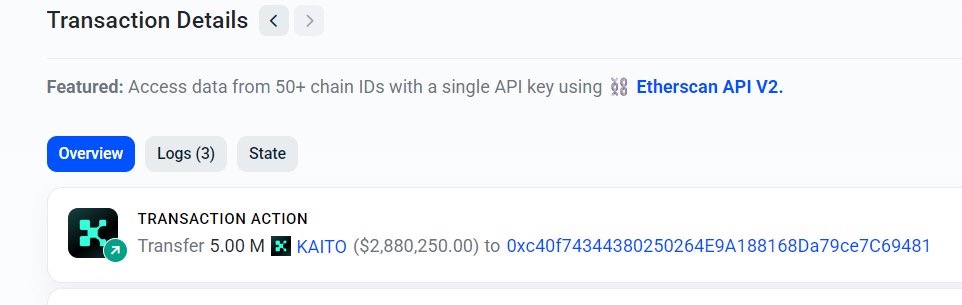
Taking Kaito as an example, its multi-signature contract address distributed and transferred a cumulative 24 million KAITO (approx. $13.31 million) to 5 addresses two weeks ago. Among them, according to monitoring by crypto KOL "vasucrypto", the 0x049A address associated with the Kaito team transferred 5 million KAITO to Binance 7 days ago, possibly for sale. More intriguingly, crypto KOL "加密无畏" (Crypto Fearless) added that Kaito's staking unlocks also peaked in the past few days. 1.1 million KAITO tokens are also scheduled to unlock tomorrow (January 17th), with the unstaking period being 7 days.

Farewell to the 'Talk-to-Earn' Era, Long-Overdue Content Justice

X's brutal industry purge is not just an adjustment of platform rules but also a reshaping of the crypto content ecosystem.

For X, which highly relies on advertising revenue and subscription services, facing external pressures like slowing user growth, inefficient traffic monetization, and the strong rise of competitors, this adjustment is an inevitable choice for survival. In fact, over the past few months, X has already begun making sweeping reforms in content and traffic distribution, including adjusting algorithm weights and increasing revenue for high-quality creators. Ultimately, X's true target is not solely the InfoFi model, but the low-quality content that severely dilutes the platform's value and drives away real users.

For the crypto Twitter circle, this is also a long-overdue form of content justice. Although the original intention of the InfoFi model was to encourage creators to produce high-quality content through token incentives, and it did shine briefly, this mechanism was also hijacked by 'airdrop farming' behavior, where a large number of profit-seekers疯狂制造 (frantically produced) low-quality and repetitive spam information. This false流量繁荣 (traffic prosperity) not only made content dull but also caused truly deep and valuable content to be drowned out by noise, accelerating the loss of real users.

This 'ban' is undoubtedly a 'noise filter' for CT users who are tired of spam; their timelines can finally catch a breath.

However, the decline in CT's热度 (heat) is not entirely attributable to InfoFi; it is also closely related to the overall downturn cycle of the crypto industry. Even the viewership of crypto content on YouTube has fallen to its lowest level since January 2021.

Regardless, the end of this InfoFi model is a necessary path to improving the readability of crypto content and returning to the essence of content. For InfoFi projects, now that the shortcut of寄生 (parasitizing) Web2 giant traffic has been cut off, how to establish a SocialFi mechanism based on the flow of real value is a难题 (challenge) that urgently needs answering.


Twitter:https://twitter.com/BitpushNewsCN

Bitpush TG Discussion Group:https://t.me/BitPushCommunity

Bitpush TG Subscription: https://t.me/bitpush

Original Link:https://www.bitpush.news/articles/7603422

Criptomoedas em alta

Perguntas relacionadas

QWhat major change did X (formerly Twitter) announce regarding InfoFi applications on January 15th?

AX revoked API access for InfoFi applications, effectively ending the 'post-to-earn' model that rewarded users for posting.

QAccording to X's product lead Nikita Bier, why was the API access for InfoFi apps terminated?

ABecause these incentive mechanisms were identified as the main cause of a large amount of AI-generated spam and low-quality replies on the platform, which degraded user experience.

QHow did the InfoFi ecosystem react to X's policy change, as mentioned in the article?

AProjects like Kaito and Cookie DAO announced they were pivoting or shutting down their incentivized platforms, with Kaito developing a new marketing tool and Cookie DAO focusing on a market intelligence product.

QWhat controversy emerged concerning the Kaito team's actions prior to the official announcement?

AThe community questioned if the team had prior knowledge of the policy change, as a team-associated address transferred a large amount of KAITO tokens to Binance potentially for selling, and a significant token unlock was scheduled around the same time.

QWhat does the article suggest is the broader implication of X's crackdown on InfoFi for the crypto content ecosystem?

AIt is seen as a necessary step to filter out low-quality content and spam, a 'long-overdue content justice' that could improve readability and push the ecosystem to focus on genuine value and content quality rather than artificial engagement for rewards.

Leituras Relacionadas

The "Impossible Triad" Is Fundamentally a Pseudo-Problem

The article argues that blockchain's fundamental limitation is not the scalability trilemma (decentralization, scalability, security), which has been largely solved, but the lack of **privacy** and, until recently, clear **legitimacy**. Blockchain is described as a slow, expensive, globally shared computer whose core value is censorship resistance and verifiability. While ideal for native digital assets like money (e.g., stablecoins), its default transparency acts as a **tax**, exposing all transactions and enabling MEV extraction, which deters serious institutional capital. Simultaneously, its permissionless nature created regulatory ambiguity. The piece contends that **privacy** is the missing critical feature. It rejects the false choice between total transparency and complete anonymity. Modern cryptography (like zero-knowledge proofs) enables **compliant privacy**: users can prove facts (solvency, KYC status, compliance) without revealing the underlying sensitive data (specific holdings, identities). This preserves auditability for regulators and eliminates the leak of financial information. With recent regulatory progress (e.g., the GENIUS Act) addressing legitimacy, adding default, provably compliant privacy becomes a pure upgrade. It transforms blockchain from a costly, public ledger into a confidential settlement layer, finally bridging the gap to mainstream institutional and individual adoption of on-chain finance.

链捕手Há 10h

The "Impossible Triad" Is Fundamentally a Pseudo-Problem

链捕手Há 10h

Optical Chips: Collective Capacity Expansion

The global optical chip industry is experiencing a massive wave of expansion driven by surging AI data center demand. Major players across the US, Japan, Europe, and China are aggressively investing to ramp up production capacity. In the US, Coherent is expanding its 6-inch Indium Phosphide (InP) semiconductor fab in Texas, supported by CHIPS Act funding and a $2 billion strategic investment from NVIDIA. Lumentum is building a new factory for InP optical devices, and Nokia is scaling its advanced photonic chip packaging and testing capabilities. NVIDIA's investments aim to secure future supply of critical lasers and optical interconnect products for AI infrastructure. Japan's JX Advanced Metals, a leading InP substrate supplier, plans a multi-billion yen investment to increase its capacity 7-10 times, strengthening its grip on the crucial upstream materials market. In Europe, IQE and Tower Semiconductor settled a patent dispute and signed a multi-year InP epitaxial wafer supply agreement, highlighting that next-generation silicon photonics platforms will integrate high-performance InP components. STMicroelectronics and Sivers Semiconductors are also expanding silicon photonics production and partnerships. China is rapidly building out its domestic supply chain. Dongshan Precision's subsidiary, Source Photonics, announced a $12 billion project to expand optical chip and module production. Companies like Sanan Optoelectronics and Yunnan Germanium are scaling up InP chip manufacturing and substrate production, moving towards vertical integration from materials to modules. While debate continues around the exact future architecture—whether CPO (Co-Packaged Optics), NPO, or pluggables will dominate—analysts like Morgan Stanley argue the underlying driver is unchangeable: the explosive growth in bandwidth demand. This will inevitably increase the volume of optical engines, lasers, and related content per GPU, regardless of the final technical path. The competition for "more light" in the AI era has intensified into a global, full-chain capacity race.

marsbitHá 12h

Optical Chips: Collective Capacity Expansion

marsbitHá 12h

Stablecoins Finally Find Real Yield: An In-Depth Look at On-Chain Reinsurance Re | A Conversation with Re Founder Karan Saroya

Stablecoin Real Yield Found: A Deep Dive into On-Chain Reinsurance with Re's Karan Saroya As stablecoin supply exceeds $170 billion, the search for sustainable, non-speculative yield intensifies. Re, an on-chain reinsurance platform, provides an answer: connecting stablecoin capital to the trillion-dollar traditional reinsurance market. Re operates as a regulated reinsurer, accepting stablecoin deposits as collateral to back US insurance companies. These insurers pay premiums, generating yield that flows back to on-chain depositors. Currently supporting 35 insurers and underwriting $500 million, Re projects scaling to over $1 billion soon. Key insights from a Bankless podcast with founder Karan Saroya and investor Avichal of Electric Capital: 1. **Uncorrelated, Real-World Yield:** Re offers stablecoin holders access to reinsurance returns (targeting 12-14%+), an asset class entirely separate from crypto or equity markets. 2. **Operational Efficiency via Smart Contracts:** Re replaces traditional, labor-intensive capital fundraising with smart contracts, allowing a ~12-person team to compete with industry giants. 3. **Regulatory Leverage:** For every $1 of collateral, regulations allow backing $5-7 in written premiums. This leverage amplifies returns from the underlying risk-free rate. 4. **DeFi Integration:** Depositors receive receipt tokens, which can be used in protocols like Morpho for "looping," potentially pushing yields to 18-20%+. 5. **The "DeFi Mullet" Model:** A compliant front-end (regulated reinsurer) paired with a decentralized back-end (smart contracts, DeFi capital markets). 6. **RE Governance Token:** Modeled on Lloyd's of London, the token governs the central capital pool's allocation, counterparty acceptance, and parameters. 7. **Real Economic Impact:** Capital funds real-world productivity (factories, clinics, businesses) via insurance, moving beyond crypto's internal loops. The discussion highlights a pivotal moment: DeFi's supply-side infrastructure is now met by real demand for productive yield, potentially kickstarting a flywheel where vast on-chain stablecoin capital seeks these real-world returns.

链捕手Há 13h

Stablecoins Finally Find Real Yield: An In-Depth Look at On-Chain Reinsurance Re | A Conversation with Re Founder Karan Saroya

链捕手Há 13h

1996 or 1999? Walsh's First Test is 'How to View AI'

"1996 or 1999? Wall's First Big Test Is 'How to View AI'" Federal Reserve Chairman Wall's initial challenge is not whether to raise or cut rates, but a more fundamental judgment: what kind of boom is the current AI boom? This will determine the Fed's policy path and define his legacy. Economics is split between two opposing views, according to reporter Nick Timiraos. One sees imminent productivity gains that will increase supply and cool inflation, allowing the Fed to hold steady. The other argues that while productivity benefits are distant, demand shocks are here now, and waiting for data confirmation risks missing the intervention window, forcing sharper rate hikes later. Wall has signaled a leaning toward the first view, echoing 1996-era Alan Greenspan, who embraced strong, productivity-driven growth without fear of inflation. However, Wall faces a different macro environment than Greenspan did, with tariff pressures, expanding fiscal deficits, and diminishing globalization benefits, which could force more significant inflation pressures even if AI benefits materialize. Wall's logic, expressed before taking office, is that AI-driven productivity gains won't show in official data for years. If the Fed waits for confirmation, it might mistakenly tighten policy and choke off the very growth that could suppress inflation. This argues for using forward-looking narratives over lagging data. Chicago Fed President Austan Goolsbee presents a key counter-argument. He distinguishes between expected and unexpected productivity booms. A widely anticipated boom, like the current AI wave, can cause people to spend future wealth gains in advance, overheating the economy before productivity actually rises, thus requiring preemptive rate hikes. He cites rising costs for AI data centers as evidence of such overheating. Fed Governor Christopher Waller offers a rebuttal to Goolsbee, noting the "expected spending" mechanism only works if people can borrow against future income, which many households cannot do due to borrowing constraints. Wall also faces a paradox related to his desire to reduce the Fed's use of "forward guidance" (pre-announcing policy moves). This practice was established in 1999 when Greenspan began signaling hikes to avoid market shocks. If the economy follows a less optimistic path, Wall may be forced to choose between using the guidance he wants to abolish or risking market volatility by staying silent. The ultimate question defining Wall's first major test remains: Is this 1996 or 1999?

marsbitHá 14h

1996 or 1999? Walsh's First Test is 'How to View AI'

marsbitHá 14h

Trading

Spot
Futuros

Artigos em Destaque

Como comprar ERA

Bem-vindo à HTX.com!Tornámos a compra de Caldera (ERA) simples e conveniente.Segue o nosso guia passo a passo para iniciar a tua jornada no mundo das criptos.Passo 1: cria a tua conta HTXUtiliza o teu e-mail ou número de telefone para te inscreveres numa conta gratuita na HTX.Desfruta de um processo de inscrição sem complicações e desbloqueia todas as funcionalidades.Obter a minha contaPasso 2: vai para Comprar Cripto e escolhe o teu método de pagamentoCartão de crédito/débito: usa o teu visa ou mastercard para comprar Caldera (ERA) instantaneamente.Saldo: usa os fundos da tua conta HTX para transacionar sem problemas.Terceiros: adicionamos métodos de pagamento populares, como Google Pay e Apple Pay, para aumentar a conveniência.P2P: transaciona diretamente com outros utilizadores na HTX.Mercado de balcão (OTC): oferecemos serviços personalizados e taxas de câmbio competitivas para os traders.Passo 3: armazena teu Caldera (ERA)Depois de comprar o teu Caldera (ERA), armazena-o na tua conta HTX.Alternativamente, podes enviá-lo para outro lugar através de transferência blockchain ou usá-lo para transacionar outras criptomoedas.Passo 4: transaciona Caldera (ERA)Transaciona facilmente Caldera (ERA) no mercado à vista da HTX.Acede simplesmente à tua conta, seleciona o teu par de trading, executa as tuas transações e monitoriza em tempo real.Oferecemos uma experiência de fácil utilização tanto para principiantes como para traders experientes.

488 Visualizações TotaisPublicado em {updateTime}Atualizado em 2026.06.02

Como comprar ERA

Discussões

Bem-vindo à Comunidade HTX. Aqui, pode manter-se informado sobre os mais recentes desenvolvimentos da plataforma e obter acesso a análises profissionais de mercado. As opiniões dos utilizadores sobre o preço de ERA (ERA) são apresentadas abaixo.

活动图片