Telegram Financial Report Revealed: Main Revenue Actually Comes from Selling Coins!

marsbitPublicado em 2026-01-07Última atualização em 2026-01-07

Resumo

Telegram's unaudited financial report for the first half of 2025 reveals a 65% year-on-year revenue increase to $870 million, up from $525 million in the same period of 2024. However, the company reported a net loss of over $220 million, compared to a net profit of $334 million a year earlier. This loss is attributed to a significant decline in the value of its Toncoin (TON) holdings, leading to asset write-downs. Despite its growth in users—now exceeding 900 million monthly active users—Telegram's financial performance is heavily tied to TON. Approximately one-third of its revenue, around $300 million, comes from TON-related exclusive agreements, including wallet integration and payment services. Moreover, Telegram has sold over $450 million worth of TON in 2025 alone, accounting for about 10% of TON's market capitalization, making cryptocurrency sales a major revenue stream. Telegram's planned IPO has been delayed due to ongoing legal investigations involving its founder, Pavel Durov, in France. The company secured $1.7 billion in convertible bonds from institutions like BlackRock and Mubadala in May 2025. Originally launched in 2017, TON faced regulatory challenges from the SEC but was revived as a community-led blockchain. Despite initial growth, TON's ecosystem has struggled recently, with many projects declining significantly in value.

Author: C Labs Crypto Watch

According to unaudited financial reports disclosed by the Financial Times, Telegram, known as the "dark version of WeChat," achieved revenue of $870 million in the first half of 2025, a 65% year-over-year increase, showing a significant leap compared to $525 million in the same period of 2024.
From a "revenue growth" perspective, this is a quite impressive growth curve.

However, the problem lies in the profit side. Telegram recorded a net loss of over $220 million in the first half of 2025, compared to a net profit of $334 million in the same period last year.
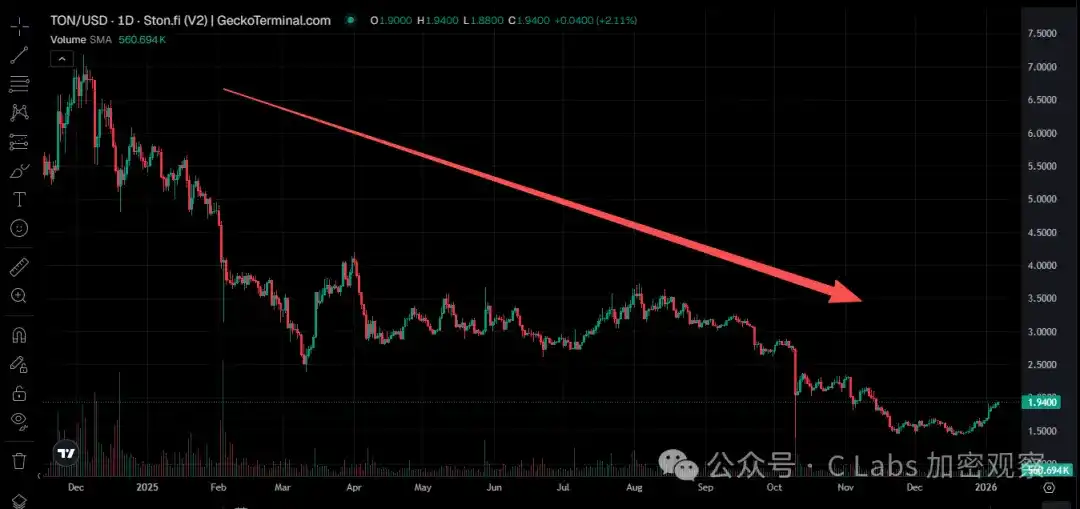
The loss did not stem from a collapse in the main business but was due to a significant decline in the value of Toncoin (TON) held by the company in 2025, leading to a write-down of related assets.

PART 01: Telegram's Development History

Telegram was founded in 2013 and is one of the world's most important instant messaging platforms.

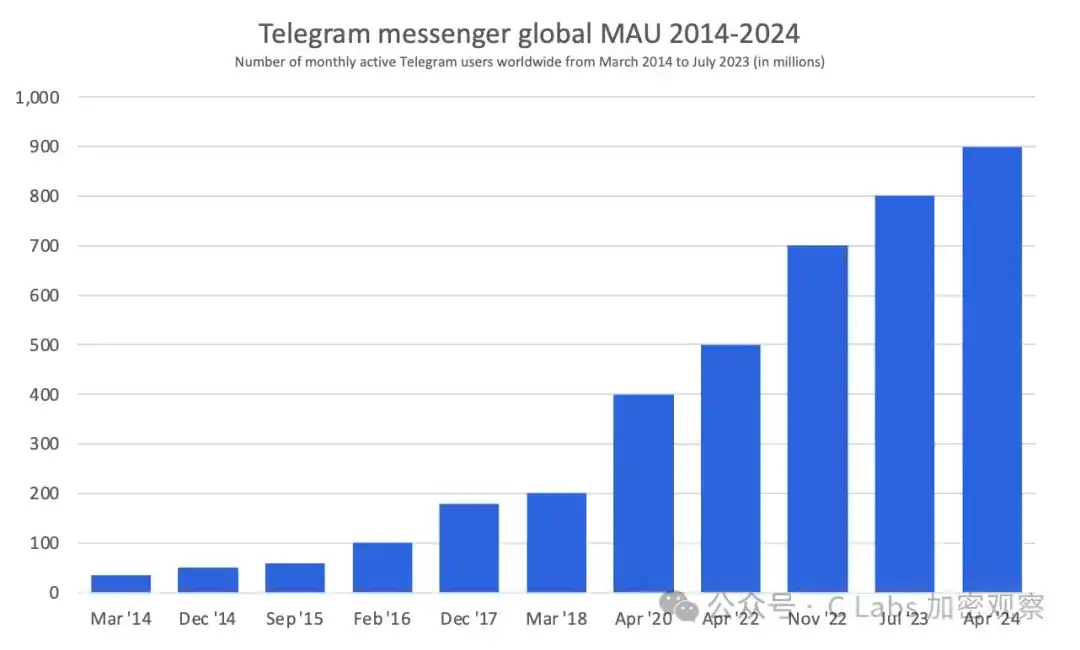
As of 2025, Telegram's monthly active users have exceeded 900 million, covering Europe, the Middle East, South America, and emerging markets, making it one of the fastest-growing social applications globally.
For crypto users, Telegram has become the de facto "public discussion layer" of the crypto industry: a large number of exchange announcements, project governance, airdrop information, OTC trading, and on-chain communities use Telegram as their core platform.

This gives it the dual attributes of a social platform and financial information infrastructure.

PART 02: IPO Plans Shelved

Although Telegram announced preparations for an IPO, the practical obstacle is that its founder, Pavel Durov, is still under investigation in France (Breaking! TG Founder Arrested, TON Price Plummets).

Telegram has clearly stated that it will not proceed with the listing until related compliance issues are clearer.

Fortunately, Telegram is not short of capital support. In May 2025, the company completed a $1.7 billion convertible bond financing, backed by top institutions including BlackRock and Mubadala.

PART 03: Telegram's Relationship with TON

The relationship between Telegram and TON is also complex.

In 2017, Telegram launched the blockchain project TON (Telegram Open Network), aiming to embed a payment system into the messaging app, and raised approximately $1.7 billion in 2018. However, in 2019, it was forced to halt the project after the SEC deemed it an unregistered securities offering. Telegram settled with regulators and exited the project in 2020.

Subsequently, TON was reborn as a community public chain, and Telegram re-engaged with it in a "non-official but deeply integrated" manner, which saw significant growth in 2024.
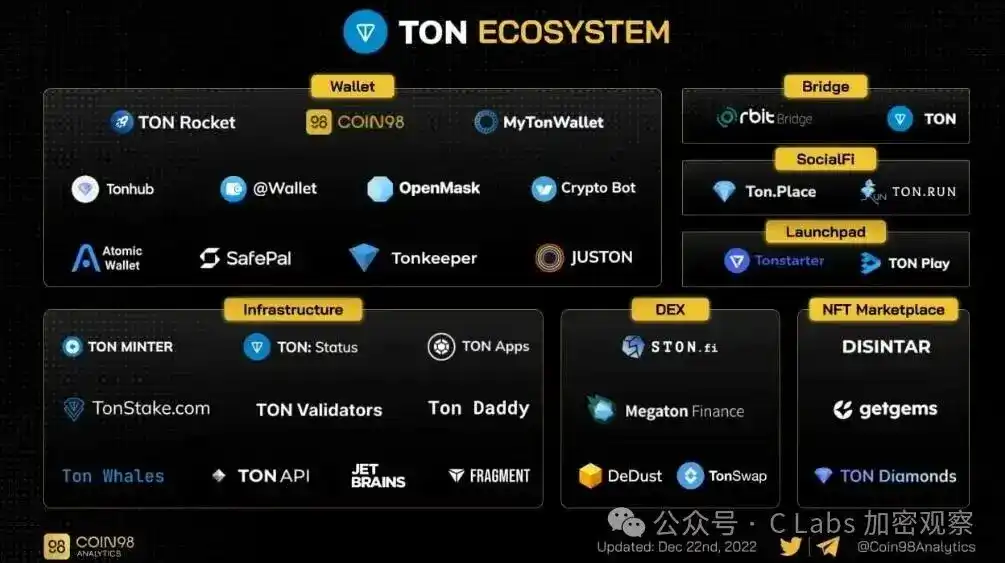
Unfortunately, in 2024, after founder Durov was arrested, the rapid progress came to an abrupt halt (TON Chain Crashed? No New Blocks for a Long Time).

Most of the once-popular TON ecosystem projects have now faded, with token prices generally down over 70%:
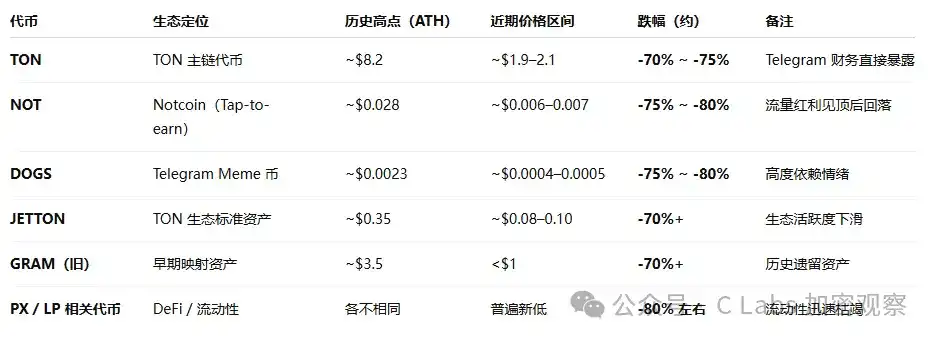
However, according to the latest financial report, the relationship between Telegram and TON has already gone beyond "official support for a public chain."

Significant Proportion of TON-Related Revenue

The financials show that about one-third of Telegram's revenue (approximately $300 million) comes from exclusive agreements related to TON, including wallet integration, payment functions, and ecosystem collaboration.

At the same time, Telegram is also one of the most significant sources of TON circulation, having sold over $450 million worth of TON since 2025, accounting for about 10% of TON's current market value.

This means that selling coins is Telegram's main business, and simultaneously, Telegram is the biggest whale dumping TON!

Perguntas relacionadas

QWhat was Telegram's revenue in the first half of 2025 and what was the year-over-year growth rate?

ATelegram's revenue in the first half of 2025 was $870 million, representing a 65% year-over-year growth compared to the same period in 2024.

QWhy did Telegram report a net loss in the first half of 2025 despite significant revenue growth?

ATelegram reported a net loss of over $220 million in the first half of 2025 due to a significant decline in the value of the Toncoin (TON) it held, which led to an accounting write-down of these assets.

QWhat is the relationship between Telegram and the TON blockchain project?

ATelegram initially launched the TON blockchain project in 2017 but was forced to abandon it in 2020 after a settlement with the SEC. The project was later revived by the community, and Telegram has since re-engaged with it in a 'non-official but deeply integrated' manner, with TON-related services now contributing significantly to its revenue.

QHow much of Telegram's revenue came from TON-related exclusive agreements in the first half of 2025?

AApproximately one-third of Telegram's revenue, about $300 million, came from TON-related exclusive agreements in the first half of 2025.

QWhat major financing did Telegram secure in May 2025 and which institutions were involved?

AIn May 2025, Telegram completed a $1.7 billion convertible bond financing round with backing from top-tier institutions including BlackRock and Mubadala.

Leituras Relacionadas

Will the Fed Definitely Raise Interest Rates in September? How Will Crypto and U.S. Stocks Withstand the Pressure?

The market's expectation for a September Fed rate hike surged dramatically in early August, jumping from under 50% to over 80% within a week. This shift followed a contentious July FOMC meeting, where a 9-3 vote to hold rates revealed growing dissent from hawkish members advocating for an immediate hike to combat persistent inflation. The primary catalyst for this repricing is rising oil prices, driven by renewed geopolitical tensions around the Strait of Hormuz, which threaten global supply. Energy costs directly influence inflation metrics, making the upcoming July CPI report (due August 12th) a critical data point. If it shows inflation reaccelerating, the probability of a September hike will solidify. For Bitcoin and crypto assets, this is typically bearish news. Bitcoin continues to behave as a high-beta, liquidity-sensitive risk asset. A rate hike raises the opportunity cost of holding non-yielding assets and could drive capital toward money markets, pressuring crypto prices in the short term. However, historical patterns suggest that if a hike is perceived as the end of a tightening cycle rather than the start, any negative price impact may be brief. U.S. stocks, particularly crypto-linked equities like Coinbase and growth-oriented tech stocks, are also vulnerable. Higher rates increase discount rates in valuation models, putting pressure on high-multiple companies. This coincides with a pivotal tech earnings season where investor focus has shifted from massive AI capital expenditure to tangible revenue and cash flow generation. Companies with negative cash flow and weak growth narratives could face heightened volatility if borrowing costs rise in September. In summary, a September Fed hike has evolved into a mainstream market scenario. Key factors to watch are oil prices, the July CPI report, and Fed communications, which will determine the final decision and its impact on volatile crypto and equity markets.

marsbitHá 1m

Will the Fed Definitely Raise Interest Rates in September? How Will Crypto and U.S. Stocks Withstand the Pressure?

marsbitHá 1m

A 'Overlooked' Market Event: Joint US-Japan-South Korea Intervention, Rare US Treasury Involvement, and Bessent's Quiet 'Market Rescue'?

Summary: The United States, Japan, and South Korea executed their largest coordinated foreign exchange intervention in nearly 30 years. The action targeted depreciation pressure on the Japanese yen and South Korean won. This move is seen as a significant effort by the US to stabilize the financial markets of its key allies and prevent the spillover of risks. Key details: * Japan reportedly intervened on July 30 using approximately 8.45 trillion yen (about $52.8 billion). South Korean authorities also intervened that day, selling dollars to support the won. * Notably, the US Treasury Department intervened directly in yen markets for the first time in roughly 30 years. The New York Fed, reportedly acting on behalf of the Treasury, sold euros to buy yen via Goldman Sachs and Morgan Stanley on July 31. Analysts view the use of the euro-yen pair as a way to alleviate yen pressure without adding selling pressure to the US dollar. * Prior to the action, the New York Fed conducted "rate checks" on both USD/JPY and EUR/JPY, a newer signaling tool that falls between verbal and physical intervention. The intervention is interpreted as going beyond traditional currency stabilization. Analysts, such as Michael Hartnett of Bank of America, suggest it resembles a "Price Keeping Operation" for the AI era. The core US objectives are perceived to be: 1. Preventing rapid yen depreciation from triggering a sharp rise in Japanese government bond yields. 2. Containing financial stress from spreading across Asian markets like South Korea and Japan. 3. Reducing the risk of disorderly capital flows impacting the US bond market. This coordinated action underscores the importance of Japan and South Korea as critical partners in the US semiconductor and AI supply chain. Stabilizing their financial markets is seen as vital to mitigating risks to the broader tech industry and the US market itself. The intervention coincides with market pressures, including the KOSDAQ index hitting a low since October 2022. While seen as a move to control volatility, some analysts caution it may not fundamentally reverse existing market trends.

marsbitHá 5m

A 'Overlooked' Market Event: Joint US-Japan-South Korea Intervention, Rare US Treasury Involvement, and Bessent's Quiet 'Market Rescue'?

marsbitHá 5m

Will the Federal Reserve Definitely Raise Interest Rates in September? How Will Cryptocurrencies and US Stocks Bear the Pressure?

In early August 2024, market expectations for a September Federal Reserve rate hike surged dramatically, from below 50% to over 80%, driven by renewed inflation concerns. This shift followed a contentious July FOMC meeting where a 9-3 vote to hold rates revealed a growing hawkish faction advocating for an immediate hike, citing prolonged above-target inflation. The key catalyst is escalating conflict near the Strait of Hormuz, which has pushed oil prices up approximately 20% in July, threatening to reignite inflation. The next critical data point is the July CPI report on August 12th; a hot reading could solidify hike expectations. For crypto assets, particularly Bitcoin, this represents near-term pressure. Bitcoin continues to exhibit high-beta, risk-on characteristics, making it sensitive to tightening liquidity and higher opportunity costs. However, historical precedent suggests that if a hike is perceived as the cycle's end rather than its start, the negative impact may be brief, with markets quickly pivoting to anticipate future rate cuts. U.S. stocks, especially crypto-linked equities like Coinbase and high-valuation tech stocks, face amplified volatility. Higher rates increase discount rates in valuation models, pressuring growth stocks. This coincides with a pivotal tech earnings season where investor focus has shifted from massive AI capital expenditures to demonstrable revenue and cash flow generation. Companies with negative cash flows and weak growth narratives could see severe pressure if a September hike materializes, as financing costs would rise. Key indicators to watch include oil prices, upcoming inflation data, and Fed commentary at events like the Jackson Hole symposium.

Odaily星球日报Há 5m

Will the Federal Reserve Definitely Raise Interest Rates in September? How Will Cryptocurrencies and US Stocks Bear the Pressure?

Odaily星球日报Há 5m

Trading

Spot
活动图片