"Startled from a deathbed illness," SBF desperately flatters Trump for pardon but gets rejected

marsbitPublicado em 2026-02-25Última atualização em 2026-02-25

Resumo

Sam Bankman-Fried (SBF), the convicted cryptocurrency fraudster and former major donor to the Democratic Party, has recently adopted a pro-Trump and MAGA-aligned rhetoric in a series of social media posts. Despite being sentenced to 25 years in federal prison, SBF has been actively praising Donald Trump and criticizing what he calls the "Deep State" and partisan bias in the judiciary, explicitly naming the judge who sentenced him. His apparent goal is to seek a presidential pardon from Trump, who has previously pardoned high-profile financial criminals, including Binance founder Changpeng Zhao (CZ). However, the Trump administration has reiterated that he has no intention of pardoning SBF, along with several other notable prisoners. SBF, once a prominent supporter of progressive causes, began shifting toward conservative alignment after the collapse of FTX, even planning to appear on Tucker Carlson’s show as a Republican. Despite his efforts, his history as a top Biden donor and his notorious reputation in crypto make a pardon highly unlikely. SBF continues to appeal and maintains an active, conservatively-focused social media presence through approved prison communication channels.

Author: Fortune

Compiled by: Felix, PANews

Convicted cryptocurrency fraudster Sam Bankman-Fried (SBF) was once a major donor to the Democratic Party, but his recent public statements have taken on a distinct "MAGA" (Make America Great Again) tone. In a recent manifesto posted on platform X, he wrote: "Judge Lewis Kaplan, appointed by Clinton, showed no restraint in his political bias when sentencing me. I admire President Donald Trump because he dares to stand up to this 'partisan, out-of-control radical'!"

This is just one of dozens of tweets SBF has posted in recent weeks, filled with attacks on the "Deep State" and other MAGA villains. Despite being one of the most notorious financial criminals of the century, currently serving a 25-year sentence in federal prison, he remains active.

Although SBF has not explicitly stated it, the purpose of his social media frenzy is obvious: to persuade President Donald Trump to rescue him from prison. Given that Trump has pardoned several high-profile individuals convicted of financial crimes, including SBF's former rival, Binance founder Changpeng Zhao (CZ), this strategy seems logical.

However, for SBF, his plea for Trump's mercy appears futile. In response to recent social media advocacy, a White House spokesperson reiterated to Fortune magazine that Trump has no intention of pardoning SBF.

In an email, the spokesperson referenced Trump's remarks in January of this year, when the president explicitly stated that he did not plan to pardon SBF or several other high-profile prisoners, including former New Jersey Senator Robert Menendez and ousted Venezuelan President Nicolás Maduro. The spokesperson wrote: "The president is the final arbiter of all pardon matters."

SBF's lawyers did not respond to the matter.

Failed Attempt

SBF has long been a supporter of progressive causes, and his parents, both law professors at Stanford University, wield considerable influence among top Democrats. However, when SBF's fraudulent crypto empire collapsed in November 2022, the founder began planning a shift to the right. During the trial, a private document revealed that SBF planned to appear on conservative TV host Tucker Carlson's show and "come out as a Republican."

On the surface, this strategy seemed reasonable, especially in the current political climate. Trump is set to take office in January 2025 and has promised to roll back the Biden administration's crackdown on cryptocurrencies. Under Trump's leadership, regulators have withdrawn key lawsuits against blockchain companies, and the Department of Justice has shifted its approach to cryptocurrency enforcement.

However, Washington insiders say SBF's status as a top donor to Biden, combined with his continued notoriety in the crypto industry, made his pardon plea a long shot from the start. Even his unauthorized appearance on Tucker Carlson's show last year (which reportedly landed him in solitary confinement) failed to turn the tide.

Despite the slim chances, SBF has not given up. He is still appealing his conviction in federal appellate court. His X account is filled with posts promoting his newly adopted conservative identity, which critics have dubbed a "puppet account." (In his bio, SBF clarifies that he communicates content to agents via Bureau of Prisons-approved phones and emails for posting.)

A recent post read: "Democrats love to censor 'misinformation' on social media," followed by praise for Trump's campaign platform. "Truth Social and GETTR have always put free speech first."

Related reading: SBF's first prison interview: I was targeted by the DOJ for donating to the Republican Party, begging President Trump's pardon


Perguntas relacionadas

QWhat is the main reason SBF (Sam Bankman-Fried) is trying to align himself with MAGA and Donald Trump?

ASBF is attempting to seek a pardon from Donald Trump by publicly supporting him and criticizing his opponents, hoping for a commutation of his 25-year prison sentence for cryptocurrency fraud.

QHow did the White House respond to SBF's recent efforts to gain support from Trump?

AA White House spokesperson reiterated to Fortune magazine that Trump has no intention of pardoning SBF, referencing Trump's earlier statements in January where he explicitly stated he would not pardon SBF and other high-profile prisoners.

QWhat was SBF's political affiliation before his legal troubles, and how did it change?

ASBF was previously a major donor to the Democratic Party and supported progressive causes. However, after the collapse of his crypto empire in November 2022, he began shifting to the right, planning to appear as a Republican on conservative media.

QWhat strategy did SBF use to promote his new conservative identity while in prison?

ASBF used his X (formerly Twitter) account, managed by an approved intermediary through prison-approved phone and email, to post numerous messages criticizing the 'Deep State' and praising Trump, in an effort to build conservative support.

QWhy is SBF's attempt to gain a pardon from Trump considered unlikely to succeed?

ASBF's past as a top donor to Biden, his notorious reputation in the crypto industry, and the explicit rejection from Trump's camp make his pardon plea highly unlikely, despite his efforts to align with conservative causes.

Leituras Relacionadas

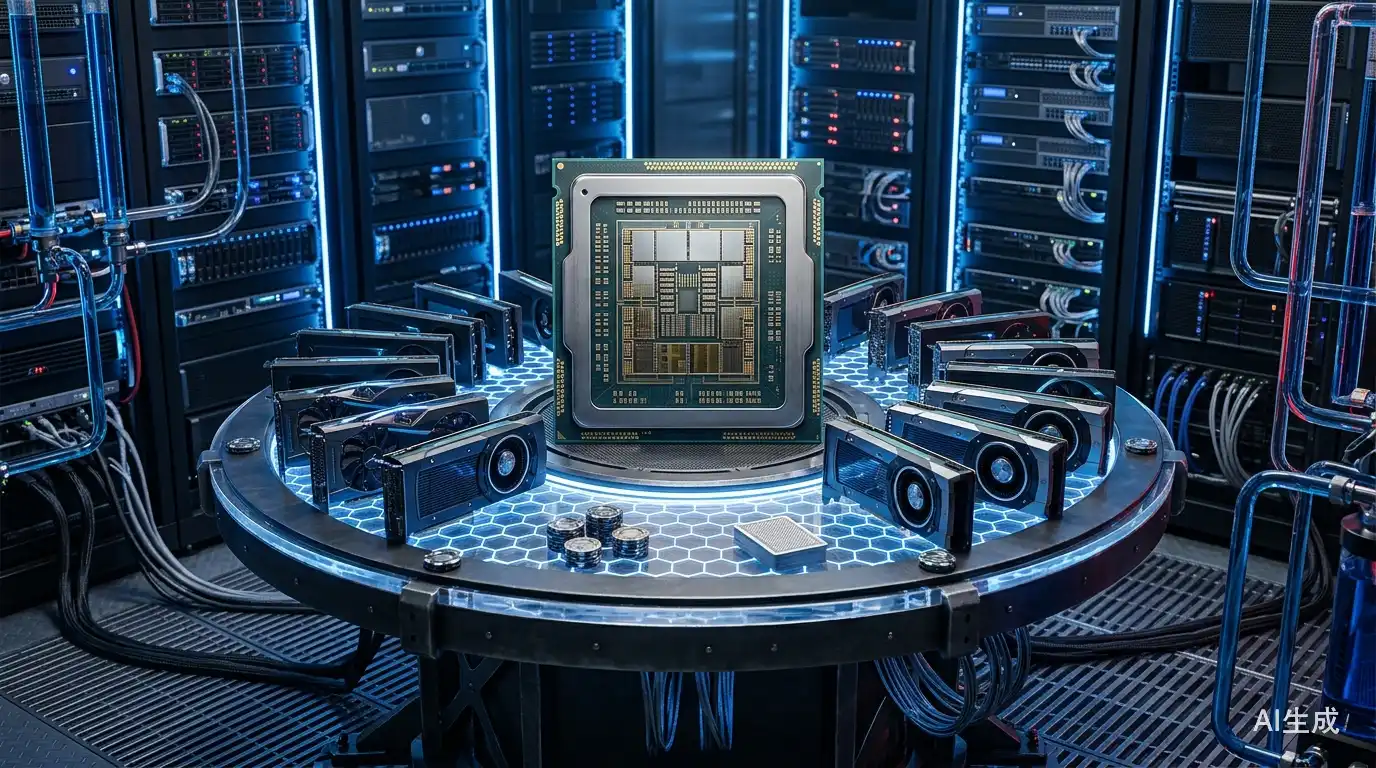
CPU Makes a Comeback to the Table, A $170 Billion "Power Seizure" Drama Begins

A new era is dawning for the server CPU (Central Processing Unit), driven by the shift from AI model training to large-scale reasoning and the rise of Agentic AI. This article explores how the CPU is reclaiming a central role in the AI data center. For years, the focus has been on the GPU (Graphics Processing Unit) for AI training. However, as AI moves to the inference and Agent phase—where tasks involve complex, multi-step reasoning, tool calls, and data management—the workload balance is flipping. Studies show CPUs now handle over 70% of the workload in Agentic AI, up from 10-30% in training. This is because Agent tasks generate massive intermediate data (KV Cache) that exceeds GPU memory, forcing it to be offloaded to the CPU's larger, more scalable memory pools. This increased importance is translating into market changes. Major players are taking note: NVIDIA launched its first standalone CPU line, Vera, based on ARM architecture and optimized for Agent performance. AMD doubled its server CPU market forecast to over $1200 billion by 2030. Analyst reports project the total server CPU market could reach $1700 billion by 2030, with AI-driven demand being a primary driver. Furthermore, the classic ratio of CPUs to GPUs in AI servers is rapidly changing, converging from 1:8 toward 1:1 for Agent deployments. This surge in demand has led to a rare industry-wide price increase of 10-15% for server CPUs from Intel and AMD, breaking a decade-long trend of "more performance for the same price." Demand is bifurcating into high-core-count CPUs for in-rack GPU support and moderate-core CPUs for standalone Agent task orchestration. In China, this global trend presents an opportunity for domestic CPU manufacturers like Hygon (海光信息) and Huawei Kunpeng, who are bolstered by both growing AI infrastructure needs and national policies promoting technological self-reliance ("xin chuang"). The maturity of their software ecosystems is also accelerating, evidenced by faster adaptation to new AI models. In conclusion, the narrative is shifting from a GPU-centric view to one where CPU-GPU synergy is critical. The CPU is no longer a peripheral component but a performance-defining bottleneck and a key growth driver in the AI hardware stack, opening a massive new market estimated in the hundreds of billions of dollars.

marsbitHá 8h

CPU Makes a Comeback to the Table, A $170 Billion "Power Seizure" Drama Begins

marsbitHá 8h

TechFlow Intelligence: AMD AI Director Publicly Criticizes Claude Code for "Becoming Dumber and Lazier", Trump Claims Full Ceasefire in Hormuz But Strait Still Has 80 Unexploded Mines

TechFlow Intelligence Report: This daily digest covers key developments in AI, crypto, hardware, and geopolitics. In AI, SK Telecom faces US export control scrutiny over its partnership with Anthropic, while a Gemini user reports being misled in a scam scenario, sparking safety debates. China's Z.AI launches the GLM-5.2 model, rivaling Claude Opus without NVIDIA chips. In crypto, Bithumb lists ReProtocol, and Upbit delists KernelDAO. On the hardware front, MIT researchers build a custom OS to study chips, ASML denies US claims its advanced lithography machines are in China, and Amazon considers selling its in-house AI chips. Apple's future A21 Pro chip may use TSMC's latest N2P process. Major tech issues include 10,000 GitHub repositories distributing malware and Apple patching a critical eavesdropping flaw in Beats earbuds. US stocks rise, led by semiconductors, with Intel surging 10.6%, while SpaceX falls 3.5%. Geopolitically, despite a US-Iran deal, the Strait of Hormuz remains risky with ~80 uncleared mines, stalling 80M barrels of oil on standby tankers. Iran postpones Switzerland talks, and Trump calls the agreement an "unconditional surrender." The report highlights a contrast: temporary geopolitical calm versus the ongoing, fundamental restructuring of tech supply chains and chip independence.

marsbitHá 8h

TechFlow Intelligence: AMD AI Director Publicly Criticizes Claude Code for "Becoming Dumber and Lazier", Trump Claims Full Ceasefire in Hormuz But Strait Still Has 80 Unexploded Mines

marsbitHá 8h

Trading

Spot
Futuros
活动图片