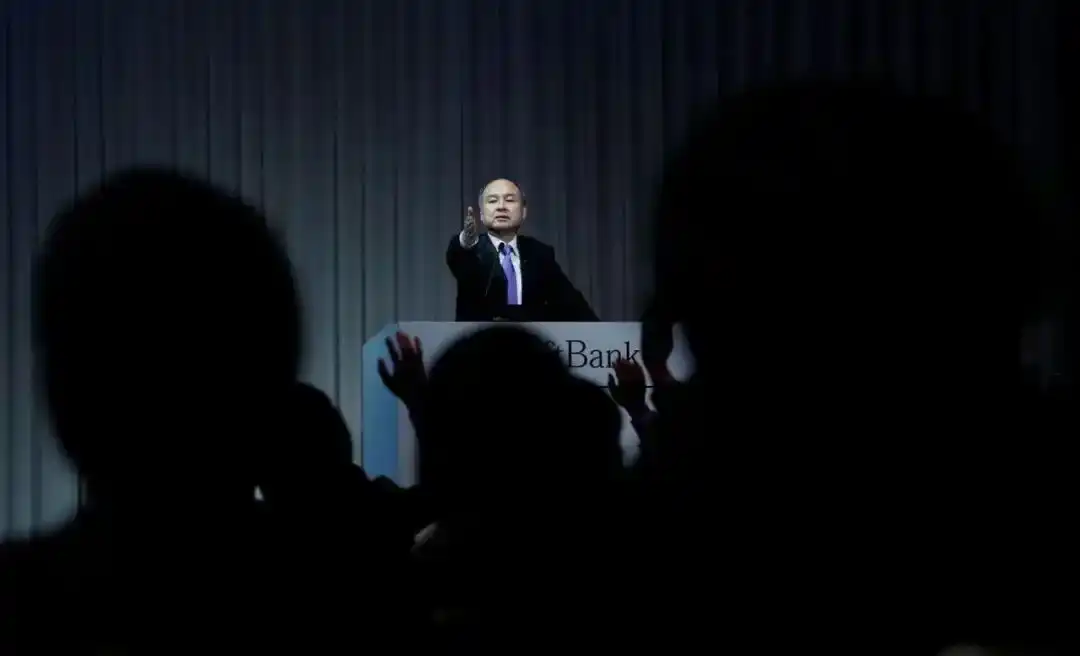
SoftBank's Son, Bankrupted by Good Stories, Awaits His Next Alibaba

marsbitPublicado em 2026-06-09Última atualização em 2026-06-09

Resumo

Masayoshi Son is back. After years defined by Vision Fund's massive losses and costly missteps like WeWork—which shattered market confidence and led to billions in write-downs—Son has found redemption through AI. His early, high-conviction bets are paying off handsomely. Arm, acquired for $32 billion in 2016 and once a heavily leveraged burden, has become a gold mine amid the AI compute boom, delivering roughly a 10x return for SoftBank after its 2023 IPO. More crucially, SoftBank has made an enormous, concentrated bet on OpenAI, committing over $64 billion for a roughly 13% stake. This investment is already showing massive paper gains, contributing significantly to SoftBank's soaring valuation and propelling Son back to the top as Asia's richest person. The narrative has shifted from the "fool" who fell for grandiose stories to the visionary who endured a brutal downturn and is now being rewarded for his early faith in artificial intelligence.

Masayoshi Son is back.

In recent years, when people mention SoftBank, they no longer talk about him being Jack Ma's 'benefactor'. More often, they think of the failed investment in WeWork, the massive losses of the Vision Fund, and the Japanese investor who was repeatedly humbled by the market during the tech bubble.

But today, AI assets are being repriced. The value of Son's shares in Arm and OpenAI is rising. SoftBank's stock price has surged, Son's fortune has climbed back to the top, and he is once again Asia's richest person.

Evaporating $70 Billion

People fear the unknown, so someone who hasn't experienced a bubble bursting might be afraid.

But not Masayoshi Son. At 67, he has experienced the peak of the internet 20 years ago and was left bruised when the bubble burst.

Son was first chosen by fortune in the late 1990s. Back then, the internet was like a newly discovered magic. Yahoo, portals, e-commerce, online trading—anything related to the web was believed by the capital markets to be rewriting the world. SoftBank also changed during that time. It was no longer just a Japanese software company but became a massive basket filled with internet stocks. Son bet on Yahoo and Yahoo Japan, and SoftBank's stock price was pushed to dizzying heights by the bubble.

In early 2000, Son's wealth became unreal. At that time, his net worth could increase by about $10 billion in a week, even briefly surpassing Bill Gates to become the world's richest person for three days. A Japanese entrepreneur of Korean descent from Kyushu, relying on extreme belief in the internet, suddenly stood at the pinnacle of global wealth.

After the dot-com bubble burst, SoftBank's stock plummeted, and Son's personal wealth evaporated by about $70 billion from a peak of roughly $76 billion. However, Son wasn't written off as a failure of that bubble era because he still held Alibaba. In the autumn of 2014, Alibaba listed on the NYSE. With the huge success of this single investment, Son's personal wealth exceeded $58 billion. That's equivalent to Warren Buffett's total investment gains over 70 years.

It was the most important and successful venture capital investment in the history of China's internet. This investment forged Alibaba and also made Masayoshi Son.

Around 2017, the Vision Fund was established with a size close to $100 billion. Son became the person tech startups worldwide most wanted to meet and the most powerful money bag in Silicon Valley.

Armed with funds from the Middle East, Apple, Qualcomm, and others, he traveled through Silicon Valley, China, India, and Southeast Asia, pouring money into ride-sharing, food delivery, fintech, autonomous driving, and co-working spaces. Those companies all talked about scale, network effects, winner-takes-all, and changing the world.

Son Felt He Was Getting Old

Son's fall from grace this time started with WeWork.

An ordinary failed investment at most hurts profits, but WeWork damaged the market's trust in Son's judgment and his acumen.


In early 2019, WeWork's valuation was still as high as $47 billion. Its founder, Adam Neumann, was charismatic and wildly ambitious. He never described his company as just an office rental business but as a lifestyle, a community, a future work order.

Son liked this kind of person because he was one himself. He spent his life searching for founders who framed business on a human scale.

But not everyone bought it.

In August 2019, WeWork filed its IPO prospectus. Details previously obscured in the private financing market by grand visions were now under the spotlight, laid bare before investors.

The company was burning massive cash, weighed down by heavy leases, plagued by governance chaos, and had a founder with excessive power. It claimed to be a tech company, but the more Wall Street looked, the more its core business appeared to be leasing office buildings and subdividing and subletting them. This business could hardly support a $47 billion valuation.

The market began to doubt Son's own abilities, forcing him to reflect on his investment style: Were those who could articulate grand visions more likely to get Son's money? Did he value founder charisma too much and financial discipline too lightly? Why was SoftBank willing to give such high valuations? Why believe a company that hadn't proven profitability could burn cash into a future? Could a founder who was good at saying 'change the world' make Son overlook due diligence, valuation, and business models?

Months later, WeWork withdrew its IPO. Adam Neumann resigned as CEO. The valuation plummeted from $47 billion to around $8 billion.

But by then, SoftBank and WeWork were in the same boat, unable to disembark. SoftBank had no choice but to bail it out.

Heaven abhors excess; human affairs avoid perfection. The company once lifted to the clouds by Son suddenly became the most glaring loss on SoftBank's books.

In November 2019, SoftBank posted its first quarterly loss in 14 years. The Vision Fund alone lost nearly $9 billion in a single quarter. Son admitted his misjudgment and that he had turned a blind eye to WeWork's governance issues. Because he wanted so desperately to find the next Alibaba, to replicate that victory of betting early when everyone else couldn't see.

In 2020, the wounds widened. The pandemic hit global markets. Uber underperformed its original myth. Oyo fell into layoffs and governance controversies. OneWeb filed for bankruptcy. Wirecard imploded, and later Greensill collapsed.

The money Son scattered had basically turned into shattered fragments.

Then, in 2021, fortune briefly glanced his way again. DoorDash, Coupang, and others went public. SoftBank's stock surged, and buybacks pushed the price higher. That year, Son returned to the top of Japan's wealth list. For a while, the outside world thought WeWork was just an ugly interlude, and the Vision Fund could eventually cover its losses with a few big wins. Son seemed about to prove once more that he wasn't wrong, just early to the market again.

But it was just a brief recovery. Starting in the second half of 2021, the winds changed. China tightened internet regulations, US inflation heated up, interest rates rose, and global tech stocks receded. The market was no longer willing to pay infinite money for 'will be big in the future.' Companies reliant on financing, scale, and imagination to support their valuations suddenly had to answer the same old question: When exactly will you make money?

Heaven and Earth have cycles; life has its ups and downs. Observing the way of Heaven and acting accordingly—that is all.

In 2022, Son truly fell into the biggest trough of his life.

The SoftBank Vision Fund lost about $27.5 billion in the 2021 fiscal year. In August 2022, SoftBank announced a net loss of about $23.4 billion for a single quarter.

He said he cried for two whole weeks. "For two weeks, I cried every day. I did nothing. I was anxious, didn't know what to do."

Recalling that period later, Son left a sincere monologue: "I thought about how I am already old, my remaining life is limited, but I haven't achieved anything. I cried a lot. I asked myself, am I really going to grow old like this and then die? People call me a successful businessman? Entrepreneur? Business guru? But I really felt sorry for myself."

SoftBank also began to shrink. New investments slowed dramatically. The Vision Fund team faced layoffs. Assets were continuously monetized. Alibaba, the功臣 that once helped Son turn his fortunes, was also gradually sold off by SoftBank to improve its financial structure. Son's business empire was under siege from all sides, and his father was taken by cancer.

In recent years, the companies that excited Son became strings of write-downs and losses. He said, "I would rather accept my own stupidity and ignorance, accept the wrong decisions I made, so I can learn from them." He admitted that he was too happy when he saw huge profits in the past and now felt ashamed. He also said that if he had been more selective and invested better at the time, the damage wouldn't have been so great.

Many said that Son during those years was not like the Son they knew. He grew quiet and rarely reappeared in the public eye.

He said SoftBank would enter "defense mode," and he would focus on Arm in the coming years.

Looking back today, this was another great investment by Son.

AI Has Forgiven Son

But initially, Arm didn't seem like a destined success; the deal put Son under immense pressure.

In the summer of 2016, SoftBank spent a whopping $32 billion in cash to acquire a 90% stake in Arm, a 40% premium.

Arm was, of course, a good company then. But most of the funds for the acquisition came from bank loans—leverage of 1.5 times raised by an already debt-laden SoftBank. Many investors doubted if Arm was really worth it. Even after being taken private by SoftBank, Arm's increased investments led to falling profit margins and severe performance declines at one point. SoftBank nearly sold Arm to Nvidia.

It wasn't until after ChatGPT that the market re-understood computing power. The vast rivers of artificial intelligence made Arm shine brightly. In September 2023, Arm listed on Nasdaq with an IPO valuation of about $54.5 billion. From about 14 trillion yen at the end of March 2023, SoftBank's NAV rose to about 34 trillion yen in June 2024. Arm now constitutes the bulk of SoftBank's shareholding value. SoftBank stated in its annual report that Arm has delivered returns of 24.6 trillion yen to group shareholders, roughly a 10x return.
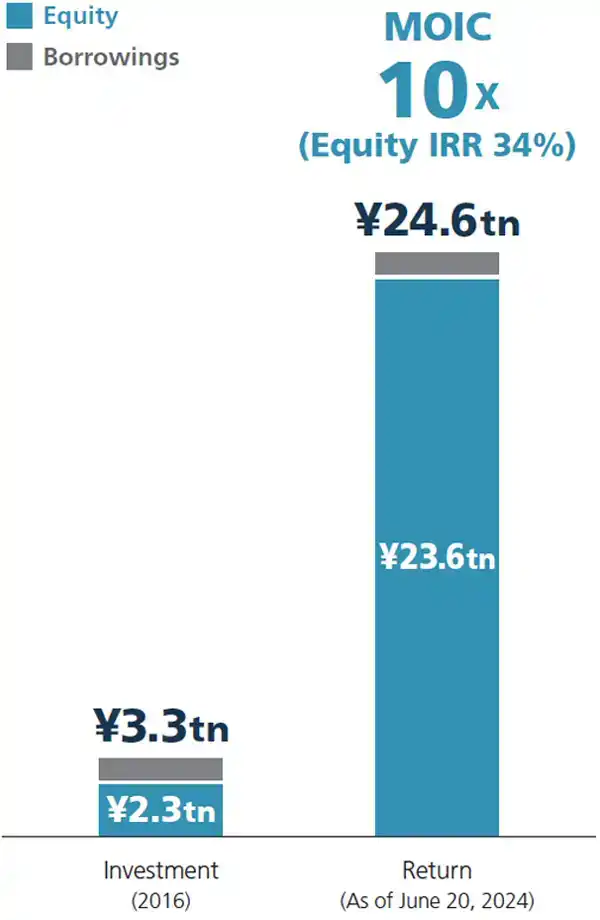
If Arm gave Son a pull out of the mud, then OpenAI might be his comeback battle.

In January 2025, OpenAI, SoftBank, Oracle, and MGX announced the Stargate project, planning to build large-scale AI infrastructure in the US, with potential investments up to $500 billion over the next four years.

Subsequently, SoftBank's investments in OpenAI became very aggressive.

In 2025, SoftBank completed an investment of about $30 billion in OpenAI. By February 2026, SoftBank signed an additional $30 billion investment agreement with OpenAI. According to SoftBank's announcement, upon completion of the top-up, SoftBank's cumulative investment in OpenAI is expected to reach $64.6 billion for an approximately 13% stake. In April 2026, SoftBank executed the first tranche of this additional investment, amounting to $10 billion.

In March 2026, SoftBank secured a $40 billion bridge loan, primarily for the subsequent OpenAI investment. It is also selling or monetizing other assets, using Arm shares, SoftBank telecom assets, etc., as financing leverage.
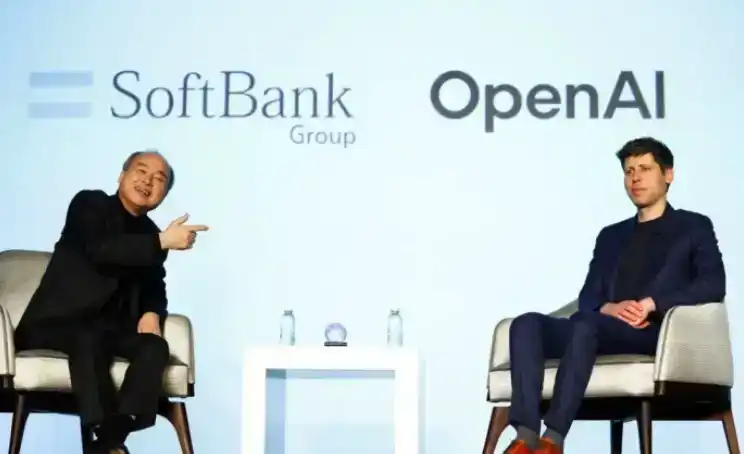
This investment is classic Son. Once again, he is putting SoftBank's most valuable assets on the line to buy a ticket to the next round of the future.

In the internet era, he bet himself on Yahoo and Alibaba; in the mobile internet era, he heavily invested in telecoms, Sprint, Arm; in the Vision Fund era, he scattered money to startups telling huge stories. And in the AI era, he is pushing SoftBank towards OpenAI and AI infrastructure.

At the end of March this year, SoftBank disclosed its OpenAI investment cost at about $34.6 billion, with a fair value of about $79.6 billion, resulting in cumulative investment gains of about $45 billion.

Recently, SoftBank's stock soared, its market cap once surpassing Toyota, making it one of Japan's most sought-after companies. Son also reclaimed his title as Asia's richest person.

Fortune is once again on Son's side.

Criptomoedas em alta

Perguntas relacionadas

QWhy did the WeWork failure significantly damage Masayoshi Son's reputation and investment strategy?

AWeWork's failure, from a $47 billion valuation to a collapse before its planned IPO, exposed deep flaws in its business model, financials, and governance. It damaged Son's reputation because it became a symbol of his investment strategy prioritizing grand vision and charismatic founders over rigorous due diligence, financial discipline, and sustainable business models. It led the market to question his judgment and marked the beginning of massive losses for the Vision Fund.

QWhat role did the acquisition and IPO of Arm play in Masayoshi Son's recent financial recovery?

AThe acquisition of Arm in 2016, though initially heavily leveraged and criticized, became a cornerstone of Son's recovery. With the AI boom driving demand for compute power, Arm's value soared. Its successful IPO in 2023 at a $54.5 billion valuation significantly boosted SoftBank's asset value. Arm now constitutes a major part of SoftBank's holdings, delivering an approximately 10x return and helping to restore investor confidence and financial stability.

QHow did Masayoshi Son's investment in OpenAI contribute to his return as Asia's richest person?

ASon made aggressive, large-scale investments in OpenAI, with SoftBank's total commitment reaching around $64.6 billion for a roughly 13% stake. By March 2026, the fair value of this stake was approximately $79.6 billion against a cost of $34.6 billion, generating an unrealized gain of about $45 billion. This massive bet on a leading AI company, coupled with Arm's success, fueled a surge in SoftBank's stock price and market capitalization, propelling Son back to the top of Asia's wealth rankings.

QWhat major factors led to the massive losses of SoftBank's Vision Fund after 2021?

AKey factors include: the collapse of major portfolio companies like WeWork; broader market shifts where rising interest rates and inflation ended the era of cheap capital, forcing unprofitable tech companies to face scrutiny; regulatory tightening in China affecting tech investments; and underperformance or failures of other bets like Uber, Oyo, OneWeb, Wirecard, and Greensill. These combined to create unprecedented losses for the Vision Fund, culminating in a $27.5 billion loss for the 2021 fiscal year.

QHow did Masayoshi Son describe his personal and emotional state during the low point of his career in 2022?

ASon described being deeply distressed, stating he cried for two weeks straight, felt anxious, and did nothing. He questioned his life's achievements, feeling that despite being labeled a successful businessman, he had accomplished nothing meaningful as he grew older. He expressed shame over past mistakes driven by excitement over large profits and acknowledged his 'stupidity and ignorance' in making poor investment decisions, vowing to learn from them.

Leituras Relacionadas

The Changing Landscape: What Are Crypto VCs Experiencing?

Title: The Shifting Landscape of Crypto Venture Capital The era of dedicated crypto venture capital funds is undergoing a significant transformation. Once essential for navigating the sector's complexity and high risk, these specialized funds are now facing an identity crisis as the market matures. This shift mirrors historical patterns in other specialized investment classes like cleantech and SPACs, where initial information advantages dissipate as technologies become mainstream and integrated into existing industry frameworks. The article argues that crypto is reaching a critical inflection point, transitioning from a "building phase" to an "integration phase." Major players like Stripe, BlackRock, and Visa now engage with crypto not for its novel mechanics but as a foundational financial infrastructure. Their needs—regulatory compliance, banking partnerships, distribution channels—align with traditional fintech, a domain easily understood by large, generalist funds like Sequoia and Founders Fund. This evolution creates a "barbell effect" within the VC landscape. On one end are massive, diversified platforms that can incorporate crypto as one vertical among many. On the other are small, nimble funds focused on niche, experimental projects. The middle ground—medium-sized dedicated crypto funds—is being squeezed out. Their typical fund size makes it impossible to generate sufficient returns solely from early-stage crypto bets, yet they cannot compete with giants for later-stage deals. Consequently, leading crypto-native firms like Paradigm and Framework Ventures are expanding into AI, robotics, and other sectors, driven partly by LP pressure for better returns amid a broader VC DPI crisis. Others, like Dragonfly and a16z, have narrowed their crypto focus predominantly to financial infrastructure like stablecoins, reframing the sector's core narrative. For crypto entrepreneurs, this consolidation presents challenges. While generalist funds offer larger checks and broader resources, crypto projects now compete fiercely with AI for attention and capital within these firms. Furthermore, the long-term, non-commercial foundational work that built the ecosystem—funded by dedicated crypto VCs—is less likely to attract generalist capital focused on direct returns. The conclusion is that "crypto investor" as a standalone category is becoming obsolete, akin to "internet investor." Crypto is becoming a baseline infrastructure layer. The future will see a barbell structure: large-scale growth financing handled by generalist funds, while pioneering, speculative projects are funded by small, specialized vehicles. The dedicated crypto funds of the 2017-2021 boom, which incubated core infrastructure, are giving way to this new, bifurcated reality.

Foresight NewsHá 15m

The Changing Landscape: What Are Crypto VCs Experiencing?

Foresight NewsHá 15m

As Consensus Accelerates, What Are Young Investors Betting On?

Title: As Consensus Forms Faster, What Are Young Investors Betting On? In the rapid evolution of tech investment, a new generation of young investors is navigating a landscape where AI, robotics, commercial aerospace, and quantum computing are advancing simultaneously. Traditional investment logic based on financial models is giving way to a need for deep technical understanding and the ability to act before industry consensus forms. An analysis of trends from the "WAIC FUTURE TECH" list of young investment leaders reveals key shifts in focus. The first major trend is the movement of AI from the digital screen into the physical world. Investment is shifting from large language models and chatbots towards embodied AI, robotics, AI hardware, and edge computing. While demonstrations generate excitement, the real challenge lies in achieving scalable, reliable, and cost-effective delivery in complex real-world environments like factories and logistics. Success depends not just on algorithms but on the integration of sensors, actuators, and control systems. Second, the competitive focus for large models is moving beyond raw capability toward building an "intelligence flywheel." The goal is to create self-reinforcing systems where user interaction generates data, improving the model, which in turn enhances the user experience and attracts more engagement. Companies that successfully embed AI into workflows to create these closed-loop systems can build lasting value that isn't easily erased by the next model upgrade. Third, facing a potential bottleneck in high-quality human-generated data, investors are looking at new underlying technologies. Reinforcement learning and self-play, as demonstrated by AlphaGo Zero, offer paths for AI to generate its own experience. Scientific foundation models, which aim to build general AI capabilities for fields like life sciences and materials discovery, represent a non-consensus direction that could unlock new frontiers of knowledge and data. Finally, in deep-tech areas like quantum computing, commercial aerospace, and space-based infrastructure, patient capital is essential. These fields have long, uncertain development and validation cycles involving complex engineering, supply chains, and regulations. Investment here requires a long-term view, focusing on foundational team capabilities and the eventual emergence of market demand, even if commercial returns are distant. Collectively, these trends illustrate how young investors are adapting to a new era. They are learning to make earlier, technically-informed judgments, balance hype with real-world viability, and provide the patient capital needed to build the deep-tech foundations of the future.

marsbitHá 43m

As Consensus Accelerates, What Are Young Investors Betting On?

marsbitHá 43m

Can Japan Buy Growth with AI? Will the Bond Market Believe It?

Japan's cabinet has introduced the 2026 Basic Policy on Economic and Fiscal Management and Reform, shifting its primary fiscal target. The new framework moves away from the traditional annual primary balance goal and instead prioritizes a stable reduction of the debt-to-GDP ratio. This change is tied to a strategy of increased "responsible proactive fiscal" spending, aiming to boost long-term growth through investments in strategic sectors like AI, semiconductors, energy, and robotics. The government estimates total public and private investment in 62 key technologies could exceed 370 trillion yen by 2040. The market reaction has been mixed and cautious. While equity markets may respond to policy signals, bond markets are focused on fiscal credibility. Concerns center on whether the weakening of the clear primary balance anchor could lead to looser fiscal discipline. If investors doubt that these strategic investments will generate sufficient productivity gains, tax revenue, and nominal growth to outpace rising interest costs, they may demand higher yields on Japanese Government Bonds (JGBs). Recent volatility in the yen and JGB yields, with the 10-year yield briefly reaching 2.9%, reflects this skepticism. The success of this new framework hinges on two factors: whether Japan can achieve a nominal growth rate consistently higher than its long-term interest rates, and whether future budgets demonstrate disciplined control over bond issuance. The government's narrative is that strategic investment is essential to break Japan's cycle of low growth, aging, and labor shortages. However, the bond market will continuously assess the credibility of this plan, pricing the risk that it may represent fiscal expansion rather than a viable growth strategy.

marsbitHá 1h

Can Japan Buy Growth with AI? Will the Bond Market Believe It?

marsbitHá 1h

Trading

Spot

Artigos em Destaque

O que é $S$

Compreender o SPERO: Uma Visão Abrangente Introdução ao SPERO À medida que o panorama da inovação continua a evoluir, o surgimento de tecnologias web3 e projetos de criptomoeda desempenha um papel fundamental na formação do futuro digital. Um projeto que tem atraído atenção neste campo dinâmico é o SPERO, denotado como SPERO,$$s$. Este artigo tem como objetivo reunir e apresentar informações detalhadas sobre o SPERO, para ajudar entusiastas e investidores a compreender as suas bases, objetivos e inovações nos domínios web3 e cripto. O que é o SPERO,$$s$? O SPERO,$$s$ é um projeto único dentro do espaço cripto que procura aproveitar os princípios da descentralização e da tecnologia blockchain para criar um ecossistema que promove o envolvimento, a utilidade e a inclusão financeira. O projeto é concebido para facilitar interações peer-to-peer de novas maneiras, proporcionando aos utilizadores soluções e serviços financeiros inovadores. No seu núcleo, o SPERO,$$s$ visa capacitar indivíduos ao fornecer ferramentas e plataformas que melhoram a experiência do utilizador no espaço das criptomoedas. Isso inclui a possibilidade de métodos de transação mais flexíveis, a promoção de iniciativas impulsionadas pela comunidade e a criação de caminhos para oportunidades financeiras através de aplicações descentralizadas (dApps). A visão subjacente do SPERO,$$s$ gira em torno da inclusão, visando fechar lacunas dentro das finanças tradicionais enquanto aproveita os benefícios da tecnologia blockchain. Quem é o Criador do SPERO,$$s$? A identidade do criador do SPERO,$$s$ permanece algo obscura, uma vez que existem recursos publicamente disponíveis limitados que fornecem informações detalhadas sobre o(s) seu(s) fundador(es). Esta falta de transparência pode resultar do compromisso do projeto com a descentralização—uma ética que muitos projetos web3 partilham, priorizando contribuições coletivas em vez de reconhecimento individual. Ao centrar as discussões em torno da comunidade e dos seus objetivos coletivos, o SPERO,$$s$ incorpora a essência do empoderamento sem destacar indivíduos específicos. Assim, compreender a ética e a missão do SPERO é mais importante do que identificar um criador singular. Quem são os Investidores do SPERO,$$s$? O SPERO,$$s$ é apoiado por uma diversidade de investidores que vão desde capitalistas de risco a investidores-anjo dedicados a promover a inovação no setor cripto. O foco desses investidores geralmente alinha-se com a missão do SPERO—priorizando projetos que prometem avanço tecnológico social, inclusão financeira e governança descentralizada. Essas fundações de investidores estão tipicamente interessadas em projetos que não apenas oferecem produtos inovadores, mas que também contribuem positivamente para a comunidade blockchain e os seus ecossistemas. O apoio desses investidores reforça o SPERO,$$s$ como um concorrente notável no domínio em rápida evolução dos projetos cripto. Como Funciona o SPERO,$$s$? O SPERO,$$s$ emprega uma estrutura multifacetada que o distingue de projetos de criptomoeda convencionais. Aqui estão algumas das características-chave que sublinham a sua singularidade e inovação: Governança Descentralizada: O SPERO,$$s$ integra modelos de governança descentralizada, capacitando os utilizadores a participar ativamente nos processos de tomada de decisão sobre o futuro do projeto. Esta abordagem promove um sentido de propriedade e responsabilidade entre os membros da comunidade. Utilidade do Token: O SPERO,$$s$ utiliza o seu próprio token de criptomoeda, concebido para servir várias funções dentro do ecossistema. Esses tokens permitem transações, recompensas e a facilitação de serviços oferecidos na plataforma, melhorando o envolvimento e a utilidade gerais. Arquitetura em Camadas: A arquitetura técnica do SPERO,$$s$ suporta modularidade e escalabilidade, permitindo a integração contínua de funcionalidades e aplicações adicionais à medida que o projeto evolui. Esta adaptabilidade é fundamental para manter a relevância no panorama cripto em constante mudança. Envolvimento da Comunidade: O projeto enfatiza iniciativas impulsionadas pela comunidade, empregando mecanismos que incentivam a colaboração e o feedback. Ao nutrir uma comunidade forte, o SPERO,$$s$ pode melhor atender às necessidades dos utilizadores e adaptar-se às tendências do mercado. Foco na Inclusão: Ao oferecer taxas de transação baixas e interfaces amigáveis, o SPERO,$$s$ visa atrair uma base de utilizadores diversificada, incluindo indivíduos que anteriormente podem não ter participado no espaço cripto. Este compromisso com a inclusão alinha-se com a sua missão abrangente de empoderamento através da acessibilidade. Cronologia do SPERO,$$s$ Compreender a história de um projeto fornece insights cruciais sobre a sua trajetória de desenvolvimento e marcos. Abaixo está uma cronologia sugerida que mapeia eventos significativos na evolução do SPERO,$$s$: Fase de Conceituação e Ideação: As ideias iniciais que formam a base do SPERO,$$s$ foram concebidas, alinhando-se de perto com os princípios de descentralização e foco na comunidade dentro da indústria blockchain. Lançamento do Whitepaper do Projeto: Após a fase conceitual, um whitepaper abrangente detalhando a visão, os objetivos e a infraestrutura tecnológica do SPERO,$$s$ foi lançado para atrair o interesse e o feedback da comunidade. Construção da Comunidade e Primeiros Envolvimentos: Esforços ativos de divulgação foram feitos para construir uma comunidade de primeiros adotantes e investidores potenciais, facilitando discussões em torno dos objetivos do projeto e angariando apoio. Evento de Geração de Tokens: O SPERO,$$s$ realizou um evento de geração de tokens (TGE) para distribuir os seus tokens nativos a apoiantes iniciais e estabelecer liquidez inicial dentro do ecossistema. Lançamento da dApp Inicial: A primeira aplicação descentralizada (dApp) associada ao SPERO,$$s$ foi lançada, permitindo que os utilizadores interagissem com as funcionalidades principais da plataforma. Desenvolvimento Contínuo e Parcerias: Atualizações e melhorias contínuas nas ofertas do projeto, incluindo parcerias estratégicas com outros players no espaço blockchain, moldaram o SPERO,$$s$ em um jogador competitivo e em evolução no mercado cripto. Conclusão O SPERO,$$s$ é um testemunho do potencial do web3 e das criptomoedas para revolucionar os sistemas financeiros e capacitar indivíduos. Com um compromisso com a governança descentralizada, o envolvimento da comunidade e funcionalidades inovadoras, abre caminho para um panorama financeiro mais inclusivo. Como em qualquer investimento no espaço cripto em rápida evolução, potenciais investidores e utilizadores são incentivados a pesquisar minuciosamente e a envolver-se de forma ponderada com os desenvolvimentos em curso dentro do SPERO,$$s$. O projeto demonstra o espírito inovador da indústria cripto, convidando a uma exploração mais aprofundada das suas inúmeras possibilidades. Embora a jornada do SPERO,$$s$ ainda esteja a desenrolar-se, os seus princípios fundamentais podem, de facto, influenciar o futuro de como interagimos com a tecnologia, as finanças e uns com os outros em ecossistemas digitais interconectados.

121 Visualizações TotaisPublicado em {updateTime}Atualizado em 2024.12.17

O que é $S$

O que é AGENT S

Agent S: O Futuro da Interação Autónoma no Web3 Introdução No panorama em constante evolução do Web3 e das criptomoedas, as inovações estão constantemente a redefinir a forma como os indivíduos interagem com plataformas digitais. Um projeto pioneiro, o Agent S, promete revolucionar a interação humano-computador através do seu framework aberto e agente. Ao abrir caminho para interações autónomas, o Agent S visa simplificar tarefas complexas, oferecendo aplicações transformadoras em inteligência artificial (IA). Esta exploração detalhada irá aprofundar-se nas complexidades do projeto, nas suas características únicas e nas implicações para o domínio das criptomoedas. O que é o Agent S? O Agent S é um framework aberto e agente, especificamente concebido para abordar três desafios fundamentais na automação de tarefas computacionais: Aquisição de Conhecimento Específico de Domínio: O framework aprende inteligentemente a partir de várias fontes de conhecimento externas e experiências internas. Esta abordagem dupla capacita-o a construir um rico repositório de conhecimento específico de domínio, melhorando o seu desempenho na execução de tarefas. Planeamento ao Longo de Longos Horizontes de Tarefas: O Agent S emprega planeamento hierárquico aumentado por experiência, uma abordagem estratégica que facilita a decomposição e execução eficientes de tarefas intrincadas. Esta característica melhora significativamente a sua capacidade de gerir múltiplas subtarefas de forma eficiente e eficaz. Gestão de Interfaces Dinâmicas e Não Uniformes: O projeto introduz a Interface Agente-Computador (ACI), uma solução inovadora que melhora a interação entre agentes e utilizadores. Utilizando Modelos de Linguagem Multimodais de Grande Escala (MLLMs), o Agent S pode navegar e manipular diversas interfaces gráficas de utilizador de forma fluida. Através destas características pioneiras, o Agent S fornece um framework robusto que aborda as complexidades envolvidas na automação da interação humana com máquinas, preparando o terreno para uma infinidade de aplicações em IA e além. Quem é o Criador do Agent S? Embora o conceito de Agent S seja fundamentalmente inovador, informações específicas sobre o seu criador permanecem elusivas. O criador é atualmente desconhecido, o que destaca ou o estágio nascente do projeto ou a escolha estratégica de manter os membros fundadores em anonimato. Independentemente da anonimidade, o foco permanece nas capacidades e no potencial do framework. Quem são os Investidores do Agent S? Como o Agent S é relativamente novo no ecossistema criptográfico, informações detalhadas sobre os seus investidores e financiadores não estão explicitamente documentadas. A falta de informações disponíveis publicamente sobre as fundações de investimento ou organizações que apoiam o projeto levanta questões sobre a sua estrutura de financiamento e roteiro de desenvolvimento. Compreender o apoio é crucial para avaliar a sustentabilidade do projeto e o seu impacto potencial no mercado. Como Funciona o Agent S? No núcleo do Agent S reside uma tecnologia de ponta que lhe permite funcionar eficazmente em diversos ambientes. O seu modelo operacional é construído em torno de várias características-chave: Interação Humano-Computador Semelhante: O framework oferece planeamento avançado em IA, esforçando-se para tornar as interações com computadores mais intuitivas. Ao imitar o comportamento humano na execução de tarefas, promete elevar as experiências dos utilizadores. Memória Narrativa: Utilizada para aproveitar experiências de alto nível, o Agent S utiliza memória narrativa para acompanhar os históricos de tarefas, melhorando assim os seus processos de tomada de decisão. Memória Episódica: Esta característica fornece aos utilizadores orientações passo a passo, permitindo que o framework ofereça suporte contextual à medida que as tarefas se desenrolam. Suporte para OpenACI: Com a capacidade de funcionar localmente, o Agent S permite que os utilizadores mantenham o controlo sobre as suas interações e fluxos de trabalho, alinhando-se com a ética descentralizada do Web3. Fácil Integração com APIs Externas: A sua versatilidade e compatibilidade com várias plataformas de IA garantem que o Agent S possa integrar-se perfeitamente em ecossistemas tecnológicos existentes, tornando-o uma escolha apelativa para desenvolvedores e organizações. Estas funcionalidades contribuem coletivamente para a posição única do Agent S no espaço cripto, à medida que automatiza tarefas complexas e em múltiplos passos com mínima intervenção humana. À medida que o projeto evolui, as suas potenciais aplicações no Web3 podem redefinir a forma como as interações digitais se desenrolam. Cronologia do Agent S O desenvolvimento e os marcos do Agent S podem ser encapsulados numa cronologia que destaca os seus eventos significativos: 27 de Setembro de 2024: O conceito de Agent S foi lançado num artigo de pesquisa abrangente intitulado “Um Framework Agente Aberto que Usa Computadores como um Humano”, mostrando a base para o projeto. 10 de Outubro de 2024: O artigo de pesquisa foi disponibilizado publicamente no arXiv, oferecendo uma exploração aprofundada do framework e da sua avaliação de desempenho com base no benchmark OSWorld. 12 de Outubro de 2024: Uma apresentação em vídeo foi lançada, proporcionando uma visão visual das capacidades e características do Agent S, envolvendo ainda mais potenciais utilizadores e investidores. Estes marcos na cronologia não apenas ilustram o progresso do Agent S, mas também indicam o seu compromisso com a transparência e o envolvimento da comunidade. Pontos-Chave Sobre o Agent S À medida que o framework Agent S continua a evoluir, várias características-chave destacam-se, sublinhando a sua natureza inovadora e potencial: Framework Inovador: Concebido para proporcionar um uso intuitivo de computadores semelhante à interação humana, o Agent S traz uma abordagem nova à automação de tarefas. Interação Autónoma: A capacidade de interagir autonomamente com computadores através de GUI significa um avanço em direção a soluções computacionais mais inteligentes e eficientes. Automação de Tarefas Complexas: Com a sua metodologia robusta, pode automatizar tarefas complexas e em múltiplos passos, tornando os processos mais rápidos e menos propensos a erros. Melhoria Contínua: Os mecanismos de aprendizagem permitem que o Agent S melhore a partir de experiências passadas, aprimorando continuamente o seu desempenho e eficácia. Versatilidade: A sua adaptabilidade em diferentes ambientes operacionais, como OSWorld e WindowsAgentArena, garante que pode servir uma ampla gama de aplicações. À medida que o Agent S se posiciona no panorama do Web3 e das criptomoedas, o seu potencial para melhorar as capacidades de interação e automatizar processos significa um avanço significativo nas tecnologias de IA. Através do seu framework inovador, o Agent S exemplifica o futuro das interações digitais, prometendo uma experiência mais fluida e eficiente para os utilizadores em diversas indústrias. Conclusão O Agent S representa um ousado avanço na união da IA e do Web3, com a capacidade de redefinir a forma como interagimos com a tecnologia. Embora ainda esteja nas suas fases iniciais, as possibilidades para a sua aplicação são vastas e cativantes. Através do seu framework abrangente que aborda desafios críticos, o Agent S visa trazer interações autónomas para o primeiro plano da experiência digital. À medida que avançamos mais profundamente nos domínios das criptomoedas e da descentralização, projetos como o Agent S desempenharão, sem dúvida, um papel crucial na formação do futuro da tecnologia e da colaboração humano-computador.

735 Visualizações TotaisPublicado em {updateTime}Atualizado em 2025.01.14

O que é AGENT S

Como comprar S

Bem-vindo à HTX.com!Tornámos a compra de Sonic (S) simples e conveniente.Segue o nosso guia passo a passo para iniciar a tua jornada no mundo das criptos.Passo 1: cria a tua conta HTXUtiliza o teu e-mail ou número de telefone para te inscreveres numa conta gratuita na HTX.Desfruta de um processo de inscrição sem complicações e desbloqueia todas as funcionalidades.Obter a minha contaPasso 2: vai para Comprar Cripto e escolhe o teu método de pagamentoCartão de crédito/débito: usa o teu visa ou mastercard para comprar Sonic (S) instantaneamente.Saldo: usa os fundos da tua conta HTX para transacionar sem problemas.Terceiros: adicionamos métodos de pagamento populares, como Google Pay e Apple Pay, para aumentar a conveniência.P2P: transaciona diretamente com outros utilizadores na HTX.Mercado de balcão (OTC): oferecemos serviços personalizados e taxas de câmbio competitivas para os traders.Passo 3: armazena teu Sonic (S)Depois de comprar o teu Sonic (S), armazena-o na tua conta HTX.Alternativamente, podes enviá-lo para outro lugar através de transferência blockchain ou usá-lo para transacionar outras criptomoedas.Passo 4: transaciona Sonic (S)Transaciona facilmente Sonic (S) no mercado à vista da HTX.Acede simplesmente à tua conta, seleciona o teu par de trading, executa as tuas transações e monitoriza em tempo real.Oferecemos uma experiência de fácil utilização tanto para principiantes como para traders experientes.

1.3k Visualizações TotaisPublicado em {updateTime}Atualizado em 2026.06.02

Como comprar S

Discussões

Bem-vindo à Comunidade HTX. Aqui, pode manter-se informado sobre os mais recentes desenvolvimentos da plataforma e obter acesso a análises profissionais de mercado. As opiniões dos utilizadores sobre o preço de S (S) são apresentadas abaixo.

活动图片














