Podcast Notes | U.S. Stocks Hit Another Record High: Senior Fund Manager Nancy Tengler's Portfolio Picks for the Second Half of the Year

marsbitPublicado em 2026-08-14Última atualização em 2026-08-14

Resumo

Podcast Summary: Veteran fund manager Nancy Tengler (CEO/CIO of Laffer Tengler Investments) discusses her investment outlook for the second half of the year, amidst the S&P 500 reaching new highs. She is bullish on the market, citing strong, productivity-driven earnings growth and the current economic transformation. Tengler emphasizes that this rally differs from the 1990s bubble, as fundamentals (earnings) and price appreciation have been aligned. She outlines four key investment themes: 1. **AI Infrastructure:** Companies like Quanta Services (PWR), GE Vernova (GEV), Williams (WMB), and Deere (DE) to benefit from massive capital expenditures ($7.5 trillion over five years) in data centers and electrification. 2. **Growth Stocks at Value Prices:** Names like Nvidia (NVDA) and Amazon (AMZN), which she views as undervalued based on forward earnings and growth rates (e.g., NVDA's PEG ratio of 0.25). 3. **Cybersecurity:** Prefers CrowdStrike (CRWD) over Palo Alto Networks (PANW) while acknowledging growing competition. 4. **Financials & Consumer Discretionary:** Sees catch-up potential in Goldman Sachs (GS), JPMorgan (JPM), Brookfield Asset Management (BAM), Starbucks (SBUX), and Home Depot (HD). She avoids sectors like consumer staples, utilities, and most REITs in this strong growth environment. Key risks are a potential credit market breakdown or a resurgence of inflation. Tengler believes market leadership will broaden beyond mega-cap tech and advises long-term invest...

Arranged & Compiled: Deep Tide TechFlow
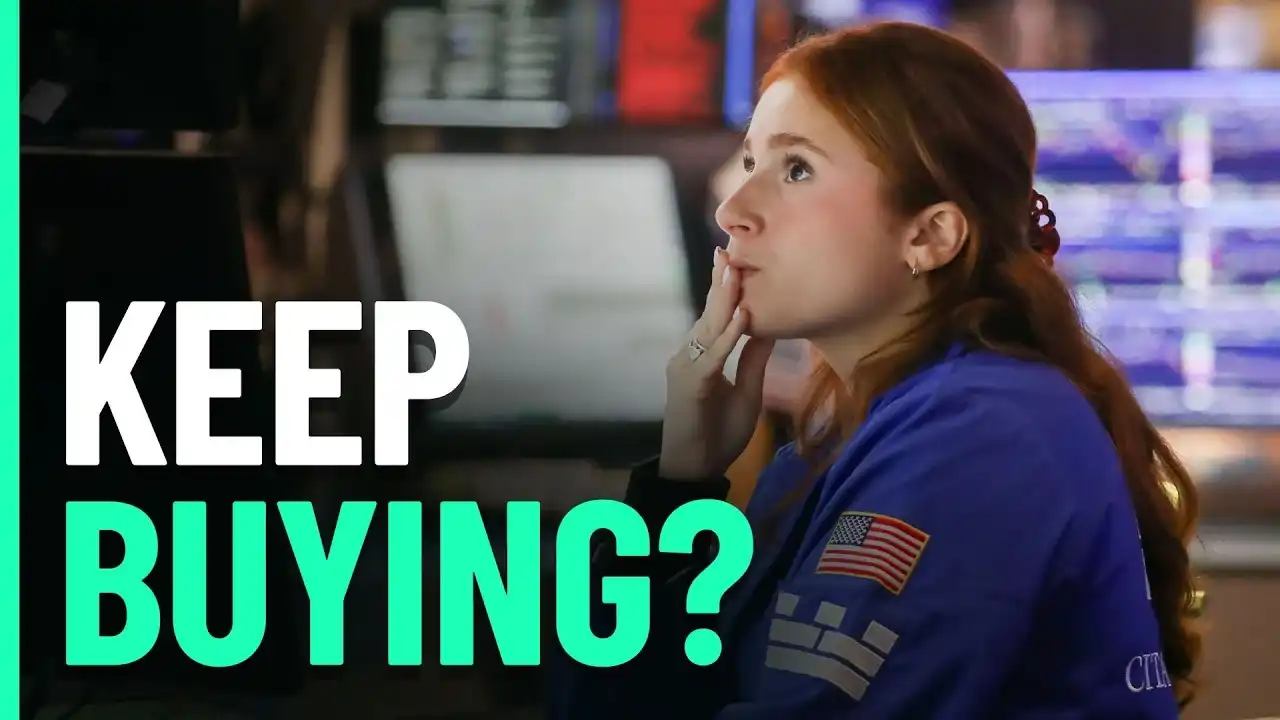
Guest:Nancy Tengler, Senior Fund Manager, CEO & Chief Investment Officer of Laffer Tengler Investments

Host:Caroline Woods, TheStreet

Podcast Source:TheStreet

Original Title:Market At Record Highs — Nancy Tengler Says To Keep Buying These Names

Broadcast Date:August 12, 2026

Interest Declaration:Nancy Tengler is the CEO/CIO of Laffer Tengler Investments. Most of the stocks discussed in this episode are holdings in the portfolios managed by her firm. The related views represent the investment stance of an interested party and do not constitute independent third-party analysis.

Key Takeaways

Nancy Tengler is a senior fund manager with four decades of portfolio management experience, having previously led the value equity team at UBS Asset Management and served as CEO of Fremont Investment Advisors. In this August 12 interview, she remains bullish despite the S&P 500 hitting new highs, but more valuable is a practical portfolio list for the second half of the year that can be directly implemented.

She clearly directs funds towards four areas: AI Infrastructure (PWR, GEV, WMB, DE), Misunderstood Growth-at-a-Reasonable-Price Stocks (NVDA, AMZN), Cybersecurity (PANW, CRWD, preferring the latter), and Financials & Consumer Discretionary Catch-up Plays (GS, BAM, JPM, SBUX, HD). NVDA is a typical value stock in her view, trading at only 16 to 18 times next year's earnings with a 60% to 80% profit growth rate, resulting in a PEG of just 0.25. She would avoid $META, Consumer Staples, Utilities, and REITs, believing one should stick with growth in a strong growth environment. She also warns that a credit market breakdown or a resurgence of inflation are the biggest risks.

Highlights Excerpt

What Stage the Market Is In

  • "This is one of the best markets since the 1990s."
  • "From 1995 to 2000, earnings grew 60%, but stock prices rose 220%. That was multiple expansion. Over the past five years, earnings grew about 80%, and the total stock return was about 85% to 90%. They match."
  • "I'd rather the S&P end the year up 12% to 15%, not 20% to 25%. A bull market needs a breather, you need to prune the roses."

AI Infrastructure & Broadening Market

  • "There's $7.5 trillion in capex heading into compute and data centers over the next five years."
  • "New tech is eating tech companies, it's building infrastructure for electrification."

Individual Stocks & Positions

  • "Nvidia is trading at 16 to 18 times next year's earnings, with profit growth of 60% to 80%. Its PEG is only 0.25."
  • "Tesla, Palantir, SpaceX — they are all story stocks. You're paying for future possibilities, so volatility will be high."
  • "Being on the sidelines is a bigger mistake than chasing."

1. Echoes of the 1990s, But This Isn't a Bubble

Caroline Woods: The S&P 500 is near record highs, and inflation data is relatively mild. You said this is one of the best markets since the 1990s. Why so optimistic?

Nancy Tengler: Because of earnings, and because we are in the midst of a technological revolution, or economic transformation. Productivity-driven growth is very convincing, and it's self-reinforcing. We've listened to all the earnings calls, and you can hear every industry adopting new technologies, not just cloud computing, but also physical AI and electric-powered solutions.

Caroline Woods: Hearing '1990s,' many investors reflexively think 'bubble.' What's different this time?

Nancy Tengler: Because today's companies are real. Back then, those companies had nothing but debt on their books. Now you see companies with fortress-like, clean balance sheets and remarkably strong profitability. The hyperscalers are prime examples.

Also, from 1995 to 2000, earnings grew about 60%, but stock prices rose 220%. They were mismatched. Valuations were pushed to absurd levels — Cisco once traded at 100 times earnings. Over the past five years, earnings grew about 80%, and the total stock return was about 85% to 90%. This is not multiple expansion. Valuations do look high, but high valuations don't predict bear markets. The key difference was that severe earnings-stock price mismatch back then.

Caroline Woods: So, do you think the market is expensive now?

Nancy Tengler: I think valuations are justified because growth is so strong. For younger investors, current interest rates might seem high, but for those of us who've been around a long time, this environment looks quite good. The 10-year Treasury yield is below its 40-year average, seriously. So we're excited about opportunities; the market isn't overstretched.

2. The Key to Breaking the Range: The Market Needs to 'Broaden'

Caroline Woods: Earnings are the driver, but what will truly break the past three months' trading range?

Nancy Tengler: I think it will be the broadening of underlying stocks. The rally has been quite concentrated lately, though the summer correction alleviated it somewhat. But I think we'll see the rally broaden out. We've already shifted and expanded our positions towards infrastructure.

For AI infrastructure build-out, we hold many related stocks, have added new positions, and added to existing ones. Goldman estimates $7.5 trillion in capex heading into compute and data centers over the next five years. I want exposure to that theme. I think this will be the key driver for a rotation in sector leadership.

Caroline Woods: When you say broaden, do you mean within the tech sector?

Nancy Tengler: We've already seen broadening at the overall level, but if you look at future market leaders, they will still be tech-driven. New technology is 'eating' tech companies, it's building electrification infrastructure for new tech. That's the broadening I'm talking about.

3. How to Invest in Infrastructure: From Grid to Tractors

Caroline Woods: Besides 'eat' (referring to power consumption/infrastructure demand), what's the best way to invest in the infrastructure theme?

Nancy Tengler: Right now, I think Quanta Services looks good. It has run up, but based on its backlog and the earnings growth guidance from management, I think it can continue. We also hold GE Vernova, the gas turbine company, and recently added to Williams. It's a defensive way to play the AI trade because they transport natural gas, the contracts are fixed-price, so natural gas price volatility affects them minimally, and they are expanding business around hyperscalers.

We also hold industrials like Deere, which isn't directly infrastructure but is using AI to help farmers weed, plant, and use autonomous tractors. It's cool; you can even go home for dinner while the tractor keeps planting.

4. Buying Nvidia and Amazon as Value Stocks

Caroline Woods: I noticed Amazon and Nvidia recently entered your Value Folio. Can they still be considered value stocks now?

Nancy Tengler: Caroline, that's a great question because most people miss this. We identified them in our growth portfolio two years ago. We also added Google to the value portfolio. Remember after Bard launched, everyone said Google would never catch up. It was a disastrous launch. Then Gemini came out, and the stock is up over 100%.

Now look at the Russell 1000 Value index — the world is completely upside down. The largest holding is Amazon, and Micron was number one earlier this year. I know how they calculate it; sometimes these 'fallen angel' growth stocks trade at a value price.

Nvidia's significant dividend increase, in our view, is the company winking at the market, signaling they believe this level of profitability is sustainable. Based on next year's earnings, it trades at 16 to 18 times P/E, with earnings growth of 60% to 80%, depending on fiscal or calendar year. So its PEG ratio is only 0.25. Compare that to Tesla at 5 times. That's why we bought it.

Amazon is completely stuck in its own shadow. We believe Andy Jassy knows what he's doing, and he's been through similar phases before. We wanted to own it ahead of earnings, which is rare for us. We sold some Apple to buy Amazon, and that trade has looked very right for at least the past few weeks.

Caroline Woods: Would you still buy these two now?

Nancy Tengler: Yes.

5. Cybersecurity, Palantir & the Tesla Narrative

Caroline Woods: What's your highest conviction stock-picking direction for the second half?

Nancy Tengler: I still think it's infrastructure. Those names mentioned earlier, plus some we're researching but can't mention now because we might add this week. But this will be the main theme for the second half. This doesn't mean tech stocks have to keep outperforming for the market to do well, but you still need to hold some tech names. Cybersecurity is a significant part of our portfolio — we hold both Palo Alto Networks and CrowdStrike.

This business will grow, but competition will intensify. Vertical integrators will also enter, like Palantir. They are all doing data security. It will be an interesting battle ahead.

Caroline Woods: Would you add Palantir now?

Nancy Tengler: We added during the summer selloff. Palantir is still down for the year but has rebounded significantly from lows. These high-multiple stocks — Palantir, Tesla, SpaceX — are story stocks. Palantir's growth is indeed amazing, but you buy it for the future. So volatility will be high. I remember we added at $88, it went to $250, back to $100, and I'm still happy. If you're a long-term investor, you must make volatility your friend.

Caroline Woods: Tesla is a big laggard this year. What needs to happen for it to become a winner again?

Nancy Tengler: FSD must truly be realized, Cybercab and Robotaxi need to launch. But we initially invested in Tesla for its battery storage business, Megapack, utility-scale battery storage. Also, a potential acquisition or merger of Tesla by SpaceX could be a catalyst.

Caroline Woods: SpaceX isn't profitable yet. Would you invest in it?

Nancy Tengler: Yes, we held it at IPO and added during the recent decline. You need to hold this stock for 3 to 5 years. Honestly, Caroline, you won't care whether your cost basis is $105 or $150 later because it's the future, it will change how we live. Elon Musk is one of those people you must grit your teeth and hold during weakness because he always finds a way. The Wall Street Journal had an article yesterday saying many of his compensation package targets would be achieved if a merger happens. He's always two, even a dozen, steps ahead.

6. Catch-up Opportunities in Financials & Consumer Discretionary

Caroline Woods: What about other sectors — healthcare, energy, financials?

Nancy Tengler: We hold Goldman, Brookfield Asset Management, JPMorgan. What we hear from their earnings calls is they are using AI. Goldman said on the call headcount will remain flat, but growth will accelerate 20% to 25%. That's very strong operating leverage.

I look at consumer discretionary. We are overweight this sector and like several names, we even added ahead of recent earnings. Thank goodness. Starbucks is interesting; we all know the CEO knows how to turn things around. Amazon, of course, also belongs to consumer discretionary. Home Depot is becoming interesting now; we hold it. It hasn't moved much in our 12 best ideas portfolio, but that's the nature of investing. We believe the housing market will eventually see a revival, just uncertain on timing.

Caroline Woods: Are there any sectors you'd avoid?

Nancy Tengler: Staples. We only hold one or two. Utilities, we only hold one electric company. REITs too — I think there are better places now. REITs are less than a market weight in the portfolio. In a super strong growth environment, you want to stick with growth.

7. Year-end Target & Biggest Risk

Caroline Woods: You don't usually give price targets, but how do you think the market will proceed?

Nancy Tengler: The S&P is up about 10% year-to-date. I'd be satisfied if it closed the year up 12% to 15%; I wouldn't want to see 20% to 25%. This is a relatively young bull market, early compared to the 90s. We know bull markets need to catch their breath, need to prune the roses, need a consolidation. So 12% to 15% would make me content. The fourth quarter usually sees momentum acceleration; we might see a final push.

Caroline Woods: What would make you wrong? What's the biggest risk to this bull market?

Nancy Tengler: At the start of the year, I would have said a geopolitical shock, but we seem to weather those. If companies start missing, if guidance starts slowing, we will see earnings growth decelerate — the question is by how much. If the credit market breaks, then I'm wrong. Currently, credit spreads are still tight by historical standards. You hear lots of complaints in the bond market about too much debt, but it's nothing compared to the past. Mainly those two things.

8. Quick-fire Round

Caroline Woods: Wall Street — too optimistic or reasonable?

Nancy Tengler: I think it's just a five-stock market.

Caroline Woods: New all-time highs — buy or wait?

Nancy Tengler: If you're a long-term investor, buy. Sorry, I hedged.

Caroline Woods: Trade early or late?

Nancy Tengler: Early.

Caroline Woods: Get $10k today — lump sum or dollar-cost average?

Nancy Tengler: Lump sum.

Caroline Woods: Bigger mistake — chasing or being on the sidelines?

Nancy Tengler: Being on the sidelines.

Caroline Woods: Biggest market risk from here — valuation or inflation?

Nancy Tengler: Inflation.

Caroline Woods: New money — better in value or growth?

Nancy Tengler: Growth.

Caroline Woods: Best value in the market now — individual stocks or sectors?

Nancy Tengler: Sector. I pick consumer discretionary.

Caroline Woods: Top pick in consumer discretionary?

Nancy Tengler: Amazon.

Caroline Woods: Amazon vs. Apple — who has more upside?

Nancy Tengler: Amazon.

Caroline Woods: Broadcom or AMD?

Nancy Tengler: Broadcom.

Caroline Woods: Palo Alto or CrowdStrike?

Nancy Tengler: CrowdStrike.

Caroline Woods: In the Mag 7, who would you avoid?

Nancy Tengler: Meta.

Caroline Woods: Buy one — Tesla or SpaceX?

Nancy Tengler: Next 12 months, Tesla.

Caroline Woods: U.S. stocks or international?

Nancy Tengler: U.S. stocks.

Caroline Woods: Large-cap or small-cap?

Nancy Tengler: Large-cap.

Caroline Woods: Long-term investor — individual stocks or index funds?

Nancy Tengler: Individual stocks.

Caroline Woods: Cash on the sidelines — invest now or wait for a pullback?

Nancy Tengler: Invest now.

Caroline Woods: One word to describe the market for the rest of the year?

Nancy Tengler: Bullish.

Caroline Woods: Market up or down, and by how much?

Nancy Tengler: Up, about 5%.

Criptomoedas em alta

Perguntas relacionadas

QWhat are the four key investment areas Nancy Tengler is focusing on for the second half of the year?

ANancy Tengler is focusing on four key areas: AI infrastructure (including stocks like PWR, GEV, WMB, DE), mispriced growth/value stocks (like NVDA and AMZN), cybersecurity (preferring CRWD over PANW), and financials/consumer discretionary for catch-up potential (including GS, BAM, JPM, SBUX, HD).

QAccording to Nancy Tengler, how does the current market rally differ from the 1990s dot-com bubble?

ATengler states that unlike the 1990s bubble, where valuations expanded massively despite weak fundamentals, the current market strength is driven by strong and real corporate earnings growth. Companies today have fortress balance sheets and impressive profitability. She cites that over the past five years, earnings grew ~80% while stock returns were ~85-90%, indicating a healthy correlation, not a valuation bubble.

QWhy does Nancy Tengler consider Nvidia (NVDA) to be a value stock?

ATengler views NVDA as a value stock based on its valuation metrics relative to its growth. She notes that based on next year's earnings, NVDA trades at a P/E of 16-18x with an earnings growth rate of 60-80%. This results in a very low PEG ratio of around 0.25, which she considers a classic value signal. She also points to its significant dividend increase as a sign of sustainable profitability.

QWhat is Tengler's highest conviction investment theme for the remainder of the year, and what are some related stocks?

AHer highest conviction theme for the rest of the year is AI infrastructure. She believes this will be the main driver of market leadership rotation. Related stocks she mentions include Quanta Services (PWR), GE Vernova (GEV), Williams (WMB), and Deere (DE), noting that AI is driving infrastructure build-out and automation across sectors.

QWhat does Nancy Tengler identify as the biggest risk to the current bull market?

AShe identifies two primary risks: 1) A rupture in the credit market, and 2) A resurgence of inflation. While she notes that geopolitical shocks are a concern, the market has so far weathered them. The core vulnerabilities would be a slowdown in corporate earnings guidance or a significant widening of credit spreads.

Leituras Relacionadas

Nomura Research Report Insights: Lumentum's Performance Confirms Continued Shortage of Optical Chips, Chinese Suppliers See Structural Opportunities

Lumentum's Q4 FY26 earnings, with revenue surging 109% YoY to $1.01B, confirm a sustained global shortage of key optical chips like EML and CW lasers. Nomura's analysis indicates this supply-demand imbalance is expected to persist through FY26-FY27, driven by explosive demand from AI data centers. This shortage creates a structural window of opportunity for Chinese suppliers. Lumentum's performance highlights strong demand across laser categories: narrow linewidth laser component shipments grew over 130% YoY, and pump laser shipments grew 80%. EML sales set a quarterly record, fueled by 100G demand, with 200G EML accelerating to over 25% of related revenue. CW lasers are dominating 1.6T silicon photonics applications, while EML is projected to regain share in the 3.2T era. The technological roadmap is clear, with NPO (Near-Packaged Optics) seen as an incremental step before CPO (Co-Packaged Optics) commercialization around 2027-2028. Furthermore, Lumentum's Optical Circuit Switch (OCS) shipments doubled quarter-over-quarter, aligning with AI data center architectural upgrades. Nomura identifies specific Chinese companies poised to benefit: chipmaker Source Photonics for global market share gains, module leader InnoLight from the 800G-to-1.6T upgrade and silicon photonics adoption, and Tianfu Communication from incremental NPO opportunities. The report issues ratings and price targets for these A-share companies. In summary, Lumentum's results signal a structural shift where AI-driven bandwidth demand is outpacing upstream optical chip supply, creating a strategic window for the Chinese optical communication supply chain.

marsbitHá 12m

Nomura Research Report Insights: Lumentum's Performance Confirms Continued Shortage of Optical Chips, Chinese Suppliers See Structural Opportunities

marsbitHá 12m

Trading

Spot

Artigos em Destaque

O que é $S$

Compreender o SPERO: Uma Visão Abrangente Introdução ao SPERO À medida que o panorama da inovação continua a evoluir, o surgimento de tecnologias web3 e projetos de criptomoeda desempenha um papel fundamental na formação do futuro digital. Um projeto que tem atraído atenção neste campo dinâmico é o SPERO, denotado como SPERO,$$s$. Este artigo tem como objetivo reunir e apresentar informações detalhadas sobre o SPERO, para ajudar entusiastas e investidores a compreender as suas bases, objetivos e inovações nos domínios web3 e cripto. O que é o SPERO,$$s$? O SPERO,$$s$ é um projeto único dentro do espaço cripto que procura aproveitar os princípios da descentralização e da tecnologia blockchain para criar um ecossistema que promove o envolvimento, a utilidade e a inclusão financeira. O projeto é concebido para facilitar interações peer-to-peer de novas maneiras, proporcionando aos utilizadores soluções e serviços financeiros inovadores. No seu núcleo, o SPERO,$$s$ visa capacitar indivíduos ao fornecer ferramentas e plataformas que melhoram a experiência do utilizador no espaço das criptomoedas. Isso inclui a possibilidade de métodos de transação mais flexíveis, a promoção de iniciativas impulsionadas pela comunidade e a criação de caminhos para oportunidades financeiras através de aplicações descentralizadas (dApps). A visão subjacente do SPERO,$$s$ gira em torno da inclusão, visando fechar lacunas dentro das finanças tradicionais enquanto aproveita os benefícios da tecnologia blockchain. Quem é o Criador do SPERO,$$s$? A identidade do criador do SPERO,$$s$ permanece algo obscura, uma vez que existem recursos publicamente disponíveis limitados que fornecem informações detalhadas sobre o(s) seu(s) fundador(es). Esta falta de transparência pode resultar do compromisso do projeto com a descentralização—uma ética que muitos projetos web3 partilham, priorizando contribuições coletivas em vez de reconhecimento individual. Ao centrar as discussões em torno da comunidade e dos seus objetivos coletivos, o SPERO,$$s$ incorpora a essência do empoderamento sem destacar indivíduos específicos. Assim, compreender a ética e a missão do SPERO é mais importante do que identificar um criador singular. Quem são os Investidores do SPERO,$$s$? O SPERO,$$s$ é apoiado por uma diversidade de investidores que vão desde capitalistas de risco a investidores-anjo dedicados a promover a inovação no setor cripto. O foco desses investidores geralmente alinha-se com a missão do SPERO—priorizando projetos que prometem avanço tecnológico social, inclusão financeira e governança descentralizada. Essas fundações de investidores estão tipicamente interessadas em projetos que não apenas oferecem produtos inovadores, mas que também contribuem positivamente para a comunidade blockchain e os seus ecossistemas. O apoio desses investidores reforça o SPERO,$$s$ como um concorrente notável no domínio em rápida evolução dos projetos cripto. Como Funciona o SPERO,$$s$? O SPERO,$$s$ emprega uma estrutura multifacetada que o distingue de projetos de criptomoeda convencionais. Aqui estão algumas das características-chave que sublinham a sua singularidade e inovação: Governança Descentralizada: O SPERO,$$s$ integra modelos de governança descentralizada, capacitando os utilizadores a participar ativamente nos processos de tomada de decisão sobre o futuro do projeto. Esta abordagem promove um sentido de propriedade e responsabilidade entre os membros da comunidade. Utilidade do Token: O SPERO,$$s$ utiliza o seu próprio token de criptomoeda, concebido para servir várias funções dentro do ecossistema. Esses tokens permitem transações, recompensas e a facilitação de serviços oferecidos na plataforma, melhorando o envolvimento e a utilidade gerais. Arquitetura em Camadas: A arquitetura técnica do SPERO,$$s$ suporta modularidade e escalabilidade, permitindo a integração contínua de funcionalidades e aplicações adicionais à medida que o projeto evolui. Esta adaptabilidade é fundamental para manter a relevância no panorama cripto em constante mudança. Envolvimento da Comunidade: O projeto enfatiza iniciativas impulsionadas pela comunidade, empregando mecanismos que incentivam a colaboração e o feedback. Ao nutrir uma comunidade forte, o SPERO,$$s$ pode melhor atender às necessidades dos utilizadores e adaptar-se às tendências do mercado. Foco na Inclusão: Ao oferecer taxas de transação baixas e interfaces amigáveis, o SPERO,$$s$ visa atrair uma base de utilizadores diversificada, incluindo indivíduos que anteriormente podem não ter participado no espaço cripto. Este compromisso com a inclusão alinha-se com a sua missão abrangente de empoderamento através da acessibilidade. Cronologia do SPERO,$$s$ Compreender a história de um projeto fornece insights cruciais sobre a sua trajetória de desenvolvimento e marcos. Abaixo está uma cronologia sugerida que mapeia eventos significativos na evolução do SPERO,$$s$: Fase de Conceituação e Ideação: As ideias iniciais que formam a base do SPERO,$$s$ foram concebidas, alinhando-se de perto com os princípios de descentralização e foco na comunidade dentro da indústria blockchain. Lançamento do Whitepaper do Projeto: Após a fase conceitual, um whitepaper abrangente detalhando a visão, os objetivos e a infraestrutura tecnológica do SPERO,$$s$ foi lançado para atrair o interesse e o feedback da comunidade. Construção da Comunidade e Primeiros Envolvimentos: Esforços ativos de divulgação foram feitos para construir uma comunidade de primeiros adotantes e investidores potenciais, facilitando discussões em torno dos objetivos do projeto e angariando apoio. Evento de Geração de Tokens: O SPERO,$$s$ realizou um evento de geração de tokens (TGE) para distribuir os seus tokens nativos a apoiantes iniciais e estabelecer liquidez inicial dentro do ecossistema. Lançamento da dApp Inicial: A primeira aplicação descentralizada (dApp) associada ao SPERO,$$s$ foi lançada, permitindo que os utilizadores interagissem com as funcionalidades principais da plataforma. Desenvolvimento Contínuo e Parcerias: Atualizações e melhorias contínuas nas ofertas do projeto, incluindo parcerias estratégicas com outros players no espaço blockchain, moldaram o SPERO,$$s$ em um jogador competitivo e em evolução no mercado cripto. Conclusão O SPERO,$$s$ é um testemunho do potencial do web3 e das criptomoedas para revolucionar os sistemas financeiros e capacitar indivíduos. Com um compromisso com a governança descentralizada, o envolvimento da comunidade e funcionalidades inovadoras, abre caminho para um panorama financeiro mais inclusivo. Como em qualquer investimento no espaço cripto em rápida evolução, potenciais investidores e utilizadores são incentivados a pesquisar minuciosamente e a envolver-se de forma ponderada com os desenvolvimentos em curso dentro do SPERO,$$s$. O projeto demonstra o espírito inovador da indústria cripto, convidando a uma exploração mais aprofundada das suas inúmeras possibilidades. Embora a jornada do SPERO,$$s$ ainda esteja a desenrolar-se, os seus princípios fundamentais podem, de facto, influenciar o futuro de como interagimos com a tecnologia, as finanças e uns com os outros em ecossistemas digitais interconectados.

344 Visualizações TotaisPublicado em {updateTime}Atualizado em 2024.12.17

O que é $S$

O que é AGENT S

Agent S: O Futuro da Interação Autónoma no Web3 Introdução No panorama em constante evolução do Web3 e das criptomoedas, as inovações estão constantemente a redefinir a forma como os indivíduos interagem com plataformas digitais. Um projeto pioneiro, o Agent S, promete revolucionar a interação humano-computador através do seu framework aberto e agente. Ao abrir caminho para interações autónomas, o Agent S visa simplificar tarefas complexas, oferecendo aplicações transformadoras em inteligência artificial (IA). Esta exploração detalhada irá aprofundar-se nas complexidades do projeto, nas suas características únicas e nas implicações para o domínio das criptomoedas. O que é o Agent S? O Agent S é um framework aberto e agente, especificamente concebido para abordar três desafios fundamentais na automação de tarefas computacionais: Aquisição de Conhecimento Específico de Domínio: O framework aprende inteligentemente a partir de várias fontes de conhecimento externas e experiências internas. Esta abordagem dupla capacita-o a construir um rico repositório de conhecimento específico de domínio, melhorando o seu desempenho na execução de tarefas. Planeamento ao Longo de Longos Horizontes de Tarefas: O Agent S emprega planeamento hierárquico aumentado por experiência, uma abordagem estratégica que facilita a decomposição e execução eficientes de tarefas intrincadas. Esta característica melhora significativamente a sua capacidade de gerir múltiplas subtarefas de forma eficiente e eficaz. Gestão de Interfaces Dinâmicas e Não Uniformes: O projeto introduz a Interface Agente-Computador (ACI), uma solução inovadora que melhora a interação entre agentes e utilizadores. Utilizando Modelos de Linguagem Multimodais de Grande Escala (MLLMs), o Agent S pode navegar e manipular diversas interfaces gráficas de utilizador de forma fluida. Através destas características pioneiras, o Agent S fornece um framework robusto que aborda as complexidades envolvidas na automação da interação humana com máquinas, preparando o terreno para uma infinidade de aplicações em IA e além. Quem é o Criador do Agent S? Embora o conceito de Agent S seja fundamentalmente inovador, informações específicas sobre o seu criador permanecem elusivas. O criador é atualmente desconhecido, o que destaca ou o estágio nascente do projeto ou a escolha estratégica de manter os membros fundadores em anonimato. Independentemente da anonimidade, o foco permanece nas capacidades e no potencial do framework. Quem são os Investidores do Agent S? Como o Agent S é relativamente novo no ecossistema criptográfico, informações detalhadas sobre os seus investidores e financiadores não estão explicitamente documentadas. A falta de informações disponíveis publicamente sobre as fundações de investimento ou organizações que apoiam o projeto levanta questões sobre a sua estrutura de financiamento e roteiro de desenvolvimento. Compreender o apoio é crucial para avaliar a sustentabilidade do projeto e o seu impacto potencial no mercado. Como Funciona o Agent S? No núcleo do Agent S reside uma tecnologia de ponta que lhe permite funcionar eficazmente em diversos ambientes. O seu modelo operacional é construído em torno de várias características-chave: Interação Humano-Computador Semelhante: O framework oferece planeamento avançado em IA, esforçando-se para tornar as interações com computadores mais intuitivas. Ao imitar o comportamento humano na execução de tarefas, promete elevar as experiências dos utilizadores. Memória Narrativa: Utilizada para aproveitar experiências de alto nível, o Agent S utiliza memória narrativa para acompanhar os históricos de tarefas, melhorando assim os seus processos de tomada de decisão. Memória Episódica: Esta característica fornece aos utilizadores orientações passo a passo, permitindo que o framework ofereça suporte contextual à medida que as tarefas se desenrolam. Suporte para OpenACI: Com a capacidade de funcionar localmente, o Agent S permite que os utilizadores mantenham o controlo sobre as suas interações e fluxos de trabalho, alinhando-se com a ética descentralizada do Web3. Fácil Integração com APIs Externas: A sua versatilidade e compatibilidade com várias plataformas de IA garantem que o Agent S possa integrar-se perfeitamente em ecossistemas tecnológicos existentes, tornando-o uma escolha apelativa para desenvolvedores e organizações. Estas funcionalidades contribuem coletivamente para a posição única do Agent S no espaço cripto, à medida que automatiza tarefas complexas e em múltiplos passos com mínima intervenção humana. À medida que o projeto evolui, as suas potenciais aplicações no Web3 podem redefinir a forma como as interações digitais se desenrolam. Cronologia do Agent S O desenvolvimento e os marcos do Agent S podem ser encapsulados numa cronologia que destaca os seus eventos significativos: 27 de Setembro de 2024: O conceito de Agent S foi lançado num artigo de pesquisa abrangente intitulado “Um Framework Agente Aberto que Usa Computadores como um Humano”, mostrando a base para o projeto. 10 de Outubro de 2024: O artigo de pesquisa foi disponibilizado publicamente no arXiv, oferecendo uma exploração aprofundada do framework e da sua avaliação de desempenho com base no benchmark OSWorld. 12 de Outubro de 2024: Uma apresentação em vídeo foi lançada, proporcionando uma visão visual das capacidades e características do Agent S, envolvendo ainda mais potenciais utilizadores e investidores. Estes marcos na cronologia não apenas ilustram o progresso do Agent S, mas também indicam o seu compromisso com a transparência e o envolvimento da comunidade. Pontos-Chave Sobre o Agent S À medida que o framework Agent S continua a evoluir, várias características-chave destacam-se, sublinhando a sua natureza inovadora e potencial: Framework Inovador: Concebido para proporcionar um uso intuitivo de computadores semelhante à interação humana, o Agent S traz uma abordagem nova à automação de tarefas. Interação Autónoma: A capacidade de interagir autonomamente com computadores através de GUI significa um avanço em direção a soluções computacionais mais inteligentes e eficientes. Automação de Tarefas Complexas: Com a sua metodologia robusta, pode automatizar tarefas complexas e em múltiplos passos, tornando os processos mais rápidos e menos propensos a erros. Melhoria Contínua: Os mecanismos de aprendizagem permitem que o Agent S melhore a partir de experiências passadas, aprimorando continuamente o seu desempenho e eficácia. Versatilidade: A sua adaptabilidade em diferentes ambientes operacionais, como OSWorld e WindowsAgentArena, garante que pode servir uma ampla gama de aplicações. À medida que o Agent S se posiciona no panorama do Web3 e das criptomoedas, o seu potencial para melhorar as capacidades de interação e automatizar processos significa um avanço significativo nas tecnologias de IA. Através do seu framework inovador, o Agent S exemplifica o futuro das interações digitais, prometendo uma experiência mais fluida e eficiente para os utilizadores em diversas indústrias. Conclusão O Agent S representa um ousado avanço na união da IA e do Web3, com a capacidade de redefinir a forma como interagimos com a tecnologia. Embora ainda esteja nas suas fases iniciais, as possibilidades para a sua aplicação são vastas e cativantes. Através do seu framework abrangente que aborda desafios críticos, o Agent S visa trazer interações autónomas para o primeiro plano da experiência digital. À medida que avançamos mais profundamente nos domínios das criptomoedas e da descentralização, projetos como o Agent S desempenharão, sem dúvida, um papel crucial na formação do futuro da tecnologia e da colaboração humano-computador.

940 Visualizações TotaisPublicado em {updateTime}Atualizado em 2025.01.14

O que é AGENT S

Como comprar S

Bem-vindo à HTX.com!Tornámos a compra de Sonic (S) simples e conveniente.Segue o nosso guia passo a passo para iniciar a tua jornada no mundo das criptos.Passo 1: cria a tua conta HTXUtiliza o teu e-mail ou número de telefone para te inscreveres numa conta gratuita na HTX.Desfruta de um processo de inscrição sem complicações e desbloqueia todas as funcionalidades.Obter a minha contaPasso 2: vai para Comprar Cripto e escolhe o teu método de pagamentoCartão de crédito/débito: usa o teu visa ou mastercard para comprar Sonic (S) instantaneamente.Saldo: usa os fundos da tua conta HTX para transacionar sem problemas.Terceiros: adicionamos métodos de pagamento populares, como Google Pay e Apple Pay, para aumentar a conveniência.P2P: transaciona diretamente com outros utilizadores na HTX.Mercado de balcão (OTC): oferecemos serviços personalizados e taxas de câmbio competitivas para os traders.Passo 3: armazena teu Sonic (S)Depois de comprar o teu Sonic (S), armazena-o na tua conta HTX.Alternativamente, podes enviá-lo para outro lugar através de transferência blockchain ou usá-lo para transacionar outras criptomoedas.Passo 4: transaciona Sonic (S)Transaciona facilmente Sonic (S) no mercado à vista da HTX.Acede simplesmente à tua conta, seleciona o teu par de trading, executa as tuas transações e monitoriza em tempo real.Oferecemos uma experiência de fácil utilização tanto para principiantes como para traders experientes.

1.7k Visualizações TotaisPublicado em {updateTime}Atualizado em 2026.06.02

Como comprar S

Discussões

Bem-vindo à Comunidade HTX. Aqui, pode manter-se informado sobre os mais recentes desenvolvimentos da plataforma e obter acesso a análises profissionais de mercado. As opiniões dos utilizadores sobre o preço de S (S) são apresentadas abaixo.

活动图片