OpenSea Insider Trading Case Ends Without A Retrial – Details

bitcoinistPublicado em 2026-01-24Última atualização em 2026-01-24

Resumo

Former OpenSea product manager Nathaniel Chastain will not face a retrial for insider trading after federal prosecutors dropped the case. This follows an appeals court overturning his earlier conviction, citing incorrect jury instructions. Prosecutors reached a deferred prosecution agreement, leading to the dismissal of charges. As part of the deal, Chastain will forfeit approximately 15.98 ETH and has already served a three-month prison sentence. The case, the first insider trading prosecution involving NFTs, highlights a legal gap between traditional fraud statutes and digital assets. The ruling may influence how confidential information is treated as property in future crypto-related cases.

Nathaniel Chastain, a former product manager at OpenSea, will not face a retrial after federal prosecutors chose to drop their re-review of his insider trading case.

Reports say the US Attorney’s Office reached a deferred prosecution agreement with Chastain that will lead to dismissal of the charges once the agreement runs its course.

What Prosecutors Decided

Prosecutors told a Manhattan federal court they would not retry Chastain following an appeals court ruling that tossed his earlier conviction.

Under the deferred prosecution deal, the government will dismiss the case about a month after notifying the court, and Chastain has agreed to forfeit roughly 15.98 ETH tied to the trades. He has already served three months in prison from his original sentence.
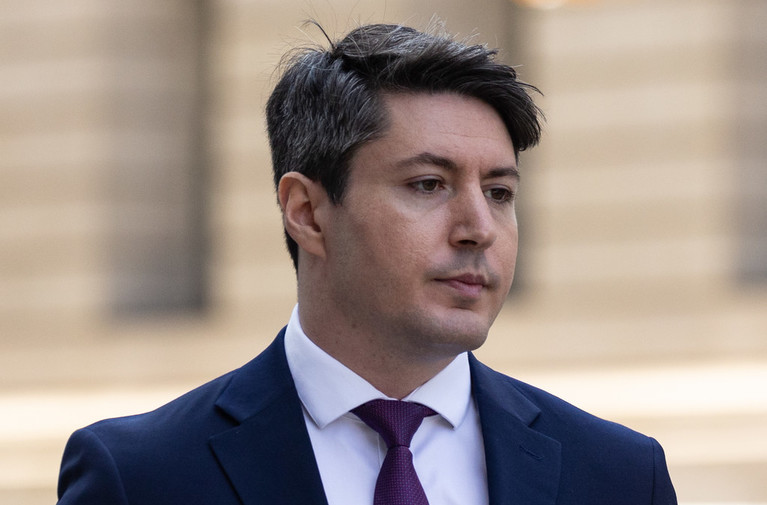
Nathaniel Chastain, former product manager at OpenSea, arrives at federal court in New York, US, on Tuesday, Aug. 22, 2023. Photo: Yuki Iwamura/Bloomberg

How The Appeals Court Changed The Case

According to the US Court of Appeals for the Second Circuit, the jury in the first trial had been given the wrong instructions about what the wire fraud law covers.

The judges said confidential information only counts as property under the statute when it has commercial value to the employer, and jurors might otherwise convict someone for behavior that is unethical but not criminal. That legal point is at the heart of the reversal.

Reports note that prosecutors had called the matter the first-ever insider trading case tied to NFTs. Now, lower courts and enforcement teams will have to think carefully before using traditional fraud laws to police activity in NFT markets.

The ruling highlights a gap between old statutes and new kinds of online goods, which may push lawmakers to give clearer rules for how to treat confidential business signals related to crypto platforms.

BTCUSD currently trading at $88,903. Chart: TradingView

OpenSea: The Case’s Earlier Chapters

Chastain was first charged in mid-2022 after prosecutors said he bought certain NFTs before they were featured on OpenSea’s homepage, then sold them after prices rose.

He was convicted at trial in 2023 of wire fraud and money laundering and received a sentence that included three months behind bars. The US Attorney’s Office originally described the scheme as a novel use of insider knowledge in digital markets.

With the deferred prosecution agreement in place for OpenSea, prosecutors can close this chapter without a new trial.

Chastain’s forfeiture of crypto assets and his already served time mean the government has secured some remedy, while the appellate decision leaves open big questions about when private business information can be treated as property for federal fraud charges.

Legal teams, judges, and regulators are likely to keep a close eye on how similar cases are handled in the future.

Featured image from Getty Images, chart from TradingView

Perguntas relacionadas

QWhy was Nathaniel Chastain's conviction overturned by the appeals court?

AThe appeals court overturned the conviction because the jury in the first trial was given incorrect instructions. The judges ruled that confidential information only qualifies as property under the wire fraud statute when it has commercial value to the employer, and the previous instructions could have led to a conviction for unethical but not criminal behavior.

QWhat is the outcome of the deferred prosecution agreement for Nathaniel Chastain?

AUnder the deferred prosecution agreement, the government will dismiss the case about a month after notifying the court. In exchange, Chastain has agreed to forfeit approximately 15.98 ETH and has already served his three-month prison sentence from the original conviction.

QWhat was Nathaniel Chastain originally convicted of in relation to his actions at OpenSea?

ANathaniel Chastain was originally convicted in 2023 of wire fraud and money laundering. Prosecutors alleged he used insider knowledge to purchase NFTs before they were featured on OpenSea's homepage and then sold them for profit after their prices increased.

QWhy is this case considered significant for the NFT market and legal enforcement?

AThis case is significant because it was the first-ever insider trading case tied to NFTs. The appellate ruling highlights a gap between traditional fraud laws and new digital goods, indicating that courts and enforcement teams must carefully consider how to apply old statutes to NFT market activity, potentially pushing for clearer regulations.

QWhat did Nathaniel Chastain agree to forfeit as part of his deal with prosecutors?

AAs part of the deferred prosecution agreement, Nathaniel Chastain agreed to forfeit approximately 15.98 ETH, which was tied to the trades he made using insider information while he was a product manager at OpenSea.

Leituras Relacionadas

Goldman Sachs Bows Down, Bitcoin Finally Breaks Through the Gates of Wall Street

Wall Street giants, including Goldman Sachs, Morgan Stanley, Charles Schwab, and the New York Stock Exchange, have reversed their long-standing opposition to Bitcoin and are now actively embracing it. After years of dismissing Bitcoin as a scam, a bubble, or a tool for illicit activities, these institutions are launching Bitcoin ETFs, enabling spot trading, and building dedicated crypto infrastructure. Goldman Sachs, which once called Bitcoin a "fraud tool," is now offering Bitcoin ETFs. Morgan Stanley, which internally banned the term "cryptocurrency," has launched its largest-ever ETF backed by Bitcoin. Charles Schwab has opened spot crypto trading for its retail clients, integrating Bitcoin alongside traditional assets. The NYSE is building robust infrastructure to support digital assets, signaling a long-term commitment. This dramatic shift is driven not by a change in ideology but by economic necessity. As Bitcoin repeatedly survived market crashes and grew into a multi-trillion-dollar asset class, ignoring it became too costly. Wall Street’s business model relies on capturing fees, and Bitcoin’s rise represented a massive wealth transfer occurring outside their ecosystem. The fear of missing out (FOMO) and client demand forced these institutions to capitulate. The article frames this as a historic surrender to Bitcoin’s mathematical inevitability. Unlike the trust-based traditional financial system, Bitcoin operates on decentralized, transparent, and unchangeable rules. Its scarcity and resilience make it a hedge against fiat currency devaluation and systemic risk. The narrative has flipped: not holding Bitcoin is now seen as the greater risk. The author concludes that Bitcoin has not been co-opted by Wall Street; instead, it has co-opted Wall Street, marking a fundamental shift in the global financial architecture.

marsbitHá 47m

Goldman Sachs Bows Down, Bitcoin Finally Breaks Through the Gates of Wall Street

marsbitHá 47m

Trading

Spot
Futuros
活动图片