Ondo partnership fuels Solana’s 2026 push into Wall Street capital

ambcryptoPublicado em 2026-01-22Última atualização em 2026-01-22

Resumo

Ondo Finance's partnership with Solana is accelerating the network's push into institutional finance by launching over 200 tokenized assets. This collaboration builds on the growing Real-World Asset (RWA) sector, which saw 250% year-over-year growth in 2025 and has become a key bridge between DeFi and traditional finance. Solana enters 2026 with over $1 billion in RWA total value locked (TVL), $200 million of which comes from public equity assets, signaling strong Wall Street participation. Despite market volatility, SOL has maintained a price above $120 for 10 weeks and is outperforming many peers with a 4.5% gain since the start of 2026. The Ondo partnership reinforces Solana’s institutional adoption, driving ETF interest and positioning its 2026 growth cycle as conviction-driven.

No doubt, 2025 really pushed crypto and Wall Street closer together.

The real driver behind this momentum? The RWA sector. By making tokenized assets tradable on-chain, it turned what was once a niche experiment into a practical bridge between DeFi and institutional finance.

In other words, the RWA sector became a direct link between on-chain activity and big-money adoption. Given that, it’s not surprising that RWAs were 2025’s top performers, posting an impressive 250% YoY growth.

With that kind of momentum, it makes sense that most L1s are now trying to ride the wave and push more RWA adoption. Case in point: Solana [SOL] teaming up with Ondo Finance to launch 200+ tokenized assets.

And honestly, the timing couldn’t be better.

Solana is kicking off 2026 with its RWA TVL already past $1 billion, making the Ondo partnership a smart move to attract even more interest. In short, RWA flows are now emerging as a key growth metric for the network.

But here’s the real question: With the market still volatile, is this just a smart move or a strategic play to help Solana build conviction by leaning into the fastest-growing sector?

Institutional adoption driving Solana’s 2026 cycle

Solana’s Wall Street presence is clearly no longer just a dream.

In fact, with tokenized assets trading on-chain, more Wall Street capital is making its way onto the network. That’s accounting for 20% of Solana’s $1 billion+ RWA TVL, or about $200 million locked in as public equity assets.

Meanwhile, ETFs aren’t far behind. While Bitcoin [BTC] is seeing big outflows from its major ETF players, Solana is still pulling in capital, with net inflows hitting nearly $6 million over the past two trading days.

In short, the recent Ondo partnership marks a clear strategic pivot, bringing Solana even closer to its growing institutional foothold. Already, the impact is showing in the price action, with SOL leading the gains.

Even amid ongoing FUD, Solana has consistently held above the $120 level for the past 10 weeks. In fact, it’s now 4.5% above its 2026 open, while many of its high-cap peers are seeing roughly half that ROI so far.

In essence, Solana’s RWA adoption is keeping the FOMO alive (as seen in SOL ETFs), and the recent Ondo partnership is adding even more momentum, shaping SOL’s 2026 cycle to be more institutionally led, where conviction outweighs capitulation.


Final Thoughts

  • With $1 billion in RWA TVL and 200+ tokenized assets via the Ondo partnership, Solana is bridging on-chain activity with institutional capital.
  • Despite market volatility, SOL has held above $120 for 10 weeks, outperforming peers, signaling that conviction is outweighing capitulation in its 2026 cycle.

Perguntas relacionadas

QWhat is the main driver behind the growing connection between crypto and Wall Street as discussed in the article?

AThe main driver is the RWA (Real World Asset) sector, which makes tokenized assets tradable on-chain, creating a practical bridge between DeFi and institutional finance.

QWhat significant partnership did Solana announce to push RWA adoption, and how many assets are involved?

ASolana teamed up with Ondo Finance to launch over 200 tokenized assets.

QWhat was Solana's RWA Total Value Locked (TVL) at the start of 2026, and what portion of it comes from Wall Street capital?

ASolana's RWA TVL was past $1 billion at the start of 2026, with 20% of that (approximately $200 million) coming from Wall Street capital locked in as public equity assets.

QHow has Solana's SOL price performance been described in relation to its peers amid market volatility?

ASOL has consistently held above the $120 level for the past 10 weeks and is 4.5% above its 2026 open, outperforming many of its high-cap peers who are seeing roughly half that ROI.

QAccording to the article, what is emerging as a key growth metric for the Solana network?

ARWA (Real World Asset) flows are now emerging as a key growth metric for the Solana network.

Leituras Relacionadas

What's the Connection Between Pinduoduo's Huang Zheng and Blockchain?

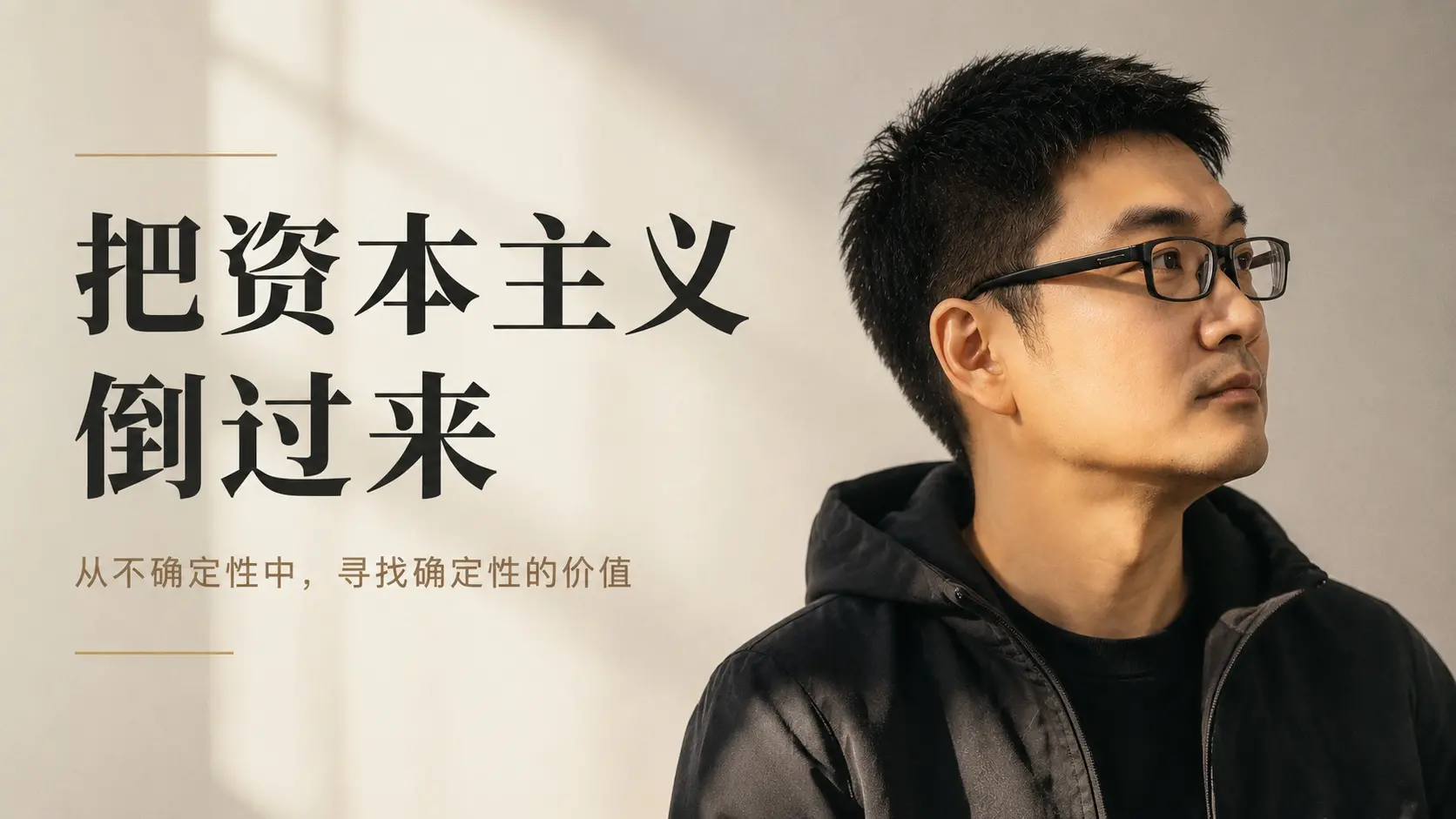
This text explores the unexpected connection between Pinduoduo founder Colin Huang and blockchain, as suggested in his article *Turning Capitalism Upside Down*. Huang argues Pinduoduo's core business is about managing "uncertainty." He posits that wealth flows to the rich because they absorb life's uncertainties (e.g., illness, job loss) that devastate the poor, who pay a premium for certainty through insurance or stable prices. Pinduoduo's model attempts a "reverse insurance": by aggregating consumer demand via group-buying and flash sales, it creates a large, predictable order for manufacturers. This certainty allows factories to remove risk premiums, passing savings back as lower prices, thus partially reversing the wealth flow. The key obstacle, Huang notes, is that an individual's buying intent is an unreliable promise. He then asks if blockchain is the natural solution for this "reverse insurance." The text elaborates that blockchain, through smart contracts with binding deposits, could transform casual intent into a costly-to-break, enforceable commitment. This replaces interpersonal trust with coded rules, making promises credible, pricable, and resistant to fraud. Finally, the author draws a parallel to Bitcoin, framing two paths to creating certainty: the "Pinduoduo path" of aggregating decentralized will into scale, and the "Bitcoin path" of locking rules into immutable code. Both sacrifice something—personal freedom or system flexibility—to manufacture trust and predictability.

链捕手Há 1h

What's the Connection Between Pinduoduo's Huang Zheng and Blockchain?

链捕手Há 1h

The Storage Magnate Who Conquered a Trillion-Dollar Kingdom, Yet Ultimately Could Not Become the Richest

**Summary:** "The Memory Magnate Who Built a Trillion-Dollar Empire, Yet Never Became the Richest" explores the journey of Zhu Yiming, founder of GigaDevice (603986) and co-founder of the soon-to-IPO ChangXin Memory Technologies (CXMT). The article positions GigaDevice, a fabless chip designer now valued at ~¥340 billion, as a prequel to the massive IDM (Integrated Device Manufacturer) venture, CXMT. Starting in 2005 with minimal capital, Zhu strategically "picked up the pieces" by focusing on niche markets like NOR Flash and microcontrollers (MCUs), areas major players were exiting. This allowed GigaDevice to grow into a diversified semiconductor company, maintaining robust profitability even during industry downturns by controlling costs. However, the piece argues that in the highly cyclical and capital-intensive memory chip industry, the fabless model has limits. True resilience and scale require the ability for "counter-cyclical expansion" – investing heavily during downturns – a tactic only possible for IDMs like Samsung or SK Hynix. This insight led Zhu to partner with the Hefei city government in 2016 to establish CXMT, an IDM focused on DRAM. Zhu's symbolic moves, like forfeiting salary and diluting his equity, were crucial in securing the massive state and bank funding needed. CXMT's equipment base is now valued even higher than that of BYD's vast auto manufacturing empire. Despite the potential for CXMT to reach a market cap of ¥1-2 trillion upon its IPO, Zhu's indirect stake in both companies is estimated below 3%, placing his personal wealth far below that of China's top billionaires. The article concludes that his strategic vision built a trillion-yuan memory landscape, but the capital structure necessary to achieve it precluded a personal fortune of similar scale.

marsbitHá 1h

The Storage Magnate Who Conquered a Trillion-Dollar Kingdom, Yet Ultimately Could Not Become the Richest

marsbitHá 1h

XRP Ledger Daily Fees Drop Below $400 As Network Activity Question Returns

The XRP Ledger is drawing attention as daily network fees have fallen below $400. While low fees align with XRPL's design for affordable transactions and are often seen as a strength, the metric can also serve as an indicator of network demand and paid transaction volume. This data point of around $3,100 in weekly fee burn highlights the stark contrast with higher-fee chains like Ethereum and Bitcoin. The development fuels an ongoing debate. Proponents view low fees as a sign of efficiency and accessibility, while critics may question if the network is generating sufficient high-value activity relative to its market cap and payments-focused narrative. The article cautions against overstating the finding, noting a single low-fee day does not signify network failure. It instead adds context to discussions about XRPL's usage, especially alongside Ripple's broader initiatives in stablecoins (RLUSD), AI payments, and enterprise infrastructure. The report recommends monitoring for a fee rebound, checking transaction counts for a fuller picture, and confirming the trend via native explorers like Bithomp. It frames the story within a larger market shift where on-chain data, protocol updates, and infrastructure developments are becoming crucial alongside price action. The editorial stance is to present the verified data, explain its significance for assessing network activity, and avoid hype, positioning it as part of the daily crypto conversation.

bitcoinistHá 5h

XRP Ledger Daily Fees Drop Below $400 As Network Activity Question Returns

bitcoinistHá 5h

Trading

Spot
Futuros

Artigos em Destaque

Como comprar PUSH

Bem-vindo à HTX.com!Tornámos a compra de Push Protocol (PUSH) simples e conveniente.Segue o nosso guia passo a passo para iniciar a tua jornada no mundo das criptos.Passo 1: cria a tua conta HTXUtiliza o teu e-mail ou número de telefone para te inscreveres numa conta gratuita na HTX.Desfruta de um processo de inscrição sem complicações e desbloqueia todas as funcionalidades.Obter a minha contaPasso 2: vai para Comprar Cripto e escolhe o teu método de pagamentoCartão de crédito/débito: usa o teu visa ou mastercard para comprar Push Protocol (PUSH) instantaneamente.Saldo: usa os fundos da tua conta HTX para transacionar sem problemas.Terceiros: adicionamos métodos de pagamento populares, como Google Pay e Apple Pay, para aumentar a conveniência.P2P: transaciona diretamente com outros utilizadores na HTX.Mercado de balcão (OTC): oferecemos serviços personalizados e taxas de câmbio competitivas para os traders.Passo 3: armazena teu Push Protocol (PUSH)Depois de comprar o teu Push Protocol (PUSH), armazena-o na tua conta HTX.Alternativamente, podes enviá-lo para outro lugar através de transferência blockchain ou usá-lo para transacionar outras criptomoedas.Passo 4: transaciona Push Protocol (PUSH)Transaciona facilmente Push Protocol (PUSH) no mercado à vista da HTX.Acede simplesmente à tua conta, seleciona o teu par de trading, executa as tuas transações e monitoriza em tempo real.Oferecemos uma experiência de fácil utilização tanto para principiantes como para traders experientes.

524 Visualizações TotaisPublicado em {updateTime}Atualizado em 2026.06.02

Como comprar PUSH

Discussões

Bem-vindo à Comunidade HTX. Aqui, pode manter-se informado sobre os mais recentes desenvolvimentos da plataforma e obter acesso a análises profissionais de mercado. As opiniões dos utilizadores sobre o preço de PUSH (PUSH) são apresentadas abaixo.

活动图片