Not Just Trading and Meme: These 5 Projects on Base Are Exploring New On-Chain Use Cases

marsbitPublicado em 2026-08-28Última atualização em 2026-08-28

Resumo

Beyond Trading and Memes: 5 Projects Exploring New On-Chain Use Cases on Base While much of the crypto space is dominated by speculation, Base—Coinbase's Ethereum Layer 2 with over $5B TVL—is fostering innovative projects beyond the usual categories. Here are five notable examples: 1. **Hydrex**: A MetaDEX/AMM aggregator that pools native and external liquidity (e.g., from Uniswap, Morpho) to offer optimal swap rates. It features a ve(3,3)-style incentive model and single-signature transactions. 2. **SwapRoyale**: A fantasy trading competition app where users pay a fixed entry fee to trade with a virtual $100k portfolio in real-time contests. It gamifies trading with various tournament formats and has already distributed over $100k in prizes. 3. **BlockRun**: A permissionless AI gateway and payment layer for the on-chain agent economy. It allows autonomous systems to discover, pay for, and execute services using USDC on Base via the x402 micropayment standard, enabling pay-per-use AI. 4. **PixieChess**: A play-to-earn digital chess game where each piece is a collectible NFT with unique abilities that alter classic rules. Value is kept within the ecosystem, with a treasury funding real ETH prizes for winners. 5. **Tokensto**: A platform that lets users sell their unused AI API credits (e.g., from OpenRouter) for cash. It automatically prices credits and facilitates direct payouts to crypto wallets. These projects demonstrate that builders on Base are actively exper...

Author: ollieblocmates, blocmates

Compiled by: Deep Tide TechFlow

Deep Tide Guide: The popular consensus is that crypto has been reduced to four winning categories: perpetual contracts, memecoin launchpads, stablecoin issuers, and trading apps. As technological optimists, blocmates is touring major networks to find viable use cases that still have vitality beyond speculation's dominance. This stop is Base: a network with over $5 billion in TVL, handling approximately 12 million transactions daily, and settling about 90% of x402 transactions, is nurturing a batch of products that haven't yet entered the spotlight—the MetaDEX Hydrex which aggregates liquidity, the fantasy competition app SwapRoyale that gamifies trading, the permissionless AI gateway BlockRun, the real-money chess PixieChess where pieces are collectible NFTs, and Tokensto which turns idle AI tokens into cash. The author believes the surface area of interesting on-chain activities is still wider than the current consensus admits.
The popular consensus is that crypto has been reduced to four winning categories—perpetual contracts, memecoin launchpads, stablecoin issuers, and trading apps.

From a revenue perspective, there's some truth to this statement.

However, as technological optimists, we believe crypto has more viable use cases beyond the dominance of speculation.

To prove our point, we are touring major networks to see what interesting things are brewing within their ecosystems.

Today's stop is Base—the native network of the Base App.

Despite being in controversy where there's a gap between the network's stated direction and its actions, a look at the charts reveals a healthy network with a TVL of over $5 billion.
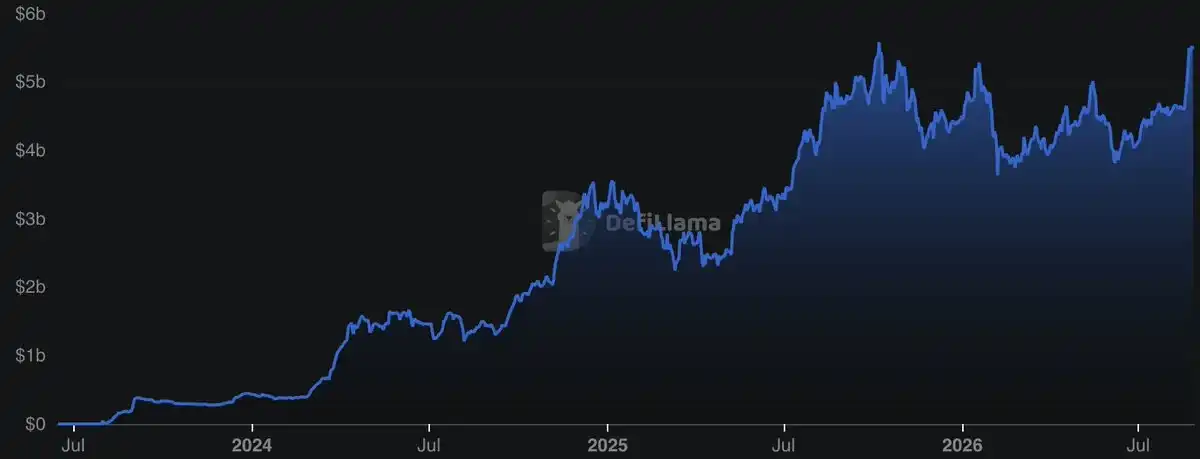
Chart: Source: DeFiLlama

It's worth noting that this metric is significantly skewed. Morpho alone accounts for over 80% of the network's locked value, totaling over $3 billion.

As of mid-August 2026, the network processes approximately 12 million transactions daily (ranking among the highest in tracked chains for transaction volume), with about 283,000 daily active addresses.

Base also settles about 90% of x402 transactions (the emerging standard for micropayments between agents) and leads in on-chain spot trading volume for major L1 assets like BTC, ETH, and SOL.

Over the past year, its share of global DEX trading volume increased from 8.8% to 12.1% (a 38% growth), with total trading volume up 38% year-over-year.

Furthermore, some refreshing products have emerged on the network, some not yet in the spotlight. We've listed a few worth watching.

Hydrex

Starting with Hydrex. This is a Base-native MetaDEX/automated market maker that aggregates native pools with external liquidity sources within the Base ecosystem, routing trades through Uniswap, Morpho, etc., to provide the best prices.

Hydrex runs a modified ve(3,3)-style incentive engine, with weekly community governance directing HYDX emissions and protocol revenue to the most productive liquidity and trading volume.

Holders of locked token accounts can capture 100% of the fees generated by Hydrex LPs through weekly distributions, plus partner incentives, creating a tight flywheel that rewards long-term commitment.

Hydrex has some very cool features, like token swaps and liquidity provision with a single signature, automated liquidity managers, and backing HYDX emissions with real reserve contributions.

SwapRoyale

Yes, we do agree perpetual contracts are one of crypto's "four horsemen," but have you tried the DraftKings version?

SwapRoyale adds something particularly appealing to the concept of trading; it's truly one of the most interesting projects being built on Base right now.
Chart: Source: SwapRoyale

SwapRoyale is a fantasy trading competition app, currently in public beta on iOS. Users pay a fixed entry fee to receive a $100,000 virtual portfolio and participate in real-time trading competitions.

At a time when consumer apps are finally starting to win markets (fomo being the most recent obvious proof), SwapRoyale is one of the purest expressions of this thesis: take something people already love (trading), wrap it in a gamified, skill-oriented format, and make the UX smooth.

Here's how it works:

  • Users sign up with an email
  • A wallet is automatically created
  • Fund via Coinbase, Venmo, PayPal, Apple Pay, debit card, or any crypto wallet
  • Zero platform fees for deposits and withdrawals
  • Users can view and join competitions: available assets, prize pool, payout structure, duration, max number of trades, and minimum participants

There are three competition formats:

  • Guaranteed Prize Pool (GPP)—high volatility, large prizes
  • Double/Triple Up—low volatility, stable play
  • Free contests to practice the format risk-free

SwapRoyale currently has over 300 daily players, has distributed over $100,000 in prizes, and has over 1,500 paying players.

More integrations are being added to enhance the player experience, covering rewards, engagement, and ease of use.

These integrations will bring a full 76-badge system (with interactive 3D collectibles, revamped streak mechanics, and richer sharing), weekly Megapot draws (free entry tickets, real-time prize pool tracking, prizes backed by real tickets), and partner rewards redeemable through Trove, Moonshot, and Beezie.

It also adds Blink for instant deposits, a more polished first-launch experience, and a major UX overhaul across the app: new navigation system, unified leaderboard, smoother gestures, haptic feedback, sound effects, animations, and redesigned sharing flows.

This product is already showing strong product-market fit and is definitely worth watching as it progresses.

BlockRun

The on-chain agent economy is being built on Base, and this is far from just a slogan.

We've witnessed some of the most innovative things in on-chain AI launching first on Base, with x402 being a significant innovation among them.

BlockRun adds to these exciting projects, serving as a routing and payment layer for the agent economy.

BlockRun is a permissionless AI gateway that enables autonomous systems to discover, pay for, and execute services without API keys, subscriptions, or credit cards.

Through BlockRun, agents can fund a non-custodial wallet with USDC on Base, call any endpoint, and have payments directly embedded into HTTP requests by the x402 protocol, completing settlement in a single round trip.

With BlockRun, users enjoy true metered intelligence, paying only for what they actually use.

Payments settle instantly in USDC, agents run at internet speed, unburdened by the friction of traditional API billing.

PixieChess

We also found a magical, real-money chess game built on Base where each piece is a collectible NFT with unique abilities that rewrite the classic rules.

It's called PixieChess. Players assemble their board from their collections, then either climb the ladder or burn pieces to enter high-stakes tournaments and duels.
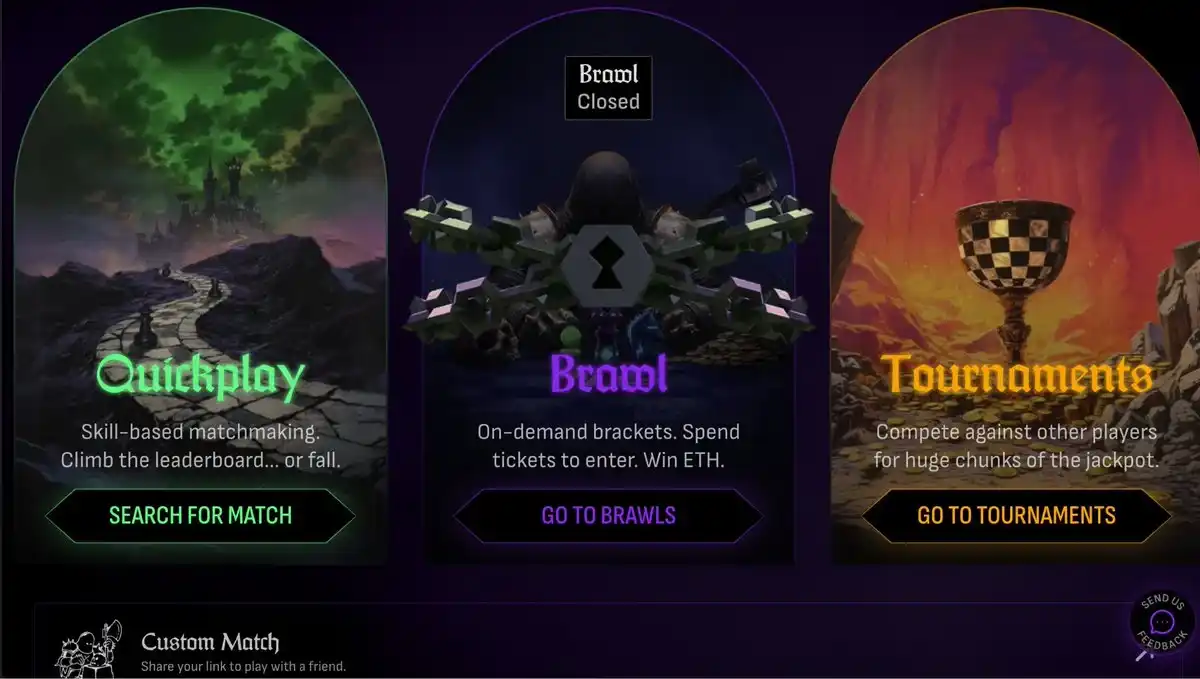
PixieChess is built so all value stays within the system. Each sale funds the treasury, which in turn funds prizes, allowing winners to take home real ETH.

PixieChess is based on classic chess: White moves first, players take turns, moving one piece per turn. Castling, en passant, and pawn promotion follow standard rules (unless overridden by a piece's special ability).

The goal is to checkmate the opponent's king. However, stalemate, agreed draw, the 50-move rule (no captures or pawn moves), threefold repetition, or insufficient material result in a draw.

Each player has a chess clock that only runs on their turn. Timeout usually means losing (unless the opponent has insufficient material to checkmate, then it's a draw).

I'm not much of a chess player, but this is genuinely very cool and has the potential to break out of the Crypto Twitter echo chamber.

Tokensto

Almost everyone familiar with AI has experienced this "sobering moment": spending subscription money on an AI product they thought was really great, only to be left with a pile of unused tokens.

Or maybe it's not just disappointment—it could be accumulating a large amount of tokens, only to stumble upon a competitor's viral launch video, and that competitor happens to be 10x better than the one they subscribed to.

Tokensto solves this problem: it lets users turn idle AI tokens into cash. This is a fairly straightforward product built on the Base network.

Users paste a provider key (OpenRouter, Venice, or any OpenAI-compatible URL), and it gets listed; if the price is competitive enough, it gets bought, with proceeds sent directly to the user's wallet.

Its tech is powered by Surplus (an open inference marketplace), Usdctofiat automatically prices each listing at the top of the order book, and users can cash out directly to off-chain banking apps via Peer (a permissionless on/off-ramp protocol).
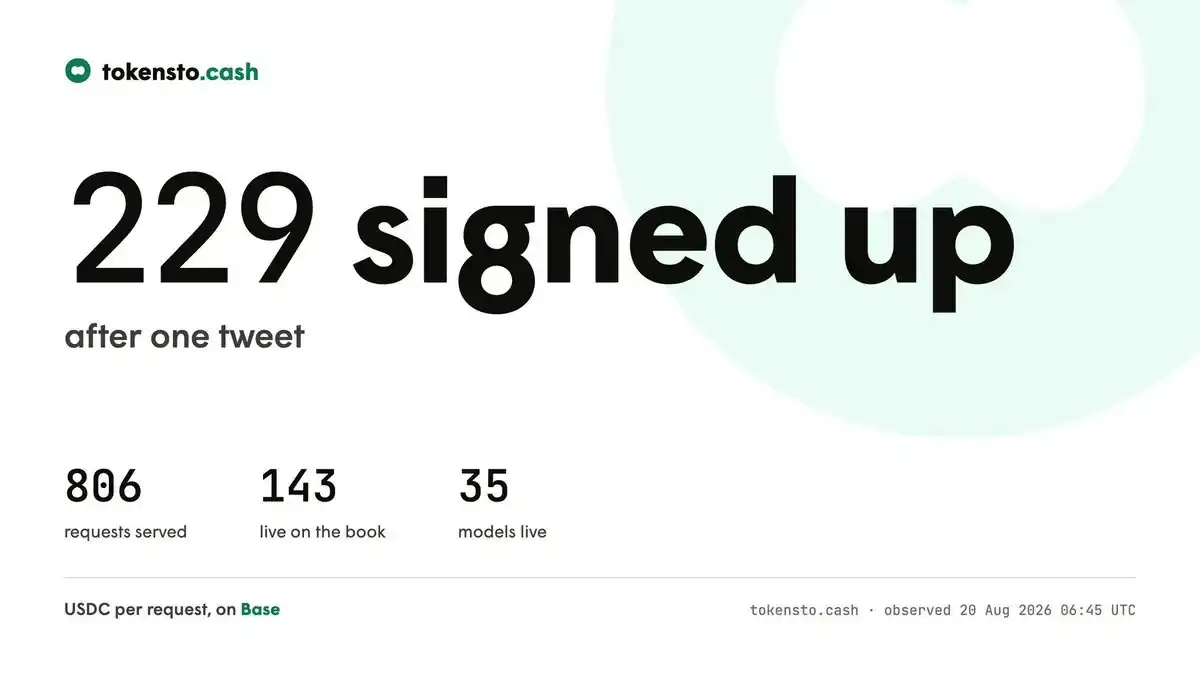
The data shows users are buying into it; its breakout is only a matter of time.

Reflections

Our tour of Base revealed a MetaDEX designed for tighter incentive alignment, a skill-based fantasy trading app that turns market intuition into competition, an agent payment layer that eliminates the friction of traditional API billing, a magical chess game that rewrites rules with collectible pieces while keeping value flowing within the system, and a platform that can sell idle AI tokens for cash.

Not all of these experiments will become category-defining successes, but they show that builders on Base are still willing to explore consumer experiences, the agent economy, and novel gaming mechanics, rather than simply chasing the next speculative flywheel.

This means the surface area of interesting on-chain activities is still wider than the current consensus admits.

As trading volume quietly flows in and the "going crypto" slogan grows louder, we believe more projects will surface. We can only hope that this time is different, with more than just a handful of apps truly breaking out of the CT echo chamber.


Criptomoedas em alta

Perguntas relacionadas

QWhat are the four dominant categories that popular consensus suggests cryptocurrency has been reduced to, according to the article?

AThe four dominant categories are perpetual contracts, memecoin launchpads, stablecoin issuers, and trading applications.

QWhat is the main function and unique feature of Hydrex on Base?

AHydrex is a Base-native MetaDEX/Automated Market Maker that aggregates native pools with external liquidity sources within the Base ecosystem. Its unique feature is a modified ve(3,3) incentive engine, where weekly community governance directs HYDX emissions and protocol revenue to the most productive liquidity and trading volumes, creating a flywheel that rewards long-term alignment.

QHow does SwapRoyale transform trading into a gamified experience?

ASwapRoyale is a fantasy trading competition application. Users pay a fixed entry fee to receive a $100,000 virtual portfolio and participate in real-time trading contests. It gamifies trading by wrapping the speculative activity in a competitive, skill-oriented format with a smooth user experience.

QHow does BlockRun enhance the on-chain AI/agent economy on Base?

ABlockRun serves as a permissionless AI gateway and payment layer for the agent economy. It allows autonomous systems to discover, pay for, and execute services without requiring API keys, subscriptions, or credit cards. Using USDC on Base, agents fund a non-custodial wallet, call endpoints, and have payments embedded directly into HTTP requests via the x402 protocol, enabling single-round-trip settlement and true pay-as-you-go AI usage.

QWhat problem does Tokensto solve, and how does it work on Base?

ATokensto solves the problem of users having leftover, unused AI credits or tokens. It allows users to turn these idle AI tokens into cash. Users can paste a vendor key (e.g., from OpenRouter or any OpenAI-compatible URL) to list it for sale. If the price is competitive, it gets bought, and the proceeds are sent directly to the user's wallet, facilitated by Surplus and Usdctofiat, with off-ramping via Peer.

Leituras Relacionadas

Chinese Venture Capital Is Shifting from 'Selecting People' to 'Selecting Cities'

Chinese Venture Capital: Shifting from "Picking Founders" to "Picking Cities" The article discusses a significant shift in China's venture capital (VC) landscape. Historically, VC investments heavily focused on the individual founder's vision, track record, and capability, as seen in early internet-era successes like Wang Xing (Meituan), Li Bin (Nio), and Li Xiang (Li Auto). The belief was that betting on exceptional people was the key to success. However, the rise of hard tech startups—in fields like semiconductors, robotics, AI, and biotech—has changed this calculus. These industries depend heavily on deep, localized ecosystems: specialized talent pools, established supply chains, manufacturing bases, and application scenarios. A city's industrial "resume" now significantly impacts a startup's chances. Examples include Shenzhen's dominance in robotics, Beijing's concentration of AI firms, Suzhou's biotech cluster, and Hefei's successful bet on semiconductor giant ChangXin. This shift is further driven by changes in funding sources. Government-guided funds and state-owned capital now dominate VC limited partners (LPs). These "patient capital" investors prioritize local economic development, job creation, and industrial chain growth alongside financial returns. Their early bets signal viability to other investors. Ultimately, the VC logic remains about managing risk and increasing the odds of success. In the hard tech era, a supportive city ecosystem provides crucial resources—talent, suppliers, R&D, and policy stability—that a single founder cannot easily assemble. The investment due diligence process has thus expanded from evaluating just the founder to also evaluating the founder's city. Consequently, capital is concentrating in a few regions with strong, focused industrial foundations, challenging other cities to build compelling, credible ecosystems to attract investment.

marsbitHá 6m

Chinese Venture Capital Is Shifting from 'Selecting People' to 'Selecting Cities'

marsbitHá 6m

BitGo Buys NYDIG's Trading Unit as Institutions Consolidate Crypto Services

On August 27, 2026, BitGo, a major regulated crypto custodian, announced the acquisition of NYDIG's institutional trading division. This move expands BitGo's service offerings to include derivatives, structured products, and lending services, allowing it to provide institutions with a more comprehensive, single-provider solution for custody, trading, and settlement. The deal adds approximately 30 NYDIG employees and their trading network to BitGo. The acquisition reflects a broader institutional trend towards consolidating digital asset services with fewer, regulated partners. A Fireblocks report from April 2026 indicated strong institutional budget allocation for such infrastructure, with 53% of surveyed firms spending at least $1 million. BitGo, which went public in January 2026, reported significant revenue and client growth alongside platform assets of $65.2 billion. Its regulatory standing, including a federal trust license, is a key factor for risk-conscious institutions. The deal also provides BitGo access to the crypto lending market, despite a recent quarterly decline reported by Galaxy Research, and aligns with growing activity on regulated derivatives venues like CME Group. However, this integration of multiple services attracts closer regulatory scrutiny. The Bank for International Settlements has warned that such crypto conglomerates could concentrate financial risks. For NYDIG, the sale marks a strategic shift to focus on its vertically integrated bitcoin mining and high-performance computing data center business.

cryptonews.ruHá 11m

BitGo Buys NYDIG's Trading Unit as Institutions Consolidate Crypto Services

cryptonews.ruHá 11m

Trading

Spot

Artigos em Destaque

O que é MEME 2.0

Memecoin 2.0: A Ascensão do $MEME 2.0 no Mundo das Criptomoedas Introdução No panorama em constante evolução das criptomoedas, um novo concorrente surgiu. Memecoin 2.0, simbolizado como $MEME 2.0, eleva o conceito de moedas meme a um novo nível emocionante. Como um subproduto do Memecoin original, este projeto capturou a atenção da comunidade crypto ao mudar o foco de incentivos financeiros típicos para uma experiência envolvente e divertida. Operando na blockchain Ethereum, Memecoin 2.0 redefine audaciosamente o envolvimento da comunidade na esfera crypto. O que é Memecoin 2.0, $MEME 2.0? No seu cerne, Memecoin 2.0 é um projeto de criptomoeda que prioriza o espírito comunitário e a diversão associada à cultura meme. Ao contrário das criptomoedas convencionais, que se concentram em casos de uso práticos e benefícios tangíveis, Memecoin 2.0 distingue-se ao abraçar o lado mais leve da moeda digital. O projeto existe sem promessas de utilidade, um roteiro estruturado ou retornos financeiros, focando em vez disso em fomentar uma comunidade vibrante centrada em memes e no prazer partilhado. Ao fazer isso, aproveita a crescente tendência da cultura meme no espaço online, tornando-se num jogador único no mundo dos ativos digitais. Criador do Memecoin 2.0, $MEME 2.0 Apesar de extensa pesquisa sobre as origens do Memecoin 2.0, a identidade explícita do seu criador continua desconhecida. Esta anonimidade não é incomum na comunidade crypto, onde muitos projetos são liderados por indivíduos ou grupos que preferem ficar nos bastidores. A falta de informações publicamente disponíveis sobre o criador pode ser vista como um movimento estratégico, colocando os holofotes no envolvimento da comunidade em vez de na notoriedade individual dentro do espaço. Investidores do Memecoin 2.0, $MEME 2.0 As informações sobre os investidores ou o financiamento do Memecoin 2.0 são escassas. Esta ausência de detalhes pode sugerir que o projeto é autofinanciado ou que o seu foco na comunidade, em vez de estruturas de investimento tradicionais, atraiu um tipo diferente de apoiador. Como o mundo das moedas memes geralmente envolve mais envolvimento de base do que investimento institucional, esta abordagem alinha-se ao ethos de projetos orientados pela comunidade. Como Funciona o Memecoin 2.0, $MEME 2.0? O Memecoin 2.0 opera inteiramente na blockchain Ethereum, aproveitando as suas robustas características de segurança e escalabilidade. Ao aproveitar os pontos fortes da Ethereum, o Memecoin 2.0 pode oferecer um ambiente seguro para interações dos utilizadores enquanto assegura que as transações são eficientes e custo-efetivas. Uma das características únicas do Memecoin 2.0 reside na sua estrutura orientada pela comunidade. O valor e a popularidade do token $MEME 2.0 derivam da participação ativa dos seus utilizadores, em vez de uma utilidade inerente. Este design reforça o foco do projeto no aspecto de entretenimento das criptomoedas, implicando que o riso e o envolvimento da comunidade são as verdadeiras moedas que impulsionam o seu sucesso. Além disso, o projeto insere-se no ecossistema mais amplo das moedas meme, onde o valor de cada moeda meme oscila com base na cultura, nas tendências e no envolvimento da comunidade, em vez de nos princípios económicos tradicionais. Linhas do Tempo do Memecoin 2.0, $MEME 2.0 Para melhor entender a evolução e os marcos do Memecoin 2.0, aqui está uma linha do tempo que destaca eventos significativos na sua história: 2024: O início do Memecoin 2.0 é reconhecido como um desdobramento do Memecoin original, estabelecendo-se dentro do contexto próspero das moedas meme enquanto opera na blockchain Ethereum. 13 de Julho de 2024: O Memecoin 2.0 posiciona-se oficialmente como uma moeda meme centrada na comunidade na rede Ethereum, enfatizando a sua abordagem centrada no entretenimento que convida os utilizadores a participar e envolver-se no seu crescimento. Pontos Chave Sobre o Memecoin 2.0, $MEME 2.0 Várias características críticas definem o Memecoin 2.0: Abordagem Centrada na Comunidade: A missão primária do Memecoin 2.0 é criar uma experiência comunitária divertida e envolvente, capitalizando o prazer coletivo derivado da cultura meme. Construído na Ethereum: Operar na blockchain Ethereum fornece ao projeto uma infraestrutura essencial que garante segurança e escalabilidade. Falta de Utilidade ou Roteiro: Numa notável divergência das criptomoedas tradicionais, o Memecoin 2.0 não promete quaisquer características utilitárias ou retornos financeiros, reafirmando o seu compromisso com o envolvimento da comunidade e a participação social. Foco na Cultura Meme: Ao abraçar os aspectos humorísticos e culturais do fenómeno meme, o Memecoin 2.0 fornece uma plataforma para que os utilizadores se envolvam com a crypto offline e online. Contexto Adicional: A Importância das Moedas Meme As moedas meme emergiram como uma classe distinta de criptomoeda, frequentemente impulsionadas pelo humor e por uma abordagem leve ao comércio. Estas moedas geralmente carecem de utilidade significativa ou roteiros de desenvolvimento, atraindo os utilizadores com a promessa de diversão, interação comunitária e relevância cultural. No panorama do ecossistema crypto mais amplo, as moedas meme revive a importância do envolvimento da comunidade, resistindo contra abordagens exclusivamente orientadas para o lucro. Projetos como o Memecoin 2.0 inauguram uma era em que o entretenimento pode harmonizar-se com aspirações financeiras, transformando a blockchain numa plataforma para criatividade e interação social. Conclusão O Memecoin 2.0, ou $MEME 2.0, representa uma nova onda de criptomoeda que prioriza o envolvimento da comunidade em detrimento de estruturas financeiras rígidas. Com um foco no humor e na interação social, capitaliza a fascinação em torno da cultura meme. Ao operar na blockchain Ethereum, o Memecoin 2.0 aproveita as capacidades da tecnologia, enquanto mantém um compromisso firme com o valor de entretenimento da moeda digital. À medida que o espaço em torno das criptomoedas continua a evoluir, o Memecoin 2.0 serve como um testemunho da ideia de que o futuro dos ativos digitais pode muito bem depender de experiências partilhadas, risadas e conexões comunitárias sólidas. No mundo imprevisível da crypto, talvez a alegria possa ser tão valiosa quanto o ganho financeiro tradicional.

210 Visualizações TotaisPublicado em {updateTime}Atualizado em 2024.12.03

O que é MEME 2.0

Como comprar MEME

Bem-vindo à HTX.com!Tornámos a compra de Memeland (MEME) simples e conveniente.Segue o nosso guia passo a passo para iniciar a tua jornada no mundo das criptos.Passo 1: cria a tua conta HTXUtiliza o teu e-mail ou número de telefone para te inscreveres numa conta gratuita na HTX.Desfruta de um processo de inscrição sem complicações e desbloqueia todas as funcionalidades.Obter a minha contaPasso 2: vai para Comprar Cripto e escolhe o teu método de pagamentoCartão de crédito/débito: usa o teu visa ou mastercard para comprar Memeland (MEME) instantaneamente.Saldo: usa os fundos da tua conta HTX para transacionar sem problemas.Terceiros: adicionamos métodos de pagamento populares, como Google Pay e Apple Pay, para aumentar a conveniência.P2P: transaciona diretamente com outros utilizadores na HTX.Mercado de balcão (OTC): oferecemos serviços personalizados e taxas de câmbio competitivas para os traders.Passo 3: armazena teu Memeland (MEME)Depois de comprar o teu Memeland (MEME), armazena-o na tua conta HTX.Alternativamente, podes enviá-lo para outro lugar através de transferência blockchain ou usá-lo para transacionar outras criptomoedas.Passo 4: transaciona Memeland (MEME)Transaciona facilmente Memeland (MEME) no mercado à vista da HTX.Acede simplesmente à tua conta, seleciona o teu par de trading, executa as tuas transações e monitoriza em tempo real.Oferecemos uma experiência de fácil utilização tanto para principiantes como para traders experientes.

492 Visualizações TotaisPublicado em {updateTime}Atualizado em 2026.06.02

Como comprar MEME

Discussões

Bem-vindo à Comunidade HTX. Aqui, pode manter-se informado sobre os mais recentes desenvolvimentos da plataforma e obter acesso a análises profissionais de mercado. As opiniões dos utilizadores sobre o preço de MEME (MEME) são apresentadas abaixo.

活动图片