Long Queue at Tencent's Door to Receive "Lobster", an Heavily Advertised Exchange Accused of Being a Scam?!

比推Publicado em 2026-03-07Última atualização em 2026-03-07

Resumo

BitPush News reported on several trending topics in the crypto and tech space. A notable event involved a large gathering at Tencent’s headquarters, where nearly a thousand developers and AI enthusiasts queued to install OpenClaw (also referred to as “Lobster”), an AI agent framework, with assistance from Tencent Cloud engineers. Attendees received “Lobster birth certificates,” leading to online commentary comparing the event to past promotional campaigns and speculating about Tencent’s underlying testing motives. Another topic discussed the efficiency of AI in trading, with a sarcastic post highlighting automated trading tools that facilitate rapid financial losses. The article also addressed allegations against a heavily advertised cryptocurrency exchange, accused of being a potential scam or internal manipulative platform (“内盘”). Critics claimed the platform promotes fake pre-IPO equity opportunities and described the crypto influencer landscape as an echo chamber with little genuine investor participation. Finally, the piece mentioned U.S. labor market data which showed a loss of 92,000 jobs in February and a rise in the unemployment rate to 4.4%, sparking discussions about economic health and a possible wave of layoffs.

Hello dear readers~

What have the KOLs in the crypto circle been talking about in the past 24 hours?

Note: The following content is compiled from the X platform and represents personal opinions. It does not represent the stance of this platform and should not be considered as investment advice.

OpenClaw Tencent Free Installation Event: Every Generation Has Its Own Eggs to Receive

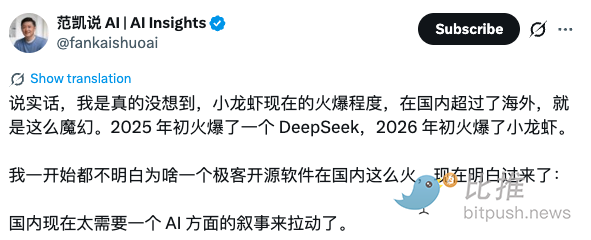
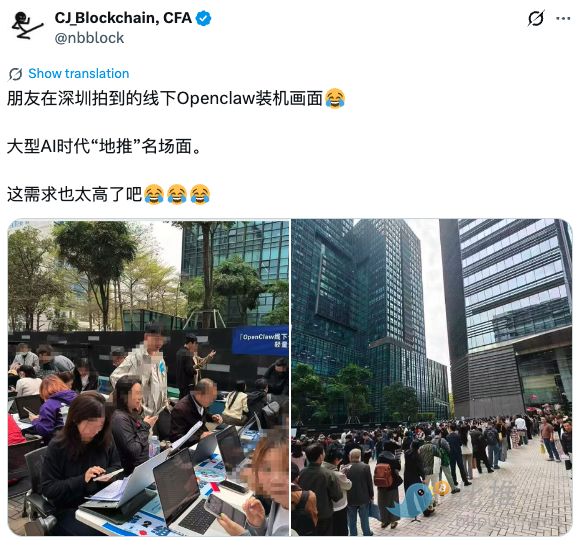
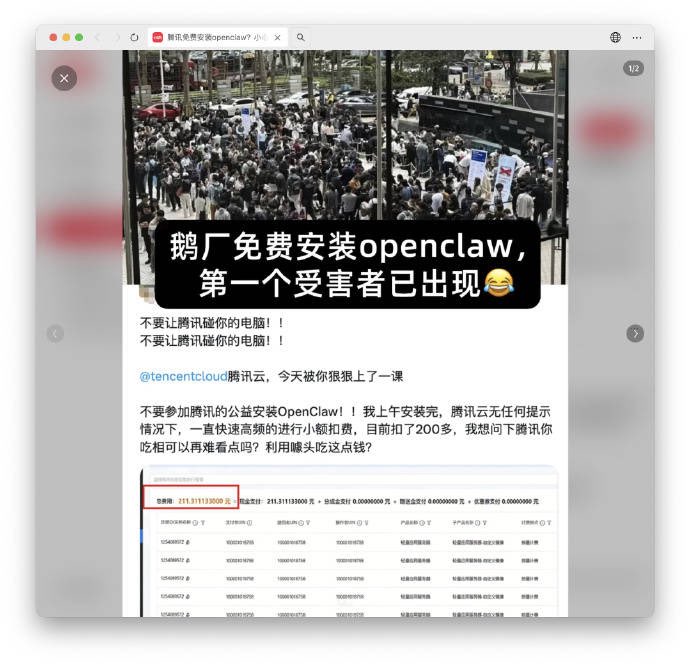
On February 6th, a long queue formed at the door of Tencent (鹅厂): Nearly a thousand developers and AI enthusiasts reportedly came to Tencent Tower and, with the assistance of Tencent Cloud engineers, completed the cloud installation of OpenClaw (commonly known as "Lobster"), collectively becoming "cloud lobster farmers." Some Tencent employees said the last time such a large scene occurred was during the New Year's red envelope distribution.
极速赛车开奖官网历史记录

Popular Comments:

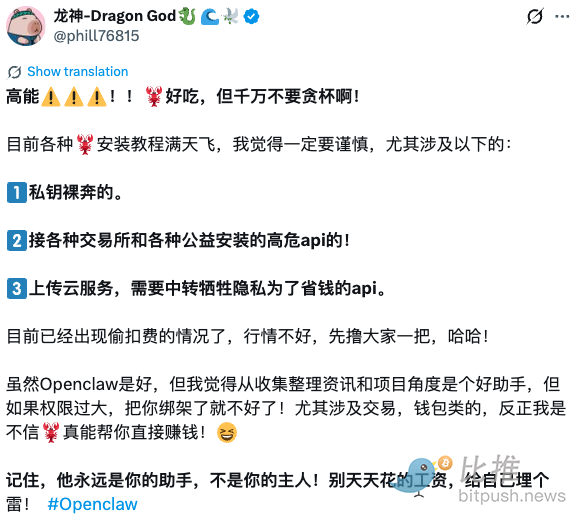
Install it first. You might not use it, but you must have it!

I feel like they installed the Tencent Cloud version. It's said that小龙虾 (little lobster) birth certificates were also handed out on site, clearly stating Tencent Cloud. Tencent doesn't do this for no reason; it feels like a form of灰度测试 (gray scale testing).

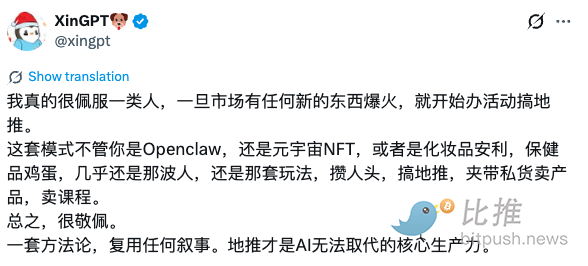
In 2023, it was ground promotion for Web3; in 2024, for大模型API (large model APIs); in 2025, for Agent frameworks. The salespeople in Shenzhen's Huaqiangbei are always at the forefront of the times, just reprinting flyers with a different logo each time.

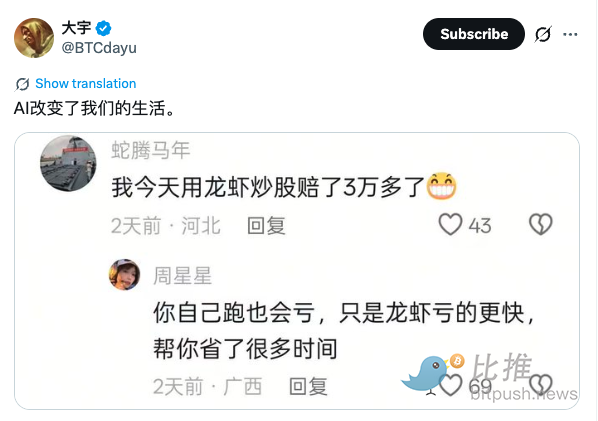
AI Makes Our Lives Better??

Well, losing money also requires efficiency.
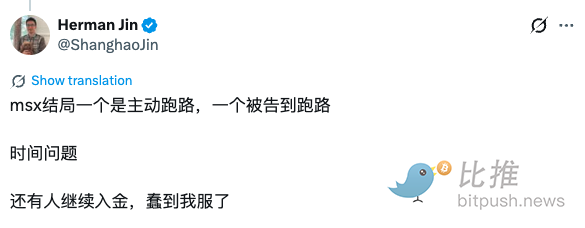
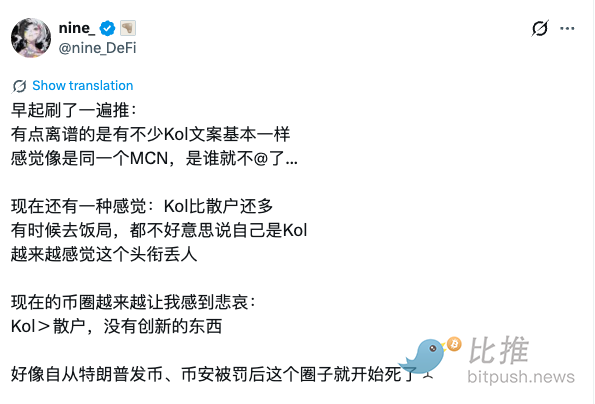
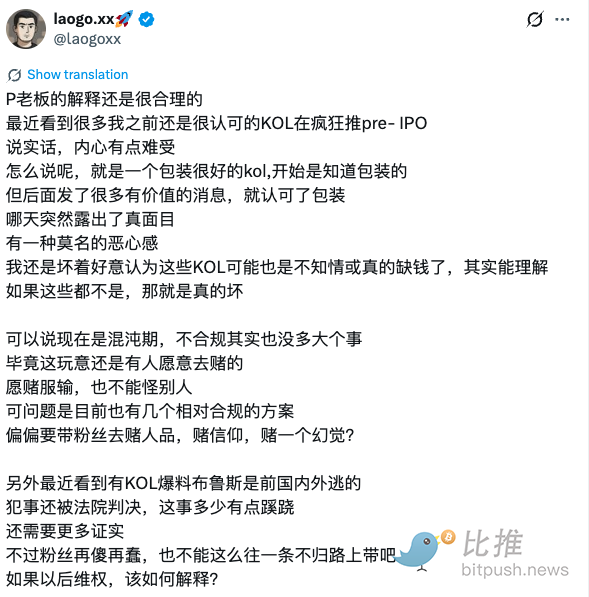
More Crypto KOLs Than Retail Investors? Is a Certain Exchange an Inside Job?
Popular Replies:

Ads are just copy-pasting and sending it once, with minor changes, haha.

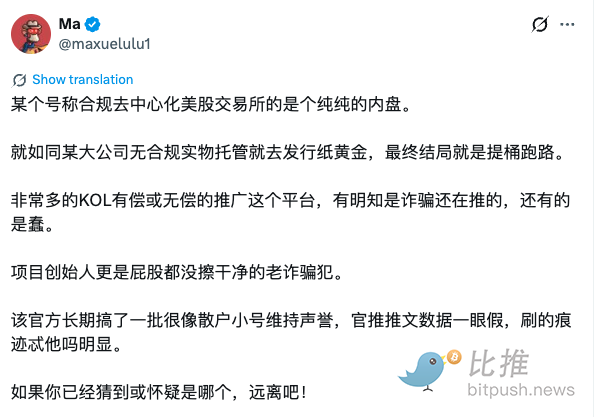
The current crypto circle has indeed become a self-indulgent scene for KOLs; everyone is copying each other's homework, while真正的散户 (real retail investors) have become rare.

If this isn't a scam, what is? Because the essence is that MSX claims to sell you pre-IPO equity opportunities, but in reality, you are buying air, equity that can never be兑现 (cashed out).

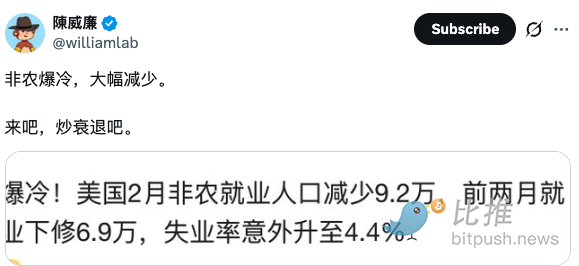
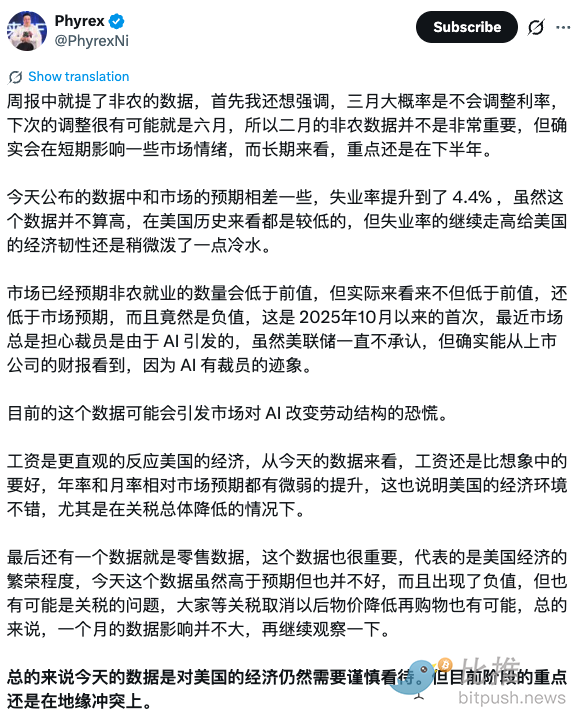
Non-Farm Payroll Data Interpretation and Market Impact

Data shows that U.S. employers surprisingly cut jobs in February, and the unemployment rate rose, raising questions about the health of the labor market. According to data released by the Bureau of Labor Statistics (BLS) on Friday, non-farm payrolls decreased by 92,000 last month, after a strong start to the year. The unemployment rate climbed to 4.4%.

Extended reading:Is It the End for Workers? The 2026 Layoff Wave Has Just Begun...


Twitter:https://twitter.com/BitpushNewsCN

Bitpush TG Discussion Group:https://t.me/BitPushCommunity

Bitpush TG Subscription: https://t.me/bitpush

Original article link:https://www.bitpush.news/articles/7617605

Perguntas relacionadas

QWhat was the main event that took place at Tencent's headquarters on February 6th?

ANearly a thousand developers and AI enthusiasts queued up at Tencent's headquarters to have OpenClaw (commonly known as 'Lobster') installed on the cloud with the assistance of Tencent Cloud engineers, collectively becoming 'cloud lobster farmers'.

QWhat is OpenClaw, and what did participants receive during the event?

AOpenClaw, colloquially referred to as 'Lobster,' is an AI agent framework. Participants received assistance in installing it on the cloud and were also given a 'lobster birth certificate' that clearly stated it was from Tencent Cloud.

QAccording to the article, what is a major criticism of a certain cryptocurrency exchange?

AThe exchange is accused of being a scam or an internal盘 (internal trading盘), where KOLs are heavily promoting it, but it is suggested that users are essentially buying 'air'—non-existent equity that can never be兑现 (realized or cashed out).

QWhat was the unexpected data from the US Bureau of Labor Statistics (BLS) regarding non-farm payrolls?

AThe data showed that US employers unexpectedly cut 92,000 jobs in February, and the unemployment rate rose to 4.4%, which raised questions about the health of the labor market.

QWhat historical comparison did a Tencent employee make regarding the scale of the OpenClaw event?

AA Tencent employee stated that the last time there was such a large commotion was during the New Year when红包 (red envelopes containing money) were distributed.

Leituras Relacionadas

The 'VVV' Concept Soars 9x in Half a Year, The New AI Narrative on Base Chain

"The article explores the 'VVV' concept as the new AI-focused narrative within the Base ecosystem, centered around the token $VVV of the privacy-focused, uncensored generative AI platform Venice, led by crypto veteran Erik Voorhees. Venice has seen significant growth in 2026, with its API users surging, partly attributed to exposure from OpenClaw. The platform now boasts over 2 million total users and 55,000 paid subscribers. Correspondingly, the $VVV token price has risen over 9x this year. Key to its performance are tokenomics designed for value accrual: reduced annual emissions, subscription revenue used for buyback-and-burn, and a unique staking mechanism. Staking $VVV yields $sVVV, which can be used to mint $DIEM tokens. Each staked $DIEM provides a daily $1 credit for using Venice's API services, creating tangible utility. The article also highlights other tokens associated with the 'VVV' narrative. $POD, the token of distributed AI network Dolphin (which co-developed Venice's default AI model), saw a massive price surge. $cyb3rwr3n, a project for a Venice credit auction market, gained attention due to perceived connections to Venice's team despite official denials. Finally, $SR of robotics platform STRIKEROBOT.AI rose after announcing a partnership with Venice for robot vision-language model development. Overall, the 'VVV' ecosystem combines AI platform growth, deflationary tokenomics, and innovative utility mechanisms, driving significant investor interest and price action in related tokens."

marsbitHá 9m

The 'VVV' Concept Soars 9x in Half a Year, The New AI Narrative on Base Chain

marsbitHá 9m

Anthropic and OpenAI Have Single-Handedly Severed the Logic of Pre-IPO Stock Tokenization

The pre-IPO stock token market is experiencing significant turmoil following strong statements from AI giants Anthropic and OpenAI. Both companies have updated their official policies, declaring that any transfer of their company shares—including sales, transfers, or assignments of share interests—without prior board approval is "invalid" and will not be recognized in their corporate records. This means buyers in such unauthorized transactions would not be recognized as shareholders and would have no shareholder rights. A major point of contention is the use of Special Purpose Vehicles (SPVs), which are legal entities commonly used by pre-IPO token platforms to pool investor funds and indirectly acquire shares from employees or early investors. The companies explicitly state they do not permit SPVs to acquire their shares, and any such transfer violates their restrictions. They warn that third parties selling shares through SPVs, direct sales, forward contracts, or stock tokens are likely engaged in fraud or are offering worthless investments due to these transfer limits. This stance directly threatens the core model of many pre-IPO token platforms, which rely on SPV structures. The announcement revealed additional risks within this model, such as complex "SPV-within-SPV" layering that obscures legal transparency, increases management fees, and creates a chain reaction risk of invalidation. Following the news, tokens like ANTHROPIC and OPENAI on platforms like PreStocks fell sharply (over 20%). The market reaction highlights a divergence: while asset-backed pre-IPO tokens plummeted, purely speculative pre-IPO futures contracts, which are bilateral bets on future IPO prices with no claim to actual shares, remained relatively stable as they are unaffected by the transfer restrictions. The industry is split on the implications. Some believe the fundamental logic of pre-IPO token trading is broken if leading companies reject SPV-held shares, potentially causing a domino effect. Others, like Rivet founder Nick Abouzeid, argue that buyers of such unofficial tokens always knowingly accepted the risk of non-recognition by the company. The statements serve as a stark risk warning and a corrective measure for a market where valuations for some AI-related pre-IPO tokens had soared to irrational levels, far exceeding recent funding round valuations.

marsbitHá 1h

Anthropic and OpenAI Have Single-Handedly Severed the Logic of Pre-IPO Stock Tokenization

marsbitHá 1h

Anthropic and OpenAI Personally Sever the Logic of Pre-IPO Crypto-Stocks

The pre-IPO token market has been rocked by strong statements from Anthropic and OpenAI. Both AI giants have updated official warnings, declaring that any sale or transfer of their company shares without explicit board approval is "invalid" and will not be recognized on their corporate records. This directly targets Special Purpose Vehicles (SPVs), the common legal structure used by pre-IPO token platforms. These platforms typically use an SPV to acquire shares from employees or early investors, then issue blockchain-based tokens representing a claim on the SPV's economic benefits. Anthropic and OpenAI's position means that if an SPV's share purchase lacked authorization, the underlying asset could be deemed worthless, nullifying the token's value. Anthropic explicitly warned that any third party selling its shares—via direct sales, forwards, or tokens—is likely fraudulent or offering a valueless investment. The crackdown highlights risks in the popular SPV model, including complex multi-layered "Russian doll" SPV structures that obscure legal ownership, add fees, and concentrate risk. If one layer is invalidated, the entire chain could collapse. Following the announcements, tokens like ANTHROPIC and OPENAI on platforms like PreStocks fell sharply (over 20%). In contrast, purely speculative pre-IPO prediction contracts remained stable, as they involve no actual share ownership. The move is seen as a corrective measure amid a market frenzy where some pre-IPO token valuations (e.g., Anthropic's token hitting a $1.4 trillion implied valuation) far exceeded recent official funding rounds. Opinions are split: some believe this undermines the core logic of pre-IPO token trading if top companies reject SPVs, while others argue buyers always assumed this legal risk when accessing unofficial channels. The statements serve as a stark warning and a potential catalyst for market de-leveraging and clearer boundaries.

Odaily星球日报Há 1h

Anthropic and OpenAI Personally Sever the Logic of Pre-IPO Crypto-Stocks

Odaily星球日报Há 1h

The Waged Worker Driven to Poverty by AI Subscriptions

"AI Membership: The Hidden Cost Pushing Workers Toward 'Poverty'" The widespread corporate push for AI adoption is creating a hidden financial burden for employees. Companies, from giants like Alibaba to small firms, are mandating AI use, often tying token consumption to KPIs, but frequently refuse to cover the costs. Workers are forced to pay for subscriptions out of pocket to stay competitive and avoid being replaced. Front-end developer Long Shen spends up to 2000 RMB monthly on tools like Cursor and ChatGPT Plus, seeing it as a necessary 3% salary investment to handle 90% of his coding tasks. While it boosted his performance and led to promotions, he now faces idle time at work, pretending to be busy. Designer Peng Peng navigates strict company firewalls by using personal devices and accounts for AI image generation tools like Midjourney, spending hundreds monthly without reimbursement, while her boss demands faster, more numerous revisions. The pressure creates workplace anxiety and suspicion. Programmer Li Huahua, after a friend's experience of raised KPIs following AI success, fears being branded a "traitor" for using it yet worries about falling behind if she doesn't. The dynamic allows management to demand results without understanding the tools or covering expenses, treating employees like AI "agents." While some, like entrepreneur Jin Tu, find high value in paid AI, building entire systems and winning competitions, for most, it's a trap. Free tools like Kimi and Doubao are introducing fees, closing off alternatives. The initial efficiency gains individual advantage, but as AI becomes ubiquitous, the personal edge disappears, workloads increase, and a cycle of dependency begins. Workers like Long Shen realize they cannot maintain AI-generated code without AI, making stopping harder than continuing to pay. The tool promising liberation is instead becoming a compulsory, costly chain in the modern workplace.

marsbitHá 2h

The Waged Worker Driven to Poverty by AI Subscriptions

marsbitHá 2h

Trading

Spot
Futuros
活动图片