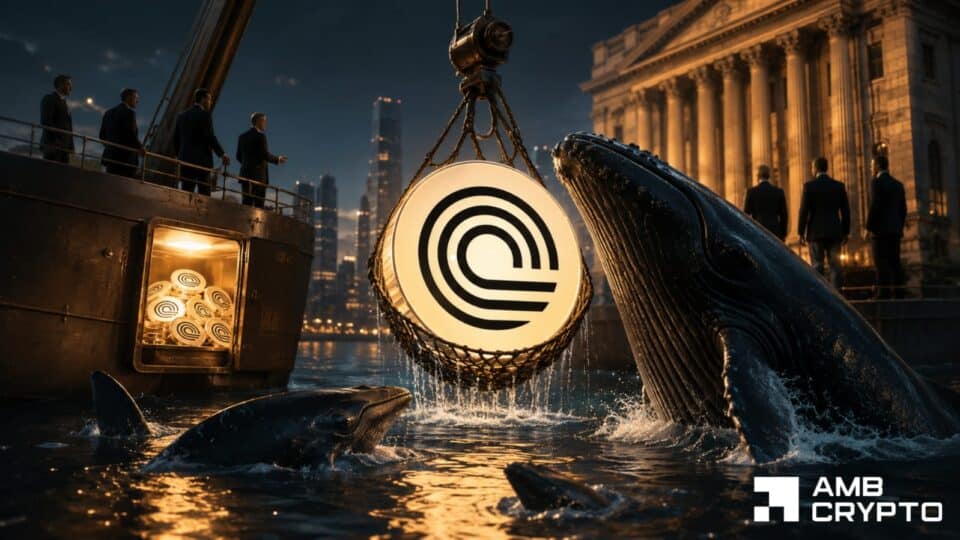
Kraken Launches Pre-IPO Perps For OpenAI And Anthropic With Up To 5x Leverage

bitcoinistPublicado em 2026-06-16Última atualização em 2026-06-16

Resumo

Kraken has launched pre-IPO perpetual futures contracts for private AI giants OpenAI and Anthropic, offering eligible traders up to 5x leverage. These derivatives provide synthetic exposure to the companies' valuations ahead of any public listing, tapping into high investor demand for AI themes. However, the product carries unique risks compared to standard crypto perpetuals, as private company valuations lack transparent, continuous pricing and depend on funding rounds, secondary transactions, and IPO timelines. This move signals crypto exchanges' expansion into alternative speculative markets beyond digital assets, though it raises questions about risk management, liquidity, and investor understanding, especially when using leverage.

Kraken is pushing deeper into the overlap between crypto derivatives and private-market exposure with the launch of pre-IPO perpetual futures tied to OpenAI and Anthropic.

The exchange said the new contracts allow eligible traders to take long or short positions on two of the most closely watched private artificial intelligence companies before any public listing. The products offer up to 5x leverage, according to Kraken’s announcement.

TL;DR

  • Kraken has launched pre-IPO perpetual futures for OpenAI and Anthropic.
  • Eligible traders can access up to 5x leverage.
  • The products offer exposure to private AI companies before public listings.
  • The contracts carry unique risks tied to private valuations, liquidity, and IPO timing.

Crypto Derivatives Meet Private AI Exposure

OpenAI and Anthropic are two of the most sought-after private companies in the world. Direct exposure to their equity is typically limited to insiders, venture funds, private secondary markets, and selected institutional investors.

Kraken’s new pre-IPO perps attempt to turn that demand into a tradable derivatives product. Instead of buying private shares directly, eligible traders can take synthetic exposure through perpetual futures contracts.

That is a notable shift. Crypto derivatives platforms are no longer only offering exposure to digital assets. Increasingly, they are experimenting with markets tied to private companies, real-world assets, political events, and other off-chain narratives.

For traders, the attraction is obvious. AI has become one of the most powerful investment themes in global markets, and many public-market investors have been unable to access the highest-profile private names directly.

How Pre-IPO Perps Differ From Normal Crypto Perps

A Bitcoin or Ethereum perpetual future tracks an asset that trades continuously in liquid spot markets. That gives exchanges plenty of reference data for pricing, funding, and liquidation mechanics.

Pre-IPO private-company exposure is more complicated.

Private companies do not have the same transparent, continuous market price as public stocks or major crypto assets. Their valuations can depend on funding rounds, secondary transactions, internal marks, and expectations around future IPO timing.

That makes risk management more complex. If the expected listing timeline changes, if private-market valuations move sharply, or if demand dries up, the contract may behave differently from a standard crypto perp.

Kraken’s 5x leverage feature makes those risks more important. Leverage can amplify gains, but it also magnifies losses and liquidation risk. Traders who treat pre-IPO perps like standard crypto momentum products may underestimate how different the underlying exposure is.

Why This Launch Matters

The launch shows how crypto trading infrastructure is expanding beyond tokens. Exchanges are trying to become broader venues for speculative and alternative exposure, especially in markets that traditional retail investors struggle to access.

That could be powerful, but it also raises questions about investor protection, disclosures, pricing sources, and liquidity depth.

For Kraken, the product fits a wider push into derivatives and trader-focused markets. For users, it offers a new way to express a view on AI leaders before their public listings.

The safer interpretation is not that pre-IPO perps make private markets simple. They do not. The key point is that crypto-native derivatives are moving into areas that used to sit behind private-market walls.

That makes the product interesting — and risky enough that traders should understand exactly what they are trading before touching leverage.


Source: Kraken Blog

Perguntas relacionadas

QWhat are the new financial products launched by Kraken and for which companies?

AKraken has launched pre-IPO perpetual futures (pre-IPO perps) for the private artificial intelligence companies OpenAI and Anthropic.

QWhat is the maximum leverage offered for Kraken's new pre-IPO perps?

AThe new pre-IPO perpetual futures products offer up to 5x leverage.

QHow do pre-IPO perpetual futures differ fundamentally from standard crypto perpetuals like for Bitcoin?

AStandard crypto perpetuals track assets with continuous, liquid spot markets. Pre-IPO perps track private companies, which lack transparent, continuous market pricing and depend on funding rounds, secondary transactions, and IPO expectations, making risk management and pricing more complex.

QAccording to the article, why is the launch of these pre-IPO perps significant for crypto trading platforms?

AIt shows crypto trading infrastructure is expanding beyond digital assets, attempting to become broader venues for speculative exposure in markets (like private equity) traditionally hard for retail investors to access.

QWhat are some of the unique risks associated with trading these pre-IPO perpetual futures mentioned in the article?

ARisks include those tied to private company valuations, liquidity, IPO timing changes, and the amplified impact of these factors when using the offered leverage, which can magnify losses and liquidation risk.

Leituras Relacionadas

Global Stock Market's Storm Center: South Korea's Stock Market De-leveraging Is Largely Complete

Storm's Eye: South Korean Market De-leveraging Nears Completion The recent sharp correction in South Korean equities, with the KOSPI index dropping 32% from its June high, has been a key trigger for global tech stock volatility. The core driver was not a fundamental shift but a forced de-leveraging process within the market's unique structure, which is now largely complete. Two main leverage channels amplified the sell-off: 1. **Leveraged ETFs:** Their size, proportionally four times larger than in the U.S., peaked near $50 billion. Their mandatory daily rebalancing mechanism created a vicious cycle of "price drop → forced selling → further drop." Approximately 75% of this excess has been unwound, shrinking to $26 billion, with regulatory curbs now blocking new inflows. 2. **Hedge Fund Leverage:** Using swaps to magnify exposure, hedge funds saw their net long positioning fall by over 50% from peak levels. The most intense phase of this institutional de-leveraging is over. In contrast, **retail margin debt** poses minimal systemic risk. At 0.5% of market cap, it is far lower than in the U.S. or China, lacks automatic triggers, and is concentrated in smaller stocks. The conclusion: the high-leverage structures most prone to "chain-reaction selling" have been substantially cleared. The market is transitioning from a liquidity-driven crash to one priced more on fundamentals. The article argues that the AI trend—centered on Korean memory chips—remains intact. This episode represents a painful but necessary clearing of crowded trades, not the end of the AI revolution. For investors, the key question is conviction in the long-term AI direction; if the trend is real, current volatility is a cost of entry, not a terminal risk.

链捕手Há 46m

Global Stock Market's Storm Center: South Korea's Stock Market De-leveraging Is Largely Complete

链捕手Há 46m

The Eternal Fragments of Money: Third-Party Payment Has No First Principle

"The Enduring Fragments of Money: Third-Party Payments Lack a First Principle" Stripe is reportedly attempting to acquire PayPal, marking a significant shift reminiscent of PayPal's merger with the original X.com 30 years ago. The article analyzes Stripe's strategic challenges and the broader payments industry landscape. Despite its initial success with a developer-friendly API model, Stripe missed its optimal IPO window during the pandemic and has since seen its valuation decline. Its attempts to expand through acquisitions and new ventures, particularly in stablecoins (like its OUSD project) and Agent-focused payments (ACP/MPP protocols), have faced headwinds. The author argues that the payment industry remains highly fragmented and is ultimately an adjunct to the traditional banking system. This structure limits the potential for any single player, including Stripe, to achieve complete dominance. While stablecoins and the future rise of autonomous Agent economies present potential growth avenues, they are not yet mainstream and still require integration with the existing financial system. For now, Agent-based transactions are largely used for speculative "volume boosting" rather than substantive business applications. Stripe's current move to acquire PayPal is seen as an attempt to bolster its weak consumer-facing (C-side) business after its stablecoin-focused strategies faltered. Meanwhile, PayPal is described as structurally outdated, unable to revive itself through new products like Venmo or PYUSD. The future of payments may lie not in payments themselves but in value-added services like more efficient settlement networks. The author suggests that companies like Stripe and Circle, which are building their own blockchains (Tempo, Arc) and stablecoins, are positioning themselves to eventually profit from high-efficiency settlement systems. These new networks could potentially bypass some traditional banking layers. In conclusion, the article posits that third-party payment is a perpetually fragmented battlefield where scale alone cannot ensure victory. Players must find new models, focusing on efficiency to compete with the entrenched banking system. Stripe's acquisition of PayPal represents a bet on this uncertain future.

链捕手Há 1h

The Eternal Fragments of Money: Third-Party Payment Has No First Principle

链捕手Há 1h

Trading

Spot
活动图片