Key Lawmaker 'Relents', Wash's Biggest Obstacle to Assuming Fed Chair on May 15 Cleared

marsbitPublicado em 2026-04-27Última atualização em 2026-04-27

Resumo

Key political opposition to Kevin Warsh's nomination as Federal Reserve Chair has been removed after Senator Thom Tillis (R-N.C.) withdrew his objection, clearing the way for a committee vote on April 29. Tillis had previously blocked the nomination due to a criminal investigation into current Chair Jerome Powell, which he viewed as a threat to Fed independence. The Justice Department has since dropped the investigation. Warsh, who has broad Republican support, is expected to be confirmed by the Senate in time for Powell’s term expiration on May 15. If confirmed, Warsh has signaled significant policy changes, including abolishing the "dot plot" of interest rate projections and reevaluating the Fed’s forward guidance framework. These changes could fundamentally alter the market’s pricing mechanisms for stocks, bonds, and currencies. Although the criminal case against Powell is closed, uncertainty remains as he retains his board seat until 2028. President Trump has not fully endorsed Powell, citing an ongoing review of Fed renovation spending. Warsh’s potential reforms target the communication tools developed post-2008, which have become foundational to global asset pricing.

A key political obstacle to Kevin Wash's appointment as Federal Reserve Chair has been removed, as North Carolina Republican Senator Thom Tillis announced on Sunday that he would withdraw his opposition to Wash's nomination.

The biggest political obstacle to Kevin Wash becoming Federal Reserve Chair has been cleared, and his confirmation process is expected to advance rapidly this week.

According to Bloomberg, Thom Tillis, a Republican Senator from North Carolina and a member of the Senate Banking Committee, announced on Sunday that he would withdraw his blocking stance on Wash's nomination, clearing the way for a committee nomination vote scheduled for April 29.

Previously, the Department of Justice announced the closure of a criminal investigation into current Fed Chair Jerome Powell. Tillis stated that this decision alleviated his core concern regarding threats to the Federal Reserve's independence.

Wash enjoys broad support among Republican senators. The Senate Banking Committee has scheduled the nomination vote for April 29. If the committee passes it smoothly, the nomination will proceed to a full Senate vote. It is widely anticipated that the timing for his final confirmation aligns closely with Powell's term expiration on May 15.

Once confirmed, Wash is expected to initiate sweeping reforms. During his hearing last week, he called for the abolition of the 'dot plot' and a re-evaluation of the forward guidance mechanism. This suggests a fundamental overhaul of the core framework that has underpinned global asset pricing for the past 15 years, potentially leading to a comprehensive restructuring of the pricing logic in stock, bond, and currency markets.

Tillis Withdraws Opposition, Nomination Vote Set for April 29

Tillis previously held a crucial vote on the Senate Banking Committee and had explicitly pledged to block Wash's nomination as long as Powell was under investigation by federal prosecutors. He characterized this criminal investigation as an attack on the Fed's independence, believing its underlying intent was to force Powell to step down early.

On Friday, Washington D.C. federal prosecutor Jeanine Pirro announced on social media that she would drop the criminal investigation into the Fed's building renovation cost overruns and Powell's congressional testimony, transferring the review to the Fed's Office of Inspector General.

Tillis subsequently communicated with the Department of Justice and received assurances that the criminal case against Powell and the Fed had been 'completely and thoroughly concluded.'

'That was my initial issue because I felt the prosecutor in Washington thought this could be used as leverage to force Powell out early,' Tillis said in an interview with NBC. He stated that after receiving the Justice Department's assurance, he was 'prepared to move forward with Mr. Wash's confirmation process.'

In his Sunday statement, Tillis called Wash an 'outstanding nominee' and said 'it is time for the Fed to move beyond this distraction and return its full attention to its mission.'

Powell's Fate Remains Uncertain, Trump's Stance Leaves Room

Despite the accelerated confirmation process, the uncertainty surrounding Powell has not completely dissipated. Powell's term as Fed Chair expires on May 15, but his seat on the Federal Reserve Board lasts until 2028. The partial closure of the case by the Justice Department does not guarantee his departure from the Board.

When questioned by reporters on Saturday, Trump stated that with Pirro dropping the criminal investigation, Wash's confirmation path 'I suppose should be smooth.' However, he refused to give Powell a 'full clearance,' citing the ongoing Inspector General's review of the renovation overruns, saying 'I have an obligation to find out' the reasons behind the cost overruns.

This lingering uncertainty means pressure from the Trump administration will continue, which could ironically become a motivation for Powell to remain on the Board—even if Wash is ultimately confirmed by the Senate.

Wash Aims to Dismantle Forward Guidance, Asset Pricing Faces 'De-anchoring' Risk

Wash's policy stance might be more significant for markets than his confirmation itself.

During his April 21 hearing before the Senate Banking Committee, he explicitly called for abolishing the 'dot plot'—a chart published quarterly showing the interest rate projections of the 19 FOMC members—and criticized core PCE as a 'rough estimate.'

He characterized the high inflation of 2021-2022 as a policy failure rather than an external shock, refused to commit to maintaining the post-FOMC meeting press conferences, stating 'the pursuit of truth is more important than repetition.' He also hinted at potentially reducing the number of meetings per year but did not give a specific figure.

Wash's criticism targets the very mechanism of forward guidance—the entire framework through which the Fed communicates its policy intentions to the market in advance. This system, gradually built by Ben Bernanke after 2008, includes calendar-based guidance, conditional commitments, statements parsed word-for-word by the market, and the dot plot. It has quietly become the implicit foundation for global asset pricing over the past 15 years.

If Wash follows through, the core tool markets rely on to build interest rate expectations would be removed, causing the certainty premium to fade. Pricing models in stock, bond, and foreign exchange markets would all face systemic revaluation pressures.

Perguntas relacionadas

QWhat was the key political obstacle that was removed for Kevin Warsh's nomination as Fed Chair?

AThe key political obstacle was removed when North Carolina Republican Senator Thom Tillis withdrew his opposition to Warsh's nomination after the Justice Department dropped its criminal investigation into current Fed Chair Jerome Powell.

QWhen is the Senate Banking Committee scheduled to hold the nomination vote for Kevin Warsh?

AThe Senate Banking Committee has scheduled the nomination vote for April 29th.

QWhat significant change to Fed communication tools did Kevin Warsh advocate for during his hearing?

AKevin Warsh called for the abolition of the 'dot plot,' which is the quarterly chart showing the interest rate projections of the 19 FOMC members.

QWhat reason did Senator Tillis give for initially blocking Warsh's nomination?

ASenator Tillis initially blocked the nomination because he believed the criminal investigation into Jerome Powell was an attack on the Federal Reserve's independence and an attempt to force Powell out early.

QWhat potential market impact is discussed if Warsh implements his proposed changes to Fed guidance?

AIf implemented, the changes could remove core tools that markets use to build interest rate expectations, leading to a systemic revaluation of pricing models in stock, bond, and currency markets due to the loss of certainty premiums.

Leituras Relacionadas

Why Pricing Social Interactions is Doomed to Fail?

Titled "Why Putting a Price on Social Interaction Is Doomed to Fail," this article critiques attempts to monetize social networks directly through SocialFi models, arguing their inevitable failure stems from a fundamental misunderstanding of media dynamics. Using Marshall McLuhan's theory of "hot" and "cold" media, the author posits that social networks are inherently "cold" media. Their value isn't contained in individual posts but is co-created through user participation, interpretation, and fragmented, ongoing interaction (e.g., replies, shares). This ambiguity and need for user involvement are core to their function. The article asserts that SocialFi projects like Friend.tech failed because introducing real-time, tradable financial pricing (a definitive "hot" signal) into this "cold" environment doesn't add a layer—it replaces the medium's essence. The unambiguous price signal overshadows and nullifies the nuanced, participatory social signal. Users become traders, not participants, and when speculative profits vanish, the underlying social ecosystem—never genuinely cultivated—collapses entirely. This principle extends beyond crypto. The author argues platforms like Twitter have gradually "heated up" through metrics (likes, retweets counts, algorithmically defined value), shifting users from participants to performers and eroding organic engagement. The solution isn't to abandon capital but to manage its entry point. Successful models like Substack, Patreon, or Bandcamp allow capital to "condense" at specific, isolated nodes (e.g., subscriptions, one-time payments) without permeating and "heating" every social interaction. They preserve the core "cold," participatory medium while enabling monetization at designated boundaries. The NFT boom and bust serves as a stark parallel: the ancient "cold" medium of collecting (valued for story, community, gradual accumulation) was rapidly destroyed by platforms that introduced real-time floor prices, rarity scores, and trading dashboards, transforming collectors into speculators and vaporizing cultural value when prices fell. The core lesson: "Liquidity equals heat." Injecting high liquidity and definitive pricing into a "cold" participatory medium doesn't optimize it; it fundamentally alters and destroys its value-creating mechanism. The future lies not in pricing every social gesture but in finding precise, non-invasive points for capital to condense without overheating the entire ecosystem.

marsbitHá 4m

Why Pricing Social Interactions is Doomed to Fail?

marsbitHá 4m

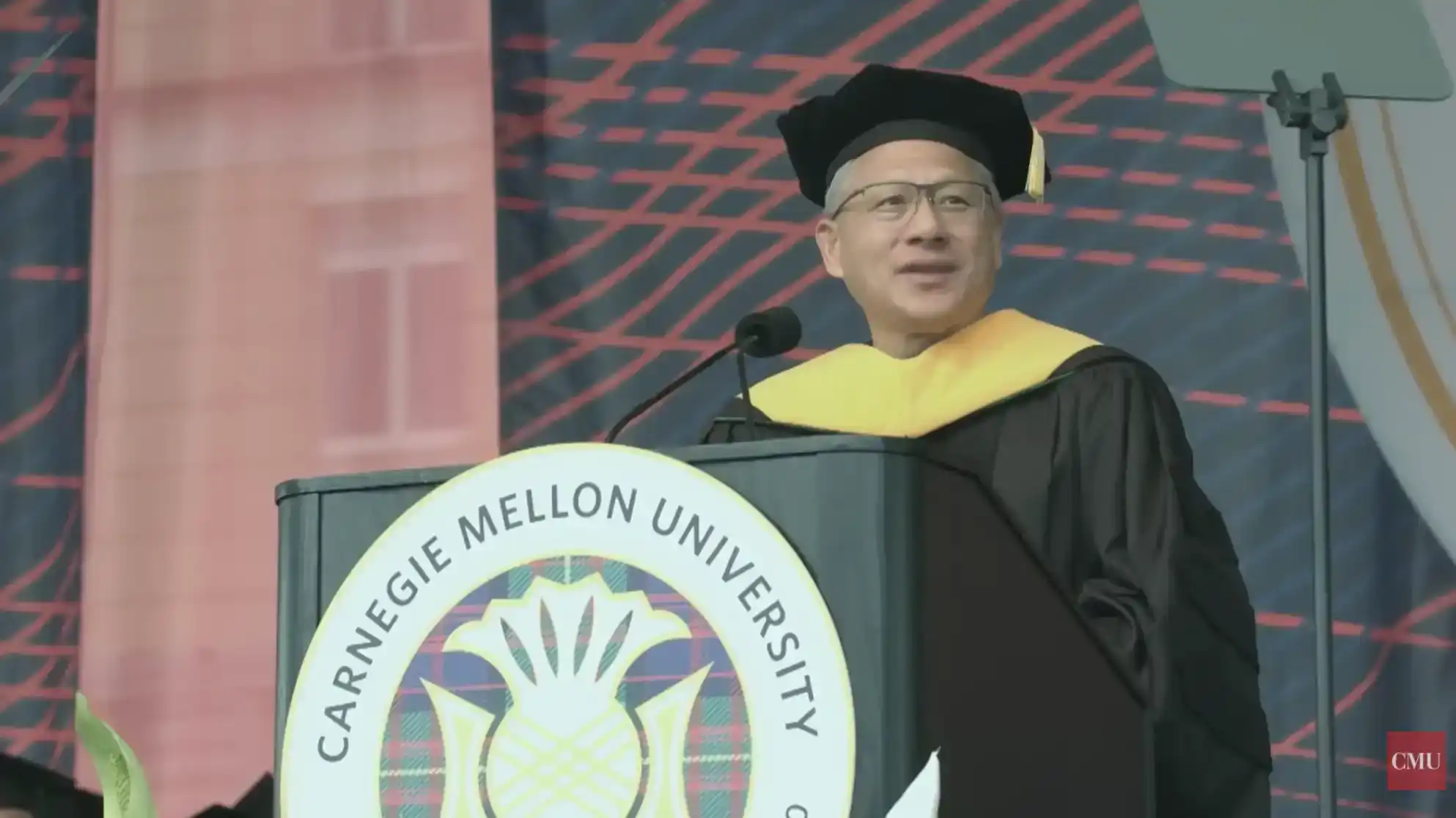
Jensen Huang's CMU Speech: In the AI Era, Don't Just Watch, Build

Jensen Huang, CEO of NVIDIA and a first-generation immigrant, delivered the commencement address to Carnegie Mellon University's class of 2026. He shared his personal journey from a humble background to founding NVIDIA, emphasizing resilience, learning from failure, and the responsibility that comes with leadership. Huang framed the present moment as the dawn of the AI revolution, a shift he believes is more profound than previous computing waves. He described AI as fundamentally resetting computing—moving from human-written software to machines that understand, reason, and use tools. This will create a new industry for generating intelligence and transform every sector. While acknowledging AI's potential to automate tasks and displace some jobs, Huang distinguished between the *tasks* of a job and its core *purpose*. He argued AI will augment human capability, not replace humans. The real risk, he stated, is not AI itself, but people being left behind by those who effectively use AI. He presented AI as a generational opportunity for massive infrastructure investment—in chip factories, data centers, energy grids, and advanced manufacturing—that could re-industrialize nations like the U.S. and bridge the digital divide by making computing and intelligent tools accessible to all. Huang called for a balanced approach: advancing AI safely and responsibly, establishing prudent policies, ensuring broad access, and encouraging universal participation. He urged the graduates not to fear the future but to engage with optimism and ambition, reminding them of CMU's motto, "My heart is in the work." His core message was clear: this is their moment to actively build and shape the AI-powered future, not merely observe it.

marsbitHá 1h

Jensen Huang's CMU Speech: In the AI Era, Don't Just Watch, Build

marsbitHá 1h

The Era Has Arrived Where Human Writers Must Prove They Are Not Machines

The article describes an era where AI-generated content is flooding the market, forcing human authors to prove they are not machines. It begins with the example of dozens of AI-written, error-ridden biographies of Henry Kissinger appearing on Amazon within hours of his death, a pattern repeated for other deceased celebrities and even living experts who find fraudulent books under their names. This spam content has exploded, with monthly new book releases on platforms like Amazon reaching 300,000 by late 2025. The issue spans genres, from suspiciously high proportions of AI-written teen romance and self-help books to dangerous, AI-generated foraging guides containing lethal advice. The platforms' automated review systems, designed to catch plagiarism and banned words, are ill-equipped to detect AI-generated text that avoids these pitfalls while being nonsensical or fraudulent. The problem has infiltrated traditional publishing. A major publisher, Hachette, had to recall a bestselling horror novel after AI detection tools suggested 78% of its content was machine-generated. An acclaimed European philosophy book was later revealed to be entirely written by AI under a fake author persona. In response, authors are fighting back. At the 2026 London Book Fair, 10,000 writers published a blank book titled "Don't Steal This Book" containing only their signatures—using emptiness as a protest weapon in an age of AI overproduction. Initiatives like the "Human Author Certification" program have emerged, ironically placing the burden on humans to prove their work is not machine-made. The article warns of a vicious cycle: AI-generated low-quality books pollute the data used to train future AI models, leading to "model collapse" and an ever-worsening flood of digital waste, eroding trust in publishing and devaluing human creativity.

marsbitHá 1h

The Era Has Arrived Where Human Writers Must Prove They Are Not Machines

marsbitHá 1h

Trading

Spot
Futuros
活动图片