Is India moving back towards a crypto ban?

ambcryptoPublicado em 2026-07-08Última atualização em 2026-07-08

Resumo

India's crypto policy appears to be regressing, with the Reserve Bank of India (RBI) reportedly advocating for a prohibition on cryptocurrencies. The central bank wants to bar banks and financial institutions from exposure to crypto, citing risks to financial stability, contagion, and threats to monetary sovereignty from stablecoins. Tax authorities add to the pressure, noting significant underreporting of crypto transactions and challenges in enforcement and valuation. With an estimated 39 million traders holding $2.1 billion in assets, India's prolonged regulatory uncertainty continues to hurt its domestic crypto industry, contrasting with the clearer frameworks emerging in markets like the U.S., Japan, and Singapore.

India’s crypto policy appears to be moving backwards. This is an interestingly glum turn, especially as global markets push for better regulations.

According to internal government documents, the Reserve Bank of India (RBI) is now actively for a policy that is “leaning towards (the) prohibition” of crypto.

RBI’s push for a crypto ban

The RBI has reportedly stated that banks and financial institutions should be barred from gaining exposure to cryptocurrencies and privately issued stablecoins. As per Reuters, the concern is that allowing regulated lenders to interact with crypto could bring chaos to the formal financial system.

Another concern is that it would allegedly increase contagion risks.

The RBI also believes that foreign currency-backed stablecoins are a threat to monetary sovereignty. Even the idea of rupee-backed tokens doesn’t have much support since there might be the risk of reducing the government’s income from issuing fiat currency.

Pressure from the tax department?

According to Reuters, the department has reportedly found instances of misreporting in crypto disclosures.

Fewer than a quarter of the 6,45,000 crypto transaction participants of FY2023 reported them in their tax returns. Officials believe that offshore exchanges, private wallets, and peer-to-peer rupee trades make it harder to identify beneficiaries.

India currently taxes crypto gains at 30%, but enforcement is a different ball game altogether. The tax department has flagged wild swings and the lack of uniform valuation standards as challenges.

The Ministry of Corporate Affairs is now taking a look at accounting standards and guidance for VDAs.

Why this matters for India’s crypto market

India has nearly 39 million crypto traders holding around $2.1 billion in digital assets, as per tax department estimates. However, the country has kept crypto in a grey zone for years. A 2021 draft bill to ban private cryptocurrencies was never introduced, and a formal discussion paper has been delayed for long.

Meanwhile, the U.S has reaffirmed its commitment to the industry. They’ve also put forth the CLARITY Act for Senate consideration.
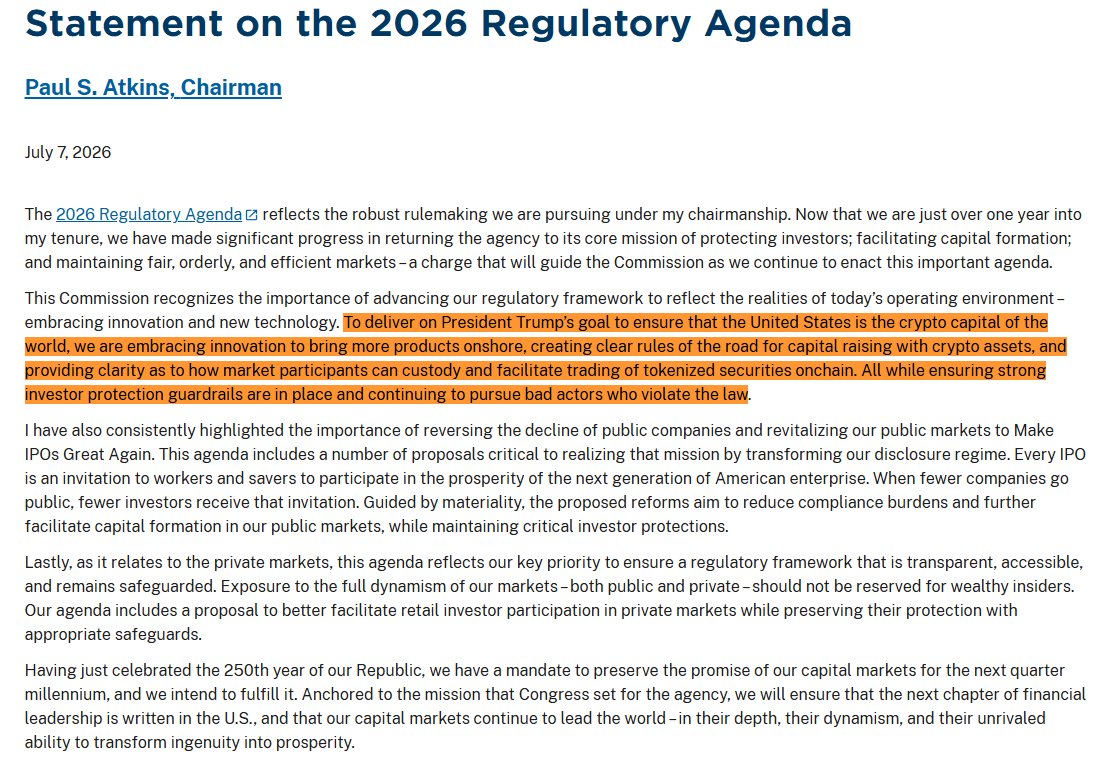
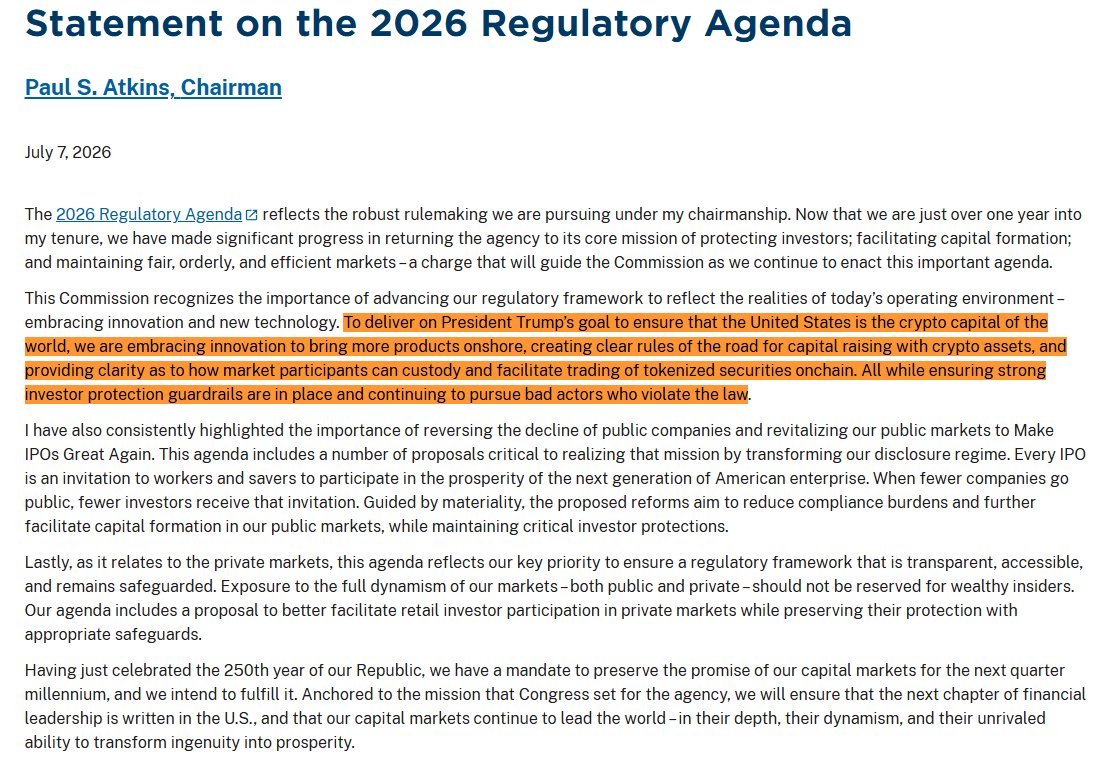
Source: sec.gov

Japan and Singapore have also built regulatory frameworks. Interestingly, one of the other big economies, China, continues to maintain a ban.

As it stands, this uncertainty will continue to hurt Indian exchanges, Web3 startups, institutions, and investors.


Final Summary

  • The Reserve Bank of India has reportedly pushed for a crypto ban in India.
  • India has 39 million crypto traders holding $2.1 billion.

Criptomoedas em alta

Perguntas relacionadas

QWhat is the Reserve Bank of India (RBI) reportedly leaning towards regarding cryptocurrency policy?

AThe Reserve Bank of India (RBI) is reportedly leaning towards a policy of prohibition on cryptocurrencies.

QWhat are two key reasons cited by the RBI for potentially banning crypto exposure for regulated financial institutions?

AThe RBI is concerned that allowing regulated lenders to interact with cryptocurrencies could bring chaos to the formal financial system and increase contagion risks.

QAccording to the article, what tax compliance issue did the tax department find regarding crypto transactions?

AThe tax department found that fewer than a quarter of the 645,000 crypto transaction participants in FY2023 reported them in their tax returns, with issues of misreporting in disclosures.

QApproximately how many crypto traders and how much in digital assets does India have, according to tax department estimates?

AIndia has nearly 39 million crypto traders holding around $2.1 billion in digital assets, according to tax department estimates.

QHow does the current regulatory uncertainty in India affect its crypto market participants?

AThe current regulatory uncertainty continues to hurt Indian crypto exchanges, Web3 startups, institutions, and investors.

Leituras Relacionadas

In Conversation with Ray Dalio: We Are Currently in an AI Bubble, with 1% of My Portfolio in Bitcoin

Ray Dalio, founder of Bridgewater Associates, warns in an interview that the current AI boom shows classic bubble characteristics, which could lead to significant economic downturns as seen in past cycles like 1929 or 2000. He explains that speculative enthusiasm, fueled by debt and overvaluation, often precedes a crash when rising rates or taxation force asset sales, causing widespread losses and recession. Dalio also outlines his "Big Cycle" theory, describing an approximate 80-year pattern where widening wealth gaps, massive government deficits, and shifting geopolitical power (like China's rise) create internal conflict and global instability. He emphasizes that we are in a late-cycle, transitional phase where traditional powers like the US and UK face decline. For personal wealth protection, Dalio advises diversification beyond cash into assets like stocks, bonds, real estate, and particularly gold, which he prefers over Bitcoin. While he holds about 1% of his portfolio in Bitcoin as a non-printable hard asset, he views gold as more secure from technological or governmental threats. Regarding AI's impact, Dalio believes it will disproportionately benefit capital owners, worsening inequality by replacing both physical and cognitive labor. He suggests that human intuition and emotional intelligence, combined with AI, will be key for future workers. On taxation, Dalio argues that wealth taxes are impractical and risk triggering asset sell-offs, reducing productive investment. He points to the UK as a cautionary example of debt, low productivity, and political strife. Geopolitically, Dalio foresees a more regionalized world, with the US showing weakness in prolonged conflicts like with Iran, akin to past imperial declines. The ideal outcome, he suggests, is coexisting powerful blocs (e.g., Americas, China-Asia Pacific) without major war.

marsbitHá 2h

In Conversation with Ray Dalio: We Are Currently in an AI Bubble, with 1% of My Portfolio in Bitcoin

marsbitHá 2h

Daily 7.2 Trillion KRW: Foreign Capital's Record Net Buying on Friday! Wall Street Says Headwinds for Korean Stock Fund Flows Have Subsided

South Korean stock market sees a dramatic shift in fund flows. On July 31, foreign investors made a record net purchase of approximately KRW 7.2 trillion in KOSPI stocks, marking a fundamental reversal from the persistent large-scale net outflows seen in previous months. This contributed to a significant narrowing of foreign net selling in July to KRW 9.8 trillion, down sharply from KRW 48.4 trillion in June and KRW 44.5 trillion in May. Simultaneously, domestic institutional pressure eased. South Korean pension funds and asset managers turned to a net buying position in July, purchasing KRW 1.0 trillion worth of KOSPI shares, contrasting with net sales in May and June. Market volatility is expected to be dampened by new financial regulations. Effective July 31, the Financial Services Commission tightened access for retail investors to single-stock leveraged ETFs by raising the minimum cash deposit requirement. Trading volumes for these products subsequently dropped to about 50% of their monthly average. Citigroup Research maintains its year-end KOSPI target of 10,000 points. The firm cites several supportive factors: the substantial easing of headwinds from capital outflows, a robust fundamental outlook for the semiconductor sector, historically low market valuations, strong economic fundamentals, and the potential for policy support from financial authorities if needed.

marsbitHá 2h

Daily 7.2 Trillion KRW: Foreign Capital's Record Net Buying on Friday! Wall Street Says Headwinds for Korean Stock Fund Flows Have Subsided

marsbitHá 2h

Thanks to Dice Rolls, Bitcoin Keys Are Stored Offline, But Not Everyone Will Do It

The article discusses using dice rolls to generate secure Bitcoin wallet seeds, providing entropy independent of potentially flawed hardware random number generators. It explains that each fair dice roll offers about 2.585 bits of entropy, with around 50 rolls needed for a standard 12-word seed phrase and 99+ recommended for higher security. This method gained attention after a vulnerability was revealed in some Coldcard hardware wallets, where a faulty firmware RNG (dating back to 2021) compromised generated keys. The analysis notes that while a dice-generated main seed was safe from this specific flaw, other Coldcard functions (like creating paper wallets, backup keys, or passwords) could still be vulnerable if they used the defective RNG. The piece argues that while dice-based entropy is technically robust, the manual process is error-prone, tedious, and unrealistic for most new users, who might make mistakes in recording or inputting rolls. It concludes that while manual entropy generation should remain an option for advanced users, the long-term goal is to develop reliable, user-friendly hardware and software that securely generates randomness without requiring specialized knowledge. Coldcard users are advised to check their firmware version and replace any secondary secrets (like paper wallet keys) created with vulnerable devices, while also considering multi-signature setups with devices from different manufacturers for added security.

cryptonews.ruHá 8h

Thanks to Dice Rolls, Bitcoin Keys Are Stored Offline, But Not Everyone Will Do It

cryptonews.ruHá 8h

Trading

Spot

Artigos em Destaque

Como comprar BAN

Bem-vindo à HTX.com!Tornámos a compra de Comedian (BAN) simples e conveniente.Segue o nosso guia passo a passo para iniciar a tua jornada no mundo das criptos.Passo 1: cria a tua conta HTXUtiliza o teu e-mail ou número de telefone para te inscreveres numa conta gratuita na HTX.Desfruta de um processo de inscrição sem complicações e desbloqueia todas as funcionalidades.Obter a minha contaPasso 2: vai para Comprar Cripto e escolhe o teu método de pagamentoCartão de crédito/débito: usa o teu visa ou mastercard para comprar Comedian (BAN) instantaneamente.Saldo: usa os fundos da tua conta HTX para transacionar sem problemas.Terceiros: adicionamos métodos de pagamento populares, como Google Pay e Apple Pay, para aumentar a conveniência.P2P: transaciona diretamente com outros utilizadores na HTX.Mercado de balcão (OTC): oferecemos serviços personalizados e taxas de câmbio competitivas para os traders.Passo 3: armazena teu Comedian (BAN)Depois de comprar o teu Comedian (BAN), armazena-o na tua conta HTX.Alternativamente, podes enviá-lo para outro lugar através de transferência blockchain ou usá-lo para transacionar outras criptomoedas.Passo 4: transaciona Comedian (BAN)Transaciona facilmente Comedian (BAN) no mercado à vista da HTX.Acede simplesmente à tua conta, seleciona o teu par de trading, executa as tuas transações e monitoriza em tempo real.Oferecemos uma experiência de fácil utilização tanto para principiantes como para traders experientes.

699 Visualizações TotaisPublicado em {updateTime}Atualizado em 2026.06.02

Como comprar BAN

Discussões

Bem-vindo à Comunidade HTX. Aqui, pode manter-se informado sobre os mais recentes desenvolvimentos da plataforma e obter acesso a análises profissionais de mercado. As opiniões dos utilizadores sobre o preço de BAN (BAN) são apresentadas abaixo.

活动图片













