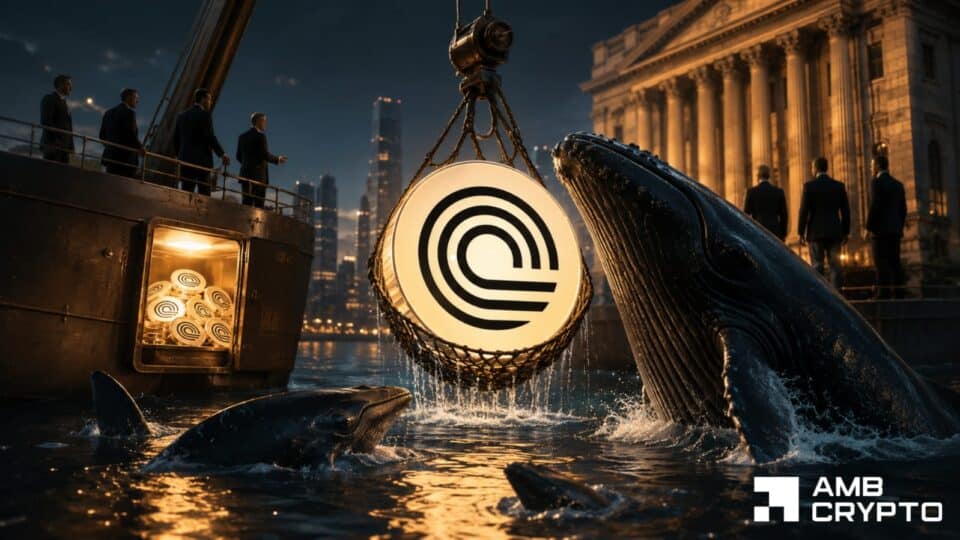
IOSG: TAO is Elon Musk who invested in OpenAI, Subnet is Sam Altman

marsbitPublicado em 2026-04-14Última atualização em 2026-04-14

Resumo

The article presents a critical analysis of Bittensor (TAO), a decentralized AI marketplace, comparing its economic model to Elon Musk's early investment in OpenAI, where funders have no guaranteed return. TAO acts as a funding layer, distributing tokens to subnet operators (akin to labs or researchers) based on their subnet token performance. However, subnets are under no obligation to return any value—such as AI models, data, or services—back to the TAO ecosystem. This creates a risk of value extraction, where developers may use TAO incentives for research and then commercialize成果 independently. The bear case highlights the lack of binding mechanisms, potential capital drain through token inflation, and competition from well-funded centralized AI giants. The optimistic view argues that continuous resource needs may naturally retain subnets within Bittensor, leveraging crypto’s ability to aggregate resources at scale, similar to Bitcoin’s success with computation. Ultimately, investing in TAO is a speculative bet on a coordination miracle—where incentives align to keep valuable AI projects within the ecosystem—rather than a traditional equity-like claim on output. The outcome distribution is highly skewed: most scenarios lead to niche use or value leakage, while a few could result in TAO becoming a foundational decentralized AI asset.

The bullish case for TAO requires you to believe that a game theory miracle can happen. But such miracles have occurred before in the cryptocurrency industry.

Bittensor has one of the most elegant narratives in the cryptocurrency space: a decentralized marketplace for AI intelligence, where market mechanisms allocate capital to the most impactful research. TAO is the coordination layer, subnets are the labs, and the market is the funding committee.

Strip away the narrative, and you'll find something more unsettling.

Bittensor is a funding program where cryptocurrency speculators provide capital for AI R&D—and the funded parties have no obligation to return any value to TAO.

Think of TAO as Elon Musk—he was the first investor in OpenAI, a "non-profit" enterprise. Subnets are like Sam Altman—they are the builders who receive the funding, deliver the product, but have no contractual obligation to share the proceeds. They may ultimately choose to privatize the gains without returning any value to the original funding source.

Bittensor distributes TAO tokens to subnet operators and miners based on the price of the subnet's token. Once a subnet receives a TAO allocation, there is no enforcement mechanism requiring that the AI models, datasets, or services it generates must remain within the Bittensor ecosystem. Subnet operators can farm the TAO incentives from Bittensor and then take the real product elsewhere—deploy it on centralized cloud servers, package it as an independent API, or simply put a SaaS wrapper on it and sell it.

TAO holds no equity and has no licensing contracts. The only binding element is the subnet token—its price must be maintained to sustain access to resources. But this only works *before* the subnet "flies the coop": once the product is robust enough to stand on its own outside the Bittensor system, that tether is cut. The relationship between Bittensor and its subnets is less like venture capital and more like research grant funding—you get seed money, but they don't get your equity.

To put it bluntly, Bittensor is essentially a wealth transfer: from the pockets of token speculators to the accounts of AI researchers—or more plainly, from the retail investors to the technically savvy "miners".

The mechanism is simple: TAO investors are underwriting the entire ecosystem. They buy and hold TAO, propping up the price, and that price itself is the pipeline for capital flowing into the subnet incentive system. Subnet operators earn TAO inflation rewards by "demonstrating performance"—but in reality, "demonstrating performance" largely means keeping the price of their own subnet token looking good. The AI products built with this funding can walk away at any time—the only constraint is their continued need to access network resources.

This is a VC's worst nightmare: you provide the capital, they build the product, but they owe you nothing. What remains is a token emission schedule and a prayer.

The Optimist's Interpretation

Now, look at it from another angle. The optimistic view rests on two pillars:

Persistent resource needs mean AI companies are perpetually capital-constrained. Compute, data, and talent are expensive. If Bittensor can reliably provide these resources at scale, subnets have a rational incentive to stay—not because they are locked in, but because leaving means losing the supply channel.

There is a soft, logical underpinning: AI's hunger for resources is insatiable, and the scale TAO can provide is unattainable through independent financing. Following this logic, subnet teams will actively maintain their token's valuation; no enforcement mechanism is needed, and the TAO economy spontaneously forms a positive flywheel. Cryptocurrency excels at resource aggregation. Bitcoin aggregated a massive amount of computing power solely through token incentives. Ethereum's proof-of-work was also a tremendous success, a powerful magnet for computational resources.

Bittensor is applying the same playbook to AI. The "enforcement mechanism" is the token game itself—as long as TAO has value, the incentive to participate keeps growing.

If you ran 1000 simulations of Bittensor's future, the distribution of outcomes would be extremely skewed.

In most simulated scenarios, Bittensor remains a niche funding program. The AI outputs generated by subnets are insignificant. The best-performing subnets gain significant attention, capture the rewards, and then pivot to closed-source models, leaving no value for TAO. As token emissions outpace value creation, the TAO token depreciates.

In a minority of simulation paths, something actually takes off. A subnet creates a truly competitive AI service, and network effects begin to snowball. TAO becomes the de facto coordination layer for decentralized AI infrastructure—not by enforcing value capture, but through the gravitational pull of being the reserve asset of a functioning AI economy.

In a very few cases, TAO becomes the defining asset of a new category.

What Could Go Wrong

The bear case is simple: no stickiness. Once a subnet no longer needs the TAO token incentives, it leaves. Bittensor is a transitional phase, not a final destination. Centralized AI holds overwhelming advantage. Companies like OpenAI, Google, and Anthropic have orders of magnitude more compute and talent. TAO cannot compete with the firepower of venture capital and private equity markets. Therefore, the best talent will choose the traditional path. Emissions are a tax.

TAO's emission schedule subsidizes subnets by diluting holders. If the value created by subnets doesn't justify this dilution, it's a slow bleed disguised as a "growth mechanism".

The optimistic scenario, frankly, feels more like wishful thinking than a viable path to success.

Conclusion

The majority of capital deployed into TAO will ultimately subsidize development activities that return no value to token holders. But Crypto has repeatedly proven that coordination games driven by token incentives can produce results that all rational models fail to forecast.

Bitcoin shouldn't have worked, but it did—though this argument alone is not sufficient, and the industry has used it to back numerous projects that couldn't withstand first-principles scrutiny.

The core question for TAO isn't whether an enforcement mechanism exists—it doesn't, and efforts like dTAO haven't changed that. The core question is: are the game-theoretic incentives strong enough to keep the highest-quality subnets on the rails? Buying TAO is a bet that a "soft lock-in" will hold in the harsh face of reality.

This is either naivety or foresight.

Perguntas relacionadas

QWhat is the core concern raised about Bittensor's economic model in the article?

AThe core concern is that Bittensor functions as a wealth transfer from TAO token speculators to AI researchers (miners), with no mandatory mechanism forcing subnet operators to return any value (like AI models or profits) back to the TAO ecosystem. Subnets can take the TAO incentives and then take their successful products elsewhere.

QAccording to the optimistic view, what are the two main reasons subnets might choose to stay within the Bittensor ecosystem?

AThe two main reasons are: 1) A continuous, insatiable demand for AI resources (compute, data, talent), which Bittensor can provide at a scale that is hard to achieve alone. 2) The success of crypto token incentives in aggregating massive resources, as seen with Bitcoin and Ethereum, creating a powerful flywheel effect where the value of TAO itself becomes the enforcement mechanism.

QHow does the article use Elon Musk's investment in OpenAI as an analogy for the relationship between TAO and its subnets?

AThe article compares TAO to Elon Musk, the first investor in the 'non-profit' OpenAI. The subnets are compared to Sam Altman, the builders who receive the funding and deliver a product but have no contractual obligation to share the profits or returns with the original source of capital (TAO/Musk).

QWhat is the primary risk identified for TAO token holders regarding the token's emission schedule?

AThe primary risk is that the TAO emission schedule acts as a tax or dilution on token holders. If the value created by the subnets being subsidized does not justify the level of dilution, it becomes a form of slow bleeding of value under the guise of a 'growth mechanism'.

QWhat does the article conclude is the fundamental bet someone makes when buying TAO?

ABuying TAO is a bet that a 'soft guarantee' based on game theory incentives will hold up in reality. It is a gamble that the incentives will be powerful enough to keep the highest-quality subnets within the Bittensor ecosystem, creating a positive feedback loop, despite the lack of any hard, mandatory mechanism to force them to stay.

Leituras Relacionadas

Global Stock Market's Storm Center: South Korea's Stock Market De-leveraging Is Largely Complete

Storm's Eye: South Korean Market De-leveraging Nears Completion The recent sharp correction in South Korean equities, with the KOSPI index dropping 32% from its June high, has been a key trigger for global tech stock volatility. The core driver was not a fundamental shift but a forced de-leveraging process within the market's unique structure, which is now largely complete. Two main leverage channels amplified the sell-off: 1. **Leveraged ETFs:** Their size, proportionally four times larger than in the U.S., peaked near $50 billion. Their mandatory daily rebalancing mechanism created a vicious cycle of "price drop → forced selling → further drop." Approximately 75% of this excess has been unwound, shrinking to $26 billion, with regulatory curbs now blocking new inflows. 2. **Hedge Fund Leverage:** Using swaps to magnify exposure, hedge funds saw their net long positioning fall by over 50% from peak levels. The most intense phase of this institutional de-leveraging is over. In contrast, **retail margin debt** poses minimal systemic risk. At 0.5% of market cap, it is far lower than in the U.S. or China, lacks automatic triggers, and is concentrated in smaller stocks. The conclusion: the high-leverage structures most prone to "chain-reaction selling" have been substantially cleared. The market is transitioning from a liquidity-driven crash to one priced more on fundamentals. The article argues that the AI trend—centered on Korean memory chips—remains intact. This episode represents a painful but necessary clearing of crowded trades, not the end of the AI revolution. For investors, the key question is conviction in the long-term AI direction; if the trend is real, current volatility is a cost of entry, not a terminal risk.

链捕手Há 24m

Global Stock Market's Storm Center: South Korea's Stock Market De-leveraging Is Largely Complete

链捕手Há 24m

The Eternal Fragments of Money: Third-Party Payment Has No First Principle

"The Enduring Fragments of Money: Third-Party Payments Lack a First Principle" Stripe is reportedly attempting to acquire PayPal, marking a significant shift reminiscent of PayPal's merger with the original X.com 30 years ago. The article analyzes Stripe's strategic challenges and the broader payments industry landscape. Despite its initial success with a developer-friendly API model, Stripe missed its optimal IPO window during the pandemic and has since seen its valuation decline. Its attempts to expand through acquisitions and new ventures, particularly in stablecoins (like its OUSD project) and Agent-focused payments (ACP/MPP protocols), have faced headwinds. The author argues that the payment industry remains highly fragmented and is ultimately an adjunct to the traditional banking system. This structure limits the potential for any single player, including Stripe, to achieve complete dominance. While stablecoins and the future rise of autonomous Agent economies present potential growth avenues, they are not yet mainstream and still require integration with the existing financial system. For now, Agent-based transactions are largely used for speculative "volume boosting" rather than substantive business applications. Stripe's current move to acquire PayPal is seen as an attempt to bolster its weak consumer-facing (C-side) business after its stablecoin-focused strategies faltered. Meanwhile, PayPal is described as structurally outdated, unable to revive itself through new products like Venmo or PYUSD. The future of payments may lie not in payments themselves but in value-added services like more efficient settlement networks. The author suggests that companies like Stripe and Circle, which are building their own blockchains (Tempo, Arc) and stablecoins, are positioning themselves to eventually profit from high-efficiency settlement systems. These new networks could potentially bypass some traditional banking layers. In conclusion, the article posits that third-party payment is a perpetually fragmented battlefield where scale alone cannot ensure victory. Players must find new models, focusing on efficiency to compete with the entrenched banking system. Stripe's acquisition of PayPal represents a bet on this uncertain future.

链捕手Há 47m

The Eternal Fragments of Money: Third-Party Payment Has No First Principle

链捕手Há 47m

Trading

Spot
活动图片