Interactive Tutorial | Total Prize Pool of $1 Million, Jupiter Launches Trading Card Collection Event

Odaily星球日报Publicado em 2025-12-15Última atualização em 2025-12-15

Resumo

Jupiter, a leading Solana-based DEX aggregator, has launched a new trading card collection event with a total prize pool of $1 million USDC. The event runs from December 11, 2025, to February 1, 2026. Users can earn cards by trading specific token pairs—including JUP, JUP/SOL, JUP/jupSOL, and others—using Jupiter’s Ultra Mode (market order) or Limit Order V2. Only trades of $10,000 or more in volume qualify for card rewards. Each card has different rarity levels and corresponding rewards: Common (87.399% chance, 1 USDC), Advanced (10%, 5 USDC), Rare (2.5%, 25 USDC), Mythic (0.1%, 100 USDC), and Legendary (0.001%, 10,000 USDC). Participants are advised to use the Jupiter wallet (browser extension or mobile app) and trade via jup.ag. Estimated cost per card is around $3–5. Users can also earn extra cards through referral links. Note that card opening must be done on the desktop version.

Original | Odaily Planet Daily (@OdailyChina)

Author | Asher (@Asher_ 0210)
Amid the boring market, a new "airdrop farming" opportunity has arrived.

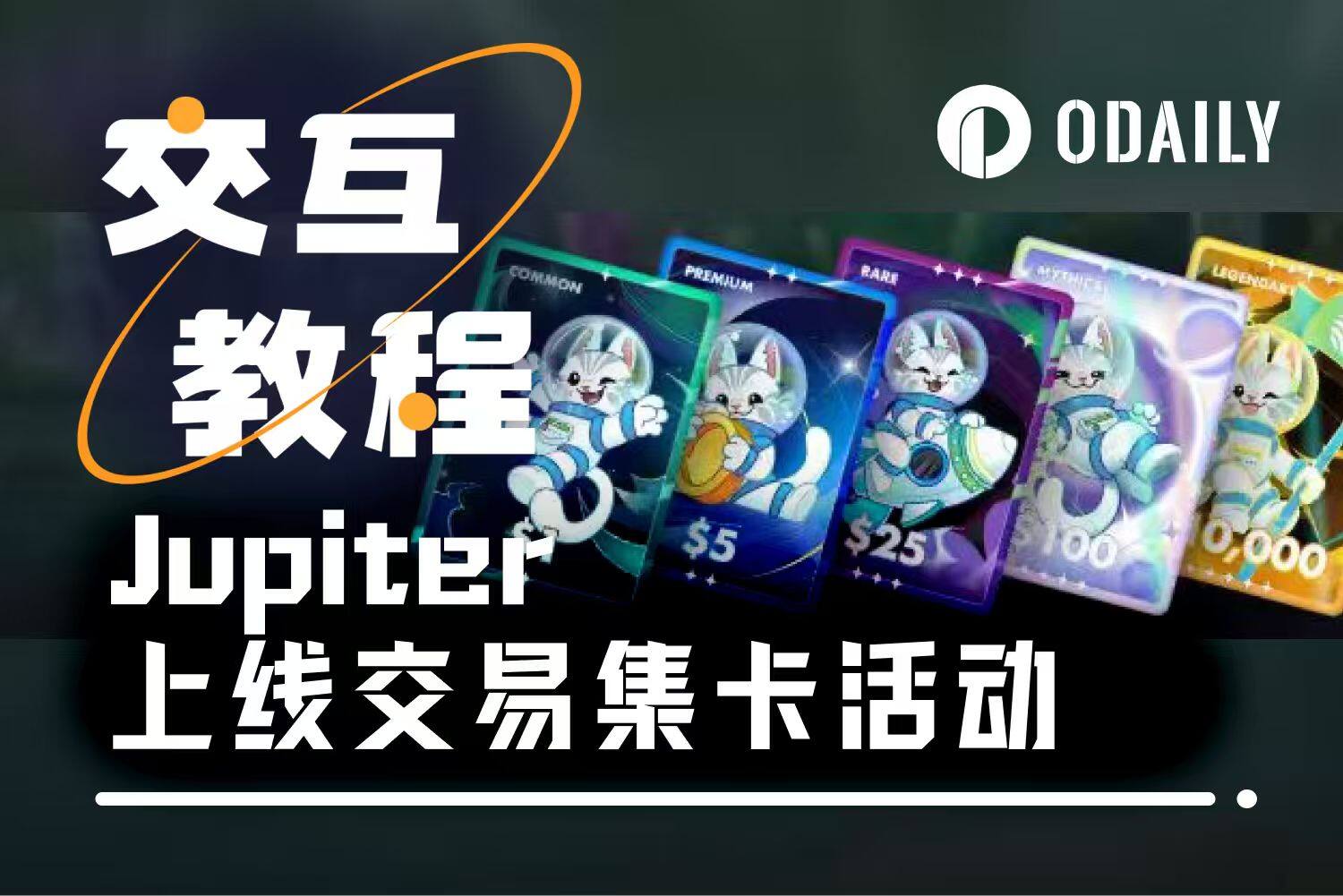
On the evening of December 12, Jupiter announced on the X platform the launch of a trading card collection event with a total prize pool of 1 million USDC. Users can automatically obtain cards by trading specified trading pairs and meeting the corresponding trading volume; they can also get more cards by inviting friends. The cards have different rarities, and scratching them open can yield corresponding USDC rewards.

Below, Odaily Planet Daily will guide everyone through the details of Jupiter's trading card collection event and the participation guide.

Details of Jupiter's Trading Card Collection Event

Event Overview: Trade specified trading pairs on Jupiter (web or mobile) to automatically receive cards. Open the cards to share the rewards.

Total Event Prize Pool: 1 million USDC.

Event Time: December 11, 2025, 15:00 Beijing Time to February 1, 2026, 07:59.

Card Classification: Users automatically receive cards by trading eligible token pairs on Jupiter (web or mobile). Cards are divided into 5 levels. The specific card levels, probabilities, and corresponding rewards are:

  • Common Card: Draw probability 87.399%, reward 1 USDC;
  • Uncommon Card: Draw probability 10%, reward 5 USDC;
  • Rare Card: Draw probability 2.5%, reward 25 USDC;
  • Mythic Card: Draw probability 0.1%, reward 100 USDC;
  • Legendary Card: Draw probability 0.001%, reward 10000 USDC.

Eligible Trade Types: Only trades executed via Market (Ultra Mode) or Limit Order V2 mode are eligible (V1 and DAC DCA modes cannot participate).
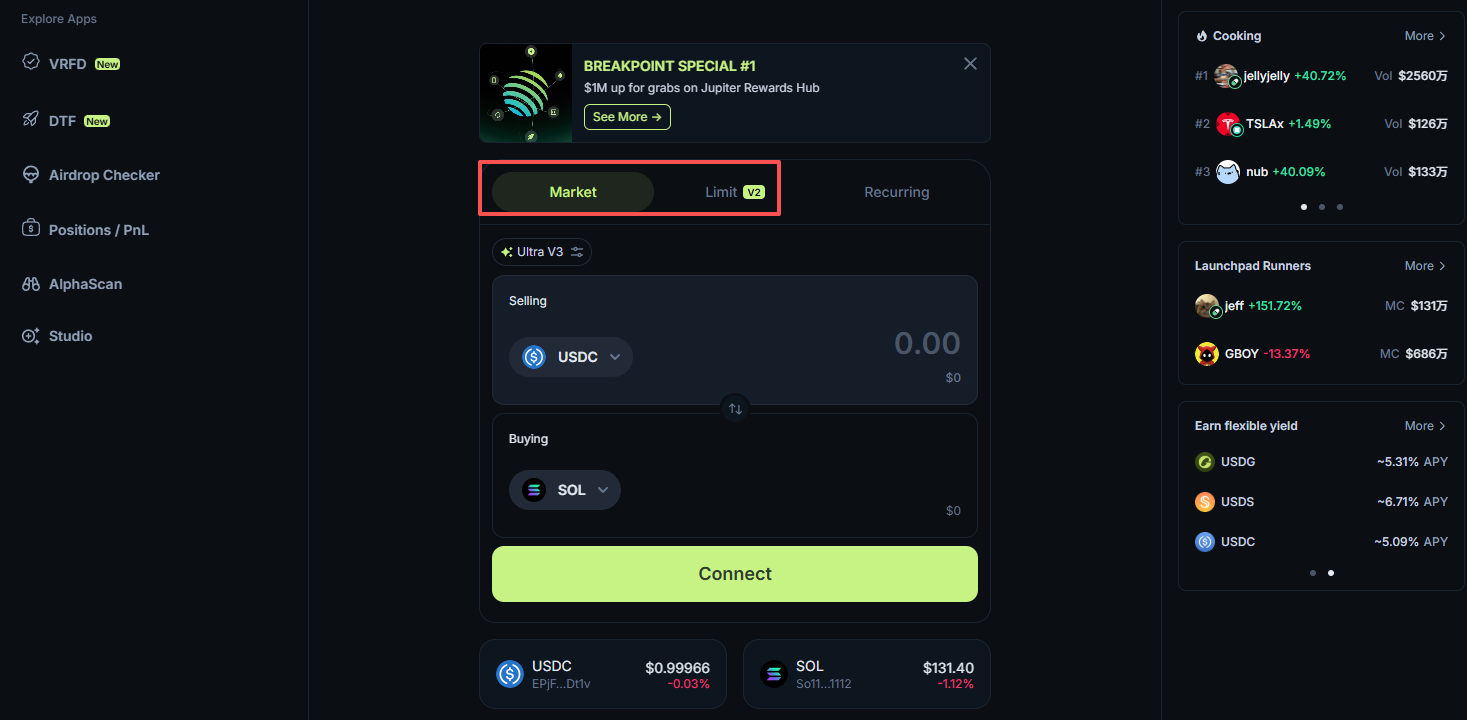
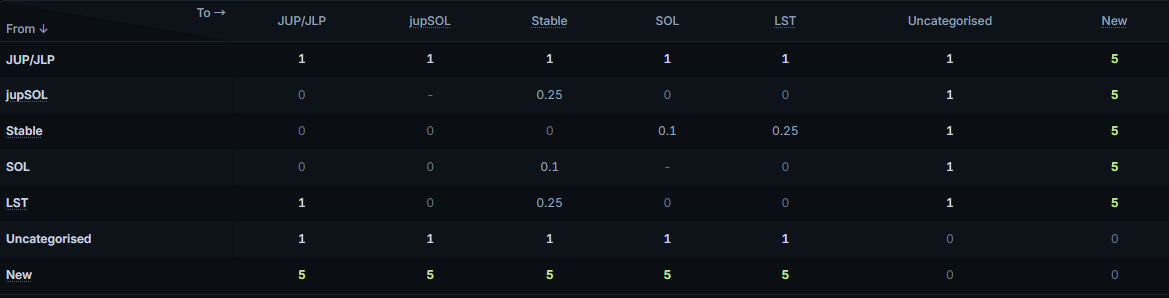
Eligible Trading Pairs: As shown in the table below, including JUP, JUP/SOL, JUP/jupSOL, JUP/Stable, JUP/LST, JUP/Uncategorised, JUP/New (refers to new coins listed on Jupiter within 24 hours). The numbers in the table indicate the number of cards obtained for every $10,000 in trading volume completed. For example, completing $10,000 worth of JUP to SOL trading volume yields 1 card.
Step-by-Step Participation Tutorial

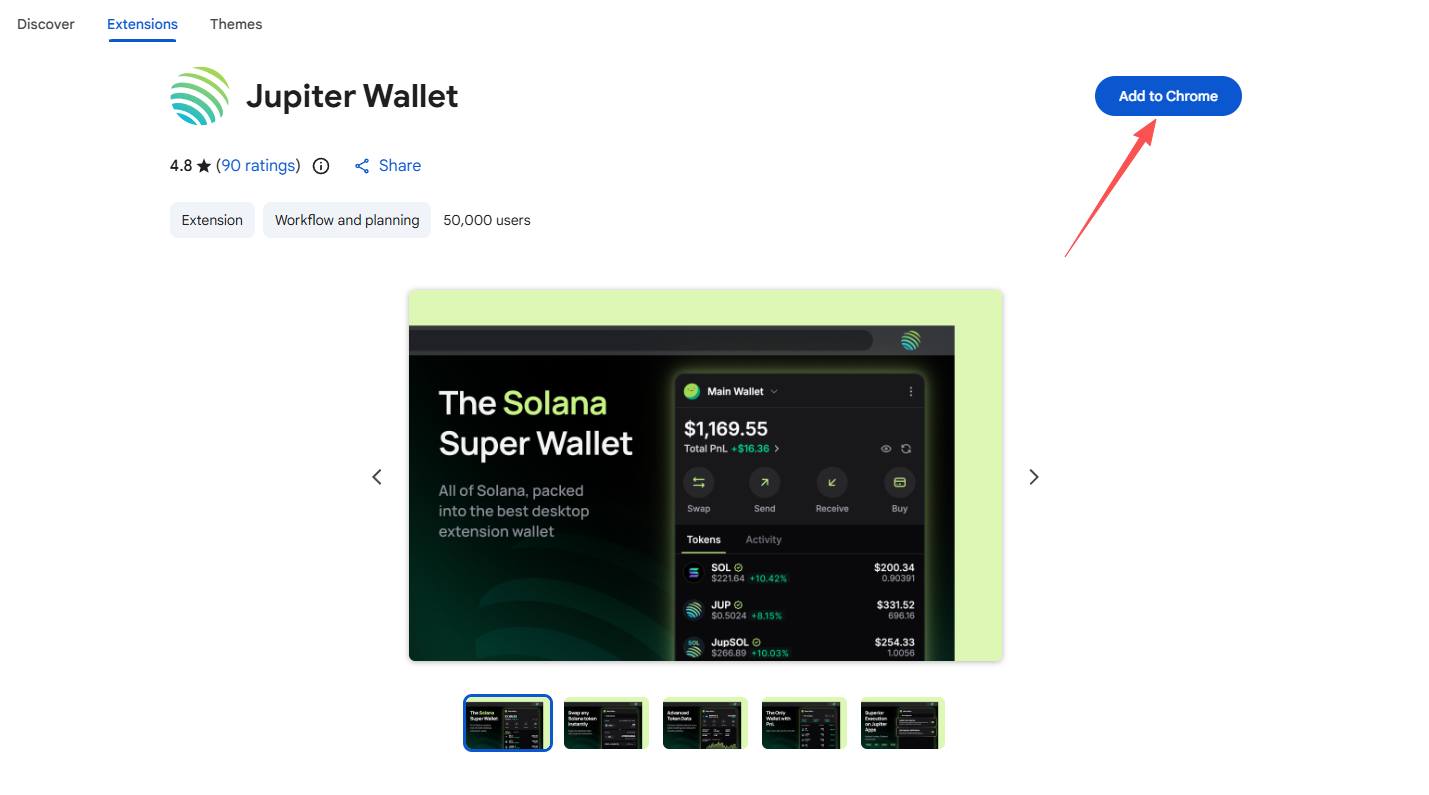
STEP 1. Download the Jupiter wallet from the Chrome Web Store (Link: https://chromewebstore.google.com/detail/jupiter-wallet/iledlaeogohbilgbfhmbgkgmpplbfboh), import an existing wallet address or create a new wallet address. It's worth noting that while participation is possible via mobile, claiming reward cards and opening them must be done on the desktop version.

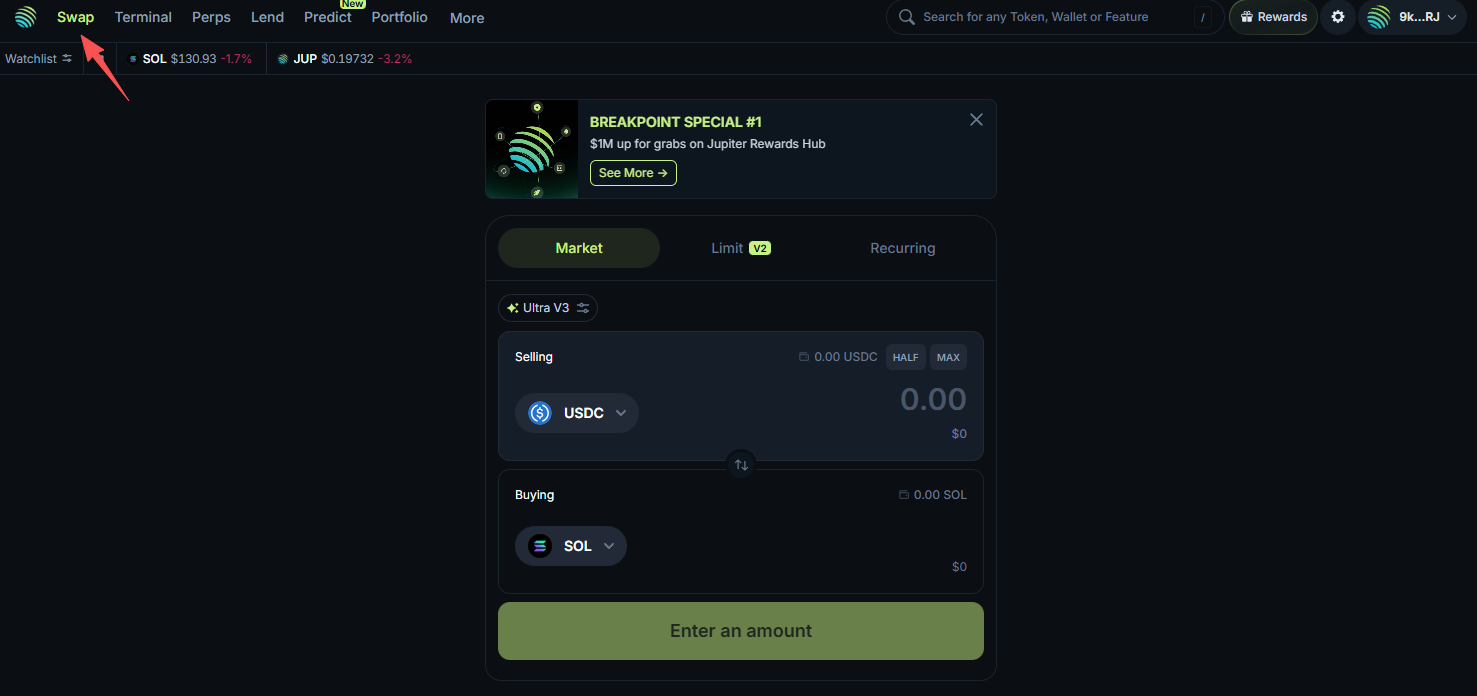
STEP 2. Go to the trading website (Link: https://jup.ag/), generate trading volume to earn cards. Based on实测 data, it costs approximately $3 to $5 to obtain one card.
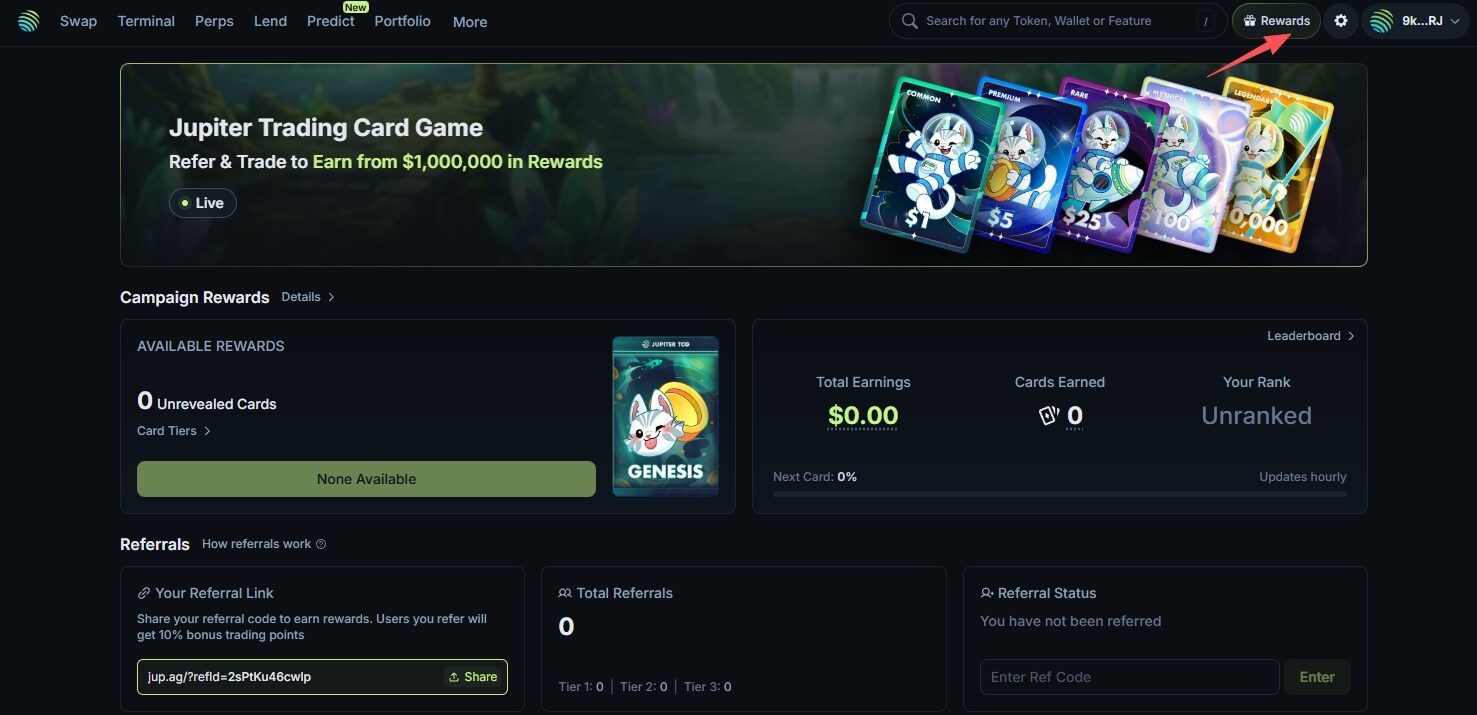
STEP 3. Click on "Rewards" to enter the rewards panel, generate a personal referral link to increase the number of cards. Additionally, this page also allows you to view the number of cards obtained.
Criptomoedas em alta

Perguntas relacionadas

QWhat is the total prize pool for Jupiter's trading card collection event?

AThe total prize pool for Jupiter's trading card collection event is 1,000,000 USDC.

QWhat are the different rarities of cards and their corresponding rewards in the Jupiter event?

AThe card rarities and rewards are: Common (87.399% chance, 1 USDC), Advanced (10% chance, 5 USDC), Rare (2.5% chance, 25 USDC), Mythic (0.1% chance, 100 USDC), and Legendary (0.001% chance, 10,000 USDC).

QWhat trading modes are eligible for the Jupiter card collection event?

AOnly trades executed in the 'Ultra Mode' (market order) or 'Limit Order V2' mode are eligible. Trades using V1 or DAC DCA modes do not qualify.

QWhat is the estimated cost to earn one card in the Jupiter event according to the article?

AAccording to the article, the estimated cost to earn one card is approximately 3 to 5 US dollars.

QDuring what time period is the Jupiter trading card event active?

AThe event is active from 15:00 on December 11, 2025, to 07:59 on February 1, 2026 (Beijing Time).

Leituras Relacionadas

Before the Second Attempt at Hong Kong IPO, Topstar 'Hands Out' 548 Million in Related-Party Orders

Tosda, an industrial robotics firm, is making its second attempt at a Hong Kong listing shortly after its first application lapsed. The company has undergone a significant strategic shift, pivoting away from its lower-margin intelligent energy and environmental management system (IEEMS) business to focus on core robotics and machinery. This "revenue-reduction, profit-growth" strategy saw revenue nearly halve from 2022 to 2025, but resulted in a sharp turnaround to profitability, with a 1147% year-on-year increase in Q1 2026 net profit. This restructuring involved spinning off the IEEMS business, leading to a substantial jump in related-party transactions. Following the departure of a former executive, two newly associated companies are expected to handle up to 548 million RMB worth of IEEMS orders in 2026, with Tosda acting as a platform charging a 3% management fee. While profitability has improved, several financial concerns remain. Accounts receivable collection cycles have lengthened, inventory—particularly for robots—has surged significantly despite falling revenue, and the company faces challenges in overseas market expansion. Notably, overseas business currently has a lower gross margin than domestic operations. The company was also recently reprimanded by regulators for accounting inaccuracies related to revenue recognition and bad debt provisions. The success of its strategic pivot and its second listing attempt will depend on managing these financial risks, the transparency of its new business model, and the long-term performance of its core robotics segment.

marsbitHá 8m

Before the Second Attempt at Hong Kong IPO, Topstar 'Hands Out' 548 Million in Related-Party Orders

marsbitHá 8m

Is the AI Bull Market in Jeopardy? Philadelphia Semiconductor Index Breaks Below Key Support at 11,200 Points

The Philadelphia Semiconductor Index (SOX) faces a critical technical and fundamental test. It recently breached a key short-term support level around 11,200 points—a level that held in mid-July—and closed below it. Technical indicators have deteriorated, with the 21-day moving average crossing below the 50-day, signaling bearish momentum. Should the 11,200 support fail, the next major support is the 200-day moving average. The sell-off, which saw memory chip stocks like Micron and Western Digital plunge over 10%, stems from growing concerns about the cyclicality and quality of AI demand. Market participants question the sustainability of the AI capital expenditure boom, highlighted by divergences between the capital expenditures of mega-cap tech firms and semiconductor index performance. However, some positive structural shifts are emerging. Institutional positioning has normalized, unwinding the previously crowded "long semiconductors, short Mag 7" trade, leaving cleaner positioning. Seasonal tailwinds are also approaching, as the NDX historically performs well after this period, potentially supporting a rebound if retail inflows resume. The core question is whether the SOX can hold the 11,200 support. A failure could trigger further declines toward the 200-day moving average, while a successful defense, combined with lighter positioning and seasonal support, could offer a recovery window for the sector.

marsbitHá 8m

Is the AI Bull Market in Jeopardy? Philadelphia Semiconductor Index Breaks Below Key Support at 11,200 Points

marsbitHá 8m

Qualcomm and Arm Fall Together: The Bill for Memory Price Hikes Finally Arrives at Mobile Chip Companies

After posting Q2 FY2026 results, Qualcomm and Arm both saw their shares decline, reflecting the impact of memory price increases on the smartphone chip sector. Qualcomm's revenue of $9.95B slightly beat expectations, but EPS of $2.21 fell short. More concerning was its guidance for next quarter, with EPS projections below analyst estimates. The company directly attributed a >$1.50 per share annual EPS headwind to rising memory costs and supply constraints in Android phones, prompting planned price hikes. While automotive revenue grew 61% and is approaching one-third of phone revenue, the mobile segment declined 20%. Qualcomm also confirmed a significant reduction in its modem share for the upcoming iPhone and outlined a plan for data center revenue to replace all Apple-related income by FY2027. Arm's results surpassed expectations with revenue of $1.29B and EPS of $0.45, and its guidance was also strong. However, its stock fell. Key concerns included royalty revenue failing to set a new record and a downward revision to full-year royalty growth guidance from ~20% to the high-teens, citing weak smartphone demand and high memory prices. Despite robust growth in its data center business, Arm's premium valuation (over 100x forward P/E) means even beating expectations isn't enough to push the stock higher, as any sign of uncertainty is magnified. Ongoing global antitrust investigations add another risk factor. The situation highlights a broader shift. Memory price surges, which boosted Samsung's profits, are now pressuring chip designers. Meanwhile, the semiconductor sector saw significant corrections in July, with the hardest-hit stocks often being those with the biggest AI-driven gains year-to-date. Qualcomm, lacking such a premium, was an exception.

marsbitHá 23m

Qualcomm and Arm Fall Together: The Bill for Memory Price Hikes Finally Arrives at Mobile Chip Companies

marsbitHá 23m

13 Business Lines Surpass $100 Million in Annualized Revenue, Robinhood Moves Toward a 'Super Financial App'

Robinhood Q2 2026 Earnings: Record Revenue and a Push Towards a "Super Financial App" Robinhood (HOOD) reported strong Q2 2026 results, with net revenue reaching $1.308 billion, up 32% year-over-year, and net income hitting $561 million, a 45% increase. The company now has 13 distinct business lines each generating over $100 million in annualized revenue. Key drivers included a 44% surge in transaction-based revenue to $776 million, led by a more than 10x growth in "event contracts" (prediction markets) and strong performance in stocks and options. User metrics also grew, with funded accounts rising to 28.4 million and total assets under custody reaching $369 billion. The Robinhood Gold subscription service hit a record 4.8 million users. The report highlights a strategic shift for Robinhood. Moving beyond its core as a zero-commission trading platform for retail investors, it is actively building a broader financial ecosystem. This includes expanding into wealth management (Robinhood Strategies), payments (Robinhood Credit Card), and next-generation infrastructure like AI-powered "Agentic Trading" and its own Ethereum Layer 2 blockchain, Robinhood Chain. The company's goal is to evolve from a trading app into a comprehensive "super financial app," offering a one-stop shop for investing, cash management, and future on-chain finance.

Odaily星球日报Há 53m

13 Business Lines Surpass $100 Million in Annualized Revenue, Robinhood Moves Toward a 'Super Financial App'

Odaily星球日报Há 53m

Trading

Spot

Artigos em Destaque

Como comprar T

Bem-vindo à HTX.com!Tornámos a compra de Threshold Network Token (T) simples e conveniente.Segue o nosso guia passo a passo para iniciar a tua jornada no mundo das criptos.Passo 1: cria a tua conta HTXUtiliza o teu e-mail ou número de telefone para te inscreveres numa conta gratuita na HTX.Desfruta de um processo de inscrição sem complicações e desbloqueia todas as funcionalidades.Obter a minha contaPasso 2: vai para Comprar Cripto e escolhe o teu método de pagamentoCartão de crédito/débito: usa o teu visa ou mastercard para comprar Threshold Network Token (T) instantaneamente.Saldo: usa os fundos da tua conta HTX para transacionar sem problemas.Terceiros: adicionamos métodos de pagamento populares, como Google Pay e Apple Pay, para aumentar a conveniência.P2P: transaciona diretamente com outros utilizadores na HTX.Mercado de balcão (OTC): oferecemos serviços personalizados e taxas de câmbio competitivas para os traders.Passo 3: armazena teu Threshold Network Token (T)Depois de comprar o teu Threshold Network Token (T), armazena-o na tua conta HTX.Alternativamente, podes enviá-lo para outro lugar através de transferência blockchain ou usá-lo para transacionar outras criptomoedas.Passo 4: transaciona Threshold Network Token (T)Transaciona facilmente Threshold Network Token (T) no mercado à vista da HTX.Acede simplesmente à tua conta, seleciona o teu par de trading, executa as tuas transações e monitoriza em tempo real.Oferecemos uma experiência de fácil utilização tanto para principiantes como para traders experientes.

509 Visualizações TotaisPublicado em {updateTime}Atualizado em 2026.06.02

Como comprar T

Discussões

Bem-vindo à Comunidade HTX. Aqui, pode manter-se informado sobre os mais recentes desenvolvimentos da plataforma e obter acesso a análises profissionais de mercado. As opiniões dos utilizadores sobre o preço de T (T) são apresentadas abaixo.

活动图片