In Web3 Storytelling Today, You Don't Need Creativity

深潮Publicado em 2025-12-29Última atualização em 2025-12-29

Resumo

In the Web3 space, many content creators struggle with storytelling not due to a lack of creativity, but because their content lacks contrast—the element that creates engagement and memorability. Contrast refers to a shift or change, such as moving from "before" to "after," "expectation" to "reality," or "belief" to "realization." Without this transformation, content remains flat and informational but fails to resonate. Web3 is filled with straightforward presentations of features, data, and promises, which often fail to capture attention because the human brain responds to unexpected or relatable changes. For instance, instead of stating "Solana is fast and cheap," a more effective approach would be: "I clicked send, switched tabs, and realized the transaction was already complete"—creating a moment of contrast that stands out. Embracing contrast often involves acknowledging personal mistakes, doubts, or unexpected outcomes, which can feel uncomfortable but adds authenticity and relatability. To incorporate contrast, creators should ask: "What changed here?" and include elements like past assumptions, moments of hesitation, or surprising results. Ultimately, contrast allows Web3 content to stand out in a noisy landscape without needing exaggerated creativity—just genuine, transformative storytelling.

Author:Noir

Compiled by: Deep Tide TechFlow

Most Web3 content creators think they are not good at storytelling because they feel they "lack creativity."

But friend, that is usually not the real issue.

In fact, the real problem is:

—Your content lacks contrast.

Hey, either the content:

sounds the same,

feels flat,

or has no variation.

And when nothing changes, there is no story to tell.

What is Contrast?
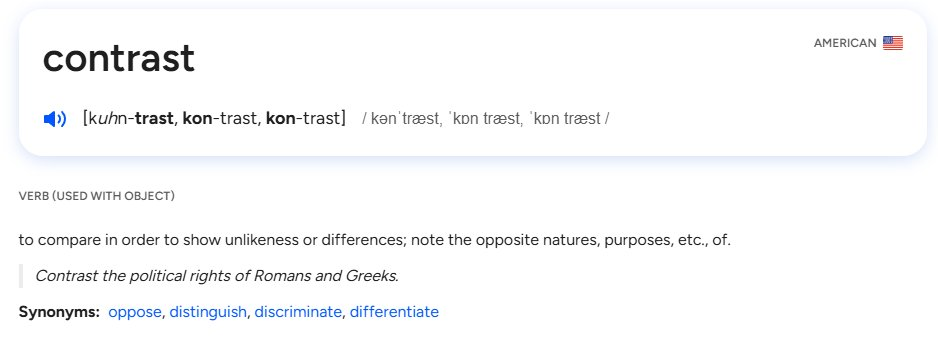
Contrast actually means something is different from previous content.

Yes, it's that simple.

It doesn't require:

flowery language,

surprising plot twists,

or background music.

Essentially, contrast is a transformation, such as:

From "before" to "after"

From "expectation" to "reality"

From "belief" to "realization"

Without this transformation, your content is just information.

Yes, it might be useful, but memorable? Hmm... unlikely.

Why does a lack of contrast make content weak?

The Web3 world is full of:

features, data, promises, roadmaps......

But most content is presented too straightforwardly:

"This is what it does."

"These are its benefits."

"This is why you should care about it."

However, the brain isn't interested in this linear information.

It wakes up when something unexpected happens.

Why Content Loses Appeal Without Contrast

The Web3 world is filled with:

features, data, promises, roadmaps......

But most content is presented too straightforwardly:

"This is its function."

"Why it's good."

"Why you need to care about it."

However, the brain isn't activated by this linear information.

It only wakes up when something unexpected happens.

A Simple Example of "Contrast"

(You must have seen it countless times)

Expression without contrast:

Solana has fast transactions and low costs.

Your brain responds: Okay... so what?

Expression with contrast:

I clicked send, switched pages, and then realized the transaction was already completed.

The same idea, but with a completely different impact.

The second expression creates a "moment." Got it?

Why Does "Contrast" Feel Uncomfortable?

(And why this matters)

Contrast often requires you to admit:

You were wrong, you were confused, you underestimated something.

That's why most people avoid it.

But this discomfort is precisely what makes content feel authentic.

People don't like flawless things.

They connect more easily with resonance and vulnerability.

When someone thinks: "Wait... I've felt that way too."

Congratulations, you've succeeded.

How to Add "Contrast" to Your Content?

Before publishing, ask yourself one question:

"What changed here?"

If you can't answer, try adding:

  • A mistaken assumption you once had

  • A moment of hesitation

  • An unexpected result

  • A "small decision" you almost didn't make

It really doesn't require a dramatic plot.

You just need a bit of relatable change.

Weirdo's Summary

Don't get me wrong, creativity does play an important role in storytelling.

But not everyone is born creative. This article is specifically for those who genuinely want to learn storytelling techniques.

Its core lies in: being sincere enough to show "transformation."

In the complex and noisy world of Web3,

"Contrast" is how you stand out without having to shout :)

Remember to follow me, or else... (Content here does not comply with Mainland China regulations, recommended to delete).


Criptomoedas em alta

Perguntas relacionadas

QWhat is the main reason most Web3 content creators struggle with storytelling according to the article?

AThe main reason is not a lack of creativity, but rather that their content lacks contrast.

QWhat does 'contrast' in content creation refer to, as defined in the article?

AContrast refers to a change or transformation from one state to another, such as from 'before' to 'after', 'expectation' to 'reality', or 'belief' to 'realization'.

QWhy does the absence of contrast make content less engaging?

AWithout contrast, content becomes straightforward information that fails to activate the brain, which is only awakened by unexpected or surprising elements.

QHow can a content creator add contrast to their work, based on the article's advice?

ABy incorporating elements like a past mistaken assumption, a moment of hesitation, an unexpected result, or a small decision that was almost not made.

QWhat emotional quality does contrast often introduce, and why is this beneficial?

AContrast often introduces discomfort through vulnerability or admitting being wrong, which makes the content feel more authentic and relatable to the audience.

Leituras Relacionadas

In Jinjiang, Fujian, a Storage Super Unicorn Lies Quiet

In Fujian's Jinjiang, a city known for sportswear, lies a quiet semiconductor giant: Fujian Jinhua Integrated Circuit Co. (JHICC). Once a promising domestic DRAM manufacturer alongside Yangtze Memory and ChangXin Memory Technologies (CXMT), its journey was derailed in 2018 when the U.S. placed it on an Entity List and filed criminal charges for alleged trade secret theft. This halted production for years. A turning point came in February 2024 when a U.S. federal court found JHICC not guilty. However, it had lost crucial time. While CXMT soared to become a top-valued A-share company in 2024, JHICC, with an estimated valuation of 80 billion RMB, was just restarting. Its current output is primarily customized DDR4 chips, not the advanced DDR5/HBM demanded for AI, but it still benefits from the broader memory chip upcycle. JHICC's story is tied to Chen Zhengkun, a veteran engineer who left Micron to lead the venture. Founded in 2016 with state-backed funding, JHICC partnered with Taiwan's UMC to develop DRAM technology. Rapid progress was cut short by the U.S. actions, which Micron initiated, partly due to its heavy reliance on the Chinese market. Post-sanctions, Chen's team worked to rebuild the production line with reduced reliance on U.S. technology. According to its records, JHICC achieved small-scale production and revenue growth under immense pressure. It now focuses on the stable "niche" DRAM market (e.g., TVs, routers) with a monthly capacity of ~40,000 wafers, aiming for 60,000 by 2026. It holds over 1,000 patents but remains on the Entity List. For Jinjiang, investing in JHICC was a bold industrial leap. The local government provided unwavering financial and logistical support during the crisis, helping the company survive. JHICC has become the anchor for a growing local semiconductor cluster. Though its scale lags behind domestic peers, JHICC's persistence symbolizes a hard-won foothold in a global market long dominated by Samsung, SK Hynix, and Micron. Having missed one boom, it seeks a place in the new AI-driven memory supercycle.

marsbitHá 29m

In Jinjiang, Fujian, a Storage Super Unicorn Lies Quiet

marsbitHá 29m

Must-Watch Events Next Week|CLARITY Act Could Face Senate Vote; SpaceX, Circle to Report Earnings (8.3-8.9)

**Summary: Key Events and Developments to Watch (August 3-9)** The upcoming week is marked by significant financial disclosures, key legislative deadlines, and notable product updates. **Major Financial Events:** Several companies are scheduled to release their Q2 2026 earnings. American Bitcoin (ABTC) will report on August 3, followed by SpaceX and Hut 8 Mining Corp. on August 4, and Circle on August 5. Notably, a significant portion of SpaceX shares (up to 12% of total shares) will be unlocked on August 6 following their earnings release. **Key Legislative Deadline:** The U.S. Senate faces an August 7 deadline to secure 60 votes for the CLARITY Act, a bipartisan bill aiming to establish a federal regulatory framework for cryptocurrencies. The Senate may hold a full vote on the bill during the week. **Economic Data:** The U.S. July Non-Farm Payrolls report will be released on August 7, providing crucial labor market data. **Technology & Product Updates:** * **Shutdowns:** DeFi portfolio tracker Zapper and wallet app Ctrl Wallet will cease operations on August 3. * **Upgrades:** LayerZero will deprecate its v1 relayers on August 3. XRP Ledger's new version 3.3.0, featuring five new functions, is expected next week. * **AI:** Elon Musk announced that the advanced Grok 4.6 AI model is set for release around August 7. * **Bitcoin:** The BIP-110 forced signaling for a potential Bitcoin network change is scheduled to begin around August 8. **Other Notable Events:** Chinese robotics firm Unitree Tech has set its preliminary price inquiry for its IPO for August 5. South Korean exchange Upbit will delist AQT and AERGO tokens on August 3.

marsbitHá 2h

Must-Watch Events Next Week|CLARITY Act Could Face Senate Vote; SpaceX, Circle to Report Earnings (8.3-8.9)

marsbitHá 2h

Trading

Spot

Artigos em Destaque

Como comprar T

Bem-vindo à HTX.com!Tornámos a compra de Threshold Network Token (T) simples e conveniente.Segue o nosso guia passo a passo para iniciar a tua jornada no mundo das criptos.Passo 1: cria a tua conta HTXUtiliza o teu e-mail ou número de telefone para te inscreveres numa conta gratuita na HTX.Desfruta de um processo de inscrição sem complicações e desbloqueia todas as funcionalidades.Obter a minha contaPasso 2: vai para Comprar Cripto e escolhe o teu método de pagamentoCartão de crédito/débito: usa o teu visa ou mastercard para comprar Threshold Network Token (T) instantaneamente.Saldo: usa os fundos da tua conta HTX para transacionar sem problemas.Terceiros: adicionamos métodos de pagamento populares, como Google Pay e Apple Pay, para aumentar a conveniência.P2P: transaciona diretamente com outros utilizadores na HTX.Mercado de balcão (OTC): oferecemos serviços personalizados e taxas de câmbio competitivas para os traders.Passo 3: armazena teu Threshold Network Token (T)Depois de comprar o teu Threshold Network Token (T), armazena-o na tua conta HTX.Alternativamente, podes enviá-lo para outro lugar através de transferência blockchain ou usá-lo para transacionar outras criptomoedas.Passo 4: transaciona Threshold Network Token (T)Transaciona facilmente Threshold Network Token (T) no mercado à vista da HTX.Acede simplesmente à tua conta, seleciona o teu par de trading, executa as tuas transações e monitoriza em tempo real.Oferecemos uma experiência de fácil utilização tanto para principiantes como para traders experientes.

540 Visualizações TotaisPublicado em {updateTime}Atualizado em 2026.06.02

Como comprar T

Discussões

Bem-vindo à Comunidade HTX. Aqui, pode manter-se informado sobre os mais recentes desenvolvimentos da plataforma e obter acesso a análises profissionais de mercado. As opiniões dos utilizadores sobre o preço de T (T) são apresentadas abaixo.

活动图片












