House Democrats Blast SEC Over Dropped Crypto Cases, Ripple Lawsuit Talk Resurfaces

bitcoinistPublicado em 2026-01-19Última atualização em 2026-01-19

Resumo

House Democrats have accused the SEC of abandoning multiple high-profile crypto enforcement cases, including those involving Binance, Coinbase, Kraken, and Ripple, despite favorable court rulings. In a January 15, 2026 letter to SEC Chair Paul Atkins, lawmakers raised concerns over a potential "pay-to-play" scheme, noting that companies whose cases were dropped had donated significantly to Trump’s inauguration. The letter also criticized the prolonged stay in the case against Justin Sun, citing his financial ties to Trump-linked businesses and questioning possible political influence. Crypto attorney Bill Morgan, however, argued that closed cases cannot be reopened due to the legal principle of res judicata. The ongoing case against Sun remains unresolved and subject to potential future action.

House Democrats have accused the SEC of abandoning many high-profile investigations, including its legal battle with Ripple, which has brought attention back to the agency’s handling of crypto enforcement.

The claims, which were outlined in a January 15 letter to SEC Chair Paul Atkins, raised questions about why several cases were dropped after favorable court rulings and whether political relationships played any role in those decisions. However, according to crypto attorney Bill Morgan, these cases are wrapped up, done, and dusted.

Lawmakers Say SEC Walked Away From Major Crypto Cases

In a January 15, 2026 letter addressed to Atkins, House Democrats accused the agency of dramatically scaling back crypto enforcement since early 2025. The lawmakers claimed the SEC has dismissed or closed more than a dozen major crypto-related cases, including actions against Binance, Coinbase, Kraken, and Ripple, despite having received favorable court rulings in some of those matters.

According to the letter, companies whose cases or investigations were dismissed donated at least $1 million each to Trump’s inauguration. This raises concerns about an unmistakable inference of a pay-to-play scheme, investor protection and market integrity at a time when digital assets are starting to become deeply intertwined with capital markets.

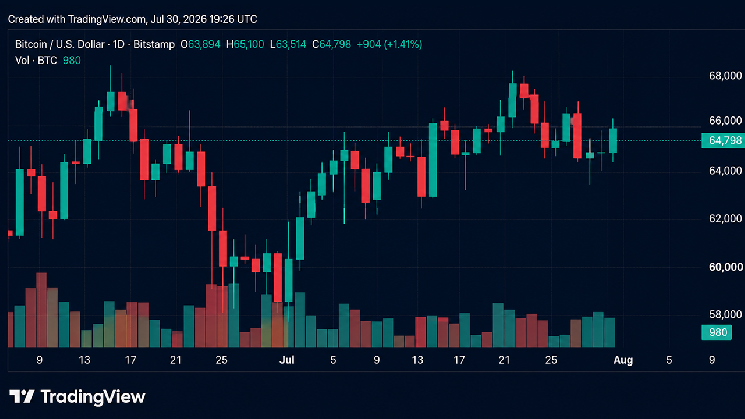
BTCUSD now trading at $95,116. Chart: TradingView

Much of the letter’s criticism was focused on the SEC’s decision to seek and maintain a stay in its case against Justin Sun, which has now been in place for about 11 months now. Unlike all the other cases, the SEC’s case against Justin Sun has not yet been dismissed. Democratic Lawmakers claimed this move sends a dangerous signal that political connections may influence enforcement outcomes.

The letter explicitly referenced Sun’s reported financial ties to businesses linked to Donald Trump. One of which was Sun’s reveal in September 2025 that he was purchasing an additional $10 million worth of $WLFI tokens from World Liberty Financial (WLFI), a Trump family business.

According to the democrats, such circumstances could undermine public trust in the SEC’s independence. The Letter also seeks information related to the SEC’s knowledge of Sun’s ties to the People’s Republic of China and any CCP-affiliated persons or entities.

Crypto Lawyer Pushes Back On Ripple Lawsuit Talk

The letter by House Democrats brings into focus whether political pressure could lead to a new action against Ripple and other firms. However, according to Morgan, this is not possible.

Morgan dismissed the idea that the SEC could simply relaunch cases it has already litigated or closed on the same grounds, pointing to the legal doctrine of res judicata. Under that principle, once a matter has been conclusively decided between the same parties, it cannot be retried on identical issues.

“Too bad the SEC can’t go against those companies again on the same matters. Res Judicata baby. Live with it fools,” he said.

Still, one unresolved question hangs over the broader controversy. Unlike the other crypto cases cited in the lawmakers’ letter, the SEC’s action against Justin Sun has not been formally dismissed and can be revisited anytime.

Featured image from Getty Images, chart from TradingView

Perguntas relacionadas

QWhat is the main accusation that House Democrats have made against the SEC in their letter?

AHouse Democrats accused the SEC of dramatically scaling back crypto enforcement, dismissing or closing more than a dozen major crypto-related cases, including those against Binance, Coinbase, Kraken, and Ripple, and raised concerns about a potential 'pay-to-play' scheme due to political donations.

QAccording to the letter, what specific concern was raised regarding the SEC's case against Justin Sun?

AThe letter raised concerns that the SEC's decision to seek and maintain a stay in its case against Justin Sun, while dismissing others, sends a dangerous signal that political connections may influence enforcement outcomes, especially given Sun's reported financial ties to businesses linked to Donald Trump.

QWhat legal principle did crypto attorney Bill Morgan cite to argue that the SEC cannot reopen cases like the one against Ripple?

ABill Morgan cited the legal doctrine of res judicata, which states that once a matter has been conclusively decided between the same parties, it cannot be retried on identical issues.

QWhat financial transaction involving Justin Sun and a Trump family business was mentioned in the letter?

AThe letter mentioned that Justin Sun revealed in September 2025 that he was purchasing an additional $10 million worth of $WLFI tokens from World Liberty Financial (WLFI), a Trump family business.

QHow does the letter connect the dismissed cases to political donations?

AThe letter states that companies whose cases or investigations were dismissed had each donated at least $1 million to Trump's inauguration, raising concerns about a potential 'pay-to-play' scheme.

Leituras Relacionadas

Bitcoin's 'Rally Ends,' Officially Entering the Later Stage of a Bear Market?

Bitcoin prices declined 13% this week, reversing the recent rebound and signaling a likely transition into the later stages of a bear market. Key on-chain metrics deteriorated, with the short-term holder cost basis falling below the Realized Price—a pattern last seen in early 2022, characteristic of bear market maturity. The rally to ~$82k proved to be a bear market bounce, as evidenced by the 90-day realized profit/loss ratio failing to sustain above the bullish threshold of 2. Daily realized losses surged to $1.35B, including significant selling from long-term holders who accumulated near cycle tops, indicating ongoing supply redistribution. Price was rejected almost precisely at the aggregate US spot ETF cost basis of ~$83k, turning that level into resistance and leaving the average ETF investor underwater again. Spot market selling pressure intensified, with the 7-day volume delta turning significantly negative to its weakest level since February. While a major long liquidation event cleared over $400M in leverage, spot demand has not yet stepped in to absorb the resulting supply. Options markets continue pricing in higher future volatility (elevated volatility risk premium) and maintain a skew toward put options, reflecting persistent demand for downside protection, though not yet panic. Overall, market structure remains fragile. Sustained recovery likely requires a reclaim of the ETF cost basis, a shift back to positive spot demand, and a slowdown in realized loss-taking. Until then, the market risks further downside or extended consolidation within the broader bear trend.

Foresight NewsHá 52m

Bitcoin's 'Rally Ends,' Officially Entering the Later Stage of a Bear Market?

Foresight NewsHá 52m

How Risky is the "Death Spiral" of MSTR and STRC?

Summary: This article explores the perceived "death spiral" risk between MicroStrategy (MSTR), its Bitcoin holdings, and its perpetual preferred stock (STRC), drawing comparisons to the LUNA-UST collapse. While both systems feature price anchors, high yields for holders, and potential feedback loops, their core mechanisms differ fundamentally. The MSTR-STRC structure relies on continuous financing to sustain its high dividend payouts, primarily through stock ATM offerings. A negative feedback cycle could occur: falling MSTR stock price makes raising equity capital harder, increasing pressure to sell Bitcoin, which undermines STRC confidence and further depresses MSTR. However, unlike LUNA-UST's automated, direct linkage, the MSTR-STRC loop is weaker and has brakes: STRC dividends can be deferred or rates lowered, and STRC holders have a $100/share liquidation preference in bankruptcy, providing a price floor. The company's sustainability hinges on its ability to continue financing. Its current ~$900 million USD reserves cover only about 6.3 months of its ~$1.71 billion annual interest/dividend burden. The next six months are critical, aligning with both the potential bottom in Bitcoin's four-year cycle and the depletion timeline of its reserves. While a LUNA-style catastrophic collapse is deemed highly unlikely due to structural differences, the key question is whether MicroStrategy can navigate this period through healthy deleveraging to restart its capital engine.

Foresight NewsHá 1h

How Risky is the "Death Spiral" of MSTR and STRC?

Foresight NewsHá 1h

Trading

Spot
Futuros

Artigos em Destaque

Como comprar HOUSE

Bem-vindo à HTX.com!Tornámos a compra de Housecoin (HOUSE) simples e conveniente.Segue o nosso guia passo a passo para iniciar a tua jornada no mundo das criptos.Passo 1: cria a tua conta HTXUtiliza o teu e-mail ou número de telefone para te inscreveres numa conta gratuita na HTX.Desfruta de um processo de inscrição sem complicações e desbloqueia todas as funcionalidades.Obter a minha contaPasso 2: vai para Comprar Cripto e escolhe o teu método de pagamentoCartão de crédito/débito: usa o teu visa ou mastercard para comprar Housecoin (HOUSE) instantaneamente.Saldo: usa os fundos da tua conta HTX para transacionar sem problemas.Terceiros: adicionamos métodos de pagamento populares, como Google Pay e Apple Pay, para aumentar a conveniência.P2P: transaciona diretamente com outros utilizadores na HTX.Mercado de balcão (OTC): oferecemos serviços personalizados e taxas de câmbio competitivas para os traders.Passo 3: armazena teu Housecoin (HOUSE)Depois de comprar o teu Housecoin (HOUSE), armazena-o na tua conta HTX.Alternativamente, podes enviá-lo para outro lugar através de transferência blockchain ou usá-lo para transacionar outras criptomoedas.Passo 4: transaciona Housecoin (HOUSE)Transaciona facilmente Housecoin (HOUSE) no mercado à vista da HTX.Acede simplesmente à tua conta, seleciona o teu par de trading, executa as tuas transações e monitoriza em tempo real.Oferecemos uma experiência de fácil utilização tanto para principiantes como para traders experientes.

284 Visualizações TotaisPublicado em {updateTime}Atualizado em 2026.06.02

Como comprar HOUSE

Discussões

Bem-vindo à Comunidade HTX. Aqui, pode manter-se informado sobre os mais recentes desenvolvimentos da plataforma e obter acesso a análises profissionais de mercado. As opiniões dos utilizadores sobre o preço de HOUSE (HOUSE) são apresentadas abaixo.

活动图片