Hot Interaction Collection | Cascade Early Access Application; OpenMind Adds Badge Tasks (December 17)

Odaily星球日报Publicado em 2025-12-17Última atualização em 2025-12-17

Resumo

Hot Interaction Roundup: Cascade Early Access and OpenMind Badge Tasks (Dec 17) Cascade, a crypto brokerage platform, is now accepting early access applications. It offers 24/7 trading of U.S. stocks and crypto perpetual contracts with a single margin account. Users can apply via X (Twitter) and Google email, and join the Discord to claim OG roles. OpenMind, founded by a Stanford professor, is building a universal OS and decentralized network for smart machines. It recently added new badge tasks: users can sign up with Google, verify with World Coin for a Personhood badge, and connect a Backpack wallet for another badge. Altius, a modular execution stack developer, launched a Web3 knowledge quiz with Open Academy. Participants can complete three course levels and social tasks for a chance to win limited edition boxes or OA tokens. The event runs until December 23.

Original | Odaily Planet Daily (@OdailyChina)

Author | Asher (@Asher_ 0210)

Cascade: 24/7 US Stock Trading + Cryptocurrency Perpetual Contract Trading

Project Introduction

Cascade is an encrypted brokerage firm, offering a brokerage-style trading application that operates 24/7, supporting perpetual contract trading for cryptocurrencies, US stocks, and private assets. Users can directly link their bank accounts to complete perpetual trading, portfolio-based lending, and asset transfers within a single margin account.

According to ROOTDATA data, Citrea completed a $15 million financing round, receiving investments from Polychain, Coinbase Ventures, and others.

Interaction Tutorial

STEP 1. Go to the official website (Link: https://cascade.xyz/join), fill in your personal X account and Google email to complete the early access application (limited-time task).
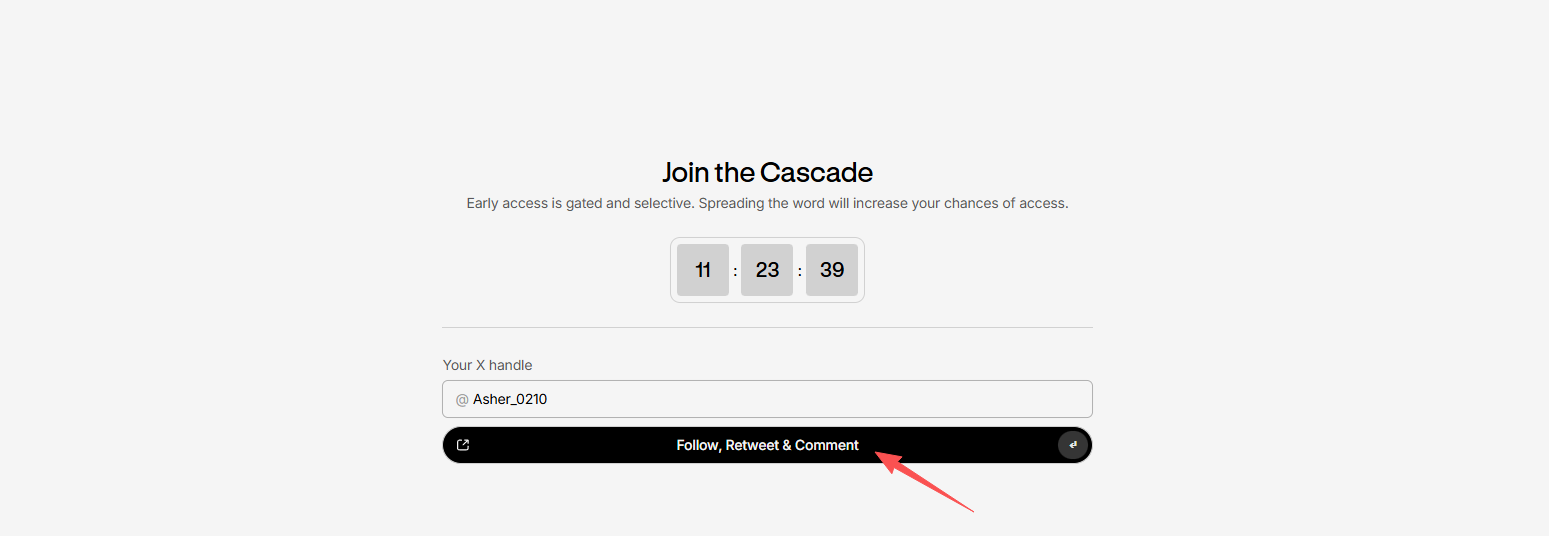
STEP 2. Join the official Discord community (Link: https://discord.com/invite/cascade-xyz) and claim the OG role (limited-time task).

OpenMind: Building a Universal Operating System and Decentralized Collaboration Network for Intelligent Machines

Project Introduction

OpenMind, founded by Stanford University Professor Jan Liphardt, is dedicated to building a universal operating system and decentralized collaboration network for intelligent machines, enabling robots from different manufacturers and of different forms to securely trust each other, share information, and collaborate globally.

In early August this year, OpenMind announced the completion of a $20 million financing round, led by Pantera Capital, with participation from Ribbit, Sequoia, Coinbase Ventures, DCG, Lightspeed Faction, Anagram, Pi Network Ventures, Topology, Primitive Ventures, Amber Group, and several other institutions and renowned angel investors.

Interaction Tutorial

STEP 1. Go to the interaction website (Link: https://fabric.openmind.org/sign-in) and register using your Google email.
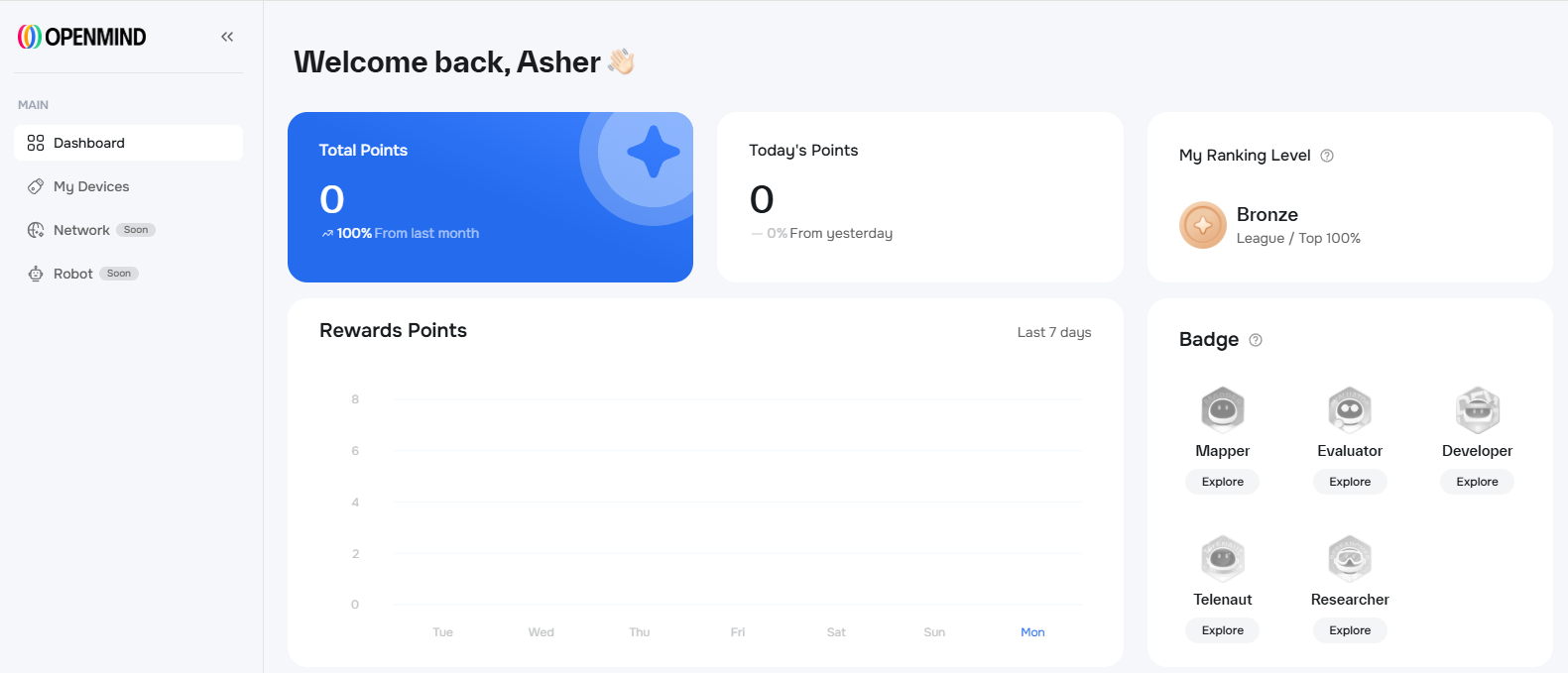
STEP 2. After installing the World Coin software on your phone, click "Personhood" and follow the process to register and receive the badge.
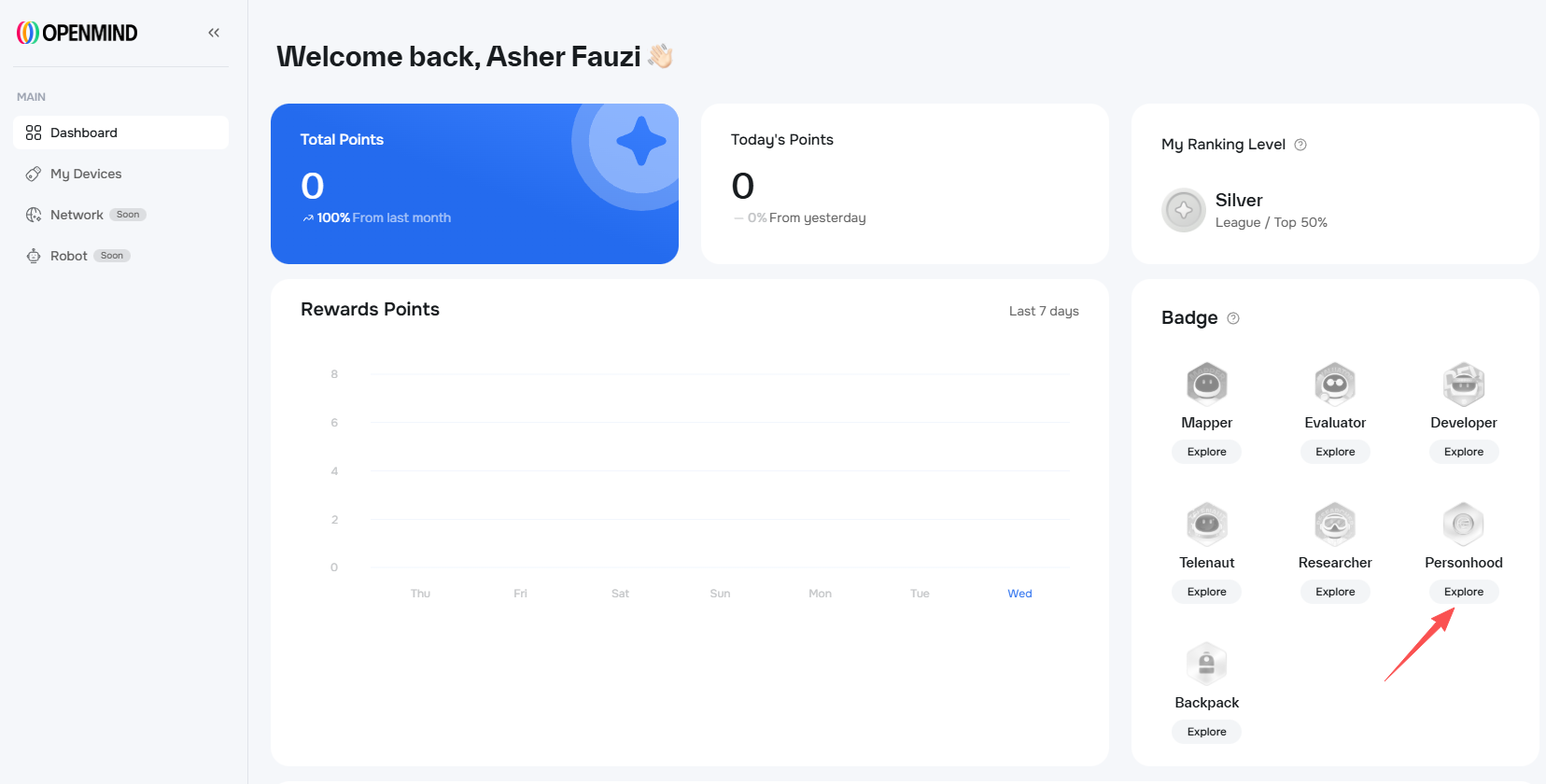
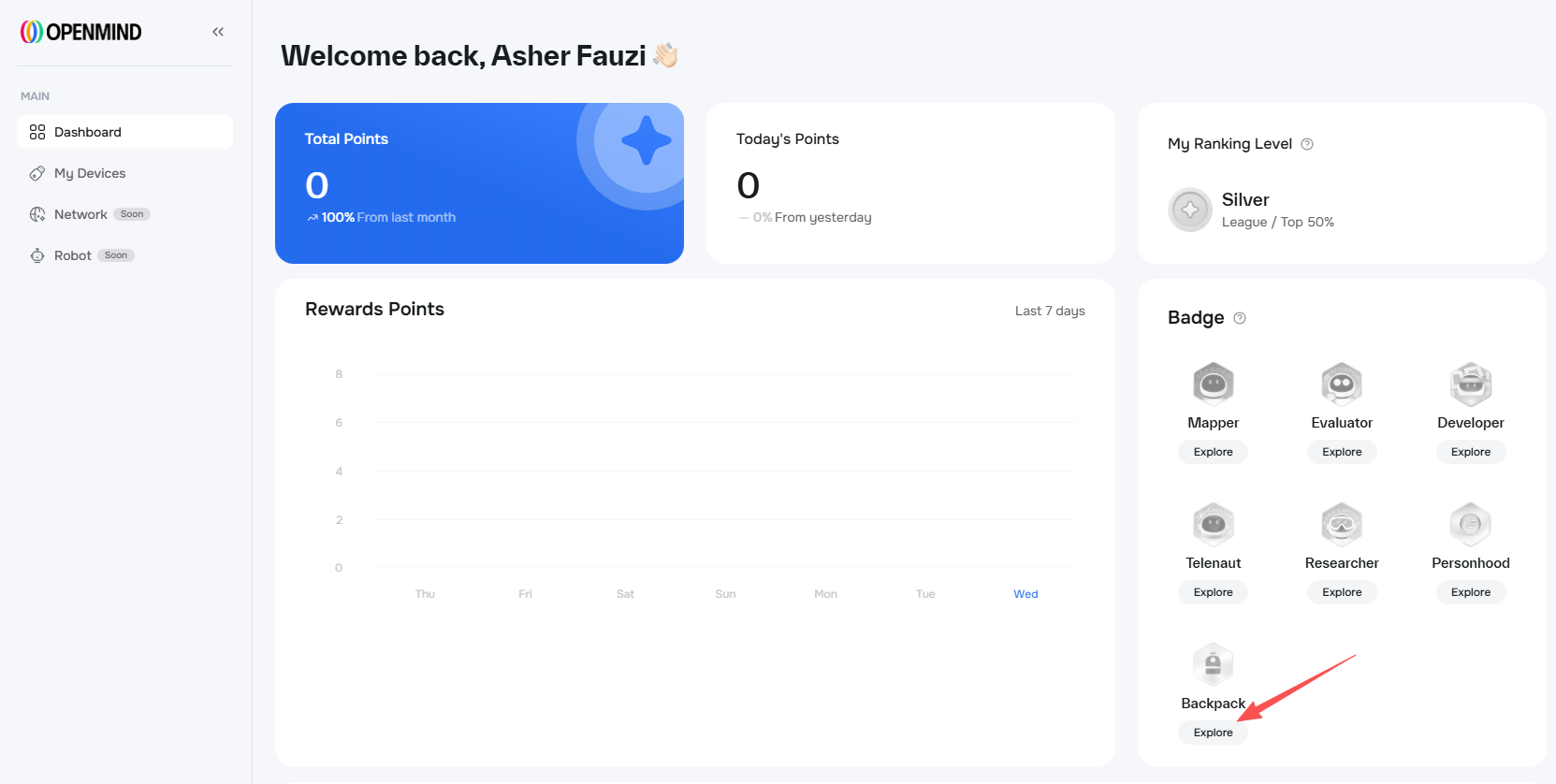
STEP 3. After installing the Backpack software on your phone and registering your personal wallet, click "Backpack", scan the QR code to connect, and receive the badge.
Altius: Committed to Developing a Virtual Machine-Agnostic Modular Execution Stack

Project Introduction

Altius is a set of high-performance on-chain execution infrastructure for the future, co-founded by former Hudson River Trading software engineer Anit Chakraborty and former Amber Group managing partner Annabelle Huang. It is committed to developing a virtual machine (VM)-agnostic modular execution stack.

In mid-February this year, Altius announced the completion of an $11 million Pre-Seed funding round, led by Founders Fund and Pantera, with participation from Archetype, Reforge, DCG, and others.

Interaction Tutorial

On December 13th, Altius, in collaboration with Open Academy, launched a Web3 knowledge test activity. 5 users can win limited edition Altius gift boxes, and 200 users can each receive 200 OA tokens. The deadline is December 23rd.

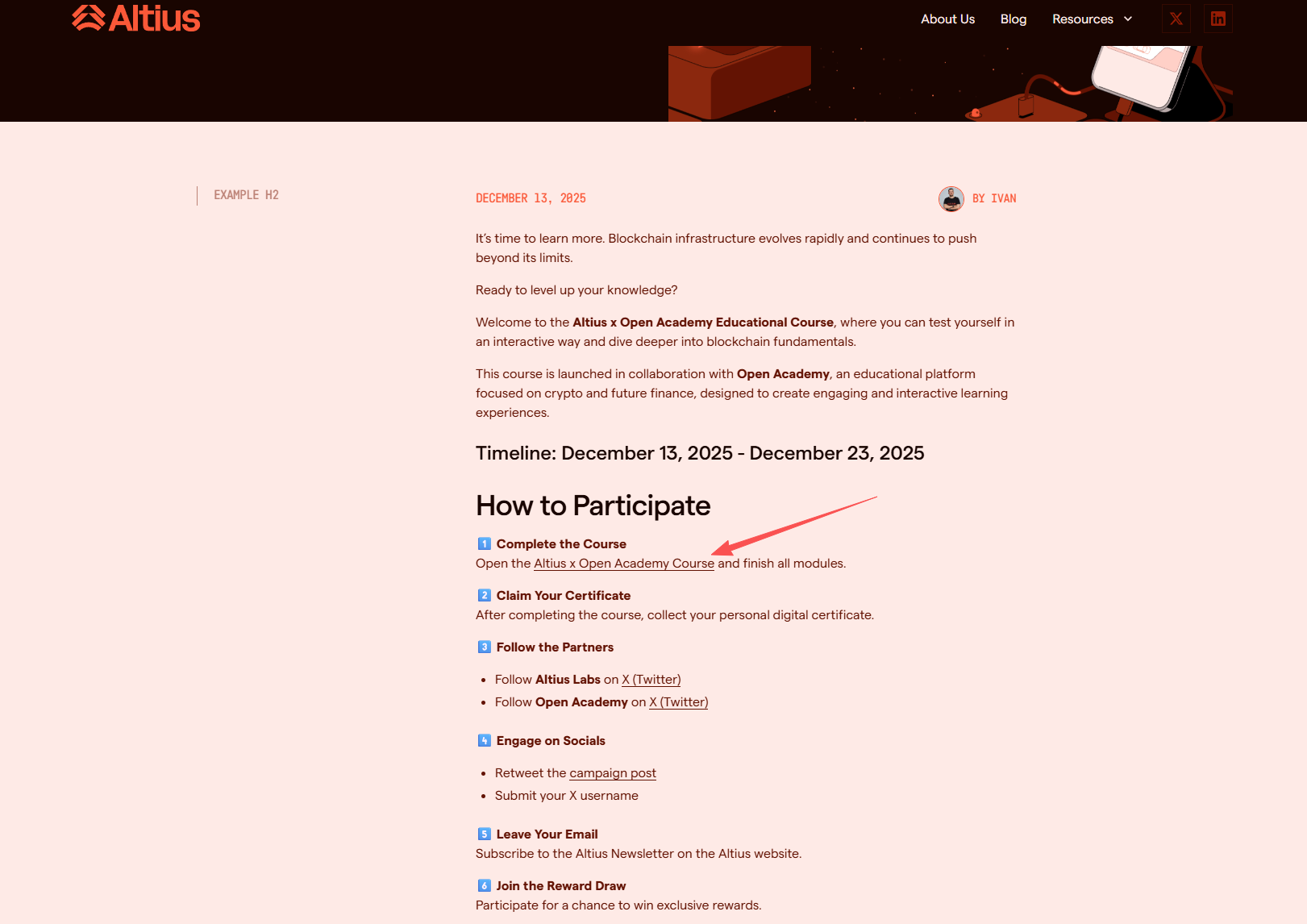
STEP 1. Go to the interaction website (Link: https://www.altiuslabs.xyz/blog/altius-x-open-academy-educational-course) and click the location shown below to jump to the Telegram link.
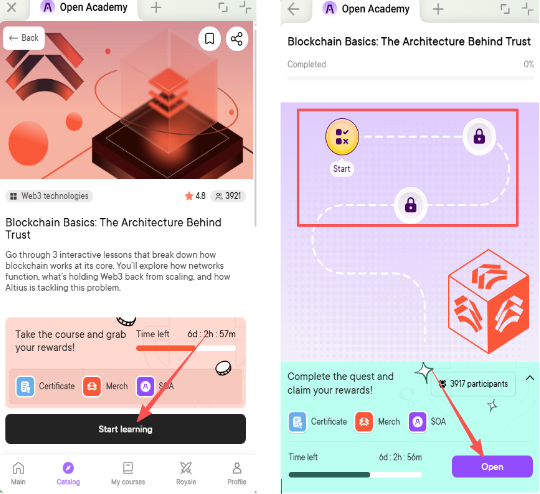
STEP 2. After entering the TG mini-app, click "Start learning". Complete the 3-level course tasks as prompted, then click "Open" below and complete the social tasks in order.
Perguntas relacionadas

QWhat is Cascade and what services does it offer?

ACascade is a crypto brokerage firm that provides a 24/7 trading application. It supports perpetual contract trading for cryptocurrencies, US stocks, and private assets. Users can link their bank accounts and perform perpetual trading, portfolio-based lending, and asset transfers within a single margin account.

QHow can users apply for early access to Cascade?

AUsers can apply for early access by visiting the official website (https://cascade.xyz/join), providing their X (Twitter) account and Google email address. This is a limited-time task.

QWhat is the main goal of the OpenMind project and who founded it?

AOpenMind aims to build a universal operating system for intelligent machines and a decentralized collaboration network, enabling robots from different manufacturers to securely share information and work together globally. It was founded by Stanford University professor Jan Liphardt.

QWhat are the steps to earn a badge on OpenMind platform?

ATo earn a badge on OpenMind, users must first register on the interaction website (https://fabric.openmind.org/sign-in) using a Google email. Then, they can obtain a badge by either: 1) Installing the World Coin app, clicking 'Personhood', and completing the registration process, or 2) Installing and registering a Backpack wallet, then clicking 'Backpack' and scanning a QR code to connect.

QWhat is the purpose of the Altius project and what recent activity did it announce?

AAltius is developing a virtual machine (VM)-agnostic modular execution stack for high-performance on-chain execution infrastructure. Recently, on December 13th, it launched a Web3 knowledge test activity in collaboration with Open Academy, offering prizes like limited edition gift boxes and OA tokens, which runs until December 23rd.

Leituras Relacionadas

Crypto is dead, Perps are forever

The crypto industry is shifting from a focus on creating native assets (like altcoins and protocol tokens) to becoming a "global asset pipeline." Native cryptocurrencies, except for Bitcoin, are seen as failing in their value storage and utility promises, with demand driven largely by speculation. Attention and liquidity are now moving toward real-world assets (RWAs) like U.S. stocks, bonds, gold, and oil traded on-chain via perpetual contracts (Perps). Stablecoins like USDT and USDC set the precedent, proving blockchain's core strength is efficient global settlement and transfer, not inventing new monetary systems. Meanwhile, assets like Ethereum and many DeFi tokens struggle as their narratives weaken against tangible traditional assets and the rapid real-world progress of AI. Perpetual contracts have emerged as a pivotal innovation. They simplify trading by offering pure price exposure to any asset, bypassing complexities of ownership, custody, and traditional market hours. Projects like Hyperliquid gained traction by combining CEX-like efficiency with on-chain transparency, capitalizing on post-FTX distrust, macroeconomic volatility, and the surge in demand for 24/7 stock trading. In conclusion, while the era of speculative native "crypto assets" may be over, perpetual contracts persist as the industry's most potent financial instrument—transforming all assets into globally accessible, constantly tradable instruments centered on price speculation.

marsbitHá 2m

Crypto is dead, Perps are forever

marsbitHá 2m

Tencent, Alibaba, ByteDance in a Battle for the Skill Store

Skill is becoming a key concept in the AI field, essentially serving as a structured "instruction manual" for AI Agents that specifies tool calls, decision logic, and output standards. This allows Agents to execute predefined tasks. As the number of Skills grows, distribution platforms have emerged. Major tech companies are swiftly entering this space. In March, Tencent, Alibaba, and ByteDance launched Skill stores within their respective Agent platforms. Subsequently, players like Zhipu AI, Meituan, and Xiaohongshu joined the fray. This competition for the "Skill store" is fundamentally a battle for the AI-era user entry point; whoever controls distribution controls the users. While ByteDance's Coze has experimented with paid Skills, most platforms offer them for free. The real value lies not in the stores themselves but in using them to attract and retain users within an ecosystem, driving revenue from services like cloud computing, model calls, or advertising. The landscape features three main player types: 1) **Internet giants** (e.g., Alibaba, ByteDance, Tencent, Meituan), leveraging Skills to drive traffic and monetize through their broader ecosystems (cloud services, transactions, ads). 2) **Large model companies** (e.g., Zhipu AI, Moonshot AI), using Skill stores to increase user engagement and monetize model API calls. 3) **Content platforms** (e.g., Xiaohongshu), treating Skills as a new content format to generate traffic and ad revenue. However, transforming Skill stores into a sustainable business faces significant hurdles. Key challenges include: the **difficulty in pricing Skills** due to inconsistent outputs across different models and contexts; **lack of cost transparency** (varying token consumption); **security risks** like Skill poisoning; and the **absence of standardized protocols** for development and evaluation. Unlike standardized mobile apps, Skills are often personalized workflows resistant to uniformity, which hinders the establishment of a reliable review and monetization system akin to the App Store. While there is genuine user demand for paid Skills—particularly in enterprise (e.g., contract review) and certain personal productivity scenarios—current platforms offer developers limited and unpredictable distribution. The future of Skill stores depends on overcoming these standardization, evaluation, and safety challenges to make acquiring a Skill as straightforward as downloading an app. For now, the stores function more as display shelves than robust marketplaces.

marsbitHá 2m

Tencent, Alibaba, ByteDance in a Battle for the Skill Store

marsbitHá 2m

The Crypto Scene Is Dead, Perpetual Swaps Are Eternal

The crypto industry is undergoing a fundamental shift. The era defined by minting novel, native digital assets (altcoins) is fading. These assets, lacking real-world cash flows or clear value, are losing relevance as attention and capital flow elsewhere. Two powerful external forces are reshaping the space. First, traditional assets like U.S. stocks, bonds, gold, and oil are being tokenized and traded on-chain. Second, the explosive growth of AI, with its tangible products, has overshadowed crypto's once-dominant "future narrative." This marks a critical pivot: crypto is transitioning from being a "factory for new assets" to becoming a "global conduit for existing assets." Its validated utility is not complex financial reinvention but efficient global settlement, transfer, and trading—the original promise of blockchain. Stablecoins like USDT and USDC exemplify this, offering faster dollar movement rather than replacing it. Consequently, native ecosystems like Ethereum face profound challenges. While still crucial infrastructure, ETH struggles to capture value as users interact with Layer 2s or trade traditional assets without needing to hold it. DeFi's grand narrative of rebuilding finance has narrowed to core needs like cheap transfers and deep liquidity. The true breakout innovation is the perpetual contract (Perp). It brilliantly bypasses the complexities of direct asset ownership (custody, compliance, dividends) by creating pure price exposure. Users can speculate on the price movement of *any* asset—NVIDIA, gold, oil—24/7, globally, and with leverage. This "price casino" model, while risky and ethically fraught, delivers unmatched liquidity and accessibility. Projects like Hyperliquid succeeded not by inventing new mechanics but by perfecting the timing and execution of this model. Key drivers included making on-chain Perps feel like centralized exchanges, post-FTX trust migration towards transparency, and rising demand to trade macro assets and equities round-the-clock. In conclusion, the crypto world's most enduring successes are the dollar (via stablecoins), Bitcoin, and trading. Its new frontier is not creating alternative assets but providing a seamless, perpetual trading layer—a new API—for the world's existing financial system. The age of native altcoins is over; the age of perpetual synthetic exposure has begun.

Odaily星球日报Há 11m

The Crypto Scene Is Dead, Perpetual Swaps Are Eternal

Odaily星球日报Há 11m

After Marvell's 32% Surge, the Chinese Chip Family Behind It Emerges

The stock price of Marvell Technology surged 32.5% on June 2nd, driven by NVIDIA CEO Jensen Huang highlighting its custom ASICs and optical interconnects as core to AI data center architecture. This event brought attention to the Chinese semiconductor family behind Marvell: the Dai siblings. The story centers on three siblings, all UC Berkeley graduates, whose three-decade entrepreneurial journey aligns with major semiconductor industry shifts. In 1995, youngest sister Dai Wei Li co-founded Marvell with her husband Sehat Sutardja and his brother, focusing on storage controllers. Eldest brother Dai Wei Min founded EDA company Ultima, later sold to Cadence, and later founded VeriSilicon (芯原) in China, becoming a leading semiconductor IP provider. Second brother Dai Wei Jin co-founded EDA firm Silicon Perspective (sold to Cadence) and GPU IP company Vivante, later acquired by VeriSilicon. The combined "Dai-Sutardja" family network extends beyond Marvell. Their ventures and investments form a comprehensive ecosystem for the post-Moore's Law, chiplet era. Key holdings include: Dream Big Semiconductor (AI SuperNICs, acquired by Arm), Alphawave (high-speed SerDes IP, acquired by Qualcomm), and Silicon Box (a chiplet advanced packaging foundry). VeriSilicon itself thrives on the AI ASIC and IP boom in China. Collectively, the family's AI infrastructure-related portfolio is estimated at over $22 billion. Their strategy represents a distinct path: building critical components for open standards and key manufacturing capacity in the chiplet era, rather than pursuing standalone AI chip dominance. While this path may not create the next NVIDIA, it has enabled repeated successful exits and sustained influence within the global semiconductor industry.

marsbitHá 1h

After Marvell's 32% Surge, the Chinese Chip Family Behind It Emerges

marsbitHá 1h

Trading

Spot
Futuros

Artigos em Destaque

Como comprar HOT

Bem-vindo à HTX.com!Tornámos a compra de Holo (HOT) simples e conveniente.Segue o nosso guia passo a passo para iniciar a tua jornada no mundo das criptos.Passo 1: cria a tua conta HTXUtiliza o teu e-mail ou número de telefone para te inscreveres numa conta gratuita na HTX.Desfruta de um processo de inscrição sem complicações e desbloqueia todas as funcionalidades.Obter a minha contaPasso 2: vai para Comprar Cripto e escolhe o teu método de pagamentoCartão de crédito/débito: usa o teu visa ou mastercard para comprar Holo (HOT) instantaneamente.Saldo: usa os fundos da tua conta HTX para transacionar sem problemas.Terceiros: adicionamos métodos de pagamento populares, como Google Pay e Apple Pay, para aumentar a conveniência.P2P: transaciona diretamente com outros utilizadores na HTX.Mercado de balcão (OTC): oferecemos serviços personalizados e taxas de câmbio competitivas para os traders.Passo 3: armazena teu Holo (HOT)Depois de comprar o teu Holo (HOT), armazena-o na tua conta HTX.Alternativamente, podes enviá-lo para outro lugar através de transferência blockchain ou usá-lo para transacionar outras criptomoedas.Passo 4: transaciona Holo (HOT)Transaciona facilmente Holo (HOT) no mercado à vista da HTX.Acede simplesmente à tua conta, seleciona o teu par de trading, executa as tuas transações e monitoriza em tempo real.Oferecemos uma experiência de fácil utilização tanto para principiantes como para traders experientes.

97 Visualizações TotaisPublicado em {updateTime}Atualizado em 2026.06.02

Como comprar HOT

O que é HOLO

Compreender o HOLO: O Futuro das Aplicações Descentralizadas Introdução ao HOLO, $holo No panorama em rápida evolução das criptomoedas e tecnologias descentralizadas, o HOLO, também conhecido como Holo, emergiu como um jogador notável. Este projeto inovador facilita o desenvolvimento de aplicações descentralizadas (DApps) através da sua arquitetura subjacente conhecida como Holochain. Com uma visão de criar uma ponte entre a internet centralizada que conhecemos hoje e o ecossistema descentralizado do futuro, o HOLO visa tornar as DApps acessíveis ao utilizador comum, sem os obstáculos de instalações complexas e habilidades técnicas. O que é HOLO, $holo? No seu cerne, o HOLO é uma plataforma distribuída projetada para hospedar DApps construídas sobre Holochain. Ao contrário das plataformas de blockchain tradicionais, o Holochain adota uma abordagem única ao permitir que cada aplicação funcione com o seu próprio conjunto de regras. O mandato do HOLO é conectar estas aplicações Holochain (hApps) com os utilizadores através de tecnologias web familiares. O objetivo principal do HOLO é democratizar o acesso e uso das DApps, permitindo que os utilizadores acedam a estas aplicações diretamente através de navegadores web padrão. Esta acessibilidade é fundamental para reduzir a fricção para os utilizadores médios da internet, permitindo-lhes utilizar aplicações de próxima geração sem precisar de navegar nas complexidades frequentemente associadas às criptomoedas e ao uso de DApps. Criadores do HOLO, $holo O HOLO surge da visão dos seus criadores, Arthur Brock e Eric Harris-Braun. Ambos são desenvolvedores experientes e programadores de contratos, e embarcaram no projeto em dezembro de 2016 como parte do MetaCurrency Project. Esta iniciativa estava inicialmente focada no desenvolvimento de ferramentas e tecnologias destinadas a fomentar uma economia peer-to-peer. Os seus antecedentes em programação e empreendimentos empresariais posicionaram-nos de forma única para enfrentar os desafios do desenvolvimento e hospedagem de aplicações descentralizadas. Investidores do HOLO, $holo Embora detalhes específicos sobre investidores individuais no HOLO não estejam facilmente disponíveis, é evidente que o projeto recebeu um apoio significativo e atenção da comunidade mais ampla de criptomoedas. A sua abordagem inovadora para a hospedagem de aplicações descentralizadas, juntamente com uma comunidade de apoio, alimentou o interesse e investimento no projeto. Como funciona o HOLO, $holo? O HOLO opera criando um extenso ecossistema onde os anfitriões contribuem com armazenamento e poder de processamento para as DApps baseadas em Holochain. Ao transformar os seus dispositivos ou até mesmo hardware dedicado como HoloPorts em nós de hospedagem, os indivíduos podem efetivamente monetizar os recursos não utilizados dos seus computadores. Os principais componentes funcionais do HOLO incluem: Fornecedor de Aplicações: Estas entidades compram créditos de hospedagem do HOLO, que são mantidos numa conta de reserva. Este mecanismo permite que os desenvolvedores de DApp garantam os recursos necessários para executar as suas aplicações. Anfitrião: Indivíduos ou organizações que escolhem hospedar DApps geram registos de serviço assinados à medida que respondem a pedidos dos utilizadores. Este processo assegura que todas as interações na rede sejam rastreadas e autenticadas. Prova de Serviço: Um elemento crucial da integridade operacional do HOLO, os anfitriões submetem faturas aos fornecedores de aplicações, que então validam o serviço prestado. Após a validação, os anfitriões recebem compensação na forma de créditos de hospedagem. HoloFuel: Servindo como o token nativo da rede Holo, o HoloFuel é projetado para microtransações. Este token facilita o extenso throughput de transações necessário para que a plataforma suporte bilhões de transações simultâneas de forma fluida. A sinergia combinada destes componentes assegura um ambiente de hospedagem robusto e descentralizado, impulsionando a utilidade e alcance das aplicações Holochain. Cronologia do HOLO, $holo A jornada do HOLO tem sido marcada por vários marcos desde a sua criação: Dezembro de 2016: A criação do HOLO por Arthur Brock e Eric Harris-Braun como parte do MetaCurrency Project. 2018: A emissão de um token ERC20, conhecido como HoloToken (HOT), serviu como um “IOU” que é resgatável por HoloFuel após o lançamento do projeto. Desenvolvimento Contínuo: Avanços contínuos, testes e otimização da rede Holo e HoloFuel, garantindo que o projeto permaneça na vanguarda da tecnologia de hospedagem de aplicações descentralizadas. Características Únicas do HOLO, $holo O HOLO destaca-se no campo saturado das criptomoedas e plataformas descentralizadas devido às suas características distintivas e à estrutura inovadora em que opera: Hospedagem Peer-to-Peer: O HOLO abre a porta para que qualquer pessoa se torne um anfitrião de DApps simplesmente utilizando os seus computadores. Esta democratização da hospedagem é semelhante à forma como plataformas como o Airbnb perturbaram a indústria hoteleira tradicional, capacitando indivíduos a participar na economia. Estrutura Holochain: Central para as inovações do HOLO está a própria estrutura Holochain. Posicionada como uma tecnologia de próxima geração, o Holochain possui escalabilidade sem igual, velocidades de transação rápidas, eficiência energética excepcional e custo-efetividade em comparação com tecnologias de blockchain convencionais. HoloFuel para Microtransações: O HoloFuel é meticulosamente projetado para acomodar microtransações, permitindo que a rede Holo gerencie eficientemente bilhões de transações simultaneamente. Esta capacidade é fundamental para a adoção em massa, permitindo que os desenvolvedores criem aplicações que sejam economicamente viáveis em grande escala. Conclusão O HOLO representa um avanço significativo no panorama das aplicações descentralizadas e da tecnologia blockchain. Com a sua infraestrutura robusta, abordagem amigável ao utilizador e a inovadora estrutura Holochain, o HOLO está preparado para desempenhar um papel crucial no futuro da web. Se irá melhorar as experiências quotidianas na internet ou redefinir a forma como desenvolvedores e utilizadores interagem com aplicações digitais, permanece por ver, mas o seu progresso até agora vale a pena acompanhar à medida que o mundo continua a mover-se em direção a uma economia digital descentralizada. À medida que o projeto evolui, os seus desenvolvimentos contínuos e o envolvimento da comunidade serão componentes cruciais do seu sucesso, potencialmente estabelecendo o HOLO como uma plataforma mainstream para aplicações descentralizadas. Com o crescente interesse em torno das tecnologias descentralizadas, a importância e o impacto de projetos como o HOLO só aumentarão nos anos vindouros.

88 Visualizações TotaisPublicado em {updateTime}Atualizado em 2024.12.26

O que é HOLO

Discussões

Bem-vindo à Comunidade HTX. Aqui, pode manter-se informado sobre os mais recentes desenvolvimentos da plataforma e obter acesso a análises profissionais de mercado. As opiniões dos utilizadores sobre o preço de HOT (HOT) são apresentadas abaixo.

活动图片