HashKey's First Earnings Report: Strategic Ambitions Under On-Chain and AI Layout, and the Undervalued Growth Logic

marsbitPublicado em 2026-03-30Última atualização em 2026-03-30

Resumo

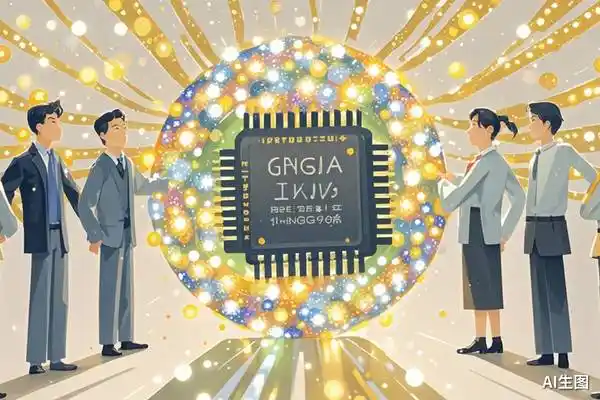
HashKey's first post-IPO financial report reveals a strategic ambition that extends far beyond its identity as a licensed Hong Kong crypto exchange. Rather than focusing solely on short-term trading metrics, the company is positioning itself as a next-generation digital financial infrastructure platform, structured around a “One Body, Two Wings” framework. The “One Body” refers to its core global compliant trading platform. The “Two Wings” represent its expansion into on-chain infrastructure—particularly for real-world asset (RWA) tokenization—and AI-driven operational capabilities. The report argues that HashKey’s licensed and compliant nature is not merely a regulatory advantage but a foundational requirement for capturing value in the emerging RWA tokenization era. This shift moves beyond crypto-native assets toward tokenizing traditional financial instruments like bonds, funds, and real estate—a transition that demands strong compliance, custody, settlement, and institutional-grade infrastructure. Meanwhile, HashKey is integrating AI not as an isolated feature but as a core systems-level capability to enhance operational efficiency, risk management, and compliance controls within a regulated framework. This includes exploring AI-agent-based payments and smart transaction systems. Ultimately, HashKey’s strategy reflects a broader vision to become a central player in the restructuring of financial infrastructure through asset tokenization, on-chain systems, and AI—a pos...

HashKey's first earnings report after going public has finally been released. From the market discussions, it seems that the most critical issues have not yet been thoroughly debated. Many current interpretations may still remain superficial: either overly concentrated on short-term data, or simply applying traditional exchange valuation frameworks, without truly touching upon the core proposition that HashKey, as a company, is more worthy of discussion.

And this proposition can precisely be approached from the 'one body, two wings' growth blueprint repeatedly emphasized by Xiao Feng during the press conference. What it reveals is not just which businesses HashKey is currently laying out, but more importantly, what kind of business form this company is attempting to grow into, and whether the market has fully understood the growth logic behind this structure.

I. Why the Market's Pricing Logic for HashKey Remains Relatively Lagging After Its IPO

HashKey's listing at the end of last year was a landmark event for the digital asset industry across Asia and even globally. Not only did the speed of its listing break records on the Hong Kong Stock Exchange, but the lineup of prestigious cornerstone investors behind it also greatly surprised outsiders. Through this listing, the market also realized that mainstream capital markets are beginning to formally include compliant digital asset platforms in their scope of observation.

Even so, the market's understanding of HashKey seems to remain stuck in a relatively old impression: sufficiently compliant, but with limited commercial imagination; sufficiently secure, but with a weak profit logic.

It is precisely for this reason that the starting point of much discussion is still viewing HashKey as a locally licensed exchange in Hong Kong and continuing to use the framework of traditional trading platforms to measure its value: looking at trading volume, user scale, short-term revenue performance, and direct comparisons with offshore platforms.

If we adhere to the analytical framework of traditional companies, this view certainly has its rationality. The problem is that what HashKey is trying to grow into today is no longer just a traditionally licensed trading platform.

From Xiao Feng's speech at the earnings conference, it can be seen more clearly that what HashKey is presenting is no longer just a business structure centered on a compliant trading platform, but rather a雏形 (prototype) of a digital financial platform that continuously extends into on-chain infrastructure, asset tokenization, stablecoin scenarios, AI capabilities, and regional networks. Furthermore, the entire earnings speech outlines what might be a new generation of digital financial infrastructure轮廓 (contour) that has not yet been fully recognized by the market.

The market is still using the pre-IPO Web3 exchange logic to understand a platform that, amidst the waves of AI and asset tokenization, is attempting to occupy a position in the new financial infrastructure.

II. The True Value of Compliance and Licensing: Why It Can Only Be Maximized Under the Wave of Asset Tokenization

Over the past two years, a very important external change has occurred in the industry: mainstream regulatory systems have begun to介入 (intervene) more deeply in the crypto industry. In this context, whether it is global leading platforms like Binance or exchanges that did not particularly prioritize compliance in the past, all are being forced to readjust their paths, increasingly倾向于 (inclining towards) obtaining licenses, establishing compliant entities, and distinguishing between onshore and offshore businesses to respond to the new regulatory reality.

However, if this change is only understood as stricter regulation, so everyone goes to get a license, it still underestimates the essence of the problem.

In the era of purely crypto-native trading, being licensed was more of a defensive move. It meant reduced policy risk and stronger survival certainty, but did not inherently mean stronger business expansion capability.

What truly causes a qualitative change in the value of a license may not be regulation itself, but the arrival of the asset tokenization wave.

The reason is not complicated. In past cycles, crypto-native assets once grew at an extremely fast pace and also created astonishing wealth effects. But looking at the results, only a minority ultimately managed to weather the cycles and precipitate into long-term value carriers. A large number of projects and assets were eventually淘汰 (eliminated) by the market after experiencing liquidity receding. More realistically, although the crypto-native asset world has极强的 (extremely strong) explosive power, the long-term supply stability, sustainability, and verifiability of its assets themselves have always had inherent limitations.

Asset tokenization corresponds to a completely different logic. What it anchors is no longer just on-chain native narratives and attention games, but asset categories that already exist in the real world and are supplied continuously over the long term: money market instruments, bonds, fund shares, real estate收益权 (income rights), accounts receivable, and even more traditional financial assets that can be standardized, rights-confirmed, and circulated in the future.

In other words, asset tokenization is not about creating a new asset world, but about reconnecting an already vast, mature, and stably existing asset world to the chain in a new technological form.

This determines that the requirements for platform capabilities are completely different for the two. In the era of purely crypto-native assets, platforms first need to solve交易效率 (trading efficiency),上币速度 (listing speed),流量获取 (traffic acquisition), and市场活跃度 (market activity). But in the asset tokenization era, platforms first need to solve a set of collaboration issues closer to traditional finance: compliance boundaries, asset确权 (rights confirmation), custody arrangements, investor suitability, issuance structure, trading rules, clearing and settlement, and continuous information disclosure.

It is precisely here that the value of licensing and compliance begins to be truly amplified. Because once the platform is to undertake not just the trading needs of native crypto users, but the more complex collaborative relationships between issuers, institutional investors, custodians, market makers, and the regulatory system, then licenses and compliance frameworks are no longer just necessary for strategic defense, but begin to become a prerequisite for the business to exist.

For this reason, returning to HashKey, it is not difficult to understand why Xiao Feng格外强调 (particularly emphasized) RWA (Real World Assets) and the entire set of on-chain infrastructure built around it at the earnings conference.

If the market truly enters a stage where asset tokenization accelerates落地 (implementation), then what will differentiate platforms may no longer be who is better at organizing trading activities, or who is better at capturing short-term traffic, but who is more capable of organizing asset onboarding, trading circulation, custody and settlement, compliance management, and institutional services into a complete business闭环 (closed loop).

From this perspective, the significance of RWA for HashKey is not just about telling a new story, but more like answering a question about the platform's long-term positioning: is it merely a licensed trading platform, or is it a digital financial infrastructure platform capable of meeting the core demands of the asset tokenization era?

And what Xiao Feng repeatedly emphasized at the earnings conference was precisely the latter. Whether it's the one-stop solution for the RWA direction, or keywords like stablecoins, on-chain clearing, and asset digital twins, they all actually point to the same core logic: HashKey is attempting to transform the compliance barriers built through long-term licensing into an organizational capability that can be operationalized, servitized, and scaled.

This is very critical. Because many platforms can also talk about RWA, asset onboarding, and stablecoins. But what really determines whether these can move from concept to business is not the ability to tell stories, but whether they can simultaneously possess the following conditions: strong institutional endorsement; mature compliance capabilities; a customer base; on-chain infrastructure; asset承接 (undertaking) and liquidity organization capabilities; and the ability to connect on-chain and off-chain collaboration processes.

If we look globally, there are actually not many such platforms. Coinbase can be seen as a relatively clear reference point; and in the Asian context, the reason HashKey is worth repeated discussion lies precisely in its attempt to form a similar combination of capabilities.

III. When AI Meets Compliance and Control: What Exactly is the Future Prospect?

If on-chain infrastructure and asset tokenization correspond more to the reorganization of financial elements in the next stage, then the significance of AI for HashKey is more like answering another question: as digital financial platforms enter an era that is more complex, higher frequency, and more intelligent, how should the platform's own organizational efficiency, risk control capabilities, and service形态 (forms) be redefined under the premise of compliance and controllability?

This is also why Xiao Feng placed AI in a very important position at the earnings conference. On the surface, AI has become a keyword discussed in almost every industry, and bandwagon narratives are not uncommon.

It is precisely for this reason that the market is naturally cautious about any company discussing AI, and this prudence is not without reason. But if we place HashKey's AI back into its overall strategic structure, its role may not be an additional capital story, but an important variable that could change the platform's capability boundaries.

The most critical point here is: the AI discussed by HashKey is not an open-ended AI脱离 (detached from)监管 (regulation) and risk control boundaries, but更像 (more like) a capability system that needs to be embedded within the licensed platform system and operate under the premise of compliance and controllability.

HashKey is not facing a single business scenario. If it is to simultaneously handle compliant trading, asset tokenization, stablecoin scenarios, on-chain clearing, regional network coordination, and institutional services in the future, the complexity of the platform will increase significantly. In this case, the value of AI is not just about improving efficiency a little, but may be更可能体现在 (more likely reflected in) three deeper dimensions.

First, the重构 (restructuring) of internal efficiency, but this efficiency must be built on controllability.

Under the premise of high compliance requirements, long business chains, and numerous collaboration links, the penetration of AI in R&D, risk control, security, and organizational processes ultimately affects not local efficiency, but whether the platform can remain controllable and scalable while complexity increases. In this sense, what HashKey needs is an AI system that can be deeply embedded in the licensed platform's processes while obeying (服从) the compliance and risk control framework.

Second, the amplification of risk control and compliance capabilities, and this may be the deepest value of AI for licensed platforms.

For a licensed platform like HashKey, the true significance of AI may not necessarily be replacing manual labor, but whether it can form a stronger systematic capability in monitoring, identification, early warning, and compliance management. In other words, if AI can be embedded within the compliance and risk control framework, what it brings is not simple cost reduction, but a reinforcement of the platform's foundational capabilities.

Third, the外扩 (outward expansion) of the service boundary, but the premise is still controllability.

As AI Agents, intelligent payments, automatic execution, and on-chain identity systems gradually mature, the digital asset platform of the future may face not just the question of how people trade assets, but how intelligent agents participate in value exchange, payment, and settlement.

In this sense, although HashKey's current discussion of directions like AI Agent payments may still be some distance from large-scale business realization, it at least indicates that the company is not treating AI as a peripheral tool, but is attempting to understand the new role of digital financial platforms in the AI era.

For licensed platforms like HashKey, the reason the AI variable is important is precisely because it is not growing freely脱离 (detached from) the regulatory system, but must evolve together with compliance, risk control, auditing, permissions, and responsibility boundaries. Perhaps even more of Xiao Feng's thinking lies in: as digital financial platforms become increasingly complex, what kind of AI can truly be incorporated into the financial system and release value?

IV. Understanding the Strategic Ambition of 'One Body, Two Wings': Why It Hides a Major Judgment on Future Financial Infrastructure

If we were to pick out the one sentence from this earnings conference most worthy of long-term tracking, it would most likely be the 'one body, two wings' repeatedly mentioned by Xiao Feng. It very clearly outlines the business structure this company is attempting to grow into.

The so-called 'one body' is the global compliant trading platform. The so-called 'two wings' are on-chain infrastructure and AI.

As analyzed earlier, the 'body' is actually HashKey's business reality, its foundation. The 'wings' solve the problems of business boundaries and capability boundaries. However, whether it is the wave of asset tokenization or the wave of the AI revolution, these trends and their corresponding business layouts are mentioned by various exchanges, but few are directly promoted as the core strategy. This suggests that this may not be just an ordinary business expansion framework, but a higher-level self-positioning.

What HashKey wants to do may not just be 'a larger exchange', but is attempting to answer a deeper question:

As the trends of trading moving onshore, asset digital twinning, finance moving on-chain, and services becoming intelligent occur simultaneously, what should the next generation platform actually look like?

If this question holds, then what the 'one body, two wings' truly corresponds to is not just a path design for revenue growth, but a platform雏形 (prototype) for the next generation of digital financial infrastructure. Furthermore, the most noteworthy aspect of this strategic ambition for the market is not how many new stories it tells, but its attempt to place several originally分散的 (dispersed) trend lines—compliant trading, asset tokenization, on-chain financial capabilities, AI-driven organizational upgrades—all within the same platform framework.

If this framework can be continuously advanced and gradually verified in the future, then HashKey's valuation logic should naturally not remain stuck in the comparative dimension of traditional trading platforms, but needs to be重新审视 (re-examined) within the higher-level logic of platform evolution.

From a more essential perspective, the most fundamental innovation of blockchain is not just singular assets like Bitcoin or Ethereum, but the underlying decentralized distributed ledger system. The collision of the asset tokenization wave with distributed ledgers does not result in a simple复制 (copying) and migration of assets to the blockchain, but a重组 (reorganization) of the ways assets are确权 (rights-confirmed), traded and circulated, cleared and settled, and value is transferred.

It is precisely for this reason that this change truly corresponds not just to the upgrade of a single trading platform, nor just to the expansion of a few new businesses, but to an upgrade of the financial market infrastructure centered around asset tokenization and the intelligent economy (智能经济体).

If we understand it along this logic, the significance of HashKey's attempt to advance the 'one body, two wings' is not just about building a few more business lines, but about attempting to occupy a key platform position in this round of financial infrastructure upgrade. And this, perhaps, is where the strategic ambition is most worthy of being重新估值 (revalued) by the market.

But from a longer-term valuation logic perspective, the real market misalignment often lies in using short-term bull/bear scales to measure the long-term growth space of a platform that is laying out around AI and on-chain capabilities, competing for a position in the new generation of financial infrastructure. Perhaps, this is the most noteworthy aspect of this debut earnings report.


Perguntas relacionadas

QWhat is the core strategic blueprint that HashKey's CEO, Xiao Feng, emphasized during the earnings call, and what does it signify for the company's future direction?

AXiao Feng emphasized the 'one body, two wings' strategic blueprint. The 'one body' refers to the global compliant trading platform, which is the core business, while the 'two wings' represent on-chain infrastructure and AI capabilities. This signifies that HashKey is not just a traditional licensed exchange but is evolving into a next-generation digital financial infrastructure platform that integrates compliance, asset tokenization, and AI-driven services.

QAccording to the article, why is the market's current valuation logic for HashKey considered lagging or outdated?

AThe market's valuation logic is considered outdated because it still views HashKey through the lens of a traditional Web3 exchange, focusing on short-term metrics like trading volume and user growth. However, HashKey is strategically positioning itself as a comprehensive digital financial infrastructure platform, leveraging asset tokenization (RWA), on-chain solutions, and AI, which requires a new framework beyond conventional exchange valuations.

QHow does the asset tokenization (RWA) trend fundamentally change the value of regulatory compliance and licensing for platforms like HashKey?

AIn the era of asset tokenization, compliance and licensing transition from being defensive measures to essential prerequisites for business operation. Tokenizing real-world assets (e.g., bonds, real estate) requires complex collaboration with issuers, institutional investors, and regulators, involving asset custody, legal frameworks, and continuous disclosure. HashKey's licensed status allows it to build a full business闭环 (closed-loop) for asset onboarding, trading, and settlement, turning regulatory壁垒 (barriers) into scalable organizational capabilities.

QWhat are the three key dimensions where AI is expected to add value to HashKey's licensed platform, as discussed in the article?

AAI is expected to add value in three key dimensions: 1) Internal efficiency重构 (restructuring) by embedding AI into compliant processes to maintain controllability and scalability; 2) Enhanced risk control and compliance capabilities, where AI strengthens monitoring, identification, and预警 (early warning) systems; 3) Expansion of service boundaries, such as enabling AI Agent payments and smart executions, while ensuring operations remain within regulatory and audit frameworks.

QWhat broader industry shift does HashKey's 'one body, two wings' strategy aim to capture, beyond mere business expansion?

AHashKey's strategy aims to capture the broader shift towards the upgrade of financial market infrastructure driven by asset tokenization and AI. It seeks to position itself as a key platform in the evolution of next-generation digital finance, where compliance, on-chain capabilities, and intelligence converge to redefine asset ownership, trading, settlement, and value transfer in a tokenized and AI-driven economy.

Leituras Relacionadas

iQiyi Is Too Impatient

The article "iQiyi Is Too Impatient" discusses the controversy surrounding the Chinese streaming platform IQiyi's recent announcement of an "AI Actor Library" during its 2026 World Conference. IQiyi claimed over 100 actors, including well-known names like Zhang Ruoyun and Yu Hewei, had joined the initiative. CEO Gong Yu suggested AI could enable actors to "star in 14 dramas a year instead of 4" and that "live-action filming might become a world cultural heritage." The announcement quickly sparked backlash. Multiple actors named in the list issued urgent statements denying they had signed any AI-related authorization agreements. This forced IQiyi to clarify that inclusion in the library only indicated a willingness to *consider* AI projects, with separate negotiations required for any specific role. The incident, which trended on social media with hashtags like "IQiyi is crazy," is presented as a sign of the company's growing desperation. Facing intense competition from short-video platforms like Douyin and Kuaishou, as well as Bilibili and Xiaohongshu, IQiyi's financial performance has weakened, with revenues declining for two consecutive years. The author argues that IQiyi is "too impatient" to tell a compelling AI story to reassure the market, especially as it pursues a listing on the Hong Kong stock exchange. The piece concludes by outlining three key "AI questions" IQiyi must answer: defining its role as a tool provider versus a content creator, balancing the "coldness" of AI with the human element audiences desire, and properly managing the interests of platforms, actors, and viewers. The core dilemma is that while AI can reduce costs and increase efficiency, it risks creating homogenized, formulaic content and devaluing human performers.

marsbitHá 51m

iQiyi Is Too Impatient

marsbitHá 51m

Trading

Spot
Futuros

Artigos em Destaque

O que é GROK AI

Grok AI: Revolucionar a Tecnologia Conversacional na Era Web3 Introdução No panorama em rápida evolução da inteligência artificial, a Grok AI destaca-se como um projeto notável que liga os domínios da tecnologia avançada e da interação com o utilizador. Desenvolvida pela xAI, uma empresa liderada pelo renomado empreendedor Elon Musk, a Grok AI procura redefinir a forma como interagimos com a inteligência artificial. À medida que o movimento Web3 continua a florescer, a Grok AI visa aproveitar o poder da IA conversacional para responder a consultas complexas, proporcionando aos utilizadores uma experiência que é não apenas informativa, mas também divertida. O que é a Grok AI? A Grok AI é um sofisticado chatbot de IA conversacional projetado para interagir com os utilizadores de forma dinâmica. Ao contrário de muitos sistemas de IA tradicionais, a Grok AI abraça uma gama mais ampla de perguntas, incluindo aquelas tipicamente consideradas inadequadas ou fora das respostas padrão. Os principais objetivos do projeto incluem: Raciocínio Fiável: A Grok AI enfatiza o raciocínio de senso comum para fornecer respostas lógicas com base na compreensão contextual. Supervisão Escalável: A integração de assistência de ferramentas garante que as interações dos utilizadores sejam monitorizadas e otimizadas para qualidade. Verificação Formal: A segurança é primordial; a Grok AI incorpora métodos de verificação formal para aumentar a fiabilidade das suas saídas. Compreensão de Longo Contexto: O modelo de IA destaca-se na retenção e recordação de um extenso histórico de conversas, facilitando discussões significativas e contextualizadas. Robustez Adversarial: Ao focar na melhoria das suas defesas contra entradas manipuladas ou maliciosas, a Grok AI visa manter a integridade das interações dos utilizadores. Em essência, a Grok AI não é apenas um dispositivo de recuperação de informações; é um parceiro conversacional imersivo que incentiva um diálogo dinâmico. Criador da Grok AI A mente por trás da Grok AI não é outra senão Elon Musk, um indivíduo sinónimo de inovação em vários campos, incluindo automóvel, viagens espaciais e tecnologia. Sob a égide da xAI, uma empresa focada em avançar a tecnologia de IA de maneiras benéficas, a visão de Musk visa reformular a compreensão das interações com a IA. A liderança e a ética fundacional são profundamente influenciadas pelo compromisso de Musk em ultrapassar os limites tecnológicos. Investidores da Grok AI Embora os detalhes específicos sobre os investidores que apoiam a Grok AI permaneçam limitados, é reconhecido publicamente que a xAI, a incubadora do projeto, é fundada e apoiada principalmente pelo próprio Elon Musk. As anteriores empreitadas e participações de Musk fornecem um forte apoio, reforçando ainda mais a credibilidade e o potencial de crescimento da Grok AI. No entanto, até agora, informações sobre fundações ou organizações de investimento adicionais que apoiam a Grok AI não estão prontamente acessíveis, marcando uma área para exploração futura potencial. Como Funciona a Grok AI? A mecânica operacional da Grok AI é tão inovadora quanto a sua estrutura conceptual. O projeto integra várias tecnologias de ponta que facilitam as suas funcionalidades únicas: Infraestrutura Robusta: A Grok AI é construída utilizando Kubernetes para orquestração de contêineres, Rust para desempenho e segurança, e JAX para computação numérica de alto desempenho. Este trio assegura que o chatbot opere de forma eficiente, escale eficazmente e sirva os utilizadores prontamente. Acesso a Conhecimento em Tempo Real: Uma das características distintivas da Grok AI é a sua capacidade de aceder a dados em tempo real através da plataforma X—anteriormente conhecida como Twitter. Esta capacidade concede à IA acesso às informações mais recentes, permitindo-lhe fornecer respostas e recomendações oportunas que outros modelos de IA poderiam perder. Dois Modos de Interação: A Grok AI oferece aos utilizadores a escolha entre “Modo Divertido” e “Modo Regular”. O Modo Divertido permite um estilo de interação mais lúdico e humorístico, enquanto o Modo Regular foca em fornecer respostas precisas e exatas. Esta versatilidade assegura uma experiência adaptada que atende a várias preferências dos utilizadores. Em essência, a Grok AI combina desempenho com envolvimento, criando uma experiência que é tanto enriquecedora quanto divertida. Cronologia da Grok AI A jornada da Grok AI é marcada por marcos fundamentais que refletem as suas fases de desenvolvimento e implementação: Desenvolvimento Inicial: A fase fundamental da Grok AI ocorreu ao longo de aproximadamente dois meses, durante os quais o treinamento inicial e o ajuste do modelo foram realizados. Lançamento Beta do Grok-2: Numa evolução significativa, o beta do Grok-2 foi anunciado. Este lançamento introduziu duas versões do chatbot—Grok-2 e Grok-2 mini—cada uma equipada com capacidades para conversar, programar e raciocinar. Acesso Público: Após o seu desenvolvimento beta, a Grok AI tornou-se disponível para os utilizadores da plataforma X. Aqueles com contas verificadas por um número de telefone e ativas há pelo menos sete dias podem aceder a uma versão limitada, tornando a tecnologia disponível para um público mais amplo. Esta cronologia encapsula o crescimento sistemático da Grok AI desde a sua concepção até ao envolvimento público, enfatizando o seu compromisso com a melhoria contínua e a interação com o utilizador. Principais Características da Grok AI A Grok AI abrange várias características principais que contribuem para a sua identidade inovadora: Integração de Conhecimento em Tempo Real: O acesso a informações atuais e relevantes diferencia a Grok AI de muitos modelos estáticos, permitindo uma experiência de utilizador envolvente e precisa. Estilos de Interação Versáteis: Ao oferecer modos de interação distintos, a Grok AI atende a várias preferências dos utilizadores, convidando à criatividade e personalização na conversa com a IA. Base Tecnológica Avançada: A utilização de Kubernetes, Rust e JAX fornece ao projeto uma estrutura sólida para garantir fiabilidade e desempenho ótimo. Consideração de Discurso Ético: A inclusão de uma função de geração de imagens demonstra o espírito inovador do projeto. No entanto, também levanta considerações éticas em torno dos direitos autorais e da representação respeitosa de figuras reconhecíveis—uma discussão em curso dentro da comunidade de IA. Conclusão Como uma entidade pioneira no domínio da IA conversacional, a Grok AI encapsula o potencial para experiências transformadoras do utilizador na era digital. Desenvolvida pela xAI e impulsionada pela abordagem visionária de Elon Musk, a Grok AI integra conhecimento em tempo real com capacidades avançadas de interação. Esforça-se por ultrapassar os limites do que a inteligência artificial pode alcançar, mantendo um foco nas considerações éticas e na segurança do utilizador. A Grok AI não apenas incorpora o avanço tecnológico, mas também representa um novo paradigma de conversas no panorama Web3, prometendo envolver os utilizadores com conhecimento hábil e interação lúdica. À medida que o projeto continua a evoluir, ele permanece como um testemunho do que a interseção da tecnologia, criatividade e interação humana pode alcançar.

348 Visualizações TotaisPublicado em {updateTime}Atualizado em 2024.12.26

O que é GROK AI

O que é ERC AI

Euruka Tech: Uma Visão Geral do $erc ai e as suas Ambições no Web3 Introdução No panorama em rápida evolução da tecnologia blockchain e das aplicações descentralizadas, novos projetos surgem frequentemente, cada um com objetivos e metodologias únicas. Um desses projetos é a Euruka Tech, que opera no vasto domínio das criptomoedas e do Web3. O foco principal da Euruka Tech, particularmente do seu token $erc ai, é apresentar soluções inovadoras concebidas para aproveitar as capacidades crescentes da tecnologia descentralizada. Este artigo tem como objetivo fornecer uma visão abrangente da Euruka Tech, uma exploração das suas metas, funcionalidade, a identidade do seu criador, potenciais investidores e a sua importância no contexto mais amplo do Web3. O que é a Euruka Tech, $erc ai? A Euruka Tech é caracterizada como um projeto que aproveita as ferramentas e funcionalidades oferecidas pelo ambiente Web3, focando na integração da inteligência artificial nas suas operações. Embora os detalhes específicos sobre a estrutura do projeto sejam um tanto elusivos, ele é concebido para melhorar o envolvimento dos utilizadores e automatizar processos no espaço cripto. O projeto visa criar um ecossistema descentralizado que não só facilita transações, mas também incorpora funcionalidades preditivas através da inteligência artificial, daí a designação do seu token, $erc ai. O objetivo é fornecer uma plataforma intuitiva que facilite interações mais inteligentes e um processamento eficiente de transações dentro da crescente esfera do Web3. Quem é o Criador da Euruka Tech, $erc ai? Neste momento, a informação sobre o criador ou a equipa fundadora da Euruka Tech permanece não especificada e algo opaca. Esta ausência de dados levanta preocupações, uma vez que o conhecimento sobre o histórico da equipa é frequentemente essencial para estabelecer credibilidade no setor blockchain. Portanto, categorizamos esta informação como desconhecida até que detalhes concretos sejam disponibilizados no domínio público. Quem são os Investidores da Euruka Tech, $erc ai? De forma semelhante, a identificação de investidores ou organizações de apoio para o projeto Euruka Tech não é prontamente fornecida através da pesquisa disponível. Um aspeto que é crucial para potenciais partes interessadas ou utilizadores que consideram envolver-se com a Euruka Tech é a garantia que vem de parcerias financeiras estabelecidas ou apoio de empresas de investimento respeitáveis. Sem divulgações sobre afiliações de investimento, é difícil tirar conclusões abrangentes sobre a segurança financeira ou a longevidade do projeto. Em linha com a informação encontrada, esta seção também se encontra no estado de desconhecido. Como funciona a Euruka Tech, $erc ai? Apesar da falta de especificações técnicas detalhadas para a Euruka Tech, é essencial considerar as suas ambições inovadoras. O projeto procura aproveitar o poder computacional da inteligência artificial para automatizar e melhorar a experiência do utilizador no ambiente das criptomoedas. Ao integrar IA com tecnologia blockchain, a Euruka Tech visa fornecer funcionalidades como negociações automatizadas, avaliações de risco e interfaces de utilizador personalizadas. A essência inovadora da Euruka Tech reside no seu objetivo de criar uma conexão fluida entre os utilizadores e as vastas possibilidades apresentadas pelas redes descentralizadas. Através da utilização de algoritmos de aprendizagem automática e IA, visa minimizar os desafios enfrentados por utilizadores de primeira viagem e agilizar as experiências transacionais dentro do quadro do Web3. Esta simbiose entre IA e blockchain sublinha a importância do token $erc ai, que se apresenta como uma ponte entre interfaces de utilizador tradicionais e as capacidades avançadas das tecnologias descentralizadas. Cronologia da Euruka Tech, $erc ai Infelizmente, devido à informação limitada disponível sobre a Euruka Tech, não conseguimos apresentar uma cronologia detalhada dos principais desenvolvimentos ou marcos na jornada do projeto. Esta cronologia, tipicamente inestimável para traçar a evolução de um projeto e compreender a sua trajetória de crescimento, não está atualmente disponível. À medida que informações sobre eventos notáveis, parcerias ou adições funcionais se tornem evidentes, atualizações certamente aumentarão a visibilidade da Euruka Tech na esfera cripto. Esclarecimento sobre Outros Projetos “Eureka” É importante abordar que múltiplos projetos e empresas partilham uma nomenclatura semelhante com “Eureka.” A pesquisa identificou iniciativas como um agente de IA da NVIDIA Research, que se concentra em ensinar robôs a realizar tarefas complexas utilizando métodos generativos, bem como a Eureka Labs e a Eureka AI, que melhoram a experiência do utilizador na educação e na análise de serviços ao cliente, respetivamente. No entanto, estes projetos são distintos da Euruka Tech e não devem ser confundidos com os seus objetivos ou funcionalidades. Conclusão A Euruka Tech, juntamente com o seu token $erc ai, representa um jogador promissor, mas atualmente obscuro, dentro do panorama do Web3. Embora os detalhes sobre o seu criador e investidores permaneçam não divulgados, a ambição central de combinar inteligência artificial com tecnologia blockchain destaca-se como um ponto focal de interesse. As abordagens únicas do projeto em promover o envolvimento do utilizador através da automação avançada podem diferenciá-lo à medida que o ecossistema Web3 avança. À medida que o mercado cripto continua a evoluir, as partes interessadas devem manter um olhar atento sobre os avanços em torno da Euruka Tech, uma vez que o desenvolvimento de inovações documentadas, parcerias ou um roteiro definido pode apresentar oportunidades significativas no futuro próximo. Neste momento, aguardamos por insights mais substanciais que possam desvendar o potencial da Euruka Tech e a sua posição no competitivo panorama cripto.

396 Visualizações TotaisPublicado em {updateTime}Atualizado em 2025.01.02

O que é ERC AI

O que é DUOLINGO AI

DUOLINGO AI: Integrar a Aprendizagem de Línguas com Inovação Web3 e IA Numa era em que a tecnologia transforma a educação, a integração da inteligência artificial (IA) e das redes blockchain anuncia uma nova fronteira para a aprendizagem de línguas. Apresentamos DUOLINGO AI e a sua criptomoeda associada, $DUOLINGO AI. Este projeto aspira a unir o poder educativo das principais plataformas de aprendizagem de línguas com os benefícios da tecnologia descentralizada Web3. Este artigo explora os principais aspectos do DUOLINGO AI, analisando os seus objetivos, estrutura tecnológica, desenvolvimento histórico e potencial futuro, mantendo a clareza entre o recurso educativo original e esta iniciativa independente de criptomoeda. Visão Geral do DUOLINGO AI No seu cerne, DUOLINGO AI procura estabelecer um ambiente descentralizado onde os alunos podem ganhar recompensas criptográficas por alcançar marcos educativos em proficiência linguística. Ao aplicar contratos inteligentes, o projeto visa automatizar processos de verificação de habilidades e alocação de tokens, aderindo aos princípios do Web3 que enfatizam a transparência e a propriedade do utilizador. O modelo diverge das abordagens tradicionais de aquisição de línguas ao apoiar-se fortemente numa estrutura de governança orientada pela comunidade, permitindo que os detentores de tokens sugiram melhorias ao conteúdo dos cursos e à distribuição de recompensas. Alguns dos objetivos notáveis do DUOLINGO AI incluem: Aprendizagem Gamificada: O projeto integra conquistas em blockchain e tokens não fungíveis (NFTs) para representar níveis de proficiência linguística, promovendo a motivação através de recompensas digitais envolventes. Criação de Conteúdo Descentralizada: Abre caminhos para educadores e entusiastas de línguas contribuírem com os seus cursos, facilitando um modelo de partilha de receitas que beneficia todos os colaboradores. Personalização Através de IA: Ao empregar modelos avançados de aprendizagem de máquina, o DUOLINGO AI personaliza as lições para se adaptar ao progresso de aprendizagem individual, semelhante às características adaptativas encontradas em plataformas estabelecidas. Criadores do Projeto e Governança A partir de abril de 2025, a equipa por trás do $DUOLINGO AI permanece pseudónima, uma prática frequente no panorama descentralizado das criptomoedas. Esta anonimidade visa promover o crescimento coletivo e o envolvimento das partes interessadas, em vez de se concentrar em desenvolvedores individuais. O contrato inteligente implementado na blockchain Solana indica o endereço da carteira do desenvolvedor, o que significa o compromisso com a transparência em relação às transações, apesar da identidade dos criadores ser desconhecida. De acordo com o seu roteiro, o DUOLINGO AI pretende evoluir para uma Organização Autónoma Descentralizada (DAO). Esta estrutura de governança permite que os detentores de tokens votem em questões críticas, como implementações de funcionalidades e alocação de tesouraria. Este modelo alinha-se com a ética de empoderamento comunitário encontrada em várias aplicações descentralizadas, enfatizando a importância da tomada de decisão coletiva. Investidores e Parcerias Estratégicas Atualmente, não existem investidores institucionais ou capitalistas de risco publicamente identificáveis ligados ao $DUOLINGO AI. Em vez disso, a liquidez do projeto origina-se principalmente de trocas descentralizadas (DEXs), marcando um contraste acentuado com as estratégias de financiamento das empresas tradicionais de tecnologia educacional. Este modelo de base indica uma abordagem orientada pela comunidade, refletindo o compromisso do projeto com a descentralização. No seu whitepaper, o DUOLINGO AI menciona a formação de colaborações com “plataformas de educação blockchain” não especificadas, com o objetivo de enriquecer a sua oferta de cursos. Embora parcerias específicas ainda não tenham sido divulgadas, estes esforços colaborativos sugerem uma estratégia para misturar inovação em blockchain com iniciativas educativas, expandindo o acesso e o envolvimento dos utilizadores em diversas vias de aprendizagem. Arquitetura Tecnológica Integração de IA O DUOLINGO AI incorpora dois componentes principais impulsionados por IA para melhorar as suas ofertas educativas: Motor de Aprendizagem Adaptativa: Este motor sofisticado aprende a partir das interações dos utilizadores, semelhante a modelos proprietários de grandes plataformas educativas. Ele ajusta dinamicamente a dificuldade das lições para abordar desafios específicos dos alunos, reforçando áreas fracas através de exercícios direcionados. Agentes Conversacionais: Ao empregar chatbots alimentados por GPT-4, o DUOLINGO AI oferece uma plataforma para os utilizadores se envolverem em conversas simuladas, promovendo uma experiência de aprendizagem de línguas mais interativa e prática. Infraestrutura Blockchain Construído na blockchain Solana, o $DUOLINGO AI utiliza uma estrutura tecnológica abrangente que inclui: Contratos Inteligentes de Verificação de Habilidades: Esta funcionalidade atribui automaticamente tokens aos utilizadores que passam com sucesso em testes de proficiência, reforçando a estrutura de incentivos para resultados de aprendizagem genuínos. Emblemas NFT: Estes tokens digitais significam vários marcos que os alunos alcançam, como completar uma seção do seu curso ou dominar habilidades específicas, permitindo-lhes negociar ou exibir as suas conquistas digitalmente. Governança DAO: Membros da comunidade com tokens podem participar na governança votando em propostas-chave, facilitando uma cultura participativa que incentiva a inovação nas ofertas de cursos e funcionalidades da plataforma. Cronologia Histórica 2022–2023: Conceituação O trabalho preliminar para o DUOLINGO AI começa com a criação de um whitepaper, destacando a sinergia entre os avanços em IA na aprendizagem de línguas e o potencial descentralizado da tecnologia blockchain. 2024: Lançamento Beta Um lançamento beta limitado introduz ofertas em línguas populares, recompensando os primeiros utilizadores com incentivos em tokens como parte da estratégia de envolvimento comunitário do projeto. 2025: Transição para DAO Em abril, ocorre um lançamento completo da mainnet com a circulação de tokens, promovendo discussões comunitárias sobre possíveis expansões para línguas asiáticas e outros desenvolvimentos de cursos. Desafios e Direções Futuras Obstáculos Técnicos Apesar dos seus objetivos ambiciosos, o DUOLINGO AI enfrenta desafios significativos. A escalabilidade continua a ser uma preocupação constante, particularmente no equilíbrio dos custos associados ao processamento de IA e à manutenção de uma rede descentralizada responsiva. Além disso, garantir a criação e moderação de conteúdo de qualidade num ambiente descentralizado apresenta complexidades na manutenção dos padrões educativos. Oportunidades Estratégicas Olhando para o futuro, o DUOLINGO AI tem o potencial de aproveitar parcerias de micro-certificação com instituições académicas, proporcionando validações verificadas em blockchain das habilidades linguísticas. Além disso, a expansão cross-chain poderia permitir que o projeto acedesse a bases de utilizadores mais amplas e a ecossistemas de blockchain adicionais, melhorando a sua interoperabilidade e alcance. Conclusão DUOLINGO AI representa uma fusão inovadora de inteligência artificial e tecnologia blockchain, apresentando uma alternativa focada na comunidade aos sistemas tradicionais de aprendizagem de línguas. Embora o seu desenvolvimento pseudónimo e o modelo económico emergente tragam certos riscos, o compromisso do projeto com a aprendizagem gamificada, educação personalizada e governança descentralizada ilumina um caminho a seguir para a tecnologia educativa no domínio do Web3. À medida que a IA continua a avançar e o ecossistema blockchain evolui, iniciativas como o DUOLINGO AI poderão redefinir a forma como os utilizadores interagem com a educação linguística, empoderando comunidades e recompensando o envolvimento através de mecanismos de aprendizagem inovadores.

380 Visualizações TotaisPublicado em {updateTime}Atualizado em 2025.04.11

O que é DUOLINGO AI

Discussões

Bem-vindo à Comunidade HTX. Aqui, pode manter-se informado sobre os mais recentes desenvolvimentos da plataforma e obter acesso a análises profissionais de mercado. As opiniões dos utilizadores sobre o preço de AI (AI) são apresentadas abaixo.

活动图片