Has Hook Summer Really Arrived? sato, Lo0p, FLOOD Ignite the New Narrative of Uniswap v4

marsbitPublicado em 2026-05-11Última atualização em 2026-05-11

Resumo

"Hook Summer" Arrives? Sato, Lo0p, FLOOD Ignite Uniswap v4 Narrative Amidst a slight market recovery, attention within the Ethereum ecosystem has shifted to Meme coins built on Uniswap v4's Hook protocol. Following ASTEROID, tokens like sato, sat1, Lo0p, and FLOOD have become market focal points, with market caps ranging from millions to tens of millions, bringing concentrated liquidity to a narrative-dry market. Uniswap v4 Hooks are "plugin smart contracts" that allow developers to inject custom logic at key points in a liquidity pool's lifecycle (initialization, adding/removing liquidity, swaps, etc.), making the AMM programmable. Recent representative projects include: * **sato**: Market cap peaked over $38M; uses a v4 curve mechanism for minting/burning, locking ETH as reserve. * **sat1**: Market cap briefly exceeded $10M, positioning as an "optimized sato," but later declined significantly. * **Lo0p**: Market cap neared $6.6M; a "lending AMM protocol" allowing users to borrow ETH against deposited LO0P tokens without immediate selling pressure. * **FLOOD**: Market cap approached $6M; channels trading reserves into Aave v3 to generate yield, which is retained in the pool. The emergence of these Hook-based tokens could drive long-term growth for the Uniswap ecosystem by attracting users and liquidity to v4 pools. Combined with Uniswap's activated fee switch (partially used to burn UNI), the long-term outlook for UNI appears positive. However, short-term UNI pr...

Original | Odaily Planet Daily (@OdailyChina)

Author | Wenser(@wenser 2010 )

After a slight recovery in the broader market, the heat for Meme coins in the Ethereum ecosystem has rekindled. Following ASTEROID, ecological tokens backed by the Uniswap v4 Hook protocol, such as sato, sat1, Lo0p, and FLOOD, have gradually become the focus of market attention, with market capitalizations ranging from millions to tens of millions of dollars, bringing rare concentrated liquidity to the narrative-dry crypto market. Odaily Planet Daily will briefly summarize the information about these tokens in this article and explore whether this boom can drive a recovery in the price of UNI.

Has Hook Summer Arrived? 4 Major Ecological Tokens, Intelligent Liquidity Management

According to Uniswap official documentation, Hook is a "plugin smart contract" tailored for liquidity pools in Uniswap v4. Unlike traditional Uniswap V2/V3 which only has a fixed constant product curve (x*y=k), it allows developers to automatically inject custom logic before and after key lifecycle nodes of the pool (initialization, adding/removing liquidity, Swap, Donate, etc.), thereby turning the entire AMM (Automated Market Maker) into programmable "Lego bricks". Aside from the previous uPEG, recent representative related projects are as follows:

sato: Market Cap Peak Exceeded $38 Million

CA:0x829f4b62eebe12af653b4dd4ffc480966f7d7f09

Current Market Cap: ~$28 Million

On May 4th, when sato first emerged, Odaily Planet Daily provided a brief introduction. At that time, its market cap was only $9 million. This token is minted and burned through the Uniswap v4 curve mechanism. Buying generates new tokens and locks ETH as reserves, while selling exchanges ETH from the reserves and burns tokens. By then, its cumulative buy volume had approached 1000 ETH. Subsequently, sato's market cap once exceeded $30 million.

Although community users later discovered its curve mechanism had a buy-sell spread, causing its market cap to once fall below $13 million, its innovative mechanism and first-mover advantage keep its current market cap around $28 million, with a 24-hour trading volume close to $6 million.

sat1: Market Cap Peak Exceeded $10 Million

CA:0x8f66337a0c2a02202fd91dd596c411cf977c6060

Current Market Cap: ~$800,000

On May 8th, sat1, under the concept of "optimized sato", reached its speculative peak. Thanks to vigorous promotion by crypto KOL Han Ba Long Wang in WeChat groups, the token's market cap once surpassed $10 million. However, with subsequent backlash, the project eventually spiraled down, losing over 90% of its value.

Lo0p: Market Cap Peak Approached $6.6 Million

CA:0x20ea861b3acec90d3a15b4755d9a1cf1f161496e

Current Market Cap: ~$960,000

Official Account: https://x.com/lo0pio

On May 10th, Lo0p's market cap once exceeded $6 million, with a daily increase of over 110x. Similarly, Lo0p's main concept is "a lending AMM protocol based on Uniswap v4 Hook," aiming to solve the idle ETH capital efficiency problem in LP pools. Users buy LO0P tokens by binding the curve, locking them as collateral (without selling), and can directly borrow ETH from the pool reserves at a 40% LTV. Borrowing does not directly impact the spot price; after liquidation, the mechanism attempts to refill the LP band. The Hook injects custom logic during the Swap/liquidity lifecycle, achieving "collateral lending + LP收益 + loan interest" compound returns while maintaining pool price stability. Its core mechanism lies in "built-in lending."

FLOOD: Market Cap Peak Near $6 Million

CA:0xff003fbe8b8d5e7f271a9cb9f2780003daed2aa8

Current Market Cap: ~$1.4 Million

Official Account: https://x.com/flood_markets

On May 10th, FLOOD's market cap once broke $5 million. As the speculative heat cooled down, the current market cap is around $1.4 million. It is reported that FLOOD has a total supply of 50 million tokens. Its special mechanism is: asset reserves generated from user purchases enter the corresponding Aave v3 market to earn yield; transaction fees are also retained in the pool, used to increase reserves and affect the token price. The core lies in Aave integration for automatic yield, with the Hook mechanism playing the role of "automatic rebalancing and yield recycling". No wonder some community users bluntly stated: "Buying funds enter the pool → pool assets generate interest on Aave → interest stays in the pool → long-term price push, so this is using my money to deposit and earn interest?"

Hook Mechanism Tokens Drive Uniswap Ecosystem Development: UNI Bullish Long-Term, But Limited Short-Term Gains

Thanks to the rapid development of the Uniswap v4 Hook mechanism, ecological tokens in this sector have now become a type of Meme coin and project ecological token. In the long run, they can further attract users and capital liquidity to participate in Uniswap v4 liquidity pool trading and development.

Combined with the previous news that "Uniswap has opened the fee switch, with part of the protocol fees used to burn UNI tokens," the long-term fundamentals of UNI show a steady and positive trend.

However, in the short term, the emergence of Hook mechanism tokens cannot directly drive the price increase of the UNI token. Intermediate factors include the token lifecycle and sustainability, token price volatility and transaction fee proportions, and the impact of crypto regulatory policies and overall market trends on the UNI token.

Therefore, in summary, the Hook ecosystem is "long-term nourishment" for UNI, but in the short term, it's more like a "catalyst" than a "booster."

Also according to the Uniswap official website page, the current v4 TVL is temporarily reported at $595 million, slightly lower than v3 ($792 million) and v2 ($966 million) liquidity pools. Therefore, v4 and the Hook ecosystem still need time to accumulate strength and gradually grow into mainstream liquidity management protocols in the market.

Finally, Odaily Planet Daily reminds readers that the above tokens are early-stage technological innovation experimental products and may contain unknown bugs or other risks. Please be aware of the relevant risks when participating in trading. The above information does not constitute investment advice.


Perguntas relacionadas

QWhat is a Hook in Uniswap v4 according to the article?

AA Hook in Uniswap v4 is a plugin-style smart contract designed for liquidity pools. Unlike the fixed constant product curve in traditional Uniswap V2/V3, Hooks allow developers to inject custom logic automatically at key lifecycle points of a pool, such as initialization, adding/removing liquidity, swaps, and donations, making the AMM programmable like Lego blocks.

QWhat was the core mechanism of the Lo0p token mentioned in the article?

AThe Lo0p token's core mechanism was 'built-in lending.' It functioned as a lending AMM protocol based on Uniswap v4 Hooks, aiming to solve the idle ETH capital efficiency problem in LP pools. Users could buy LO0P tokens, lock them as collateral, and borrow ETH directly from the pool reserves at a 40% LTV. This process did not directly impact the spot price, and after liquidation, the mechanism would attempt to refill the LP band.

QHow does the FLOOD token's mechanism integrate with Aave v3, and what was a community member's humorous critique of it?

AFLOOD's mechanism involved channeling the asset reserves generated from user purchases into the corresponding Aave v3 market to earn yield. Trading fees were also retained within the pool to increase reserves and influence the token price. A community member humorously critiqued it by saying, 'Buying funds enter the pool -> pool assets go to Aave to earn interest -> interest stays in the pool -> pushes the price up in the long run. So this is using my money to deposit and earn interest?'

QWhat is the article's view on the impact of Hook-based tokens on the UNI token's price in the short and long term?

AThe article views Hook-based tokens as 'long-term nutrients' for UNI, potentially attracting users and liquidity to the Uniswap v4 ecosystem, which is positive for its long-term fundamentals. However, in the short term, they are seen more as a 'catalyst' rather than a 'booster' for UNI's price, as immediate price movement is influenced by other factors like token lifecycle, fee proportions, crypto regulations, and overall market trends.

QWhat warning does Odaily Planet Daily give to readers regarding the tokens discussed in the article?

AOdaily Planet Daily warns readers that the discussed tokens are early-stage technological innovation experiments that may contain unknown bugs or other risks. It advises participants to be aware of the associated risks when trading and clarifies that the information provided does not constitute investment advice.

Leituras Relacionadas

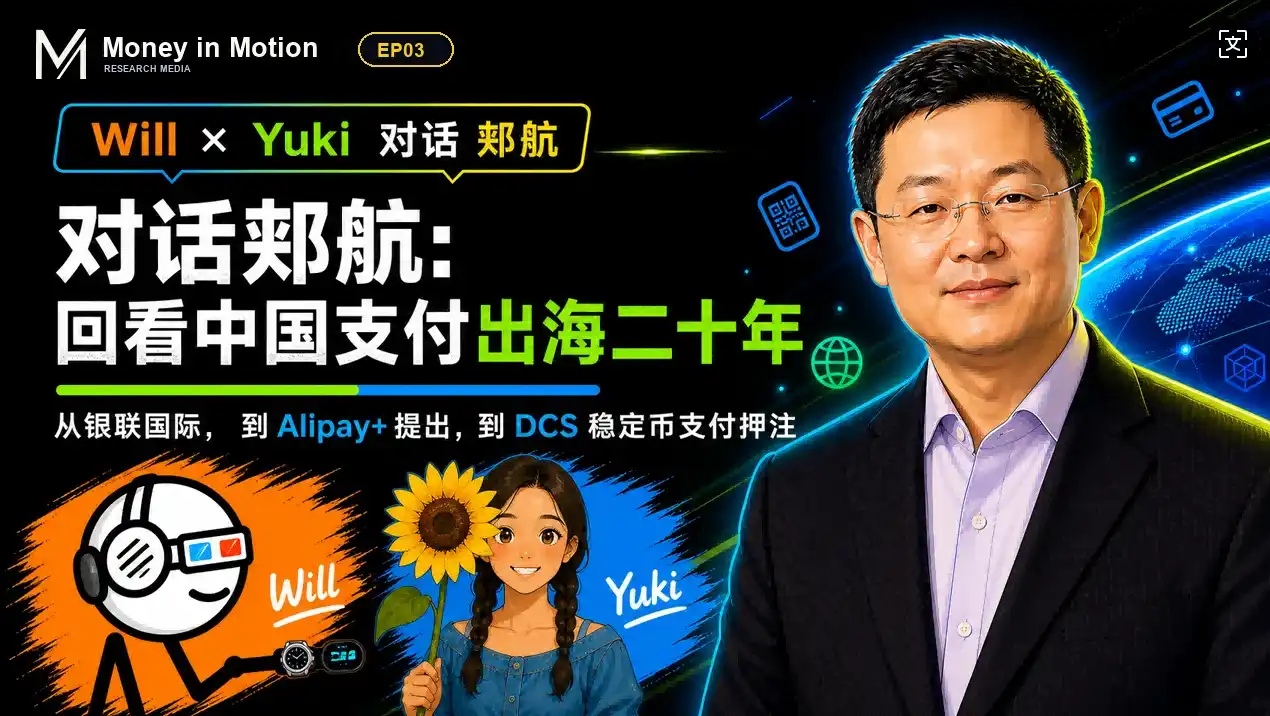
Dialogue with Jia Hang | Looking Back at Two Decades of Chinese Payment Going Global

**Summary: A Conversation with Jia Hang on Two Decades of China's Payment Globalization** Jia Hang, a veteran with over twenty years in payments, reflects on China's attempts to build a global payment network through three key phases: UnionPay (card networks), Alipay+ (digital wallets), and now, stablecoins. His journey began at UnionPay International, aiming to establish China's card network abroad. While successful in following Chinese tourists ("where Chinese go, UnionPay goes"), it struggled to achieve true global scale. The core lesson: card networks like Visa/Mastercard's unassailable advantage isn't just technical standards, but their deeply entrenched **governance and profit-sharing models** that create powerful network effects. Competing as the "same species" is nearly impossible. At Ant Group, he led Alipay+, a strategy to bypass card networks by interconnecting local e-wallets worldwide. While innovative, it faced a similar ceiling. Mobile QR payments and card swipes were essentially **the same species competing for the same pie**, lacking a disruptive value proposition for users or a sustainable new incentive model to replace the card networks' established flywheel. Today, at Singapore's DCS, Jia focuses on stablecoin-based payments. He argues stablecoins represent a fundamental shift. They are not competing with Visa for consumer payments but challenging the **traditional banking and account system for value movement**. Products like "U Cards" (stablecoin-linked payment cards) are transitional, leveraging existing card networks for acceptance while building new rails. The real potential lies in stablecoins enabling seamless, low-cost global value transfer, potentially reorganizing the financial infrastructure around **accounts rather than cards**. Jia believes stablecoin adoption for local retail payments, cross-border transactions, and as high-yield savings vehicles is becoming irreversible. This could gradually reduce reliance on traditional fiat channels, especially in regions with weak currencies or capital controls. The quest for the "next global payment network" continues, now centered on whether stablecoins can successfully bridge Web2 and Web3, establish new governance, and create compelling user value beyond mere cost reduction.

marsbitHá 24m

Dialogue with Jia Hang | Looking Back at Two Decades of Chinese Payment Going Global

marsbitHá 24m

Circle's Stock Price Plunges 76%, Hong Kong Dollar Stablecoin Set to Launch Within Two Weeks

Circle's stock price has plunged approximately 76% from its 2023 peak, reflecting a major market revaluation. Despite this, Circle President Heath Tarbert emphasized the company's focus on long-term execution and its dominant position with USDC's $73 billion circulation across 34 blockchains. The competitive landscape is intensifying. A new consortium-backed stablecoin, Open USD, is attempting to challenge incumbents by sharing reserve yields with partners. More significantly, Visa's new stablecoin platform, initially supporting Open USD while also being compatible with USDC, could erode Circle's network effects. In response, Circle is expanding into real-world payments through partnerships like the one with Japan's JCB. Separately, Tether (USDT) faces a two-year compliance window under new U.S. regulations, requiring it to adjust its reserve composition away from assets like Bitcoin and loans towards cash and U.S. Treasuries. Meanwhile, in Hong Kong, Standard Chartered-backed fintech firm Dian Dian is poised to launch a licensed HKD-pegged stablecoin (HKDAP), moving the industry into a phase where the real test is integrating licensed stablecoins into actual payment flows and corporate treasury systems. The sharp decline in Circle's stock underscores a broader shift: the stablecoin market is moving from a winner-takes-all dynamic to a multi-player competitive arena where execution, compliance, and real-world utility are becoming paramount.

marsbitHá 24m

Circle's Stock Price Plunges 76%, Hong Kong Dollar Stablecoin Set to Launch Within Two Weeks

marsbitHá 24m

Amidst Capital's Encirclement, Decentralization is the Sole Defense for Public Blockchains

In a landscape dominated by power and profit motives, the author argues that decentralization is not merely one desirable feature among many in blockchain design—it is the singular, non-negotiable defense against corporate and capital capture. The article adopts a Machiavellian, realist perspective on human institutions, positing that businesses will inevitably attempt to co-opt any valuable network to protect their profits and dominance. While external attacks like 51% forks are often discussed, the greater existential risk is internal capture—the gradual erosion of a protocol’s neutrality by vested interests, as seen historically with platforms like Visa and Google. The piece critiques permissioned chains, highly centralized “permissionless” layer-1s, and layer-2s without sufficient decentralization (e.g., single sequencers) as inherently vulnerable. These compromised systems, promoted by established financial players, are framed as delaying tactics to stifle truly open networks that threaten existing high-fee, inefficient business models. Real-world examples, such as closed enterprise consortiums that exclude competitors, illustrate how such systems cement oligopolies rather than foster innovation. The author concludes that while decentralized protocols like Ethereum are imperfect and costly to operate, they represent the only viable long-term equilibrium. In a market where value naturally flows to the most secure and neutral settlement layer, only maximally decentralized public blockchains can resist being subsumed by capital and powerful incumbents.

Foresight NewsHá 35m

Amidst Capital's Encirclement, Decentralization is the Sole Defense for Public Blockchains

Foresight NewsHá 35m

Trading

Spot
活动图片